
Avoid These 7 Pennsylvania Perennials That Spread Faster Than You Ever Expected
Follow us on Google
You step into the backyard on a warm May morning, coffee in hand, and spot a green tide sneaking under your fence.
That cute little groundcover you planted years ago has decided property lines are just polite suggestions.
You are not alone.
Many Pennsylvania homeowners fall for a plant’s charm at the nursery, only to fight a slow-motion invasion once the seasons turn.
Here are seven perennials that spread far faster than you expect, and exactly how to fight back.
1. Japanese Pachysandra Forms Relentless Green Carpets
You found the perfect fix for that impossible shady patch under the old oak.
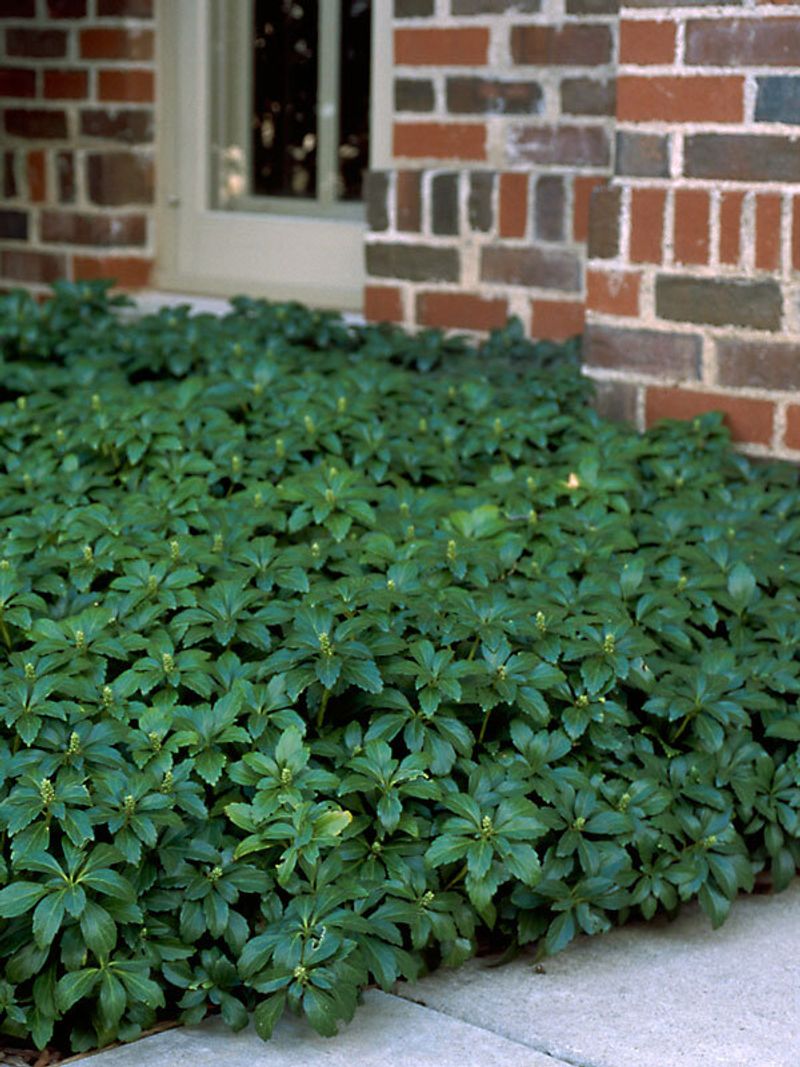
Japanese pachysandra (Pachysandra terminalis) promised a tidy, evergreen carpet, and it delivered.
Then, one crisp autumn, you noticed the carpet had rolled itself out past every edge you meant to hold.
The secret is not magic, it is a stubborn network of underground stems called rhizomes.
Even a thumbnail-sized fragment left behind after weeding can sprout into a whole new plant.
Growing about 12 inches tall, it builds dense mats that crowd out native plants and leave birds and pollinators with nothing to eat.
Clearing an established patch takes genuine grit.
For small areas, hand-pull carefully and chase down every scrap of rhizome.
For bigger invasions, a 2 percent glyphosate solution with a surfactant, applied to the leaves in fall, rides the plant’s stored energy down to the roots.
If you keep it, treat containment as a chore, not a one-time job.
Trim the edges hard every spring so it does not slip into the woods, a problem seen across the Mid-Atlantic.
Your oak deserves neighbors, not a hostage.
2. Periwinkle Undermines Desired Plantings
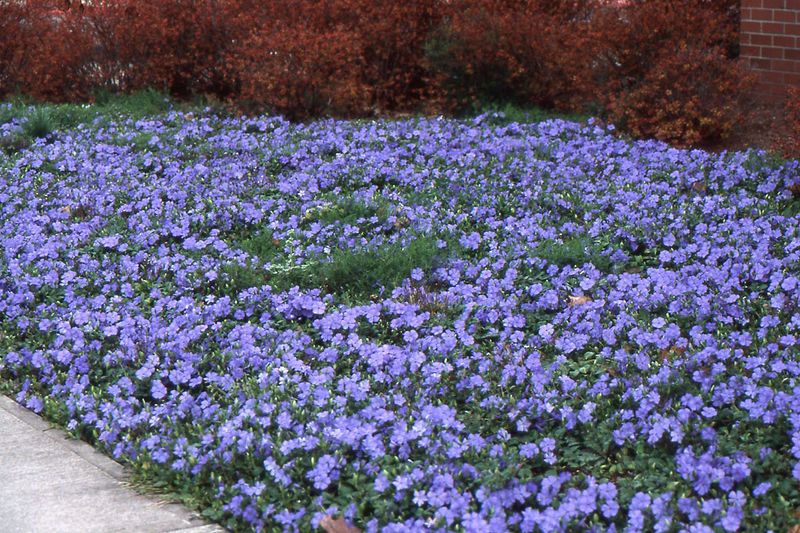
Glossy leaves, delicate violet-blue flowers, a whiff of old-world charm.
Periwinkle (Vinca minor) trails prettily around plenty of historic Pennsylvania homes.
But this European import, here since the 1700s, is a master of quiet expansion.
It sends out long runners that root wherever a leaf node touches soil.
Seeds are barely the point.
Those creeping stems do the real work, thriving in the shady understories of the Allegheny Plateau and the central valleys.
The mats it builds smother native wildflowers and tree seedlings, erasing habitat for local wildlife.
Periwinkle even leaks compounds into the soil that discourage other plants from growing nearby, a slow underground turf war.
Hand removal means digging up every plant and all its roots, which feels endless even on a small patch.
For larger areas, mow the runners close in spring, then treat the regrowth with a foliar glyphosate application.
A single patch can persist for 100 years, so patience is not optional.
Beat it back now, and next spring your ferns actually get room to breathe.
3. Goutweed Consumes Your Garden Bed
Here is a myth worth killing.
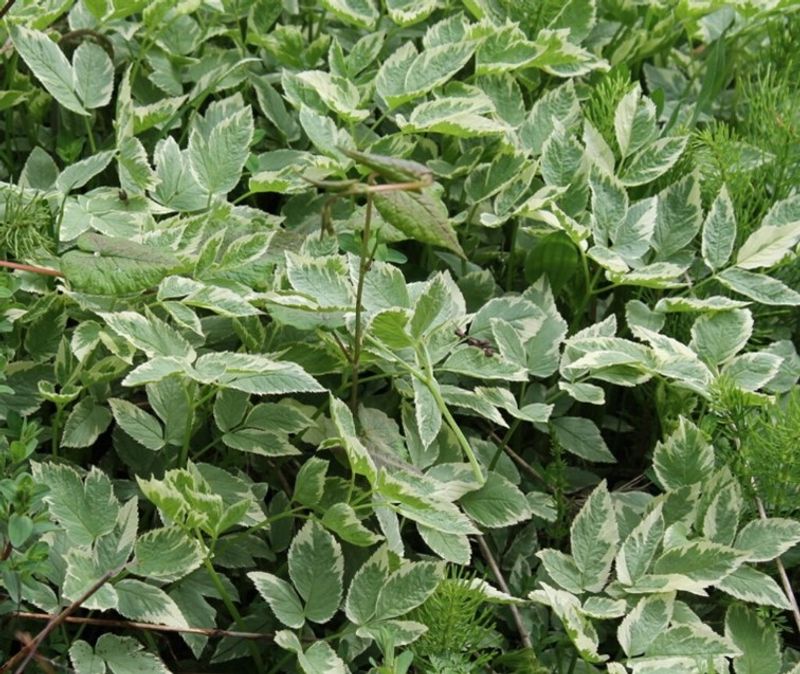
People assume a cheerful green-and-white variegated plant is too pretty to be trouble.
Goutweed (Aegopodium podagraria), also called Bishop’s Weed, proves them wrong within a season.
Early settlers from Eurasia brought it over and even used it to treat gout.
In your central Pennsylvania flower bed, it spreads through a tangled, spaghetti-like web of rhizomes that run in every direction.
Once established, pulling it feels like tugging on the whole yard.
It forms impenetrable patches, shoulders out native plants, and shrugs off deep shade well enough to invade closed-canopy forests.
That shade tolerance is exactly what makes it a threat to Pennsylvania’s woodlands.
For small infestations, hand-pull relentlessly and bag the rhizomes for the trash, never the compost.
For bigger areas, cut everything back after full leaf-out, then cover the ground with black plastic for a full growing season to starve the roots of light.
Glyphosate works too, but aim carefully.
Beat goutweed early, before it decides your entire bed belongs to it.
4. Japanese Knotweed Is a Force of Nature
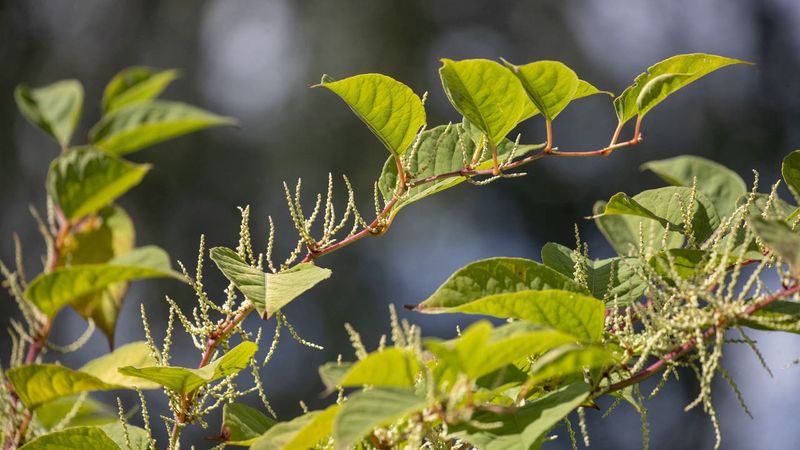
Japanese knotweed (Fallopia japonica) can shoot up three to four inches per day in early spring.
Read that again.
This is not a plant that respects fences, beds, or your patience.
You might mistake it for bamboo, with hollow, jointed stems standing tall and thick.
It is so destructive that Pennsylvania now bans its sale and trade outright.
It arrived in the late 1800s for ornamental use and erosion control, which turned out to be a genuinely bad idea.
The engine behind the takeover is a monstrous rhizome system.
A fragment the size of your thumbnail can start a brand new colony.
You will see it forming thickets along the Susquehanna Valley riverbanks and western Pennsylvania roadsides, where it chokes natives and worsens bank erosion.
Mowing alone backfires and often thickens the stand.
The most effective route for large patches is a foliar glyphosate treatment applied in late summer or early fall, after July 1 but before the first hard frost, when the plant is pumping nutrients downward.
Expect several years of consistent treatment.
This one is a war, not a weekend, so pace yourself.
5. Lesser Celandine Is a Fleeting but Fierce Invader
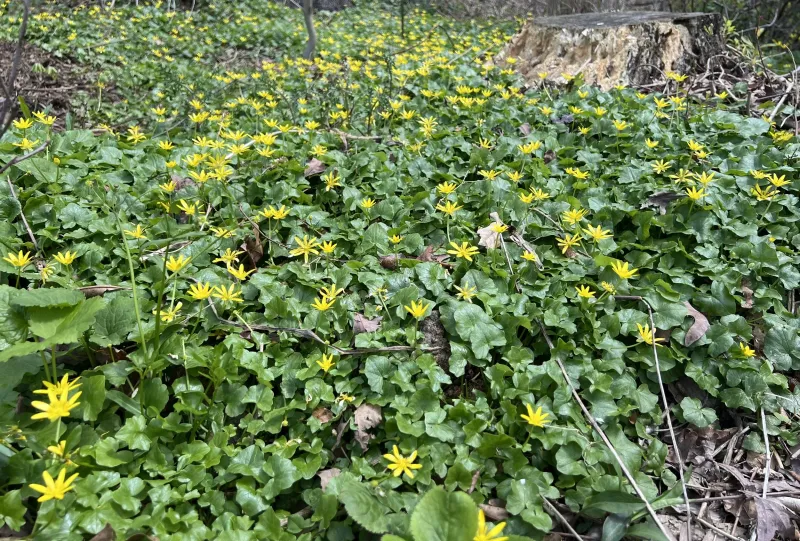
March and April in Pennsylvania bring glossy, kidney-shaped leaves and bright yellow, buttercup-like flowers spreading across lawns and beds.
Do not fall for the pretty face.
Lesser celandine (Ficaria verna) is one of the most aggressive spring invaders around, even though its foliage vanishes by late May.
It is now on the state’s Noxious Weed List, so selling or planting it is illegal in Pennsylvania.
It reproduces through swarms of tiny finger-like tubers and bulblets that dislodge easily.
Digging, animals, or floodwaters carry them off, which makes it a menace along Delaware Valley streams.
Emerging earlier than most native wildflowers, it forms dense mats that suffocate them before they even wake up.
That head start is its whole strategy.
For small patches, hand-dig and remove every tuber and bulblet, then bag them for the trash, not the compost.
For larger infestations, apply a systemic glyphosate in late winter to early spring, when temperatures top 40 degrees Fahrenheit but before natives emerge, ideally before late April.
Several years of persistence is normal.
Win this, and your trout lilies get their spring back.
6. Creeping Jenny Takes Over Moist Spots
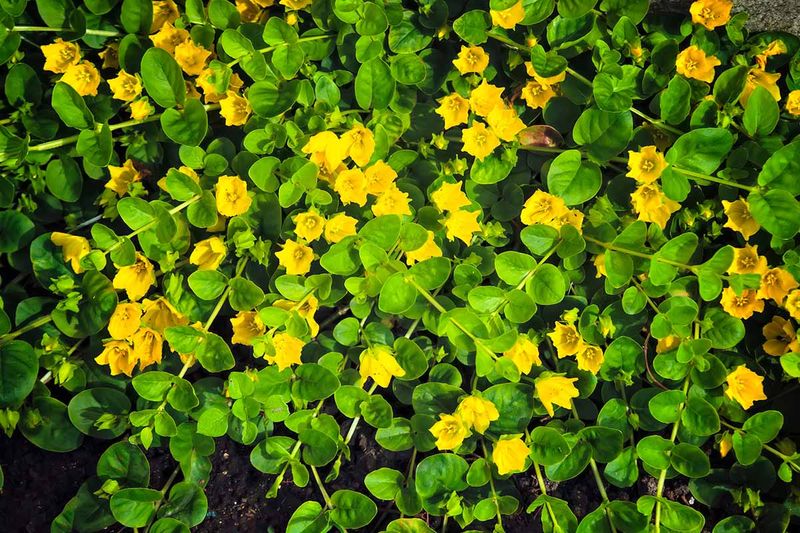
You bought creeping Jenny (Lysimachia nummularia) for those cheerful, coin-shaped chartreuse leaves, maybe spilling from a hanging basket.
Also called moneywort, it looks harmless at just 2 to 4 inches tall.
But that innocent face hides a spreading habit that landed it on Pennsylvania’s invasive watch lists, and planting it is now restricted here.
It races along the ground on creeping stems that root at every leaf node, building dense mats fast.
It also throws down rhizomes and seeds, so it comes at you from three directions at once.
Moist, rich soil is its happy place, which makes wet meadows, stream banks, and floodplain forests across Pennsylvania especially vulnerable.
Those mats smother native herbaceous plants and swallow good habitat.
Clearing an established patch can take two full growing seasons.
For small areas, hand-pull and collect every stem fragment, because even a scrap re-roots.
Mowing barely touches it, since it grows so low.
For larger patches, smother with a thick tarp or cardboard, or spot-treat with glyphosate while dodging your keepers.
Stay on it, and your damp corner turns from battleground back to garden.
7. Star-of-Bethlehem Pops Up Everywhere
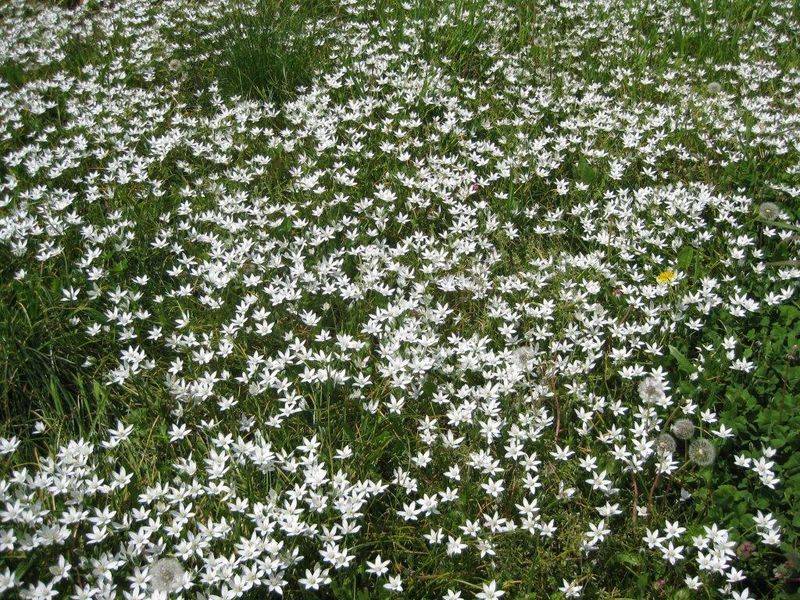
Delicate white, star-shaped flowers dot your lawn in late spring, and they genuinely are charming.
Those blooms belong to Star-of-Bethlehem (Ornithogalum umbellatum), a bulb that looks like wild onion but skips the garlic smell.
That missing scent is your first clue something is off.
This European import escapes cultivation quickly, infesting lawns, roadsides, and natural areas across Pennsylvania.
It spreads through underground bulbs and countless tiny bulblets.
Every bulblet left in the soil grows into a new plant, so careless digging actually scatters the problem wider.
The bulbs form dense tufts that crowd turf and beds, elbowing out other plants and thinning biodiversity.
It is also toxic to livestock and risky for curious kids and pets, which raises the stakes near a play yard.
For small patches, dig carefully and bag every bulb and bulblet for the landfill, never the compost.
For larger invasions, smother with 6 inches to a foot of heavy mulch and cardboard for a full season.
For chemical control, glyphosate works when leaves are fully out in early spring above 50 degrees Fahrenheit, or use a lawn-safe selective product with sulfentrazone or 2,4-D.
Reclaiming your space takes a steady, multi-year hand.
You have got this.