
The Shade Tree North Carolina Homeowners Plant Now To Cool A Yard That Bakes All Afternoon
Follow us on Google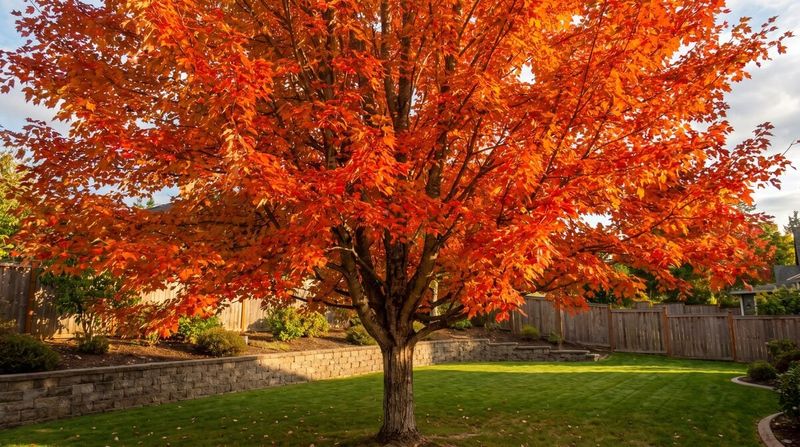
By three in the afternoon, a North Carolina yard facing west can feel less like a backyard and more like a parking lot. The grass bakes, the patio radiates heat long after the sun moves on, and nobody wants to sit outside until well after dark.
Planting the right tree in the right spot can genuinely change that, but the payoff comes from a mature canopy, not from a sapling you stuck in the ground last Tuesday. Here is what actually works, where to put it, and how to get it started on the right foot.
Red Maple Fits Many North Carolina Yards
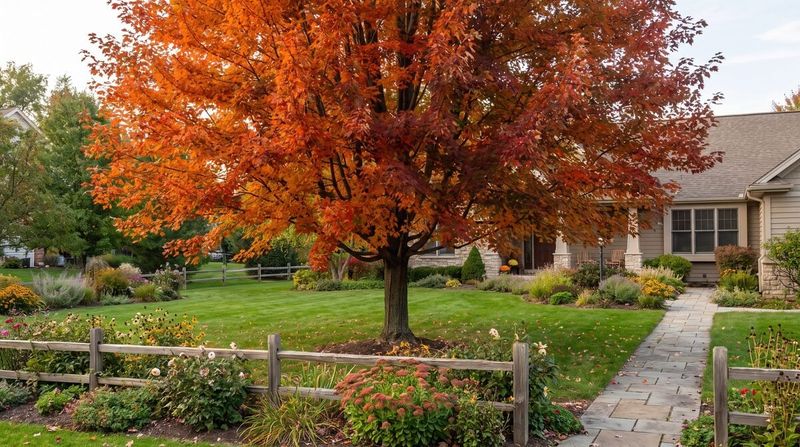
Acer rubrum, commonly called red maple or sometimes Carolina maple, is the tree that keeps coming up when North Carolina homeowners ask what to plant for fast, reliable shade. That reputation is earned.
NC State Extension describes red maple as native, rapidly growing, tolerant of clay, adaptable to full sun and partial shade, and capable of reaching 40 to 70 feet tall with a mature canopy spread of roughly 30 to 50 feet.
What makes it genuinely useful across North Carolina is its range. It grows in the Coastal Plain, the Piedmont, and up into the mountains, covering hardiness zones 2a through 9b.
Sandy soil on the coast, heavy red clay in the Piedmont, occasionally wet spots near a drainage swale, even slightly dry conditions in the Sandhills, red maple handles more of those situations than most trees its size. NC State’s Carolina maple profile notes that its strongest performance comes in moist, well-drained, slightly acidic soil, which describes a lot of typical residential lots across the state.
The North Carolina Forest Service also lists it as a rapid-growing species adaptable to many sites statewide. That combination of speed and flexibility is why it shows up so often as a practical recommendation.
It is not the right answer for every yard, and it is not an officially designated best tree for the state, but for a homeowner with a hot, west-facing lawn and a few years of patience, it is a strong place to start.
Mature Canopy, Not Planting Day, Delivers Shade
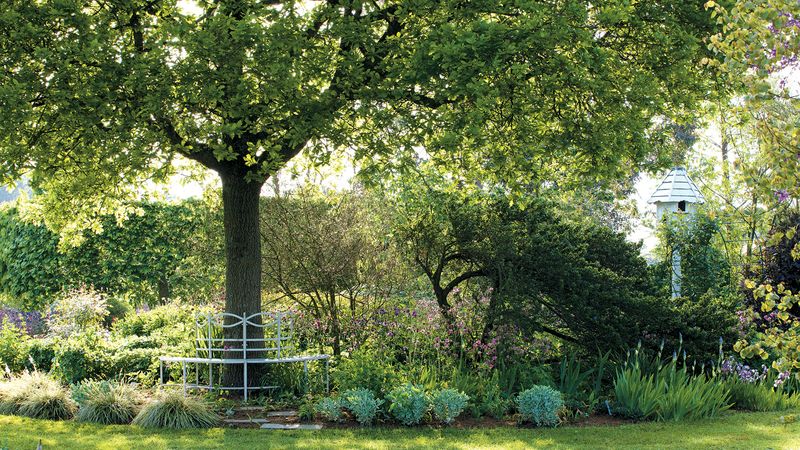
Here is where people get surprised. Planting a tree does not cool a yard.
A mature tree does. The difference between those two things is about ten to fifteen years of growth, and being honest about that timeline is the only way to plan for it properly.
Shade and evapotranspiration, the process by which trees pull water from the soil and release it through their leaves, are both real and measurable. EPA research on trees and heat islands summarizes studies finding that shaded surfaces can run 20 to 45 degrees Fahrenheit cooler than unshaded materials, and that evapotranspiration can reduce peak summer air temperatures by roughly 2 to 9 degrees Fahrenheit under relevant conditions.
Those are real numbers from real studies. But they describe what larger canopy cover does across neighborhoods and research sites, not what one young tree does in a single suburban yard.
Surface temperature and air temperature are also two different things, and both are different from how hot a person actually feels standing outside. A dark concrete patio under a full canopy may cool dramatically compared to one baking in direct sun.
The air a few feet away may cool more modestly. Your personal comfort depends on humidity, wind, how much of the sky is blocked, and whether you are sitting on that hot concrete or on a chair in the grass nearby.
USDA Forest Service research consistently points toward larger canopy cover as the meaningful variable. A small tree at planting provides almost no shade.
The payoff grows steadily as the crown expands, year by year, until the canopy is wide enough to actually cover the space you want to use. Plant with that future canopy in mind, not the sapling in the nursery pot.
Aim the Future Canopy at Afternoon Heat
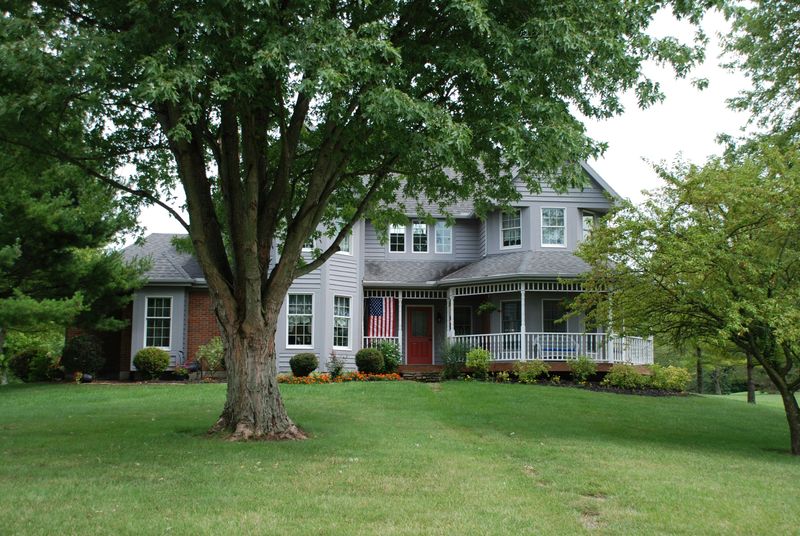
Before you dig a single hole, stand in your yard at 3 or 4 in the afternoon on a hot day and notice exactly where the sun is punishing you. That spot, or the ground between you and the sun, is where the future canopy needs to go.
A tree planted too far to the north or south of a patio can grow for decades without shading the chairs.
NC State Extension’s landscape design guidance specifically recommends placing deciduous trees on the western side of a home to cut late-day summer heat while still letting winter sun reach the house after the leaves drop. That is exactly the dynamic a west-facing yard needs.
The tree blocks the low afternoon angle in summer, and by December it is bare and letting warmth in.
Plan for a mature spread of 30 to 50 feet and pick a location with enough open ground to support that canopy without crowding structures, pavement, or neighboring trees. NC State’s red maple profile notes that the species can develop a dense surface root mat, which means planting too close to a driveway or sidewalk creates problems down the road.
Give it room.
Overhead utility lines are a separate concern. ISA guidance on avoiding utility conflicts identifies a tall planting zone as at least 50 feet from distribution lines.
Red maple will eventually reach those lines if planted beneath them, so choose a location clear of overhead wires from the start. A little planning at this stage saves an expensive pruning situation later.
Use August to Choose and Plan
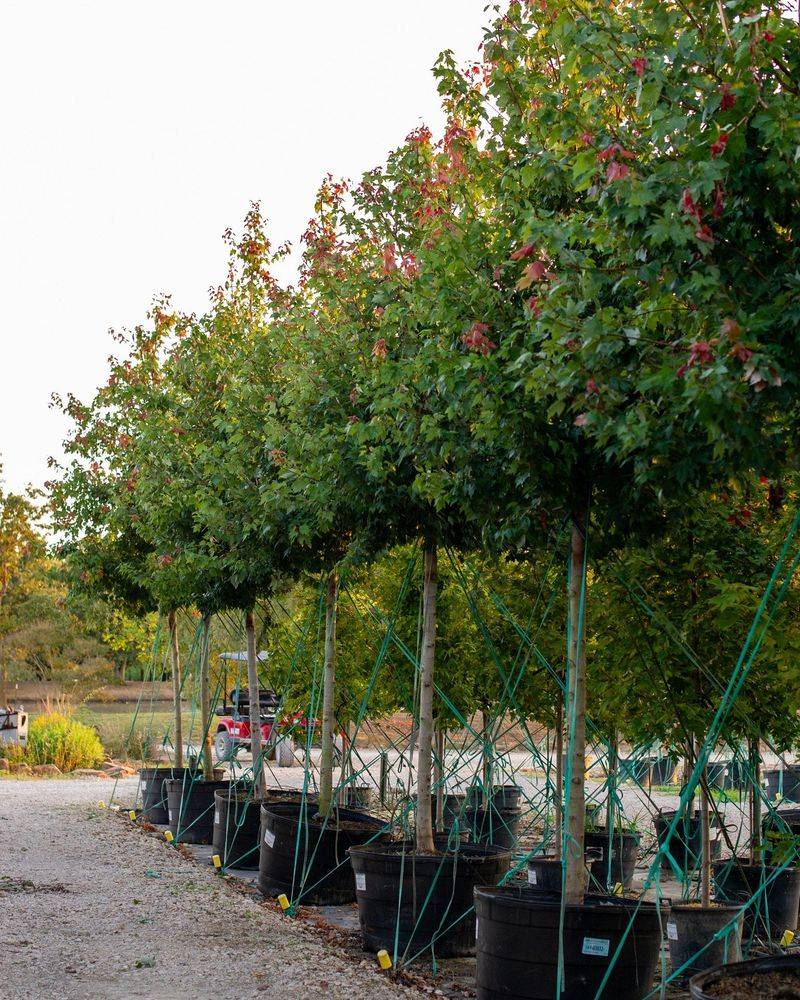
August in North Carolina is genuinely not the easiest time to put a new tree in the ground. The soil is warm, the air is muggy, afternoon thunderstorms are hit or miss, and a freshly transplanted tree is already managing stress from moving to a new location.
Adding summer heat to that equation increases how much water the tree needs and how closely you need to watch it.
That said, August is a great time to choose your tree. Walk the nursery, pick a healthy container-grown specimen with a straight trunk and no circling roots visible at the soil line, and either purchase it or put it on hold.
NC State Extension notes that container plants generally establish best and need less supplemental watering when transplanted in late fall or early spring, when cooler temperatures reduce water demand and the tree can focus on root development before summer arrives.
The NC Forest Service seedling program commonly uses containerized seedlings from October through March and bare-root seedlings from January through March, which reflects the same seasonal logic. Those windows are not arbitrary, they line up with cooler soil, more reliable rainfall, and lower evaporative stress on a newly planted root system.
If you do plant in August, use a container-grown tree rather than bare-root, water consistently and deeply from day one, and check the soil every two or three days during dry stretches. It can work, but it asks more of both the tree and the homeowner than a fall or late-winter planting would.
Plant and Water It for Establishment
Before anything else, call 811. NC811 recommends contacting the service at least three working days before you dig, even in a residential yard.
Underground utility lines are not always where you expect them, and a call costs nothing.
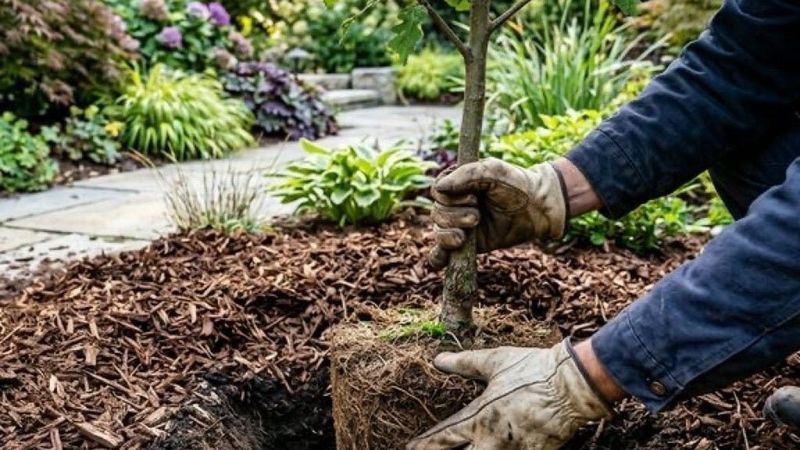
When you are ready to plant, dig a hole no deeper than the root ball and about twice as wide as the root system. Depth matters more than most people realize.
Setting the tree too deep buries the trunk flare, that slight flare where the trunk meets the roots at the base, and that mistake can slowly kill an otherwise healthy tree. Keep the trunk flare at or just slightly above the surrounding grade.
Remove all container materials, including any wire, burlap, or plastic. Spread any circling roots outward rather than leaving them to wrap around the trunk as the tree grows.
Water thoroughly right after planting, enough to settle the soil and soak the root zone completely.
NC State Extension’s woody ornamentals guidance calls for at least 1 inch of water per week during the first growing season, adjusted for rainfall and soil conditions. Sandy coastal soils drain fast and may need more frequent watering.
Heavy Piedmont clay holds moisture longer but can also stay waterlogged, so pay attention to how your specific site drains.
Finish the planting by spreading 2 to 3 inches of coarse organic mulch over the root zone, keeping it a few inches away from the trunk. NC State cautions against mulch deeper than 4 inches because excessive mulch can trap moisture against the bark, encourage rot, and create habitat for pests right at the base of the tree.
A mulch ring done right looks like a shallow saucer, not a volcano.
Leave Room for Roots and Weather
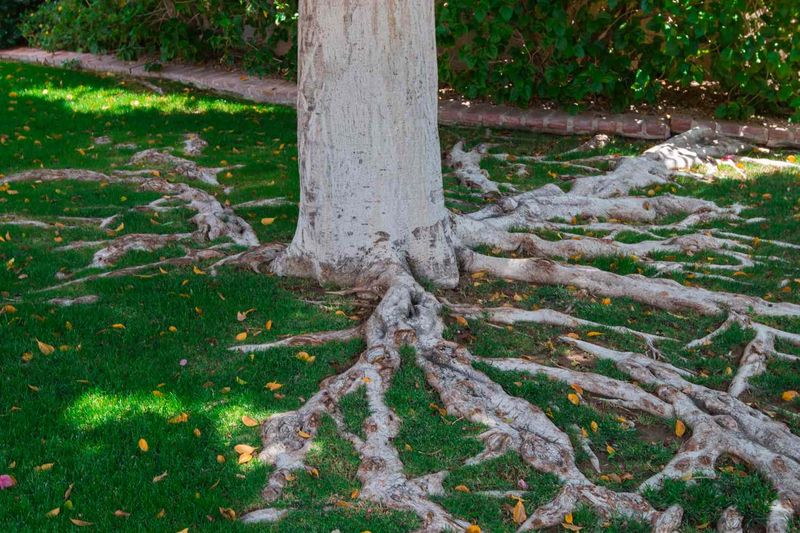
Red maple is adaptable, but adaptable does not mean plant-anywhere. One of the most common complaints about mature red maples is what happens to nearby pavement.
NC State’s Carolina maple profile notes that the species develops a dense mat of surface roots that can be difficult to plant beneath and can buckle nearby sidewalks or driveways if the tree goes in too close. Narrow planting strips between a sidewalk and curb are poor choices for this tree, full stop.
Weather is the other variable that does not stop being relevant just because the tree is native. Extension research on red maple establishment confirms that wind and ice can break branches, and that newly planted trees need supplemental water during dry stretches even when the calendar says summer.
North Carolina’s afternoon thunderstorms are unreliable by nature. A storm can drop an inch of rain on the neighborhood two streets over and leave your yard completely dry.
Check the soil at root depth, not just the surface, before deciding the tree got enough water from yesterday’s clouds.
NC State’s construction and tree protection guidance reinforces that native status does not eliminate the need for maintenance. A red maple still benefits from periodic inspection for storm damage, crossing branches, signs of disease, or structural defects that develop as the tree matures.
Walking around it once a year after a big storm is not a burden, it is just good stewardship of a tree you are counting on for decades of shade.
Choose a Different Tree for a Different Goal
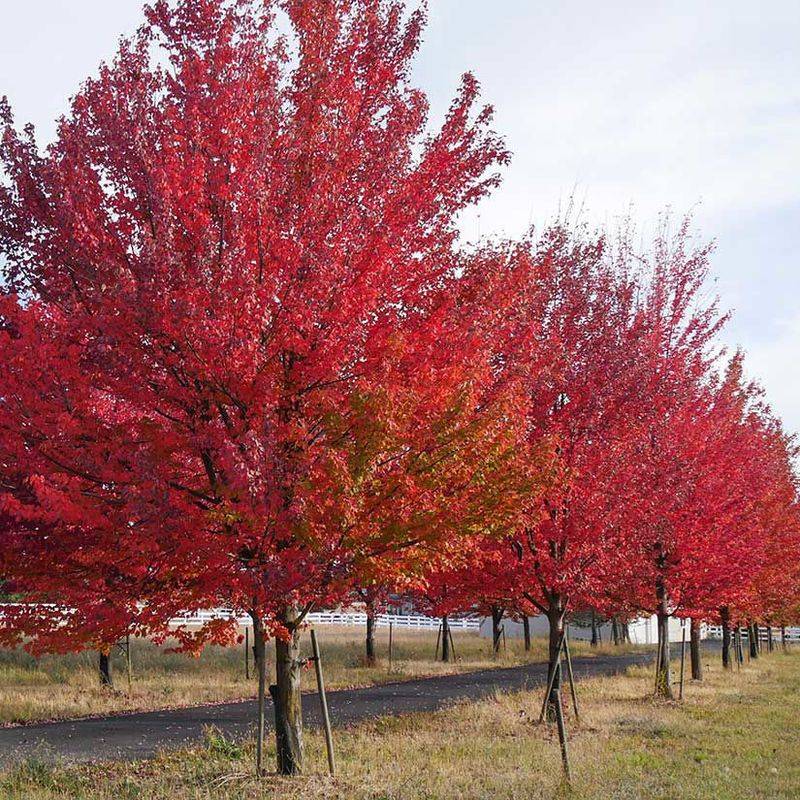
Red maple is a strong recommendation for many North Carolina yards, but two other native trees come up often enough that they deserve an honest comparison, not a sales pitch.
Tulip poplar, Liriodendron tulipifera, is tempting because it grows fast and is unmistakably native. NC State’s tulip tree profile describes it as capable of reaching enormous heights, preferring deep moist soil, and showing sensitivity to heat, drought, and soil compaction.
NC State Extension’s tulip poplar feature notes it can become exceptionally large, and University of Maryland Extension documents concerns about storm-related branch breakage. For a compact suburban lot, that combination of size, soil sensitivity, and storm risk makes tulip poplar a better candidate for a genuinely open rural property than a typical backyard.
White oak, Quercus alba, is a different kind of conversation entirely. NC State’s white oak profile and the Extension native plants handbook both support its value as a long-term habitat tree, producing acorns and supporting many caterpillar species.
The tradeoff is pace. White oak is a slower grower with a very large mature footprint, and it is genuinely a decades-long investment rather than a shade solution for this summer’s cookout.
If your goal is shade over the place you actually use, planted with enough room to grow and tended through establishment, red maple still fits that job for most North Carolina homeowners. ISA tree selection guidance puts it plainly: match the tree to the site and the goal, then give the canopy time to do its work.
The yard that bakes all afternoon right now will not feel different next summer, but ten years from now, that shade will be the reason you stay outside long after dinner.