
These Are The 8 Florida Native Wildflowers That Beat Annuals You Rebuy Every Single Year
Follow us on Google
You step onto the patio after breakfast and the air already feels heavy, that thick Florida humidity settling in before nine.
You glance at the bare patch where last spring’s impatiens used to be, now just sad, sun-baked dirt.
It is the same chore every single year, digging out faded annuals, hauling them off, and driving back to the nursery to spend more cash on plants that quit by fall.
The good news is there is a smarter way, and it starts with plants that already belong here.
Eight Florida native wildflowers can give you color, feed your butterflies, and shrug off the heat without begging for water or your wallet.
1. Tickseed Will Truly Dazzle Your Garden
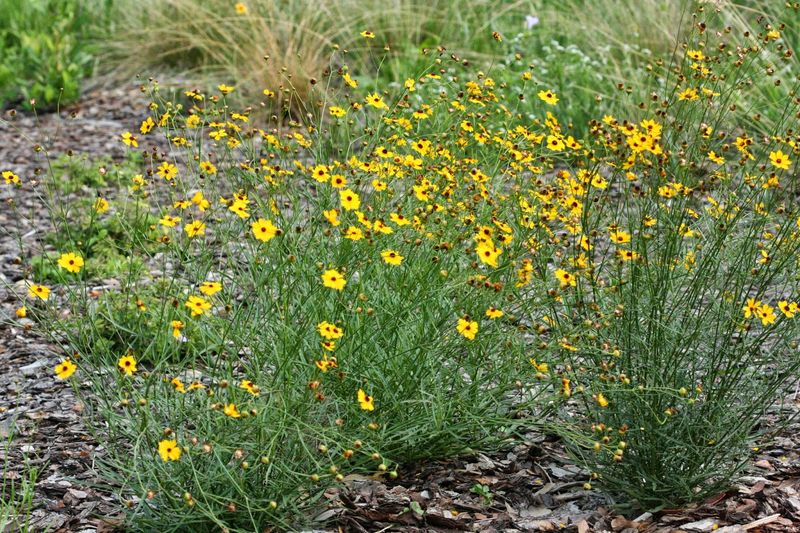
Florida picked a winner when it named the state wildflower.
Leavenworth’s tickseed (Coreopsis leavenworthii) throws out cheerful yellow, daisy-like blooms about 1 to 1.5 inches across, each with a dark brown eye, and it keeps going in a way annuals never manage.
Here is the part that surprises folks.
This one reseeds itself, so instead of one season and done, you get fresh drifts of color coming back on their own.
In South Florida it blooms nearly year-round.
Up in North Florida and the Panhandle you get spring through fall, which is genuinely a long run.
Give these sun-lovers full sun and well-drained soil, though they will forgive an occasionally wet spot.
Once established, they tolerate the dry winter stretch that spikes everyone’s water bill.
Space plants 6 to 12 inches apart so they knit into a bright, continuous carpet.
Butterflies and native bees treat tickseed like a diner that never closes.
And when your neighbor is out replanting marigolds for the third year running, yours will already be blooming, no receipt required.
2. Spotted Bee Balm Offers Unique Beauty And Pollinator Power
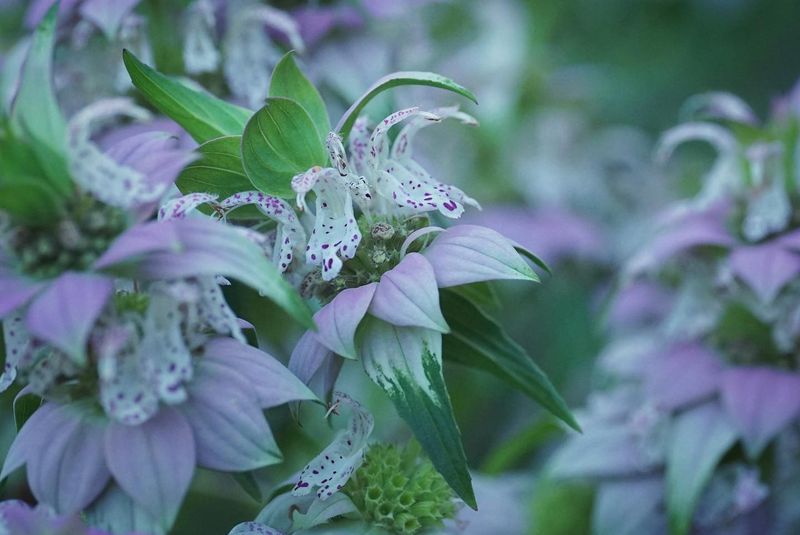
Picture stacked whorls of creamy flowers freckled with purple, ringed by pink and lavender bracts, standing 1 to 3 feet tall.
That odd, architectural look is spotted bee balm (Monarda punctata), and once you see it you will not confuse it with anything else.
Deer and rabbits leave it alone, and that is not luck.
The aromatic foliage carries a scent they dislike, so your work does not vanish overnight the way tender annuals often do.
Bees, butterflies, hummingbirds, and even beneficial predatory wasps swarm it.
Those wasps are quiet allies, hunting garden pests while you sip coffee on the porch.
Plant it in full sun and dry, sandy soil, the kind common across much of Florida.
It handles drought and even brushes off a light freeze in North Florida.
Expect a spread of 1 to 4 feet and a vigorous bloom of roughly six weeks starting in early summer, often stretching into fall.
A short-lived perennial that earns its keep, it fills space most annuals only rent.
3. Butterfly Milkweed Ignites The Landscape
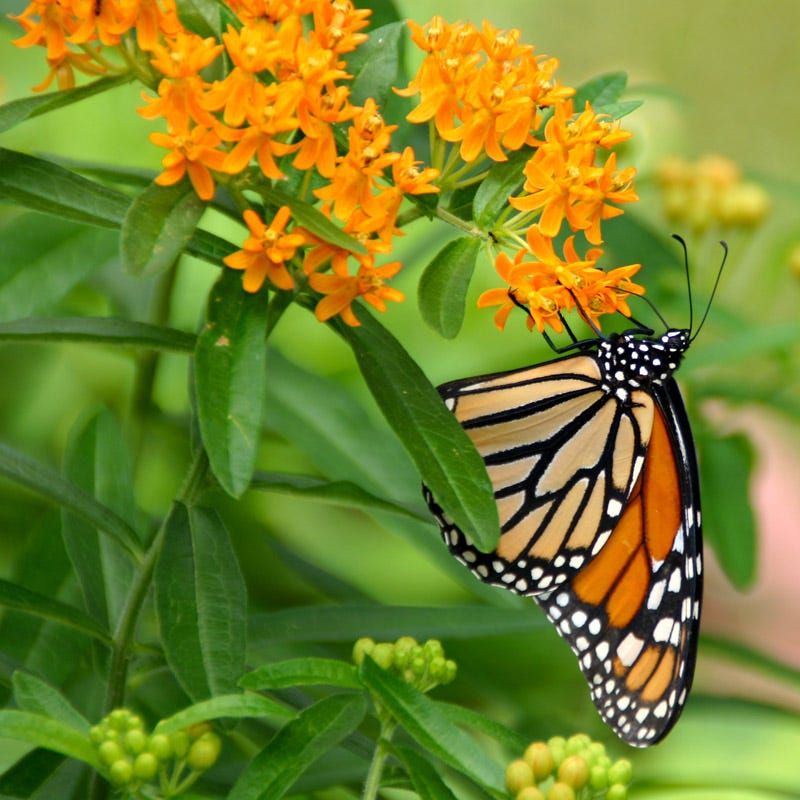
Monarchs have a problem, and butterfly milkweed (Asclepias tuberosa) is the answer they are searching for.
Their caterpillars can only grow on milkweed, so planting this is like hanging a welcome sign along the monarch migration route.
Brilliant clusters of orange, sometimes red or yellow, blaze from early through late summer.
The plant stands 1.5 to 3 feet tall and just as wide, and Queen and Soldier butterflies use it too.
Now the practical wins.
Unlike some milkweeds, this one does not spread by aggressive runners, and its stems skip the milky sap, so it stays polite in a bed.
It is exceptionally drought-tolerant once rooted and thrives in intense Central Florida sun with well-drained sandy soil.
UF/IFAS Extension encourages Florida gardeners to plant native milkweeds to support monarch populations, so you are doing real conservation, not just decorating.
Deer and serious pests mostly ignore it.
You get a low-effort hero that turns a dull corner into a butterfly nursery, and that is a feeling worth having.
4. Scarlet Sage Brings Continuous Color
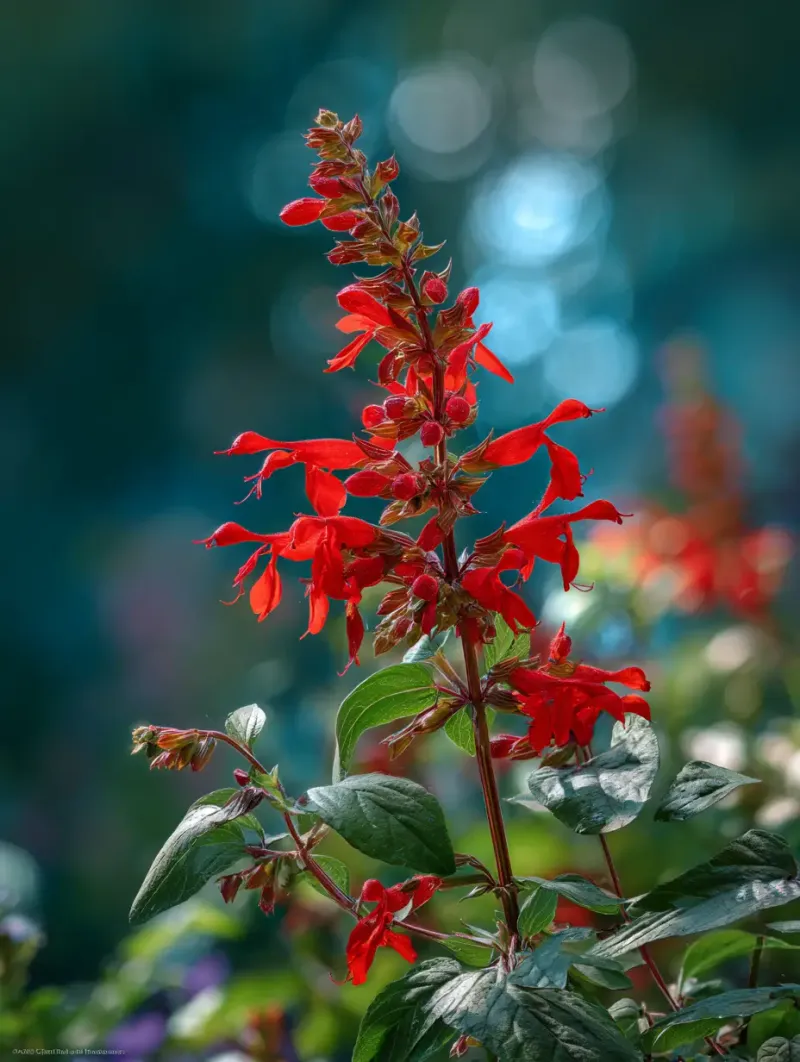
Some plants fold the moment July hits.
Scarlet sage (Salvia coccinea) does the opposite, pushing out red tubular flowers right through the worst of the heat, with pink and white forms if red is not your color.
Hummingbirds treat those tubes like personal feeders, and butterflies and bees line up behind them.
From spring through fall you get action, and in frost-free South Florida the show barely pauses.
What makes it easy is how little it asks.
It handles full sun to partial shade and a range of well-drained soils, from bone dry to moderately moist.
Once established it is genuinely drought-tolerant, needing extra water only during a long dry spell.
Left alone it can shoot up to 6 feet, so a light pruning keeps it bushy around 2 to 3 feet tall and 1 to 2 feet wide.
Space new plants 24 to 36 inches apart for good airflow, which helps fend off fungal leaf spots in humid weather.
Best of all, it self-sows, dropping volunteers you never paid for.
5. Dense Blazing Star Reaches For The Sun
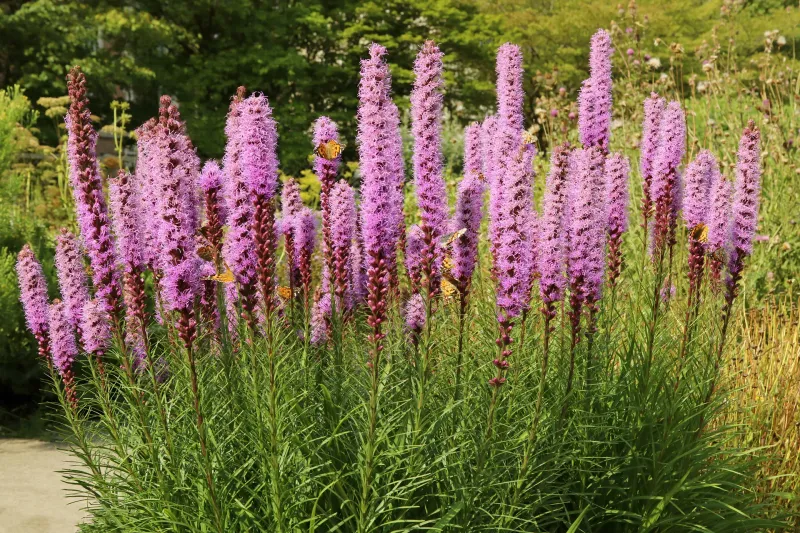
Most wildflowers sprawl sideways.
Dense blazing star (Liatris spicata) does the exact opposite, firing tall spiky wands of rosy-purple straight up, 3 to 5 feet high with just a 1 to 2 foot footprint.
It is the vertical drama a flat bed has been missing.
Bloom time lands in late summer and fall, when a lot of your garden looks tired, and each spike holds color for about three to four weeks.
Butterflies, bees, moths, and hummingbirds all clock in.
Here is where it gets tough in a good way.
Blazing star tolerates a wide swing of conditions, from moist and even wet soils to poor ground, and it does not blink at Florida heat and humidity.
Once its roots are set, it rides out drought too.
Space plants 12 to 15 inches apart so the spikes read as a purple wave rather than lonely sticks.
Deer generally pass it by, so the display stays yours to admire from the porch instead of becoming a midnight snack.
6. Stokes’ Aster Is A Low-Maintenance Gem
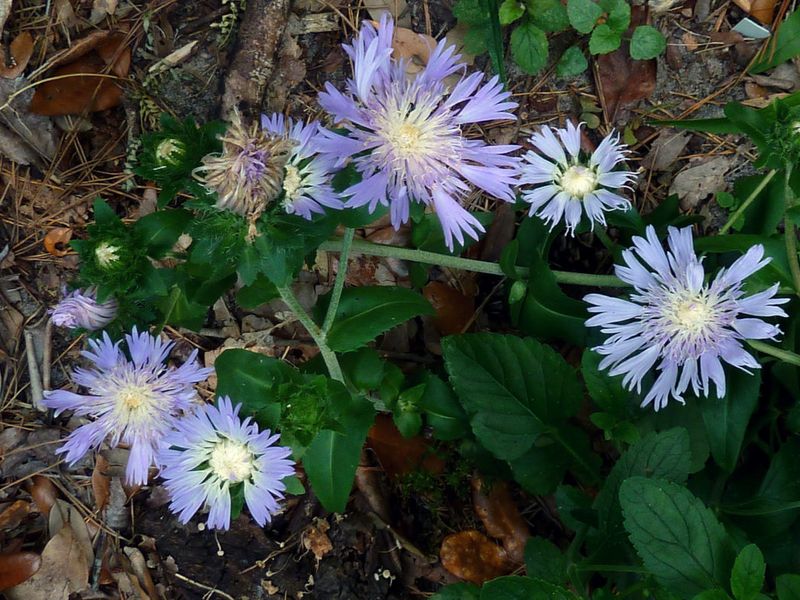
Big, fringed, cornflower-style blooms up to 2.5 to 4 inches across, and it barely asks for a thing in return.
Stokes’ aster (Stokesia laevis) is the quiet overachiever of this list.
You can find it in blue, lavender, pink, white, and even yellow, blooming from late spring through fall.
Deer and rabbits skip it, and once established it carries strong drought tolerance, so it survives the winter dry spell that browns out fussier plants.
It settles into a tidy clump, 1 to 2 feet tall and 1 to 1.5 feet wide, and stays largely evergreen through the milder Florida winters for year-round structure.
Give it full sun to partial shade and well-drained, acidic to neutral soil, which matches the sandy ground across much of the state.
Set plants about 8 to 12 inches apart.
A single Stokes’ aster can keep going for roughly 8 years, so do the math against those annuals you rebuy every spring.
One plant, nearly a decade of blooms, and hardly any sweat from you.
7. Blue Porterweed Forms A Lush Groundcover
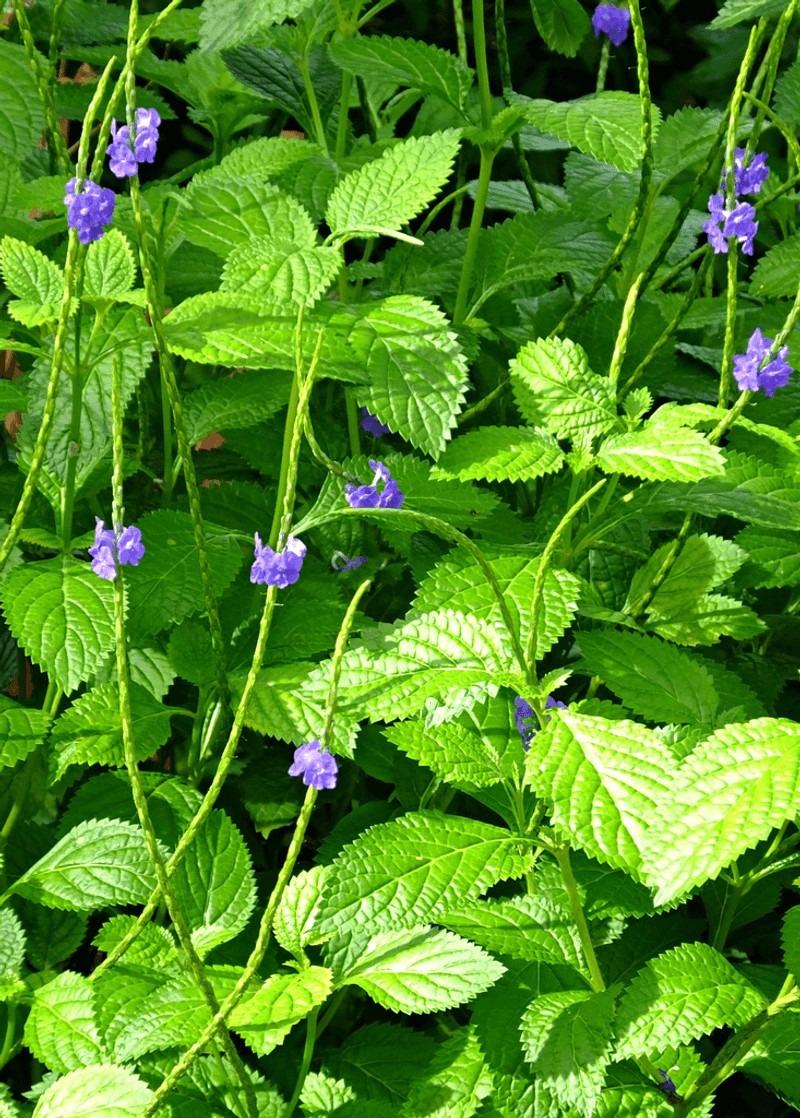
Each individual bloom on blue porterweed (Stachytarpheta jamaicensis) lasts only a single day.
Sounds like a dealbreaker, right?
But the plant cranks out so many, so fast, that you get a nonstop river of purplish-blue flowers, each with a tiny white eye running along long, slender spikes.
In South Florida it blooms year-round, and through Central Florida it carries the summer.
Butterflies cannot resist it.
It hosts the Tropical Buckeye and feeds gulf fritillaries and monarchs, turning a low corner into a fluttering hangout.
Coastal gardeners, listen up.
Blue porterweed is moderately salt-tolerant, so it holds up against the salt spray drifting off both the Gulf and Atlantic coasts, and it takes drought in stride once rooted.
Full sun to light shade suits it fine.
Growing 1 to 3 feet tall with a 2 to 4 foot sprawl, it works as a flowering groundcover.
Space plants about 2.5 to 3 feet apart and let them knit into a dense mat that smothers weeds while it blooms.
Low, tough, and always working.
8. Carolina Wild Petunia Adds Gentle Hues
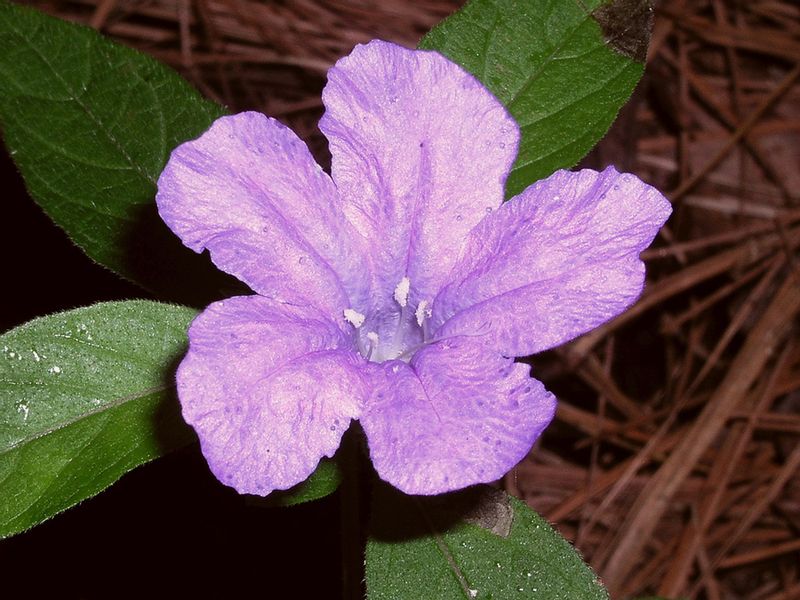
Every list needs a plant for that shady spot where nothing seems happy, and Carolina wild petunia (Ruellia caroliniensis) is it.
Soft trumpet-shaped flowers in light purple, lavender, and pinkish-blue open in the kind of shade that stumps most bloomers.
It performs beautifully in part to full shade, though it will take full sun if the soil stays consistently moist, which makes it flexible for those awkward corners under a live oak or along the north side of the house.
Blooms roll from spring through late summer without you fussing over them.
The plant forms a neat clump, 1 to 3 feet tall and just as wide, and it adapts to sandy, loamy, or clay soils as long as they drain.
Once established it handles drought, so it is forgiving when life gets busy.
Bees, hummingbirds, and Common Buckeye caterpillars all use it.
It will not shout for attention the way a flat of nursery annuals does.
Instead it just shows up, year after year, quietly filling the gaps and leaving your weekends free for the porch and the cookout.