
What It Really Means When A Whip-Poor-Will Calls All Night Near Your Pennsylvania Home
Follow us on Google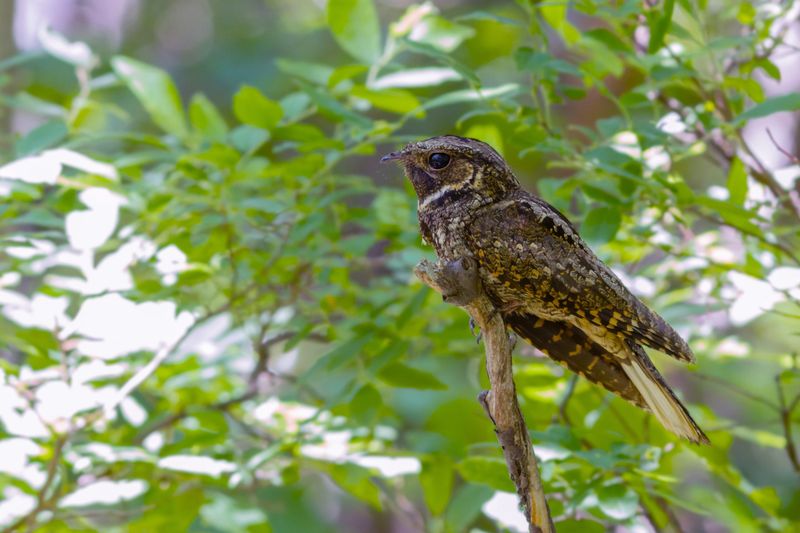
You’re sitting on the porch some warm evening in late May, and from somewhere in the dark tree line, a voice starts up: whip-poor-will, whip-poor-will, whip-poor-will, over and over, so insistent it almost sounds mechanical.
Many Pennsylvania homeowners hear it and wonder if something is wrong, or if the old stories about bad luck and coming rain are onto something.
The short answer is that the bird is almost certainly fine, and so are you.
What you’re actually hearing is one of nature’s more useful signals about the landscape around your home.
The Night Caller Is Probably A Male Whip-Poor-Will
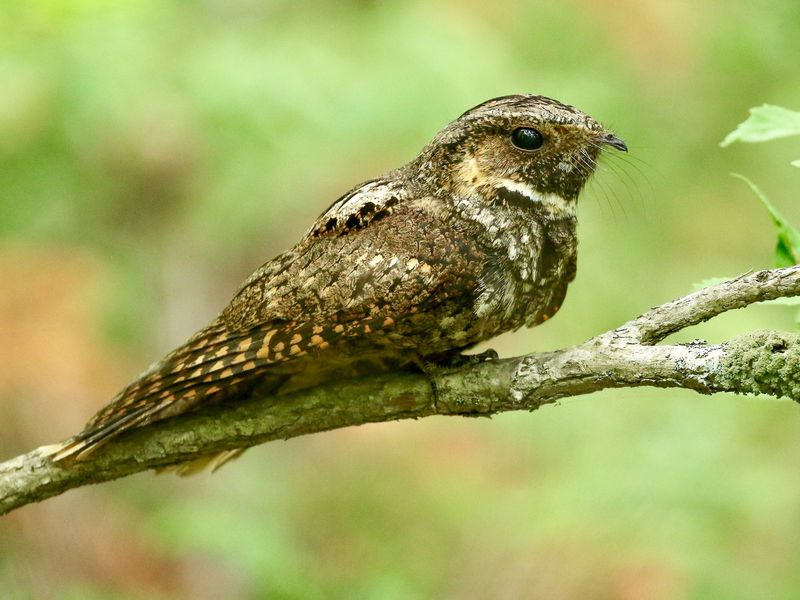
Pull up a recording of the Eastern Whip-poor-will, Antrostomus vociferus, and you will recognize it immediately if you have heard that sound near your yard.
Cornell Lab’s All About Birds describes the call as an emphatic, chanted phrase that males may repeat for hours during breeding season, using it to defend territory and signal their availability to females.
The bird is not calling to you.
It is talking to other whip-poor-wills, and it has been doing exactly this for millions of years.
Saying it is “probably” a whip-poor-will matters.
Other nighttime callers can fool even experienced ears.
Common nighthawks produce a buzzy peent call and a booming sound during dives.
Mockingbirds string together long medleys that can include mimicked phrases.
Eastern screech-owls and barred owls contribute their own distinctive sounds.
Chuck-will’s-widows, a close relative found in some southern Pennsylvania areas, call their own name in a four-syllable pattern that can be confused with the whip-poor-will’s three-part phrase.
Frogs and insects add to the chorus on warm nights.
The cleanest way to confirm the caller is to compare what you hear to a trusted recording from Cornell or Audubon’s field guide, matching the rhythm and the three distinct syllables.
Once you have a confident identification, the all-night repetition makes complete sense.
A male in full breeding mode may call hundreds of times in a row from a favorite perch, pausing only briefly.
The call is loud, persistent, and designed to carry across a dark woodland edge.
That is not distress.
That is a healthy male doing exactly what the season asks of him.
Late Spring And Summer Bring The Repeated Song
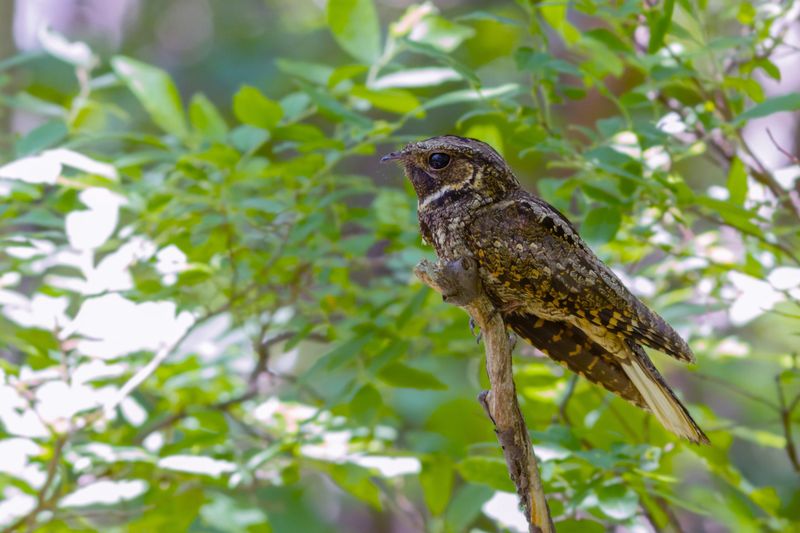
Pennsylvania residents tend to notice the whip-poor-will’s song starting sometime in late spring, and the calling typically continues through summer before fading as the season turns. eBird Status and Trends modeled data place the approximate species-level breeding window in a general late spring to midsummer range, which lines up with what many Pennsylvania observers report.
Treat those dates as a rough regional guide rather than a fixed statewide rule.
Elevation and local conditions shift the timing noticeably.
A homeowner in the northern tier or on the Allegheny Plateau may hear the first calls a week or two later than someone in the warmer central valleys or in southeastern Pennsylvania closer to the Delaware Valley.
Late spring frosts, which can still occur above 2,000 feet in May, can delay insect emergence and push bird activity later than the averages suggest.
Weather patterns in any given year also matter.
The Cornell Lab’s species account notes that males call most actively in the hours around dusk and dawn, though persistent calling can continue well into the night during the breeding season.
The Pennsylvania Game Commission’s Wildlife Notes describe fall migration as occurring mainly during September and October, so if you hear the call deep into autumn, it is worth a careful second listen to rule out another species.
The practical takeaway is straightforward.
If you hear that three-part phrase repeating on a warm evening between roughly late May and late July in Pennsylvania, you are almost certainly hearing a male at the height of his breeding-season effort.
Enjoy it while it lasts, because the silence that follows in August and September comes quickly.
Moonlight Changes Activity And Detection
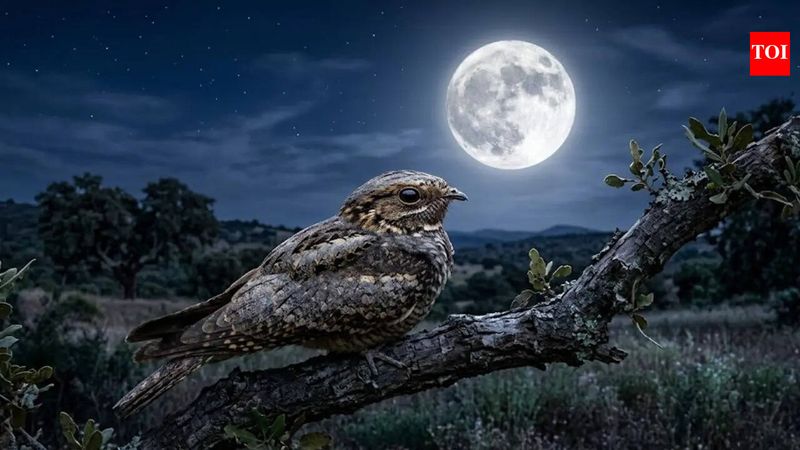
Moonlit nights genuinely do seem to produce more whip-poor-will activity, and there is a practical biological reason for that.
The Eastern Whip-poor-will is a visual hunter.
It watches for moths, beetles, and other night-flying insects against whatever light is available, then sallies out from a perch to catch them on the wing.
Brighter conditions give it a real foraging advantage.
USGS research on Eastern Whip-poor-wills in the central Appalachians describes the species’ association with habitat conditions that support nocturnal foraging, and moon visibility is one factor researchers track when studying nightjar activity.
A related study published in Ecology and Evolution and available through Wiley Online Library found that nightjars may time breeding activity partly around moonlight cycles to match peak insect availability, suggesting the connection runs deeper than casual observation implies.
Moonlight also makes calling birds easier for people to notice.
On a clear, bright night you are more likely to be outside, more likely to have windows open, and more likely to pick up a distant sound that a cloudy or rainy night would muffle.
The call itself does not get louder or stronger under a full moon.
The bird is simply more active, and you are more likely to be listening.
Keep moonlight as one piece of a larger picture.
A male calling near your home on a dark night is still defending territory and seeking a mate.
Moonlight shapes when and how hard he works at it, but the fundamental behavior stays the same across the season regardless of the lunar calendar.
Overcast nights with good insect flight can also produce active calling, so do not expect a strict on-off pattern tied only to the moon’s phase.
The Sound May Come From A Larger Habitat Mosaic
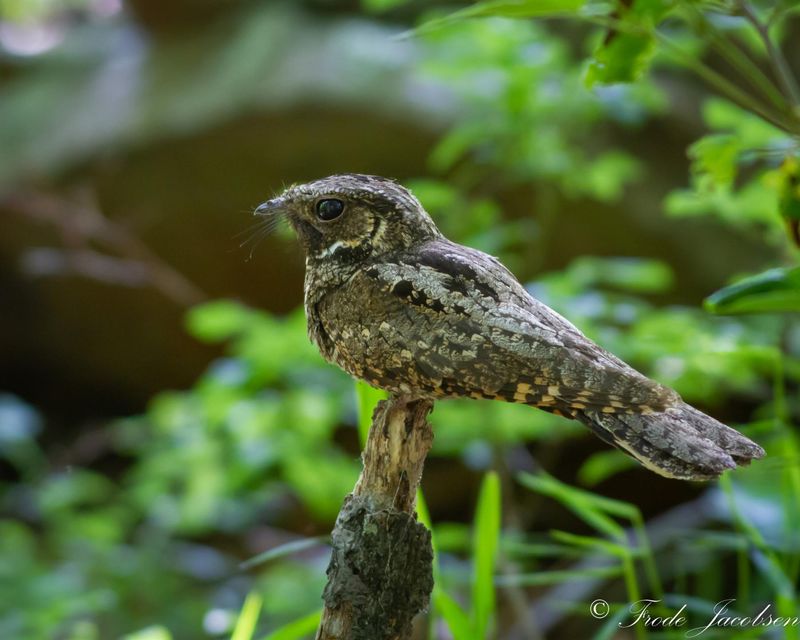
Hearing a whip-poor-will near your yard does not automatically mean the bird is living in your yard.
Pennsylvania Game Commission Wildlife Notes describe the species as associated with large forest tracts combined with scattered clearings, old fields, barrens, open woodlands, and second-growth vegetation.
A calling male may be using a forest edge, a gap created by past timbering, an adjacent neighbor’s property, or a wooded hillside several hundred yards away.
The habitat picture is genuinely more complex than “more trees” or “more clearing.” Whip-poor-wills need a mosaic, meaning forest cover for shelter and nesting combined with open patches that allow low, swooping flight while hunting insects.
Pennsylvania Game Commission habitat planning guidance notes that the species tends to be uncommon in dense, mature forest with a closed canopy and is more often associated with younger or more open woodland conditions.
But that does not mean your half-acre lot can replicate what the bird actually needs.
Here is where it gets tricky.
Creating an opening on a small residential property is not automatically helpful and can harm species that depend on large, unbroken forest.
Penn State Extension’s guidance on wildlife habitat management emphasizes that habitat manipulation at the wrong scale or in the wrong location can do more harm than good.
Removing mature trees, clearing brush, or cutting a forest edge specifically to attract one bird is not recommended without professional planning.
USGS findings on whip-poor-wills in the central Appalachians reinforce that the species operates at a landscape scale, meaning the mix of habitats across a broader area matters more than any single yard feature.
The call near your porch is a signal that suitable habitat exists somewhere in the surrounding landscape.
That is genuinely good news for the region, even if the bird is not roosting in your flower bed.
It Does Not Predict Rain Or Carry A Bad Omen
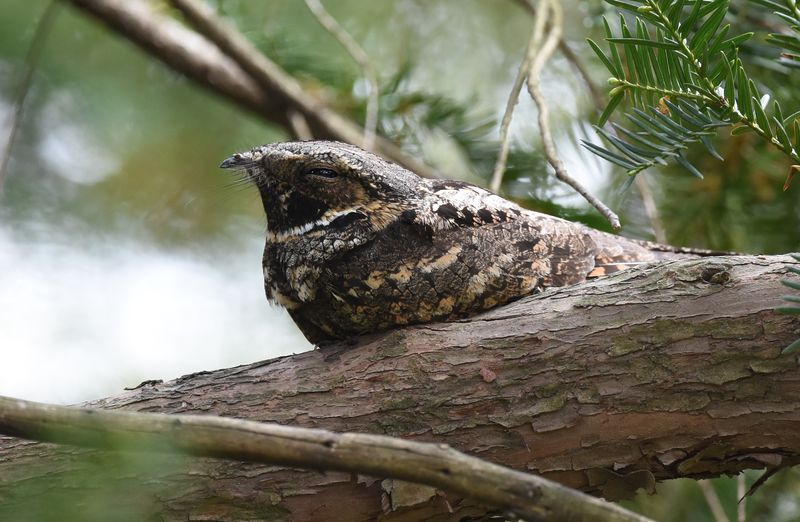
Old Pennsylvania folklore ties the whip-poor-will’s call to coming rain, approaching death, or a run of bad luck.
Those stories have been passed down through generations of rural families and are genuinely interesting as cultural history.
As weather forecasts, though, they do not hold up.
Research published in the Journal of Ornithology on weather-related bird calls found conflicting results when examining whether bird vocalizations reliably predict rain, and no source in the scientific literature establishes the Eastern Whip-poor-will’s call as a dependable forecast for any weather event.
The bird calls because it is a breeding male defending territory and advertising for a mate.
Rain, death, and bad luck are not part of that equation.
The call also does not prove that a nest exists on your property, that a breeding pair has formed, or that the bird will return next year.
Pennsylvania Bird Atlas guidance on breeding codes specifically separates possible, probable, and confirmed breeding evidence.
A singing male on its own counts as possible breeding at best.
Confirmed breeding requires a nest with eggs, dependent young, or adults carrying food to a specific location.
Before attaching any meaning to the sound, it is worth double-checking the identification.
Cornell’s comparison tools and recordings let you match the three-part whip-poor-will phrase against similar species.
A common nighthawk, a barred owl, or even a gray treefrog can create nighttime sounds that get misidentified in the dark.
Confirming the species first keeps you from building a story around the wrong caller entirely.
Quiet Observation Protects A Hidden Ground Nest
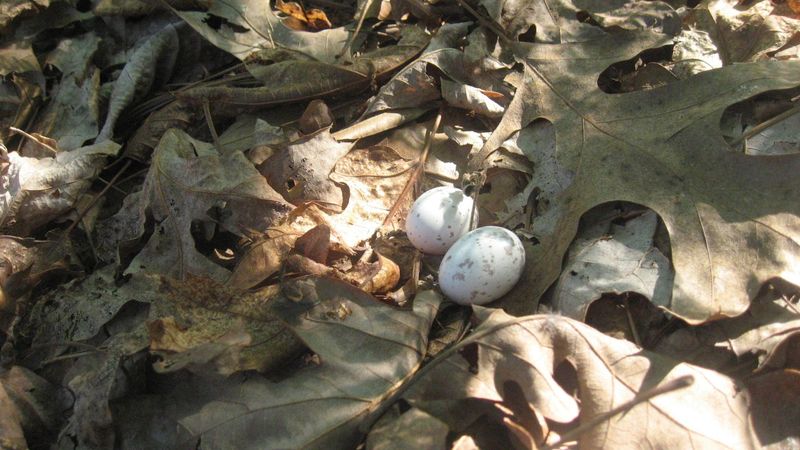
The best immediate response to a calling whip-poor-will near your home is to do almost nothing.
Sit on the porch, open a window, or stand at the tree line and listen.
The bird is not asking for help, and walking into the nearby woods at night to find it can cause real problems.
Audubon’s field guide for the Eastern Whip-poor-will explains that the species lays its eggs directly on leaf litter, usually in a shaded spot near a woodland edge or opening, with no conventional nest structure built around them.
The eggs and young chicks are extraordinarily camouflaged and nearly invisible against the forest floor.
A person walking through that area at night, even carefully, can trample a nest without ever seeing it.
Playing recorded calls to pull the bird closer is another action worth skipping.
The American Birding Association’s Code of Birding Ethics advises limiting playback and avoiding disturbance around nesting, feeding, and display sites, especially for sensitive or declining species.
Repeated playback can provoke unnecessary territorial responses and stress a bird that is already working hard through the breeding season.
Yard work deserves a second look during late spring and summer.
Research on nightjar breeding phenology underscores how tightly ground-nesting birds tie reproduction to specific conditions, and disturbance during that window carries real costs.
Avoid raking every leaf from a woodland edge, mowing a brushy patch you have not walked through carefully in daylight, or removing low brush along a shaded border.
If you suspect a bird may be using a corner of your property, leave that area alone from roughly late May through July.
The tidier yard can wait a few weeks, and the trade-off is genuinely worth it.
Use Low-Impact Steps Instead Of Major Yard Changes
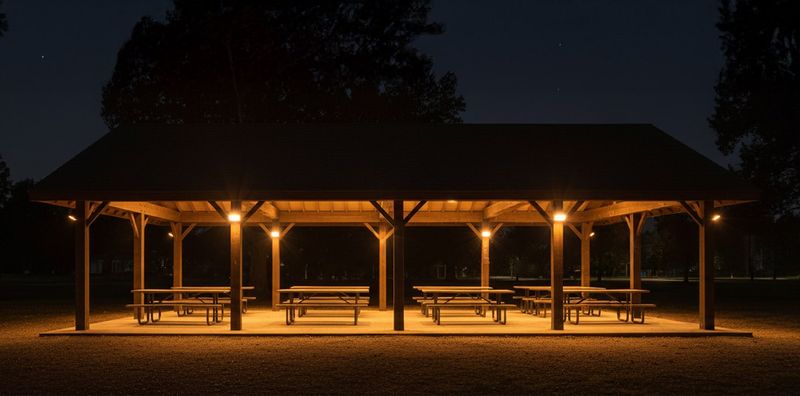
No single yard change guarantees a whip-poor-will will stay nearby, and anyone who tells you otherwise is oversimplifying a bird that operates across a much larger landscape than one property.
What you can do is take a few modest steps that support nighttime wildlife generally, without promising results you cannot deliver.
Outdoor lighting is a reasonable place to start.
The USDA Forest Service’s species review for the Eastern Whip-poor-will notes that artificial light can interfere with natural nighttime behavior in nightjars and related species.
Turn off decorative string lights and landscape uplighting when you do not need them, use motion sensors on fixtures that must stay functional, and shield any remaining lights so they point downward rather than into the tree canopy.
The Audubon Lights Out program recommends these same steps to reduce light pollution for migratory birds broadly.
A single porch light does not explain every local calling pattern, so treat lighting changes as a precautionary measure, not a proven species-specific fix.
Broad insecticide use is worth reconsidering on its own merits.
Whip-poor-wills eat night-flying moths, beetles, and other insects, and Pennsylvania Game Commission Wildlife Notes list prey decline among the pressures facing aerial insectivores statewide.
Skipping indiscriminate yard spraying during summer months removes less food from the nighttime food web.
That is not a guarantee the bird will remain, but it is a reasonable, low-effort choice.
Cats are worth mentioning plainly.
The Game Commission identifies feral and free-roaming cats as nest predators for ground-nesting species.
Keeping cats indoors from dusk through dawn protects the birds and actually keeps cats safer from cars, coyotes, and disease.
The ABA Code of Birding Ethics includes keeping cats indoors as a standard wildlife-friendly practice.
These are small habits, and none of them require tearing up your yard.
Record The Call Without Chasing The Bird
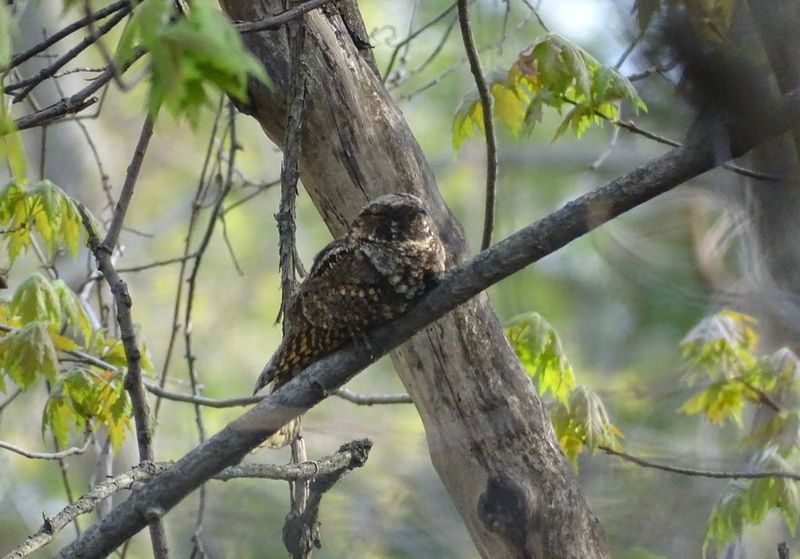
A calling whip-poor-will near your Pennsylvania home is actually a useful data point for researchers and atlas contributors who are trying to understand where the species still holds on.
You can contribute something real without leaving your porch.
Write down the date, your broad location such as the township or county, the approximate time, the weather conditions, whether the moon was visible, and roughly how long the calling continued.
Then submit that observation to eBird or check the Pennsylvania Bird Atlas for current reporting options.
The atlas began collecting breeding and overwintering records on January 1, 2024, with field work running through the end of 2028 and results continuing into 2029, so your observation fits directly into an active statewide effort.
The Pennsylvania Bird Atlas guidance on breeding codes walks you through how to categorize what you heard, whether it counts as possible, probable, or confirmed breeding activity.
A singing male heard on one night near a woodland edge would typically fall under possible breeding.
That is still worth reporting, because distribution data depend on observers who actually live near suitable habitat and happen to be awake at 11 p.m. on a June night.
Two things to avoid: do not walk toward the sound to get a closer look, and do not post the precise location of a suspected nest on social media or public mapping platforms.
Publicizing exact nest sites can draw curious visitors who disturb the bird without meaning to.
The ABA Code of Birding Ethics is clear on this point, recommending that observers protect sensitive locations from unnecessary attention.
The whip-poor-will calling outside your window is not a warning or a mystery.
It is a sign that somewhere in the landscape around your home, the right mix of darkness, cover, open air, and flying insects still exists.
That is worth noting, and worth protecting.