
Being A Plantaholic Is Not A Hobby, It Is The Cheapest Therapy Your Backyard Will Ever Give You
Follow us on Google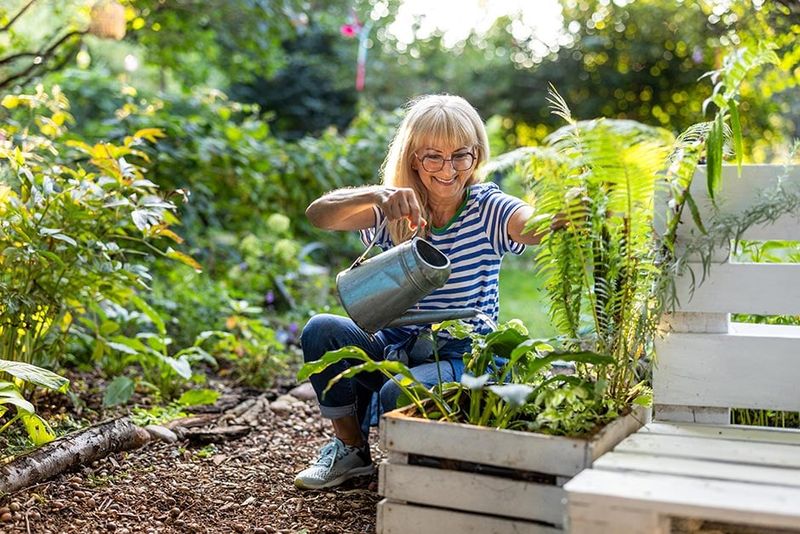
Plenty of people call themselves plantaholics half as a joke and half as a confession, because they know the feeling is real even if they can’t quite explain it.
Spending time around plants, whether that’s a backyard bed, a porch container, or a windowsill herb, can genuinely support your mood and help a stressful day feel a little more manageable.
The science behind that feeling is more interesting than the label suggests, and it comes with some honest limits worth knowing.
Understanding both sides helps you get more out of the time you already spend with your plants.
A Small Garden Can Support Wellbeing
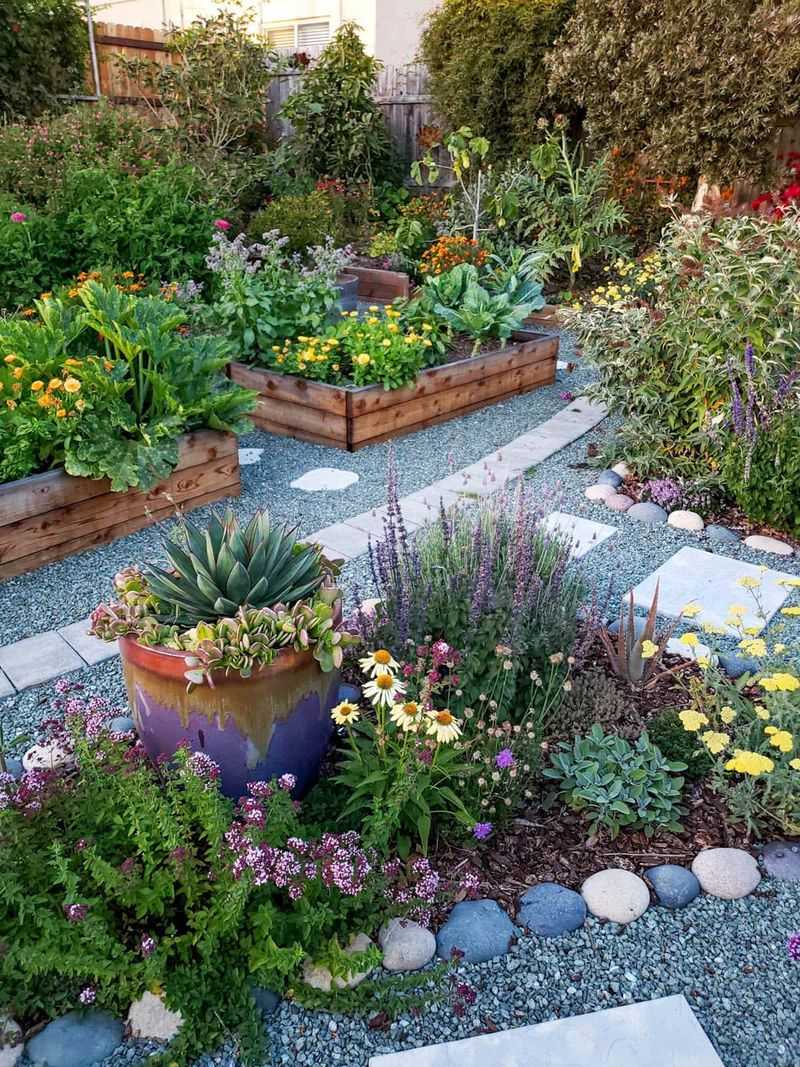
Calling a backyard garden “the cheapest therapy” is an emotionally honest thing to say.
Plenty of people reach for a watering can the way others reach for a walk or a cup of coffee, and the relief feels real.
But the phrase itself needs a small correction before it becomes genuinely useful: gardening is not formal therapy, and the research does not establish that it costs less than professional care.
What it does support is the idea that time around plants can function as a low-cost wellbeing practice, a supportive coping tool that fits into ordinary life without a prescription or a waiting list.
The evidence behind that claim is real, though it comes with boundaries worth knowing.
An umbrella review of gardening and horticultural research found positive associations between gardening, wellbeing, quality of life, and mental health across multiple studies and populations.
A separate systematic review and meta-analysis found improvements in psychological stress measures after horticultural interventions, though physiological outcomes like cortisol were less consistent between studies.
And a 2025 review of 17 studies on social and therapeutic horticulture found large effects for depression symptoms and moderate effects for anxiety, while also flagging high variation and frequent risk-of-bias concerns among the included trials.
The honest boundary is this: most of that research looks at structured, guided, group, or clinical programs, not a person watering tomatoes alone on a Tuesday evening.
Generalizing those results to ordinary self-directed backyard care requires some caution.
The benefits are associated with gardening-related activity, they are not guaranteed by it.
That distinction does not make your container garden less worthwhile, it just keeps the expectation honest.
Why Plant Care May Feel Restorative
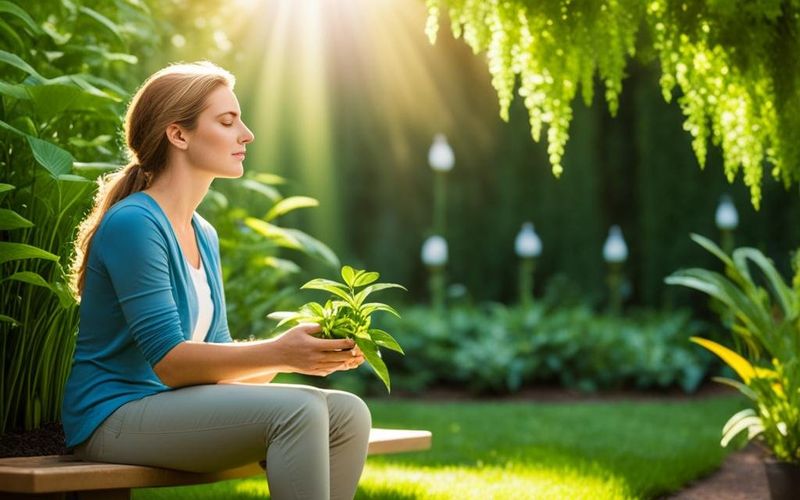
Something shifts when you step outside and start pulling dead leaves off a basil plant.
Your attention narrows, your breathing slows, and the inbox stops feeling urgent.
That shift is not accidental, and researchers have spent real time trying to understand what drives it.
An experimental study on gardening after an acute stressor found that participants who gardened reported improved mood and showed some reduction in stress-related responses compared with those who read indoors.
That finding supports a short-term restoration angle, the idea that plant care can help you come down from a hard moment faster than sitting still.
It does not establish that backyard gardening treats long-term depression or anxiety, and it should not be read that way.
What the research suggests more broadly is that several ordinary features of plant care may be working together at once.
Watering, pruning, deadheading, and harvesting herbs all involve gentle physical movement, which is good for mood in its own right.
They also demand a kind of sensory attention, noticing color, texture, smell, and moisture, that pulls focus away from rumination without requiring effort.
Add time outdoors, a predictable routine, the visible progress of a plant growing or a harvest coming in, and some mild problem-solving when something goes wrong, and you have a combination of inputs that many people find genuinely settling.
No single mechanism explains all of it.
Broader reviews of gardening and wellbeing note that the contributors likely include movement, nature exposure, routine, and social connection, especially in community or group settings.
The point is not that any one ingredient is magic.
It is that ordinary plant care quietly stacks several things that support mood, and that combination is worth understanding.
Try One Manageable Care Window
Knowing that plant care can support wellbeing is one thing.
Turning that knowledge into a habit that actually fits your life is another.
The gap between the two is usually not motivation, it is scope.
Many people start with ambitious plans and end up with a garden that feels like another item on the to-do list.
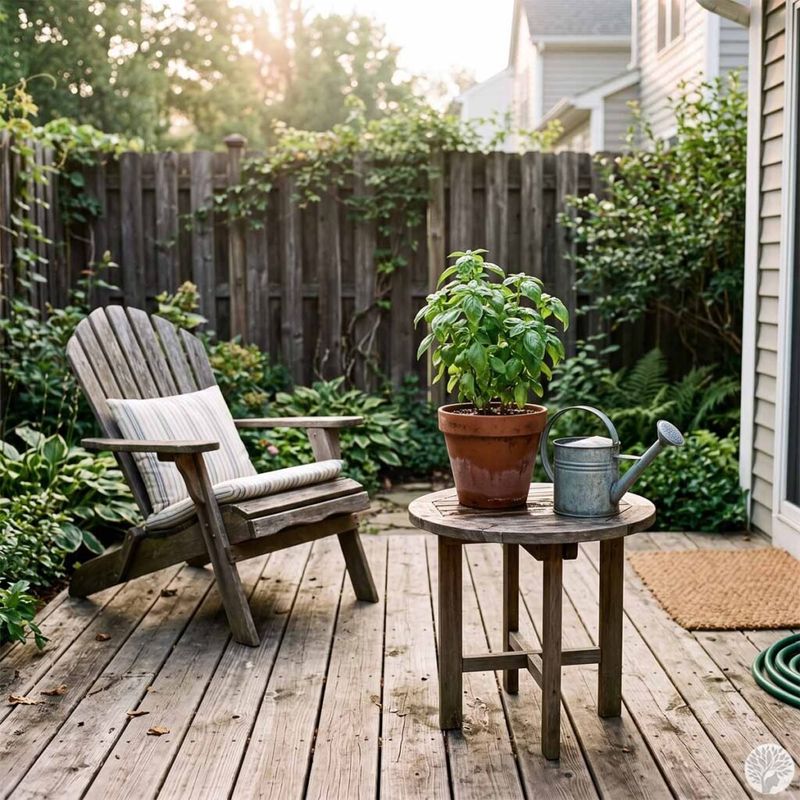
One practical way to close that gap is to set aside 10 to 20 minutes for low-pressure plant care and treat it as optional rather than obligatory.
Watering, deadheading spent flowers, harvesting a few herb sprigs, checking leaves for pests, or simply standing near your plants and noticing what has changed, any of those tasks counts.
Research on horticultural interventions and psychological stress supports the idea that engaged time with plants is associated with stress reduction, though that time frame is practical editorial guidance, not a clinically validated dose.
Think of it as a starting point, not a rule.
Some people prefer longer sessions on weekends.
Others find that indoor plant care, a few houseplants near a bright window, fits their schedule or mobility better than outdoor gardening.
Informal observation, just sitting near a container and watching a bee work through the flowers, can carry some of the same sensory and attentional benefits as active care.
The wider evidence base on social and therapeutic horticulture does not point to one correct style or duration as superior.
What matters more is whether the activity feels chosen, manageable, and worth repeating, not whether it follows a particular format.
A care window that you actually use twice a week is more useful than an elaborate routine that collapses after the first rainy weekend.
Start with whatever feels small enough to be easy.
Start Small With A Container
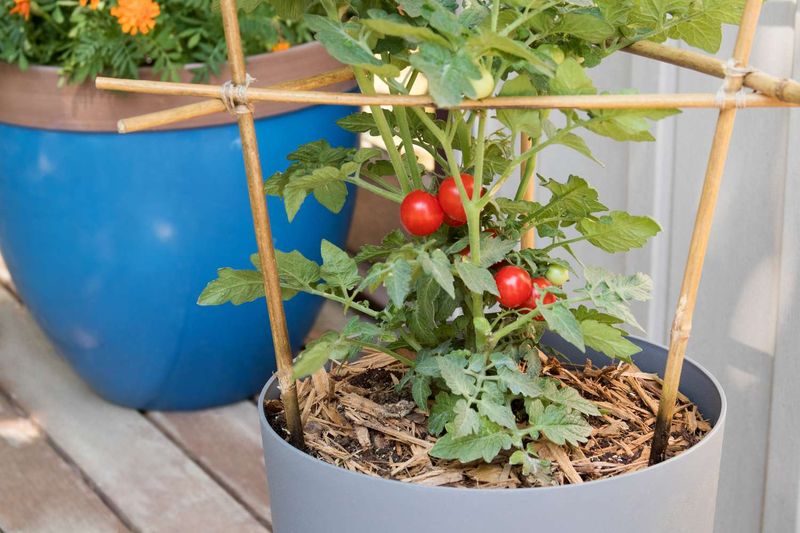
A single container with drainage holes is a completely legitimate place to start.
You do not need a raised bed, a tiller, or a weekend of heavy lifting to get the basic experience of growing something and watching it respond to your care.
Pick one container that holds at least a few gallons of soil, fill it with commercial potting mix rather than garden soil, which compacts and drains poorly in pots, and choose one plant suited to the light you actually have.
Oregon State University Extension advises that vegetables grown for fruit, like tomatoes (Solanum lycopersicum), peppers (Capsicum annuum), and beans (Phaseolus vulgaris), generally need 6 to 8 hours of direct sun.
A 10-inch pot suits many herbs, while tomatoes, peppers, and eggplant (Solanum melongena) do better in 5-gallon containers or larger.
Herbs like basil (Ocimum basilicum) or mint (Mentha spp.) are forgiving choices for a first container and reward regular harvesting.
Containers dry out faster than garden beds, especially when they sit on concrete or catch afternoon sun.
University of Minnesota Extension notes that container plants may need daily watering and, during hot weather, sometimes more than once per day.
Check the top inch of potting mix and water when it is dry, but avoid letting the pot sit in standing water, which can rot roots.
Their container gardening guidance also covers fertilizing, since potting mix nutrients wash out faster than garden soil nutrients do.
One more thing worth knowing before you plant: USDA hardiness zones describe average annual extreme minimum winter temperatures, not spring planting dates.
Knowing your zone tells you which perennials can survive your winters, not when your last frost falls.
For local frost dates and a plant list suited to your county, your state Cooperative Extension service is the most reliable free resource available.
Make The Space Easier To Use
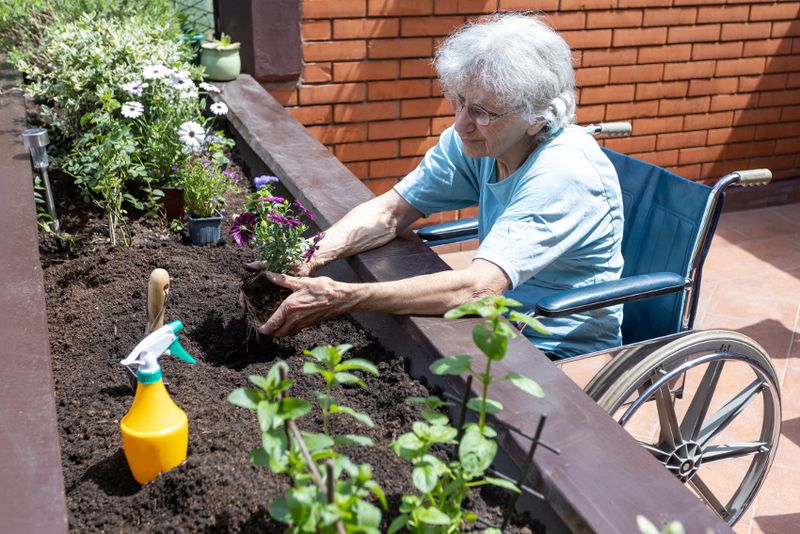
A garden that fits the person using it is far more likely to feel restorative than one that requires contorting, overheating, or pushing through pain.
The design details matter more than most gardening articles admit.
Raised beds set at a height that lets you work without bending deeply, containers placed on a surface you can reach without kneeling, wide paths that allow a chair or walker to pass, and a nearby seat where you can rest mid-task, these are practical changes that keep gardening accessible as energy, strength, or mobility shifts.
The American Horticultural Therapy Association identifies raised planting beds, containers, accessible paths, and sensory-oriented plant choices as design features of therapeutic gardens.
You do not need a professionally designed space to borrow those ideas for your own backyard.
Sensory-oriented plants, fragrant herbs like lavender (Lavandula angustifolia) or lemon thyme (Thymus citriodorus), soft-textured foliage, or plants with interesting seed heads, can add a layer of tactile and olfactory interest to a space without requiring any claim that a particular scent produces a predictable mental-health effect.
Choose them because you enjoy them, not because they are guaranteed to do something specific.
Gardening can also feel harder rather than calming, and that is worth naming plainly.
Allergies, asthma, heat, biting insects, grief tied to a garden a loved one kept, perfectionism about plant appearance, financial pressure from replacing failed plants, or the frustration of repeated crop losses can all turn a supposedly restorative activity into a source of stress.
MedlinePlus notes that hot, dry, windy days can increase airborne pollen, which matters for people managing seasonal allergies or asthma.
Shorter sessions in cooler parts of the day, shade cloth, gloves, indoor plants, or delegating heavy work to someone else are all proportional adaptations worth trying before abandoning the idea entirely.
Prevent The Garden From Becoming A Hazard
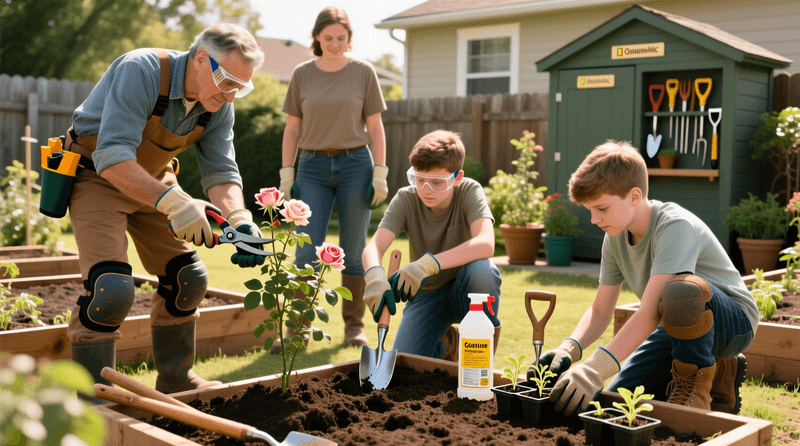
Most of what makes a garden feel good, the dirt, the insects, the open air, the chemical sprays people reach for when pests appear, also carries risks that are easy to underestimate when you are focused on the restorative side of the hobby.
Soil contamination is the one that catches people off guard most often.
Older urban lots, properties near busy roads, homes with peeling exterior paint from before 1978, and sites with any industrial history may have elevated lead levels in the soil.
CDC advises covering bare contaminated soil and using containers with clean potting mix rather than growing food directly in potentially affected ground.
ATSDR notes that some communities offer soil-screening events that test residential soil for lead at no cost, which is worth checking before you plant edibles in a lot you are unsure about.
Pesticides deserve the same honest look.
Reaching for a spray when you spot aphids or whiteflies is understandable, but botanical and homemade products can still harm people, pets, beneficial insects, and pollinators.
The word “organic” does not mean harmless.
Prevention, removing affected leaves by hand, improving air circulation, choosing resistant plant varieties, is the first layer of pest management.
When a product becomes necessary, EPA guidance on pollinator protection recommends reading and following the label, avoiding applications to blooming plants when pollinators are present, and choosing timing and methods that reduce exposure to beneficial insects.
Pollen is the third hazard that deserves a brief mention.
Hot, dry, and windy days push airborne pollen levels higher, which matters for anyone managing seasonal allergies or asthma.
Gardening in the early morning or after rain, wearing a light mask during high-pollen periods, and rinsing off after outdoor sessions are simple adjustments that keep the activity accessible without requiring you to give it up entirely.
Know When Gardening Is Not Therapy
The word “therapy” gets used loosely in everyday conversation, and that is usually fine.
But when it comes to mental health, the loose version can quietly discourage people from getting the kind of care that actually matches what they are dealing with.
Formal horticultural therapy is a specific practice.
The American Horticultural Therapy Association defines horticultural therapy as horticultural activity facilitated by a registered horticultural therapist within an established treatment, rehabilitation, or vocational plan.
That is not what happens when you water your tomatoes before work.
Therapeutic horticulture, a related but less formal practice, also involves professional facilitation and defined participant needs.
Ordinary backyard care is neither of those things, and calling it therapy, even affectionately, can blur a line that matters.
That does not mean your garden has no value for your mental health.
It means the value it offers sits alongside professional care rather than replacing it.
NIMH describes depression treatment as typically involving psychotherapy, medication, or both, depending on a person’s individual needs and medical situation.
A container of herbs on the porch does not substitute for that.
It can complement it, give you something to tend during a hard week, offer a small sense of routine and progress, but it cannot replace a therapist, a psychiatrist, or a crisis line.
If you or someone you know is in an urgent behavioral-health crisis in the United States, SAMHSA directs people to call or text 988, the Suicide and Crisis Lifeline, which connects callers to trained counselors around the clock.
Keeping a garden is a good thing.
Knowing when to reach for more support is also a good thing.
Let The Garden Be A Support, Not A Promise
The honest version of the plantaholic’s claim is quieter than the bumper-sticker version, but it holds up better under pressure.
The research on gardening and mental health supports potential benefits rather than a universal outcome.
Some people find plant care genuinely settling.
Others find it frustrating, expensive, or physically demanding in ways that outweigh the payoff.
Both experiences are real, and neither makes the other person wrong.
What the broader evidence on gardening and wellbeing suggests is that the activity works best when it feels chosen and manageable rather than obligatory or performance-driven.
A plant that dies is not a verdict on your mental health.
A week without watering is not a failure.
The garden is not a test.
If you want to try plant care as a coping tool, pick one affordable activity that your body can handle comfortably, a container on the porch, a houseplant near a window, ten minutes of deadheading on a Wednesday afternoon, and notice over a few weeks whether it helps.
That is it.
No elaborate system required.
Keep the boundary from the previous section in mind as you go.
Formal horticultural therapy involves professional facilitation and established treatment goals.
Your backyard does not need to meet that standard to be worth your time.
And if you are working with a therapist, a psychiatrist, or a prescribing doctor, those relationships remain the foundation of your care.
The garden gets to be something quieter: a place where attention lands softly, where progress is visible, and where the stakes, at least for one small hour, are just a plant and some water.