
Native Texas Ground Covers That Outlast St. Augustine When The Heat Dome Settles In
Follow us on Google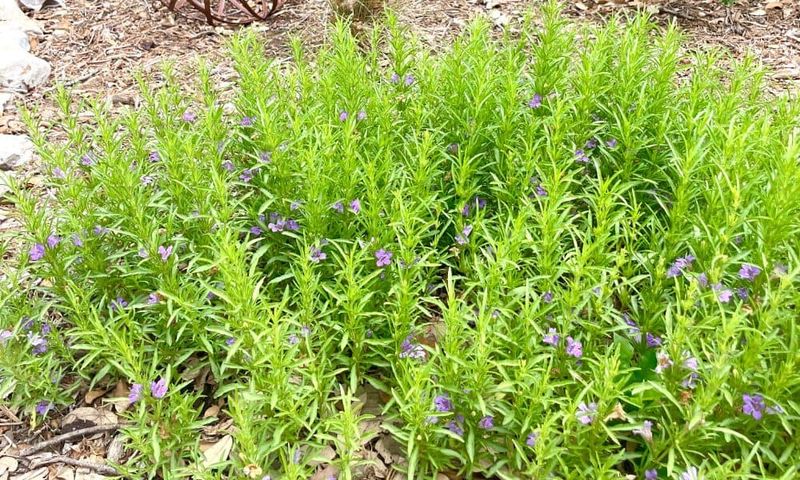
You step outside before breakfast and the patio already feels warm, the air thick enough to lean on.
The news just called it another heat dome, promising weeks of triple-digit days, and your St. Augustine lawn is already going blue-gray at the edges.
You know what comes next, more water than the restrictions allow and a brown lawn anyway.
But some native ground covers genuinely shrug off this heat, holding green while the grass gives up.
Here are nine tough Texas natives ready to take the lawn’s place and outlast it.
1. Frogfruit Covers Ground Like No Other
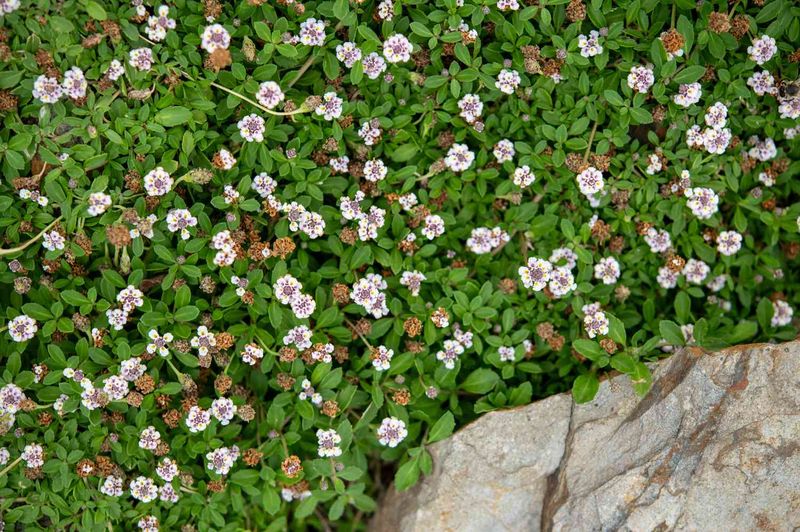
When the sun beats down and your lawn sighs under the strain, frogfruit (Phyla nodiflora) is out there thriving.
This low-growing native spreads fast, forming a dense mat of small green leaves dotted with tiny white and purple flowers from spring into fall.
It fits nearly every Texas region, from the humid Gulf Coast to drier Central and West Texas.
Here is the turn.
St. Augustine is a warm-season grass that loves heat above 80F, but only when it gets steady water.
In prolonged heat with shallow or compacted soil, its roots cannot keep up with what the broad blades lose to evaporation.
Frogfruit stores moisture in its stems and keeps going.
Plant plugs 12 to 18 inches apart for faster coverage.
For the first two weeks, water deeply every two days when highs top 75F, soaking the soil to about 4 inches.
Then drop to once a week for a month, only if the top inch is dry.
Once established, around three months in, it needs water only during droughts longer than 14 days.
A half-inch soak does it.
It even handles light foot traffic and pulls in butterflies, so your yard feels alive while it stays green.
2. Silver Ponyfoot Shines In The Scorching Sun
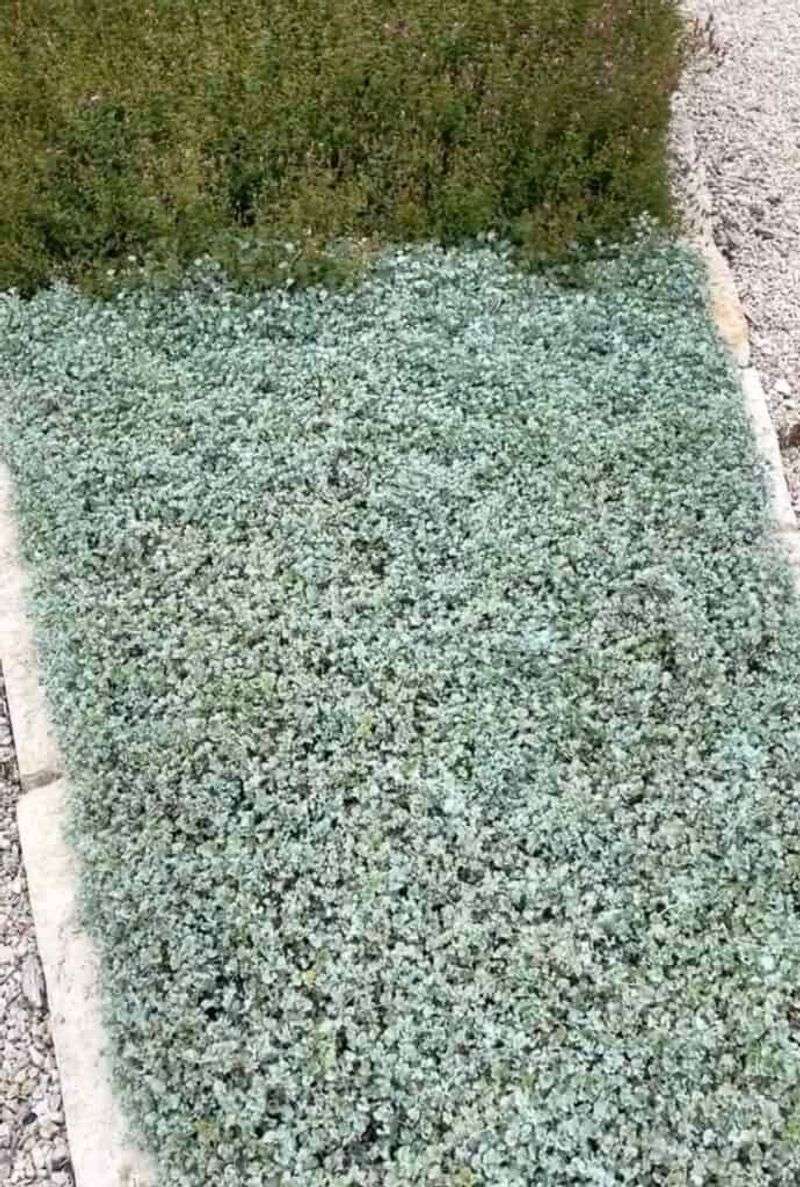
Picture a low carpet of shimmering silver thriving where St. Augustine would just burn out.
Silver ponyfoot (Dichondra argentea) genuinely embraces the heat, trailing into a dense silvery-gray mat with a metallic sheen in full sun.
It stays low, 1 to 5 inches tall, but spreads 2 to 5 feet through its stolons.
And it stays evergreen in mild Texas winters.
This one is built for the arid rocky ground of West Texas, yet it adapts statewide, even in Central Texas gardens.
St. Augustine sulks in alkaline, limestone-derived soils common across Texas.
Silver ponyfoot forgives far more, asking only for good drainage.
Do not overwater it, soggy roots are its one weakness.
Plant it in spring after the last freeze and give it room to spread.
Once its roots take hold, it often lives on rainfall alone.
During an extreme dry stretch, one deep watering keeps it looking sharp.
It also dodges the chinch bugs and diseases that plague stressed St. Augustine, and it spills beautifully over rock walls for erosion control.
3. Horseherb Saves Shady Spots From Summer Scorch
Here is where it gets tricky.
You have those shady spots under live oaks where St. Augustine just gives up the ghost.
It has some shade tolerance, sure, but in deep shade it thins out and disappears.
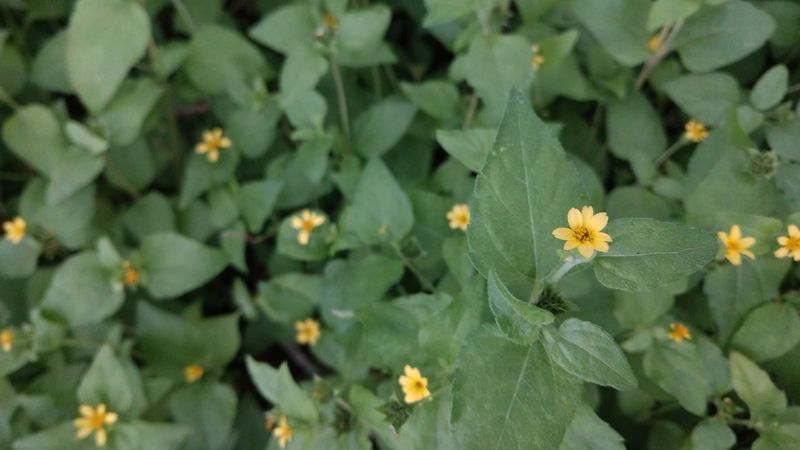
Horseherb (Calyptocarpus vialis), also called straggler daisy, steps into exactly that gap.
It forms a dense, bright green mat of small leaves with tiny yellow daisy flowers from spring through fall, and it is a favorite turf substitute in shaded yards across Central and South Texas.
It handles heavy blackland clay and limestone soils as long as drainage stays moderate.
In full sun during extreme heat and drought, it may go summer dormant and brown out until cooler, wetter weather returns.
But in partial to full shade, it generally stays green year-round.
Plant plugs 12 to 18 inches apart.
Water every other week that first season, then let it ride on rainfall once established, especially in shade.
Mowed, it stays under 4 inches, unmown it reaches 6 to 12 inches for a soft look.
It colonizes by stolons, filling bare patches, and takes moderate foot traffic where kids and pets roam.
4. Gregg’s Mistflower Brings Beauty And Toughness
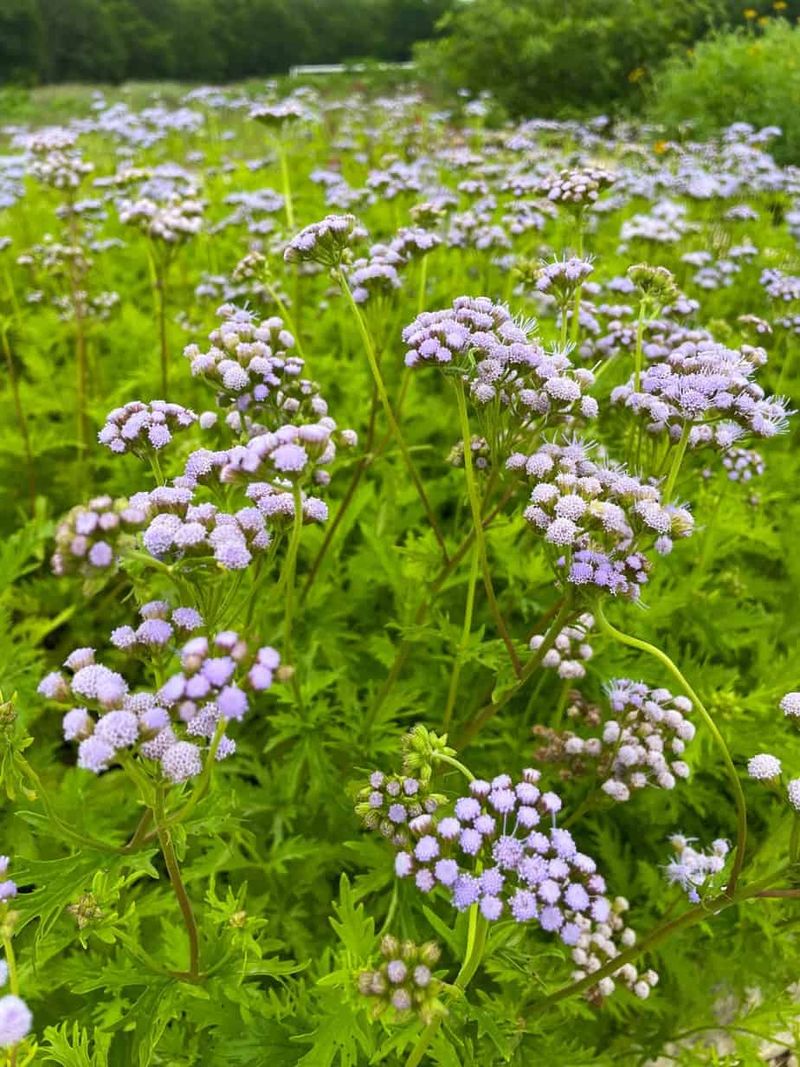
You might not picture a ground cover with a burst of powder-blue flowers when you think heat-proof, but Gregg’s mistflower (Conoclinium greggii) is exactly that.
This Central and West Texas native thrives in hot, dry spots and shines in xeriscaping.
It spreads by rhizomes into a mounded groundcover in full sun to part shade.
Its misty blue flower clusters appear from late summer into fall and pull in a flurry of butterflies, Queens especially.
During the fall monarch migration your yard becomes a fuel stop.
Once established, it is genuinely drought tolerant, happy in lean, well-drained soils including the shallow alkaline caliche of the Hill Country.
St. Augustine, by contrast, wants 1.5 to 2 inches of water a week in summer just to look decent.
Mistflower needs medium moisture only while getting started, then prefers hot and dry.
Give plants space, they reach 12 to 18 inches tall and 24 inches wide.
Plant in groupings for impact.
Root hardy to 0F, they bounce back after a hard freeze.
They can spread eagerly with regular water, so divide every two years to keep them in bounds, and prune lightly in early spring for more blooms.
5. Texas Sedge Offers A Soft, Green Alternative
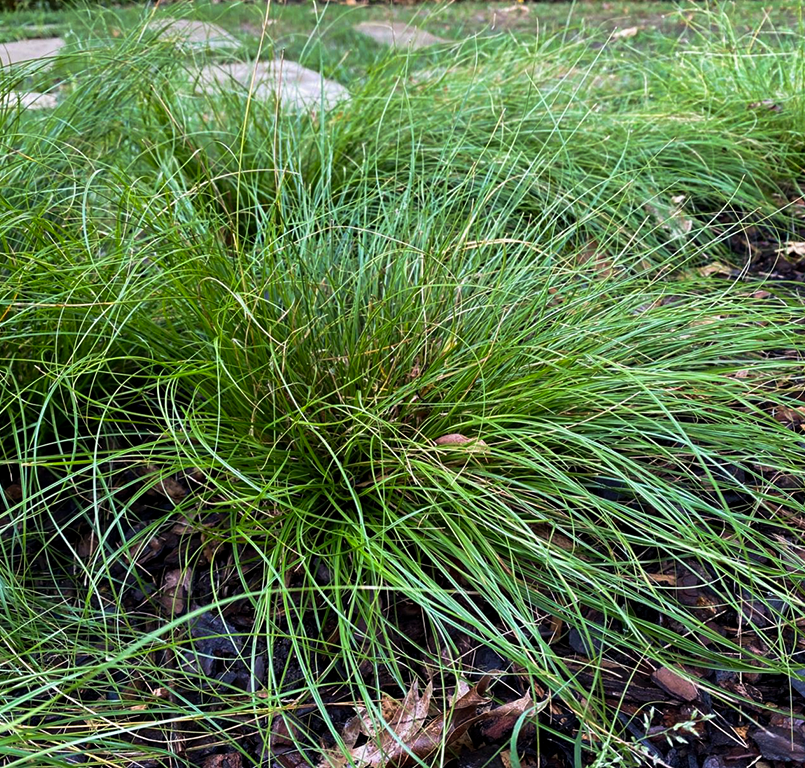
Sometimes you just want something that looks like grass without acting like high-maintenance St. Augustine.
Texas sedge (Carex texensis) gives you that soft green carpet even under the heat dome.
It is a cool-season perennial, growing most in milder weather, yet remarkably heat and drought tolerant once established.
And it handles cold better than St. Augustine, which takes frost damage in North and West Texas, so sedge works across more of the state.
It forms clumps that spread by rhizomes into continuous cover, and it fills those dry, shady corners where grass simply refuses.
Full sun works too with a little more moisture.
Its tolerance of sandy woodlands makes it a natural for East Texas acidic soils as well as Central Texas.
Plant plugs and let them knit together.
It starts slow, but patience pays with a resilient cover.
Established, it often lives on rainfall alone.
For a turf look, mow a few times a year on a high setting, at least 4 inches, far less than St. Augustine’s weekly summer cut.
It is deer resistant and lends a calm, fine texture.
6. Sedum Nuttallianum Handles Rock And Caliche
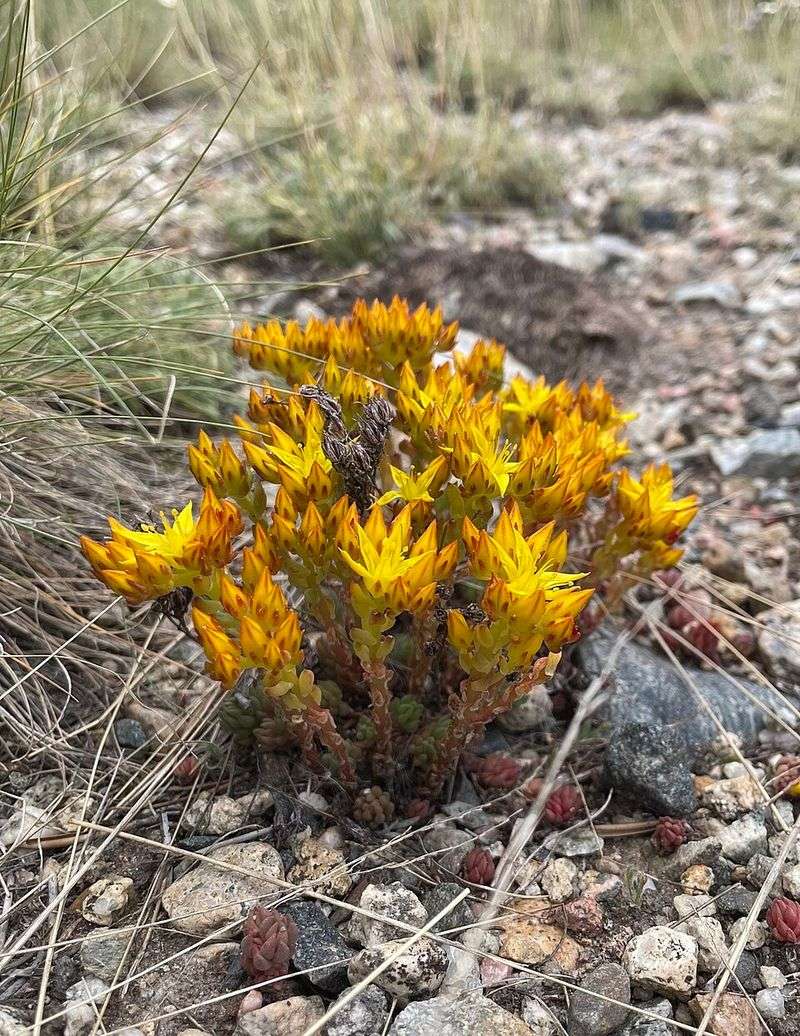
Blunt truth.
Some corners of a Texas yard are basically rock with a dusting of dirt on top, and nothing turf-like survives there.
Nuttall’s sedum (Sedum nuttallianum) actually prefers that misery.
A tiny native succulent, it hugs the ground at 2 to 4 inches, its fleshy leaves storing water like a canteen.
In spring it lights up with small yellow star-shaped flowers that carpet gravelly ground where St. Augustine would not even root.
It loves the shallow alkaline caliche of the Hill Country and West Texas, thriving in cracks between stones and along dry edges.
Give it sharp drainage and full sun.
Standing water is its enemy, so it is one to keep away from irrigated beds.
Plant small divisions in spring, spacing them 6 to 8 inches apart, and press them gently into rocky soil.
Water lightly every week or so for the first month, then step back.
Once settled, it survives long dry stretches on almost nothing, holding green while the thermometer sits above 100F.
It is a low, tough patch-filler for the spots you had written off entirely.
7. Snake Herb Threads Through The Toughest Heat
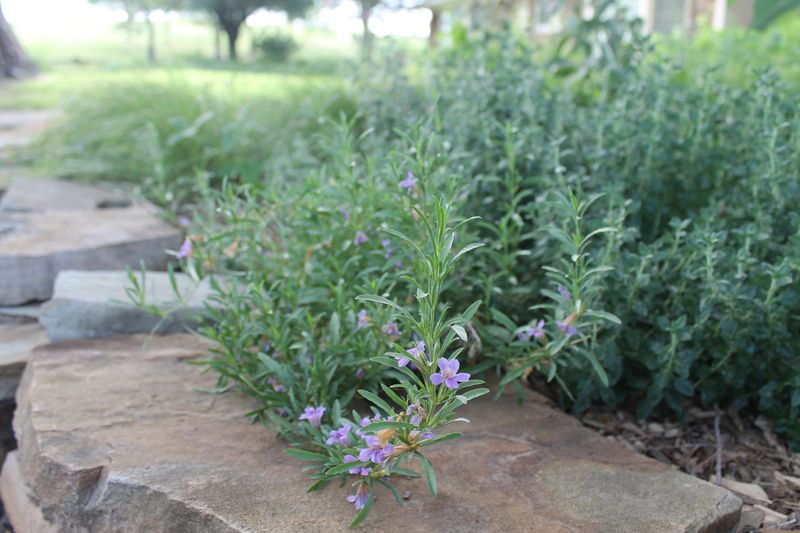
Snake herb (Dyschoriste linearis) sounds intimidating, but it is a quiet, well-behaved native that laughs at drought.
It creeps low and threads across dry ground, sending up small trumpet-shaped flowers in soft blue-purple through the warm months.
Native across Central and South Texas, it settles into thin, rocky, alkaline soils and full sun without complaint.
While St. Augustine leans on humidity and steady water, snake herb runs lean, spreading by underground stems into a loose green mat only 6 to 10 inches tall.
It earns its keep in the fillers between larger plants, softening the gaps in a xeriscape bed.
Bees and small butterflies work its blooms, adding a hum of movement to a corner that used to sit lifeless in July.
Set plants about 12 inches apart in spring.
Water weekly for the first three to four weeks to settle the roots, then let rainfall carry it.
Once established, it tolerates dry spells beyond two weeks and daytime highs well over 95F.
It stays modest, never grabby, and it fills space that grass abandons the moment the water gets scarce.
8. Wooly Stemodia Loves West Texas Grit
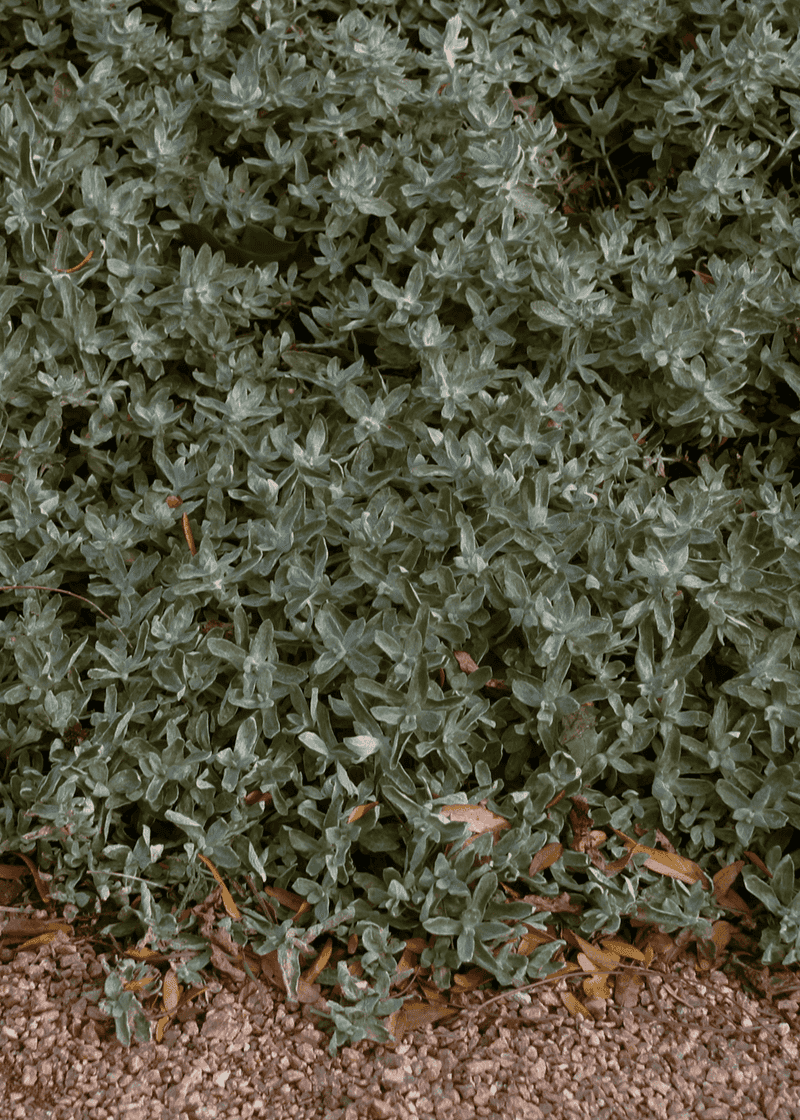
Down in the far southern and western reaches of Texas grows a soft silver mat that most people walk right past.
Wooly stemodia (Stemodia lanata) is a fuzzy, gray-green ground cover built for the toughest, driest, sandiest ground the state can throw at it.
Its woolly leaves are covered in fine hairs that reflect sun and trap what little moisture floats by, a clever trick that keeps it cool while everything else fries.
It stays around 3 to 6 inches tall and spreads outward into a dense, textured carpet.
This one is a South Texas and Gulf Coast favorite, and it handles sandy, well-drained soil beautifully.
It wants full sun and hates wet feet, so it is not the pick for heavy clay that holds water.
Plant it in spring, spacing plugs 12 to 18 inches apart for a solid fill within a season.
Water twice a week for the first two to three weeks, soaking to about 3 inches, then wean it off.
Established plants coast through 100F-plus days on rain alone.
Its silvery color plays off greens and blooms nearby, giving a stressed yard a cool, calm shimmer.
9. What Else Actually Helps Keep Your Yard Alive
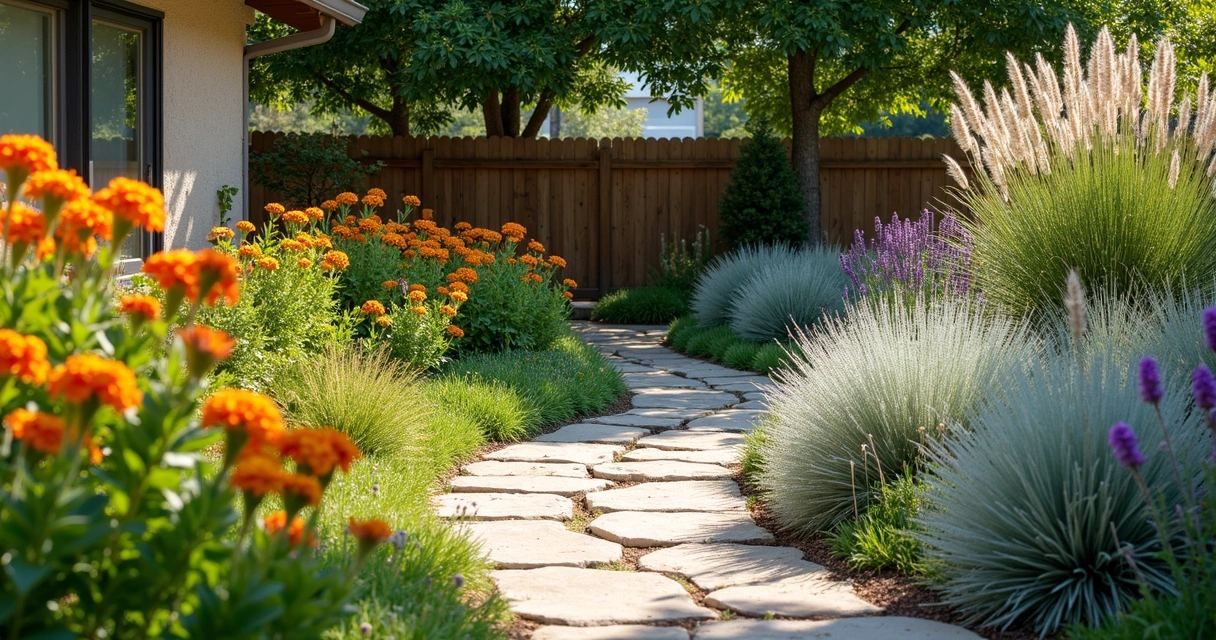
Choosing native ground covers is a smart move, but they are one layer in a bigger heat-beating plan.
Even tough plants appreciate good soil prep, so work a layer of organic compost in before planting, whether you garden in blackland clay or sandy loam.
Compost helps sandy soil hold moisture and helps heavy clay drain, giving roots a fairer shot.
A 2-inch layer of mulch, like shredded native cedar, keeps soil cooler and cuts evaporation so water lingers longer where it counts.
Texas A&M AgriLife Extension has long pointed gardeners toward native and adapted plants paired with sound soil practices for exactly this reason.
And let us be honest, no plant is a magic solution.
During a brutal dome, when highs sit above 100F for days with no rain, even natives can look tired.
Their gift is bouncing back, something demanding St. Augustine rarely manages.
By leaning on these natives you are gardening with the Texas climate instead of fighting it.
You genuinely get to enjoy the porch evening and the cookout without dreading the water bill or staring at a crispy brown lawn.
That is a yard that finally works as hard as you do.