
The Florida Yard Changes That Bring Butterflies Back After Years Of An Empty Garden
Follow us on Google
You step onto the back porch on a warm Florida morning, coffee in hand, and scan the flower beds you planted two seasons ago.
The blooms are doing fine, but the butterflies are not showing up the way you hoped.
Most Florida gardeners run into this exact wall, and the reason has less to do with luck than with one specific habitat gap.
The good news is that the fix is practical, affordable, and something you can start this weekend.
The Missing Resource Is A Caterpillar Host Plant
Flowers feed adults passing through, but they do not give a female butterfly a reason to stay.
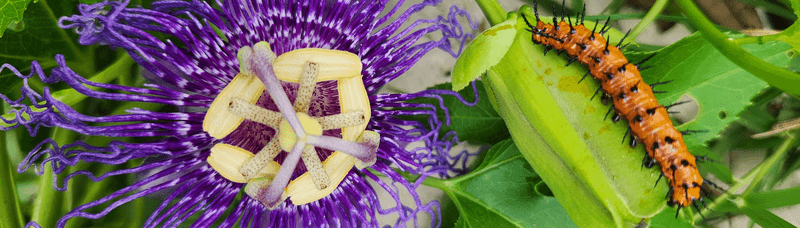
What actually keeps gulf fritillaries and zebra longwings coming back is a plant where they can lay eggs and where the caterpillars can eat and grow.
Without that one resource, your yard is essentially a rest stop, not a home.
For both of these Florida butterflies, that resource is a native passionvine.
UF/IFAS butterfly gardening guidance identifies purple passionflower, Passiflora incarnata, and corkystem passionflower, Passiflora suberosa, as host plants for both gulf fritillaries and zebra longwings.
The caterpillars of both species need these vines to develop, full stop.
A yard with only nectar flowers can attract a passing adult, but a yard with a passionvine can also become a place where eggs are laid and the next generation gets started.
Give the vine something to climb.
A fence, trellis, arbor, or sturdy wire support all work well.
UF/IFAS Gardening Solutions notes that passionflower vines spread aggressively, so plan for their reach before you plant.
They are not a tidy little accent shrub; they want to run, and giving them a defined structure keeps them manageable.
Adding a native passionvine improves your yard’s usefulness to these butterflies in a real, measurable way.
It does not guarantee a visit, because nearby populations, weather, season, and landscape connectivity all play a role too.
But Florida butterfly garden research is clear that host plants are the change most likely to shift your yard from a place butterflies pass over to a place they use.
That is a meaningful difference.
Build A Yard That Feeds Adults And Larvae
A passionvine handles the larval side of the equation, but adult butterflies still need food to fuel their daily activity.
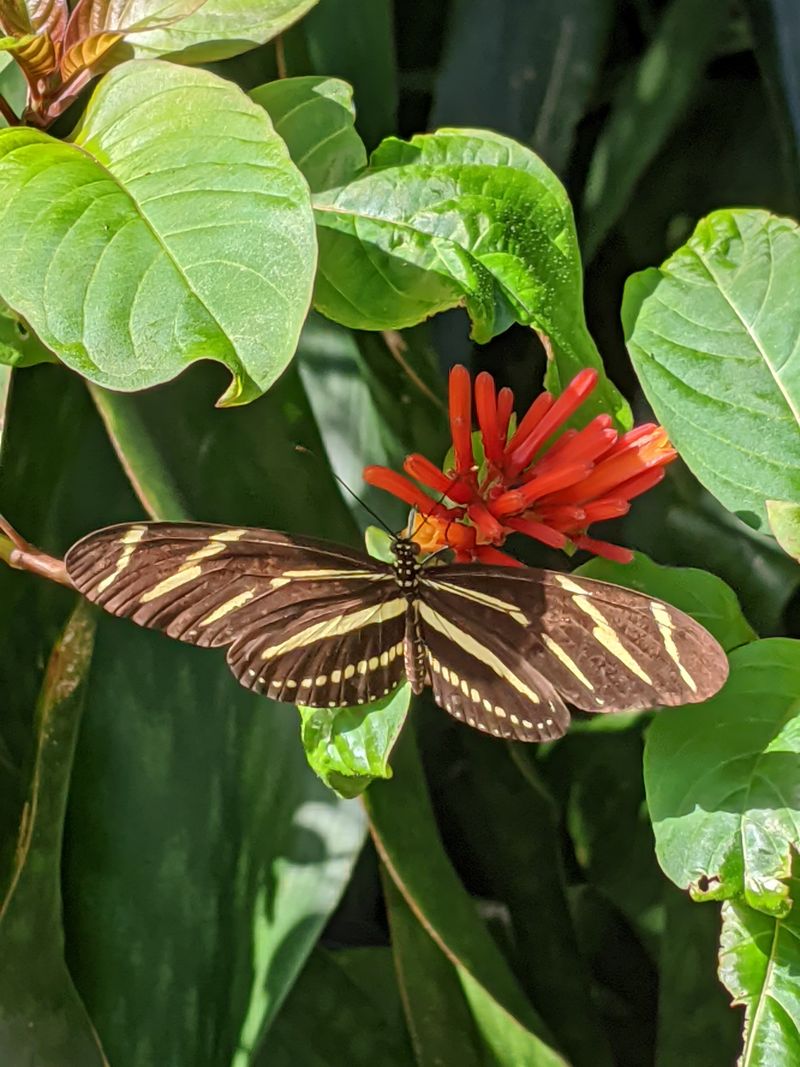
Gulf fritillaries and zebra longwings both feed on flower nectar, and zebra longwings go a step further by collecting pollen as well, which gives them a longer lifespan than most Florida butterflies.
A yard with only one or two bloom types, or with flowers that all fade at the same time, leaves gaps that adults cannot bridge.
UF/IFAS Panhandle gardening guidance lists lantana, verbena, firebush (Hamelia patens), and heliotrope as nectar favorites for zebra longwings.
Firebush, blanket flower (Gaillardia species), sage, pentas, blazing star, and yarrow round out a solid supporting cast for gulf fritillaries and other visitors.
No single plant on that list is a guarantee, so variety is the actual strategy.
Think about succession when you choose your plants.
General butterfly garden guidance recommends keeping something in bloom throughout the season rather than concentrating color in one short window.
In Florida that principle is especially useful because the growing season stretches well beyond what northern states experience, though bloom timing still shifts by region and plant variety.
A North Florida yard and a South Florida yard will not run on the same schedule, so check locally when your chosen plants typically peak.
The fuller picture here is that a yard with both host plants and a rotating set of nectar sources gives adult butterflies more reasons to linger and more chances to find the passionvine.
That connection between food and host plant is what turns a flower bed into something that can genuinely support repeat visits.
Choose A Passionvine That Fits Your Site
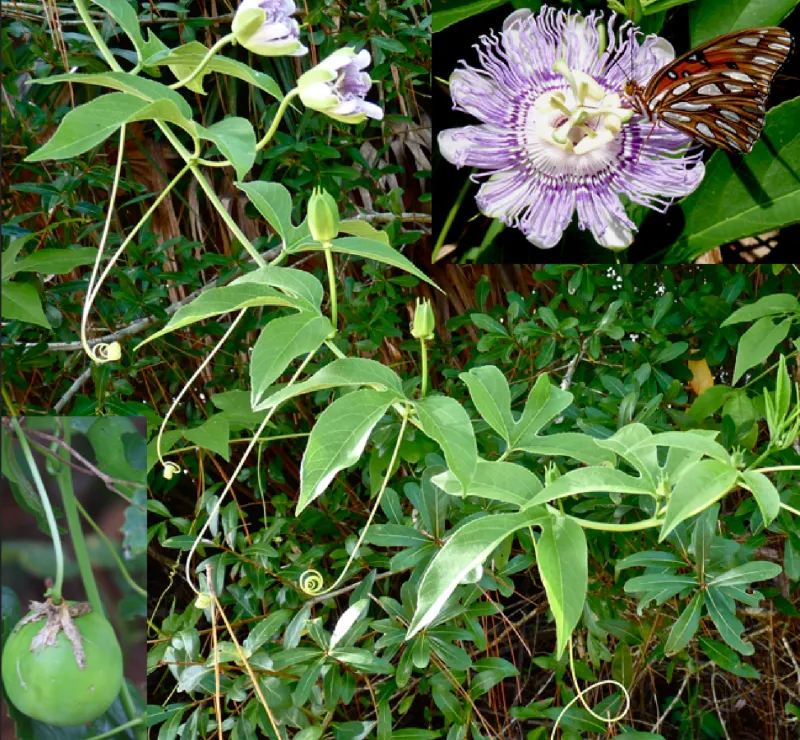
Walking into a nursery and asking for passionflower can get you into trouble fast.
The label on the pot might say passionflower, but the species underneath that label matters a great deal in Florida.
Some passionflower species have become invasive here, and planting the wrong one does not help butterflies and can actually create a new problem for the landscape around you.
Stick with the two native choices that UF/IFAS supports for gulf fritillary and zebra longwing habitat.
Purple passionflower, Passiflora incarnata, is native to Florida and hardy across approximately USDA zones 7B through 11, though local freezes and microclimates can still damage or kill it in colder parts of the state.
Corkystem passionflower, Passiflora suberosa, is another Florida-native option and tends to be smaller and more shade-tolerant than its purple-flowered relative.
UF/IFAS Gardening Solutions confirms that passionflower performs best in full sun but can tolerate some shade, and that the vines need room because they spread vigorously.
Two species to avoid are Passiflora biflora and Passiflora foetida.
UF/IFAS invasive plant guidance identifies Passiflora biflora as a Florida invasive-category plant, and Passiflora foetida has become invasive in parts of South Florida.
Buying by scientific name from a reputable native-plant nursery is the safest move.
Do not rely on a common name alone.
North Florida gardeners should also plan for the possibility of a hard freeze knocking back the vine, especially in the Panhandle where temperatures occasionally dip well below freezing for several nights in a row.
The roots of Passiflora incarnata often survive and resprout, but above-ground growth can be lost.
For site-specific questions about soil drainage, microclimate, and regional performance, your local UF/IFAS Extension office is the most reliable place to check.
Give Gulf Fritillaries Sun And Zebra Longwings Shelter
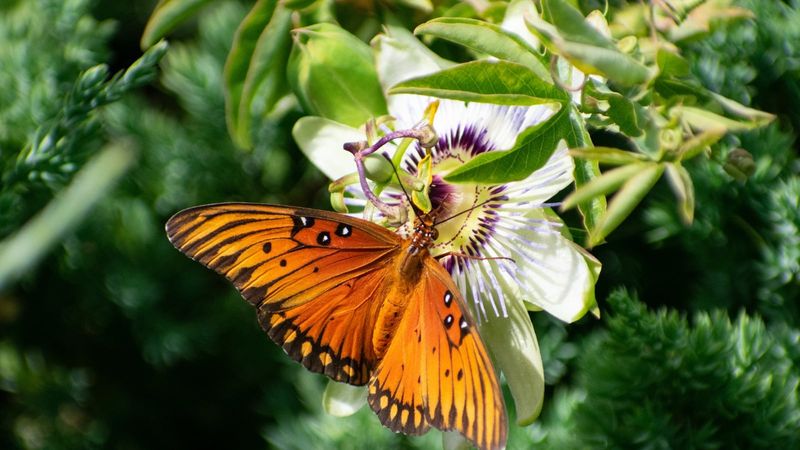
Here is where it gets interesting.
Gulf fritillaries and zebra longwings do not have identical habitat preferences, and a yard designed only for one of them may underserve the other.
Getting both species comfortable in the same space means thinking in zones rather than one flat, uniform planting.
UF/IFAS butterfly gardening research describes gulf fritillaries as associated with open, sunny areas and passionvines, while zebra longwings are linked to woodlands, forest margins, gardens, and partly shaded locations.
A completely exposed yard baking in full Florida sun may work well for gulf fritillaries but offer little of the sheltered, woodland-edge character that zebra longwings favor.
A practical way to address both is to place your passionvine in the sunniest, most open part of the yard for gulf fritillaries, then use existing trees, a hedge, a stand of shrubs, or even a tall fence line to create a partly shaded transition zone nearby.
UF/IFAS Polk County Extension notes that increasing structural diversity in a yard, meaning multiple plant layers and varied light conditions, supports a broader range of butterfly species.
You do not need a forest; a few taller native shrubs or a small understory tree near the vine can create enough of a sheltered edge to matter.
Shelter from strong wind and heavy rain also makes the whole habitat more usable.
Penn State Extension butterfly garden guidance recommends a sunny location protected from strong wind, with surrounding vegetation acting as a natural buffer.
Butterflies are warm-blooded fliers in a practical sense; they need warmth to move and feed, and a yard that turns into a wind tunnel during afternoon storms gives them little reason to stay.
This is guidance based on observed habitat preferences, not a formula that guarantees colonization, but the logic is sound and the adjustment is easy to make.
Add A Damp Spot And Water Plants Carefully
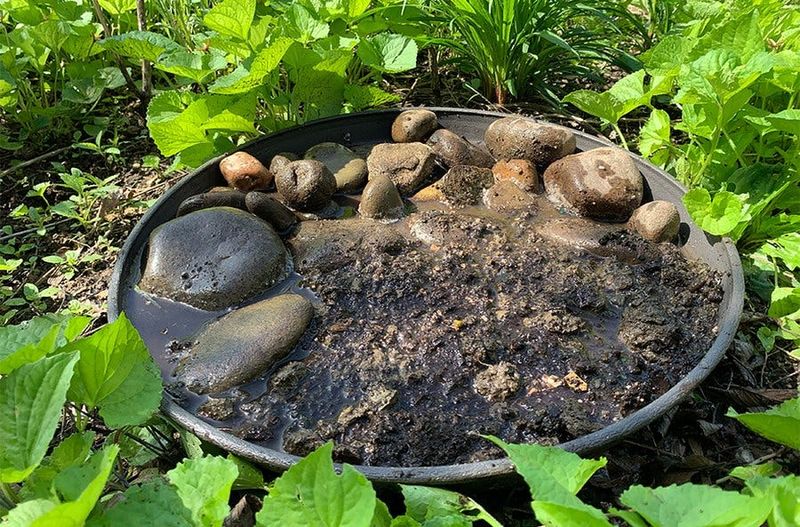
Male butterflies have a behavior called puddling, where they gather on damp ground to absorb water and dissolved minerals.
A yard without any moist ground is missing a resource that can pull in visiting males, particularly on dry Florida mornings after a stretch without rain.
The fix is simple and costs almost nothing.
Set out a shallow clay tray or saucer filled with damp sand or soil, and add a flat stone or small piece of wood so butterflies have a perch while they drink.
Keep it moist but not flooded.
UF/IFAS Panhandle gardening notes on the zebra longwing recommend this shallow damp approach rather than a deep birdbath or a container of standing water, which can be harder for butterflies to use safely and can become a mosquito breeding spot in Florida’s warm climate.
Watering your new plants carefully matters just as much.
New shrubs generally need about 20 to 28 weeks to fully establish their root systems, and new trees may need roughly 3 to 4 months per inch of trunk diameter before they can handle Florida’s dry spells on their own.
For a newly planted tree with a 2-inch trunk, that is roughly 6 to 8 months of attentive watering.
UF/IFAS irrigation guidance suggests approximately 2 to 3 gallons per inch of trunk diameter per watering event for new trees, adjusted for soil type, rainfall, and drainage.
For general landscape beds, UF/IFAS Florida-Friendly landscaping guidelines commonly reference 1/2 to 3/4 inch of water per irrigation event as a starting point, but Florida’s sandy soil drains quickly, and what works in Central Florida may be too much or too little in the Panhandle or the Keys.
Once your plants are established, reduce irrigation steadily and let rainfall do more of the work.
Native Florida plants are built for this climate, and overwatering actually increases pest and disease pressure.
Let Caterpillars Eat The Passionvine
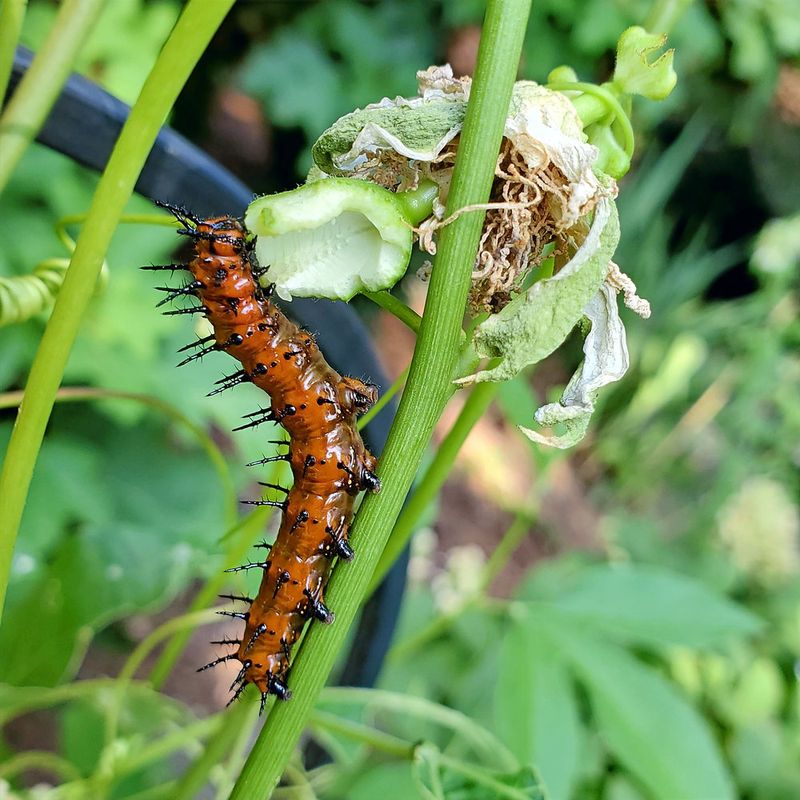
The first time you walk out and find your passionvine stripped down to bare stems, the instinct is to reach for something to stop whatever is doing that.
Resist it.
Chewed leaves on a passionvine are not a pest problem; they are proof that the plant is doing exactly the job you planted it to do.
UF/IFAS Gardening Solutions confirms that passionflower vines can be stripped of their leaves by caterpillars and still recover.
Heavy feeding may slow the vine’s growth temporarily, but the plant generally rebounds when the caterpillars move on to pupate.
Treat the bare stems as a sign of success, not failure, and give the vine time to push out new growth.
The real danger to your caterpillars is pesticide exposure, and it comes from directions many gardeners do not expect.
UF/IFAS guidance on natural pest-management products is direct on this point: Bacillus thuringiensis var. kurstaki, the caterpillar-control product often marketed as organic and safe, kills butterfly caterpillars just as effectively as pest caterpillars.
Neem, insecticidal soaps, horticultural oils, and spinosad can also affect beneficial insects, and spinosad is highly toxic to bees while it is still wet.
None of these products are automatically safe around butterfly life stages.
The right approach is to inspect plants, identify what you are actually dealing with, and protect eggs and larvae by keeping treatments away from any host plant that is in active use.
UF/IFAS community butterfly habitat guidance recommends scouting and spot-treating only when necessary, and avoiding routine or indiscriminate insecticide applications across the yard.
If a treatment is genuinely needed somewhere else in the garden, keep it targeted, follow the label, and give your passionvine a wide buffer.
The caterpillars on it are the whole point.
Measure Progress Without Expecting A Swarm
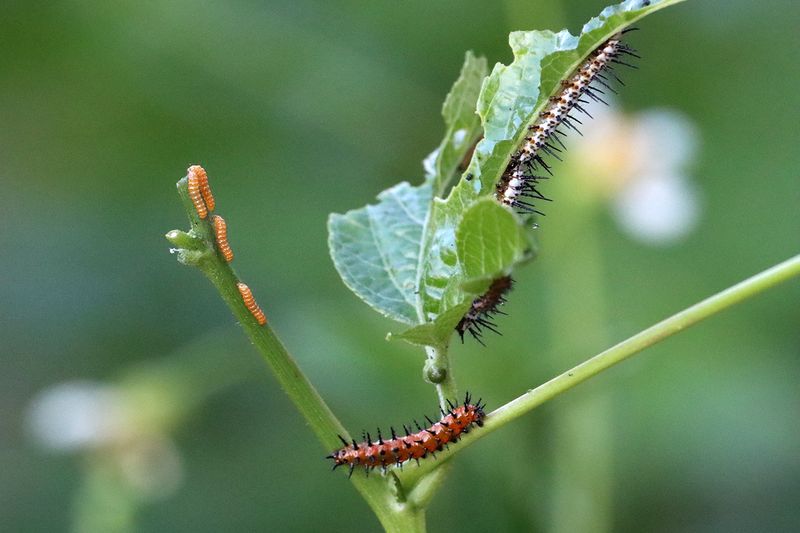
An improved yard rarely announces itself with a sudden cloud of butterflies on day one.
What you are more likely to see first is a chewed leaf, then a tiny egg on a vine stem, then an orange caterpillar working its way through the foliage.
That quiet sequence is the actual sign that something has changed.
Research on urban butterfly gardens supports gardens as useful habitat, while also making clear that arrival depends on factors outside any single yard’s control, including nearby populations, landscape connectivity, season, weather, predators, and pesticide exposure in the surrounding area.
A yard in a neighborhood with active pesticide use, or one that sits far from any existing butterfly population, faces steeper odds than one surrounded by other native plantings.
Your maintenance list is short.
Keep the passionvine growing and supported.
Maintain nectar flowers across as many bloom periods as your region allows.
Preserve the sheltered edge or shade structure if you have one.
Refresh the damp puddling spot after dry stretches.
Adjust your watering and plant care to your corner of Florida, because a schedule that works in Tampa may not translate to Tallahassee or Homestead.
Florida-Friendly Landscaping principles frame this kind of yard as a functioning system, not a decoration, and that framing is useful here too.
You cannot command a butterfly’s arrival, but you can remove the habitat gaps that make a yard invisible to gulf fritillaries and zebra longwings.
A yard that has the right vine, the right food, the right light, and clean foliage is genuinely a different place than one that does not, and that difference is what gives these butterflies a reason to stop.