
7 Native Florida Trees That Beat Crape Myrtle And Ask For Far Less Cleanup
Follow us on Google
You step onto the patio after breakfast and the air already feels heavy, promising another scorching Florida summer day.
You spot it right away, a scattering of sticky, black soot on your outdoor furniture, clinging to the leaves of your patio plants, even staining the concrete.
It is that familiar mess from the crape myrtle, a tree many of us inherited for its summer flowers but which quietly delivers a surprising amount of grime.
You might love those blooms, but the constant scrubbing and the battles with pests that feed the sooty mold can genuinely wear you down.
Here are seven Florida-native trees that offer beauty, resilience, and a dramatically cleaner backyard, so you can get back to enjoying your slice of paradise.
1. Live Oak Stands Strong, Demands Little
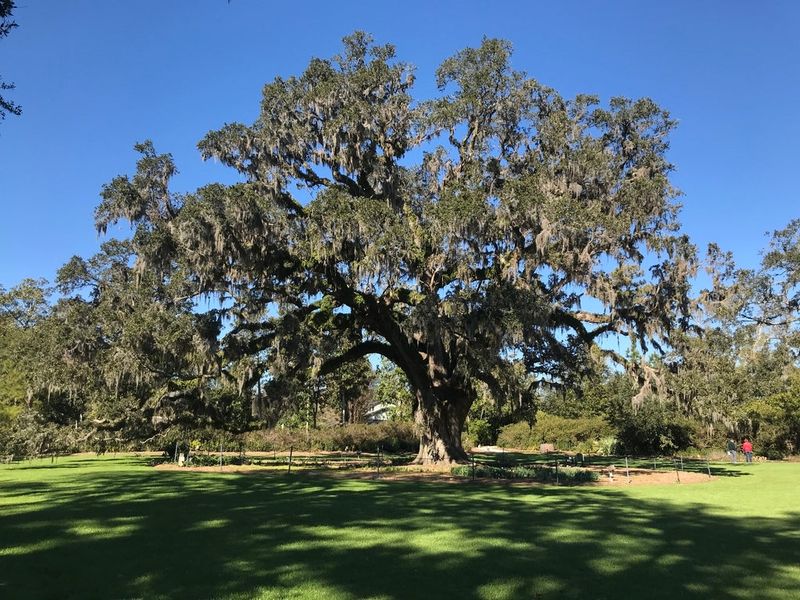
Many Central Florida homeowners fall for the shade of a majestic live oak (Quercus virginiana), then worry about its size.
Here is where it gets tricky.
While crape myrtles drop petals, seed pods, and the sticky residue of sooty mold, a live oak takes a different approach.
Its leaves are evergreen, falling gradually all year rather than in one big pile, so you never face a concentrated mess.
You might find acorns in fall, but those are a feast for squirrels and jays, not a driveway problem that needs a power washer.
The turn is simple.
A live oak works with Florida, not against it.
These trees shrug off strong winds, salt spray along both coasts, and long dry spells once established.
You rarely see the scale insects and sooty mold that plague crape myrtles.
Give a young live oak room, because its canopy can spread over 100 feet wide and the trunk can add an inch in diameter each year when young.
Prune it for the first 5 years to build a strong structure, removing branches that form narrow angles with the trunk.
After that, it is mostly hands off.
You get a resilient shade tree that becomes a lasting legacy, asking far less of you than you would guess.
2. Sabal Palm Offers Tropical Ease
Picture a tree that hands you that classic Florida feel without dropping messy flowers or sticky sap.
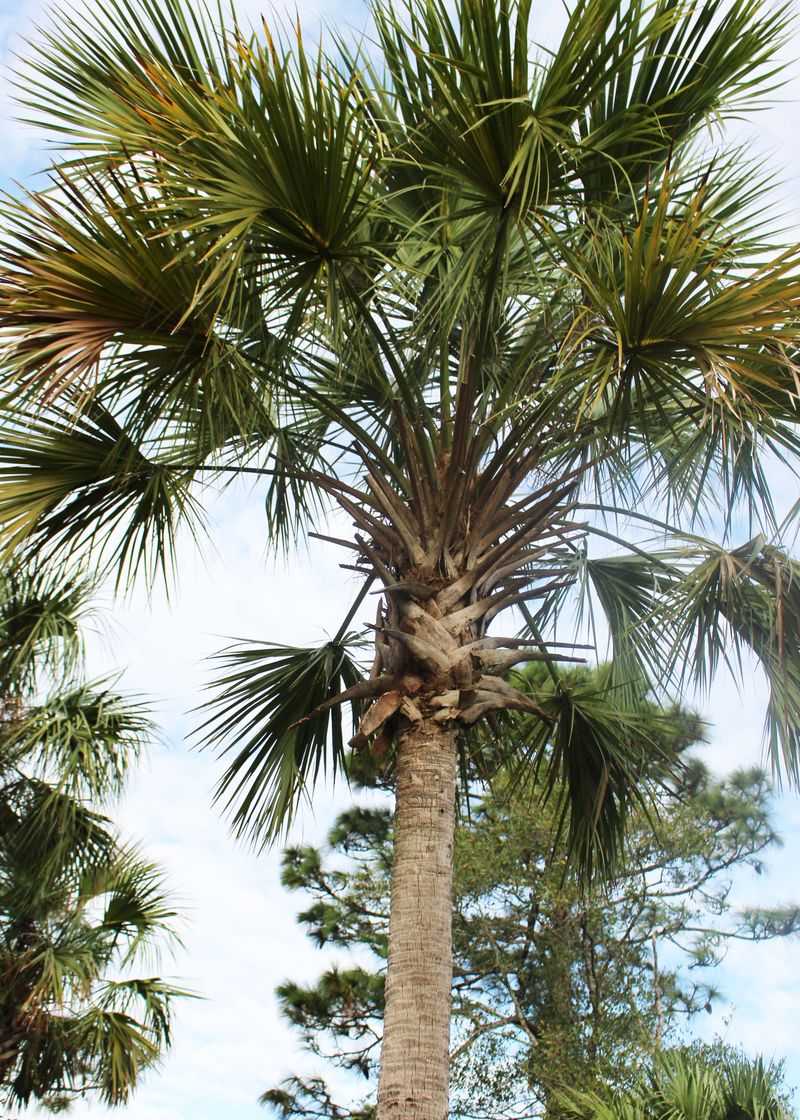
Many gardeners assume palms are a maintenance headache, but the truth about our state tree, the sabal palm (Sabal palmetto), is a pleasant surprise.
Unlike the constant litter from a crape myrtle, sabal palms only shed fronds when they are fully brown and dried out, and they are actually healthier when you let those fronds fall on their own.
Expect a much cleaner ground beneath them.
The reason is that a sabal palm was engineered by nature for our climate.
These palms tolerate temperatures as low as 15 degrees Fahrenheit, brush off salt spray, and stand firm against hurricane winds.
There is no crape murder needed here.
Your job is simple.
Do not over-prune.
Only trim fronds that are entirely brown and hang below a horizontal line, roughly between the 9 and 3 o’clock positions.
If late-summer fruit clusters look messy to you, snip those for tidiness, otherwise let the tree be.
Growing up to 40 feet tall, these palms reward you with a naturally clean, storm-tough landscape, their tiny creamy-white flowers even drawing honeybees in late spring.
You get the tropics without the chore.
3. Gumbo Limbo Dazzles With Peeling Bark
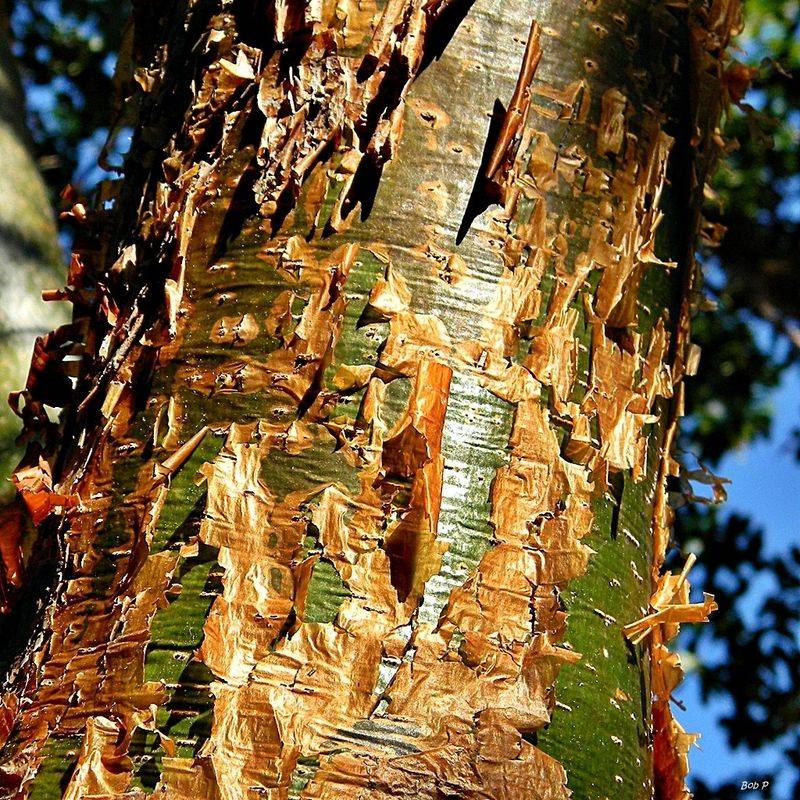
Walk through parts of South Florida or the Keys and you will spot the gumbo limbo (Bursera simaruba) quickly, thanks to its reddish, peeling bark.
Folks call it the tourist tree because it looks like sunburned skin.
The tension is its fast growth, which makes you assume it needs endless trimming.
Not so.
This native is remarkably low maintenance and offers a tidy, one-of-a-kind beauty that leaves crape myrtle in the dust.
Gumbo limbo is built for the tropics, especially from Zone 10b south.
It handles drought, strong winds, and salt spray, which makes it a genuine hurricane hero.
It is generally pest resistant, and while whiteflies and croton scale can appear, local predators often keep them in check with no sooty mold takeover.
Your work is minimal.
Once established, prune only to lift low branches for clearance or to shape its sculptural form.
Plant it 15 to 20 feet from your home to give those thick, low limbs room to spread.
The small red, three-sided berries ripen in early summer and get gobbled up by birds, so they never linger as a mess on your walkway.
You gain a fascinating, wind-resistant tree that adds real character for almost no fuss.
4. Sweetbay Magnolia Brings Fragrant Elegance
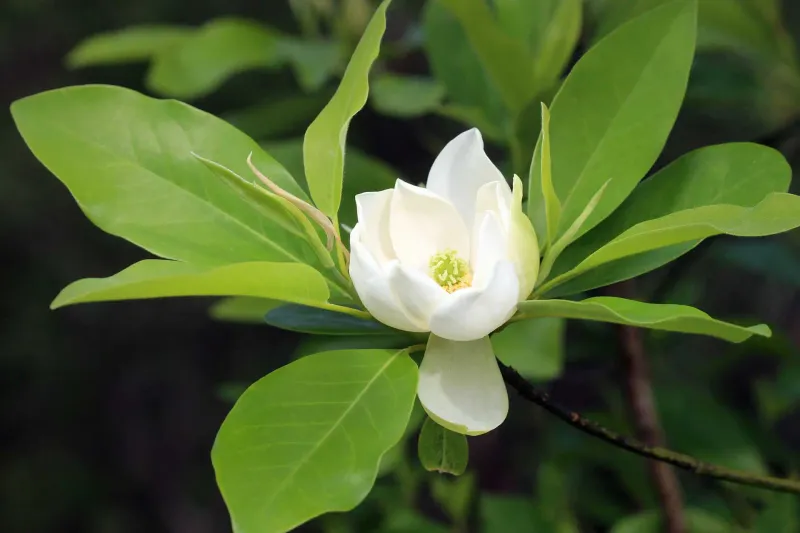
Magnolias get a bad name for giant, messy leaves and heavy seed cones.
That reputation belongs to the larger Southern magnolia.
The sweetbay magnolia (Magnolia virginiana) breaks the mold, giving you all the charm with far less cleanup and a smaller footprint.
Where crape myrtle flowers leave a colorful but sticky carpet, sweetbay’s creamy-white blooms offer a soft, lemon-scented perfume without the litter.
Adaptability is its real strength.
Sweetbay thrives from North Florida down to Miami, even in soggy spots that would drown other trees.
It is deciduous in cooler zones and semi-evergreen to evergreen in warmer parts of the state.
Its small red fruits, from June through September, feed birds and do not pile up as trash.
Plant it in full sun or partial shade, ideally in rich, acidic soil, and water it twice weekly for the first few months to settle it in.
It naturally resists most major pests, though scale and aphids show up rarely on stressed plants.
Reaching a manageable 40 to 60 feet, it suits a patio corner or a narrow space where crape myrtle would become a permanent chore.
You gain a graceful, fragrant tree that draws birds and asks for very little pruning, so you can simply sit and enjoy it.
5. Red Maple Brings Real Fall Color
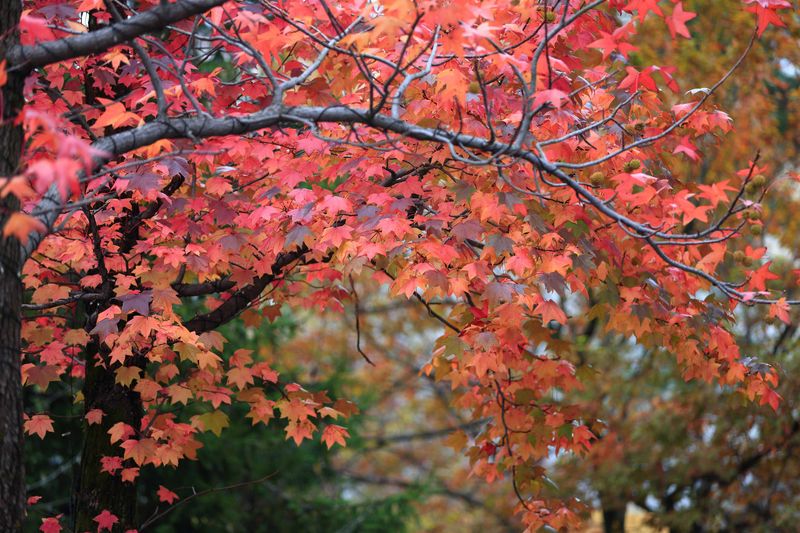
Plenty of Florida homeowners quietly mourn the lack of fall color, then reach for non-native trees that struggle in our heat or turn messy.
That is the usual trade-off.
But the native red maple (Acer rubrum) genuinely delivers, turning your yard into yellow, orange, and brilliant red without any crape myrtle stickiness.
Its yearly leaf drop is a clean seasonal event, not the multi-season debris of spent flowers, pods, and sooty mold.
Red maples are tough and adaptable, performing well across much of the state, especially north of USDA Zone 9, as long as they get enough moisture.
Some scale or aphids can appear, but beneficial insects usually keep those minor pests down.
Unlike crape myrtle bark scale, which leaves behind black sooty mold, red maples skip that sticky drama.
Plant it in full sun to partial shade, keep water steady during dry spells, and prune it young to shape a strong frame by removing competing branches.
These fast growers can reach 60 to 75 feet, throwing generous shade.
The tiny pinkish seeds, called samaras, are popular with squirrels and birds and never become a litter problem.
You finally get that autumn show you have wanted, with maintenance that stays refreshingly low.
6. Black Gum Offers Unsung Beauty
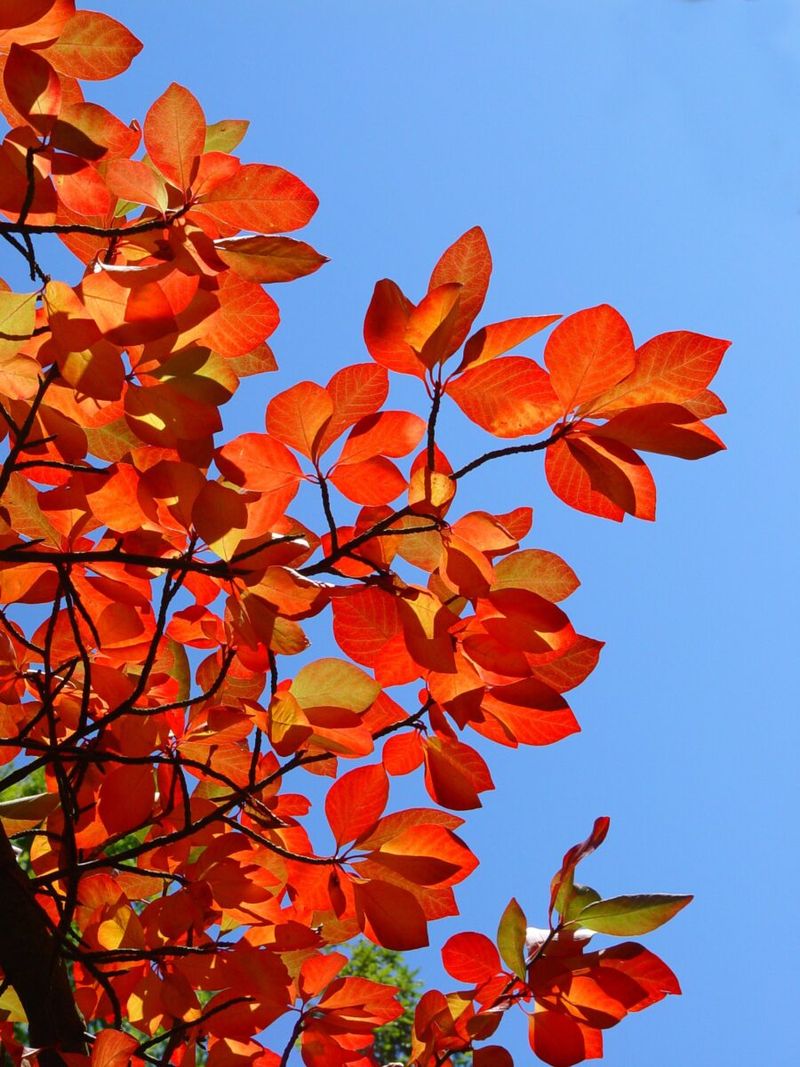
The black gum (Nyssa sylvatica), also called black tupelo or sourgum, is an unsung hero of Florida yards.
Many people do not even realize it is native.
The worry is that it drops its leaves, and any deciduous tree can look like a cleanup burden.
Compared to the fussy crape myrtle, though, black gum gives you a neat, contained leaf drop with none of the sticky honeydew or endless seed pods.
Here is the pleasant part.
Its glossy summer leaves turn spectacular orange, red, and deep purple in fall, making it one of the most striking natives for seasonal color.
When those leaves drop, they come down slowly and break apart easily, so you can often leave them to feed your soil instead of raking and bagging.
The small blue-black fruits on female trees vanish fast into the beaks of birds and small mammals, never lingering on your patio.
Plant black gum in full sun to partial shade and give it space, since it can reach 40 to 70 feet.
It prefers moist, acidic soil but tolerates both wet and dry ground once established.
It is generally pest tolerant, facing only occasional leaf miners or scale that rarely turn serious.
You get bold color and a genuinely low-cleanup backyard.
7. Bald Cypress Provides Architectural Grace
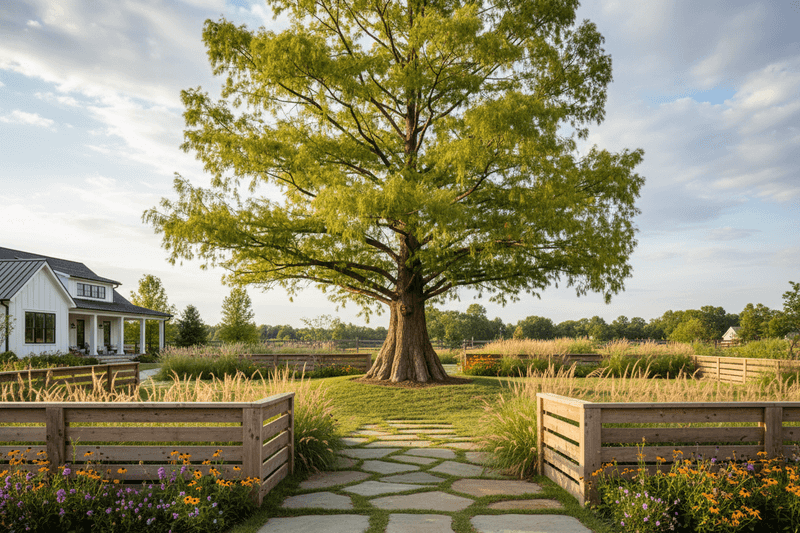
Say cypress and most people picture swamps and those odd knees poking out of the water.
That is the myth, and it makes homeowners assume the tree is messy or needs a wetland to survive.
Yet the bald cypress (Taxodium distichum) is a surprisingly clean, adaptable, and rugged native that outshines crape myrtle on the maintenance front by a wide margin.
Truth is, bald cypress thrives in dry urban yards just as happily as beside a pond, and it usually skips the knees unless it sits in standing water.
This deciduous conifer sheds fine, feathery needles in fall after they turn a warm coppery yellow, and those needles break down fast, unlike bulky leaves or crape myrtle pods.
There is no sticky sooty mold here either, since it resists major pests.
Plant it in full sun with room for its 60 to 80 foot height, and water it regularly until established.
After that it is nearly hands off, needing only occasional pruning to clear dead branches.
Its upright, pyramidal shape delivers strong vertical interest, and its deep roots are less likely to buckle sidewalks than many big shade trees.
According to UF/IFAS Extension, it is one of the most reliable large natives for Florida landscapes.
You gain a striking, enduring tree that brings calm, low-fuss character to your yard.