
Why Ibis Flocks Keep Dropping Onto Your Florida Lawn Right After Every Downpour
Follow us on Google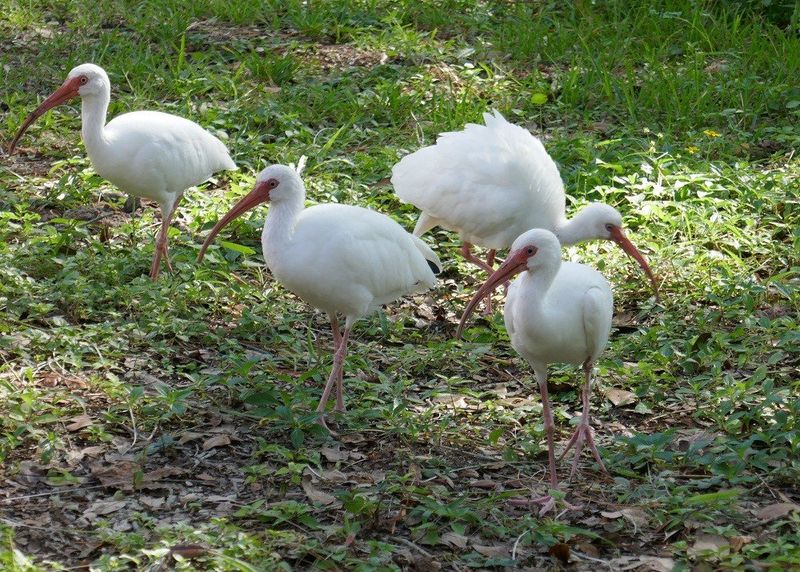
You step onto the patio after a summer downpour and the wet grass is suddenly covered in white birds, heads down, probing the ground like they own the place.
It is a striking scene, and the first thought many Florida homeowners have is that something must be seriously wrong underground.
The good news is that a flock of wading birds on a wet lawn does not automatically mean you have a grub invasion or a mole-cricket crisis.
Understanding what the birds are actually doing, and what your lawn is actually telling you, can save you money and keep you from spraying something you do not need.
Is That White Flock Really White Ibis?
Before you read anything into the flock’s behavior, take a good look at the birds themselves.
Adult American white ibis, known scientifically as Eudocimus albus, are hard to miss once you know what to look for.
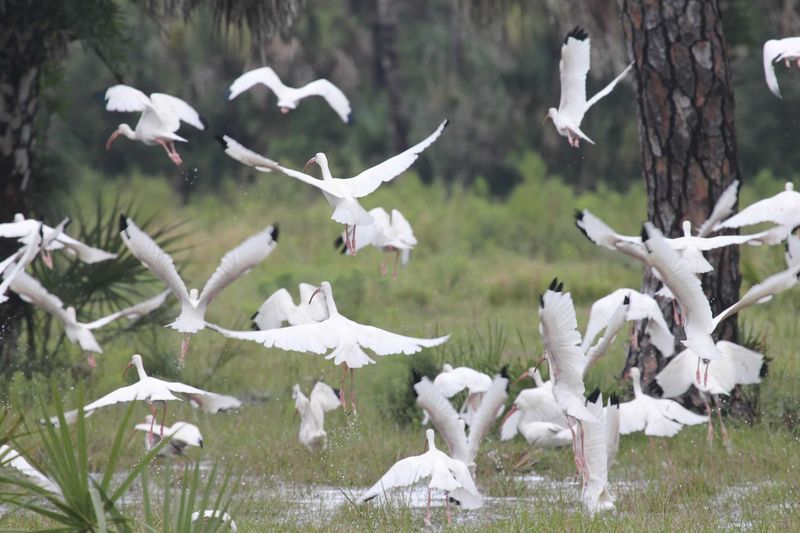
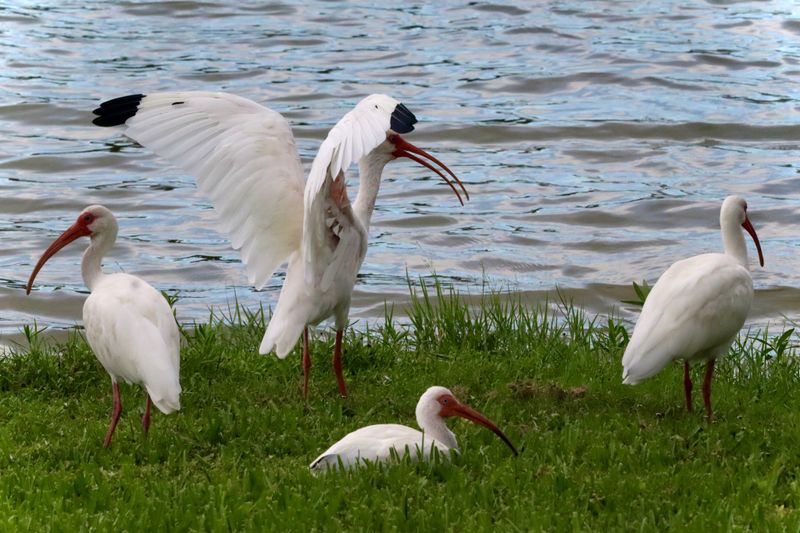
They stand about 22 inches tall, carry a wingspan of roughly 37 inches, and wear mostly white feathers with black wingtips that show clearly in flight.
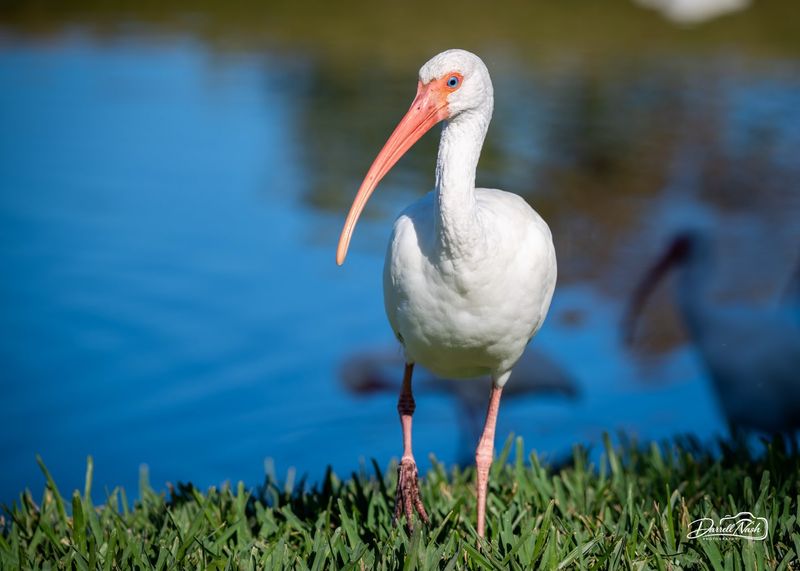
Up close, you will notice red legs, red facial skin, and a long, downward-curving bill that is built for pushing into soft soil and pulling out whatever is hiding there.
That curved bill is the key field mark.
According to Florida Fish and Wildlife Conservation Commission, white ibis use wetlands, parks, urban green spaces, and residential lawns across most of Florida, especially in the southern half of the state.
They are genuinely comfortable in neighborhoods, which is why a flock landing on your St. Augustine or bahiagrass lawn is not unusual after a heavy rain.
Not every white bird in your yard is an ibis, though.
Immature white ibis are brown on top and white below, so a mixed group can look confusing.
Great egrets and snowy egrets are tall and slender with yellow or black bills, not curved red ones.
Wood storks are larger, with a featherless gray head and a much heavier bill.
Glossy ibis carry dark, iridescent plumage rather than white.
A quick look at the Cornell Lab identification guide for white ibis can help you sort out a mixed flock in seconds.
Confirming the species matters because the feeding behavior of egrets, storks, and ibis differs enough that misidentifying the birds can lead you to the wrong conclusion about what is happening underground.
Identify first, interpret second.
Heavy Rain Can Create an Easy Feeding Patch
Rain changes the lawn in ways that matter to a foraging bird.
When several inches fall in a short time, which is a routine summer event from the Gulf Coast to the Atlantic side of the state, the soil softens and earthworms and other invertebrates may move closer to the surface or become easier to detect.
For a bird with a sensitive, probing bill, that shift can turn an ordinary patch of grass into a temporarily productive feeding spot.
The connection between rainfall and ibis foraging has real research behind it, though the strongest studies involve species other than Florida’s American white ibis.
A peer-reviewed study of urban Australian white ibis found that rainfall increased earthworm availability and the birds’ consumption of them.
Separate laboratory work on another ibis species, published in the Journal of Avian Biology, found that wetter soil improved the birds’ ability to detect live worms through touch alone.
Those findings come from different species and different settings, so they are not direct proof of what American white ibis are chasing on your Central Florida lawn on a Tuesday afternoon.
What they do support is the general idea: wet, soft soil can make foraging easier, and birds that probe for a living will notice.
That means the most grounded explanation for a post-rain flock is not a pest outbreak but a temporarily attractive feeding patch.
The lawn became easier to work after the storm, and the birds moved in to take advantage.
Florida’s ibis are documented urban foragers by habit, and a freshly soaked lawn fits right into their usual routine.
The pattern may repeat whenever conditions line up, but it does not happen on a strict schedule after every single downpour.
The Birds Cannot Identify the Pest for You
Watching an ibis pull something out of the ground can feel like a diagnosis, but the bird is not being selective in a way that tells you much.
White ibis eat a genuinely wide range of prey.
FWC and Audubon’s white ibis field guide both document a diet that includes crabs, crayfish, fish, snakes, frogs, insects, snails, earthworms, and marine worms.
The same probing motion that pulls out a white grub will also pull out an earthworm, a beetle, or a harmless soil insect.
Because the menu is that broad, flock behavior alone cannot tell you whether you have grubs, mole crickets, earthworms, or nothing particularly worrying at all.
Cornell’s life history account reinforces how opportunistic white ibis feeding actually is, adapting to whatever prey is accessible in the moment.
The real indicators of a lawn pest problem live in the grass itself, not in the flock overhead.
Look for turf that is yellowing or dying in patches, thinning in areas that get adequate water, feeling spongy or soft underfoot, or lifting away from the soil easily when you tug it.
Raised tunnels running just under the surface, dead strips that look drought-stressed even after irrigation, and roots that crumble or pull free with almost no resistance are all meaningful clues.
A flock landing on a lawn that looks full, green, and firmly rooted is a different situation entirely.
As UF/IFAS Extension notes on white grub management, an occasional grub or soil insect is a normal part of any lawn ecosystem and does not automatically call for action.
When no turf symptoms are present, the better move is to watch and wait rather than reach for a product.
Check Damaged Turf for White Grubs
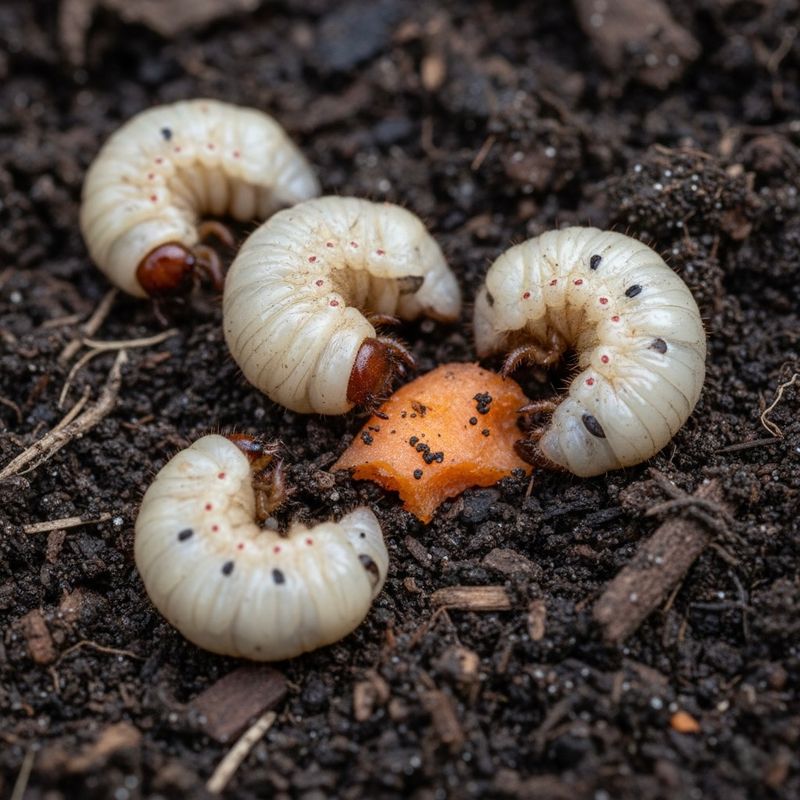
If your lawn is showing real symptoms, grubs are worth ruling out.
White grubs are the larvae of several beetle species, and they feed on turfgrass roots just below the soil surface.
In Florida, grub damage tends to be spotty and is more common in coastal areas, though it can turn up across the state.
The signs to look for include grass that yellows or dies in irregular patches, turf that feels unusually soft or spongy, thinning that does not respond to watering, and sections that peel back from the soil with almost no resistance when you grab a handful and pull.
When you spot those symptoms, UF/IFAS Gardening Solutions recommends a simple hands-on inspection.
Find the edge of a damaged patch and use a knife or spade to cut around three sides of a roughly 1-foot square of turf.
Dig down about 2 inches, fold the turf back like a flap, and examine the roots and the exposed soil carefully.
White grubs are creamy white, C-shaped larvae with six small legs near their heads and a brownish head capsule.
They are not hard to spot once the turf is folded back.
Count what you find across several sample squares, since grub populations are rarely uniform, and the UF/IFAS white grub publication provides species-specific thresholds to help you decide whether the count is concerning.
After the inspection, fold the turf back into place and water the area so the roots can reestablish contact with the soil.
UF/IFAS guidance on white grub management in turf is clear that finding an occasional grub does not automatically justify treatment.
Healthy turf with a firm root system can tolerate low grub numbers without visible damage, so let the inspection result and the turf’s condition together guide your decision.
Use a Different Test for Mole Crickets
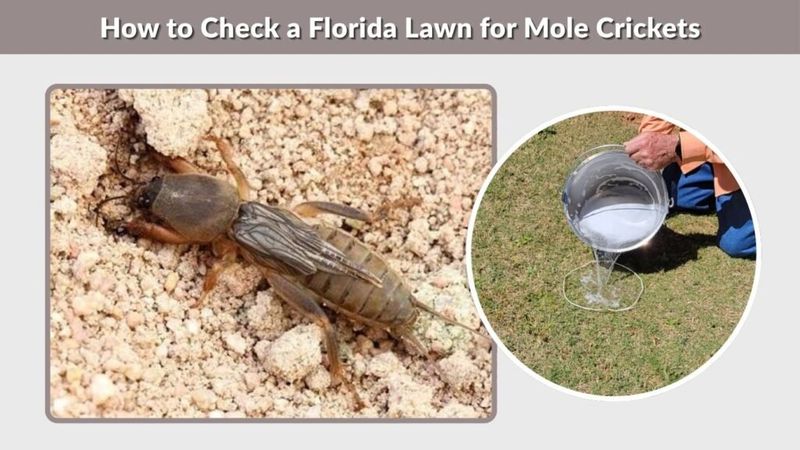
Mole crickets are a separate problem from grubs, and they need their own scouting method.
These insects tunnel through the top few inches of soil, loosening roots and sometimes feeding on underground plant material.
The damage they leave looks deceptively like drought stress: thinning turf, dead or browning patches, and grass that wilts even when your irrigation is running on schedule.
You may also notice small raised ridges or tunnels just under the soil surface, especially in the morning after a warm, moist night.
Warm, wet conditions are when mole cricket activity tends to peak in Florida, which means the same summer downpour that draws ibis to your lawn can also push mole crickets closer to the surface.
Bahiagrass and bermudagrass lawns are particularly vulnerable, as UF/IFAS guidance on bahiagrass management acknowledges, though mole crickets can damage other turf types across the state as well.
The standard scouting tool is the soap flush.
Mix three-fourths of an ounce of liquid dishwashing soap, about 1.5 tablespoons, into 1 gallon of water.
Pour the mixture evenly over a 2-foot by 2-foot area where you suspect activity, then watch the ground for 3 minutes and count any mole crickets that surface.
For the test to work reliably, the soil needs to be moist beforehand, so performing it shortly after rain or irrigation makes sense.
According to the UF/IFAS mole cricket IPM guide for Florida, finding two or more mole crickets in that sample area may support corrective action, particularly when visible turf damage is also present.
That figure is a general starting point, not a fixed statewide rule, because soil type, grass species, season, and the size and age of the crickets all factor in.
A handful of small nymphs in June is a different situation than several large adults in September, and UF/IFAS coverage of mole cricket species in Florida explains why timing your response to the pest’s life stage matters for any treatment to actually work.
Inspect Before Applying Any Treatment
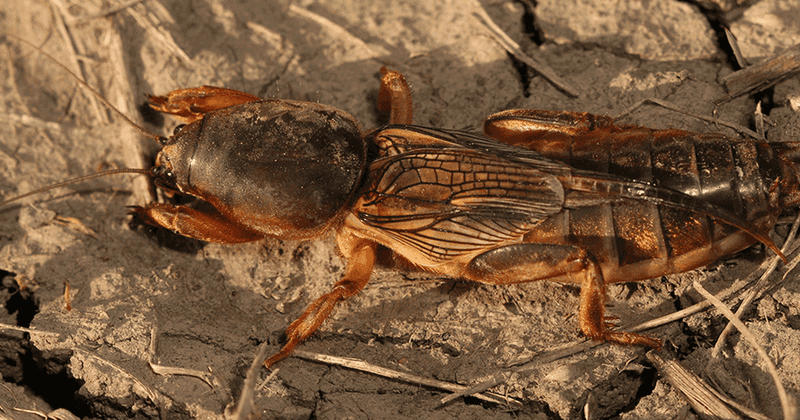
A flock of ibis on the lawn is not a treatment trigger.
The right sequence is to compare what you see in the grass with what you find in the soil, and to reach for a product only when both the symptoms and the inspection results support it.
Spraying a blanket insecticide across the whole yard the moment white birds land is the kind of reaction that costs money, harms beneficial insects, and may not address any actual problem.
EPA guidance on reducing pesticide impacts on wildlife recommends using pesticides only when necessary, limiting treatment to the affected area rather than the entire lawn, following the product label precisely, and taking steps to keep materials away from waterways, birds, fish, and beneficial insects.
Florida’s drainage patterns, proximity to canals, and summer rainfall make runoff a real concern, especially in low-lying yards along the Gulf Coast or in South Florida’s shallow limestone terrain.
Timing matters just as much as product choice, particularly with mole-cricket baits.
Some labels restrict application before rain or irrigation, or require a specific dry period after treatment.
UF/IFAS mole cricket species guidance notes that label compatibility with irrigation and rainfall varies by product, so reading the individual label before you apply anything is not optional.
What works correctly for one bait formulation can be wasted or counterproductive with another.
For grubs, UF/IFAS white grub management guidance and the UF/IFAS Florida lawn pest control guide both emphasize that treatment timing depends on the pest’s life stage and the product’s mode of action.
Applying a preventive product in September when the grubs are already large and near pupation, for example, will not give you the control you are hoping for.
And the ibis themselves, while they may eat some insects, do not provide reliable or consistent pest control.
Natural predation can contribute a small amount of suppression, but it is not a substitute for a properly timed, targeted treatment when one is genuinely warranted.
Treat the Flock as a Clue, Not a Diagnosis
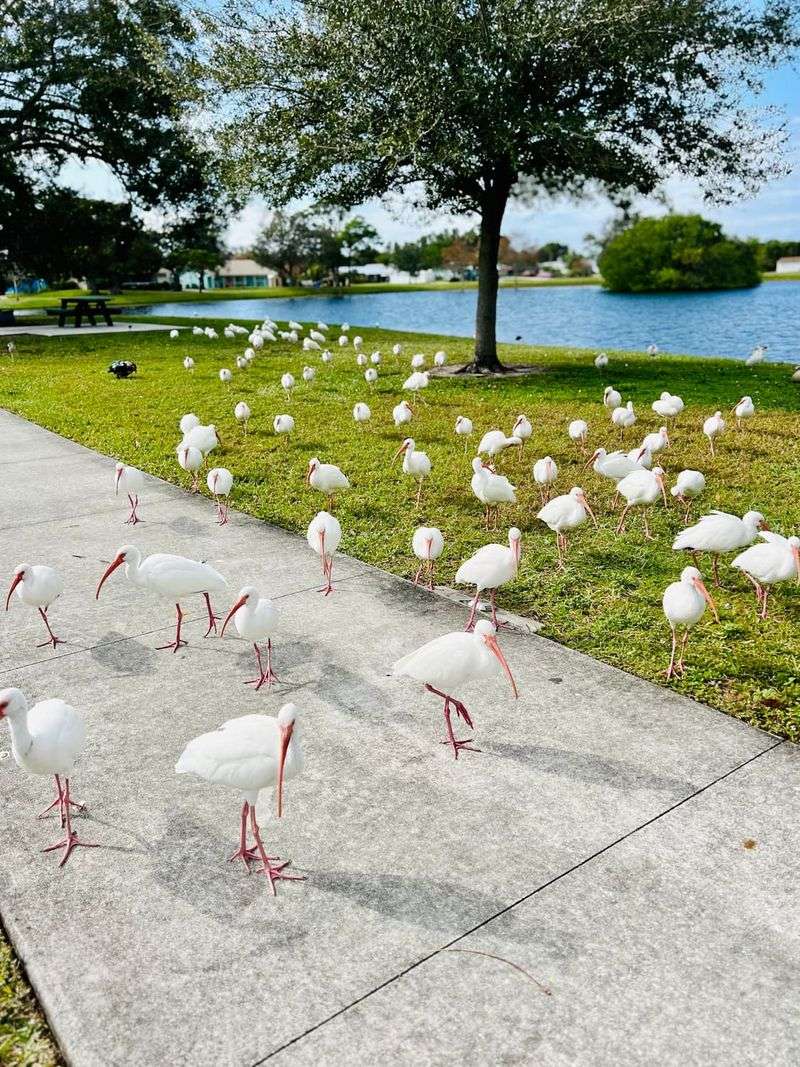
A post-rain ibis flock is genuinely worth paying attention to, just not in the way the first instinct suggests.
What the birds are actually telling you is that your lawn became an accessible feeding spot after the storm.
Wet soil probes more easily, earthworms may be moving toward the surface, and a bird that forages for a living will notice that shift within minutes.
That is a reasonable, well-supported explanation, and it does not require a pest outbreak to be true.
If the turf looks healthy, feels firm, and shows no yellowing, thinning, or loose sections, the right response is to leave it alone and keep an eye on it over the following week or two.
Earthworms in your soil are actually a sign of decent soil health, not a problem.
UF/IFAS Extension notes that a lawn can carry occasional soil invertebrates without any meaningful turf damage, and the presence of foraging birds does not change that math.
When symptoms do appear or persist, run through the inspection steps in the previous sections before spending anything.
A 1-foot soil sample and a simple soap flush take about 15 minutes and will tell you far more than watching the birds ever could.
One thing worth avoiding is feeding the ibis to keep them around as a pest-control crew.
FWC’s guidance on feeding wildlife explains that supplemental feeding can create crowding, disease risk, property damage, and a loss of the birds’ natural wariness, and FWC wildlife viewing ethics reinforces that the best way to enjoy Florida’s wading birds is to let them do what they do without interference.
The ibis will find your lawn when conditions suit them.
Your job is simply to know what to look for in the grass after they leave.