
The One Thing You Must Do To North Carolina Crape Myrtles Before August Ends Or Next Year’s Blooms Suffer
Follow us on Google
Walk past any North Carolina neighborhood right now and you will spot crape myrtles (Lagerstroemia spp.) putting on their best show, that signature burst of pink, red, or white blooms that defines a Southern summer.
Someone probably told you there is a hard August 31 deadline to prune them or next year’s flowers are gone, and that advice is everywhere on social media.
The good news is that deadline is not supported by extension research, and the real late-summer job is much simpler than a major haircut.
What you actually do right now can protect your plant heading into fall, and it takes less than an afternoon.
There Is No August 31 Bloom Deadline

Grab a glass of sweet tea and take a breath, because the August 31 pruning deadline you have been hearing about is not a real extension guideline.
Crape myrtles bloom on new growth produced each spring, which means the plant builds next year’s flowers from scratch after winter ends.
No extension publication from NC State or any Cooperative Extension system establishes a universal rule that every crape myrtle in North Carolina must be pruned before August 31 or its flowering will suffer.
According to NC State Extension’s Woody Ornamentals handbook, crape myrtles are listed among summer-flowering woody plants best pruned before spring growth begins, not in late summer on a calendar deadline.
Healthy crape myrtles can and do flower without annual pruning.
The plant does not need a yearly cut to do its job.
So what should you actually do right now?
Walk around the plant and inspect it.
Look for branches that are clearly dead, broken, diseased, or genuinely hazardous, and those are worth removing promptly regardless of the season.
Routine shaping, height reduction, and cosmetic cleanup are different animals entirely.
Those jobs are not urgent in August, and rushing them before an invented deadline can cause more harm than skipping them altogether.
Think of the late-summer inspection as a wellness check, not a haircut appointment.
University of Georgia Extension guidance on crape myrtles reinforces this approach: remove what genuinely needs to go, leave the rest, and plan deliberate structural work for the proper season.
Your crape myrtle is not waiting on you to save it before September.
Why Heavy Late-Summer Cuts Create Risk
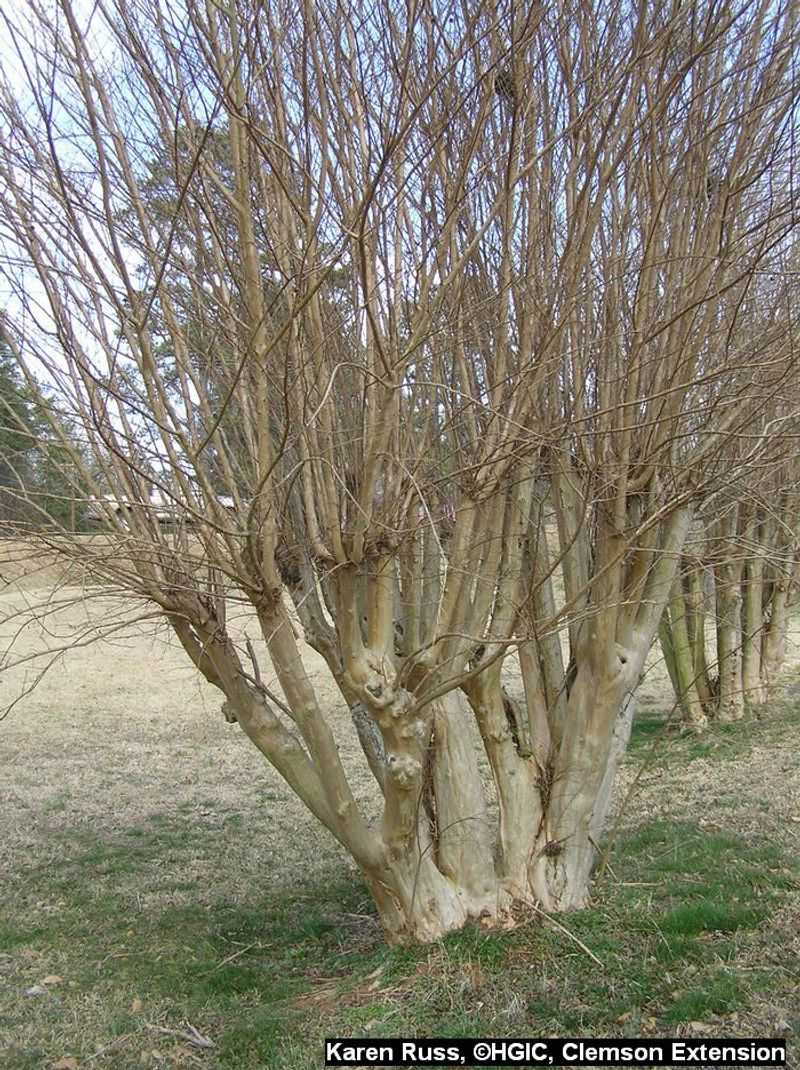
Here is where it gets a little tricky.
When you cut a crape myrtle hard in late summer, the plant does exactly what it is designed to do: it pushes out fresh new shoots.
That sounds fine until you remember that North Carolina fall weather can turn fast, and those soft green shoots have not had time to harden off before cold arrives.
NC State’s general pruning guidance notes that late-summer or early-autumn pruning can delay dormancy and leave new growth exposed to frost damage.
The concern is not that a late cut removes next year’s flower buds the way fall pruning strips buds from azaleas or dogwoods.
Crape myrtles do not carry next year’s buds through winter in the same way.
The real risk is that the tender shoots a hard cut produces may not harden before an early freeze rolls in, weakening the plant’s structure and setting up a rough spring.
North Carolina’s first-freeze timing is not one statewide number.
The NC State Climate Office freeze explorer tool shows that a freeze, defined as temperatures at or below 32 degrees Fahrenheit, can arrive in the western mountains weeks earlier than it does along the Coastal Plain or the coast.
A Asheville-area garden faces a genuinely different late-summer window than a Wilmington yard does.
Some extension sources do note that pruning completed by late summer can allow new growth to establish before winter in some circumstances.
But that qualified allowance is very different from an August 31 deadline that applies to every crape myrtle in the state.
Local conditions, the plant’s actual needs, and regional freeze timing matter far more than a single calendar date someone posted online.
Schedule Structural Pruning Before Spring Growth
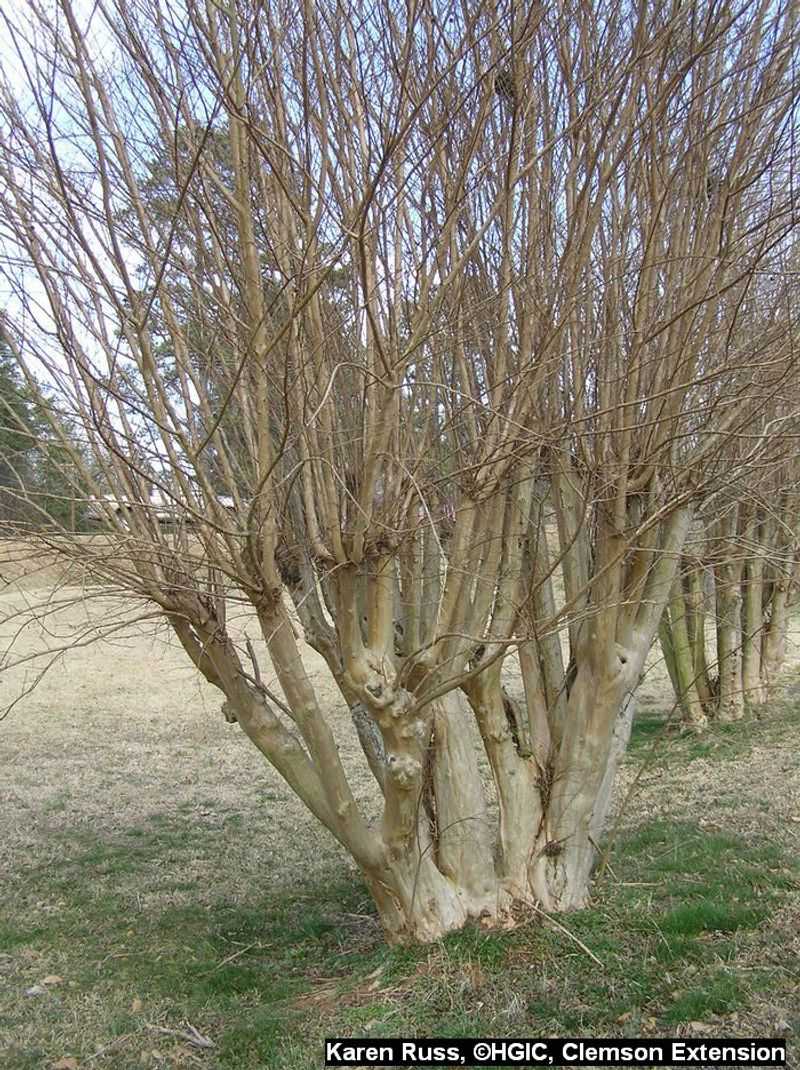
Late winter to early spring, right before new growth begins, is the window that extension research consistently points to for structural pruning on crape myrtles.
At that moment the plant is still dormant, the branch structure is easy to read without leaves in the way, and any cuts you make will be quickly followed by fresh growth that carries the season’s flowers.
NC State’s pruning techniques guide specifically lists crape myrtle among summer-flowering woody plants to prune before spring growth resumes.
The NC State Plant Toolbox profile for Lagerstroemia indica ‘Catawba’ echoes this timing, supporting late-winter pruning to encourage the new shoots that will become flowering wood.
Structural pruning at this time of year addresses real problems: branches that have crossed and begun rubbing, stems that have died back over winter, basal suckers crowding the base, or growth that has pushed into a walkway or roofline.
A naturally tall, multi-stemmed mature crape myrtle does not automatically need reshaping every year.
If the plant has good form and fits its space, leaving it alone is a completely valid choice.
Because North Carolina spans mountains, Piedmont, Sandhills, Coastal Plain, and coast, the exact calendar week for late-winter pruning will shift by region and by year.
A Piedmont gardener in Wake County and a mountain gardener in Watauga County are not working the same calendar.
Watch for the end of hard freezes in your area and move before you see swelling buds, that timing fits the guidance from University of Georgia Extension’s ornamental pruning guide without requiring you to hit a single universal date.
Use Thinning Cuts, Not Topping
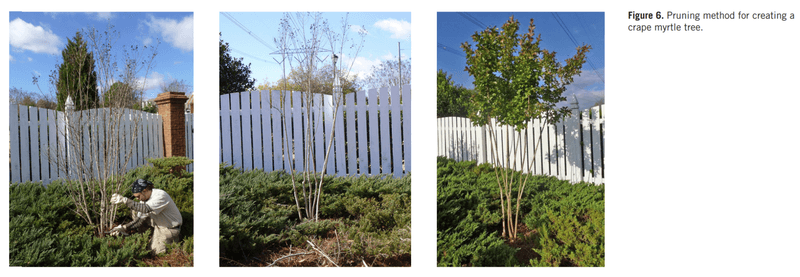
When the right pruning season arrives, the method matters as much as the timing.
A thinning cut removes an unwanted branch all the way back to its point of origin or just outside the swollen ring of tissue called the branch collar.
That collar is the plant’s natural healing zone, and cutting just outside it lets the crape myrtle seal the wound cleanly.
NC State’s Before the Cut guide lays out a practical working order: start with dead, damaged, diseased, crossing, and rubbing branches, then move to basal suckers crowding the base.
Work through those categories before you consider any cosmetic shaping, and you may find the plant looks fine without further cuts.
Topping, which means cutting every major stem to the same height, is the approach that has earned the nickname “crape murder” across the South.
University of Florida IFAS guidance on crape myrtles explains that severe topping produces clusters of weak, fast-growing shoots attached at the cut surface rather than deeply embedded in the wood.
Those shoots snap easily in wind, create a knobby silhouette, encourage heavy suckering, and often reduce the graceful branching that makes a mature crape myrtle worth having.
A small corrective cut to remove a genuinely hazardous branch is a different situation entirely from a full cosmetic shaping of the whole canopy.
Safety belongs in this conversation.
OSHA tree-trimming safety guidance states that all power lines should be treated as energized, and work within 10 feet of a line requires trained line-clearance professionals.
If your crape myrtle has grown into or near utility lines, that is a job for a certified arborist, not a weekend ladder project.
Pole pruners and tall ladders on uneven ground add real risk, especially on mature trees with heavy canopies.
The OSHA portable ladder safety guide is worth a quick read before any overhead work.
Know your limits and call a pro when the situation calls for one.
Deadheading May Extend This Year’s Display
Spent flower clusters on a crape myrtle are those faded, dried-out seed heads that appear after the first big bloom fades.
Removing them is called deadheading, and it is genuinely optional, not a bloom-saving emergency.
The question is simply whether you want to try for a second flush of color this season.
University of Georgia Extension’s crape myrtle publication notes that selectively removing spent flower clusters after the first flowers fade may encourage another bloom on some cultivars.
The key word is “some.” Early-blooming varieties that finished their first flush in June or early July have a realistic chance of pushing a second round before fall.
Plants that did not begin flowering until after mid-July have much less time to cycle through another bloom, and forcing the issue may produce little more than a few scattered clusters.
Modern long-blooming cultivars, many of the Natchez, Tuscarora, and Acoma types that are popular across the Piedmont and Coastal Plain, often continue flowering on their own without any deadheading at all.
University of Florida IFAS guidance confirms that the response varies enough by cultivar that deadheading should not be presented as a guaranteed second-bloom strategy.
The seedheads that form after flowering also do not need to come off for the plant’s health or for next year’s flowers.
UGA Extension’s “crape murder” article points out that existing seedheads naturally fall as spring growth begins and pose no threat to the plant.
If you enjoy the texture they add in fall and winter, leave them.
If you want to try for a second flush on an early-blooming cultivar, remove the spent clusters now and see what the plant does.
Check Sun, Water, and Fertilizer Instead

Before you reach for pruning shears or a fertilizer bag this late in summer, walk around your crape myrtle and think about what it has actually been living with.
Many flowering problems that get blamed on pruning timing trace back to simpler conditions: too much shade, too little water during a dry stretch, or soil that is either starved or overloaded.
NC State’s crape myrtle plant profile is direct about sun requirements: these plants perform best with at least 6 hours of direct sunlight daily.
A crape myrtle planted under a maturing oak or tucked against a north-facing wall is fighting a losing battle, and no amount of pruning or fertilizer will fully compensate for that shade.
Root competition from large trees nearby can also pull water and nutrients away from the crape myrtle’s root zone.
Water matters, especially during the extended dry spells that hit the Piedmont and Sandhills hard in late summer.
Deep watering during those dry periods supports flowering and general plant health.
UGA Extension guidance recommends deep watering while avoiding wetting the foliage, since wet leaves in humid NC summers invite fungal problems.
Shallow, frequent watering trains roots upward and leaves the plant more vulnerable during dry weeks.
Fertilizer deserves a specific warning right now.
NC State’s tree and shrub fertilizing guide advises against fertilizing around mid-August and cautions against applying slow-release fertilizer after July 15.
Late fertilizer pushes soft new growth that may not harden before an early freeze, exactly the same risk that late heavy pruning creates.
Base any fertilizer decision on visible symptoms and a soil test, not a late-summer bloom promise from a product label.
If your crape myrtle has been blooming poorly for a couple of seasons, run through the full checklist before scheduling any pruning: sun exposure, soil moisture, cultivar suitability for your region, plant age, and whether last winter brought unusual cold damage.
Inspect now, skip the needless late growth, leave those harmless seedheads right where they are, and put thoughtful structural pruning on the calendar for late winter.
Your plant already knows how to bloom.