
The Native Texas Shade Trees Homeowners Plant Instead Of Live Oaks Losing To Oak Wilt
Follow us on Google
You step outside before breakfast, and the patio already feels warm.
Then you spot it, another yellowing leaf on your live oak, a whisper of worry in the quiet.
Oak wilt has been quietly taking down live oaks across Texas, and if yours is fading, you are not alone.
But here is the relief part.
Texas hands us a whole shelf of native shade trees that shrug off this disease and still cool your house through triple-digit summers.
Let us walk the fence line together and look at the trees worth planting next.
1. Lacey Oak Stands Tall In The Face Of Disease
Not all oaks fold when oak wilt shows up.
Live oaks (Quercus fusiformis) and red oaks catch the fungus Bretziella fagacearum easily, but their white oak cousins hold the line far better.
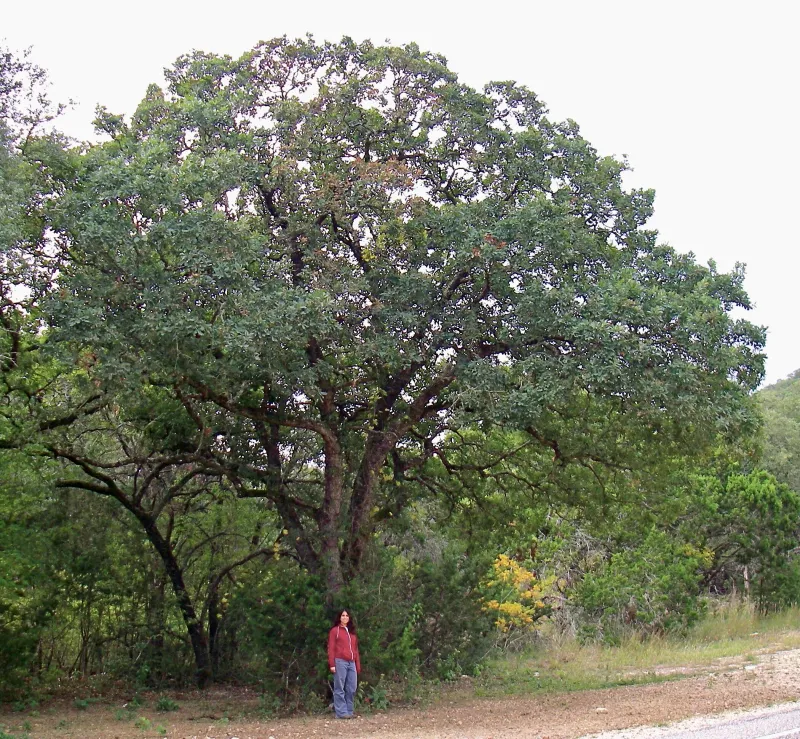
The Lacey Oak (Quercus laceyi), sometimes called Blue Oak, is a genuine hero for Central and West Texas yards.
Here is where it gets good for the Hill Country.
This tree actually thrives in shallow, alkaline soil over caliche, the kind of ground that starves most trees.
Its blue-green leaves turn a soft peach in fall, a color you rarely see out here.
Lacey Oak stays modest, about 30 to 40 feet tall with a matching 30-foot spread.
It grows slowly, sometimes just 1 to 2 feet a year, which means less pruning and a sturdy, well-shaped canopy.
Think of it as a slow handshake, these trees can live 300 years or more.
Plant it in full sun with at least six hours of direct light daily.
Once it settles in, usually after two years, it gets by on a deep monthly soak through the hottest, driest stretches.
A little patience buys you a tree your grandkids will nap under.
2. Chinkapin Oak Offers Broad Canopy For Many Regions
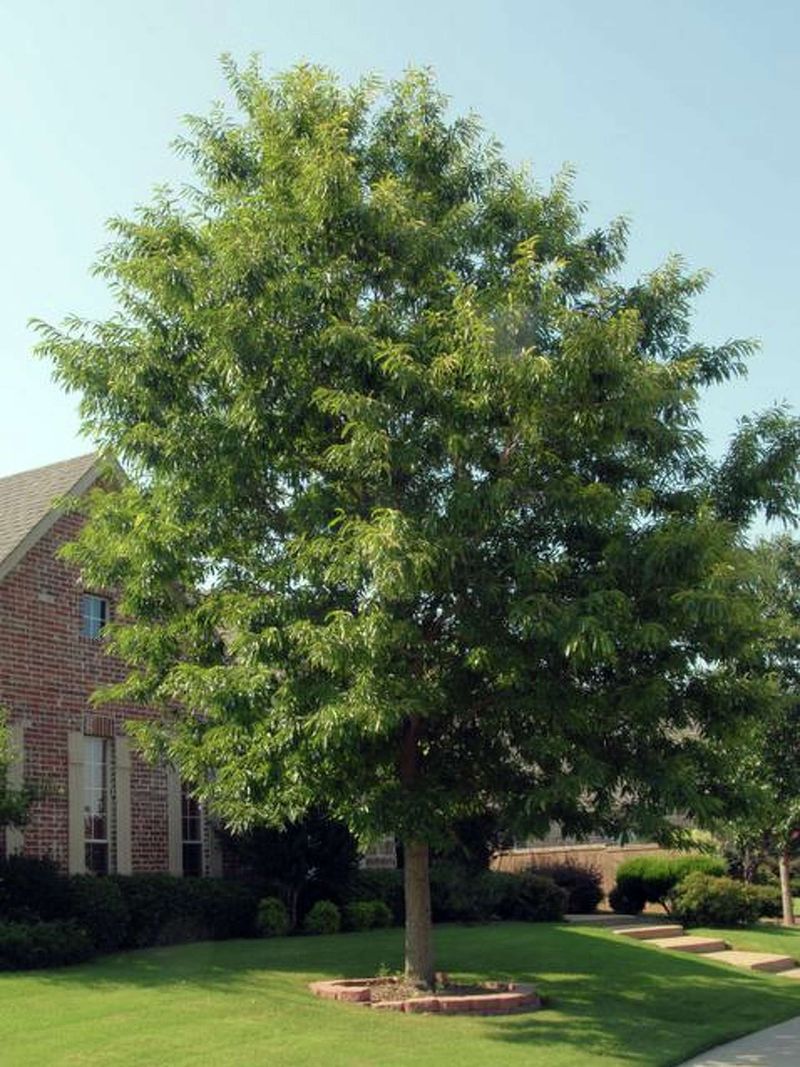
Picture a stately tree throwing a generous, rounded shadow across your back lawn by late afternoon.
That is the Chinkapin Oak (Quercus muehlenbergii), one of the stronger native answers to oak wilt.
It is notably more resistant, so it matures without keeping you up at night.
Size is where it earns its keep.
Chinkapin Oak climbs to 50 to 75 feet tall and 40 to 70 feet wide, all deep green leaves and cool shade.
You do not see it in every yard, but it genuinely deserves wider planting across Texas.
Soil flexibility is its quiet superpower.
It naturally hugs river bottoms in North Central and East Texas, thriving in moist, well-drained ground.
Whether you have blackland clay up north or acidic sandy soil in the east, this lime-loving oak adapts.
It grows at a medium clip and can establish fairly fast under good conditions, so you are not waiting a lifetime for shade.
Give it full sun for the best canopy.
Fall color is understated, but that handsome gray, platy bark keeps the tree interesting even in bare winter.
3. Bur Oak Grows Big And Beautiful
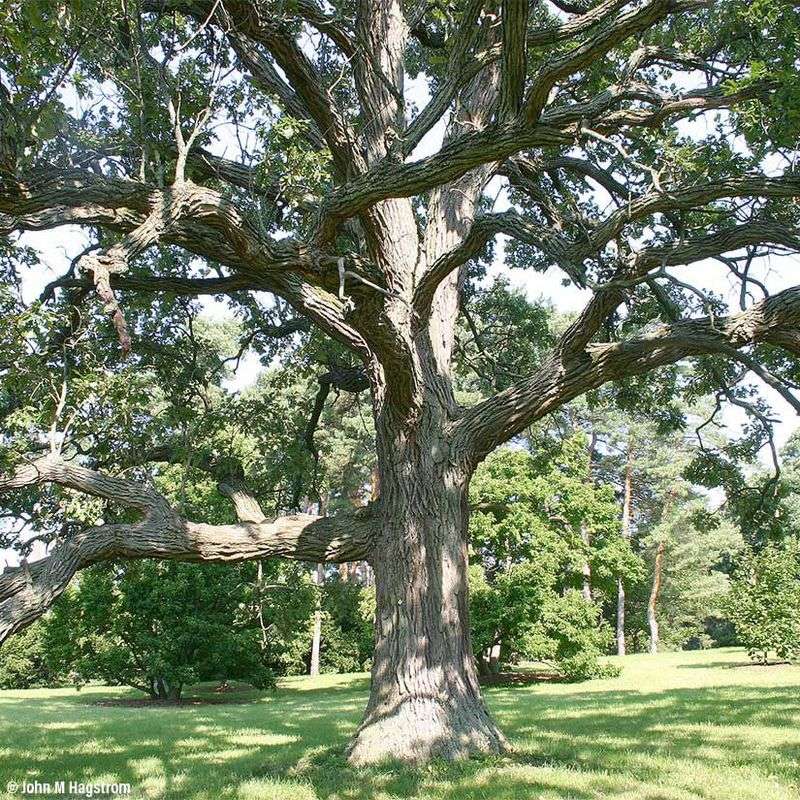
If you want a tree with real presence, the Bur Oak (Quercus macrocarpa) makes a bold statement and laughs off oak wilt too.
Huge leaves, a substantial trunk, coarse bark that looks carved by weather.
It grows to 50 to 60 feet tall with a similar spread.
People call it slow, but that reputation is a little unfair.
A Bur Oak can add 1 to 2 feet of height a year, and in fertile soil with steady moisture it may push 2 to 3 feet once its roots settle after the first couple of years.
Adaptability is its calling card.
Bur Oaks turn up from dry upland slopes to moist bottomlands, handling both the blackland clay of Central Texas and the caliche of the Hill Country.
Give it full sun and it settles in like it always belonged there.
These trees are built for the long haul, averaging 200 to 300 years, with some pushing past 400.
Just be ready for the acorns, which are big enough to notice underfoot and beloved by squirrels and deer.
A messy blessing, honestly.
4. Montezuma Cypress Brings Evergreen Feel Without The Wilt Risk
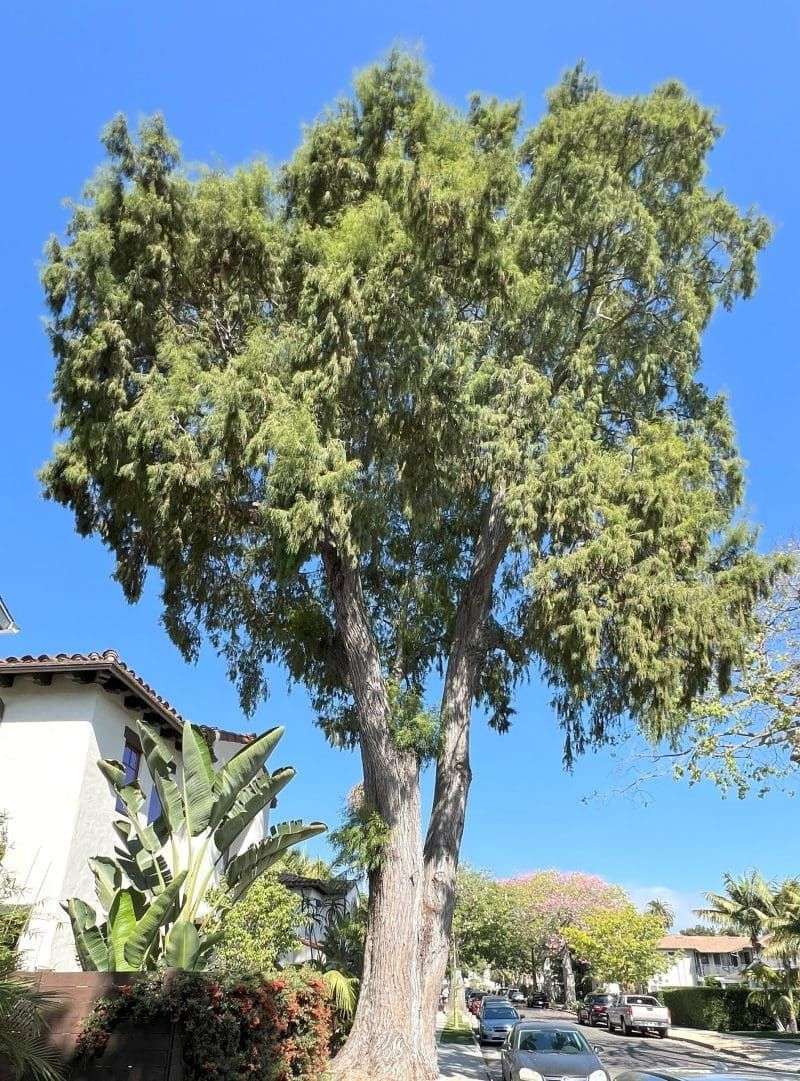
Step outside the oak family and the Montezuma Cypress (Taxodium mucronatum) opens a whole new door.
Since it is not an oak, oak wilt cannot touch it.
This majestic native from Mexico settles in beautifully along the Gulf Coast and South Texas, and in our milder winters it can look nearly evergreen.
Speed is the headline.
Under good conditions this tree adds more than 3 feet of height a year, so you get real, usable shade within a few seasons instead of a decade.
It reaches 75 to 80 feet tall and 50 feet wide, with a graceful, spreading crown.
Homeowners love one specific thing about it.
Unlike its cousin the Bald Cypress, Montezuma Cypress usually skips the surface knees that trip up mowers and toes.
That makes it genuinely lawn-friendly.
It handles swampy clay and summer drought alike, a rare kind of toughness.
Water it deeply for the first one to two years to fuel that fast growth, then it becomes moderately drought-tolerant.
Plant it in full sun or part shade, and enjoy watching it race skyward.
5. Bald Cypress For Wet Or Dry Spots
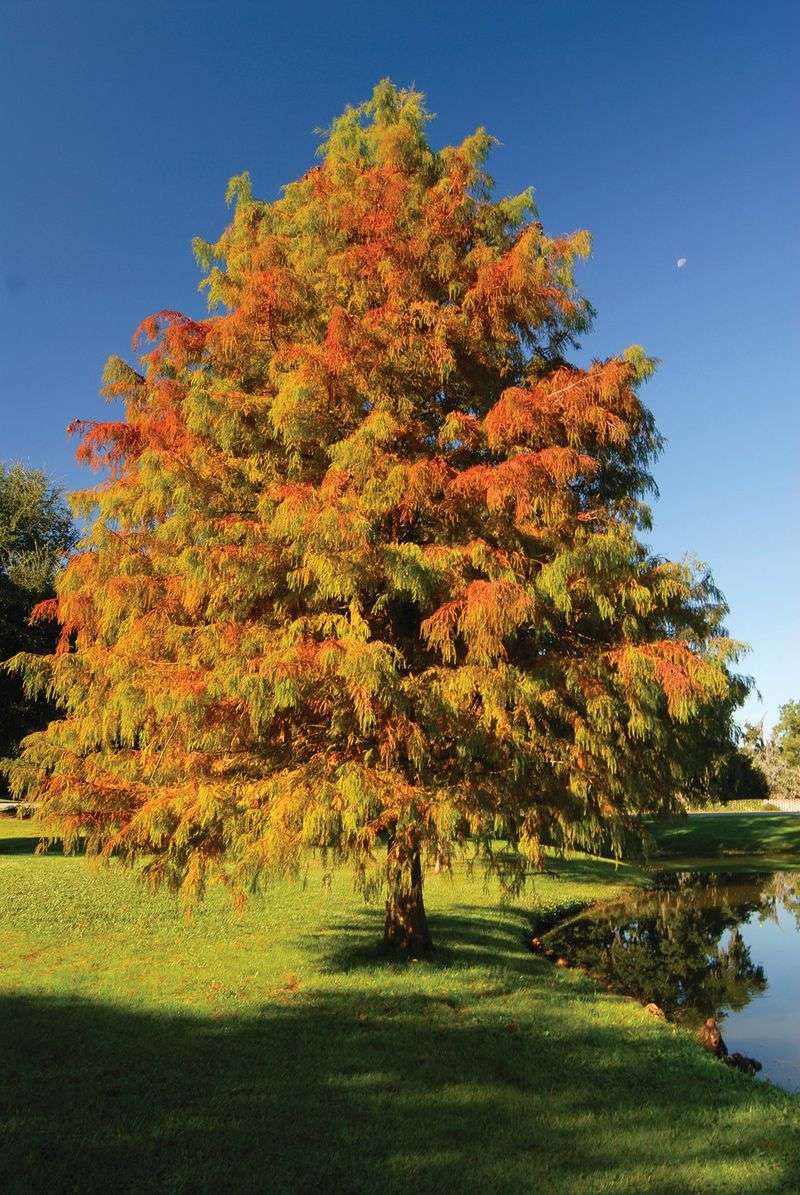
Most folks picture the Bald Cypress (Taxodium distichum) knee-deep in a swamp, and it does love water.
But this deciduous conifer surprises people.
It performs remarkably well on drier ground once established, and being a non-oak, it has zero oak wilt risk.
Versatility is its whole personality.
It slots perfectly into the acidic sandy soils of East Texas where it is native, yet it also settles happily into blackland clay.
Few trees stretch across such different ground without complaint.
It grows at a moderate 1 to 2 feet a year and reaches 50 to 70 feet in most yards, though wild giants have topped 100.
The feathery, light green needles cast a soft, dappled shade, then turn coppery bronze in fall before dropping.
And that leaf drop is a hidden gift.
Bare winter branches let warming sun reach your house when you want it.
Plant in full sun, keep young trees consistently moist, and know that established ones ride out seasonal droughts.
Pruning is minimal, just dead wood and low branches now and then.
6. Cedar Elm A Hardy Survivor Across Texas
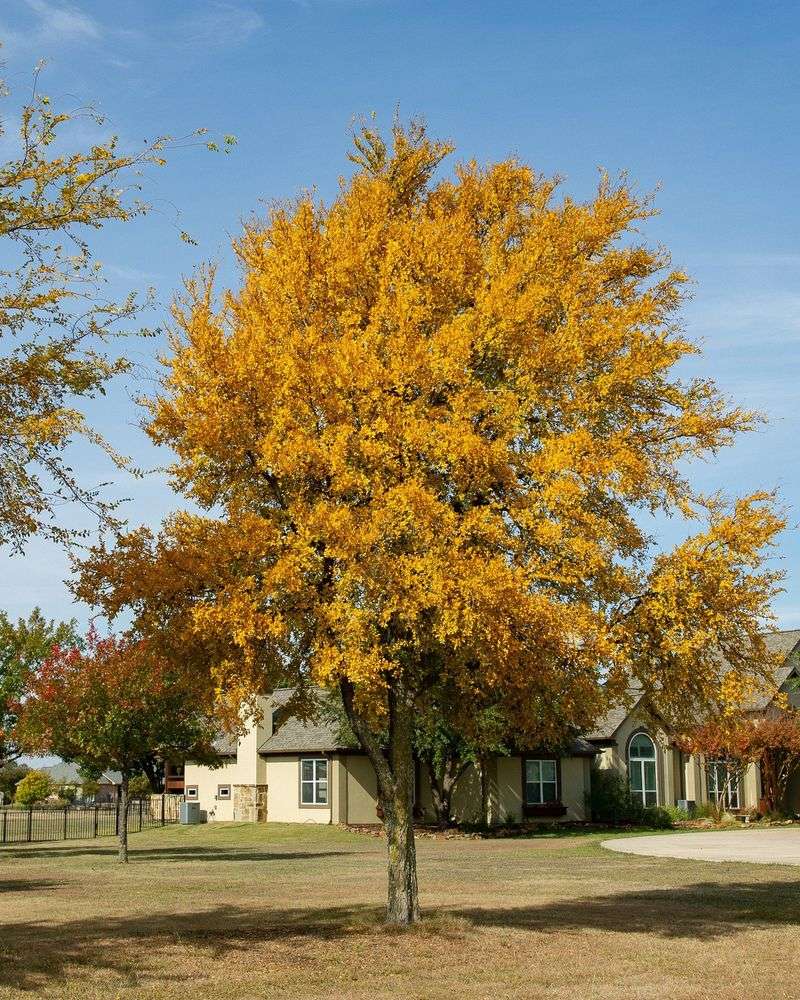
Some trees just refuse to quit, and the Cedar Elm (Ulmus crassifolia) is one of them.
This tough native shades yards from the caliche of the Hill Country to the mixed clays and loams elsewhere, and it is generally resistant to oak wilt.
That resistance is exactly why so many homeowners are turning to it.
Here is the honest catch.
Cedar Elm can catch Dutch Elm Disease, so it is not a flawless pick.
But for gardeners in zones 6 through 9 wanting a resilient shade tree, it remains a strong candidate with basic care.
It grows at a medium pace, roughly 1.5 to 2.5 feet a year, eventually reaching 40 to 50 feet tall and about as wide.
Dense branches and small, deep green leaves stack up into serious shade through our scorching summers.
Then autumn arrives and the whole canopy turns golden yellow, a genuine show.
Plant it in full sun for the best form, though it tolerates partial shade.
Once established, it drinks little to moderate water and even shrugs off periodic flooding.
A true Texas survivor.
7. Smart Planting Makes All The Difference For New Trees
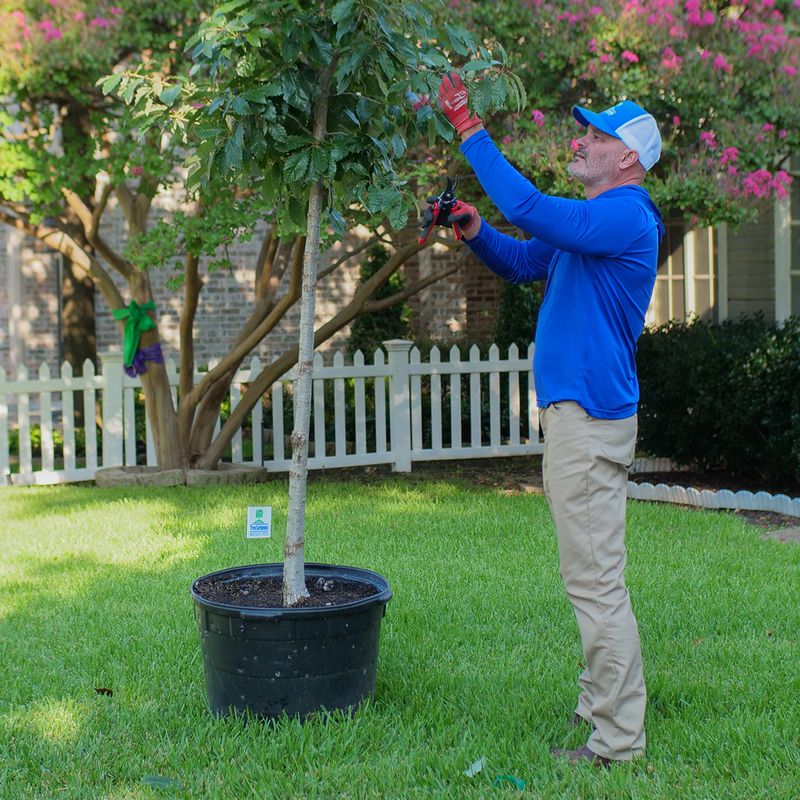
Picking the right tree is only half the job.
Getting it into the ground correctly decides whether it thrives or sulks.
In Texas, late fall through early winter is the golden window, when the tree is dormant and roots can quietly spread before summer arrives swinging.
Dig the hole two to three times wider than the root ball but no deeper.
You want the root flare, where the trunk widens at the base, sitting level with or slightly above the surrounding soil.
Skip the fancy amendments.
Backfill with the same soil you dug out, then settle it with water, never stomping it hard enough to crush fine roots.
Once it is in, ring the tree with a 2 to 3 inch layer of wood chips or pine bark out to the drip line, keeping mulch a few inches off the trunk.
Watering matters most for the first two years.
Give it about 6 to 8 gallons per diameter inch of trunk each week, one slow, deep soak instead of daily sprinkles.
Protect the trunk from mowers, string trimmers, and hungry deer with a wire cage at least 3 feet wide and 4 feet tall.
Hold off on fertilizer that first season.
Texas A&M AgriLife Extension backs this patient approach, and your tree will reward it.
8. Protecting All Your Oaks From Oak Wilt
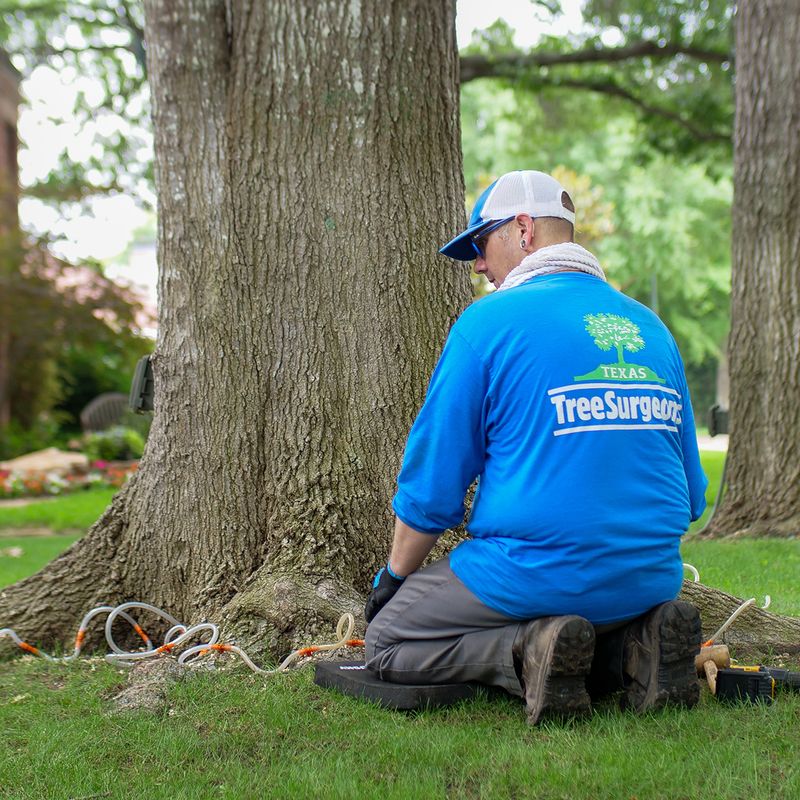
Even as you plant resistant trees, your existing live oaks and red oaks still need a guardian.
Oak wilt moves two ways, through connected roots and through sap-feeding beetles.
Live oaks are especially exposed underground, because their roots often graft together, letting the fungus creep tree to tree at roughly 75 feet a year.
The above-ground path is sneakier.
Fungal mats form under the bark of dying red oaks, mostly in spring, and tiny sap beetles show up, pick up spores, then carry them to any fresh wound on a healthy oak.
That is where your timing becomes the whole ballgame.
The single most powerful move is simple.
Do not prune or wound any oak from February through June, when those beetles are busiest.
If you absolutely must cut, at any time of year, paint every wound with pruning sealant right away.
That thin coat acts as a locked door against spores.
Also, do not haul unseasoned firewood from infected red oaks, since it can carry live fungal mats to a new spot.
Learn how oak wilt travels, and you can quietly protect not just your trees but your neighbor’s too.
That is a good feeling to carry into the evening.
9. Matching The Right Tree To Your Region
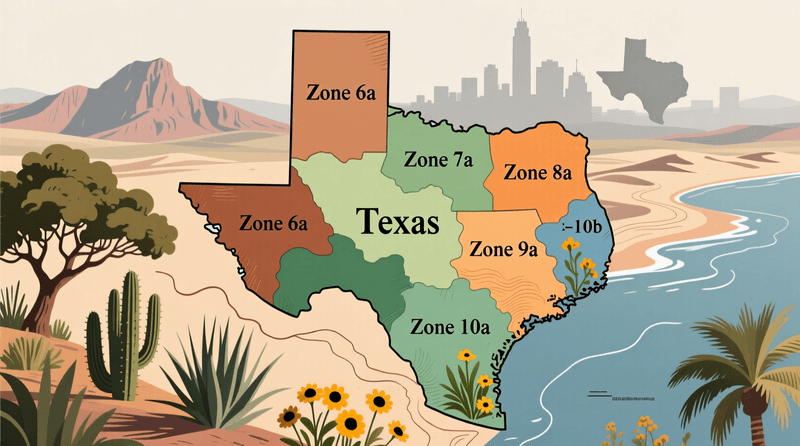
Texas is not one climate, it is a dozen wearing the same hat.
The tree that flourishes in East Texas may struggle in the caliche west of Austin, so matching the tree to your dirt saves years of frustration.
Out in the Hill Country and West Texas, where soil is shallow, alkaline, and often solid rock a shovel’s depth down, lean on Lacey Oak.
It handles limestone the way most trees only dream of.
In North and Central Texas blackland clay, Bur Oak and Chinkapin Oak spread wide and settle in for centuries.
East Texas gardeners with acidic sandy soil have it easy.
Bald Cypress belongs there, and Cedar Elm rounds out the mix with its golden fall glow.
Down on the Gulf Coast and into South Texas, where zones run warm toward 10b, Montezuma Cypress races up fast and shrugs off both flooding and drought.
Watch your extremes too.
The Panhandle drops into zone 6b winters, so hardiness matters more than speed there.
Wherever you stand, the goal is the same, a strong native shade tree that outlives the worry.
You started this morning staring at a fading live oak.
You can finish it knowing a cooler, greener yard is genuinely within reach, one smart tree at a time.