
Why North Carolina Gardeners Should Never Squash A Black Rat Snake They Find By The Shed
Follow us on Google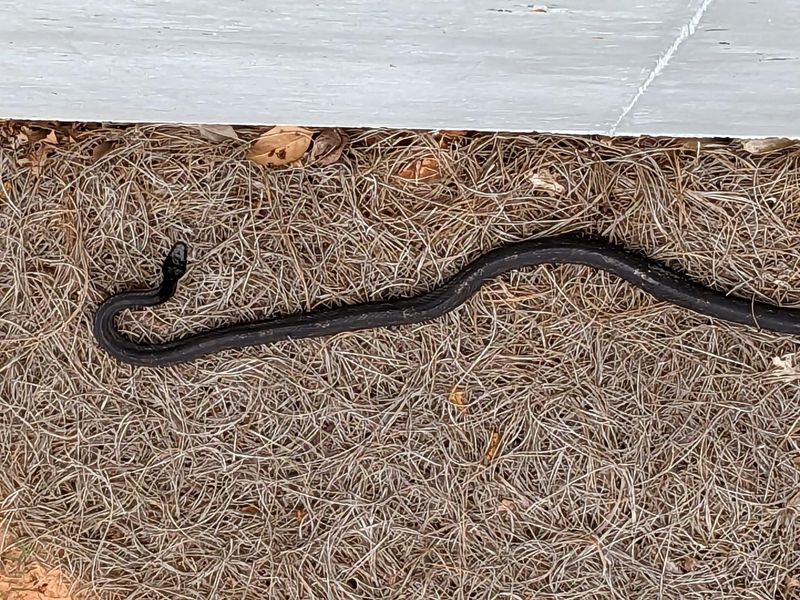
You walk out to grab the garden hose and there it is, a long dark shape coiled against the shed wall, and your first instinct is to reach for the nearest shovel. Hold on.
That snake may actually be doing your yard a quiet favor, and the story is more complicated than it looks from ten feet away. Before you make a move, here is what North Carolina gardeners genuinely need to know.
A Dark Snake Is Not Automatically A Rat Snake
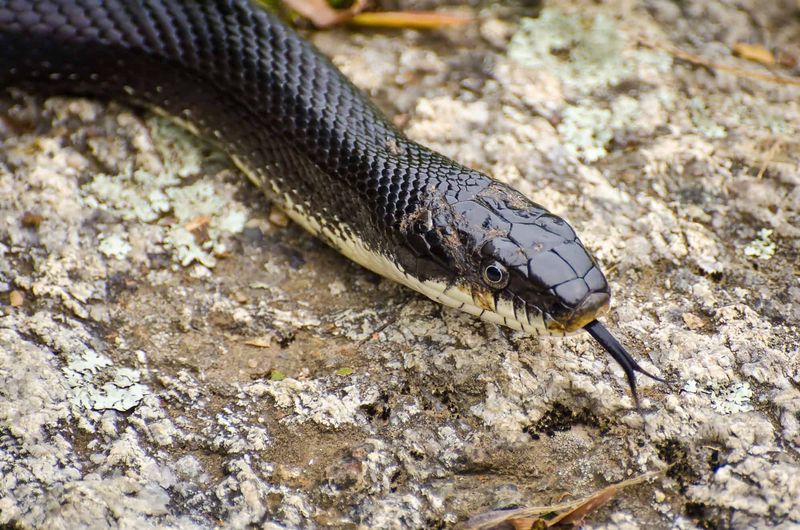
Spotting a thick black snake by the shed feels like an open-and-shut case to most people. It looks dark, it is near the building, so it must be a black rat snake, right?
Color alone cannot tell you that, and acting on that assumption is where things can go sideways fast.
The snake most people picture is the eastern rat snake, Pantherophis alleghaniensis, a species that turns up across all of North Carolina. According to NC State Extension’s guide to the colubrid snake family, adults in the mountains and Piedmont are often glossy black with lighter, checkered bellies and white around the chin and throat.
Move to the Coastal Plain, though, and the same species can show up greenish with dark stripes running along the body. A snake from the Sandhills or the coast may not match the mental image at all.
Size gives you a rough clue: adults commonly reach 5 to 6 feet, and the North Carolina Wildlife Resources Commission’s rat snake profile puts the maximum length around 85 inches. But a big dark snake is not proof of species.
Black racers are also common statewide and look similar at a glance.
North Carolina has six venomous snake species, and some can appear quite dark, especially older cottonmouths in the Coastal Plain. The NC Wildlife reptile catalog lists all of them, and the NC Wildlife venomous snakes guide shows how varied their appearances can be by region.
Do not approach the animal to get a better look at its head shape or eye color. The safest working rule is simple: you cannot identify a snake from color and location alone, so treat every unconfirmed dark snake with the same calm caution.
If It Is An Eastern Rat Snake, Its Help Is Real
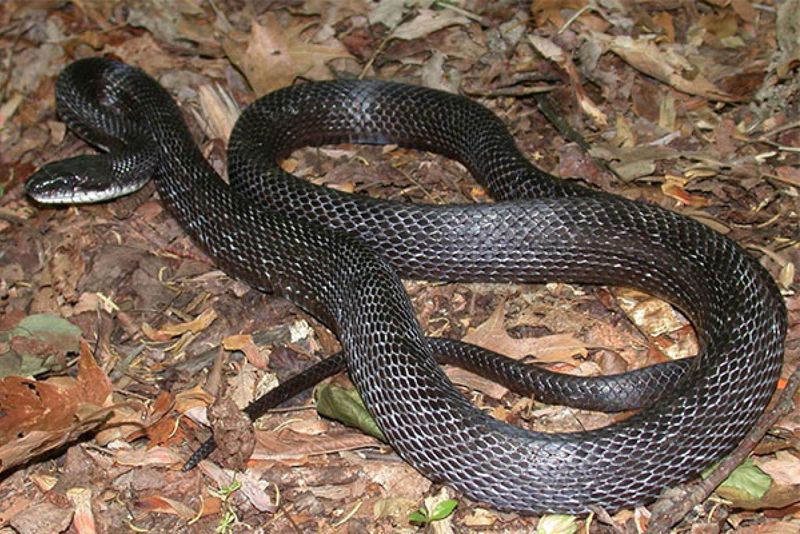
Assuming a qualified look confirms you are dealing with an outdoor eastern rat snake, there is a genuinely good reason to leave it alone. The North Carolina Wildlife Resources Commission describes the species as a common, nonvenomous predator that helps keep pest populations in check, and that description is grounded in what the animal actually does for a living.
Eastern rat snakes eat mice, rats, and voles, the same animals that chew through shed walls, raid stored birdseed, and gnaw on garden irrigation lines. The NC Wildlife rat snake profile also notes that they eat birds, bird eggs, amphibians, and domestic fowl eggs, so the honest picture is a useful predator with real tradeoffs, not a perfectly selective mouse hunter.
If you keep chickens or have active nest boxes, that is worth knowing before you decide the snake is entirely welcome.
Here is where a common claim needs a clear limit. Removing one rat snake does not guarantee a measurable rodent surge in your yard.
What it does is remove one layer of natural predator pressure. NC State Extension’s wildlife management guidance frames wild predators as one component of a broader pest management picture, not a standalone solution.
The CDC’s integrated pest management framework makes the same point: biological controls work best as one layer alongside exclusion, sanitation, and targeted trapping. The rat snake is a helpful neighbor, not a replacement for the work you still need to do around the shed.
Think of it this way: the snake is patrolling your yard for free. Killing it does not solve your rodent problem.
It just means one fewer predator is on the job.
The Shed May Be Offering Food And Shelter
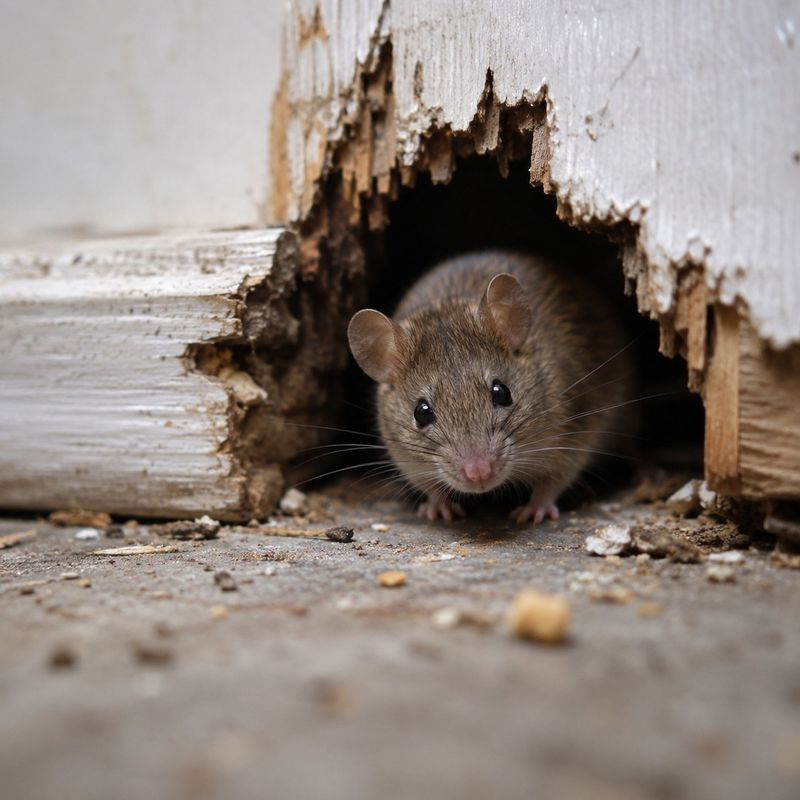
A snake does not show up beside your shed by accident. Eastern rat snakes are good climbers and surprisingly capable of squeezing through small openings, and sheds, barns, garages, and woodpiles give them exactly what they are looking for: shelter and access to prey.
The NC Wildlife rat snake profile confirms that the species regularly enters barns, outbuildings, and attics, typically following the rodents that moved in first. Penn State Extension’s snake resource echoes that pattern: a snake near a structure is usually tracking a food source, not looking for trouble with the homeowner.
Walk around the shed with fresh eyes. Spilled birdseed under a feeder is essentially a free buffet for mice and rats.
An open bag of dog food on a shelf, a loose garbage bin, stacked cardboard, or a woodpile pushed against the foundation all create the kind of cover and calories that attract rodents.
According to NC State Extension’s guidance on structure-invading rats, Norway rats can squeeze through a gap as small as half an inch, and roof rats need even less space than that. Where rodents get in, a rat snake may eventually follow.
Seeing the snake does not tell you how many rodents are actually present. It is a signal worth investigating, not a reason to panic.
Start by looking at what the shed is offering and whether any of it can be cleaned up or secured.
For An Outdoor Sighting, Give It Room
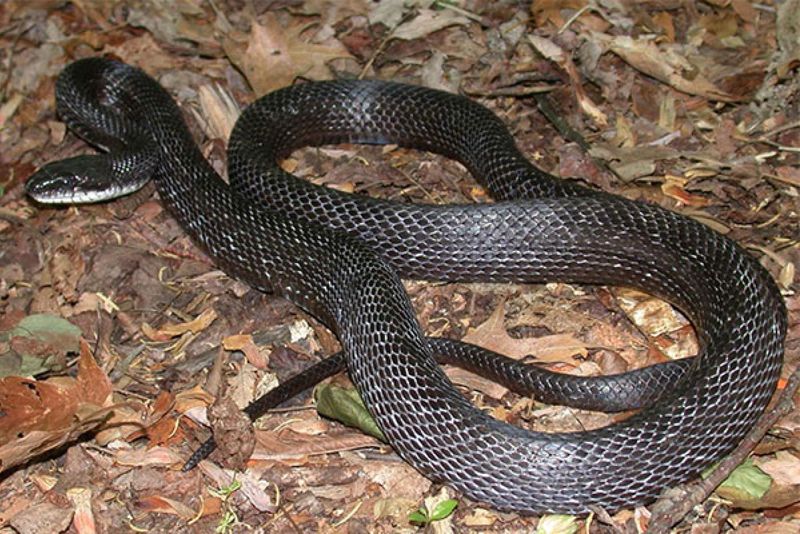
You see it, your pulse jumps, and every instinct says do something. The most useful thing you can actually do is stop moving toward it.
The NC Wildlife spring encounter press release is direct about this: remain calm, give the snake plenty of room, and allow it time to move on its own. Most snakes, including eastern rat snakes, are shy animals that want no part of a confrontation.
Given a clear path and a little patience, the snake will usually disappear within minutes.
Keep children and dogs well back, at least 10 to 15 feet if you can manage it. Do not corner the animal against the shed wall or fence, and do not throw objects to scare it away faster.
A cornered snake that feels trapped will defend itself, and even a nonvenomous bite from a large rat snake is not a pleasant experience.
The NC Wildlife 2025 spring guidance reinforces the same message: give wildlife space and avoid any action that escalates the encounter. The CDC’s wildlife and snakebite guidance adds that most bites happen when people try to handle or kill a snake.
Keep this conditional in mind, though. You should not assume the snake is harmless simply because it looks black and is sitting outdoors.
If you cannot safely maintain distance, or if children or pets cannot be kept back, step inside and contact a qualified wildlife professional rather than attempting to manage the situation yourself.
An Indoor Snake Requires More Caution
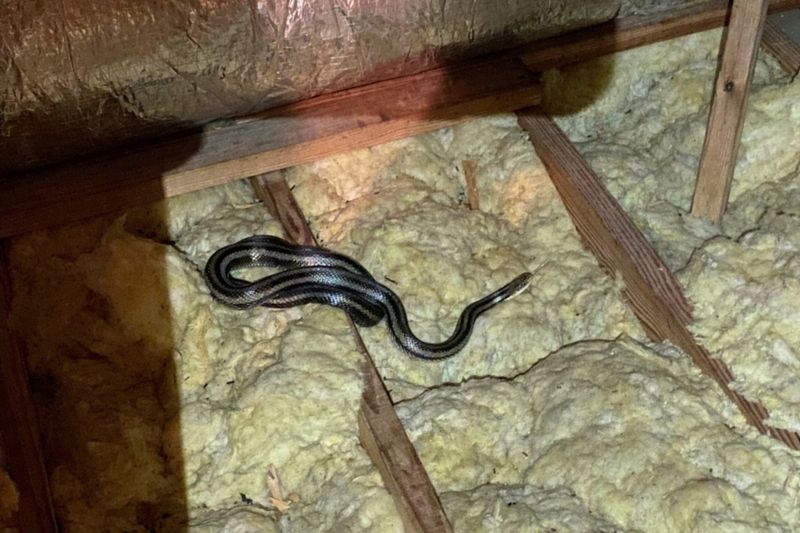
Finding a snake outside near the shed is one situation. Finding one inside the shed, the garage, the attic, or the house itself is a different problem that calls for a calmer, more deliberate response.
Start by closing any interior doors between the room and the rest of the building. Keep people and pets completely out of the area.
Do not try to sweep, pin, trap, or pick up the snake unless you are genuinely certain of what species you are dealing with, and even then, think twice.
NC State Extension’s snake management guide does mention that a confidently identified nonvenomous snake can sometimes be swept outside with a broom, but it also makes clear that identification uncertainty changes the calculation entirely. For a general homeowner who cannot make a confident call, contacting a qualified professional is the safer path, not a sign of overreaction.
The NC Wildlife licensed Wildlife Damage Control Agent directory connects homeowners with professionals who handle exactly these situations. The CDC wildlife guidance echoes the same advice: do not handle wild animals when identification is uncertain.
After the immediate situation is resolved, the more important job begins. A snake inside a structure got in somewhere.
Inspect the foundation, walls, roof line, and utility penetrations for openings and rodent trails. A rat snake in the attic almost certainly followed mice or rats that found a way in first.
Fixing the entry point is what prevents the next visit, and that work matters more than the removal itself.
Do Not Solve The Problem With Risky Shortcuts
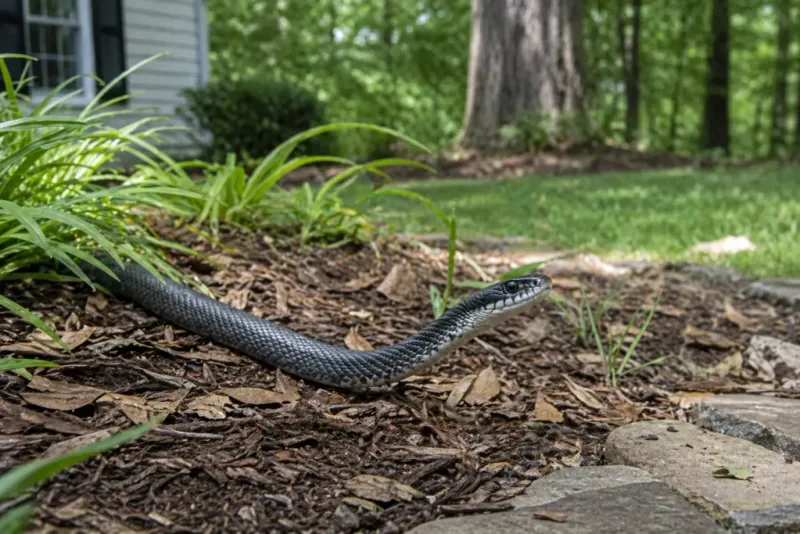
Once the adrenaline fades, a lot of people reach for a quick fix. Mothballs around the shed perimeter, sulfur powder along the foundation, ammonia-soaked rags, or a commercial snake repellent from the hardware store all feel like they should work.
They generally do not.
NC State Extension’s snake resource is clear that commercial snake repellents have not been scientifically shown to be effective, and that chemical products used outdoors can harm people, pets, and the wildlife you are actually trying to protect. Mothballs used outside of sealed containers are a pesticide misuse under federal law and can create real health hazards for children and pets.
Relocating the snake long distances is another shortcut that sounds reasonable but can cause harm. NC State Extension’s post-storm snake guidance notes that snakes have distinct home ranges and that moving one far from where it was found significantly increases its mortality.
If a nonvenomous snake is removed from a building by a professional, the guidance suggests releasing it on the same property when possible.
On the question of legal status, North Carolina’s nongame wildlife regulations are specific and worth checking directly. The NC Wildlife possession and collection rules and the nongame possession guidelines cover this in detail.
Direct any regulatory or wildlife conflict questions to the NC Wildlife Resources Commission or a licensed Wildlife Damage Control Agent rather than making assumptions.
One more point that cannot be softened: if a bite occurs and you suspect a venomous snake was involved, go directly to an emergency room. CDC and NIOSH guidance on venomous snake encounters is explicit that cutting, sucking, icing, or applying a tourniquet are all unsafe and should never be attempted.
Prompt medical care is the only right answer.
Make The Shed Less Attractive To Rodents
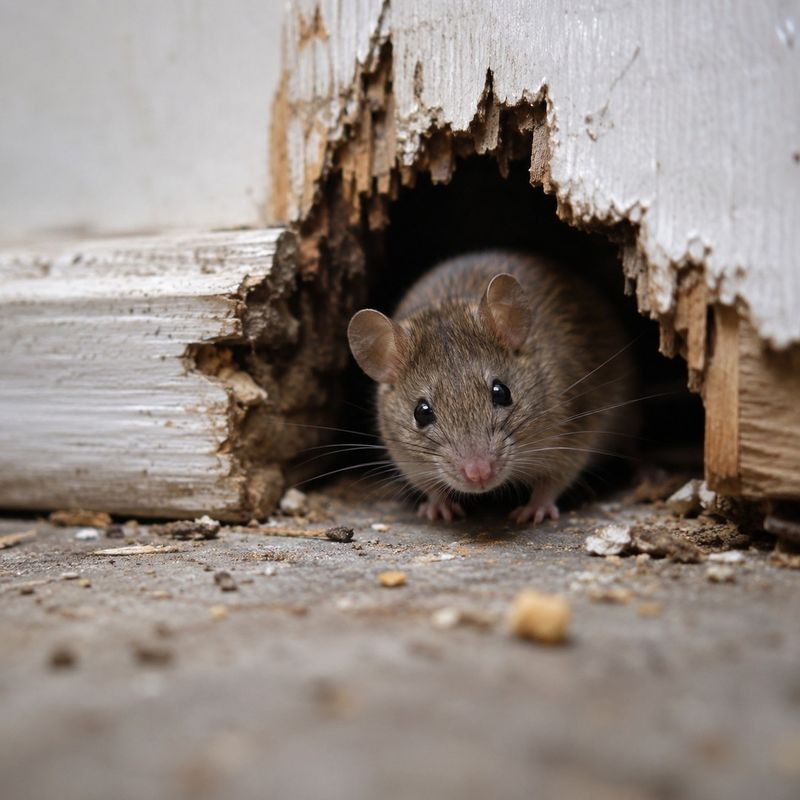
The most durable fix is not about the snake at all. It is about making the shed and the surrounding yard less appealing to the rodents that attract snakes in the first place.
Start with the gaps. CDC guidance on sealing up against rodents recommends closing any opening at least 1/4 inch wide, which is smaller than most people expect.
Use hardware cloth, steel wool packed into gaps, or caulk rated for exterior use depending on the surface. Check where pipes and wires enter the building, along the roofline, and around the base of the shed door.
The NC Wildlife guide to preventing conflicts with snakes recommends removing spilled birdseed and pet food promptly, securing garbage in bins with tight lids, and reducing clutter inside and around the shed. Stacked cardboard, old tarps, and piles of scrap wood are exactly the kind of cover that mice and rats use to move around safely.
Firewood is its own category. Store it at least 20 feet from the shed or house if you can manage the distance, and keep it elevated off the ground on a rack so air moves under it.
A woodpile pushed against a foundation is practically a welcome mat for rodents and the snakes that follow them.
NC State Extension’s rat management guidance frames exclusion as the foundation of any lasting rodent control program. These steps improve conditions around the shed considerably, though they do not promise that wildlife will never return.
A cleaner, tighter shed is simply a harder target.
Let Exclusion Do The Heavy Lifting
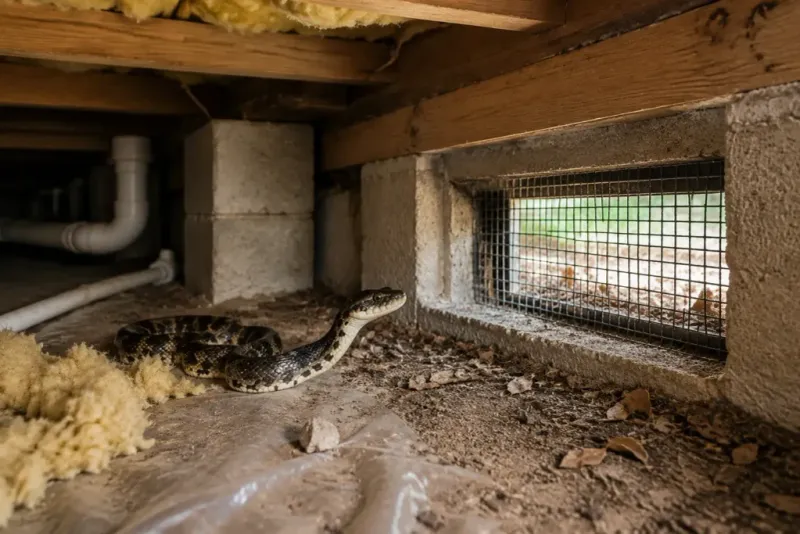
Sparing a confirmed outdoor eastern rat snake keeps one useful predator working in your yard. That is genuinely worth something.
But it does not replace the work you need to do on your own side of the equation.
Rodent control in a North Carolina yard depends on inspection, exclusion, sanitation, and appropriately sized snap traps placed where children and pets cannot reach them. CDC’s integrated pest management guidance puts those physical and mechanical controls at the center of any effective program.
The CDC hantavirus prevention resource reinforces that rodent exclusion is the primary protective step for any structure where people spend time.
NC State Extension’s structure rat guidance describes exclusion as necessary, not optional, for managing rats that have found a way into buildings. A rat snake patrolling the yard adds predator pressure on top of those measures.
It does not substitute for them.
The decision rule for any dark snake near the shed comes down to three steps. Do not kill or approach a snake whose identity you cannot confirm from a safe distance.
If a qualified identification confirms an outdoor eastern rat snake, generally leave it alone and give it room. For any snake indoors, or any encounter where identity or safety is uncertain, contact a qualified professional familiar with NC Wildlife guidance rather than handling it yourself.
A yard that is tight against rodents, clean around the shed, and respectful of the wildlife already living there is genuinely the strongest position you can be in. The snake near the shed is not the problem.
It is usually a sign of one.