
The Native Texas Plant Some Neighborhoods Are Quietly Adding To Keep Scorpions Out Of The Yard
Follow us on Google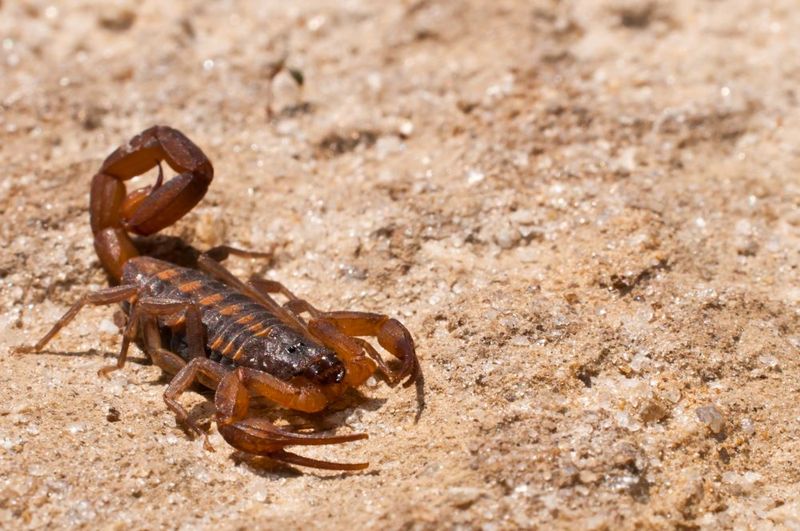
Word gets around fast in Texas neighborhoods, and lately the claim making the rounds is that one native shrub can quietly keep scorpions away from your yard.
The plant behind that idea is Texas sage, and it genuinely deserves a spot in many Texas landscapes.
But before you plant a row of it around your porch hoping to send scorpions packing, there’s something worth knowing: no reliable evidence shows that growing Texas sage actually keeps scorpions out.
What it does offer is real enough on its own terms, and pairing it with a few proven prevention steps is where you’ll actually get results.
The Plant Behind the Claim Is Texas Sage
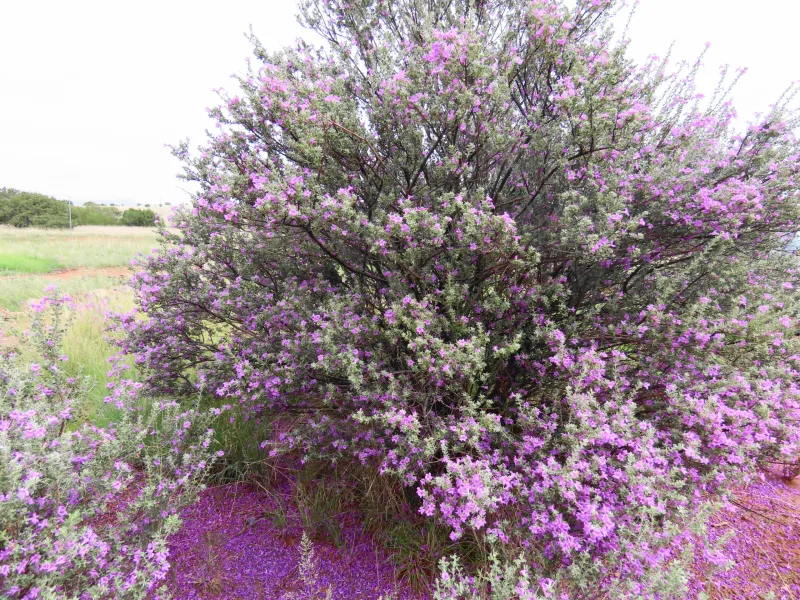
Somewhere between a garden center conversation and a Facebook share, a claim took hold: that a certain native Texas shrub is quietly showing up in neighborhoods as a natural scorpion deterrent.
The plant attached to that story is Texas sage, known botanically as Leucophyllum frutescens and by a handful of common names including cenizo, Texas silverleaf, Texas ranger, and barometer bush.
Texas A&M AgriLife Extension’s cenizo profile describes it as a widespread Texas native shrub prized for its silvery foliage and reliable purple blooms.
Before anything else, a quick name check matters.
Texas sage, meaning Leucophyllum frutescens, is not the same plant as culinary sage, Salvia officinalis, the herb you might find in a kitchen garden.
They share a common name but not a family, a chemistry, or a pest-control history.
Transferring any claim from one to the other does not hold up.
Now for the honest part.
The premise that neighborhoods are adopting Texas sage specifically to keep scorpions out is not something the available research documents.
There is no peer-reviewed study, no Texas extension publication, and no verified trend report establishing that Leucophyllum frutescens repels, excludes, or reduces scorpions in a yard.
The headline’s promise is genuinely appealing, but the evidence behind it is not there yet.
Texas sage is still worth knowing about.
It is a real Texas native with real landscape value, and the rest of this article will give you an honest picture of what it can do and what actually works against scorpions around your home.
Choose It for the Landscape, Not the Promise
Forget the scorpion angle for a moment.
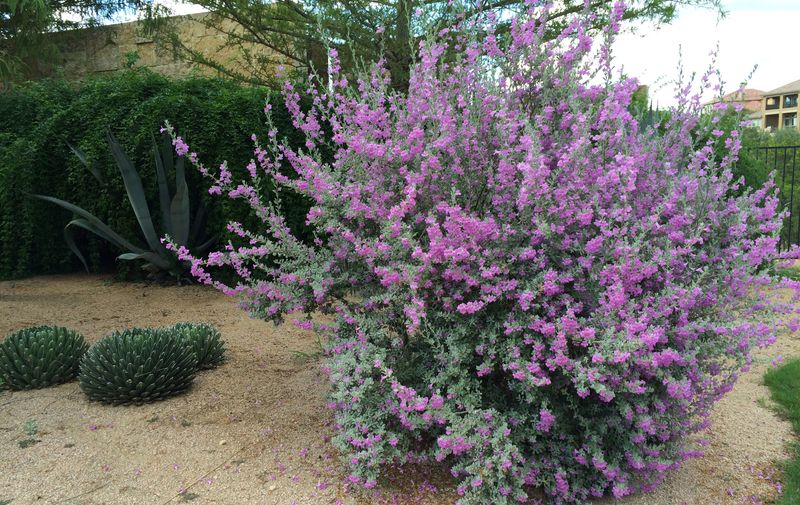
Texas sage earns its place in the right yard on its own merits, and those merits are genuinely impressive for a Texas summer.
The shrub is built for full sun and can handle long dry stretches without complaint.
Missouri Botanical Garden’s plant profile lists it growing roughly 5 to 8 feet tall and wide at maturity, with a preference for alkaline, gravelly, dry-to-medium, well-drained soil.
Many Hill Country and West Texas homeowners already know it as a tough, low-fuss backdrop shrub that looks great without much help from a garden hose.
One of its most talked-about traits is the blooming habit.
Cenizo tends to push out waves of lavender to purple flowers shortly after rainfall, which is why some people call it the barometer bush.
In a landscape starved of color after a dry July, that flush of purple after a late-afternoon storm feels like a small reward.
The regional fit matters, though.
Texas sage performs best in western, central, and southern Texas locations where sun is strong and drainage is fast.
A yard in East Texas with acidic sandy soil or one near the Gulf Coast with heavier clay and higher humidity is a different story.
The Texas A&M Earth-Kind Plant Selector is a practical tool for matching plant choices to your actual regional conditions before you dig a hole.
Plant it for the drought tolerance, the silver foliage, and those rain-triggered blooms.
Those reasons are solid.
The idea that its scent alone will manage a nocturnal arachnid problem is a separate claim, and one the science does not yet support.
Rosemary Oil Is Not a Texas Sage Study
Here is where the scorpion-and-plants story actually comes from, and why it does not transfer to Texas sage the way the headline implies.
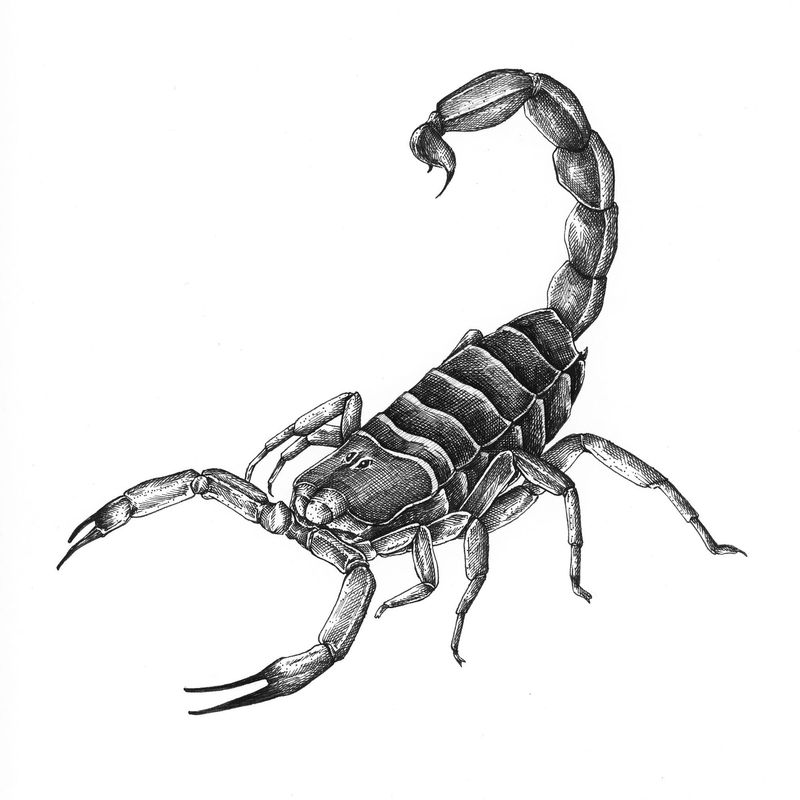
A 2019 laboratory study published in the Journal of Arachnology tested whether striped bark scorpions, Centruroides vittatus, would avoid surfaces treated with rosemary oil.
That study by Kelley and colleagues found that scorpions spent less time on sand treated with rosemary oil than on mineral-oil control sand in a small, controlled arena.
That is a real and interesting finding.
But the experiment used concentrated rosemary oil applied to sand inside a laboratory container.
It did not test living rosemary plants growing in a garden.
It did not test crushed leaves, planted borders, or any other aromatic shrub including Texas sage.
And it did not measure whether scorpions entered homes at different rates or whether outdoor populations changed over time.
A scorpion avoiding one patch of treated sand in a small box is a long way from a neighborhood trend in yard management.
A plant’s natural fragrance, an essential oil extracted from that plant, and a formulated pesticide product containing that oil are three genuinely different things.
What happens in one does not automatically happen in another.
The picture gets more complicated from there.
A 2025 comparative study found that rosemary oil repelled one tested scorpion species but did not produce the same response in a second species.
Texas has 18 scorpion species according to Texas A&M, with the striped bark scorpion being the most widespread.
Responses vary by species, so a result from one lab test on one species cannot be stretched into a general rule about all Texas scorpions or all fragrant plants.
Keep Plantings From Becoming Scorpion Shelter
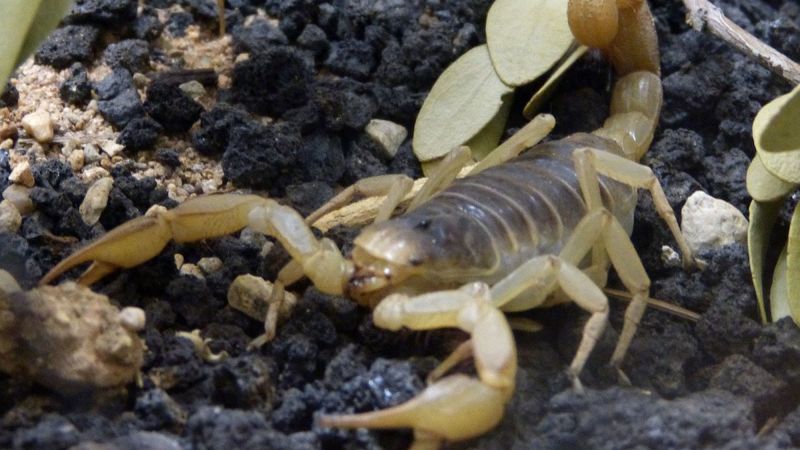
Scorpions are not wandering into yards because a fragrant shrub is missing.
They’re there because the yard gives them what they need: shelter, prey, and a path to the house.
That’s the problem worth solving.
Striped bark scorpions can climb trees, scale exterior walls, and squeeze through surprisingly small gaps.
They use firewood piles, stacked boards, loose stones, decorative boulders, bark mulch, and dense vegetation as daytime hiding spots.
Any continuous sheltered edge running from the yard to your exterior wall is a potential highway.
Texas A&M AgriLife Extension’s scorpion guidance puts habitat modification at the top of the control list, ahead of any spray or product.
The practical steps are straightforward.
Remove trash, old boards, loose bricks, and any clutter sitting close to the foundation.
Store firewood at least 20 feet from the house, and bring only what you will burn directly inside, never a whole armload to sit by the hearth.
Keep grass trimmed short near the structure, and prune any branches or overhanging growth that touches the roofline or siding.
This is also where Texas sage planting position matters.
A mature cenizo can reach 8 feet wide, and planted tight against a wall it creates exactly the kind of sheltered, hard-to-inspect zone that scorpions favor.
Give it room to breathe.
Set it back far enough that you can walk between the shrub and the wall, see the foundation clearly, and spot any weep holes, gaps, or cracks without crouching into dense foliage.
Texas sage is compatible with a sensible yard layout.
Just do not let it become the problem you were hoping it would solve.
Establish Texas Sage Without Overwatering It
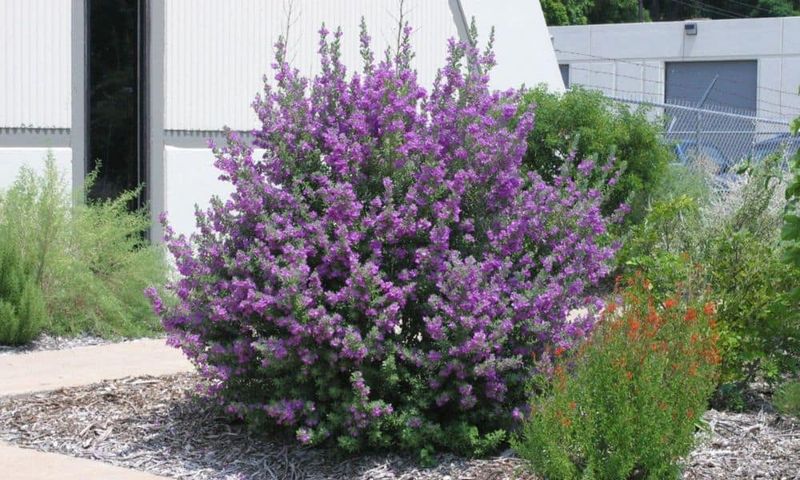
Planting Texas sage is straightforward if you match it to the right conditions from the start.
Get that part wrong and the shrub struggles before it ever gets a chance to show off.
A newly transplanted native shrub is not yet living on rainfall alone.
Texas A&M’s Earth-Kind water guidance recommends wetting soil to at least 6 inches with each watering rather than applying frequent, shallow sprinkling that barely reaches the root zone.
Deep, infrequent watering encourages roots to grow down, which is exactly what a drought-tolerant shrub needs to become self-sufficient.
Plan on supplemental irrigation for roughly the first year after planting, then let the plant gradually adjust to natural rainfall.
Site selection matters more than any watering schedule.
Texas sage wants full sun, meaning at least 8 hours of direct light per day, and fast-draining soil.
Missouri Botanical Garden’s profile for Leucophyllum frutescens notes it performs best in alkaline, gravelly, dry-to-medium, well-drained conditions.
If your soil stays wet after rain or you irrigate frequently for nearby lawn grass, this is not the right plant for that spot.
Account for mature size before you plant.
A shrub that reaches 5 to 8 feet wide needs space now, not after it has crowded a walkway or grown into an eave.
Beds that are persistently wet, heavily mulched, or crammed with other plants near the structure create conditions the shrub dislikes and that scorpions actually find hospitable.
None of this, the watering depth, the spacing, the drainage, changes scorpion numbers.
Good establishment practices produce a healthier shrub, full stop.
The pest prevention work happens separately.
Close the Routes Into the House

A scorpion that finds its way inside your house did not drift through a wall.
It used a real gap, and those gaps are findable and fixable.
Start at the doors.
Loose-fitting exterior doors with daylight visible at the bottom or sides are common entry points.
Weather-stripping is a cheap fix that pays off in multiple ways, from pest exclusion to air-conditioning efficiency.
Windows get the same treatment: repair or replace any screen with a hole or a bent frame that leaves a gap at the corner.
Texas A&M’s venomous animals publication specifically lists weather-stripping and screen repair as part of scorpion exclusion.
Move to the exterior walls next.
Pipes entering the house, gaps around roof eaves, masonry cracks, and weep holes in brick veneer are all documented entry routes.
A can of foam sealant handles most pipe penetrations.
Weep holes present a dilemma since they serve a drainage function in brick construction, but they can be fitted with small mesh inserts designed to keep pests out while preserving airflow.
The Texas A&M scorpion identification and control page reinforces that sealing cracks and crevices around the structure is a core prevention step.
Walk the perimeter of your house in good light, get low, and look at the foundation line, the utility penetrations, and any place where two different building materials meet.
Those joints are where gaps open over time.
No fragrant plant closes a gap in a door frame.
Structural exclusion is the step that actually controls what enters the building, and it works whether or not scorpions are your primary concern.
Use Labeled Control Products Only When Needed
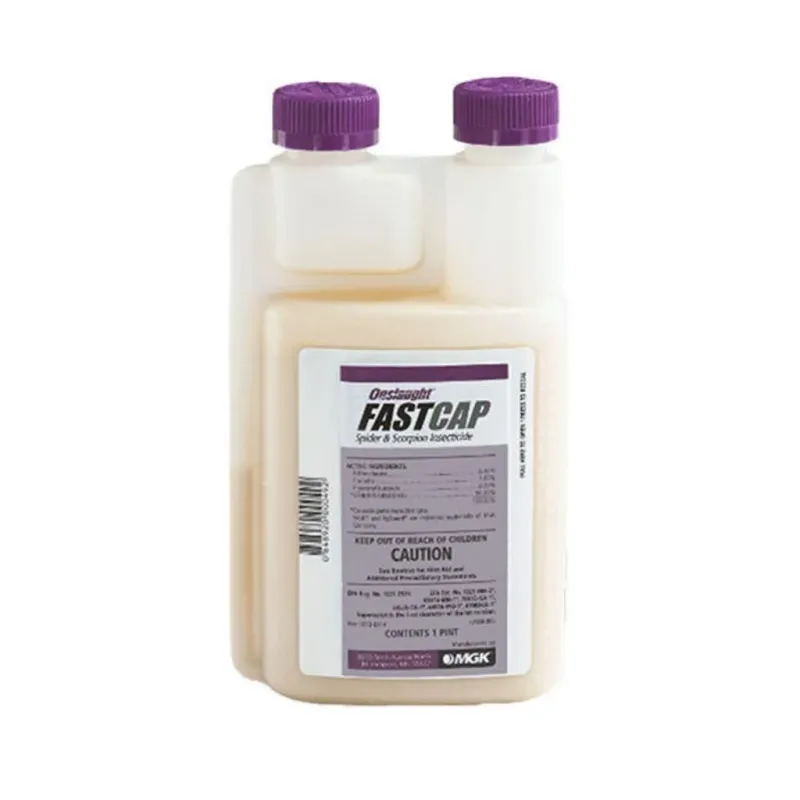
Habitat modification and structural exclusion do the heavy lifting.
When those steps are in place and you still want an extra layer of control, labeled pesticide products are an option, used correctly and proportionately.
Texas A&M is direct about this: scorpions are difficult to control with insecticides alone.
Products work best as a supplement to the debris removal, firewood storage, and gap-sealing work already described.
The AgriLife scorpion publication notes that exterior treatments are generally applied around the foundation and up to about 1 foot above ground level on exterior walls, as well as around doors, window frames, eaves, and visible cracks.
Only products specifically labeled for scorpion control on the intended surface should be used, and the label governs everything: dosage, mixing ratios, personal protective equipment, reentry intervals, and where on the property the product may be applied.
Read it before you open the container.
Some labeled products use naturally derived active ingredients.
Texas A&M’s consumer scorpion guidance lists rosemary oil, cinnamon oil, clove oil, thyme oil, peppermint oil, and pyrethrum among ingredients found in some scorpion-control products.
These tend to break down faster than synthetic options, which means they may need more frequent reapplication and may not provide the same residual control.
That is useful information, not a reason to skip them, just a reason to have realistic expectations.
Do not substitute homemade oil sprays or undiluted essential oils.
Concentration, toxicity to non-target organisms, runoff risk, and plant injury all vary in ways that make unlabeled applications genuinely risky.
University of Florida IFAS Extension’s guidance on natural pest-management products covers why formulation and concentration matter even for plant-derived ingredients.
On sting safety: Texas A&M’s venomous animals publication states that none of Texas’s scorpion species are classified as deadly, though stings can cause significant pain, allergic reactions, and serious symptoms in some people.
An ice pack may ease local pain, but if breathing becomes difficult, swelling worsens, or pain is severe, get medical attention promptly.
And through all of it, Texas sage remains what it always was: a beautiful, drought-tough native shrub that earns its place in the right Texas yard on its own terms.