
That Woodchuck Under Your Shed Moves A Lot Of Soil And May Shelter Other Wildlife, But The Numbers Need Context
Follow us on Google
Spot a fresh mound of dirt under the shed and your first instinct might be to grab a shovel or call pest control.
Before you do anything, it helps to know what is actually happening down there, because the animal doing the digging earns more credit than most homeowners give it.
Woodchucks, also called groundhogs, are widespread across the eastern and central United States, and their burrows quietly shape the soil and shelter other backyard creatures in ways worth understanding.
The real question is not whether the animal is useful, it is whether this particular one is causing damage you cannot live with.
The Burrower Is A Woodchuck
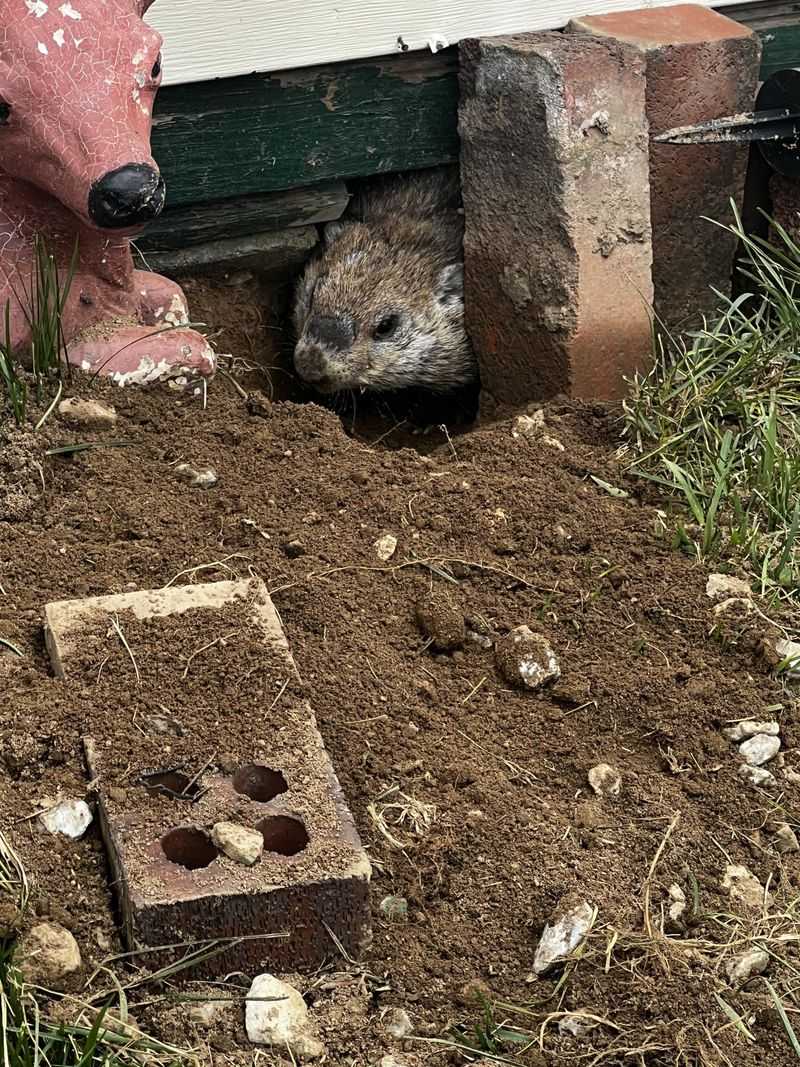
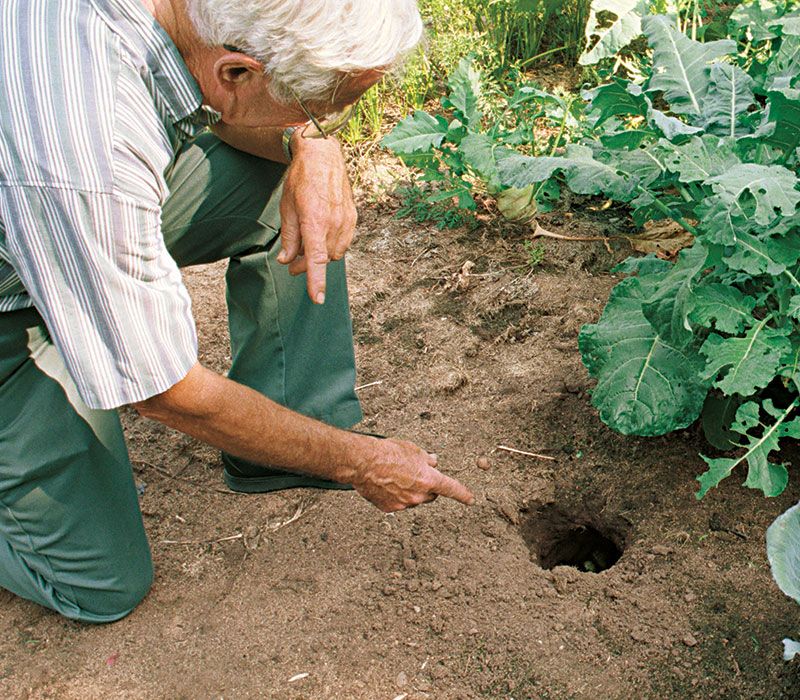
Pull back the lattice on almost any suburban shed and you may find a hole roughly the size of a softball, surrounded by a fan of loose soil.
That entrance belongs to a woodchuck, Marmota monax, one of the most common burrowing mammals in the eastern and central United States.
The animal lives in fields, woodland edges, roadsides, fencerows, pastures, and gardens, and it has adapted well to neighborhoods wherever open ground meets a little cover.
A main entrance is typically about 10 to 12 inches across, but the hole you can see represents only part of what is underground.
Missouri Extension’s woodchuck management guide describes burrow systems that can reach 25 to 30 feet in total length and as much as 5 feet in depth, though dimensions vary considerably from one animal and one site to the next.
Most systems include at least one hidden escape entrance with no mound, which can be easy to miss when you are walking the yard.
Inside, the burrow is divided into chambers.
Woodchucks use separate areas for sleeping, raising young, hibernating, and waste.
Penn State Extension notes that the main entrance has a visible dirt mound while secondary exits often do not, which matters a great deal before any exclusion work begins.
The digging does create local ecological effects on soil and can provide shelter for other animals after the woodchuck moves on, but the precise numbers attached to those effects in popular headlines are not established measurements.
A burrow is not automatically an emergency.
Rutgers Cooperative Extension puts it plainly: most woodchuck burrows are not problems and can simply be left alone.
The decision to act depends on whether there is actual structural damage, erosion, crop loss, or a genuine safety concern at your specific site.
Its Digging Changes Soil In One Small Area
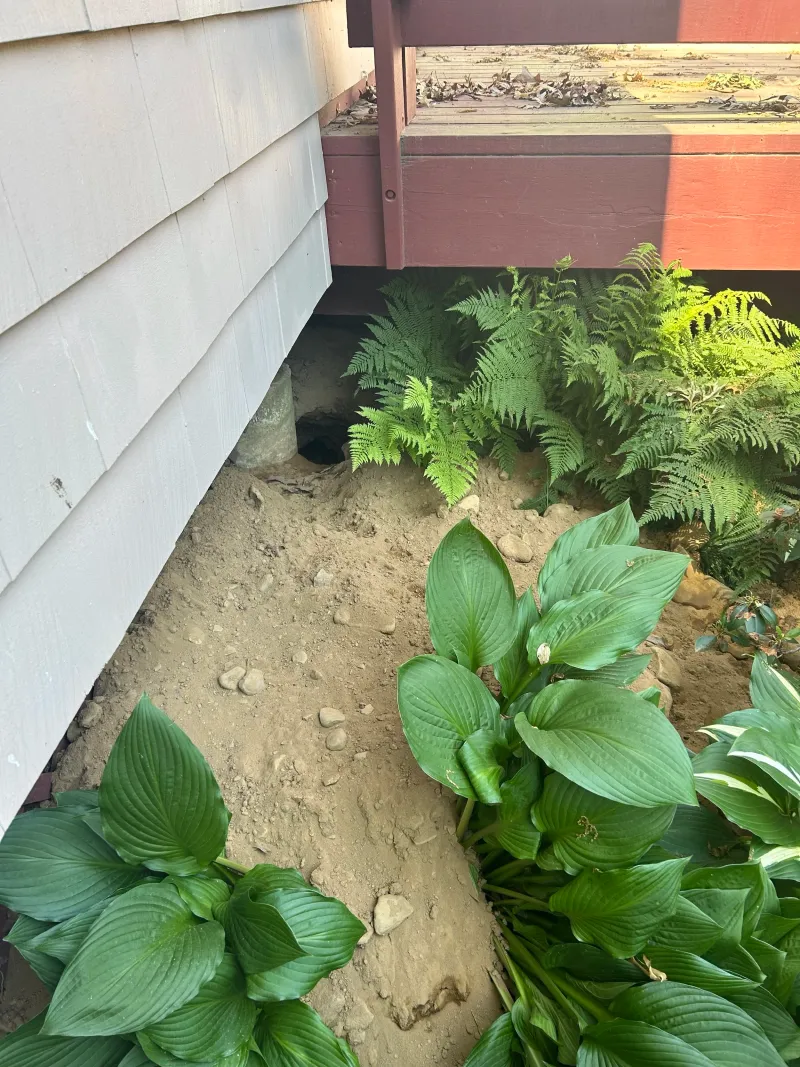
Underneath the shed, the woodchuck is doing something that soil scientists find genuinely interesting.
Burrowing physically moves earth from lower layers to the surface, mixes organic matter into mineral soil, and creates channels that water and air can follow.
The patch of ground directly around an active den can end up with a different texture, drainage pattern, and nutrient profile than the surrounding yard.
A broad review of land-animal ecosystem engineering, published in the Journal of Animal Ecology, documents how burrowing mammals can reshape soil structure and small-scale habitat across many species and landscapes.
A separate global meta-analysis covering 64 soil-disturbing vertebrates found average increases in soil nitrogen, phosphorus, plant productivity, and plant recruitment on disturbed sites, according to research in Global Ecology and Biogeography.
Those findings apply to burrowing vertebrates broadly, not to a single woodchuck under a single shed, so they cannot be converted into a precise gardening benefit for your yard.
The more accurate description is that the animal locally disturbs and loosens soil around the den.
That can reduce compaction in a small patch, encourage drainage in one corner of the yard, and move nutrients between layers.
It can also expose bare soil that erodes in rain, create depressions that collect water, and weaken the ground immediately beneath a structure.
Think of the burrow as a small-scale experiment happening in one concentrated spot, not a service being performed across the whole property.
Near an open field or garden edge, the effects may be neutral or mildly helpful.
Near a foundation, retaining wall, or frequently traveled path, the same digging can become a problem worth addressing.
The 700-Pound Number Is An Estimate

Seven hundred pounds sounds authoritative, like something measured in a lab with a scale and a stopwatch.
The number actually comes from a back-of-the-envelope calculation done in 1988 by Richard Thomas, a New York Fish and Wildlife technician, who was working through the old tongue-twister question about how much wood a woodchuck could chuck.
The National Institute of Environmental Health Sciences describes the method: Thomas estimated a burrow covering roughly 35 square feet and assumed soil weighing about 20 pounds per square foot, then multiplied.
The result was a reasonable illustration, not a measured average for woodchucks in general.
Burrow dimensions vary enough that applying one set of numbers to every animal is unreliable.
Missouri Extension describes systems that may reach 25 to 30 feet long and up to 5 feet deep, but those figures represent the larger end of the range.
A burrow dug in a dry, sandy yard will displace a different weight of soil than one dug in heavy clay after a wet spring.
Moisture content, soil texture, organic matter, and compaction all change how much a cubic foot of earth actually weighs.
The calculation also does not tell you how much soil one animal moves in a single season, whether all of that soil stays displaced, or whether the disturbance produces a net benefit at that location.
A woodchuck can clearly excavate a substantial amount of earth over the course of digging and maintaining a burrow system.
That fact is worth knowing.
But treating 700 pounds as a standard seasonal output or a guaranteed soil-improvement service overstates what the math can actually support.
The number is a useful illustration of scale, and it is fine to share it that way, just not as a measurement.
Abandoned Dens Offer Potential Shelter
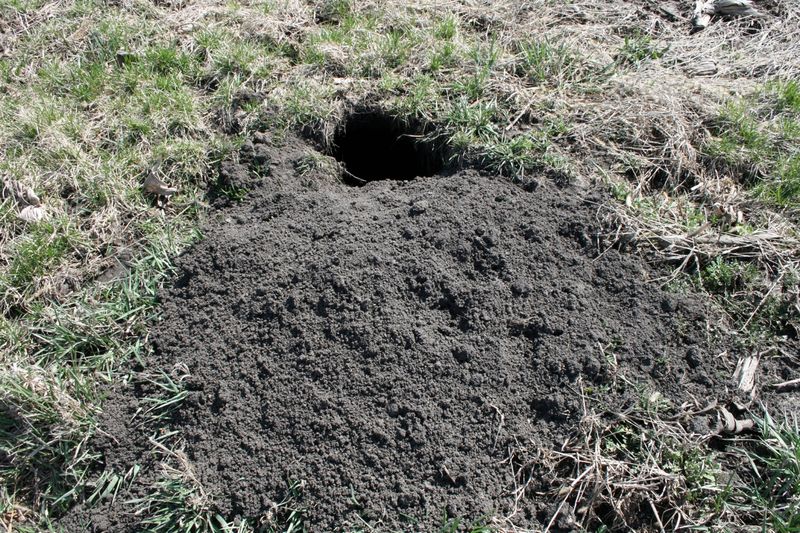
Once a woodchuck moves on, the burrow does not sit empty for long in many yards.
The tunnel system represents ready-made shelter that other animals can use without digging a single inch themselves.
Regional wildlife sources document a range of species that may move into or pass through abandoned dens, including cottontail rabbits, raccoons, red foxes, striped skunks, river otters, eastern chipmunks, weasels, Virginia opossums, meadow voles, shrews, several snake species, ground-nesting birds, and various amphibians.
Rutgers Cooperative Extension and Virginia Cooperative Extension both note that woodchuck burrows become resources for other wildlife after abandonment.
The University of Wisconsin-Stevens Point adds that the burrow system can function as a kind of neighborhood infrastructure for small mammals and other animals sharing the same habitat patch.
What those sources do not establish is a guaranteed count of 20 species for any one backyard burrow.
That number circulates online, but no reliable research pins it to a single den.
Whether another animal actually uses the burrow depends on local habitat, what predators are active nearby, the burrow’s condition, and whether the original occupant has truly left.
Some species may shelter in the tunnel briefly during a rainstorm or a cold snap.
Others may use it for seasonal nesting.
A fox might enlarge the main chamber and raise a litter there.
The same structure can mean very different things to different animals.
The honest claim is that an abandoned woodchuck burrow may provide shelter for many kinds of wildlife, and that possibility is worth keeping in mind before you fill it in.
When Wildlife Creates A Real Conflict
A woodchuck in the far corner of the yard, away from the garden and the foundation, is usually just a tenant you did not advertise for.
The math changes when the animal starts eating your food or threatening something structural.
An adult woodchuck can consume up to 1.5 pounds of vegetation per day during the summer months, and it is not shy about what it targets.
Rutgers Cooperative Extension lists common food sources that include clover, alfalfa, peas, beans, tomatoes, squash, and apples.
Missouri Extension adds that the animal may also go after lettuce, broccoli, and other garden staples.
If you have a kitchen garden, a woodchuck nearby is not a neutral presence.
Structural concerns are real in some situations.
Burrowing beneath a concrete slab, a poured foundation, a retaining wall, a dike, or heavy equipment storage can shift or weaken the ground over time.
Penn State Extension identifies these as documented categories of woodchuck damage.
A low, open shed with a dirt floor and no movement or cracking in the frame is a different situation from a burrow running under a poured concrete pad or close to a basement wall.
If the burrow sits near a utility line or a path that children use daily, treat that as a reason to get a professional assessment rather than assuming the animal has already caused damage.
Observe the site carefully and look for signs of actual undermining, erosion, or shifting before deciding what to do.
Tolerance is a reasonable choice when the conflict is minor and the area around the burrow remains stable and safe.
Check Every Entrance Before Closing The Den
Reaching for a bag of concrete or a pile of rocks the moment you spot the hole is the most common mistake homeowners make.
The burrow you are looking at may have a mother and young inside, a hibernating animal that will not move until spring, or another species that moved in after the woodchuck left.
Sealing the obvious entrance without checking everything first can trap an animal underground or leave a second entrance open and untouched.
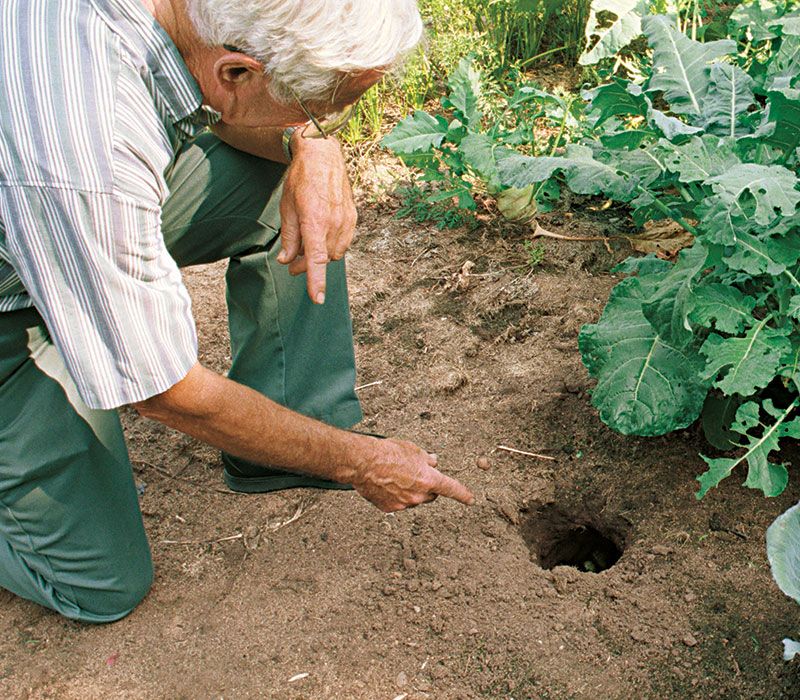
Start by walking the entire perimeter of the shed, deck, or garden edge and locating every opening.
Penn State Extension and Virginia Cooperative Extension both note that secondary escape entrances typically have no soil mound and can be easy to overlook.
Mark each one before you touch any of them.
Then loosely plug every opening with something the animal will push aside if it is inside: grass clippings, crumpled newspaper, or a bundle of sticks work well.
Check each plug daily.
Humane World for Animals recommends waiting for 3 to 5 clear summer days of undisturbed plugs before treating the burrow as vacant.
That window does not apply in winter.
A hibernating woodchuck may stay completely still for weeks, so winter inactivity is not proof the den is empty.
Timing matters regionally.
Early July through late September is often a safer window for eviction in many parts of the country because dependent young are less likely to be present at that time of year.
Breeding schedules and hibernation timing shift with latitude and local climate, so check with your state wildlife agency or county extension office for guidance that fits your area.
Immediate sealing is unsafe whenever young or another animal may be inside.
Use Exclusion To Protect Gardens And Sheds

Once you have confirmed the burrow is vacant, or once a professional has safely cleared an active one, physical exclusion is generally the more reliable long-term answer.
Barriers do not depend on an animal changing its habits or a repellent staying effective through rain and summer heat.
They physically block renewed access, and when properly installed and maintained, they keep working season after season.
The procedures differ depending on whether the den is vacant or active.
For a confirmed vacant burrow, close and reinforce every entrance you found during inspection.
For an identified active animal where exclusion is both lawful and safe, Humane World for Animals recommends fencing all but one opening, monitoring that remaining entrance, and considering a properly installed one-way door only after you have confirmed the animal’s identity, its activity pattern, and the absence of dependent young or non-target animals.
Continue checking daily after any exclusion work to make sure nothing has been trapped inside.
Penn State Extension recommends heavy wire fencing at least 3 feet high for garden protection, with the lower edge buried about 12 inches straight down and then bent outward in an L-shape for another 6 to 12 inches underground.
That footer makes it much harder for an animal to dig under the fence from outside.
For a garden perimeter, Humane World suggests mesh no larger than 3 by 3 inches and a fence height of 3 to 4 feet, with a loose or slightly floppy top section that makes climbing awkward.
A single electric strand placed about 4 inches above ground and roughly 6 inches outside the fence can discourage digging attempts, but electric fencing must be installed and maintained according to local safety rules.
Any barrier requires periodic inspection, because a poorly maintained fence or one with a gap at a corner can be circumvented.
Do Not Trap Or Poison Automatically
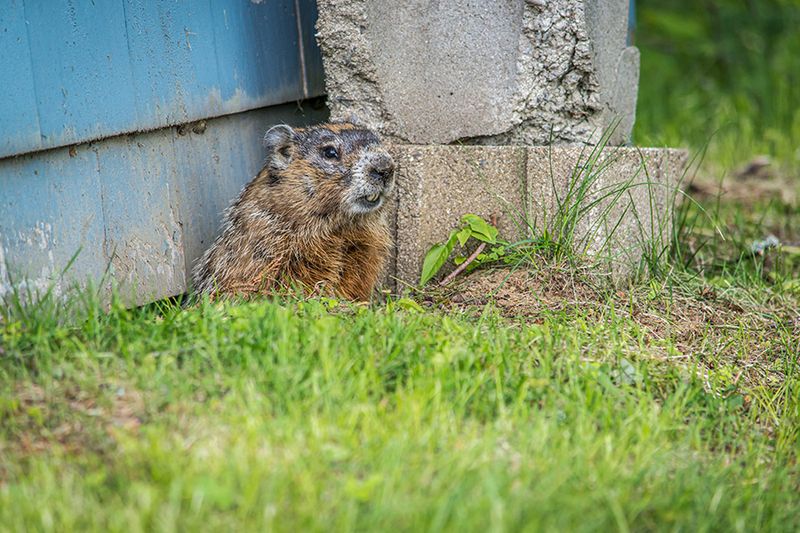
Trapping feels like a fast solution, but it carries real risks that homeowners often do not anticipate.
Humane World for Animals explains that live trapping can separate a nursing mother from young that cannot yet survive on their own, leave dependent animals to die inside the burrow, and expose the trapped animal to heat, stress, or injury before anyone checks the trap.
Relocating a captured woodchuck to an unfamiliar area may also move the conflict rather than end it, and in many states it violates wildlife regulations.
Rules differ by state and municipality.
What is permitted in one county may require a license, a permit, or a specific method in the next.
Rutgers Cooperative Extension notes that New Jersey restricts relocation and requires specific conditions before it is allowed.
Penn State Extension and Virginia Cooperative Extension each describe regulations that apply in their states and remind readers that rules vary.
Contact your state wildlife agency or county extension office before trapping, relocating, using any pesticide, or discharging a firearm.
Some methods are off the table entirely, regardless of location.
Do not use poison, fumigants, gas cartridges, carbon monoxide devices, aluminum phosphide, or fire beneath a shed or any wooden structure.
Penn State specifically warns against gas cartridges near buildings because of fire risk, and Rutgers notes that poisons can harm non-target wildlife, including the birds and small mammals that may already be using the burrow.
Repellents and scare devices may offer some temporary relief around garden perimeters or near entrances, but neither source treats them as a reliable stand-alone fix.
Scare devices tend to work best when moved frequently, and registered repellent products may not be available in every state.
The practical decision rule is straightforward.
Observe the site first.
Tolerate a safe, low-conflict burrow that is not damaging anything.
When the animal is eating crops or undermining something structural, use monitored, lawful exclusion as your primary tool, and bring in qualified help when the situation is more than you can safely manage alone.
A woodchuck that is left alone in a harmless spot is doing more quiet work underground than most yards ever notice.