
Skip The Thirsty Impatiens And Grow These 8 Texas Natives That Bloom In Full Shade
Follow us on Google
You step outside before breakfast and the patio already feels warm, the air still and heavy.
It is mid-August, and your impatiens are drooping their thirsty heads no matter how much you soak them.
Sound familiar?
Plenty of Texas gardeners fight this same losing battle every summer, hauling the hose out twice a day.
But there is a smarter way, and it starts with native plants that actually love the shade and sip water instead of gulping it.
Here are eight tough Texas natives that laugh at the heat, bring real color to your darkest corners, and leave you with a garden that feels alive instead of barely hanging on.
1. Turk’s Cap Will Deliver Big Red Blooms
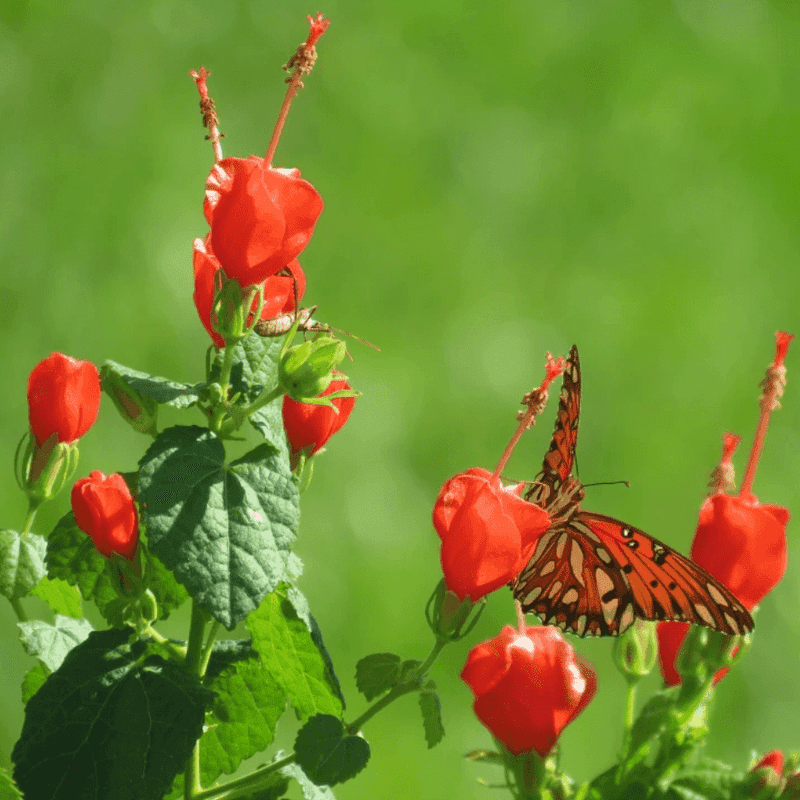
You spot a flash of bright red in the gloomy corner under your live oak, right where nothing else will grow.
That is Turk’s Cap (Malvaviscus arboreus var. drummondii) showing off, its flowers twisted tight like little Turkish turbans that never quite open.
Here is the turn.
Most bloomers sulk in dense tree canopy, but this Texas native genuinely thrives in it, flowering from May clear through November.
In North Texas it settles into a tidy 4-foot mound.
Down on the Coastal Plain, left unpruned, it can stretch 9 to 10 feet tall.
Once its roots take hold, Turk’s Cap shrugs off the long dry stretches that flatten softer plants.
It handles sandy, clay, or limestone soil, though it sings loudest in moist woodland ground.
Give new plants a deep soak about once a week their first summer, then back off.
Hummingbirds and butterflies cannot leave the nectar alone, so your quiet shady nook turns into a buzzing hub.
Plant one, and by fall you will wonder why you ever babied those impatiens.
2. Lyreleaf Sage Offers Blue-Violet Groundcover
Picture a living carpet under your trees instead of that thin, muddy grass that keeps quitting on you.
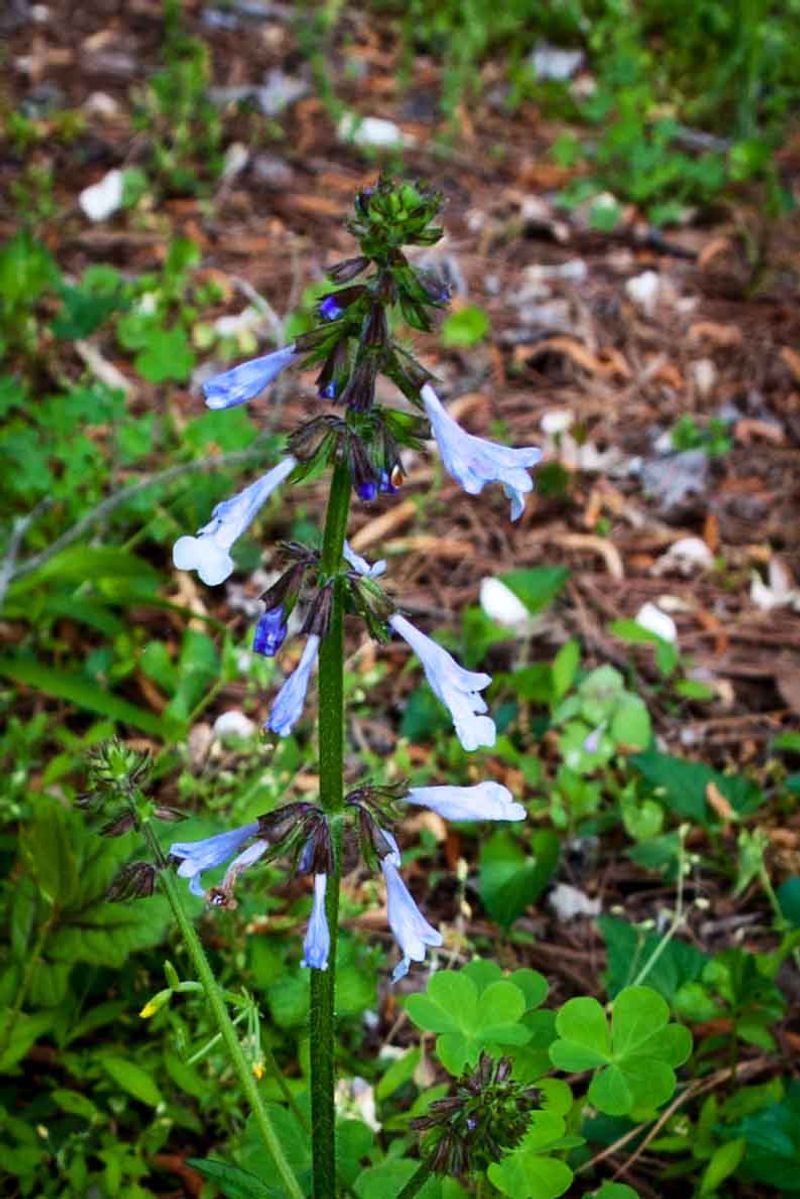
Lyreleaf Sage (Salvia lyrata) fills those bald spots and actually blooms while it does it.
The leaves form a low rosette, often washed with purple, then in spring slender spikes of pale blue to violet flowers rise about an inch long above the mat.
In Southeast Texas you can count on that show from March through June.
So what makes it worth the space?
It spreads on its own, growing 1 to 2 feet tall and about a foot wide, working like a living mulch that needs almost nothing from you.
It takes both sandy and heavy clay soils and does not flinch at the occasional flood or dry snap once settled.
Deer tend to walk right past it, a genuine relief for Hill Country gardeners tired of losing plants overnight.
Bees, butterflies, and even hummingbirds drop by for the nectar, and your bare shade finally feels like it belongs to something.
3. Pigeonberry Delivers Berries And Blooms At Once
Most plants make you choose between flowers or fruit.
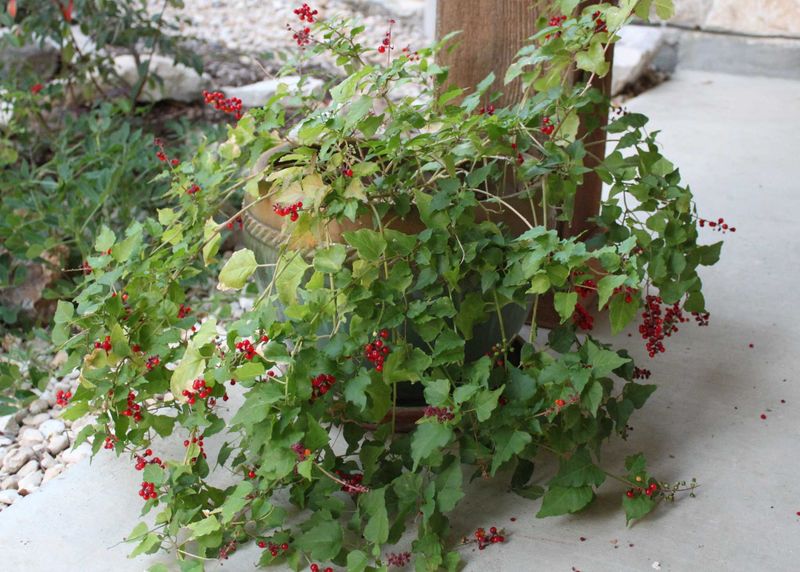
Pigeonberry (Rivina humilis) hands you both on the same stem, almost nonstop from spring until the first hard frost.
Tiny pinkish-white flowers, each about a quarter inch across, open in loose clusters.
As they fade, bright red berries barely the size of a peppercorn take their place, so you get color and food at the same time.
Central Texas gardeners lean on it as a shady-border filler that just keeps working.
It stays modest at 12 to 18 inches tall and spreads a foot or two wide.
During a brutal dry spell it may go dormant, then bounce right back after a good rain, which tells you how deep its drought toughness runs.
Sandy, loam, clay, even Hill Country limestone all suit it fine.
Birds treat those berries as a lifeline through lean seasons.
One honest warning though, the berries and leaves are mildly toxic to people, so keep curious little ones in the know.
Leave the rest for the cardinals.
4. Texas Gold Columbine Lights Up Dark Corners
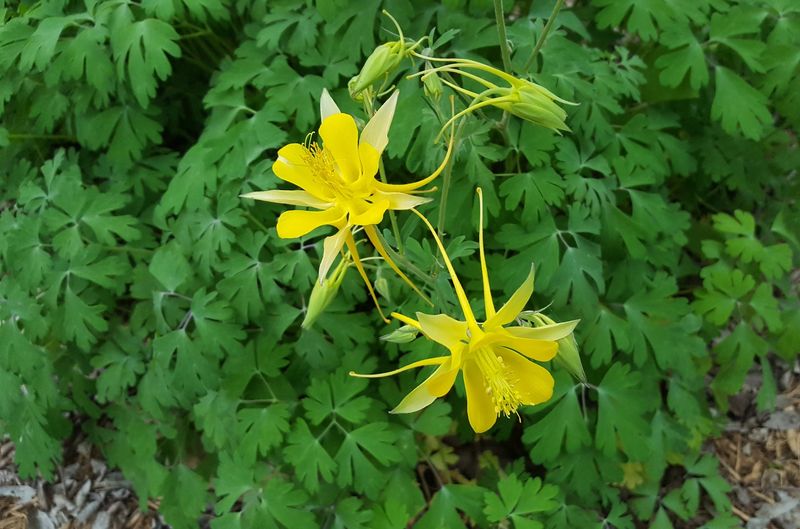
If your shady bed feels dim and tired, Texas Gold Columbine (Aquilegia chrysantha var. hinckleyana) is sunshine in plant form.
The golden, bell-shaped flowers dangle spurs that curve outward like tiny dancing lanterns, and they are fragrant besides.
Texas A&M AgriLife named it a Texas Superstar, and it earned that.
The plant traces back to moist rocky canyons in West Texas, so it comes hardwired for our tricky conditions.
It grows about 1.5 to 2 feet tall and wide, with fern-like blue-green foliage that stays handsome most of the year.
Blooms arrive reliably from March to May, a welcome pop when other shade plants are still yawning awake.
It takes full shade, but you get more flowers under light to moderate shade, especially beneath a deciduous tree that gives summer cover and winter sun.
Plant it in rich, well-drained soil, and if your yard is heavy blackland clay, build a raised bed instead.
Water about 1 inch every 7 to 10 days during dry stretches.
Hummingbirds adore it, deer skip it, and you get glow where there was gloom.
5. Coral Honeysuckle Offers Long-Lasting Vine Color
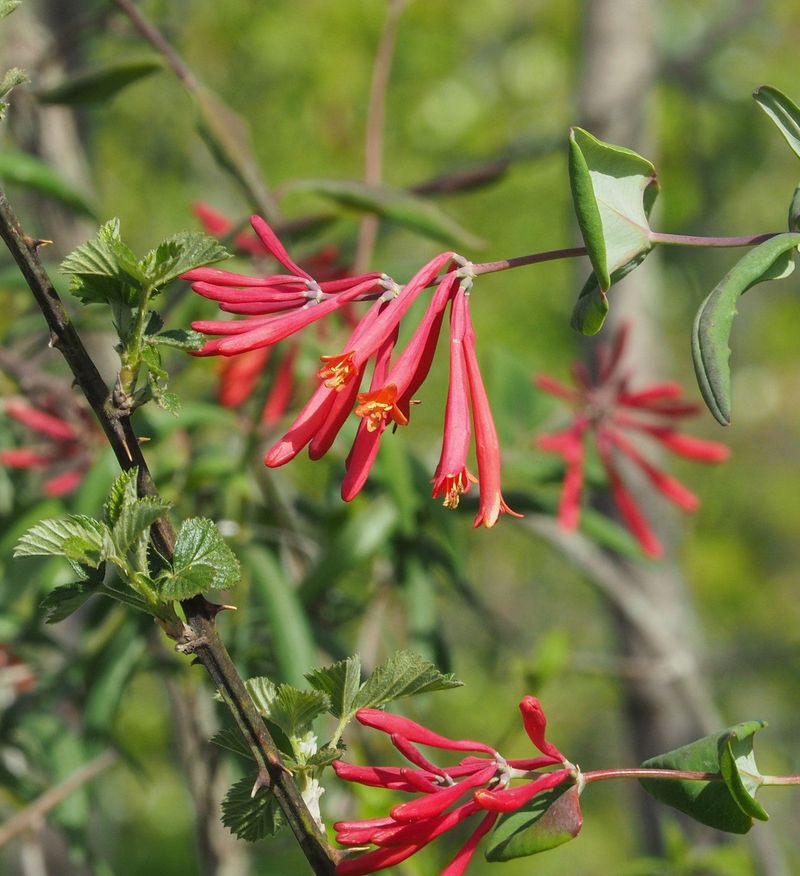
Say the word honeysuckle and people flinch, remembering the Japanese thug that swallows fences whole.
Coral Honeysuckle (Lonicera sempervirens) is the well-behaved Texas cousin, native and non-invasive, a quiet hero for a shaded trellis.
The semi-evergreen leaves keep interest all year, but the real prize is the clusters of bright red tubular flowers, about 2 inches long, many with glowing yellow throats.
Blooms come off and on most of the year, peaking hard from March to April in Central and East Texas, then flowering again after summer rains.
Give it something to climb and it will run 3 to 20 feet, twining politely rather than smothering.
Once established it laughs off drought and handles everything from sandy loam to heavy clay.
Hummingbirds mob the flowers, and later small red berries about a quarter inch feed a crowd of birds.
One tip, keep good air moving around it so the foliage stays clean.
Cover a bare fence with this, and dull becomes a living wall of red.
6. Mexican Honeysuckle Brings Orange Sparkle
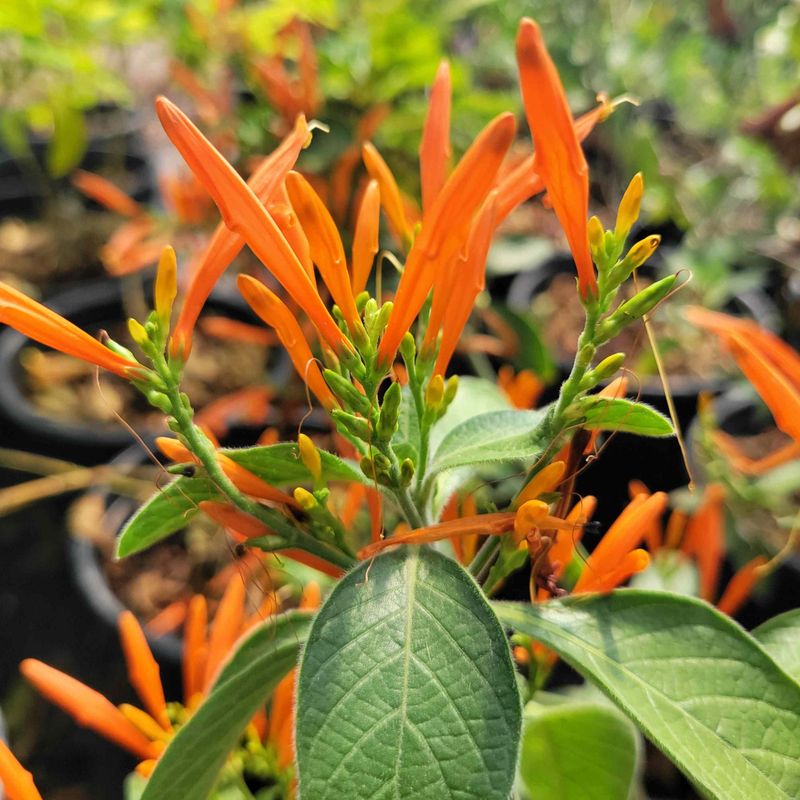
Some corners just beg for a jolt of warm color, and Mexican Honeysuckle (Justicia spicigera) answers with bright orange tubular flowers that seem lit from within.
It is not a true honeysuckle vine, it is a rounded shrub, but pollinators do not care about the technicality.
Down in South Texas and along the Gulf Coast, where winters stay mild, it can bloom nearly year-round, from late spring through fall and often into winter.
Expect a tidy shape around 3 to 5 feet tall and 5 to 6 feet wide.
It performs best in partial shade with a little morning sun, but it still holds its own in bright full shade.
Soil is not a fuss as long as drainage is decent.
Once established it takes drought in stride, though it truly rewards you with a deep soak once or twice a week during a scorching Central Texas summer.
Bees and hummingbirds work it constantly, and deer generally leave it be.
Tuck one into a dull nook and watch it flicker orange like a small, steady flame.
7. Inland Sea Oats Add Movement And Texture
Not every hero in a shade garden carries flowers.
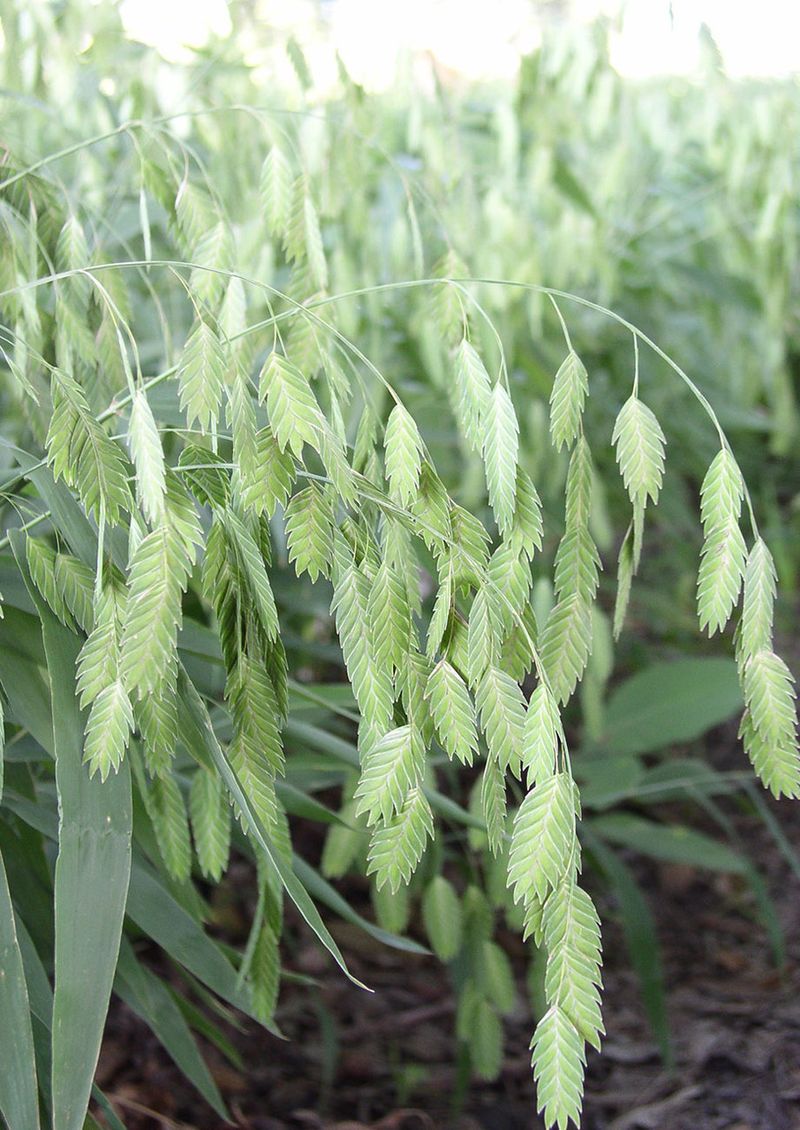
Inland Sea Oats (Chasmanthium latifolium) trades blooms for motion, and it may be the best shade-tolerant native grass Texas has.
The bamboo-like foliage carries flattened, oat-shaped seed heads that flutter and rustle in the faintest breeze.
They start green in summer, ripen to a purplish-bronze by fall, then dry to straw and hold interest deep into winter when everything else looks bare.
Clumps reach 2 to 4 feet tall and 2 to 3 feet wide.
It shrugs at soil type, acidic or alkaline, and even takes clay and poor drainage, which makes it a natural for damp creek edges or the Pineywoods of East Texas.
It pulls its weight for wildlife too.
The seeds feed cardinals and sparrows, and it hosts several skipper butterflies.
One honest catch, it self-seeds eagerly, so snip the seed heads in fall if you want to keep it in bounds.
Plant a few and your quiet corner starts to sway.
8. Cedar Sage Brings Crimson Blooms To Dry Shade
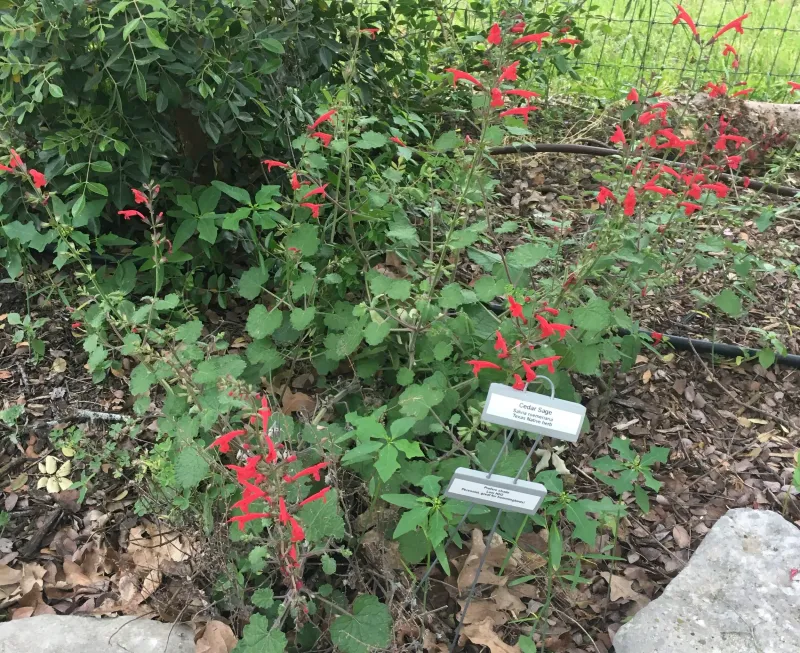
That dry, rocky, shaded ground under your cedars looks hopeless, the kind of spot where even weeds give up.
Cedar Sage (Salvia roemeriana) actually wants it.
Those cedars are really Ashe junipers, and their fine leaf litter over well-drained limestone is exactly its comfort zone.
It forms a low rosette of rounded, scalloped leaves, then sends up slender spikes of vivid crimson tubular flowers, each about 1 to 1.5 inches long on 2 to 3 inch spikes.
Heavy bloom runs a couple of months in spring, with scattered flowers through summer, always picking up after a rain.
Staying compact at 1 to 2 feet tall and wide, this short-lived perennial adds a striking pop without crowding anything.
Once established it is highly drought-tolerant, a real water-saver for West and Central Texas yards under restrictions.
Deer avoid it, hummingbirds cannot get enough.
If it sits under a deciduous tree, rake off big fallen leaves so fresh seedlings can push through.
Solve your worst dry corner, and you will feel a little proud every time you pass it.