
If You Spot This Beetle In Your Pennsylvania Yard Do Not Move It
Follow us on Google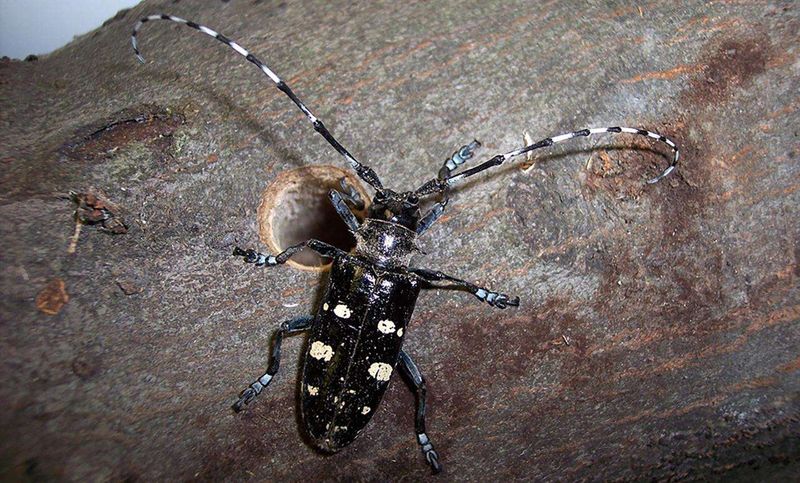
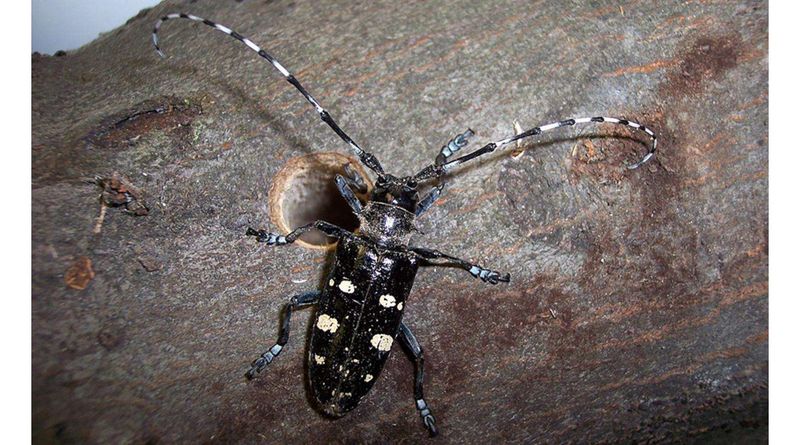
Walking out to check on your maple tree one morning, you notice a shiny black beetle clinging to the bark, its antennae longer than its whole body, banded in black and white.
That single sighting could mean nothing, or it could be one of the most urgent calls you make to a state agency this year.
The beetle behind this warning is the Asian longhorned beetle, Anoplophora glabripennis, a wood-boring insect that targets maple and other hardwoods and has not yet been found in Pennsylvania.
Knowing what to do in the next ten minutes, and what not to do, could genuinely matter for the trees in your yard and your neighbors’ yards too.
The Warning Concerns Asian Longhorned Beetle
Most warnings about invasive insects get shared widely before the full story catches up.
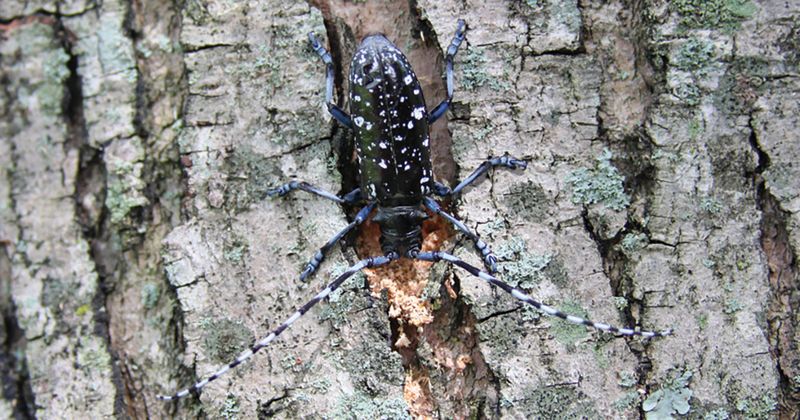
This one concerns a specific pest, the Asian longhorned beetle, Anoplophora glabripennis, a wood-boring insect native to China and Korea that has caused serious damage to hardwood trees in parts of New York, Massachusetts, Ohio, and South Carolina.
Pennsylvania’s Department of Conservation and Natural Resources states clearly that the beetle has not been found in the state, so a credible observation here would be an urgent, reportable discovery rather than confirmation that the pest is already spreading through your neighborhood.
The beetle’s preferred targets are maple trees, including the sugar maples, red maples, and silver maples that shade backyards across the Susquehanna Valley and the northern tier.
It also attacks birch, elm, willow, ash, poplar, and several other hardwoods.
USDA APHIS describes Asian longhorned beetle as a potentially serious threat to hardwood trees wherever it becomes established, and eradication programs in affected states have required the removal of thousands of trees.
The phrase “do not move it” is doing two jobs at once.
First, it warns against picking up a suspicious beetle and carrying it across town to show a neighbor, a garden center, or an extension office.
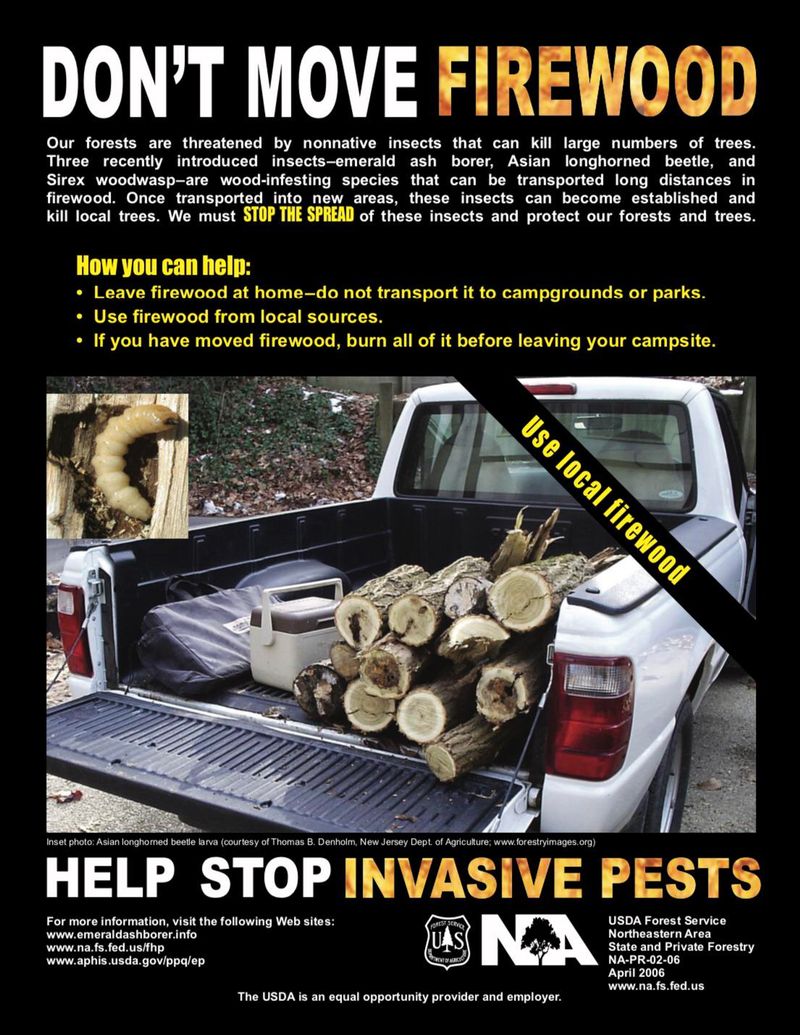
Second, and more broadly, it warns against moving firewood, cut branches, logs, stumps, or any untreated wood that could harbor hidden larvae.
An unidentified beetle in your yard may turn out to be a harmless native species, but the right response is the same either way: photograph it where you find it, leave the wood alone, and report what you saw.
Recognize The Beetle And Its Damage
Picture an almond sitting on your palm, then imagine it is a beetle with antennae stretching well past its back end.
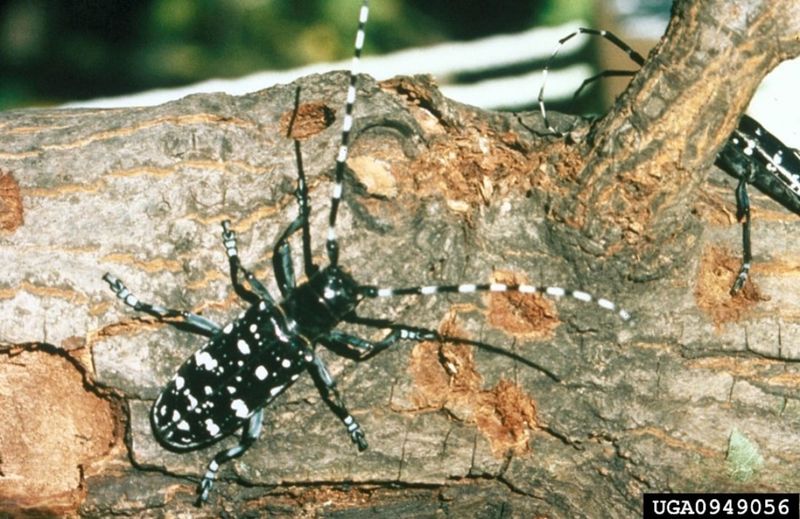
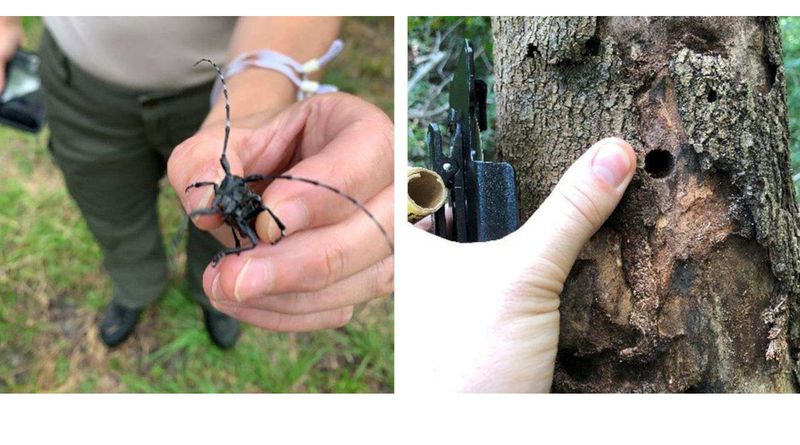
Adult Asian longhorned beetles measure roughly 0.75 to 1.5 inches long, with a shiny jet-black body marked by irregular white spots scattered across the wing covers.
The antennae are banded in crisp black and white and are longer than the beetle’s entire body, which is the single most distinctive feature for a homeowner doing a quick visual check.
Some individuals show faint bluish coloring on their feet.
APHIS’s identification guidance describes round exit holes in trunks and branches that are roughly the size of a dime or smaller, left behind when adult beetles chew their way out of a tree.
You may also find oval or round wounds cut into the bark where a female laid her eggs, sometimes surrounded by weeping or oozing sap.
Coarse, sawdust-like frass, which is actually a mix of chewed wood and waste, can collect at the base of a tree, in branch crotches, or around damaged sections of bark.
USDA’s field search guide recommends checking the lower trunk, major branches, and any sections showing bark damage or sap flow.
These features are genuine clues, not confirmation.
Boring insects, storm damage, woodpeckers, fungal disease, and other stressors can produce holes, frass, and sap weeping that look similar.
Photograph every detail you can see, note where the tree is, and let an entomologist make the call.
Hidden Larvae Can Leave A Tree Looking Healthy
Here is where the pest gets genuinely sneaky.
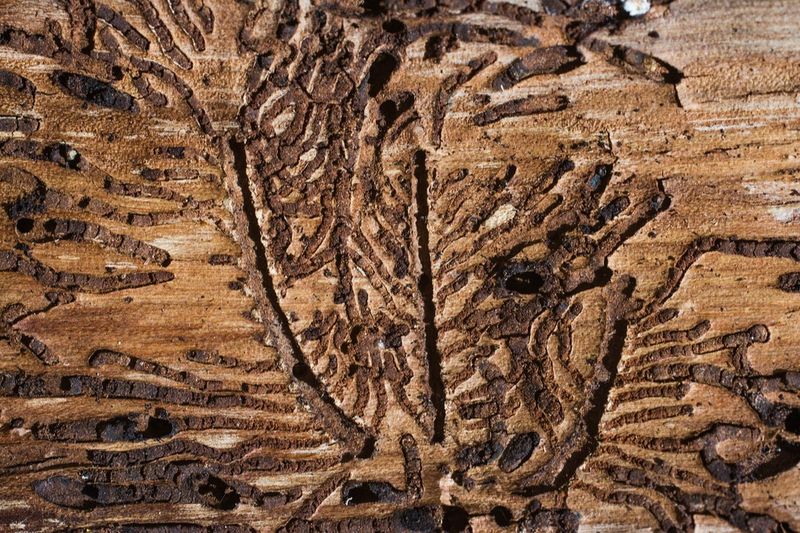
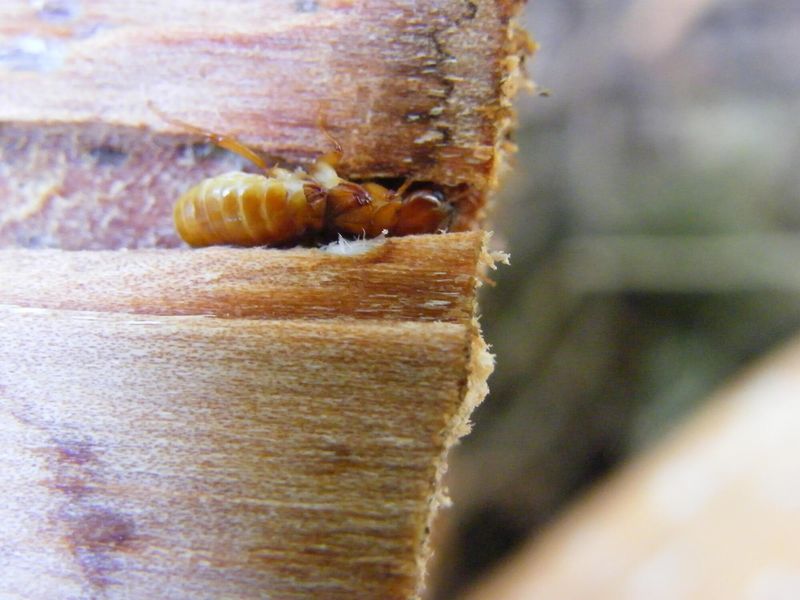
Adult beetles are visible for only part of the year, roughly from late spring through early fall, but the larvae that hatch from eggs spend months tunneling through living wood beneath the bark.
A large maple in a Delaware Valley backyard can look perfectly green and leafy while larvae are eating through the vascular tissue that moves water and nutrients up from the roots.
By the time a homeowner notices branch dieback or crown thinning, the damage inside may already be extensive.
APHIS notes that maple is the beetle’s most commonly attacked host, including boxelder, which many Pennsylvania homeowners think of as a weed tree rather than a true maple.
Other documented hosts include birch, elm, willow, buckeye, horse chestnut, ash, poplar, London planetree, mimosa, katsura, and mountain ash.
Any of these trees showing unexplained dieback, weeping wounds, or round holes deserves a closer look, though a single symptom on any one of them does not establish that Asian longhorned beetle is present.
The absence of an adult beetle does not clear a tree.
APHIS alert materials explain that larvae remain hidden and protected inside the wood through winter, continuing to feed and tunnel even when no adult is visible on the bark.
So a tree that looks fine in November could have been quietly hosting larvae since the previous summer.
That hidden timeline is exactly why moving wood, even wood that looks solid and healthy, carries real risk.
Do Not Transport Wood Or Tree Material
Your first move, the moment you spot something suspicious, is to stop.
Do not pick up the beetle.
Do not load that stack of firewood into the truck.
Do not drag cut branches to the curb or haul a section of log to a neighbor’s place to get a second opinion.
Larvae can remain hidden inside infested wood and be carried to new locations when people move it, and that quiet, accidental transport is how a localized problem can become a regional one.
Instead, take out your phone and photograph everything you can see: the beetle itself, any exit holes, frass, egg-laying wounds, and the tree it is on.
Record the exact address or GPS coordinates, the date, and the type of tree if you know it.
USDA APHIS guidance emphasizes that this on-site documentation gives investigators the information they need to respond quickly and accurately.
Pennsylvania’s firewood rules already ask residents to leave wood where it comes from, and a suspected Asian longhorned beetle sighting makes that guidance urgent rather than advisory.
Do not cut down the suspicious tree, chip its branches, apply any spray or treatment, or remove any part of it before an official has confirmed the identification and given you direction.
A household insecticide cannot reach larvae protected deep inside solid wood, and premature cutting could destroy the evidence investigators need.
Preserve A Specimen Only If You Can Do So Safely
There is a limited, practical exception to the no-transport rule, and it applies only to the adult beetle itself.
USDA APHIS recommends that if you can capture the beetle without chasing it away or damaging it, you place it in a sturdy, sealable container and put that container in your freezer.
Freezing preserves the specimen so an entomologist can examine it later and make a confident identification.
This step is entirely optional and only worth attempting if the beetle is within easy reach and you can act quickly without disturbing it.
What you should not do is drive the container to a county extension office, a local nursery, a garden center, or a neighbor’s house.
The point of freezing it at home is to keep potential risk in one place while you wait for official guidance.
Do not crush, spray, or otherwise damage the specimen, because a damaged beetle is much harder to identify accurately.
Once you have photographs and, if possible, a frozen specimen, report the sighting promptly.
Call the Pennsylvania Department of Agriculture at 1-866-253-7189 or send an email to [email protected].
Pennsylvania’s plant pest survey program is set up to receive exactly these reports and connect them with trained entomologists.
USDA APHIS also maintains a reporting line at 1-866-702-9938 and accepts reports through its online portal.
When you call or write, share your photographs, the exact location and date, the species of host tree if you know it, and a description of any visible damage.
The more detail you provide, the faster investigators can prioritize a response.
Lookalikes Make Confirmation Essential
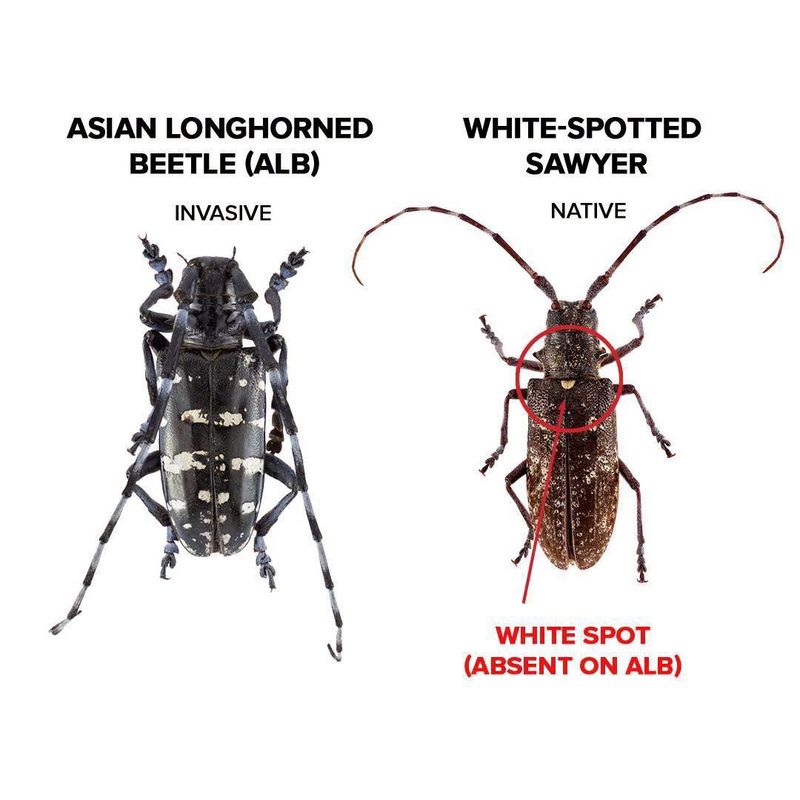
Pennsylvania’s forests and yards are home to several native longhorned beetles that can genuinely stop a homeowner in their tracks.
Pennsylvania iMapInvasives lists the white-spotted pine sawyer, the northeastern sawyer, the eyed click beetle, the brown prionid, and the broadnecked root borer as species that people commonly mistake for Asian longhorned beetle.
All of them are large, dark, and striking up close, and several have white or pale markings that can look alarming if you are already primed to worry.
A documented case makes the point clearly.
A Pennsylvania iMapInvasives case study describes a suspected Asian longhorned beetle that was submitted for identification and turned out to be a white-spotted pine sawyer, a native species that causes no comparable economic threat.
That outcome is not unusual.
Identification errors happen regularly, even among people who have seen photographs of the pest dozens of times.
The practical lesson is this: a beetle that looks alarming in your yard deserves a photograph and a report, not an emergency tree removal or a confrontation with the person who sold you firewood last weekend.
Do not accuse a local nursery, a neighbor, or a firewood vendor based on a quick visual impression.
The confirmation step exists precisely because the stakes are high in both directions.
Missing a real infestation is a problem, but so is destroying a healthy tree or damaging a local business over a misidentified native insect.
Report carefully, let the entomologists confirm, and act on what they find.
Buy And Burn Firewood Locally
Firewood is one of the most common ways wood-boring insects move from one county to another, and Asian longhorned beetle is a textbook example of why that matters.
A larva tunneling inside a log does not look like a threat.
The wood feels solid, it splits cleanly, and nothing on the outside suggests a problem.
But when that log travels 100 miles in the back of a pickup truck and gets stacked in a new location, any larvae inside travel with it.
Pennsylvania’s firewood guidance asks residents to buy firewood locally and burn it where they buy it.
Firewood brought into Pennsylvania from another state must be treated, properly dried, or certified under the state’s firewood quarantine rules.
This is not a suggestion limited to campgrounds.
It applies to wood brought home for a backyard fire pit, a fireplace, or a wood stove.
State park guidance has recommended buying firewood within about 25 miles of where you plan to burn it.
That 25-mile figure is practical local-buying advice, not a scientific boundary that defines where Asian longhorned beetle can or cannot spread.
The point is to keep wood movement short and predictable.
Whether you are heading to a campsite in the Poconos, a cabin in the Laurel Highlands, or just building a fire in your own yard in western Pennsylvania, buying local wood is the single easiest action you can take to avoid accidentally moving a hidden pest to a place where it has not yet arrived.
Let Officials Direct The Next Steps
Once you have reported a credible sighting, your role shifts from responder to witness.
Trained entomologists and state and federal plant health officials take over from there, and the steps they may take go well beyond anything a homeowner should attempt alone.
USDA APHIS eradication guidance explains that confirmed infestations trigger surveys of surrounding trees, quarantine zones that regulate the movement of wood and plant material, and in some cases the removal and destruction of infested trees or high-risk host trees nearby.
Those decisions follow official confirmation and regulatory direction, not a homeowner’s visual inspection.
APHIS is clear that infested trees do not recover, and that household sprays cannot reliably reach larvae protected deep inside solid wood.
Spraying the trunk of a tree you are worried about will not protect it and may give a false sense of security while the real problem, if there is one, continues unseen.
Leave treatment decisions to the officials managing the response.
One reassuring fact worth keeping in mind: Asian longhorned beetle does not harm people or pets.
The real household hazards are tree decline, weakened branches that can fall unexpectedly, and the loss of mature shade trees that took decades to grow.
That is a genuinely serious concern for any homeowner with large maples in the yard, but it is a tree problem, not a safety emergency for your family or your dog.
Asian longhorned beetle is also different from spotted lanternfly, which is already established across many Pennsylvania counties.
Pennsylvania’s spotted lanternfly guidance asks residents to kill and report that pest on sight, a very different protocol from the preserve-and-report approach for Asian longhorned beetle.
Knowing which pest you are dealing with shapes every step that follows.
Photograph what you find, leave the wood and the tree where they are, report promptly, and then let the people with the training and the authority finish the job.
That is genuinely the most useful thing a Pennsylvania homeowner can do.