
The Grass Cutting Habit Quietly Inviting More Ticks Onto Your Pennsylvania Lawn
Follow us on Google
Most Pennsylvania homeowners mow on a schedule and figure that’s enough to keep ticks at bay.
The real story is a little different, and the part that actually matters has less to do with how often you mow and more to do with what you let grow along the edges.
Dense, overgrown borders beside woods, brush piles, stone walls, and leaf litter are where ticks wait, and those spots are easy to overlook when the main lawn looks tidy.
A few targeted changes to how and where you manage your yard can make a real difference for your family and pets.
Dense Lawn Edges Create the Real Concern
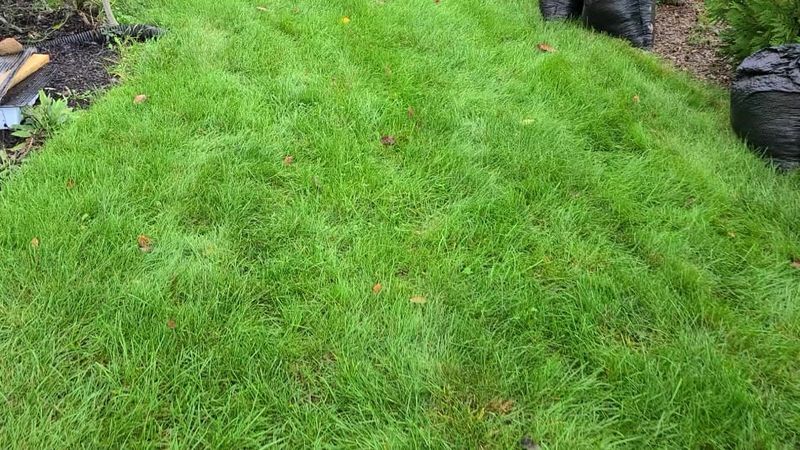
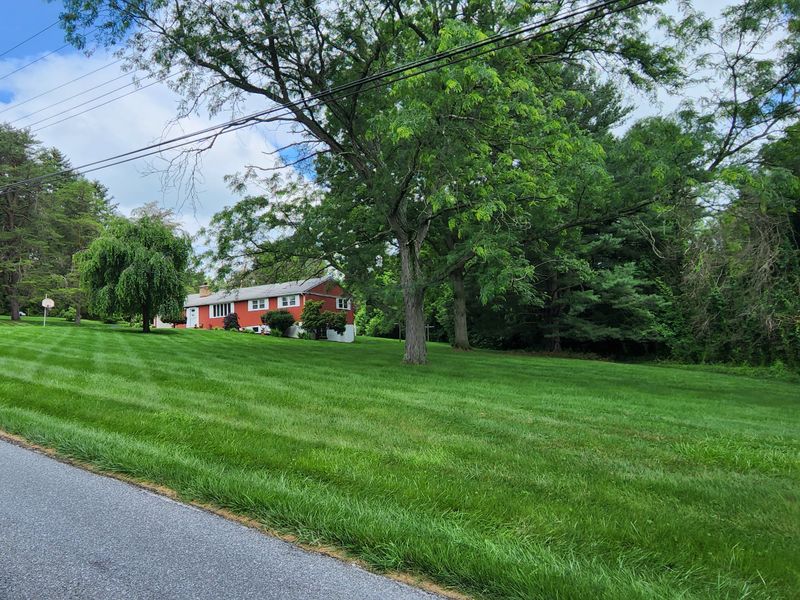
Walk to the back of a Pennsylvania yard where the mowed grass meets the tree line, and you are standing in the spot that actually matters for tick exposure.
The concern is not that you mow on a Tuesday instead of a Saturday.
The concern is what happens when that border gets ignored long enough for grass, weeds, and groundcover to grow tall and dense, especially where lawn meets woods, brush, a stone wall, or a pile of old leaves.
A suburban lawn study found no ticks in 144 drag samples taken from lawns mowed weekly, every two weeks, or every three weeks, with grass heights averaging roughly 11 to 15 centimeters across those schedules.
That result, reported in a two-year suburban mowing study, does not mean mowing is pointless.
It means that ordinary mowing schedules in maintained lawns did not, by themselves, drive tick counts up or down.
The bigger driver is the character of the edge, not the calendar on the garage wall.
A recent residential-landscape study found the greatest nymphal tick densities in maintained lawns adjacent to woodlands and in lawn-woodland edge zones, while the center of short-grass lawns had far fewer ticks.
That research on residential yard management points to the same lesson: the open middle of your lawn is not the front line.
The shaded, sheltered, humid border is.
Penn State Extension and the CDC both recommend regular mowing, clearing tall grass and brush, and removing leaf litter as practical steps to reduce tick habitat near the house.
Penn State’s tick guidance and CDC tick prevention recommendations frame these steps as layers of habitat management, not a promise of a tick-free yard.
That is the approach this article takes too: practical, honest, and focused on the spots that genuinely matter most.
Moist Woodland Borders Support Tick Habitat
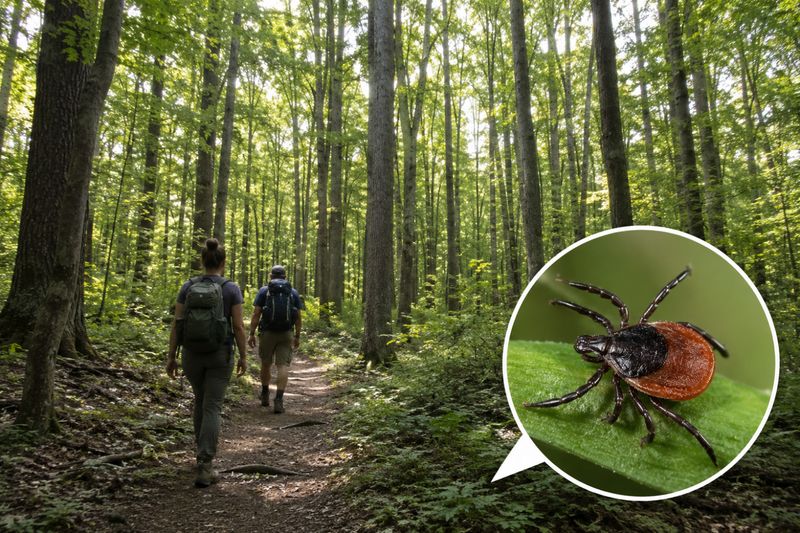
Blacklegged ticks, the species most associated with Lyme disease in Pennsylvania, do not jump or fly.
They climb to the tips of low vegetation, leaf litter, or brush and wait for a passing host, a behavior researchers call questing.
Moisture is the key factor in their survival.
Research on relative humidity and blacklegged tick activity shows that these ticks become active and quest most successfully when humidity is high, which is why shaded, leaf-covered, brushy borders stay favorable long after an open lawn has dried out.
That shaded border beside your yard does extra work as a wildlife corridor.
Deer move through, and adult blacklegged ticks use deer heavily as reproductive hosts.
More deer crossings at the lawn edge means more adult ticks completing their life cycle near your property.
CDC information on Lyme transmission and research on residential yard management and tick hosts both clarify an important distinction: deer transport ticks and support adult reproduction, but deer do not carry the Lyme bacteria themselves.
Small mammals, especially white-footed mice, are the primary reservoir hosts that keep that bacteria cycling through the tick population.
Other tick species behave differently.
American dog ticks and lone star ticks can use taller grass and more open vegetation more readily than blacklegged ticks do, so the species question matters when you are deciding where to focus your cleanup.
Penn State tick prevention resources note that Pennsylvania hosts multiple tick species, and Penn State’s ticked-off ticks resource confirms that blacklegged ticks are especially tied to humid woodland edge and leaf-litter habitat.
The damp, shaded strip along your back fence is doing the most work for the tick population on your block, and that is where your attention belongs first.
Mowing Alone Does Not Make a Yard Safe

Here is where the headline’s promise gets complicated.
Mowing keeps grass from becoming tall and dense, and that is genuinely useful as one part of a broader plan.
But mowing by itself is not a tick treatment, and the available research is honest about that.
A two-year study of suburban lawns found zero ticks in 144 drag samples collected from lawns on weekly, biweekly, and three-week mowing schedules.
The researchers were not suggesting that ticks do not exist in suburban yards.
The lawns studied simply did not have detectable tick populations regardless of mowing frequency, which tells you that the mowing schedule itself was not the deciding variable.
Surrounding habitat, wildlife activity, and site conditions mattered more.
A separate study looked at whether a single mowing event on recreational trails could knock down tick numbers.
That Minnesota trail-mowing study found that one mowing did not reduce tick abundance.
Ticks were still there.
The vegetation had changed, but the ticks had not gone anywhere meaningful.
What both results point toward is that mowing works as habitat and access management, not as a tick-killing event.
A well-maintained lawn with cleared edges gives ticks fewer places to quest and gives you more open ground between your family and the wooded border.
CDC tick prevention guidance lists mowing alongside removing leaf litter, creating landscape barriers, and using repellents, because no single step does the whole job.
Mowing is one layer of a layered approach, and an important one, but it earns its place in combination with other actions, not on its own.
Mow According to Growth

Most Pennsylvania lawns are planted with cool-season grasses, and those grasses do not grow at the same pace all year.
Spring and fall bring fast, lush growth.
Summer heat and dry stretches slow things down considerably.
Mowing on a fixed weekly calendar without checking what the grass is actually doing can lead to scalping during a dry July or letting growth get out of hand during a wet May.
A practical method is to check the lawn about once a week during active growth periods and mow when the grass approaches one-third above its target height.
Penn State’s seasonal lawn management guidance supports this growth-based approach rather than a rigid schedule.
If your target height is 3 inches, that means mowing before the grass reaches about 4 inches, not waiting until it is 5 or 6 inches tall and then cutting it back hard.
Penn State cool-season turfgrass recommendations put the maintenance range for common Pennsylvania lawn grasses at roughly 2.5 to 3.5 inches, depending on the species.
Tall fescue, one of the most widely used lawn grasses in Pennsylvania, is commonly maintained around 3 to 3.5 inches.
Penn State lawn establishment guidance reinforces the one-third rule: never remove more than one-third of the leaf blade in a single mowing.
Scalping, cutting the grass far shorter than its target height, weakens turf and can cause other lawn problems without offering any tick-control benefit.
Penn State’s clippings management resource also notes that properly managed grass clippings decompose quickly and do not create a thatch problem, so there is no need to bag clippings out of concern that they are building a damp tick nursery.
The goal is a healthy, consistent turf, not a putting green, and growth conditions in your specific yard should drive the timing more than any printed schedule.
Create Separation Without Chasing Exact Measurements

Mowing advice becomes most useful when it connects to where things are placed in your yard.
The highest-priority area is almost always the border between your maintained lawn and any wooded section, brushy area, stone wall, or dense garden bed.
That transition zone is where ticks quest most actively and where family members are most likely to brush against vegetation while walking the dog, playing, or moving firewood.
Penn State’s tick and tickborne disease resource and the CDC Tick Management Handbook both describe a 3-foot wood-chip or gravel barrier between the lawn and wooded areas as a practical landscape step.
One Penn State tick zone diagram shows an additional wider mowed separation beyond that barrier before the main living area begins.
Those measurements are practical examples, not universal rules that apply to every yard or every structure.
A property with 200 feet of woodland edge is not going to be managed the same way as a small suburban lot with a single brushy corner.
The barrier needs upkeep to stay effective.
Wood chips that collect fallen leaves and break down over time can gradually start to resemble the leaf-litter conditions that blacklegged ticks favor.
Raking the barrier clear and refreshing the material keeps it working.
CDC Lyme prevention guidance and CDC tick prevention recommendations both suggest moving playsets, patios, decks, and seating areas away from wooded or brushy borders when possible.
A maintained lawn or hardscape transition between a playset and the tree line is genuinely more protective than placing the swing set right up against the brush.
That kind of placement decision can matter as much as any mowing schedule.
Remove Leaf Litter and Sheltered Cover

Mowing handles the grass, but ticks are not waiting only in grass.
Leaf litter is actually the preferred habitat for blacklegged ticks through much of the year.
A thick mat of old leaves along the fence line, behind the shed, or under a deck gives ticks the cool, damp, protected environment they need to survive between feedings.
CDC tick prevention guidance lists removing leaf litter, clearing fallen branches and brush, and getting rid of discarded furniture, trash, and loosely stacked wood near the house as core yard management steps.
Penn State’s ticked-off ticks resource explains that these materials do double duty as tick habitat: they hold moisture and they attract the rodents and small mammals that help maintain the Lyme bacteria cycle.
A brush pile behind the garage is not just an eyesore, it is a habitat feature that supports the whole system.
Research on recommended residential yard management measures supports targeted cleanup around living areas rather than stripping out every natural feature on the property.
The goal is reducing tick contact near the house, near play spaces, and near paths you use regularly, not eliminating every leaf from the entire lot.
Penn State’s natural landscaping guidance points out that native plants and natural areas can remain when maintained paths, setbacks, and clear access routes keep dense vegetation at a sensible distance from patios and play areas.
A mowed path through a naturalized area, kept clear and wide enough to walk without brushing the sides, is a practical way to enjoy the yard without walking through prime tick questing territory.
Penn State’s tick and tickborne disease resource reinforces that targeted yard management, focused on the areas your family actually uses, is where the effort pays off most.
Adjust the Plan to Your Pennsylvania Yard
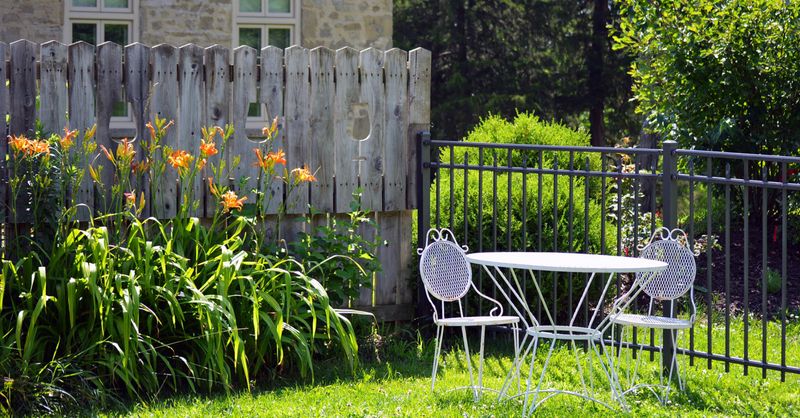
Pennsylvania is not one lawn.
A yard in the Poconos with deep shade, heavy clay soil, and a tree line 10 feet from the back door faces a different set of conditions than an open lot in the Susquehanna Valley that dries out fast after a summer storm.
Shade, drainage, soil type, local rainfall, and proximity to wooded or brushy areas all affect how quickly your lawn grows, how long the edges stay damp, and where tick pressure is likely to concentrate.
Penn State’s seasonal lawn management resource reflects this reality: cool-season grasses grow fast in spring and fall, slow down in summer heat and drought, and may need very little mowing during a dry August.
A yard in the northern tier or on the Allegheny Plateau, where the growing season is shorter and temperatures stay cooler, may reach its one-third threshold more slowly than a lawn in southeastern Pennsylvania during a warm, wet spring.
The Pennsylvania DEP tick surveillance program monitors all 67 counties, and that statewide reach does not mean every yard in the state has the same tick pressure.
Local conditions matter.
A yard with heavy shade, poor drainage, and direct woodland access has more to address than a sunny, well-drained lot with a clear separation from any wooded area.
Penn State tick guidance consistently points to the dampest, shadiest, most sheltered edges as the priority.
Start your cleanup and mowing attention there, at the spot where your yard meets conditions ticks actually prefer, and work outward from that point rather than applying the same treatment to every square foot of the property.
Pair Landscape Changes With Personal Protection
Yard changes reduce the places ticks can wait and the chances your family walks through them, but no amount of mowing or mulching eliminates tick exposure entirely.
Personal protection steps fill the gap between what the landscape can do and what actually keeps a tick off your skin.
CDC tick prevention guidance recommends checking clothing, gear, pets, and skin after any outdoor activity, including time in your own backyard.
Showering within 2 hours of coming indoors can help wash off unattached ticks and gives you a chance to do a full body check.
Tumble-drying clothing on high heat for 10 minutes kills ticks that may have hitched a ride on fabric.
For repellents, the CDC lists DEET, picaridin, IR3535, oil of lemon eucalyptus or PMD, and 2-undecanone as EPA-registered options.
CDC Yellow Book guidance on arthropod repellents notes that products containing oil of lemon eucalyptus or PMD should not be used on children under 3 years old.
Use any repellent according to its label.
If you find an attached tick, use fine-tipped tweezers, grasp as close to the skin as possible, and pull upward with steady, even pressure.
CDC tick removal guidance is clear: do not burn the tick, coat it with petroleum jelly, or twist it during removal.
Those methods can make things worse.
Pennsylvania tracks Lyme disease in every county, and the state also monitors anaplasmosis, babesiosis, Powassan virus, and other tickborne illnesses.
Pennsylvania Department of Health Lyme disease information and CDC Lyme prevention guidance both encourage symptom awareness and prompt medical follow-up after a bite, because removing a tick lowers risk but does not eliminate it.
Landscape work, regular mowing, targeted cleanup, and personal protection together make your yard and your time outside genuinely safer, and that combination is the most honest version of what actually works.