
The Hard-To-Find Pennsylvania Wildflowers Worth Hunting For A Meadow That Runs Itself
Follow us on Google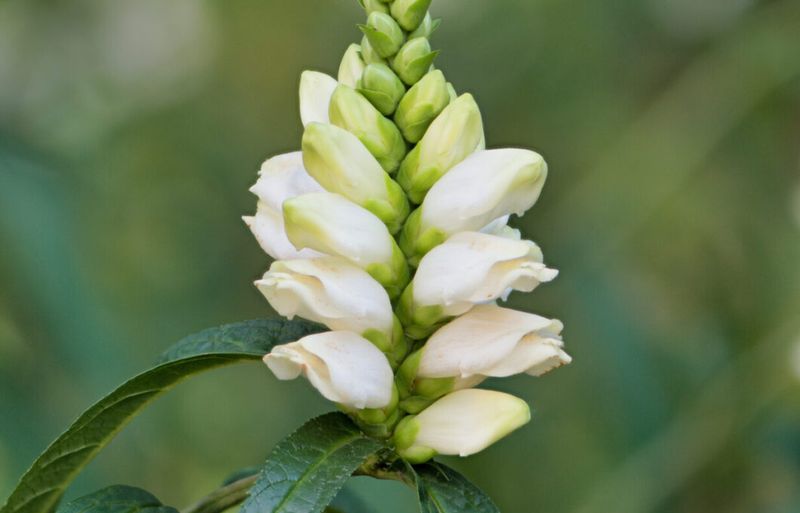
You step into your backyard on a late August morning and find a hum where yesterday there was quiet.
Big fuzzy bumblebees are shoving their way into strange white flowers you swear were not there last week.
That is the moment you realize you have stumbled onto something special, a native Pennsylvania wildflower that, once you understand it, hands you a meadow that basically runs itself.
This is the story of the plant most of us walk right past, and how to give it exactly what it wants.
1. The White Turtlehead Is Your Unsung Meadow Champion
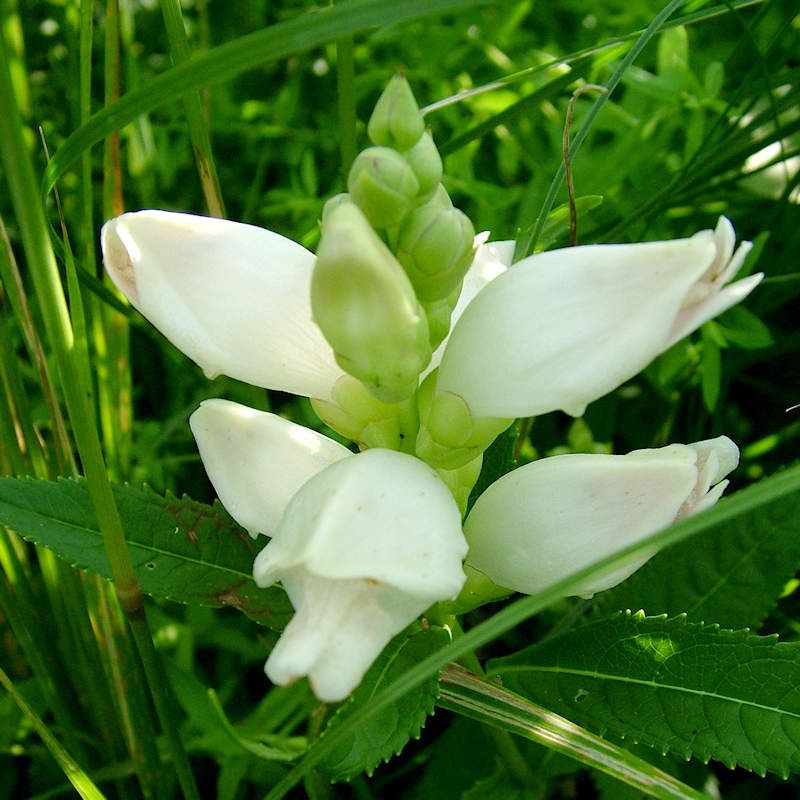
Your hard-to-find gem has a name, and it is White Turtlehead, or Chelone glabra.
Look close and you understand instantly.
Each bloom is a tiny porcelain turtle head, an inch to an inch and a half long, stacked neatly up the stem.
The flowers start opening in late summer, often by mid August, and keep going into October.
That is prime time, when most meadow flowers have already called it a season.
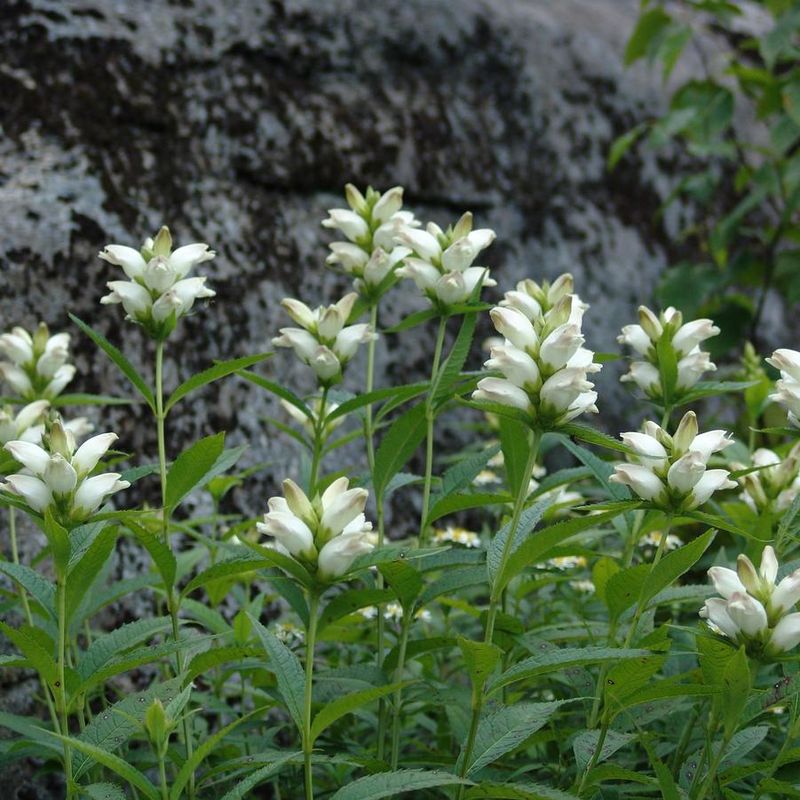
The plant stands two to three feet tall, sometimes four, with glossy dark green leaves that stay handsome all summer.
Most people skip it for one reason.
It refuses to grow just anywhere.
It is a specialist that wants steady moisture, not the dry, sun-baked spot you might picture for a meadow.
But here is the turn.
If you have a soggy corner near a downspout, a low dip that puddles after a storm, or a rain garden, you already own perfect turtlehead ground.
Once settled, it even shrugs off a little standing water.
In a state as damp as Pennsylvania, that is a quiet advantage most gardeners overlook.
2. It Demands A Consistent Drink And Nothing More
People call White Turtlehead fussy.
It is not fussy, it is honest.
It simply tells you the truth about what it needs, and that truth is moisture.
Picture a stream bank in the Laurel Highlands or a damp pocket in the limestone valleys of central Pennsylvania.
That is home.
It craves rich, humusy soil with a pH somewhere between 5.0 and 7.0, slightly acidic to neutral.
If your yard runs to heavy clay, common across parts of southeastern Pennsylvania, you might worry it stays too wet.
Good news, this plant actually welcomes that, as long as water does not sit stagnant for weeks.
In a drier garden, you become the rain.
A prolonged dry spell can invite powdery mildew, that dusty gray film on the leaves.
So lay down a generous two-inch layer of leaf compost or shredded bark around the base.
That mulch keeps the roots cool and the soil damp through our sticky, humid summers, when a week can swing from downpour to drought.
Do that one thing, and a stubborn wet spot turns into your easiest success.
The plant carries the rest.
3. A Late-Season Lifeline For Bumblebees
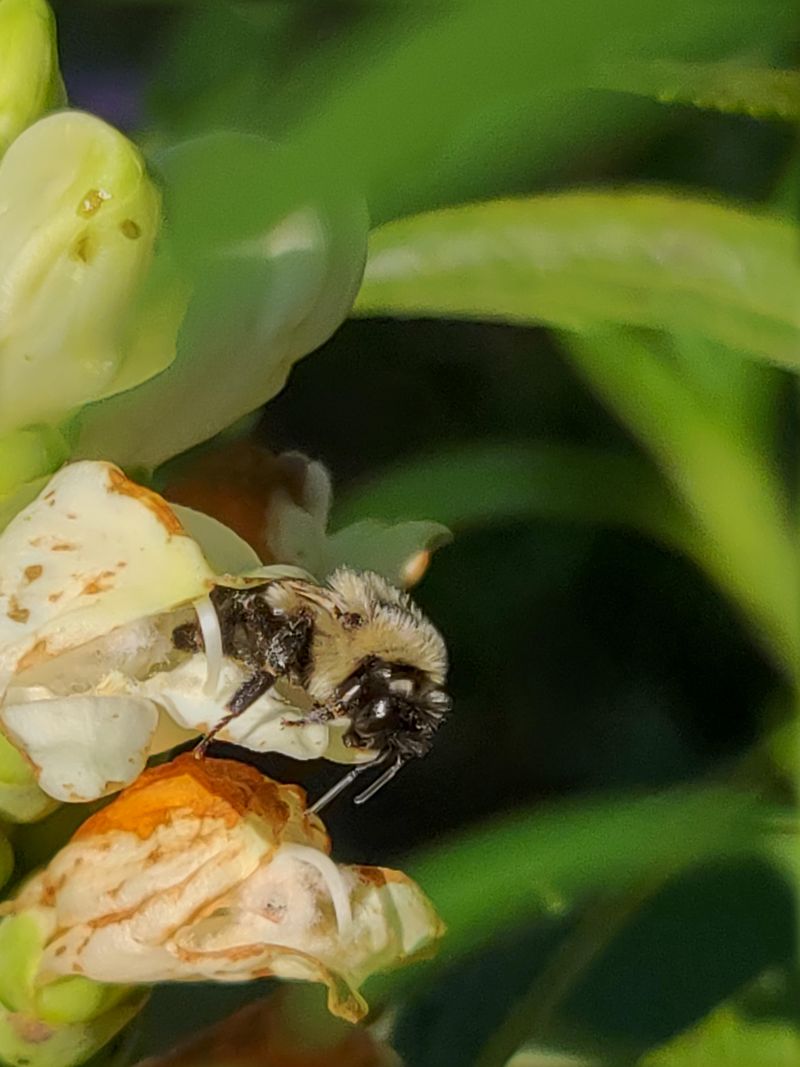
Watch a bumblebee tackle a turtlehead bloom and you will laugh out loud.
The flower has a hooded upper lip and a bearded lower one, built like a snug little tunnel.
A honeybee cannot manage it, but a big bumblebee shoulders right in and disappears.
That design is no accident.
It hands the nectar to the strong late-season pollinators that need it most, right when the calendar turns toward fall.
By September, most flowers have quit.
Bumblebees are still working hard, stocking up before the first cold snaps roll across the northern tier.
White Turtlehead is genuinely one of the last reliable meals on the menu.
It matters even more for at-risk species like the yellow-banded and half-black bumblebees, whose numbers have dropped across the region.
Feeding them in your own yard is a small act with a real payoff.
So plant a cluster near the patio where you can watch.
On a warm porch evening in early September, you will hear the low drone before you see them.
That sound is the meadow paying you back.
4. The Only Nursery For Baltimore Checkerspots
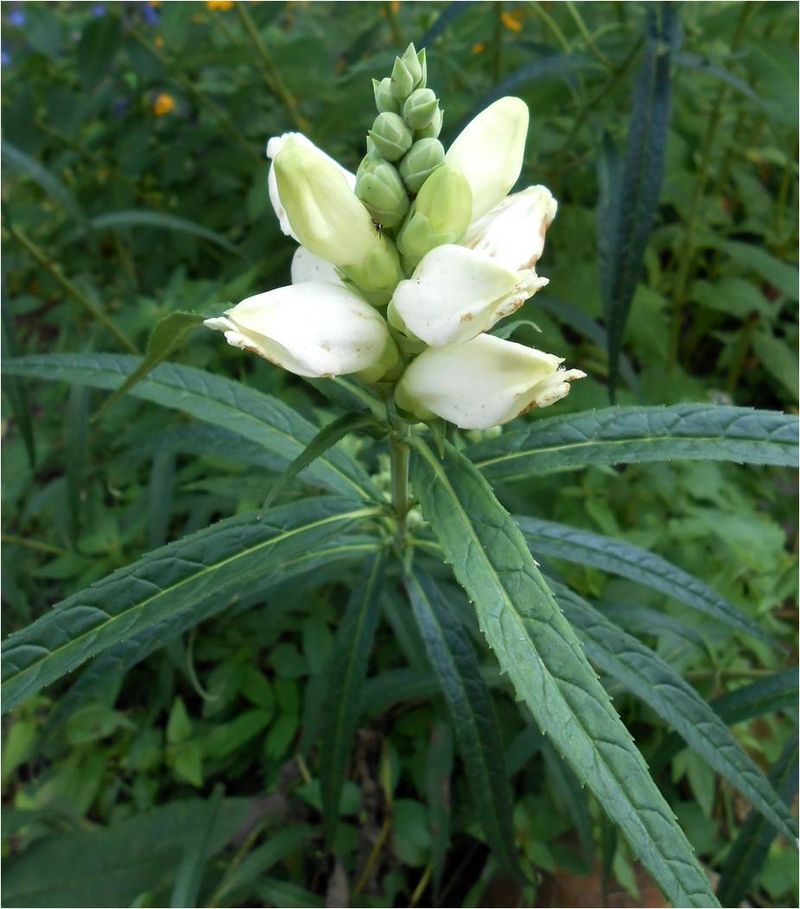
Here is a fact that surprises even seasoned gardeners.
The Baltimore Checkerspot butterfly, Euphydryas phaeton, cannot survive without this exact plant.
Its caterpillars eat turtlehead leaves and almost nothing else.
The checkerspot is stunning, dressed in orange, black, and cream, and its populations have been slipping in Pennsylvania.
No turtlehead often means no checkerspots in the neighborhood.
The caterpillars pull a clever trick, too.
They absorb bitter compounds called iridoid glycosides from the leaves, chemicals that make them taste awful to birds.
The plant hands its guests a built-in shield.
So when you tuck a few turtleheads into a damp corner, you are not just adding a flower.
You are opening a nursery for a butterfly that has nowhere else to raise its young.
There is a bonus for the weary Pennsylvania gardener.
Deer usually leave the bitter foliage alone, so the browsing crowd that flattens your hostas tends to walk right past.
Fewer chewed stems, more butterflies.
That is a trade worth making.
5. Planting It Right The First Time
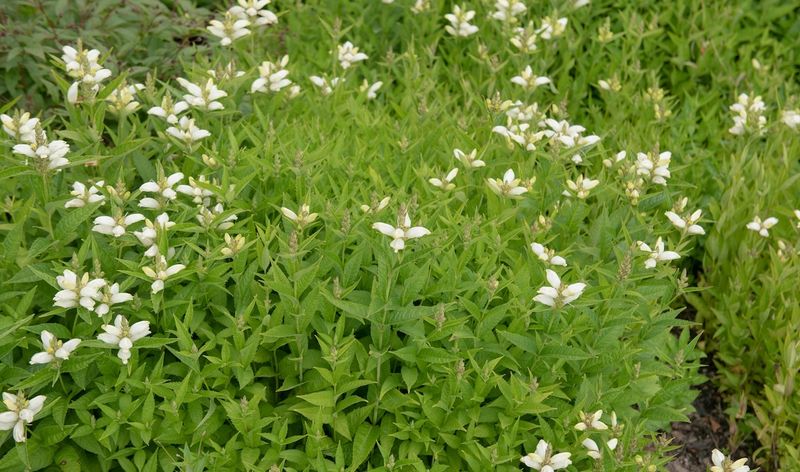
Getting turtlehead going is easier than its reputation suggests, as long as you honor the water.
Plant in spring, after your last frost, which lands around late April or early May across most of Pennsylvania.
Up on the Allegheny Plateau or in the northern tier, wait until mid or late May.
Space the plants 18 to 24 inches apart.
That gap gives each one room to bulk up into a full clump instead of a lonely stalk.
Underground, it spreads slowly by rhizomes, sending out quiet runners that knit into a colony over a few seasons.
That is the self-running meadow doing its work while you sit on the porch.
Water it deeply the first year, aiming for about one inch a week when rain does not deliver.
A slow soak that reaches six inches down beats a daily sprinkle every time.
Once those roots take hold, it settles into a plant that asks for almost nothing.
You show up for the first season, and it handles the rest for years.
That is a genuinely fair deal.
6. Growing It From Seed Takes Patience
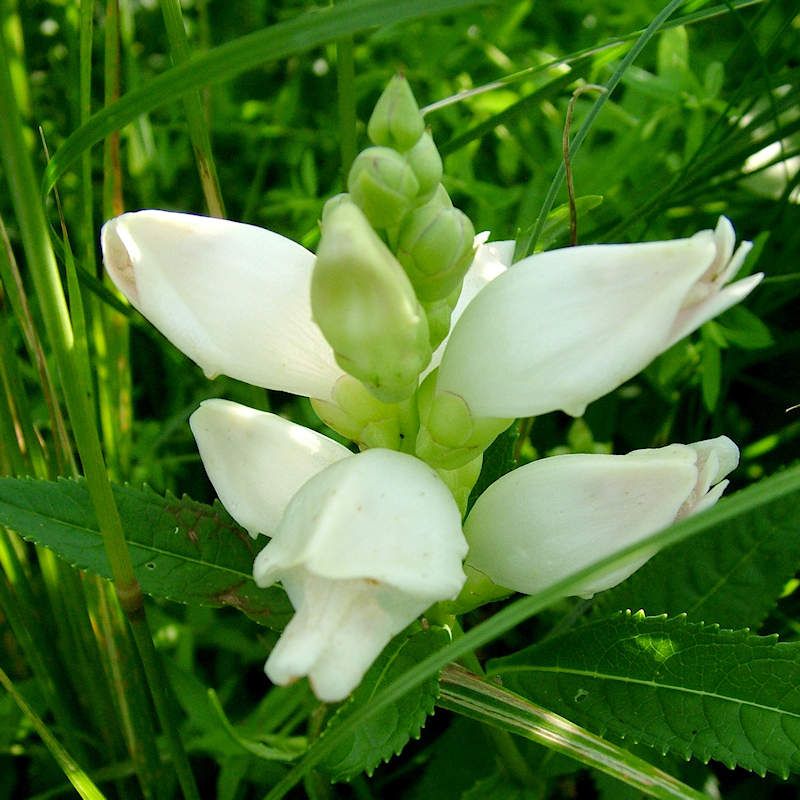
Seed is the cheapest way to fill a big damp patch, but the seeds come with a rule.
They will not sprout until they have been through a proper cold, wet chill, what gardeners call stratification.
In short, they need to feel a Pennsylvania winter first.
You have two easy paths.
Scatter them outdoors in late fall or early winter and let the snow and freeze-and-thaw cycles do the work for free.
Or fake it, tucking moist seeds in the refrigerator for about six weeks before spring sowing.
Now the part that tests your nerve.
Plants grown from seed usually skip flowering the first year and wait until year two to bloom.
So do not panic when you see only leaves that first summer.
The plant is building roots below while you tap your foot above.
If you want blooms this season, buy started plants instead.
But if you are patient and thrifty, a single fall scatter can seed a whole wet corner that comes back free, year after year.
That kind of return is hard to beat.
7. A Simple Trim Keeps It Bushy
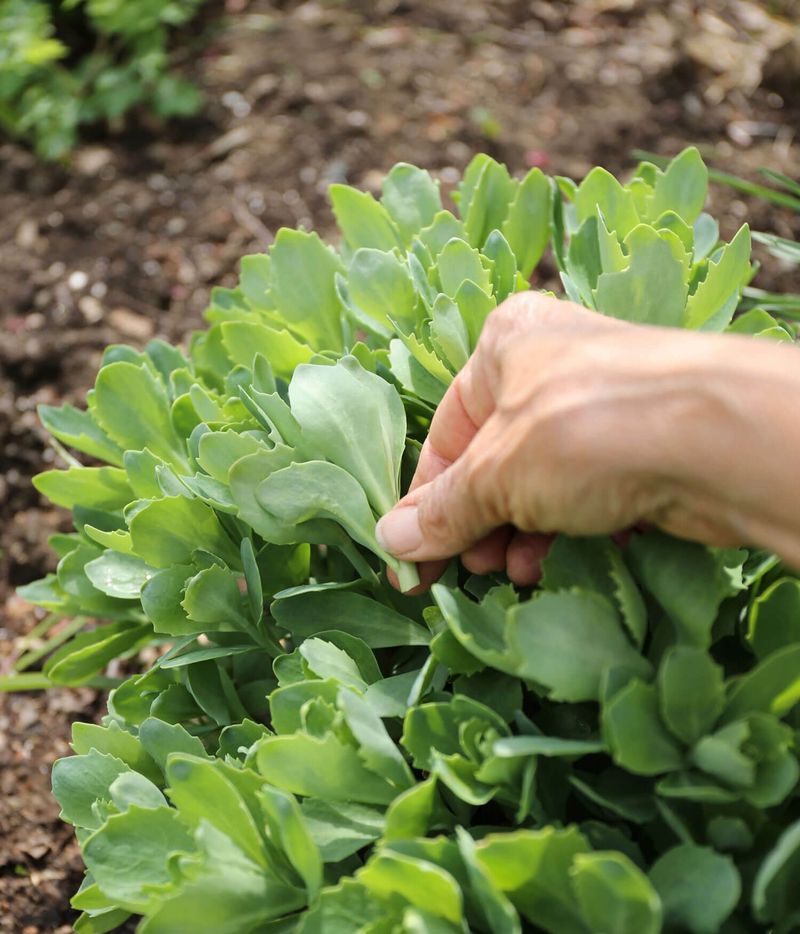
Blunt truth, White Turtlehead can flop.
In a shadier spot, or in rich soil, the stems sometimes stretch tall and lean over like they are tired of standing.
The fix is a trick borrowed from old English gardens, often called the Chelsea chop.
In late spring, usually late May, snip the stems back by about a third.
Cutting the tops forces the plant to branch lower down.
You trade a little height for a stockier, fuller shape covered in more flower clusters come August.
It is not strictly required.
Plants in full sun and steady moisture often stand up fine on their own, and you can skip the shears entirely.
Think of it as one optional layer, not a rule.
If last year your turtlehead sprawled onto the walkway, give it that spring haircut.
If it stood proud, leave it be.
Either way, resist the urge to cut it down in fall.
The dry stems and seed heads feed birds and shelter native insects through winter, one more chore the plant quietly takes off your list.
8. Watch For Powdery Mildew In Dry Spells
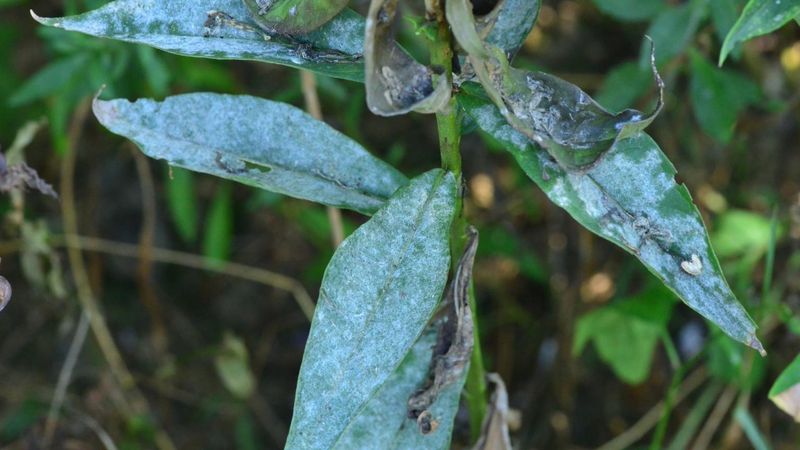
One antagonist shows up when the weather turns against you.
Powdery mildew, that dusty gray-white film, loves to creep across turtlehead leaves during a hot, dry stretch, exactly the kind of summer drought that sneaks in between our heavy downpours.
The plant is telling you something.
Mildew almost always means the soil got too dry, the air stayed too still, or the plants were crowded with no room to breathe.
According to Penn State Extension, good airflow and steady soil moisture are your best defenses, far more useful than reaching for a spray.
Prevention beats cure here every time.
So keep that mulch layer topped up, water deeply during dry weeks, and space plants at least 18 inches apart so breezes move between them.
Morning watering helps, too, since leaves dry before evening.
If mildew does appear, it looks worse than it is and rarely kills an established plant.
Snip off the worst leaves and improve the airflow.
This is not a magic cure, just one honest layer of care that keeps your quiet hero looking its best deep into fall.
9. What Else Actually Helps A Self-Running Meadow
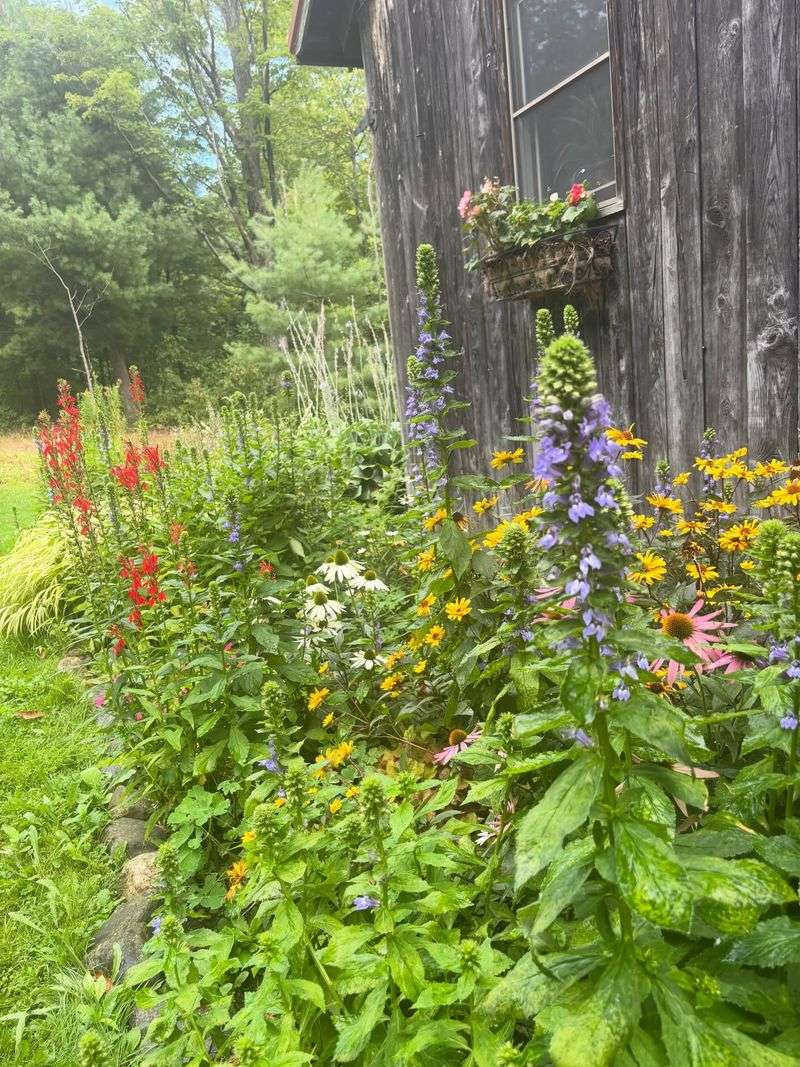
A meadow that runs itself is never one plant, it is a team.
Turtlehead is the star, but the supporting cast keeps the whole thing standing.
Start with native grasses.
Switchgrass, or Panicum virgatum, and native sedges such as Carex species drive deep, fibrous roots that lock down soil, soak up rain, and crowd out weeds before they get going.
In the heavy clay of central and western Pennsylvania, those roots slowly loosen and improve the ground for free.
Then layer in flowers that share turtlehead’s love of damp feet.
Cardinal Flower, Lobelia cardinalis, throws up fiery red spikes that hummingbirds chase in late summer.
Blue Flag Iris, Iris versicolor, covers your earliest spring color in the wettest spots.
Even in the warmer urban heat around Philadelphia or Pittsburgh, the same rule holds.
Keep the moisture steady through the humid summer and these plants nearly grow themselves.
Stagger the bloom times and you build a patch that feeds pollinators from spring iris to fall turtlehead, with no bare stretch in between.
That is the whole trick.
You do the setup once, match each plant to its niche, and then step back.
The meadow takes it from there, and you get to stand on the porch and watch it work.