
Your Tomatoes Wilt Every Hot Afternoon And Watering More Only Makes The Patch Worse
Follow us on Google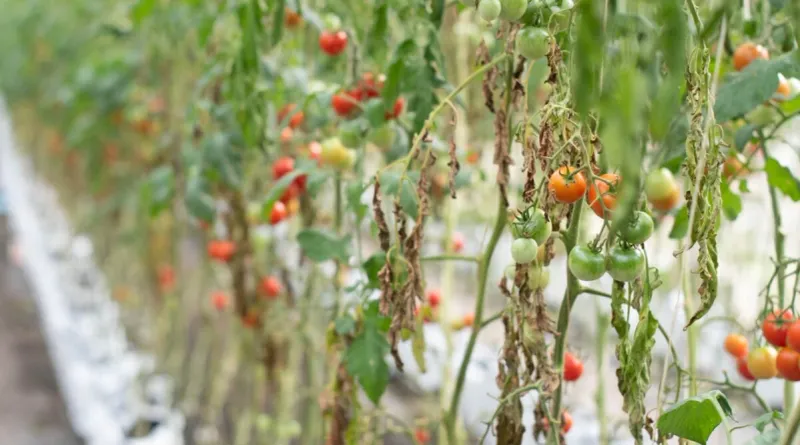
Watching your tomato plants droop like wet laundry every afternoon is enough to make any gardener reach for the hose. But that reflex can work against you, because a wilting tomato does not always mean a thirsty tomato.
Heat, wind, and low humidity can overwhelm a plant’s water system even when the root zone is perfectly moist, and pouring on extra water when the soil is already saturated can quietly wreck the roots doing all the work. The real question is not how much water you are giving, but what the soil a few inches down is actually telling you.
Afternoon Wilt Does Not Prove Dry Soil
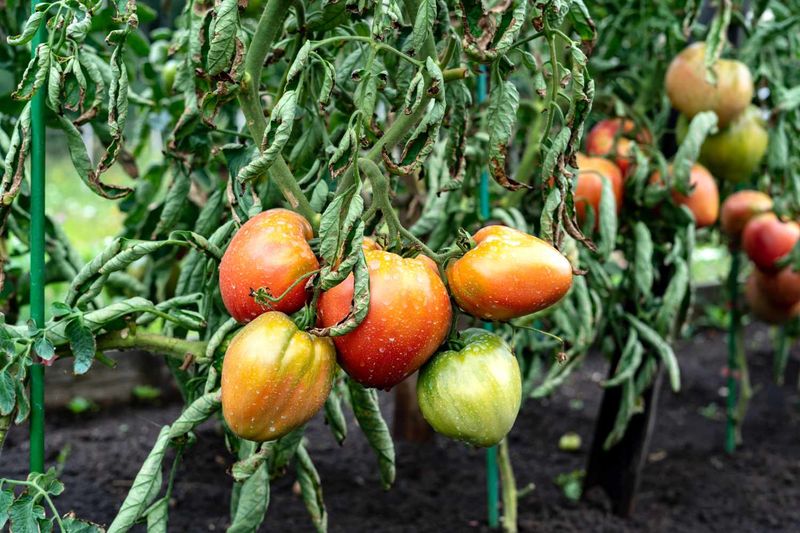
Most gardeners see drooping tomato leaves and immediately assume the plant is begging for water. That assumption is understandable, but the leaves alone cannot tell you whether the root zone is dry.
University of Minnesota Extension explains that heat, low humidity, and wind can cause leaves to lose water faster than the roots can pull it back up, so a tomato with a perfectly moist root zone may still droop by two in the afternoon and perk back up once the sun drops.
Tomatoes (Solanum lycopersicum) are not passive about this. On a hot, breezy day, the leaves may curl inward or hang limply as a kind of self-protection, slowing water loss until conditions ease.
If the plant looks normal again by evening or the next morning, heat stress is likely the explanation, not drought.
The soil check is your first and most reliable tool. Wisconsin Extension’s overview of plant wilt and Illinois Extension both recommend probing several inches into the root zone rather than judging by surface appearance.
Push a finger or a trowel handle 4 to 6 inches into the soil near the plant, but not directly against the stem. Check more than one spot around the plant, because moisture can be uneven across a bed.
If the soil feels moist at depth, hold off on watering and watch whether the plant recovers by morning. If it feels dry several inches down, the plant does need water, and the sections ahead will show you how to deliver it in a way that actually reaches the roots.
Dry Soil And Saturated Soil Can Both Cause Wilt
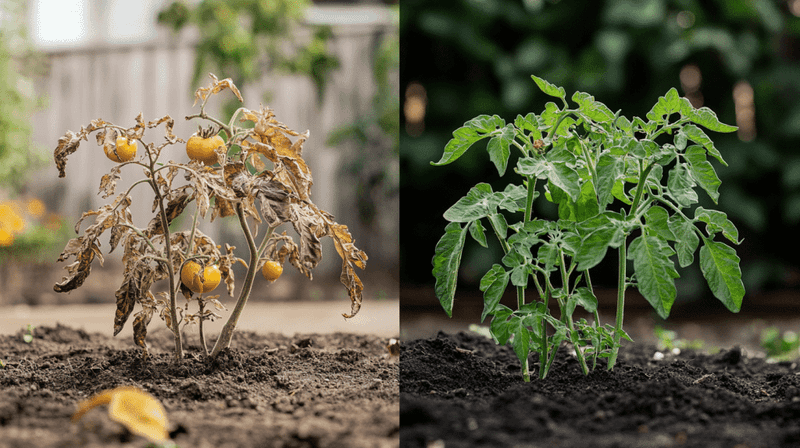
A wilting tomato is not a simple signal. Two opposite soil conditions can produce the exact same drooping leaves, which is why reaching for the hose before checking the soil is a gamble either way.
When the root zone is genuinely dry, roots cannot pull enough water to keep leaves firm. That is the situation most gardeners picture.
But Wisconsin Extension notes that saturated soil fills pore spaces with water and cuts off the oxygen roots need to function. Roots starved of oxygen begin to decline, and a damaged root system cannot move water upward even when the soil around it is soaking wet.
The plant wilts anyway, and adding more water makes the problem worse, not better.
Repeated shallow watering creates a third version of this problem. When water only wets the top inch or two, roots tend to stay near the surface chasing that moisture.
A shallow root system is far more vulnerable to heat and brief dry spells than one that reaches 12 to 18 inches deep.
Oklahoma State University Extension recommends watering deeply enough that moisture penetrates 12 to 18 inches into the root zone, then allowing the upper few inches to begin drying before watering again. That cycle encourages roots to follow water downward, building the kind of deep, resilient root system that handles hot afternoons without collapsing.
The practical takeaway is straightforward. Tomatoes need a well-drained root zone with steady, consistent moisture, not simply a larger volume of water delivered more often.
Knowing which soil problem you are dealing with is the only way to choose the right response.
Deliver Water Slowly And Evenly At Soil Level
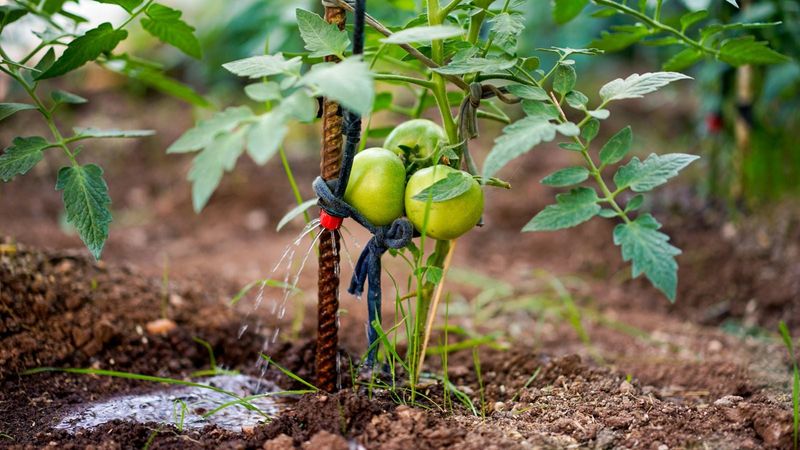
Once you have confirmed the root zone is dry, the next question is not how much water to add but how to get it there without losing most of it to runoff or evaporation. A hard spray from overhead can wet the surface and run off before it reaches the depth where tomato roots actually live.
Drip irrigation lines or soaker hoses laid along the base of the plants deliver water slowly and directly to the soil, giving it time to soak downward rather than sheet off. Oklahoma State University Extension notes that drip systems can use significantly less water than overhead sprinklers in many situations, though actual savings depend on your soil type, system design, and how well the equipment is maintained.
Keeping water off the foliage also reduces conditions that favor some foliar diseases.
Morning is the most useful general window for watering, roughly 5 to 9 a.m. according to University of Minnesota Extension. Water applied early has time to soak into the root zone before peak afternoon heat, and any moisture that does land on leaves has hours to dry.
That said, this is a guideline, not a hard rule for every region. During a severe heat wave, especially with container plants, an afternoon drink directed at the soil may be necessary to prevent real damage.
Do not assume your drip system is doing its job without checking. Clogged emitters, a faulty timer, or lines placed too far from a large root system can leave sections of the root zone dry while others sit wet.
After running the irrigation, probe the soil in several spots to confirm that water actually moved downward and spread across the root zone. The equipment is only as useful as its coverage.
Measure A Starting Amount Then Adjust It
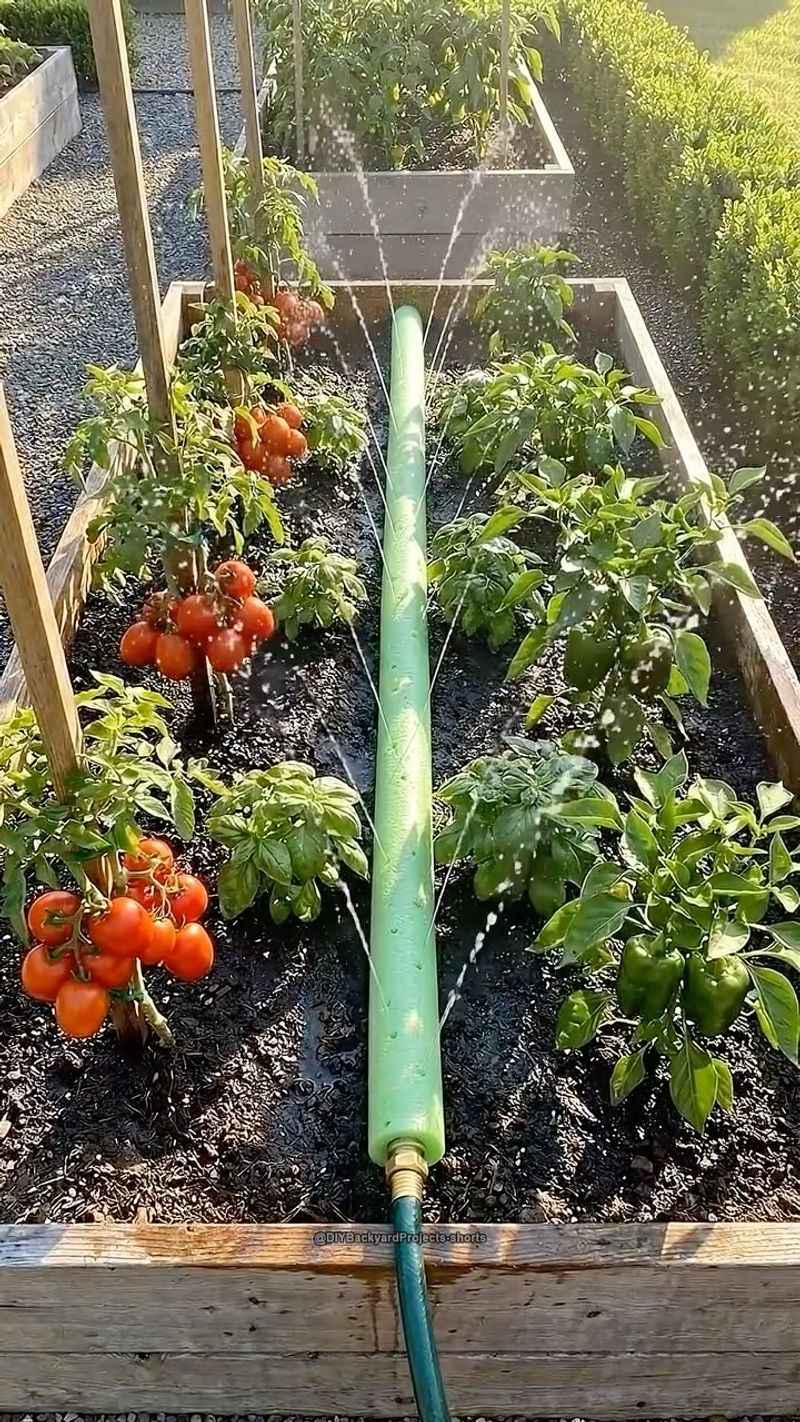
Many gardeners water by feel or by schedule, running the hose for the same number of minutes every week regardless of what the weather or the soil is actually doing. A more reliable approach starts with a rough target and then adjusts based on what you observe.
Illinois Extension recommends roughly 1 inch of water per week for many garden plants, and notes that when temperatures climb into the 90s, some gardens may need closer to 2 inches. Oklahoma State Extension suggests tomatoes need at least 1 inch per week in May and June, stepping up to at least 2 inches per week from July through September in their region.
Both figures are regional starting points, not prescriptions that apply to a humid Pennsylvania plot, a sandy Colorado raised bed, or a container on a Texas patio.
Measuring what your irrigation actually delivers is easier than most people expect. Set a straight-sided container, a clean tuna can works well, within the watered area and run your system until the can holds about 1 inch of water.
That tells you how long your system needs to run to hit your target, and it removes the guesswork.
Soil texture changes everything about that number. Sandy soil drains quickly and may need more frequent watering at shorter intervals.
Heavy clay holds water longer but can become compacted and slow to absorb. Mulch, raised beds, wind exposure, fruit load, and plant size all shift the interval as well.
Oregon State University Extension connects erratic soil moisture with blossom-end rot and fruit cracking, two problems that become far more common when plants swing between dry spells and heavy soakings. Consistent moisture does not guarantee perfect fruit, but wild swings in soil moisture make those problems much more likely.
Improve Drainage And Use Mulch Strategically
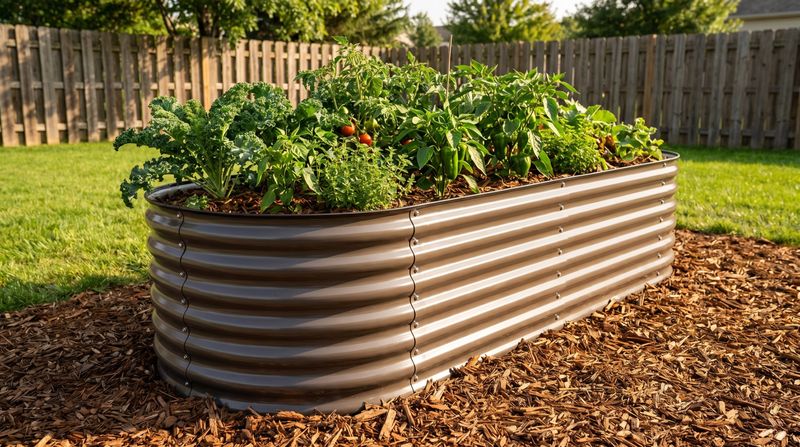
No amount of careful watering helps much if the site itself works against you. Heavy clay soil, compacted ground, or a low spot in the yard can hold water around roots long after irrigation stops, setting up the oxygen problem described earlier.
Oklahoma State University Extension recommends raised beds or planting on 4- to 6-inch-high mounds for tomatoes grown in heavy or poorly drained soil. Raising the root zone even a few inches changes how quickly excess water moves away from the roots after a rain or heavy irrigation.
If you are already dealing with wilt in a poorly draining bed, fix the drainage situation before increasing how much water you apply. Adding water to a root zone that cannot drain is the scenario where more water genuinely does make things worse.
Mulch is a practical tool for holding onto moisture once the drainage situation is reasonable. Illinois Extension supports a 2-inch layer of mulch around garden plants to slow evaporation and moderate soil temperature swings during hot weather.
University of Minnesota Extension suggests topping off mulch to 1 to 2 inches during heat waves for similar reasons.
Keep mulch a few inches away from the main stem. Piling it directly against the stem traps moisture against the bark and can invite rot or pest problems at the soil line.
Think of mulch as a blanket for the soil, not a collar for the plant.
Mulch conserves moisture that is already there, but it cannot rescue compacted or flooded soil. Illinois Extension’s drought guidance makes clear that mulch is one layer of moisture management, not a substitute for good soil structure and drainage.
Containers And Extreme Heat Need Different Adjustments
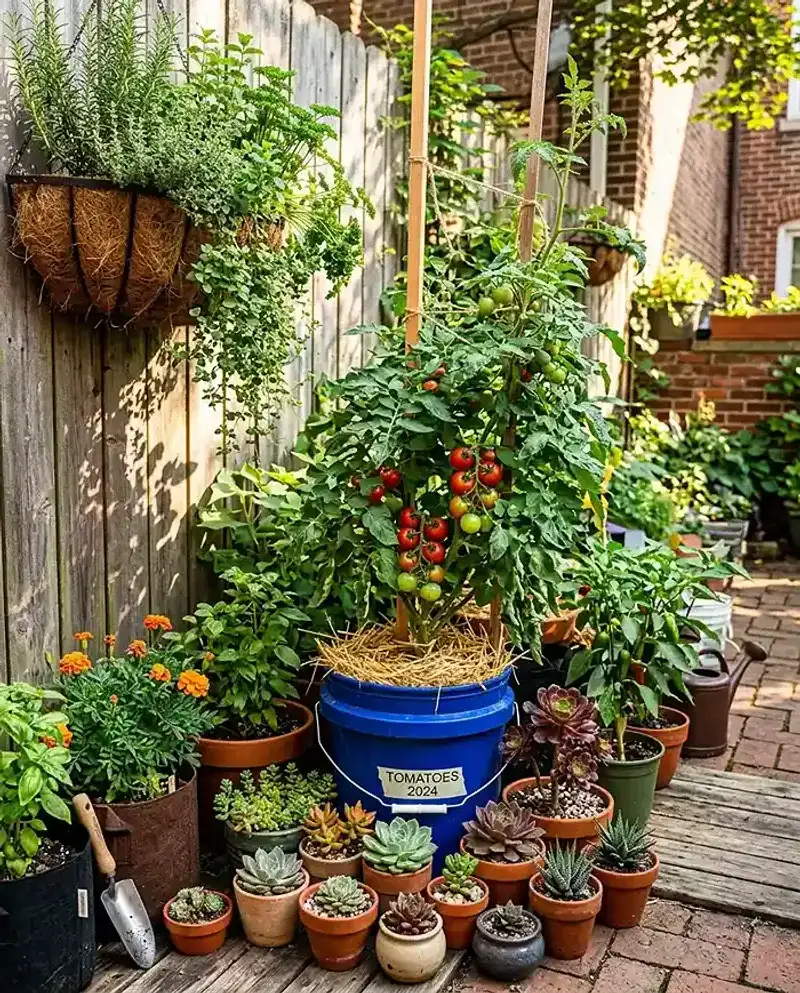
Container tomatoes play by different rules, and a schedule that works fine for an in-ground bed can leave a potted plant gasping by noon. Containers lose moisture through their walls and drainage holes far faster than garden soil does, and a small pot has very little buffer during a heat wave.
Penn State Extension recommends a container roughly 20 inches wide for a single tomato plant, and notes that adequate volume and drainage holes are both essential. A pot that is too small dries out within hours on a hot day, while a pot without drainage turns into a bucket of standing water after rain.
During a heat wave, container tomatoes may need water once or even twice a day. Check the soil a few inches down each morning and again in the evening rather than watering on a fixed schedule.
Extreme heat creates a separate problem that no amount of watering can fully fix. University of Minnesota Extension reports that blossom drop can occur around 90 degrees Fahrenheit, while Oklahoma State Extension notes that fruit set often suffers when daytime temperatures stay above roughly 92 degrees or nighttime temperatures rise above about 70 degrees.
These thresholds vary by cultivar and climate, but the pattern is consistent: heat disrupts pollination even when the plant is well watered.
Temporary shade cloth rated at 30 to 40 percent can reduce leaf and flower temperature during the worst heat stretches. University of Minnesota Extension suggests this as a short-term measure during peak heat, not permanent heavy shade, which would reduce growth and fruit production over a full season.
Steady moisture and temporary protection can meaningfully reduce heat stress, but some blossom and fruit loss during extreme weather is a normal part of summer gardening in most of the country.
Persistent Wilt Requires A Broader Diagnosis
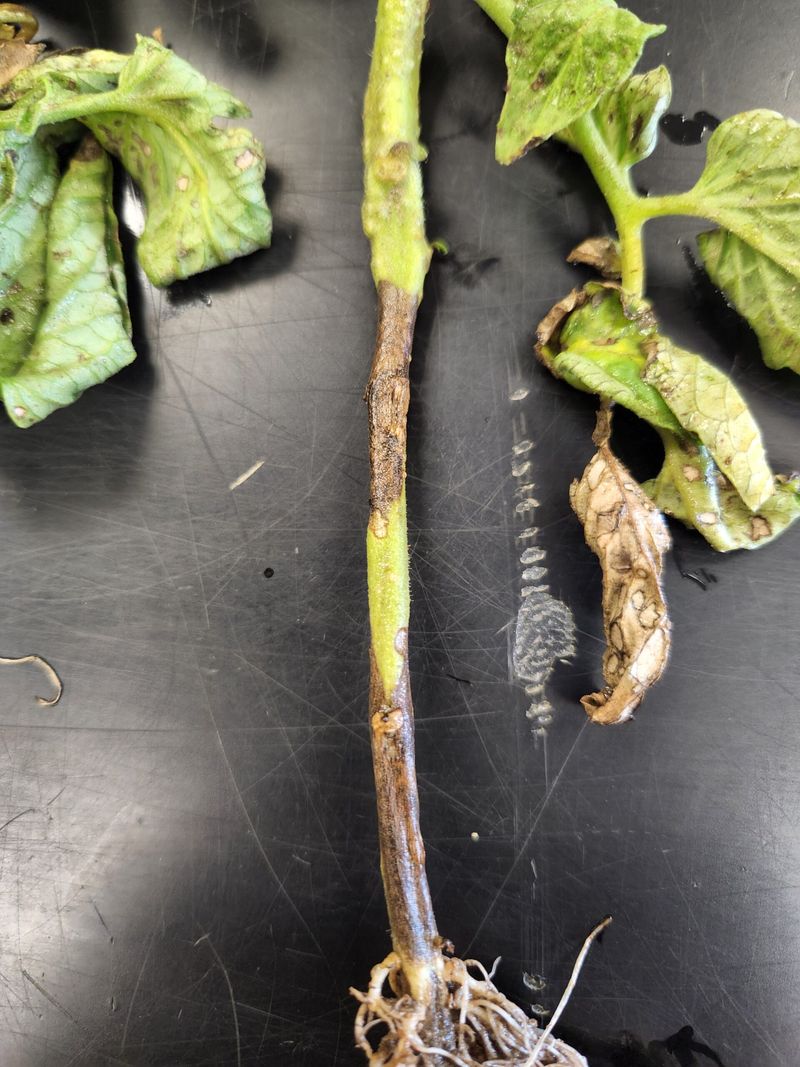
A tomato that droops at two in the afternoon and stands upright by morning is almost certainly dealing with heat stress, not a crisis. The situation changes when the plant does not recover overnight.
Wilt that persists into the morning, worsens from one day to the next, or shows up alongside yellowing leaves, one-sided collapse, dark streaking inside the stem, or visibly damaged roots is a different problem entirely. University of Minnesota’s tomato diagnostic tool lists vascular wilt diseases, stem injury, herbicide drift, and insect damage as conditions that can look almost identical to drought or heat stress from the outside.
Wet-soil wilt may involve oxygen-starved roots, but the same appearance can come from Fusarium wilt, Verticillium wilt, or other systemic problems that watering cannot fix and may accelerate.
Do not remove every wilted plant. Temporary heat wilt does not justify pulling a plant that may recover once temperatures drop.
For plants showing persistent or progressive decline, examine the roots and the interior of the stem near the soil line before making any decision. Colorado State University Extension’s guide to common tomato problems walks through the visual clues that separate disease from environmental stress.
Blossom-end rot, the dark sunken patch on the bottom of developing fruit, is another symptom that prompts quick fixes that often miss the mark. Oregon State University Extension explains that blossom-end rot is a physiological disorder tied to calcium movement and moisture consistency, not a straightforward calcium deficiency in the soil.
Calcium may be present and simply not reaching the fruit due to uneven watering or root stress. Adding Epsom salts supplies magnesium, not calcium, and can worsen nutrient imbalances.
University of Minnesota Extension notes that blossom-end rot is difficult to eliminate completely and that soil testing should guide any amendment decisions. When symptoms keep advancing despite your best efforts, your local Cooperative Extension office or a university plant clinic can give you a diagnosis based on what is actually happening in your specific soil and climate.
A healthy harvest starts with knowing what you are actually dealing with.