
The Texas Porch Plant That Shrugs Off 104 Degree Afternoons And Never Wilts
Follow us on Google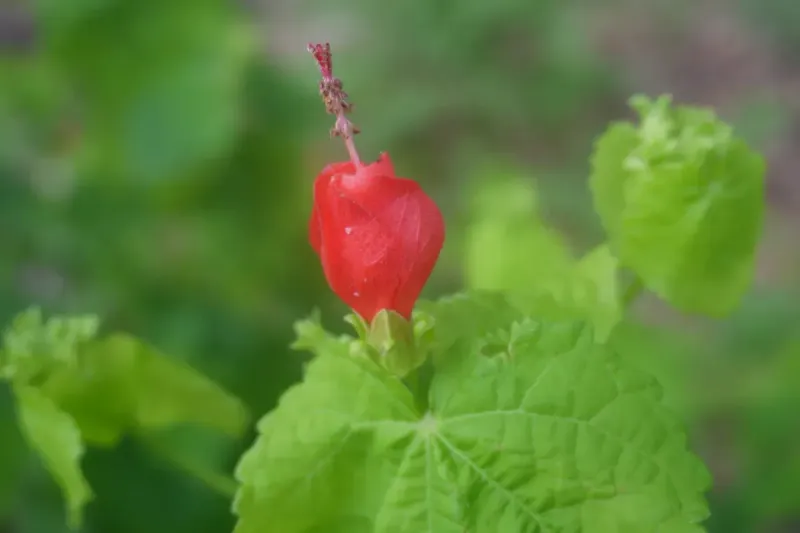
Every summer, Texas porches become plant graveyards.
You pick something up at the nursery, set it by the front door, and by August it looks like it gave up on life.
There is actually one plant that handles brutal Texas heat far better than most, and it has been growing wild across the state for centuries.
That plant is Turk’s cap, and once you understand what it can and cannot do in a container, the replace-and-disappoint cycle finally stops.
Meet Turk’s Cap, A Resilient Porch Choice
Forget the headline for a second.
No living plant in a pot on a baking Texas porch truly never wilts or shrugs off triple-digit heat without any care at all.
That kind of promise sets you up for disappointment.
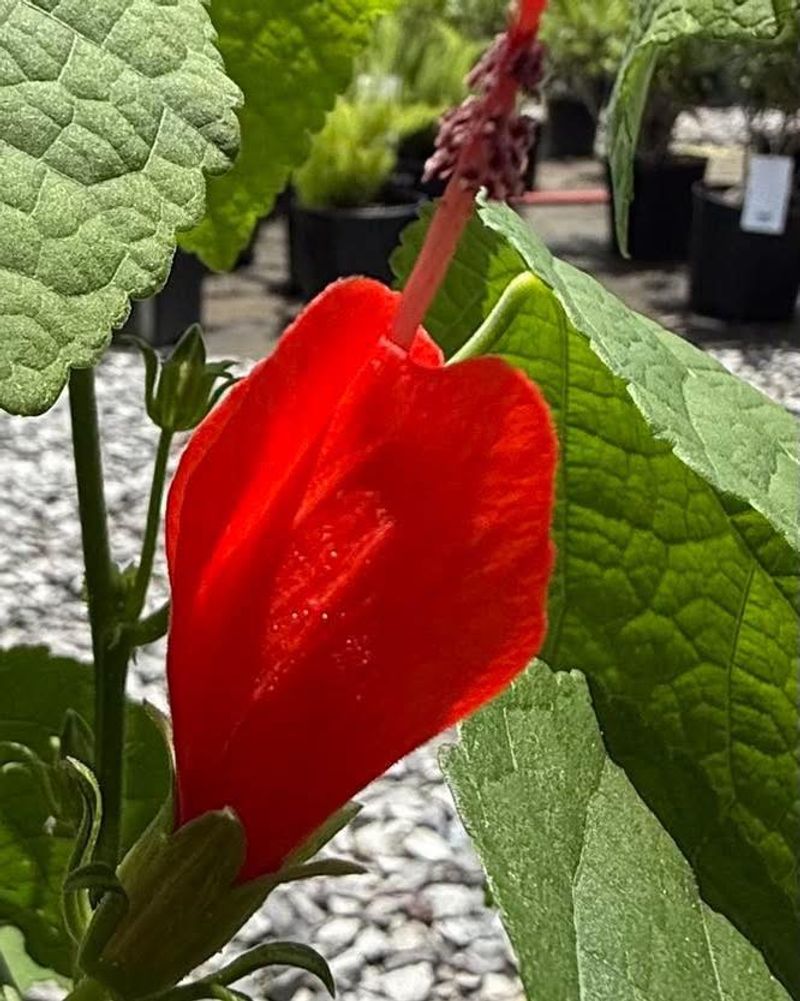
But there is a plant that comes closer to earning that headline than almost anything else you can put on a Texas porch, and its name is Turk’s cap, Malvaviscus arboreusdrummondii var. .
The Texas Superstar program, which evaluates plants specifically for Texas performance, lists Turk’s cap as unusually heat tolerant and drought tolerant once established.
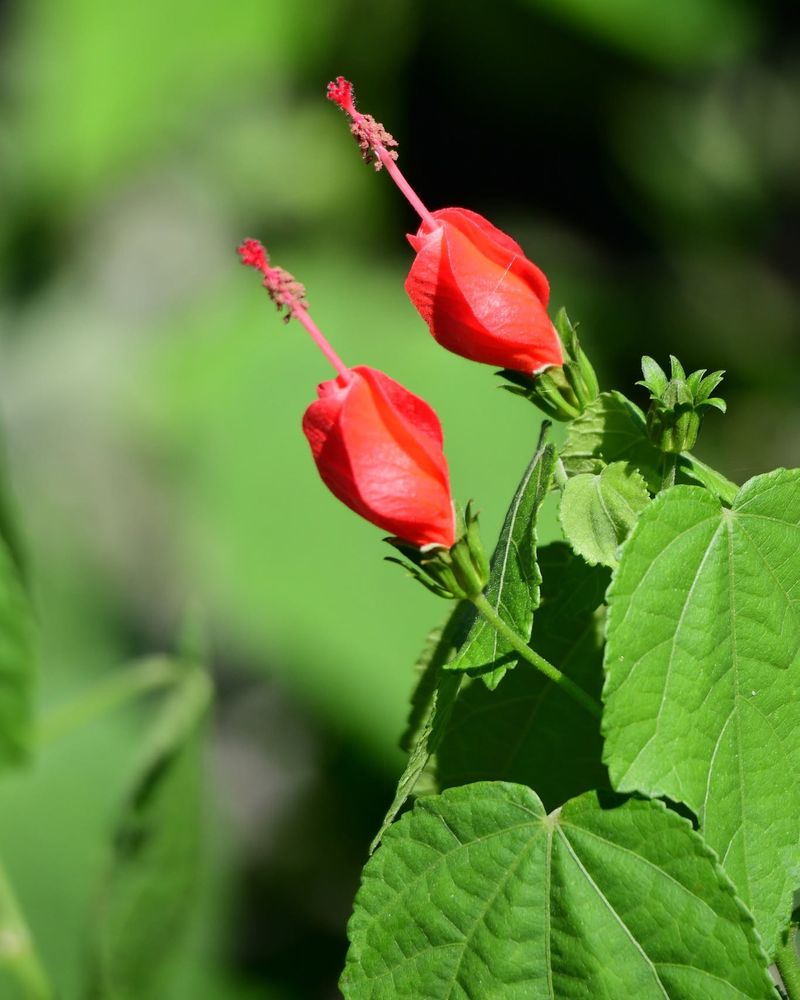
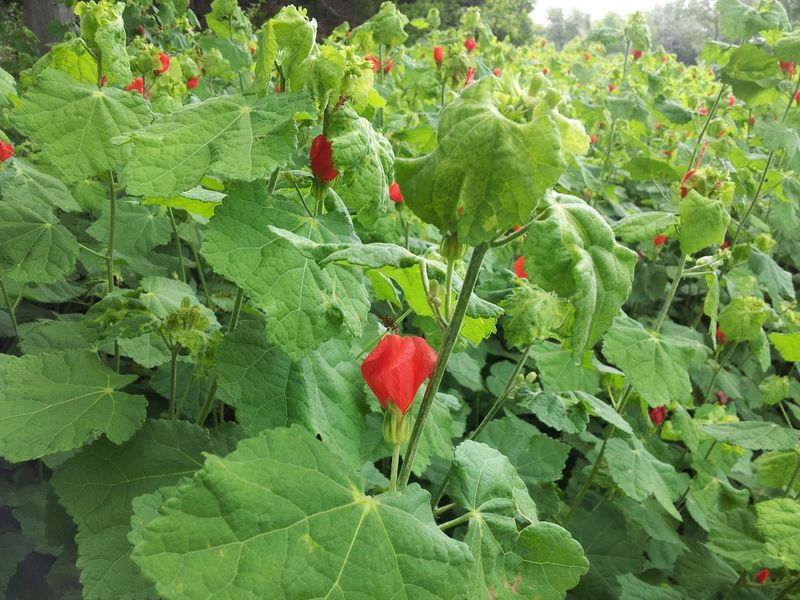
Texas Superstar’s profile of Turk’s cap identifies it as a Texas-native plant that blooms from summer all the way until frost, grows in full sun, partial shade, or full shade, and draws hummingbirds and butterflies to the flowers.
The Texas Superstar cultivar called ‘Turk’s Cap Red’ is a named example worth looking for at nurseries.
Its flowers twist into a tight, turban-like shape that stays partially closed, which is part of what makes the plant so recognizable.
Turk’s cap is also documented as root-hardy across much of Texas, meaning the roots can survive winter even when the top growth freezes back.
Keep in mind that Turk’s cap is a Texas native and separately documented as heat tolerant, but its native status alone does not automatically explain every aspect of its resilience.
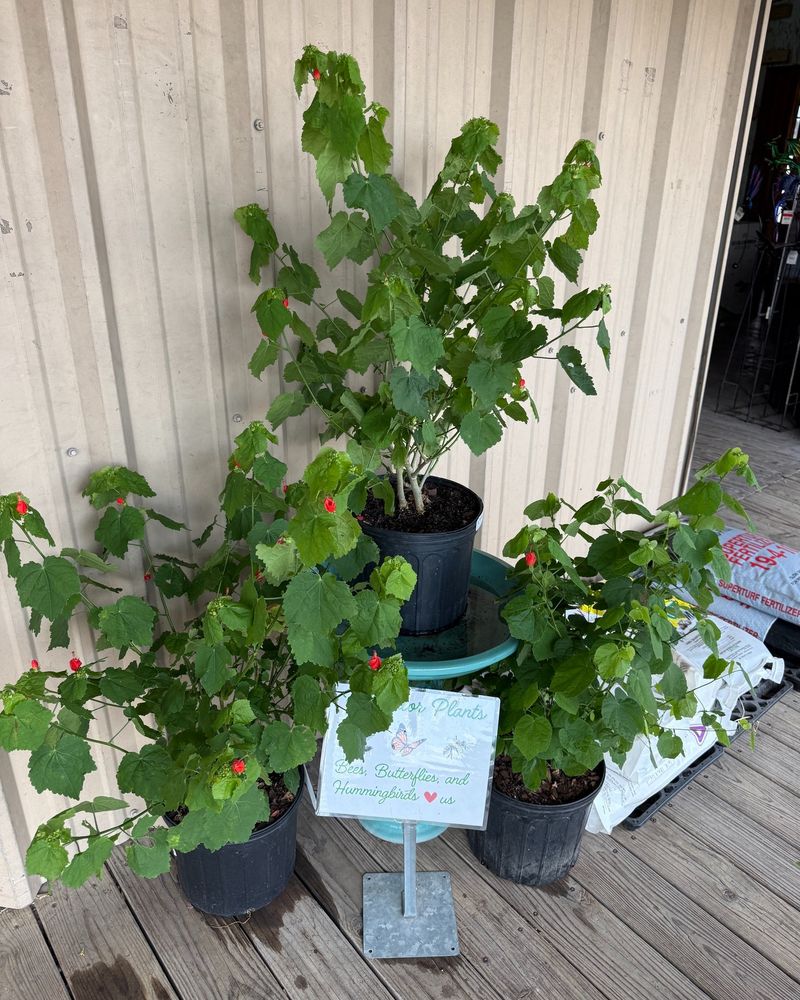
Standard plants reach 3 to 6 feet tall with a similar spread, so this is a substantial shrub, not a small porch annual.
Resilience is real here, but it is not the same as invulnerability, and that distinction matters a lot once you put it in a pot.
Heat Tolerance Does Not Prevent Wilting
Here is where it gets tricky.
Heat tolerance means the plant is more likely to survive and keep growing under stressful conditions than less-adapted choices.
It does not mean the plant cannot wilt.
A potted Turk’s cap wilts when water loss through the leaves outpaces the moisture available in its limited root zone, and that can happen faster in a container than most people expect.
Your porch is not just a neutral backdrop.
A dark plastic pot sitting on a concrete slab can turn into a root oven by mid-afternoon.
Brick walls and metal railings store heat and radiate it back onto the pot from the side.
A covered porch may block rainfall entirely while trapping hot, stagnant air.
Texas A&M AgriLife Extension guidance on managing garden stress specifically warns that container root systems are easy to stress because they are limited in size and exposed to temperature swings that in-ground roots do not face.
Wind, common in West Texas and the Panhandle, pulls moisture from leaves faster than a still afternoon, adding another layer of stress your plant has to fight through.
During hot, dry stretches, University of Minnesota Extension guidance on container plant watering notes that outdoor containers may need water at least once daily and sometimes more often depending on conditions.
Treat heat tolerance as a head start, not a hall pass.
Check the pot’s exposure and the soil before assuming the plant is fine just because it handles heat better than a petunia.
Choose Morning Sun Before Western Exposure
Turk’s cap is genuinely flexible about light.
It can grow in full sun, partial shade, or full shade, which is rare for a plant that also blooms heavily and handles summer heat.
Sun generally pushes more flowers.
Some shade, though, keeps the foliage from looking washed out, and that tradeoff matters on a porch where you are looking at the plant up close every day.
Texas Superstar notes that foliage looks more attractive with some shade, while Texas Master Gardener program guidance leans toward recommending shade, especially afternoon shade, because intense full sun can reduce bloom quality and make leaves look pale and tired.
The Henderson County Master Gardeners’ plant profile reinforces that point.
For most Texas porches, morning sun with afternoon shade is the safest broadly applicable starting placement.
A west-facing porch that gets unfiltered afternoon sun combined with reflected heat from concrete, stucco, or metal is a higher-risk site, particularly in Central Texas, the Hill Country, West Texas, and the Panhandle, where dry air and wind compound the heat load.
An established plant may tolerate it, but tolerate is not the same as thrive.
The Gulf Coast adds a different set of challenges: high humidity slows leaf drying, and sudden downpours can waterlog a pot that drains poorly.
Before you pick a spot, count the direct-light hours, look for nearby hot surfaces, consider roof cover and wind direction, and think about how much natural rainfall actually reaches the pot.
Give The Roots A Proper Container
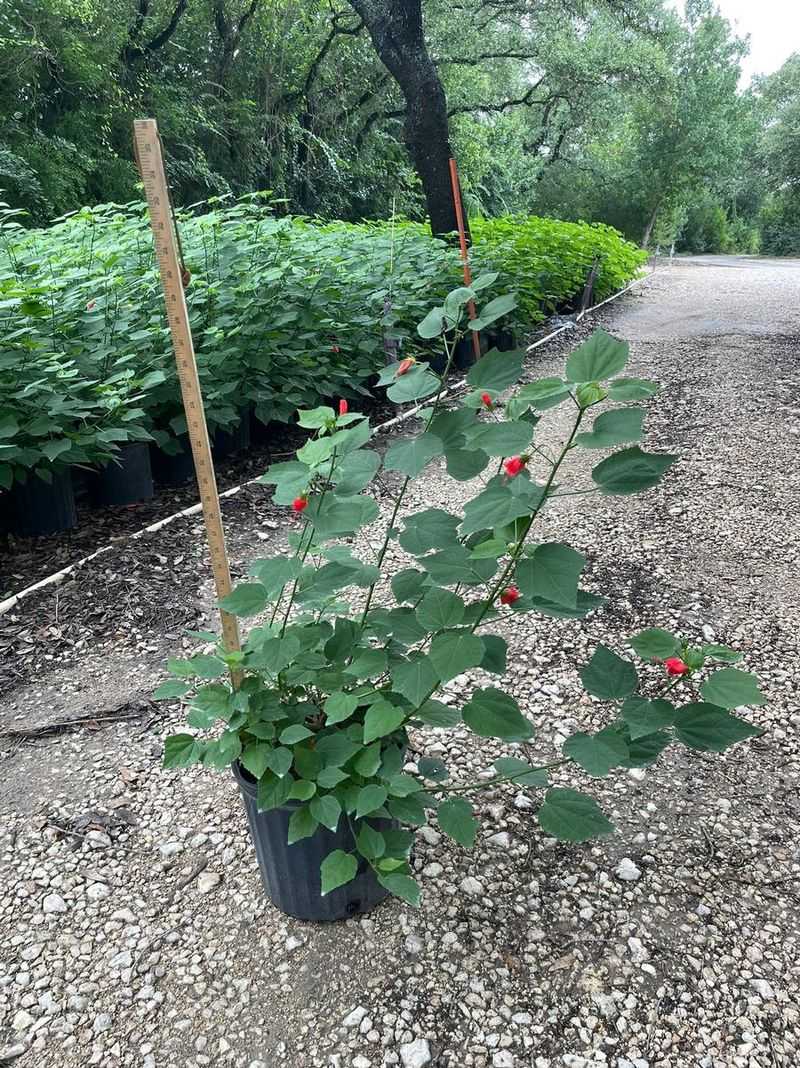
A standard Turk’s cap can reach 3 to 6 feet tall and wide and can spread by sending up root suckers around the base.
That growth habit means a small decorative pot is going to fight the plant from day one.
Choose the largest stable container you can realistically move or carry inside before a hard freeze.
There is no single officially supported gallon size for Turk’s cap in a container, so skip the guessing and simply go bigger than you think you need.
Drainage holes are not optional.
Penn State Extension’s container gardening guidance and University of Minnesota Extension’s container watering guidance both make clear that standing water and saturated soil deprive roots of oxygen and can lead to rot.
Fill the pot with a quality potting mix rather than Texas garden soil.
Blackland clay from North or Central Texas, the alkaline caliche-heavy soil common in the Hill Country and West Texas, or the sandy soil from East Texas will not drain or breathe properly in a container.
A commercial potting mix is formulated to stay loose and aerated in a pot.
Add 1 to 2 inches of mulch on top of the potting mix to slow evaporation and moderate the soil surface temperature on hot afternoons.
Texas A&M AgriLife Extension’s home gardening guide supports that mulch depth for managing surface conditions.
Keep the mulch pulled back from the stem so moisture does not collect against the base of the plant.
Container needs shift with pot size, material, weather, and how exposed the porch is, so treat these as starting points rather than fixed rules.
Check The Soil Instead Of Following A Calendar
Drought tolerance is a real trait in Turk’s cap, and it kicks in once the root system is established and spreading through the ground.
In a container, those roots are confined and surrounded by air on every side.
That changes the math on how fast the soil dries out, especially during a Texas summer when afternoon temperatures can push well past 100 degrees.
A newly planted Turk’s cap needs regular watering while its roots spread and settle in.
Even an established plant in a pot generally dries faster than a comparable in-ground plant, particularly during hot, dry stretches.
Penn State Extension’s guidance on summer watering and Texas A&M AgriLife Extension’s fall vegetable gardening guide both support the practice of checking soil moisture and watering thoroughly rather than following a fixed schedule.
Push your finger about 1 inch into the potting mix.
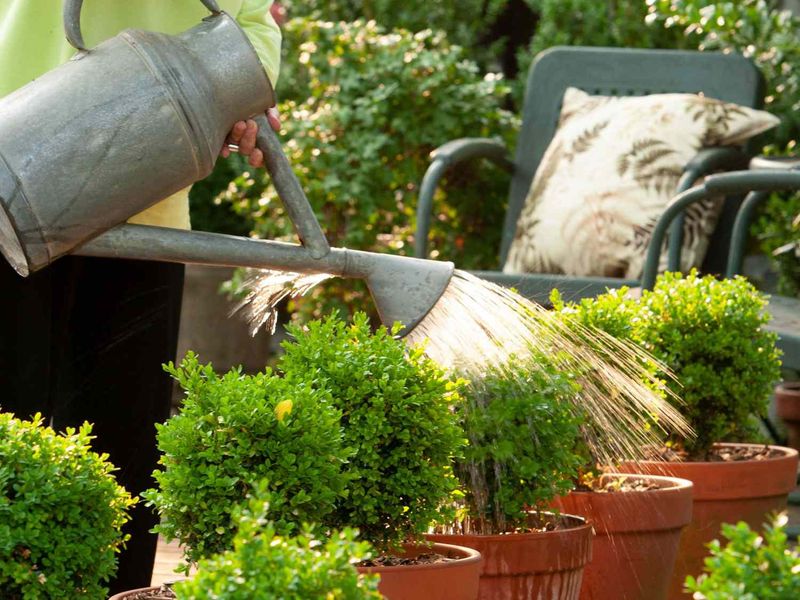
If it feels dry at that depth, water slowly and thoroughly until you see excess drain from the bottom of the pot, then remove any water that collects in a saucer.
During the hottest, driest weeks, some containers need checking daily and watering more than once a day depending on pot size, material, temperature, wind, and how actively the plant is growing.
Do not rely solely on how the leaves look.
Wilting can signal drought stress, but it can also signal overwatering or root problems, so the leaves alone cannot tell you which problem you have.
Adjust for where you live: a covered porch in dry West Texas dries faster than a shaded corner on the humid Gulf Coast, and a sudden downpour in South Texas can flip a dry pot to waterlogged in minutes.
Protect The Pot When Texas Freezes
Turk’s cap is generally root-hardy across most of Texas, and that is one of its most useful traits.
When the top growth freezes back after a hard winter, the roots often survive and push new growth in spring.
But root-hardy does not mean freeze-proof, and the container changes the equation significantly.
In-ground roots are insulated by surrounding soil, which holds heat and buffers against rapid temperature drops.
A pot sitting on a concrete porch has no such buffer.
When air temperatures fall below 32 degrees Fahrenheit, the soil inside a container can drop to damaging temperatures faster than the ground around an in-ground plant.
Texas A&M AgriLife Extension’s guide on protecting plants from frosts and freezes makes clear that container roots are more vulnerable than in-ground roots during freezing weather.
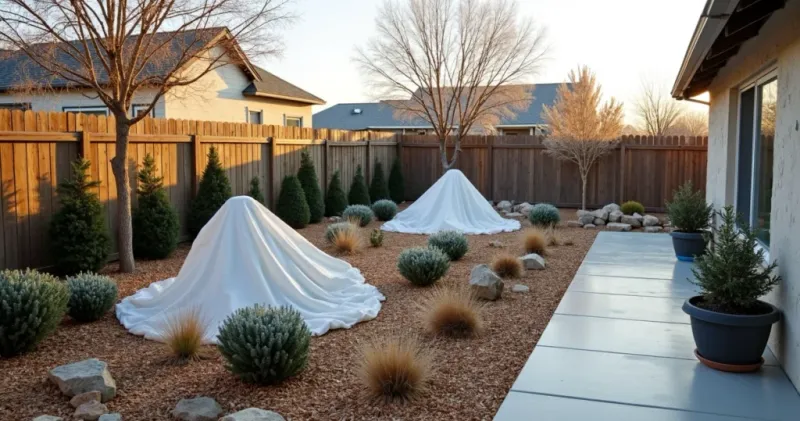
Move the pot into a garage, a covered area, or inside before a hard freeze rather than leaving it outdoors through every cold event.
Texas Superstar notes that Turk’s cap is native to South Texas and may need to be treated as an annual in North Texas under some conditions.
The Panhandle, with its zone 6b winters, is a higher-risk environment than the Lower Rio Grande Valley, which sits near zone 10b.
After a hard freeze, resist the urge to cut the damaged stems immediately.
Dead top growth provides a small amount of insulation and marks where new shoots will emerge.
Wait until late winter or early spring, after local freeze risk has eased, before trimming back the dead material.
Prune The Shrub To Fit The Porch
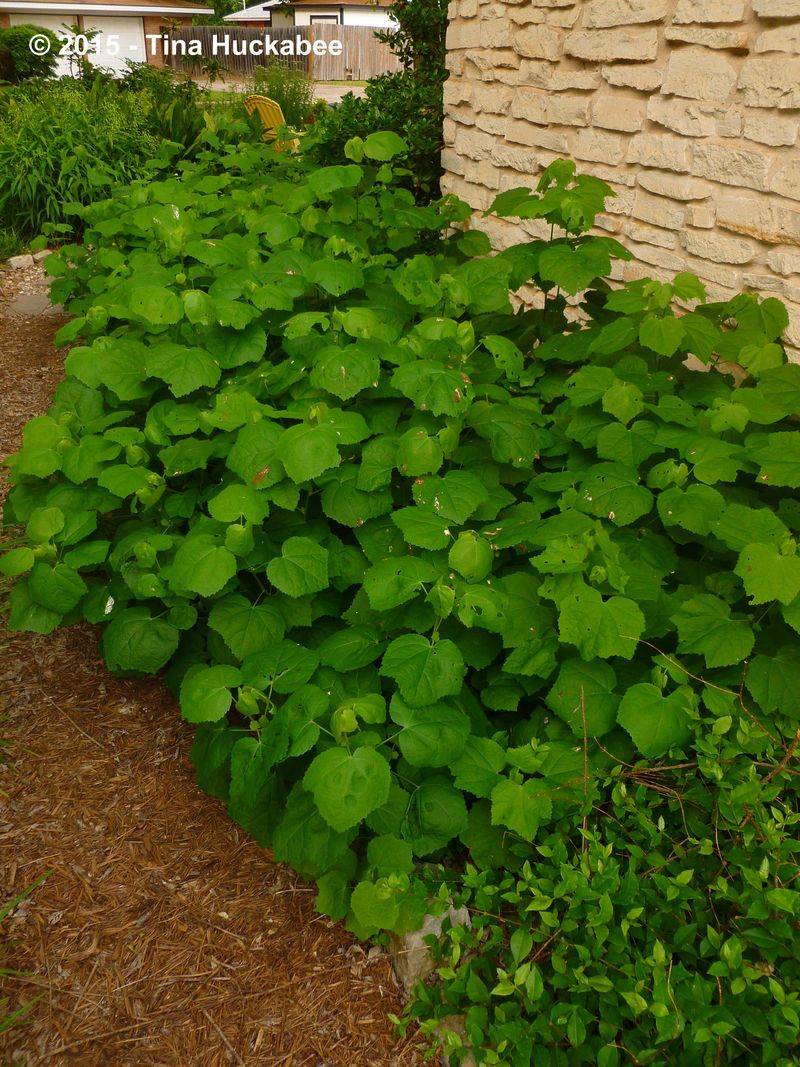
A 3-to-6-foot shrub that spreads through suckers can take over a narrow entry porch faster than you expect.
Managing Turk’s cap for porch life means staying ahead of the growth rather than reacting after it has outgrown its space.
Pruning is the tool that keeps it proportional, and the timing matters.
Texas Master Gardener program guidance suggests cutting the plant back by about half in late July to August to reduce legginess and encourage a more compact, tidy form.
The Henderson County Master Gardeners note that Turk’s cap can be pruned to a desired size.
Adjust the timing based on your local weather.
Avoid heavy pruning during severe heat or an extended drought unless the plant’s structure genuinely requires it, because cutting back a stressed plant compounds the stress rather than relieving it.
Compact cultivars can also help if your porch space is very limited, though specific size guarantees vary by cultivar and growing conditions.
Turk’s cap is generally a low-problem plant, and many gardeners grow it for years without significant pest issues.
That said, it is not completely pest free.
Texas Master Gardener sources identify powdery mildew, whiteflies, and mealybugs as possible problems.
Full sun exposure can contribute to mildew in some settings.
Keep an eye on the undersides of leaves and on new growth, especially during humid periods along the Gulf Coast or after warm, wet spring weather in Central Texas.
Catching a small problem early is far easier than managing a large one later.
Build A More Forgiving Porch Plan
Putting this all together gives you a porch plan that is genuinely more likely to succeed than the buy-and-replace approach most Texas homeowners fall into.
Start with morning sun and afternoon protection when you can manage it.
Use a large container with drainage holes and a quality potting mix, not garden soil.
Add 1 to 2 inches of mulch to the soil surface, keeping it away from the stem, to slow evaporation and moderate root-zone temperature on brutal afternoons.
Check soil moisture regularly rather than watering on a fixed schedule.
University of Minnesota Extension’s container watering guidance supports watering thoroughly when the top inch is dry and allowing excess to drain, rather than guessing by calendar or leaf color alone.
Container plants generally need closer monitoring and face greater risk of rapid drying and temperature swings than comparable in-ground plants, though the exact difference depends on conditions.
When a hard freeze is coming, move the pot inside or into a sheltered spot rather than leaving it exposed.
Texas A&M AgriLife Extension’s freeze protection guidance makes clear that container roots are more vulnerable than in-ground roots during cold events.
Turk’s cap will attract hummingbirds and butterflies to your porch, which is a genuine bonus.
One plant is one part of a habitat, not a complete pollinator garden, but it is a meaningful contribution.
Expect the plant to behave differently in South Texas than in North Texas or the Panhandle, because Texas Superstar’s own guidance notes that regional conditions shape how the plant performs season to season.
Turk’s cap offers more resilience than almost anything else you can put in that pot, and when you match the container and care to your porch, that resilience actually shows up.