
Green Anoles On Your Texas Porch May Eat Some Mosquitoes And Other Small Insects (Here Is How To Attract Them In Eastern Texas)
Follow us on Google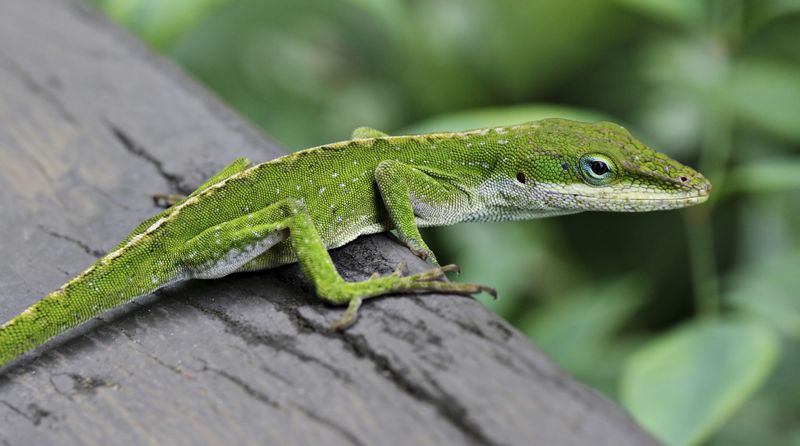
Step outside on a warm East Texas morning and you might catch a flash of bright green on the fence post, a small lizard doing a slow push-up before disappearing into the shrubs.
That is a green anole, and it has been quietly hunting insects around your porch long before you noticed it.
Homeowners across the eastern third of Texas share their outdoor spaces with these native lizards, and a few simple yard changes can make that habitat more welcoming.
They will not replace your mosquito control, but a leafy porch that supports green anoles is genuinely a healthier backyard.
First, Make Sure That Porch Lizard Is a Green Anole
Plenty of Texas lizards are small, quick, and easy to misidentify, so color alone will not settle the question.
A green anole, Anolis carolinensis, can shift from bright emerald to a dull grayish-brown depending on temperature, stress, and light, which means a stressed lizard on your porch may look nothing like the vivid green one in a field guide photo.
The body is slender and tapered, the snout is long and pointed, and the whole animal usually measures 5 to 8 inches from nose to tail tip.
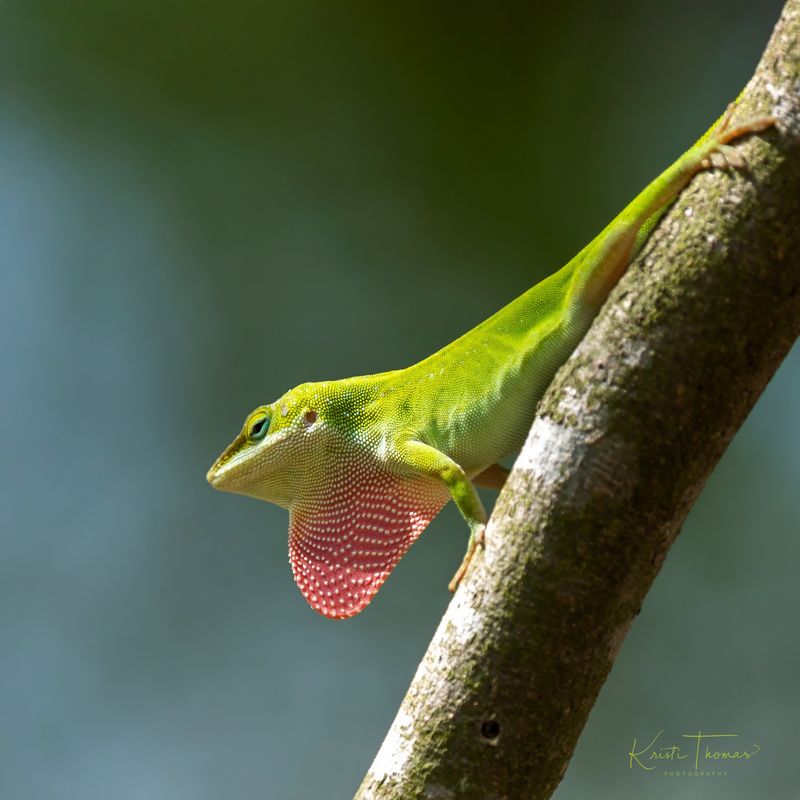
The single most reliable field mark is the male’s dewlap, a flap of skin under the throat that fans out into a pink or reddish-pink fan during territorial displays and courtship.
Females have a much smaller, paler version.
If you watch a lizard bob its head and flash that pink patch, you are almost certainly looking at a green anole.
No other common Texas fence lizard shares that combination of color-changing ability and a pink dewlap.
Geography matters here, too.
Texas Parks and Wildlife places green anoles throughout the eastern third of the state, including the Pineywoods, the Post Oak Savanna, and much of the Gulf Coast.
If you garden in Houston, Beaumont, Nacogdoches, or Lufkin, there is a good chance this species is already in your yard.
Readers in Amarillo, El Paso, the Hill Country, or the Lower Rio Grande Valley should take a closer look before assuming the lizard on the fence is a green anole, because Texas supports several other species that may look similar at a quick glance.
Green anoles favor spots with greenery, patches of shade, and some moisture nearby.
They use shrubs, vines, fences, tree trunks, and exterior walls as hunting and basking surfaces.
Knowing you have the right species is the first step before making any habitat changes.
They Eat Insects, but They Do Not Control Infestations
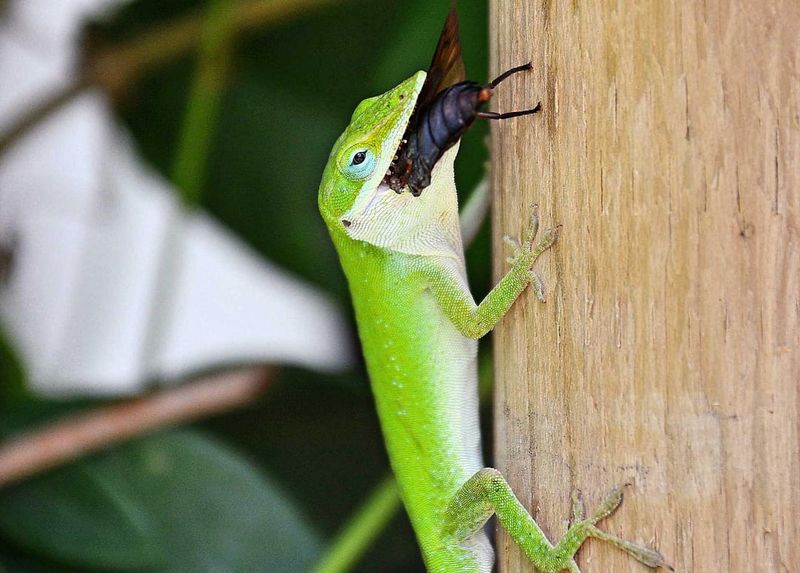
Watch a green anole for ten minutes on a warm afternoon and you will probably see it snatch something.
These lizards are active, opportunistic hunters that eat a broad range of insects, flies, beetles, spiders, and other small arthropods that are roughly the right size to swallow.
Texas Parks and Wildlife’s wildscape guide describes them as regular consumers of insects and small spiders, which is genuinely useful in a yard full of summer bugs.
The 2025 mosquito-trap story is worth knowing about, because it shows something real.
A field observation in Montgomery County, Texas documented green anoles waiting near a mosquito trap and apparently eating mosquitoes, flies, and gnats attracted to it.
That tells you anoles will take a mosquito when one is easy to catch.
What it does not tell you is how many they ate, whether the local mosquito population went down, or whether anyone’s risk of a mosquito bite changed at all.
Cockroaches come up in anole diet discussions, and the University of Michigan’s Animal Diversity Web profile for Anolis carolinensis confirms a generalist diet that shifts with location and prey availability.
Broader lizard diet research documents cockroach consumption across species, but no reliable Texas study shows that green anoles specialize in the large roaches that wander into Gulf Coast homes or that they eliminate household infestations.
A small lizard hunting in the shrubbery is not the same thing as pest control inside your walls.
The honest summary is this: green anoles eat some of what bothers you, and that is worth something.
But they are one small piece of a yard ecosystem, not a replacement for dealing with mosquito breeding water or a cockroach problem inside the house.
Think of them as a welcome layer, not a solution by itself.
Dense, Connected Shrubs Give Anoles More to Use
Here is where it gets interesting.
The single strongest thing a Texas homeowner can do to support green anoles is not a specific plant or a water dish.
It is the overall density and connectivity of the vegetation around the porch and yard.
A U.S.
Forest Service field study conducted in open pine forest on the Angelina National Forest in eastern Texas found that anole numbers were estimated at 16 times higher in the plot with greater shrub density, and the lizards consistently used shrubs that were 4 to 6 times larger than the average shrub available to them.
That eastern Texas habitat study did not point to one special plant species as the key.
Shrub volume and density mattered far more than which species of shrub was present.
Keep in mind that those findings came from a pine forest research setting, not a suburban backyard, so treat them as a direction rather than a guaranteed multiplier for your patio.
What that means practically is that a single potted plant at the corner of the porch is not going to do much.
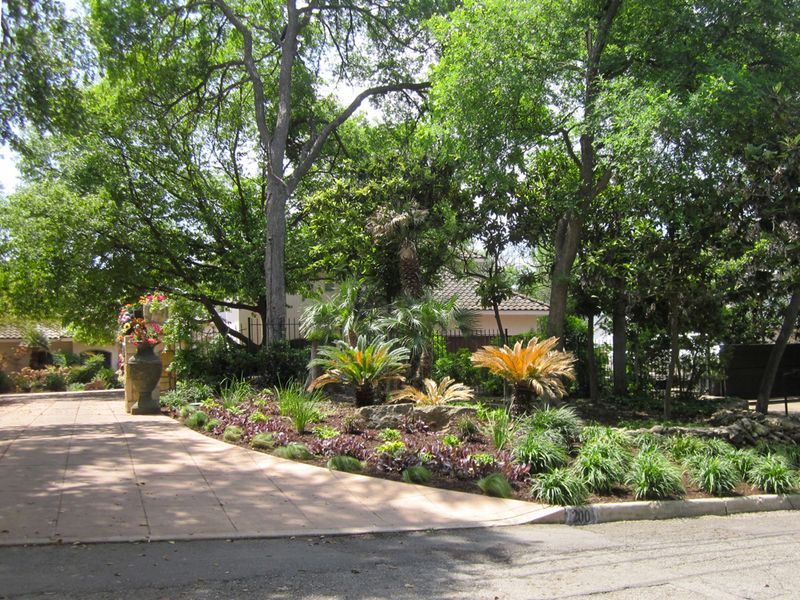
A connected run of dense shrubs, vines climbing a fence, leafy perennials filling in the gaps, and a small tree or two providing overhead cover creates the kind of layered habitat anoles actually use.
They hunt on stems and branches, bask in patches of sunlight between leaves, and retreat into thick cover when a neighborhood cat or a red-shouldered hawk comes through.
Connected vegetation matters because anoles need to move between hunting spots, basking sites, and shelter without crossing wide open ground.
A row of shrubs along the fence line that meets a perennial bed near the porch gives them a corridor.
Isolated plants with bare ground between them are much harder for a small lizard to use safely.
Think of the goal as building a leafy network rather than placing individual specimens.
Choose Native Plants for Cover and Insect Support
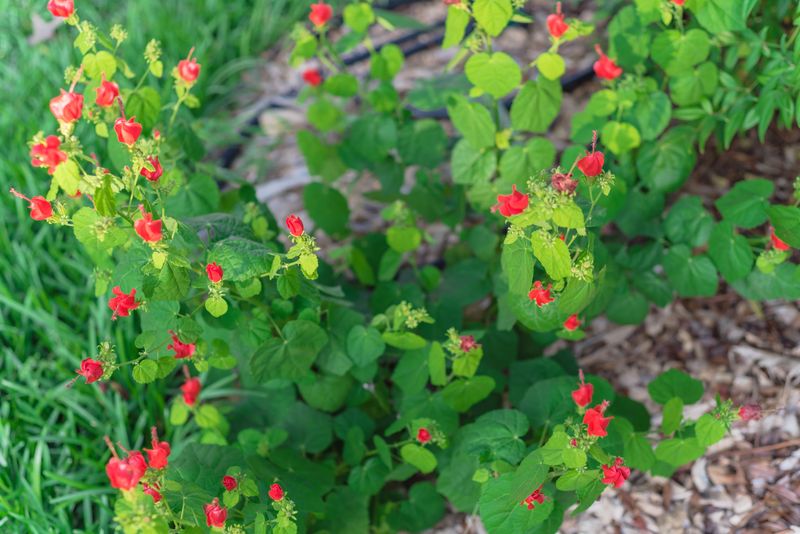
Native plants earn their place in an anole-friendly yard because they do two things at once: they provide the leafy cover and stem structure anoles use for hunting and shelter, and they support the local insect community that anoles actually hunt.
Texas Parks and Wildlife’s habitat resources guidance recommends native plants specifically for their ability to provide food, shelter, and insect support for Texas wildlife.
For East Texas and the Gulf Coast, where green anoles are most at home, plants like Turk’s cap (Malvaviscus arboreusdrummondiiSalvia greggiiAnisacanthus quadrifiduswrightiiConoclinium greggiiLantana urticoides var. ), autumn sage (), flame acanthus ( var. ), Gregg’s mistflower (), native lantana (), and native milkweeds can work well as part of a layered planting.
None of these has been proven to attract green anoles better than any other plant, so do not treat the list as a magic formula.
They show up here because they offer dense foliage, attract insects, and tend to handle Texas summers reasonably well when matched to the right spot.
Texas Wildscapes planting tips consistently emphasize choosing plants suited to your local soil, water availability, and freeze exposure rather than following a universal list.
Blackland clay in North and Central Texas, the acidic sandy soil common in East Texas, and shallow alkaline caliche in the Hill Country each call for different plant choices.
A plant that thrives in a Beaumont yard may struggle badly in a San Antonio rock garden.
The goal is density and connection, not a particular species.
A mixed planting of several native shrubs and perennials that grows full enough to touch along a fence line will serve anoles far better than a perfectly spaced ornamental row with bare mulch between each plant.
Fill the gaps, let things get a little lush, and the structure takes care of the rest.
Offer Foliage Moisture Without Creating Mosquito Water
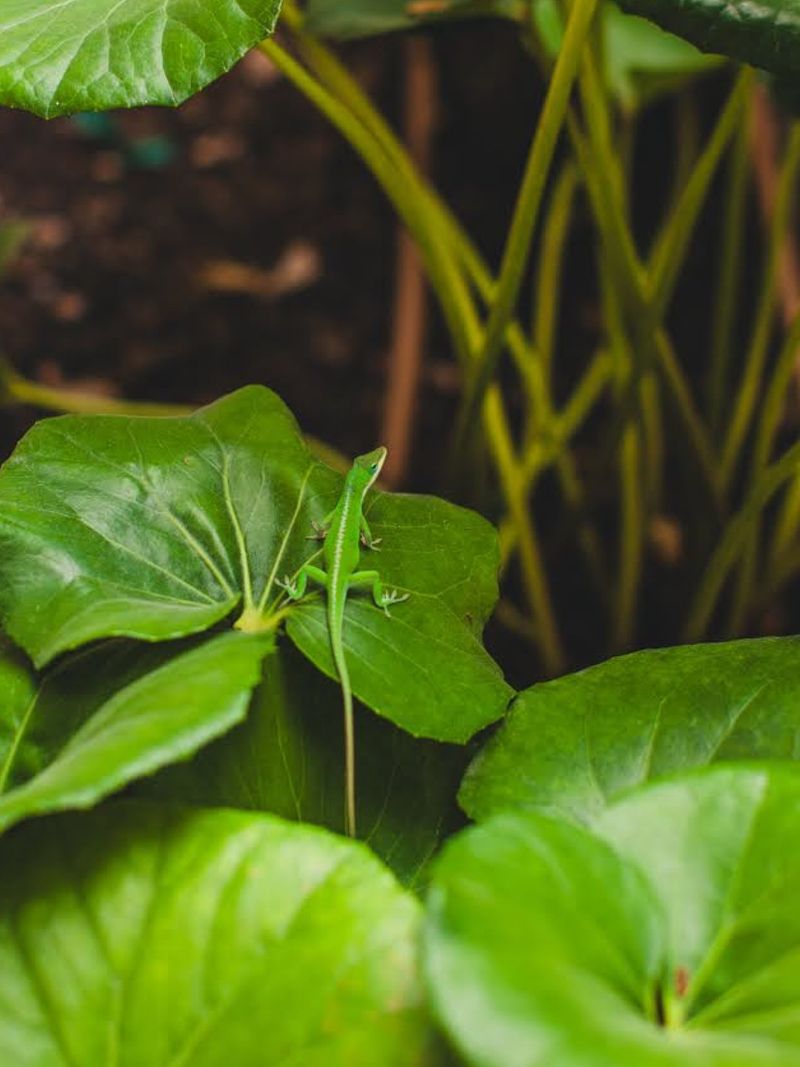
Green anoles need moisture in their environment, and the way they get it is worth knowing before you set out a water dish.
Laboratory husbandry research on green anoles reports that they commonly drink droplets from foliage rather than drinking from open water the way a dog or a bird does.
In a yard, that means wet leaves in the morning can genuinely matter to a lizard moving through your shrubs.
A gentle pass with a garden hose over the leaves of your shrubs and perennials in the early morning, before the Texas heat burns off any moisture by mid-morning, can create those drinking opportunities.
Texas Parks and Wildlife notes that green anoles prefer moist habitat, which aligns with their concentration along the wetter eastern edge of the state rather than the arid west.
During a dry August in East Texas or along the Gulf Coast, that morning misting is a reasonable small step.
During a drought with water restrictions in effect, skip it and prioritize your plants instead.
The mosquito risk is real and worth taking seriously.
University of Georgia Extension guidance on mosquito breeding sites makes clear that even small amounts of standing water, as little as a bottle cap worth, can support mosquito larvae.
Saucers under pots, low spots in the yard that collect rain, old containers left in the garden, and clogged gutters are all potential breeding sites.
Refresh birdbaths every 24 hours, tip out anything that collects rainwater after a storm, and do not leave containers sitting full near the porch.
The balance here is straightforward.
Moist leaves in the morning support anoles.
Stagnant water in containers supports mosquitoes.
Aim for one and actively prevent the other, and you are doing both jobs at once.
Protect the Lizards With More Targeted Pest Decisions
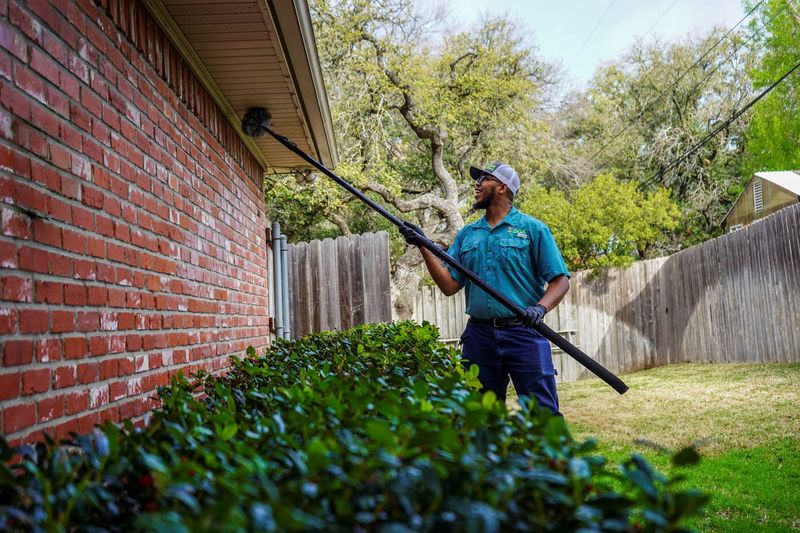
The temptation when you want more anoles around is to just let things go, skip the pest spray, and assume the lizards will handle it.
That logic runs into a real problem.
Allowing mosquito breeding water to sit, letting food waste accumulate, or ignoring a structural pest problem to avoid disturbing the local lizard population is not a sound trade-off for anyone.
Pesticides are a genuine concern for reptiles, and the science is specific about why.
EPA’s risk assessment framework for amphibians and reptiles identifies contaminated prey, foliage, soil, water, spray drift, and runoff as pathways through which reptiles can be exposed to pesticides.
An anole hunting beetles on a shrub that was sprayed an hour ago is picking up more than a beetle.
EPA guidance on reducing pesticide impacts on wildlife recommends treating only the affected area, following the product label precisely, and minimizing broad-spectrum applications that hit non-target insects and the animals that eat them.
Texas A&M AgriLife Extension’s pest management guidance consistently emphasizes scouting first, identifying the pest accurately, and treating only when the problem actually warrants it.
That approach protects anoles as a side benefit, because it keeps unnecessary chemical exposure out of the yard.
And EPA data on common causes of pesticide incidents shows that misuse and off-label application are frequent contributors to unintended wildlife harm.
Porch lighting is a separate issue worth addressing plainly.
Leaving a bright light on all night does attract insects, and anoles may occasionally forage near them.
But research on artificial light and anole lizards shows that artificial light at night can alter their behavior, and a separate study on green anoles and artificial light documents disruption to normal activity and sleep.
Bright all-night lighting is not a reliable anole strategy, and it creates other problems for the broader backyard ecosystem.
Use motion-sensor or low-intensity lighting instead.
Use Anoles as One Small Part of Mosquito Management
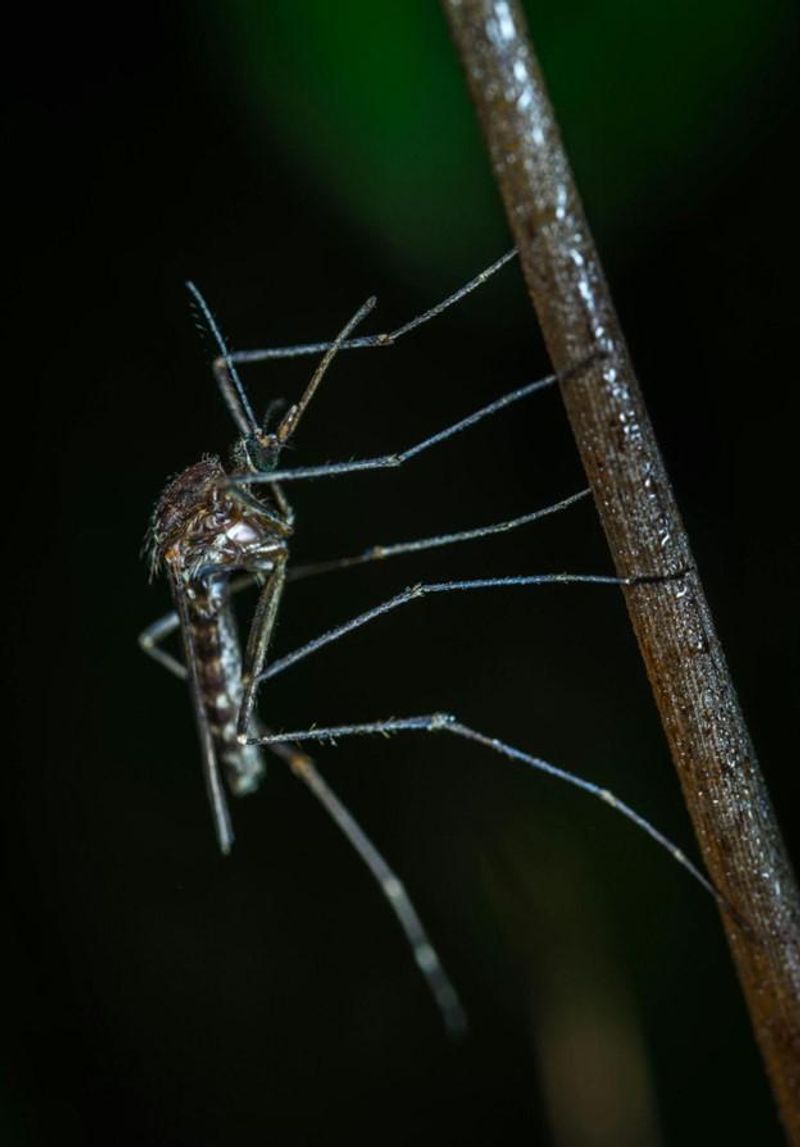
Mosquito management in a Texas yard has a few non-negotiable steps, and none of them involve lizards.
Clear your gutters at least twice a year, more often if you have trees dropping debris over the roofline.
Empty anything that collects rainwater within 24 hours of a storm: old pots, tarps, kids’ toys, low spots in the lawn.
Refresh birdbaths every day, because mosquito eggs can hatch in as little as 24 to 48 hours in warm Texas weather.
For ornamental water features that cannot be emptied, mosquito breeding site guidance from University of Georgia Extension supports using Bacillus thuringiensis israelensis, commonly called Bti, as a targeted biological option that affects mosquito larvae without harming lizards, birds, or beneficial insects.
Green anoles may eat some mosquitoes and other small insects, as the Montgomery County observation near a mosquito trap suggests, but that has not been shown to reduce mosquito numbers or lower the risk of a bite around a Texas home.
EPA wildlife-safe pest control guidance frames the layered approach well: source reduction, physical barriers like screens and fans, repellents when you need them, and targeted treatment when a problem is confirmed.
Anoles fit into that picture as one beneficial layer, not the foundation of it.
Cockroaches and other structural pests require their own separate attention.
Texas Parks and Wildlife’s wildscape guide describes anoles as consumers of insects and spiders in outdoor settings.
They are not a match for a German cockroach problem inside a wall or a large roach working its way in under a door.
Those situations call for targeted indoor pest management, not a yard full of lizards.
A porch with dense native shrubs, connected leafy cover, morning moisture on the leaves, and careful pesticide decisions is genuinely good habitat for a native predator.
That is a real thing worth building.
The lizard doing push-ups on your fence post is a small, quiet piece of a backyard that is actually working.