
Your Zucchini Throws A Dozen Blooms And Still No Squash, But Half Those Flowers Never Could
Follow us on Google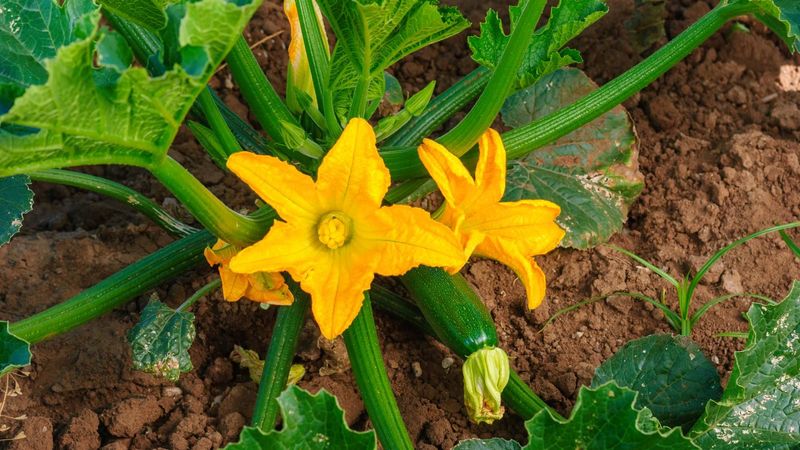
You walk out to the garden expecting a zucchini or two and find a plant absolutely loaded with yellow flowers, but not a single squash. It’s frustrating, especially when the plant looks healthy and the blooms keep coming.
The answer is hiding right there on the stem: many of those flowers were never built to become squash in the first place. Once you know how to tell the difference, you can actually do something about it on your very next morning check.
Many Blooms Were Never Going To Become Squash
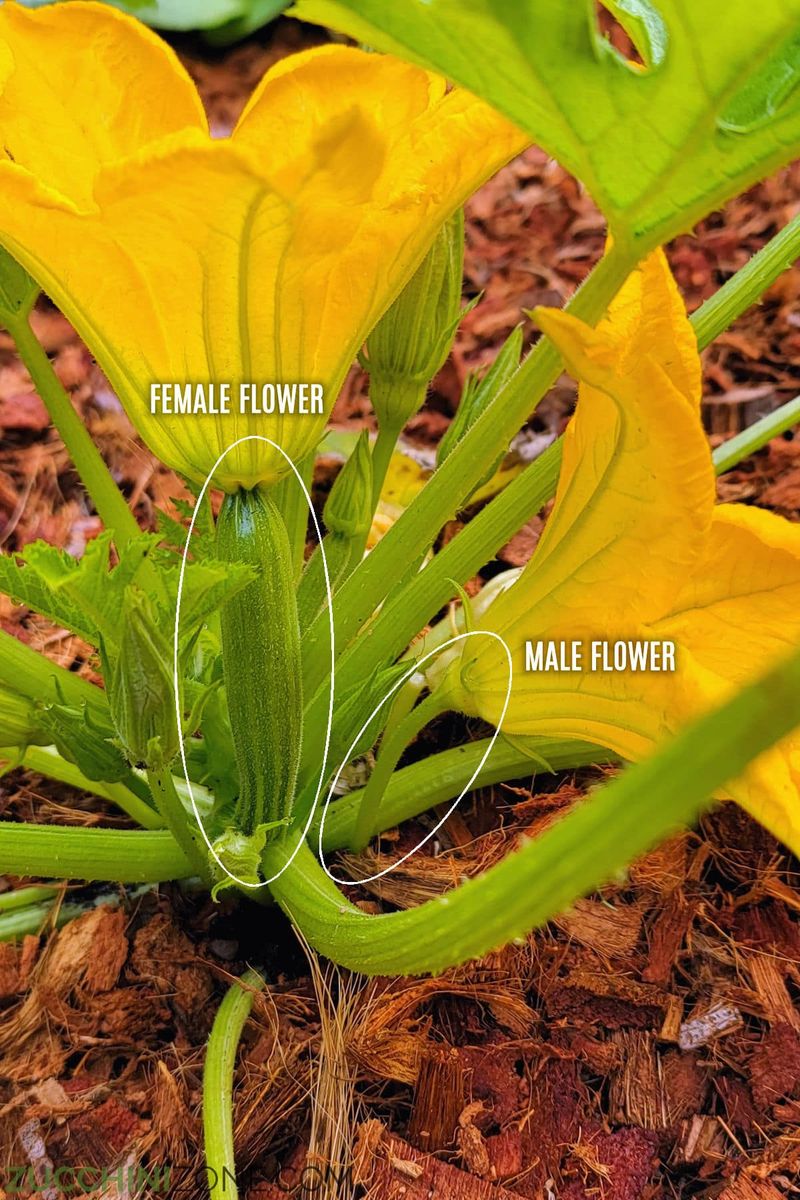
Zucchini, known botanically as Cucurbita pepo, does something that surprises a lot of gardeners: it grows two completely different kinds of flowers on the same plant. One type produces pollen and nothing else.
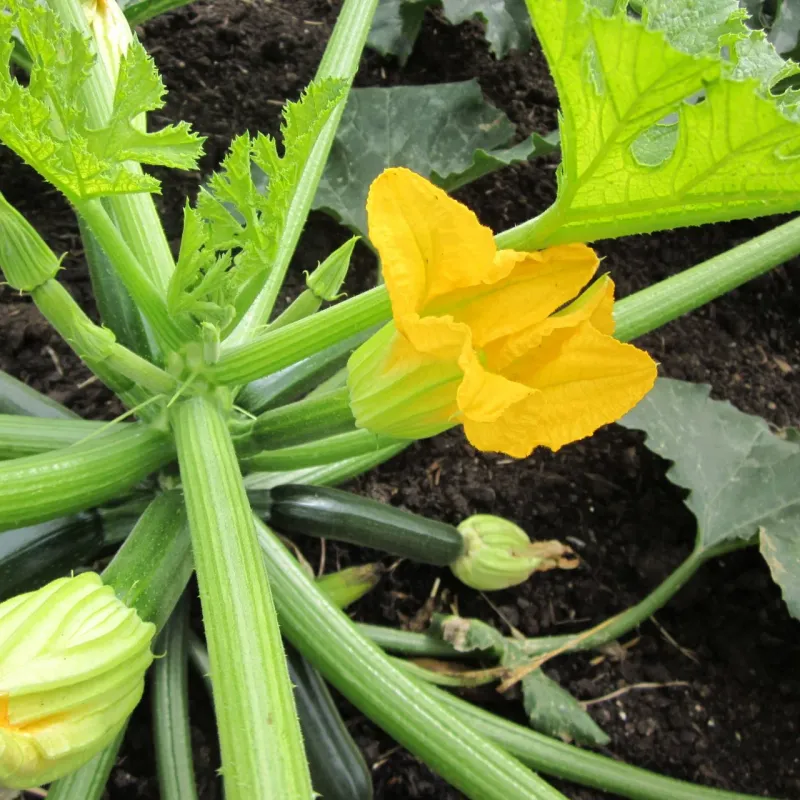
The other type can actually become squash, but only under the right conditions. University of Minnesota Extension guidance on growing summer squash and zucchini confirms that male flowers have long, thin, straight stems and supply pollen, while female flowers have thicker, shorter stems and a small swollen bump at their base that looks like a miniature zucchini.
That swollen bump is the ovary, the part that can grow into the squash you want to harvest. A male flower has no ovary.
No matter how many bees visit it or how sunny the day is, a male flower cannot become fruit. When a gardener looks out at a plant covered in blooms and wonders why there is no squash, a large share of those blooms may simply be male, doing their job by supplying pollen and nothing more.
The plant is monoecious, which means one plant carries both flower types, so a second zucchini plant is not required for basic fruit production. UGA Cooperative Extension’s commercial squash production guide supports this, noting that pollen and female flowers occur on the same plant.
What matters is that pollen gets from the male flower to the female flower at the right moment.
Early in the season, the first flowers to open are usually male, and that is completely normal. Female flowers tend to follow after the plant has been flowering for a week or more, though timing shifts with variety and growing conditions.
Illinois Extension’s summer squash page notes that this male-first pattern does not signal a sterile or struggling plant. Patience, plus the ability to tell the two flower types apart, is the first real tool in the gardener’s kit.
A Female Flower Still Needs Pollen
Spotting a female flower with that little swollen base is exciting, but the miniature zucchini shape underneath the petals is a promise, not a guarantee. The ovary still needs pollen delivered to its center before it will grow into anything worth picking.
Without that transfer, the small fruit typically yellows, softens, and drops off within a day or two.
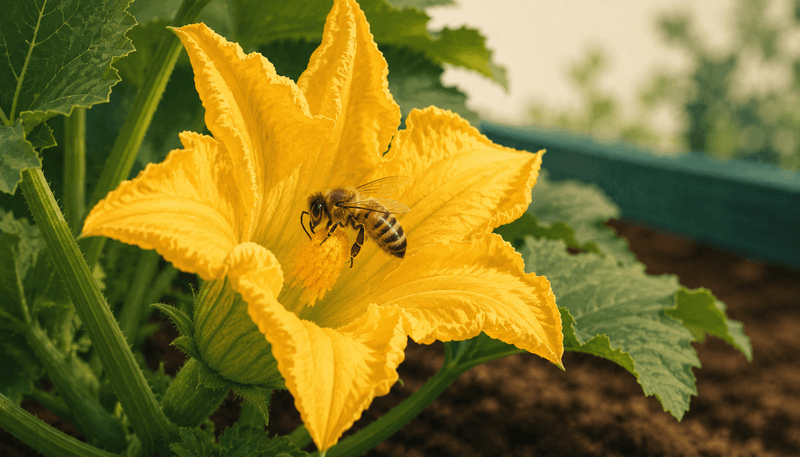
Bees do most of this work, and they tend to do it early. UMN Extension’s flower and fruit set guide for cucurbits explains that zucchini flowers commonly remain open for only a few morning hours, which makes the pollination window short and easy to miss.
Squash bees and bumblebees are particularly useful because they forage early in the morning, sometimes before other bees are active.
Weather can close that window even further. Cold temperatures, heavy cloud cover, rain, or wind can keep bees from flying during the exact hours when flowers are open and receptive.
Heat can also reduce foraging activity later in the morning. UMN Extension’s pollination requirements resource notes that these conditions can leave a plant with both male and female flowers open at the same time, yet still fail to set fruit simply because no bee made the trip.
The practical move is to check the plant early, ideally before mid-morning, while both flower types are open. Look for female flowers with their telltale swollen base and check whether male flowers nearby have visible yellow pollen on their central structure, called the anther.
If bees are not visiting or conditions look rough, that morning is a good time to step in and help.
Hand-Pollinate During The Morning Window
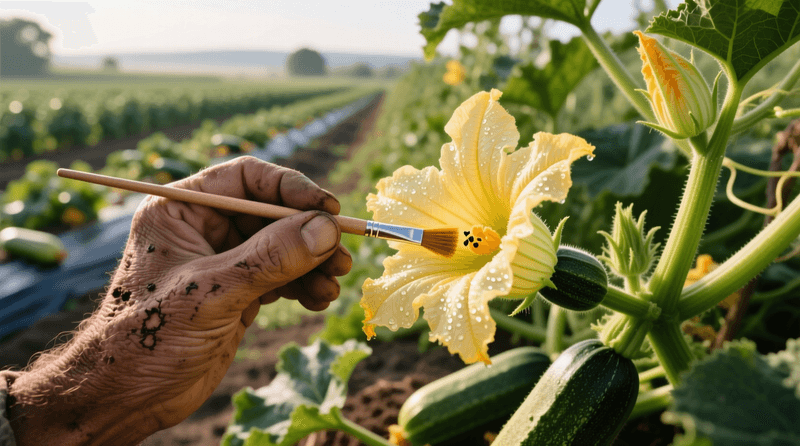
Hand pollination sounds complicated, but the whole process takes about thirty seconds per flower. The goal is simple: move fresh pollen from a male flower to the receptive center of an open female flower while both are still open and the pollen is dry and viable.
Start by finding a male flower that has bright yellow pollen visible on its anther, the small pollen-covered column at the center of the flower. Pick that male flower or simply bend it toward the female.
Colorado State University Extension’s vegetable garden hints describe removing the petals from the male flower and then gently pressing or rolling the exposed anther against the center of the open female flower. That center structure in the female flower is the stigma, and it needs good contact with pollen-coated surface to trigger fruit development.
A small artist’s brush or a clean cotton swab can also carry pollen from the anther to the stigma if you prefer not to pick the male flower. Either way, the transfer should be gentle, a light touch rather than a scrub.
UMN Extension’s cucurbit fruit set guidance reinforces that pollen viability and flower receptivity both decline as the morning progresses, so earlier is better.
If several female flowers are open on the same morning, repeat the process for each one. There is no fixed number of attempts required.
CSU Extension’s guide on cucumbers, pumpkins, squash, and melons is clear that hand pollination can compensate for a missed bee visit, but it cannot produce female flowers the plant has not already made, and it cannot rescue a plant that is struggling from heat, drought, disease, or other serious stress. Think of it as a backup, a useful one, but not a reset button for every problem.
A Tiny Zucchini Can Still Abort
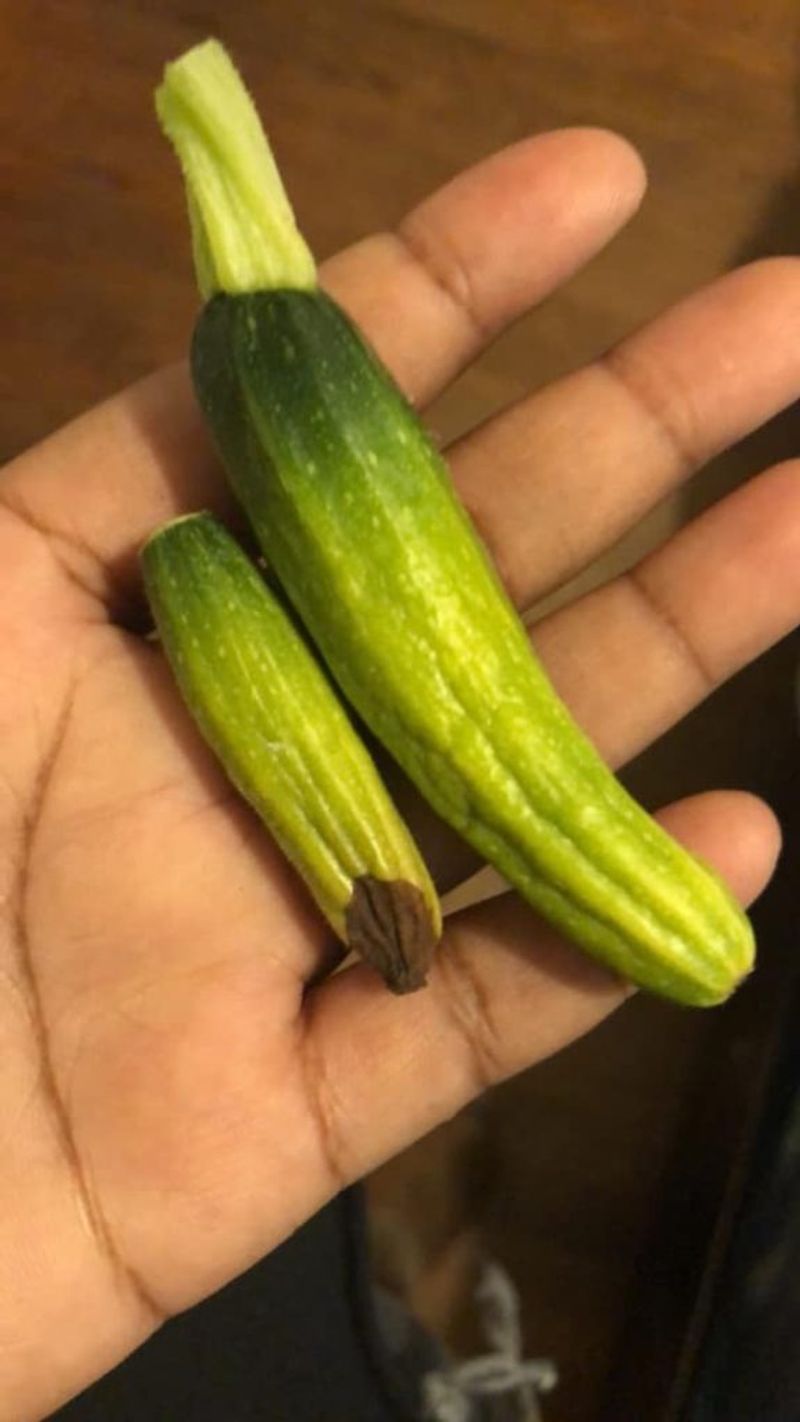
Finishing a hand-pollination attempt and then watching the tiny zucchini shrivel and drop off anyway is genuinely discouraging. Poor pollen transfer is one reason that happens, but it is far from the only one.
Setting realistic expectations after pollination means understanding the full list of things that can go wrong between a fertilized flower and a harvestable squash.
Inadequate pollination often shows up as a young fruit that stops growing, turns yellow, goes soft, and falls off. But heat, drought, waterlogged soil, disease, and pest damage can produce almost identical symptoms.
UMN Extension’s cucurbit fruit set resource notes that both too little and too much water can contribute to fruit abortion, and high temperatures during the critical pollination window can reduce pollen viability even when bees are active.
Wet weather adds another wrinkle. Blossom rot and early fruit rot can look a lot like a pollination failure at first glance.
If the young zucchini develops soft, mushy tissue or shows fuzzy white, purple, or black growth, that points toward a fungal problem rather than a missed bee visit. Illinois Extension’s guide to cucurbit troubles covers how wet conditions encourage rot that mimics other fruit failures.
UMN Extension’s pollination requirements page also points out that misshapen or very small fruit can result from incomplete pollen coverage of the stigma, but the same appearance can come from stress during early fruit development. The practical decision rule: hand-pollinate when female flowers are open, then inspect the plant carefully for other symptoms before concluding that pollination was the only issue.
Look at the leaves, the soil moisture, and any nearby fruit for clues before reaching for a single explanation.
Heat And Water Can Change Flowering
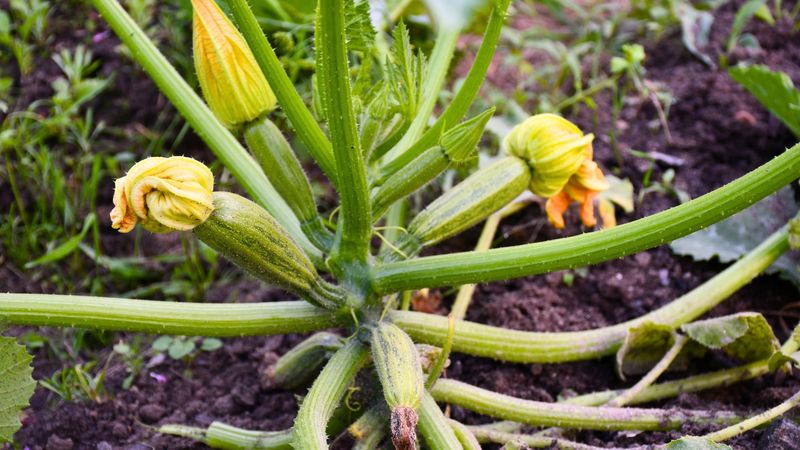
A plant covered almost entirely in male flowers is not necessarily broken. Growing conditions, especially temperature and water availability, can push zucchini toward producing more male flowers for stretches of time, and understanding that pattern helps gardeners respond to what the plant actually needs rather than what they assume is missing.
UMN Extension’s cucurbit flower and fruit set guidance identifies daytime temperatures above 90 degrees Fahrenheit and nighttime temperatures around 70 degrees Fahrenheit as conditions associated with flower and small-fruit abortion. Those figures are useful warning thresholds, not hard cutoffs that apply equally to every zucchini variety or every region of the country.
A gardener in the lower South may see their plants adapt somewhat, while a gardener in the upper Midwest may notice problems at slightly lower temperatures during a humid stretch.
Research published in Frontiers in Plant Science and indexed by PMC connects flower sex expression in monoecious crops like zucchini to a complicated interaction of temperature, plant physiology, cultivar genetics, fertilizer levels, and hormones. That peer-reviewed study on seasonal variation in monoecious crops makes clear that blaming male-heavy flowering on one factor alone, whether heat or anything else, oversimplifies what is actually a layered biological response.
UMN Extension’s heat stress guide reinforces that excessive heat affects multiple aspects of vegetable plant development beyond just flower sex ratios.
Water management matters just as much. UMN Extension’s home garden zucchini page suggests aiming for roughly 1 inch of water per week from rainfall or irrigation during the growing season, with more frequent watering sometimes needed in sandy soil or during extreme heat.
Both drought and waterlogged roots can contribute to flower abortion or altered flower production, so the goal is consistent soil moisture, not just frequent watering. Drip irrigation or soaker hoses help by delivering water to the root zone without wetting foliage, which reduces disease pressure and keeps the leaves drier during humid weather.
Keep Pollinators Welcome
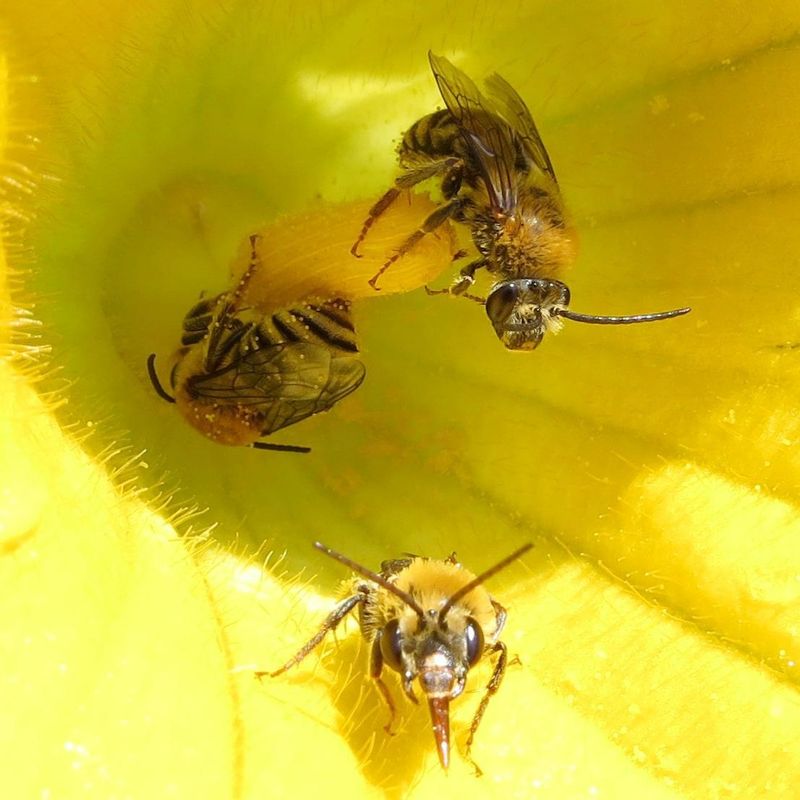
Row covers are genuinely useful early in the season, protecting young zucchini plants from squash bugs, cucumber beetles, and other pests that can derail a planting before it gets going. But once flowers appear, those same covers block the bees that the plant now depends on.
UMN Extension’s summer squash guide advises removing row covers once flowering begins unless the gardener is deliberately hand-pollinating and managing pollinator access on purpose. Leaving covers in place through bloom is one of the more common reasons a healthy-looking plant never sets fruit.
Wild bees are often doing more of this work than gardeners realize. Penn State Extension research on wild bees and Pennsylvania cucurbits found that wild bees, including squash bees, provide substantial pollination in squash and pumpkin systems, sometimes doing more of the heavy lifting than managed honeybees.
Squash bees in particular are specialists: they forage almost exclusively on cucurbit flowers, often starting before sunrise, and they nest in the ground near the plants they visit.
Supporting those wild bees over time means leaving some patches of bare or undisturbed soil for ground-nesting species, planting a variety of flowering plants that bloom across the season, and reducing pesticide exposure in and around the garden. These are longer-term investments, not a fix for this morning’s open female flower, but they build the kind of yard where natural pollination happens more reliably season after season.
On the pesticide question, the guidance is straightforward. EPA tools and strategies for pollinator protection recommend following product labels, avoiding applications to blooming plants when prohibited, and reducing drift and exposure during active foraging periods.
EPA pesticide applicator guidance also cautions that wild bees may forage early in the morning, so assuming dawn is automatically a safe spray window is not accurate. The safest approach is to avoid spraying blooming zucchini entirely and address pest problems with targeted, non-chemical methods where possible.
Harvest Often Once Fruit Sets
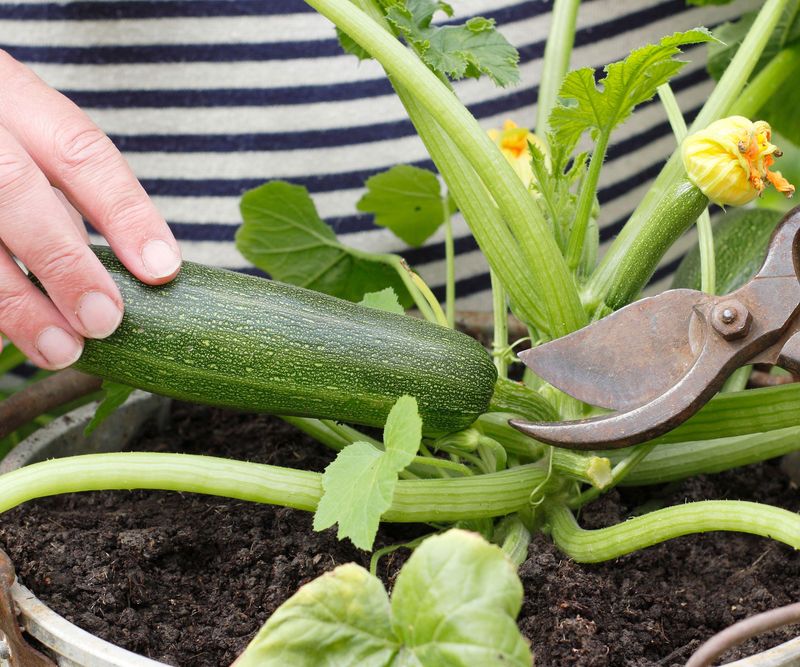
Once a female flower has been pollinated and the tiny zucchini starts growing, the next job is to not let it get away from you. Summer squash moves fast, and a fruit that was finger-length on Monday can be the size of a baseball bat by Friday.
Illinois Extension’s summer squash guide notes that gardeners commonly harvest zucchini at about 6 to 8 inches long, though the ideal size varies by cultivar, with some compact varieties best picked even smaller and some longer types suited to a bit more growth.
The reason frequent harvesting matters goes beyond just getting tender squash for the table. Large fruits left on the plant signal to the zucchini that its reproductive work is done, and the plant responds by slowing down new fruit development.
UMN Extension’s home garden guide recommends checking plants every one to two days during peak growth and removing any usable fruit before it becomes oversized.
Harvesting often also helps you spot problems early. A fruit that is misshapen, very small, or rotting at the blossom end tells you something about what happened during pollination or the days that followed.
A plant that has set several fruits but slowed down on new production may simply need more frequent picking, not a different watering schedule or a second plant.
The distinction worth making here is between a plant that is producing and needs picking, and a plant that has no female flowers or is aborting young fruit before they reach any real size. Those are different problems with different fixes, and recognizing which one you are dealing with is the starting point for whatever comes next.
Use A Simple Troubleshooting Order
When the zucchini is blooming heavily but producing no squash, working through a short checklist in order saves a lot of guesswork. Start by looking for female flowers.
No female flowers means no fruit is possible yet, and the plant may simply need more time or cooler nights before it shifts its flower production.
If female flowers are present, hand-pollinate an open one the next morning using a fresh male flower with visible pollen, as described earlier. Then give the plant a few days and watch what happens to the small fruit.
UGA Cooperative Extension’s squash production guide reinforces that one healthy plant can produce fruit on its own because it carries both flower types, so buying a second plant is not an automatic solution to a fruit set problem.
If hand-pollination does not help, work through the other likely causes. Check recent temperatures and whether the heat has been consistently above 90 degrees during the day.
Look at soil moisture and whether the garden has been getting close to an inch of water per week. Check for pest damage on the stems, leaves, and young fruit.
Look at whether row covers are still in place. Review whether any large, overripe fruit is still sitting on the plant and slowing new production.
UMN Extension’s summer squash guidance and CSU Extension’s cucurbit growing resource both support steady, appropriate watering, normal label-based fertility, open pollinator access, and frequent harvesting as the foundation of a productive plant. Those male flowers that opened and dropped without becoming squash were not wasted, they carried the pollen that made fruit set possible.
Now that you know which flowers can become squash and when to help them, the plant is already working with you.