
Simple Backyard Habits That Bring Hummingbirds Back To Your Texas Yard Every Summer
Follow us on Google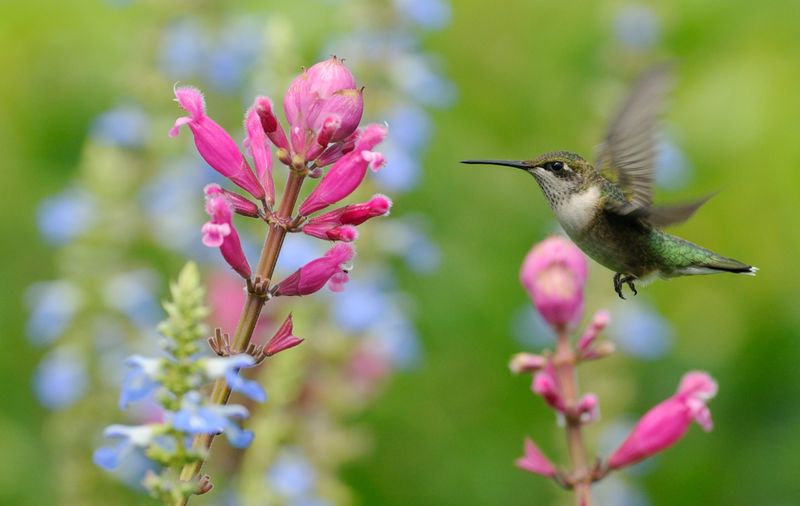
Your neighbor has hummingbirds hovering at her salvia every afternoon, and you want to know her secret.
The honest answer is that no single trick guarantees a yard full of hummingbirds every summer, but the right combination of plants, clean feeders, moving water, and a few simple habits can make your yard a place these birds genuinely want to stop and return to.
Texas is one of the best states in the country for hummingbird watching, partly because of its size and partly because major migration routes run right through it.
Understanding what these birds actually need, and what region you live in, is where it all starts.
Texas Hummingbirds Follow Regional Patterns
Most people think of hummingbirds as one species with one schedule, and that assumption is exactly what leads to empty feeders at the wrong time of year.
Texas Parks and Wildlife Department documents at least 17 hummingbird species recorded in the state, but most Texas homeowners will realistically see only a small regional subset depending on where they live.
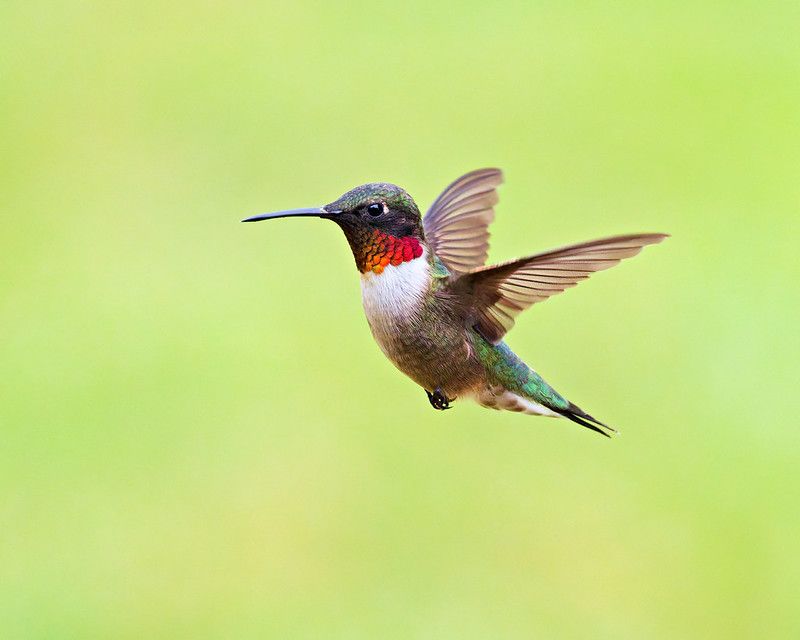
In eastern Texas and parts of North Texas, the Ruby-throated Hummingbird is the one you are most likely to spot.
The Ruby-throated Hummingbird follows a broad spring migration window across much of the state from roughly late March through mid-May, then returns south in late summer and fall.
Head west toward the Hill Country and the Trans-Pecos, and the bird changes.
The Black-chinned Hummingbird is the common summer resident in central and western Texas, nesting in riparian areas and suburban yards from spring through early fall.
Drop down to the Gulf Coast and South Texas, and the picture shifts again.
The Buff-bellied Hummingbird is a year-round resident in the Lower Rio Grande Valley and a regular visitor along the coast, and fall migration there can pile up several species at once as birds stage before crossing the Gulf.
Knowing your region tells you which species to expect and when to have your yard ready.
TPWD migration timing guidance is a practical starting point.
The goal here is not to control migration but to make your yard the kind of place a passing hummingbird decides is worth a stop, and maybe worth remembering next season.
Flowers Build The Habitat A Feeder Cannot Replace
A feeder hanging from the porch eave is a fine start, but it is the flowers that make a yard feel like actual hummingbird territory.
Nectar plants offer food in a form hummingbirds have relied on long before glass feeders existed, and they also provide the cover, perching spots, and insect life that a plastic tube simply cannot supply.
Three plants come up consistently in Texas hummingbird guidance and are worth knowing by name.
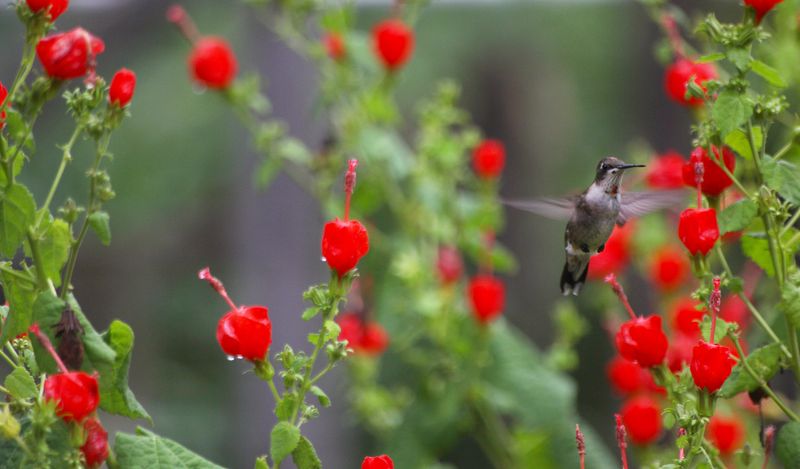
Turk’s cap, Malvaviscus arboreus var. drummondii, produces red lantern-shaped flowers that hummingbirds reach easily with their curved bills, and it tolerates the brutal shade-and-clay combination common under old trees in North and Central Texas.
Autumn sage, Salvia greggii, blooms in red, pink, and coral from spring into fall, handles heat and drought well, and is documented by Texas A&M AgriLife Extension’s Brazos County Master Gardeners as a reliable pollinator and hummingbird plant.
Flame acanthus, Anisacanthus quadrifidus var. wrightii, is a tough Hill Country native with tubular orange-red flowers that bloom heavily in summer heat, exactly when you want something blooming.
The TPWD Hummingbird Roundup final report recommends overlapping bloom periods and planting at multiple heights so the yard keeps offering nectar, cover, and perches through more of the season.
That layering matters because a yard with one plant in bloom for three weeks is far less useful than a yard with something flowering from March through October.
Check each plant’s local requirements for light, soil, drainage, and freeze exposure before buying.
Williamson County AgriLife Extension notes that regional conditions vary enough that what thrives in one part of Texas may struggle in another.
Planting the right flowers for your site improves habitat without promising a guaranteed crowd of birds.
Fresh Nectar Keeps A Feeder Safe
Here is where a lot of well-meaning feeders actually become a hazard.
Texas summers are not forgiving, and nectar that sits in direct sun above 90 degrees Fahrenheit can turn cloudy or fermented in less than 2 days.
A bird that drinks spoiled nectar is not getting a quick energy boost, it is getting something that can make it sick.
The recipe itself is straightforward.
Mix 1 part plain white granulated sugar with 4 parts water, nothing else.
Penn State Extension’s hummingbird guidance is clear that honey can promote dangerous fungal growth, and brown sugar, raw sugar, and artificial sweeteners are equally off the list.
Red food coloring is unnecessary and potentially harmful, so skip it entirely.
Boiling the water helps dissolve the sugar and can reduce contamination, but the mixture must cool completely before you fill the feeder.
Make small batches so you are not storing a large amount of nectar that will sit unused.
Texas A&M AgriLife Extension’s Harris County newsletter warns that heat accelerates mold and bacterial growth in feeders, which is why the maintenance schedule matters as much as the recipe.
Change the nectar every 2 days when temperatures exceed 90 degrees Fahrenheit.
During cooler stretches, every 2 to 4 days is reasonable, but replace it immediately if it looks cloudy, smells fermented, or has any visible debris.
Cleaning the feeder before each refill is not optional.
Use hot water, a bottle brush, and thorough rinsing.
Audubon recommends cleaning every 2 to 3 days, or daily during particularly hot conditions.
A feeder that looks clean on the outside can still have mold growing inside the ports and reservoir.
Rinsing without scrubbing leaves the problem in place.
Place Feeders For Access And Safety
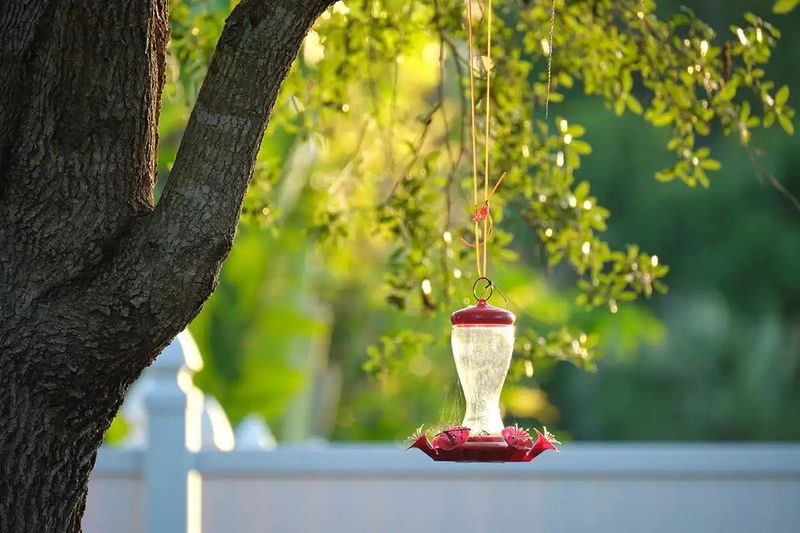
Where you hang a feeder matters almost as much as what you put inside it.
Shade or filtered light slows overheating and spoilage, which means a feeder under a tree or covered patio genuinely stays safer longer than one baking in full afternoon sun.
That said, shade does not replace cleaning or timely nectar changes.
It buys you a little more time, not a free pass on maintenance.
Hummingbirds defend food sources aggressively, and one dominant bird can block access for every other bird in the yard.
TPWD’s Ruby-throated Hummingbird page notes this territorial behavior as a common observation.
The fix is a second feeder placed out of sight of the first, around a corner or on the opposite side of the house, so the dominant bird cannot guard both at once.
Window placement deserves careful thought.
The middle zone, roughly 4 to 30 feet from glass, is where birds build up enough speed to cause a fatal collision.
Window screens, exterior tape patterns, or other collision-prevention treatments are worth adding wherever feeders sit in that dangerous range.
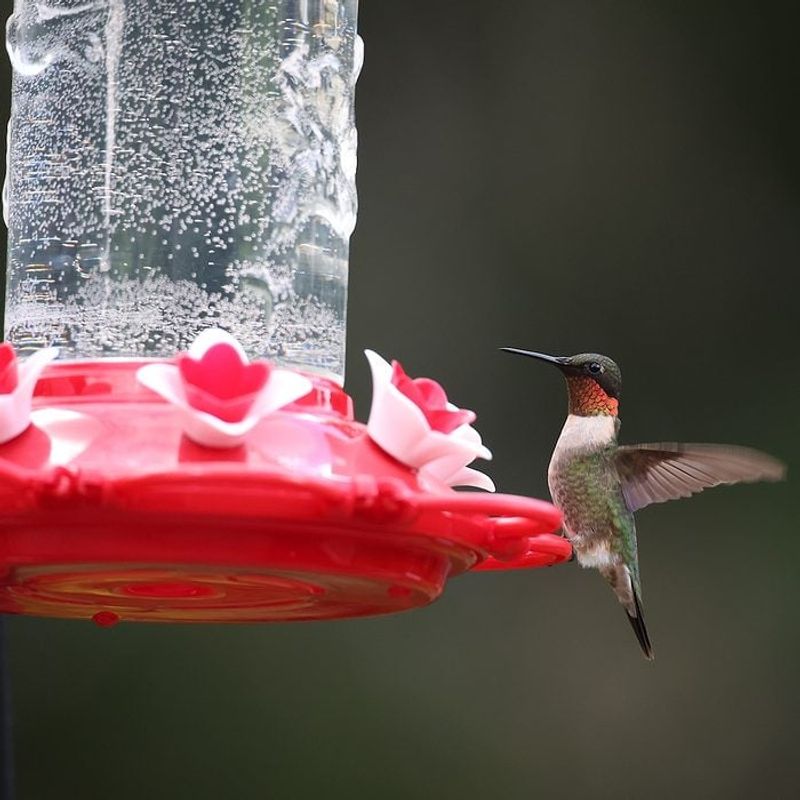
Red feeder ports or nearby red flowers can help birds notice a station.
Red dye in the nectar itself is a different matter entirely, and Audubon advises against it.
For ants, bees, and wasps, the practical answer is to prevent leaks, use an ant moat or bee guards designed specifically for feeders, relocate the feeder if insects keep finding it, and clean up any spills promptly.
Petroleum jelly on hanger wires is not a reliably safe solution for all feeder designs or bird-contact situations.
Water And Insects Complete The Food Web
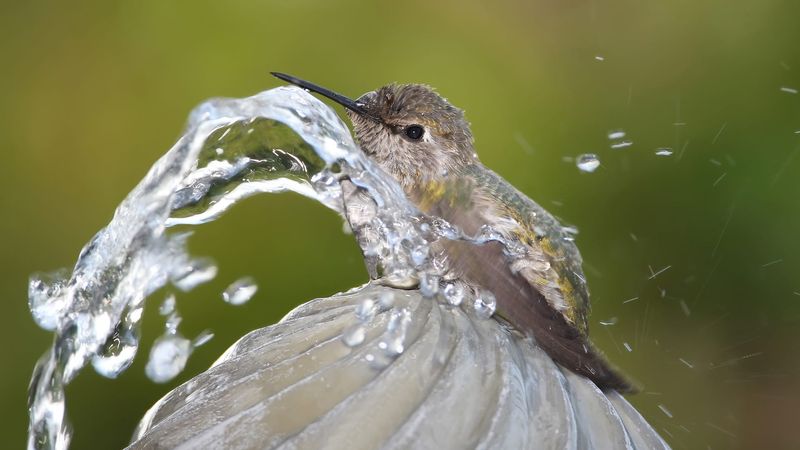
Sugar water supplies quick energy, but a hummingbird living on nectar alone would not survive long.
Small insects and spiders provide the protein, fat, and nutrients that keep these birds healthy enough to migrate thousands of miles.
A yard that supports insect life is genuinely more useful to a hummingbird than a sterile, perfectly mulched space with one feeder.
TPWD notes that Ruby-throated Hummingbirds eat small insects and spiders as a regular part of their diet, catching them in flight or gleaning them from leaves and bark.
That is why broad pesticide applications work against the very birds you are trying to attract.
Avoid spraying flowering plants while hummingbirds are actively feeding, and minimize overall pesticide use in areas where birds are foraging.
Texas A&M AgriLife Extension’s pollinator guidance supports reducing pesticide pressure as a foundation for supporting all beneficial wildlife, not just hummingbirds.
Do not count on hummingbirds to control mosquitoes in any meaningful way.
They eat small insects opportunistically, but they are not a pest-control service.
Water is the other piece most yards are missing.
Hummingbirds have tiny feet and do not wade into a birdbath the way a robin does.
TPWD specifically recommends a very shallow source, dripper, or mister because hummingbirds prefer fine spray, leaf moisture, and droplets for bathing.
A dripper over a shallow dish or a fine-mist sprayer attached to a garden hose can both work well.
Deep, stagnant birdbaths are not appropriate hummingbird features and can create mosquito problems.
Adding a moving water source may attract more birds, but it does not guarantee visits on its own.
Remove Cats And Glass Hazards
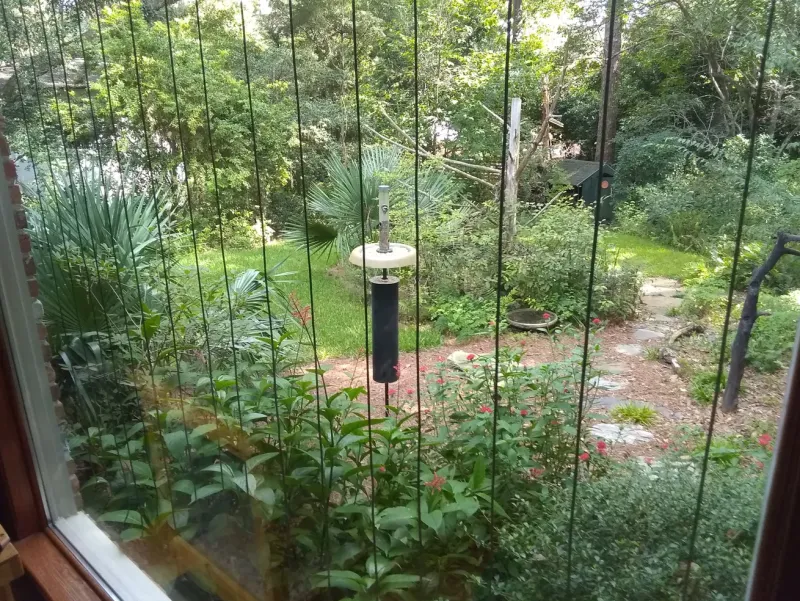
A yard full of flowers, fresh nectar, and moving water can still be a dangerous place if two common hazards go unaddressed.
Outdoor cats and reflective windows kill far more birds than most people realize, and hummingbirds are especially vulnerable because of where and how they feed.
Cats are patient hunters.
A cat that sits quietly under a feeder or beside a flower bed is not just resting, it is waiting.
Hummingbirds hover, which means they hold still at a predictable location for several seconds at a time.
Penn State Extension’s hummingbird guidance advises keeping cats indoors or controlled near feeders and flower beds.
That advice applies even to cats that seem disinterested, because the risk is real whether or not you have ever seen your cat make a move.
Window collisions are a separate and equally serious problem.
A bird that strikes glass at speed can be injured or killed outright.
The Cornell Lab of Ornithology’s seven actions to help birds includes treating windows as a priority safety issue.
The documented distance rule is clear: place feeders within 3 feet of a window so birds cannot build up speed, or more than 30 feet away where a collision is unlikely.
If your feeder sits in the 4 to 30 foot range, add exterior window tape patterns, screens, or decals to break up the reflection.
The American Birding Association’s ethics guidance frames responsible feeding as minimizing harm, not just maximizing attraction.
Removing or controlling the hazards you can control is as important as any plant you put in the ground.
A safer yard keeps the birds you attract alive long enough to come back.
Let Migration Set The Schedule
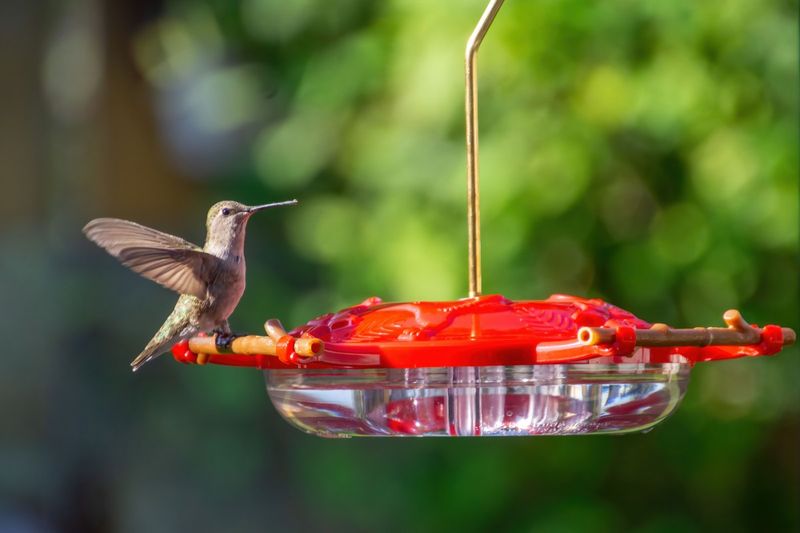
One of the most stubborn myths in backyard birding is that leaving a feeder up in fall will trap hummingbirds and prevent them from migrating.
It will not.
Audubon’s Kenn Kaufman explains clearly that migration is driven primarily by changes in day length and other environmental cues, not by food availability.
A clean feeder in October is not holding any bird against its instincts.
Cornell Lab of Ornithology addresses this directly, noting that taking feeders down in fall does not help birds migrate and may actually leave a late or injured migrant without a resource it needs.
If you keep a feeder up past the main season, you must keep maintaining it.
A neglected feeder with spoiled nectar is worse than no feeder at all.
For much of Texas, Ruby-throated Hummingbirds move through in spring from roughly late March through mid-May, according to TPWD migration timing data.
Fall movement can be even more concentrated along the Gulf Coast, where birds stage before crossing open water.
Coastal and South Texas yards may see hummingbirds well outside those windows, including winter visitors.
Bird migration basics from Cornell reinforce that individual birds vary, and conditions like drought, late freezes, or a poor bloom year can shift when and whether a bird uses a particular yard.
A well-maintained yard can become a reliable stopover, but it cannot override weather, regional habitat changes, predator pressure, or the unpredictable timing of any individual bird’s journey.
Expect variability, stay ready, and keep the feeder clean.
Build A Yard That Rewards Every Visit
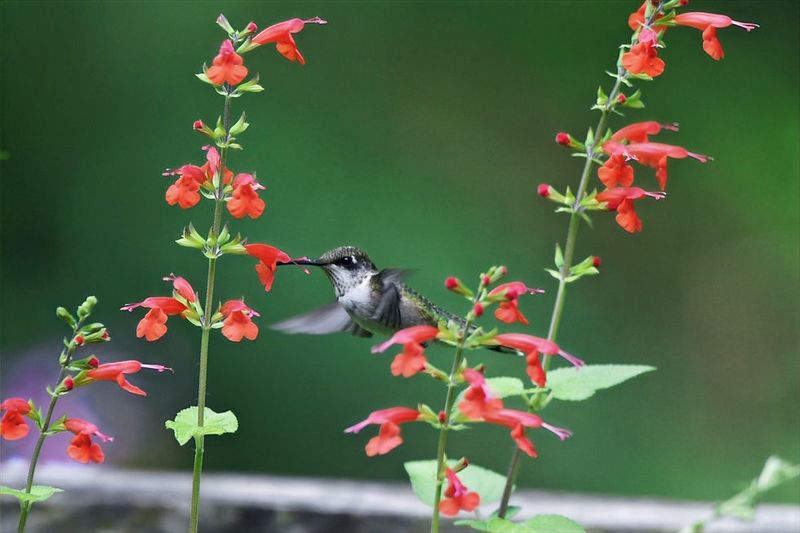
Pull the whole picture together and the priority order becomes clear.
Start with regionally suited flowers that overlap in bloom time and vary in height, because plants are the foundation that a feeder alone cannot replicate.
Add a supplemental feeder in a shaded or filtered-light spot, maintained on a strict cleaning and nectar-change schedule.
Then bring in shallow moving water, a dripper or mister that creates the fine spray hummingbirds actually use.
Protect the insect life in your yard by minimizing broad pesticide applications, especially around blooming plants.
Offer shelter and perching spots through layered plantings so birds have a place to rest and watch between feeding bouts.
Control cat access near feeders and flower beds, and treat your windows as a real safety concern by following the 3-foot or 30-foot placement rule with collision-prevention treatments where needed.
TPWD’s hummingbird garden guidance frames this combination of food, insects, water, shelter, and space as what a yard genuinely needs to support these birds.
TPWD’s nongame wildlife guidance is direct that feeders should supplement a broader habitat, not replace it.
You cannot command migration or guarantee that the same bird shows up in your yard two summers in a row.
Rainfall, drought, bloom timing, nearby habitat changes, and the sheer unpredictability of individual birds all play a role that no feeder or flower bed can override.
What you can do is make your yard safer, richer, and more worth stopping at whenever a hummingbird passes through.
That is not a small thing.
Texas hummingbird habitat starts with the right conditions on the ground, and those are entirely within your reach to build, one plant and one clean feeder at a time.