
Lemongrass On The Fence Line: A Fragrant Florida Border That Works Hard (Just Not As A Bug Shield)
Follow us on Google
Plenty of Florida homeowners have heard that one certain plant along the fence will quietly keep the mosquitoes away all season long.
That claim sounds great on a humid June evening when you’re trying to enjoy a cookout without slapping your arms every 30 seconds.
Lemongrass is genuinely a useful, fragrant plant that can do real work in a Florida yard, but the story of what it actually does is more interesting, and more honest, than the mosquito-shield myth suggests.
Stick around, because the real plan for a more comfortable backyard is simpler than you’d expect.
The Useful Fence-Line Plant Is Lemongrass
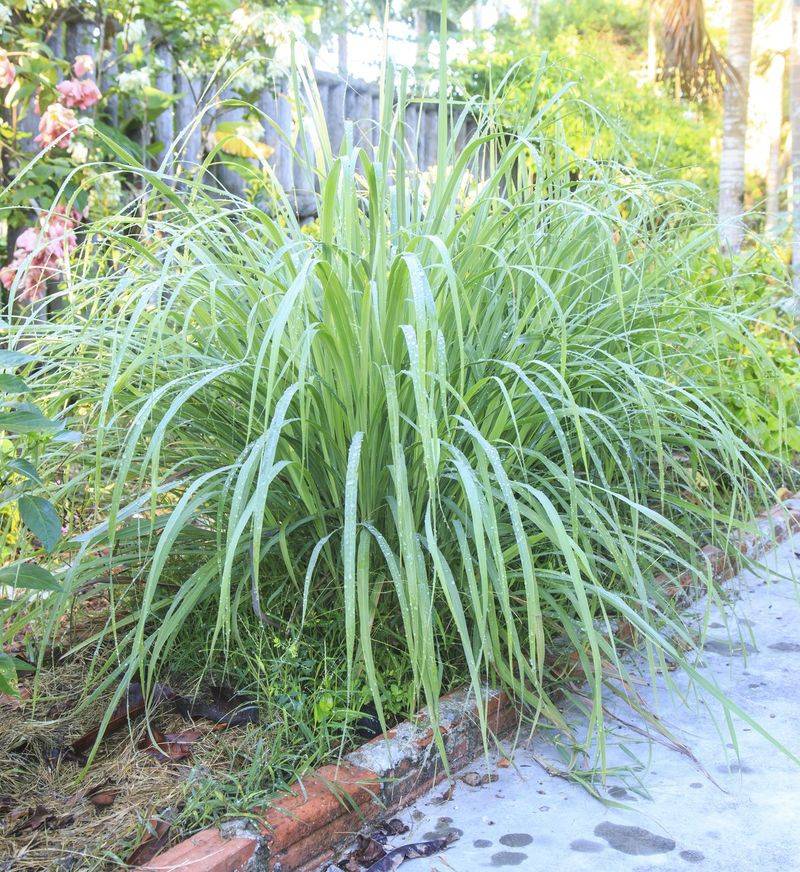
Lemongrass, known botanically as Cymbopogon citratus, is the plant most likely behind the fence-line buzz you’ve been hearing.
It’s a clumping perennial grass that can grow roughly 6 feet tall and 4 feet wide, and UF/IFAS Gardening Solutions lists it as a solid choice for Florida borders, accent plantings, mass plantings, and informal privacy screens.
That citrusy fragrance when you brush past a clump is genuinely pleasant, and the bold, upright silhouette fills a fence line the way few ornamental grasses can in this climate.
Here is where the story needs a small correction.
Growing lemongrass along your fence will not passively clear mosquitoes from your patio or quietly thin every kind of bug throughout every Florida season.
UF/IFAS experts say that plants marketed as mosquito repellents, including citronella, lavender, mint, basil, eucalyptus, and marigolds, generally do little passive work while simply sitting in the landscape.
The compounds that may have repellent effects need to be extracted, concentrated, and properly formulated before they do meaningful work.
That does not make lemongrass a bad choice.
Grow it for its structure, its scent, and its landscape value.
Use it to soften a chain-link fence, break up a long property line, or give your yard a layered, subtropical feel.
Just do not ask it to stand guard against mosquitoes, because no living fence-line plant has been shown to do that job consistently across Florida’s varied regions and seasons.
Why A Fragrant Leaf Cannot Build A Mosquito Barrier
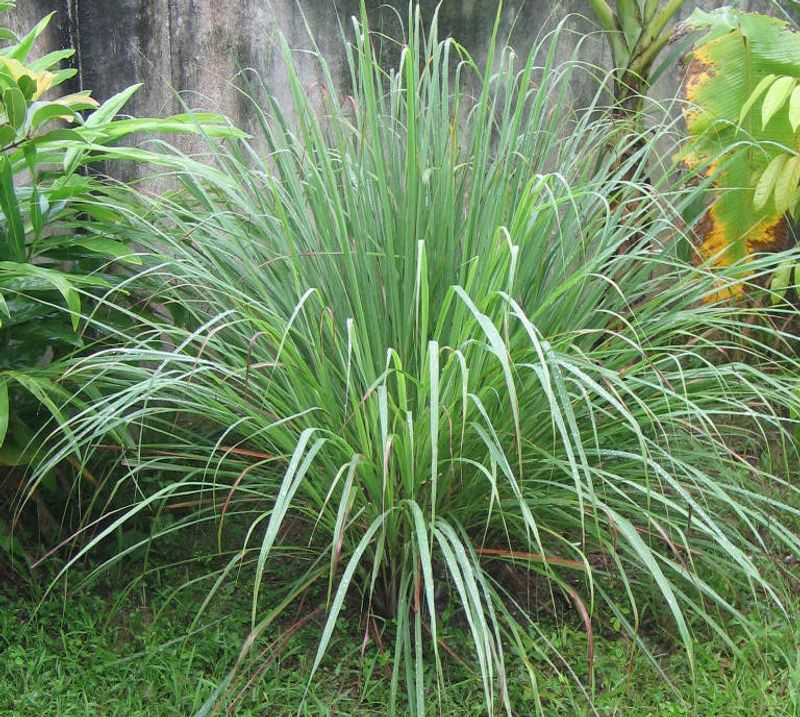
Crushing a lemongrass leaf and inhaling that sharp citrus smell is genuinely satisfying.
But that moment of fragrance is not the same thing as a controlled repellent treatment working on your skin, and the difference matters more than most garden marketing will tell you.
UF/IFAS research on natural pest-management products makes the point plainly: effectiveness depends on the specific plant compound, its concentration, the application method, and the formulation.
A living plant releases trace amounts of volatile oils into open air.
A finished repellent product delivers a measured, tested dose directly where it needs to go.
Those are two different things, and evidence about one does not transfer automatically to the other.
The word “bugs” also deserves a closer look.
Mosquitoes are a specific group of flying, biting insects whose larvae require standing water to develop.
UF/IFAS integrated pest management guidance treats mosquito control as its own discipline, separate from managing whiteflies, thrips, chinch bugs, scale insects, mole crickets, or lubber grasshoppers.
Those pests have completely different life cycles, breeding sites, and vulnerabilities.
A claim that one plant reduces mosquitoes, even a well-supported claim, says nothing about whether it affects any of those other insects.
So when someone says a fence-line plant “thins the bugs,” ask which bugs, under what conditions, and based on what evidence.
The honest answer for lemongrass growing in a yard is that the scent is real, the landscape value is real, and the passive mosquito barrier is not.
Choose The Right Spot And Give It Room
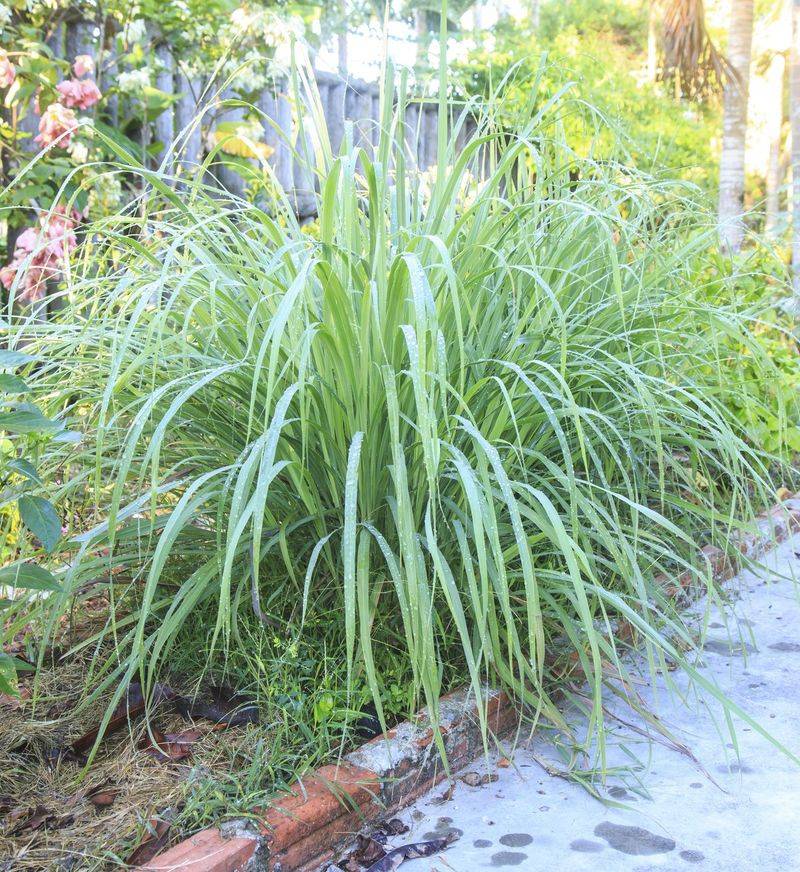
Lemongrass rewards a good planting decision more than almost any other step you will take with it.
Full sun is its first preference, though it tolerates part sun in Florida’s intense summer heat.
Give it a spot where it gets at least 6 hours of direct light and where water drains away rather than pooling around the roots.
The UF/IFAS edible ornamental landscaping guide for North-Central Florida recommends planting individual clumps about 4 feet apart, center to center, which gives each plant enough room for its mature spread and keeps airflow moving through the planting.
At maturity, expect each clump to reach roughly 6 feet tall and 4 feet wide.
Along a standard 6-foot privacy fence, that spacing creates a soft, layered screen without crowding.
Spring or summer planting gives lemongrass time to put down a solid root system before any cold weather arrives.
Sandy soil, which covers much of Florida, drains quickly and may need more frequent watering during the first 8 to 12 weeks of establishment.
Once roots are settled, the plant becomes considerably more drought-tolerant.
UF/IFAS guidance on ornamental grasses cautions that poorly drained low spots can damage roots, so avoid planting in any area that stays wet after rain.
Along the Gulf Coast or Atlantic Coast, salt spray can stress the foliage over time, so a position slightly set back from direct ocean exposure is a sensible precaution.
Placing lemongrass near a patio or outdoor seating area is a perfectly reasonable design choice for visibility, easy access, or simply enjoying the fragrance when a breeze moves through.
Just treat that location as a landscape decision, not a mosquito-control strategy.
Florida’s Regions Change How Lemongrass Performs
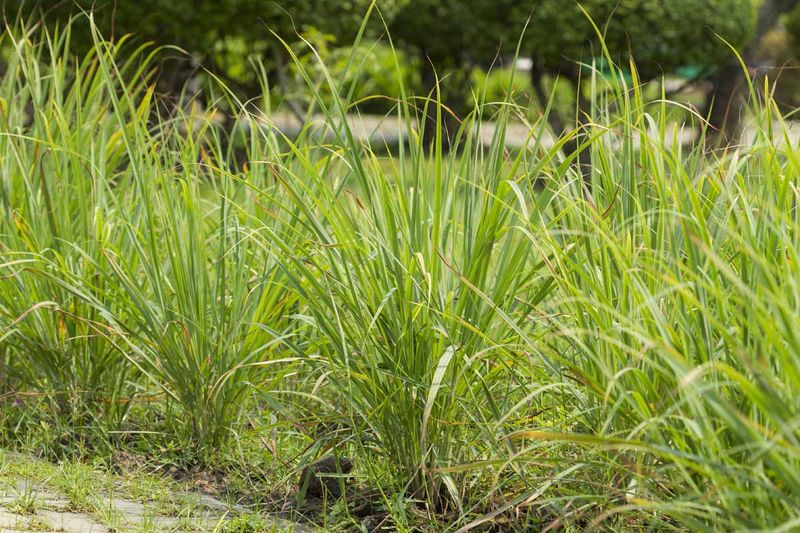
Florida is not one climate, and lemongrass performs very differently depending on where you live.
In South Florida, the Gulf Coast, the Atlantic Coast, and the Keys, the plant behaves like a dependable perennial, staying green and full through most of the year with minimal cold-weather interruption.
That kind of reliable bulk and fragrance makes it a genuinely low-effort landscape choice in those regions.
North Florida and colder parts of Central Florida are a different story.
Lemongrass is frost-tender, and a hard freeze can turn the whole clump brown overnight.
UF/IFAS recommends waiting until the end of March, after the typical freeze risk has passed, before cutting back dead or damaged leaves.
Cutting too early and then getting hit by a late cold snap can set the plant back significantly.
Many Central Florida gardeners have learned that lesson the hard way after an unexpected February cold snap.
The good news on the regional front is that UF/IFAS’s invasive-plant assessment rates Cymbopogon citratus as “not a problem species” in North, Central, and South Florida, which supports its use as a regionally appropriate nonnative ornamental.
Still, give it adequate room and drainage wherever you plant it.
One more regional reality worth naming: rainfall from tropical storms and hurricanes, which arrive from June through November, can rapidly create new mosquito-breeding habitat across the state.
UF/IFAS integrated pest management research is clear that standing water after storms drives mosquito populations up sharply.
No fence-line plant, however fragrant, can offset that kind of surge.
The Real Mosquito Fix Starts With Standing Water
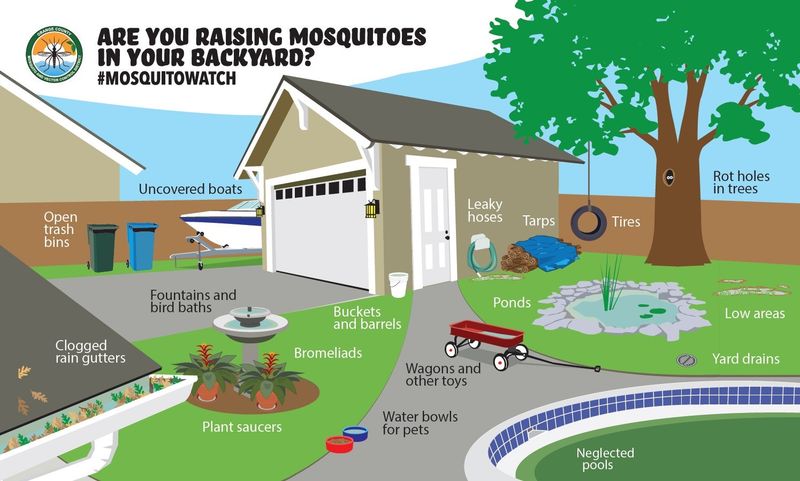
Every mosquito in your yard started as a larva in water.
That single fact is the most useful thing you can know about mosquito control, because it tells you exactly where to focus your energy.
CDC guidance recommends emptying, scrubbing, turning over, covering, or discarding any item that holds water at least once a week.
The list of culprits is longer than most people expect: plant saucers, buckets, tires, kids’ toys, tarps, clogged gutters, rain barrels without tight-fitting covers, and birdbaths are all common breeding sites.
Even a bottle cap holding a tablespoon of water can support mosquito development in Florida’s warm months.
Birdbaths and bromeliad cups get a more aggressive schedule.
UF/IFAS guidance on mosquitoes and bromeliads recommends flushing those specific features with a strong hose stream every 3 to 4 days during summer.
That frequency reflects how quickly mosquito larvae can develop in warm, shallow water.
Other water-holding features around the yard follow the weekly CDC schedule.
Tree holes are a trickier case.
Water collects in them, mosquitoes can breed there, but CDC guidance specifically warns against filling tree holes with gravel, sand, or concrete or drilling drainage holes, because those methods can damage the tree.
Follow CDC guidance for safer management of water-holding tree cavities.
For water you cannot drain or cover, a targeted larvicide is the right tool.
UF/IFAS Gardening Solutions identifies Bacillus thuringiensis israelensis, commonly called Bti, as an effective option for standing water that cannot be removed.
Choose products that specifically name the israelensis strain, and apply them according to the product label.
Not every product labeled “BT” targets mosquitoes, so reading the label before you buy is worth the extra 60 seconds.
Protect People With A Layered Plan
A well-managed yard still needs personal protection, because source control removes breeding sites but does not eliminate every mosquito that flies in from a neighbor’s property or a nearby swale.
Intact window and door screens are the first physical barrier between you and biting insects.
Check them every season for small tears, especially after a hurricane or a strong storm pushes branches against the house.
For time spent outdoors, the EPA’s list of registered skin-applied repellent ingredients includes DEET, picaridin, IR3535, oil of lemon eucalyptus, para-menthane-diol, and registered citronella products.
Apply them according to the label, and do not apply essential oils or crushed plant material to skin, children, or pets as a substitute.
Concentrated plant oils can irritate skin and eyes, and their effectiveness has not been evaluated the way registered repellents have.
The habitat layer is worth building, just with honest expectations.
Native shrubs, grasses, and flowering plants such as firebush, muhly grass, and American beautyberry, Callicarpa americana, can support birds, frogs, bats, dragonflies, damselflies, and predatory insects that consume mosquitoes as part of their diet.
UF/IFAS research on beneficial insects and integrated pest management guidance both acknowledge that these predators cannot consume every mosquito and should not be your only line of defense against mosquito-borne disease.
A yard that supports bird-friendly native plantings may also attract more insects overall, because those insects are food for the wildlife you’re inviting in.
That is an ecological benefit, not a promise of fewer bites at your next cookout.
Keep The Plant, Skip The Miracle Cure
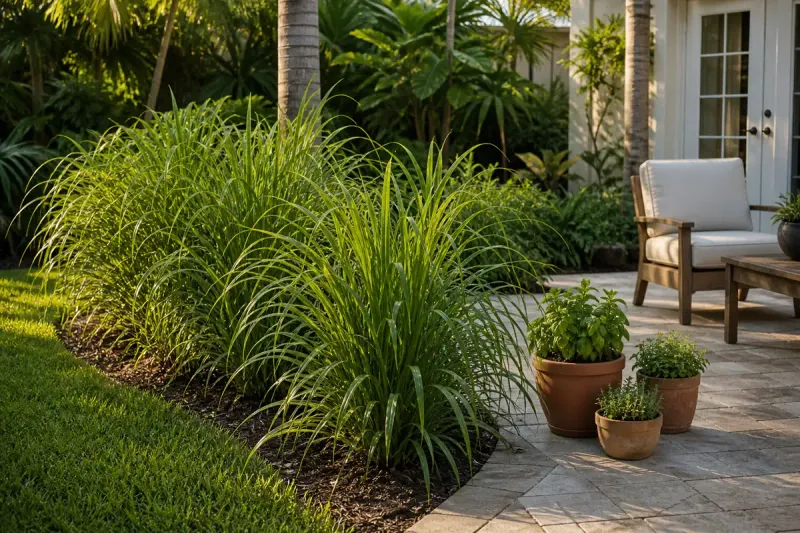
Lemongrass earns its place along a Florida fence line.
It grows fast, smells good, fills space with real visual weight, and handles the state’s heat and humidity better than most ornamental grasses from cooler climates.
Keep it for those reasons, and keep caring for it honestly: plant in spring or summer, space clumps 4 feet apart, wait until late March to cut back any freeze-damaged growth in North or Central Florida, and make sure the soil drains well.
Pair that planting with a weekly water-check habit.
Empty, scrub, and flip anything that holds water around your yard every 7 days, flush birdbaths and bromeliad cups every 3 to 4 days in summer, and address any gutters or low spots that stay wet after rain.
Those actions do more measurable work against mosquitoes than any plant arrangement you could design.
Two shortcuts worth skipping: whole-yard mosquito misting and DIY tree-hole filling.
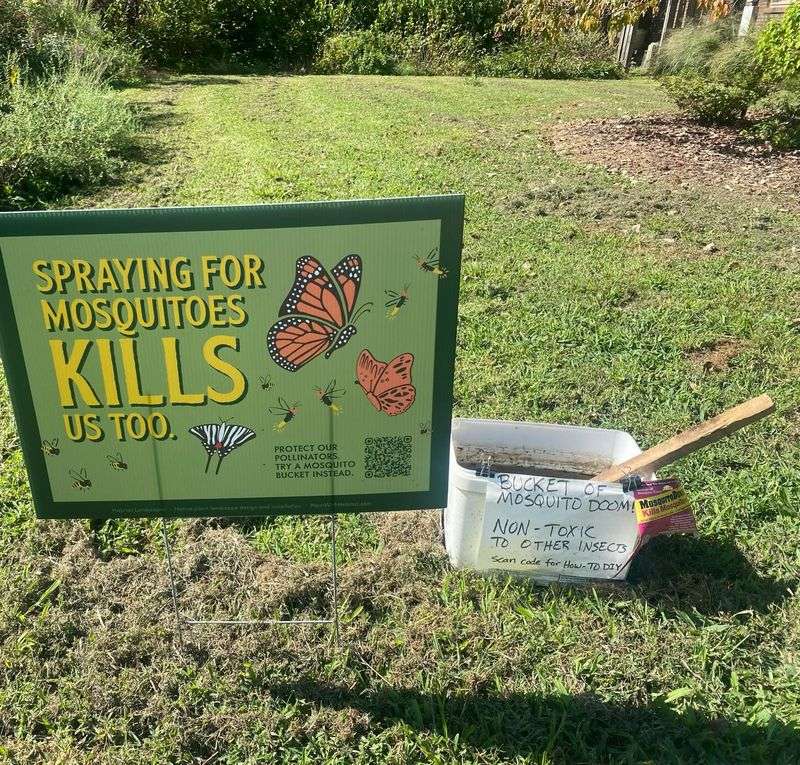
The CDC cautions against residential misting systems because repeated spraying can harm bees, butterflies, and other pollinators, increase pesticide exposure for your family, and apply insecticide when mosquitoes are not even active.
And as noted earlier, filling tree holes with concrete, gravel, or sand can damage the tree and is not recommended.
Follow CDC guidance for both situations.
A layered yard, fragrant lemongrass on the fence, standing water removed, screens intact, and a label-directed repellent in your pocket, genuinely can make a Florida evening more comfortable.
No single plant creates a bug-free property in this state, but a homeowner who works all four layers at once gets closer to that cookout without the slapping than one who relies on any single fix alone.