
Your Cucumbers Swell In The Middle But Pinch At The Ends, And One Watering Habit Is Usually Why
Follow us on Google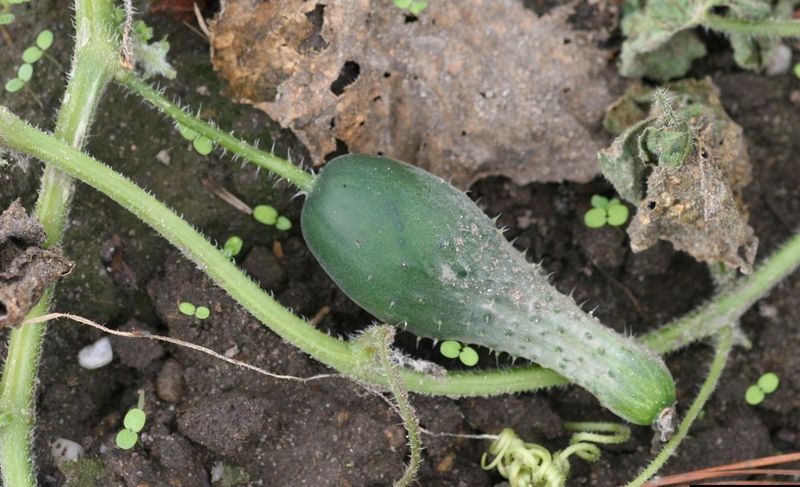
Pull a cucumber off the vine and find it fat in the middle but squeezed at both ends, and it’s hard not to wonder what went wrong.
That pinched, lumpy shape is more common than most gardeners expect, and the cause is rarely just one thing.
Uneven soil moisture during fruit development can contribute to the problem, but poor pollination, heat, and a few other factors can produce the exact same look.
Knowing how to tell them apart will save you from changing the wrong thing.
Uneven Moisture Can Contribute to Pinched Fruit
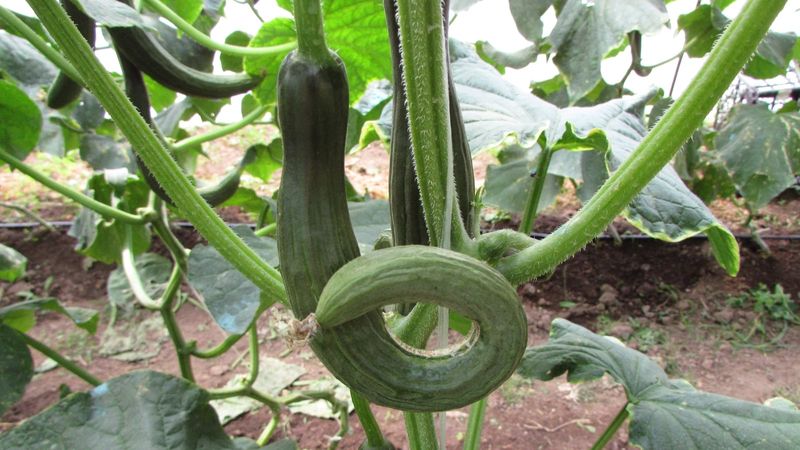
Pick up a cucumber that bulges in the center and narrows toward both ends, and your first instinct might be to blame your watering schedule.
That instinct is not wrong, but it is not the whole picture either.
Repeated swings from dry soil to changing water availability during flowering and fruit enlargement are a recognized contributor to deformed cucumbers, and Utah State Extension’s cucumber irrigation guidance connects inconsistent moisture with misshapen fruit.
Penn State Extension and Illinois Extension make similar connections for vegetables under moisture stress.
The shape you are seeing, swollen through the middle and pinched or tapered at each end, gets described in different ways depending on who you ask.
Some gardeners call it bottlenecking.
Others say it looks like the cucumber tried to grow in two separate bursts with a pause in between.
That pause is where uneven moisture can play a role, particularly when the soil dries out significantly and then receives a heavy soaking.
But the appearance alone cannot tell you that watering caused the problem.
Utah State’s garden cucumber page lists poor pollination alongside moisture stress as causes of misshapen fruit, and several other Extension programs agree.
Before you change your watering routine, check the soil, examine the flowers, think about the weather during bloom, and look at the whole plant for any signs of disease.
The watering fix may be exactly right, or it may only be part of the answer.
Rapid Fruit Development Can Reveal Moisture Stress
Cucumbers grow fast.
Illinois Extension notes that a cucumber can go from a pollinated flower to a harvestable fruit in roughly seven days, which means the plant has very little time to recover if conditions shift during that window.
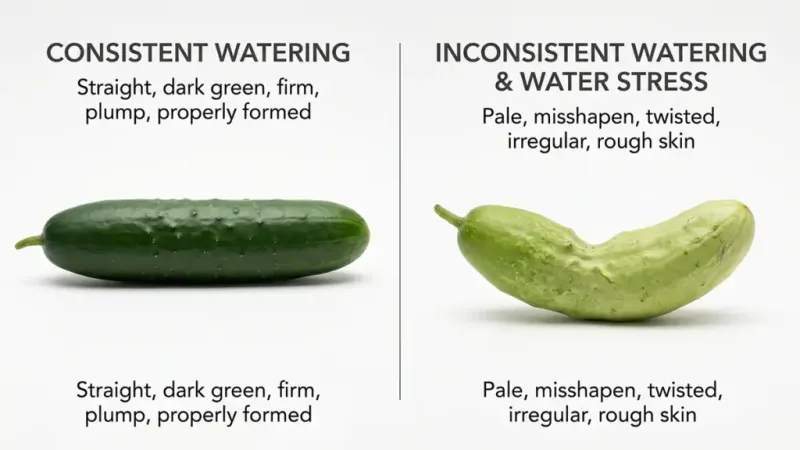
A fruit that was getting steady moisture early in its development and then hit a dry stretch in the middle can end up with uneven girth, wider where growth was going well and narrower where it slowed.
That said, no visible constriction reliably maps back to one specific missed watering.
The fruit is not keeping a diary.
What it does reflect is a pattern of changing conditions during a sensitive period, not necessarily a single afternoon when you forgot to turn on the hose.
Repeated or prolonged moisture stress during flowering and fruit enlargement is the concern, not one isolated event.
A useful mental exercise is to compare the fruit’s development with what was happening in the garden over the past week or two.
Were there several very hot days with no rain and no irrigation?
Did the soil dry out noticeably between waterings?
Illinois Extension’s cucurbit troubleshooting resource points to changing soil moisture during development as a factor in deformed fruit.
If your watering pattern has been irregular, that is worth correcting.
If the soil has actually stayed reasonably moist, look elsewhere before adjusting your routine.
The Small End May Point to Poor Pollination
Before adding more water, look at the shape more carefully.
A cucumber that is small and underdeveloped on one end, rather than evenly constricted in the middle, may be telling you something different entirely.
University of Maryland Extension identifies deformed or underdeveloped fruit on one end as a sign of incomplete pollination, where seed development did not proceed evenly through the fruit.
The end that received fewer seeds tends to stay small while the rest of the fruit grows normally.
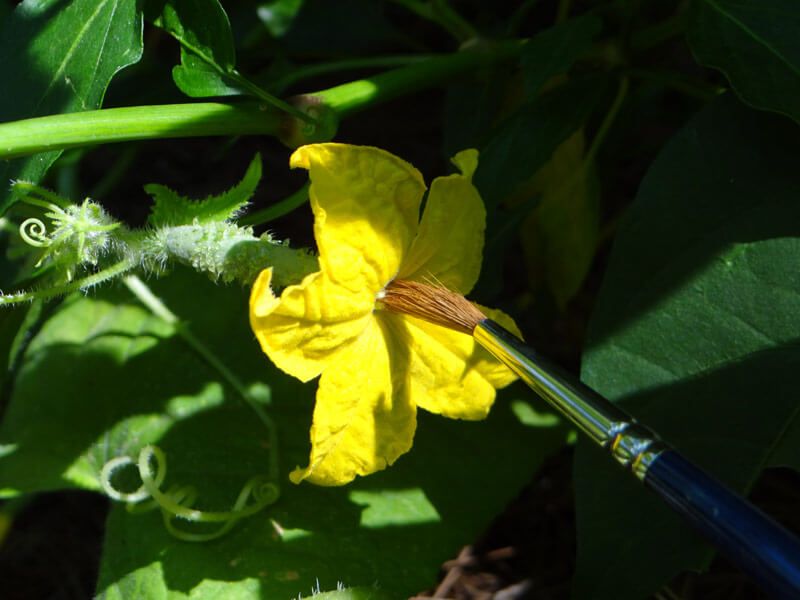
Cucumbers have separate male and female flowers on the same plant, and the female flower has a tiny immature cucumber visible right behind the petals.
That little proto-cucumber only develops fully when enough pollen reaches the flower during the short window it is open.
Colorado State Extension notes that insufficient pollination can leave one half of a cucumber mature while the other half remains small, which can look similar to moisture-related deformity at first glance.
Think back to the weather during the past few weeks of bloom.
Cool, rainy, or windy days reduce bee activity and pollen transfer.
Very hot weather, especially temperatures above about 90 degrees Fahrenheit, can affect pollen quality.
University of Georgia Extension and Maryland Extension’s pollination guide both describe how bloom-time weather and reduced bee activity can interfere with cucurbit fruit development.
Utah State’s pollination resource adds that cucurbit flowers are open for only a brief period, making timing critical.
A bottlenecked or pinched shape alone cannot separate pollination trouble from moisture stress, so check both before deciding on a fix.
Give the Root Zone a Steadier Water Supply
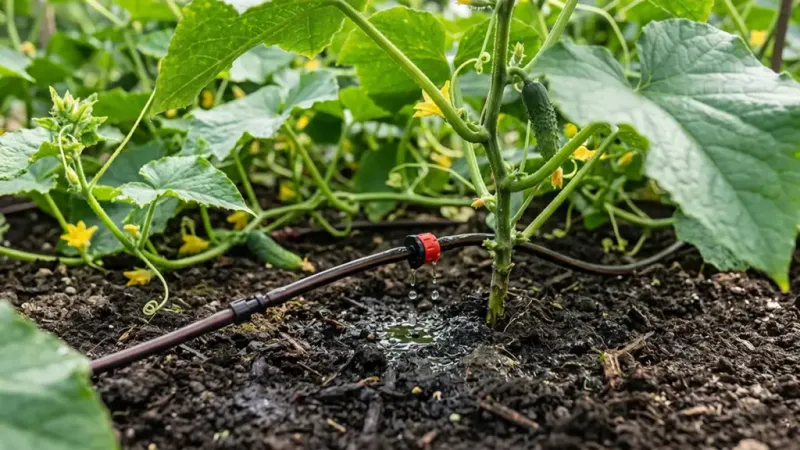
Steadier soil moisture is the correction when inconsistent watering is genuinely the problem, and the method matters as much as the amount.
The goal is to keep the root zone moist enough that the plant never hits a severe dry spell before the next irrigation.
Waiting until leaves wilt badly and then flooding the bed is the pattern most likely to cause the kind of growth interruptions that contribute to deformed fruit.
Utah State Extension recommends about 1 to 2 inches of water per week for garden cucumbers, including rainfall, as a general starting point.
Colorado State gives 1 to 1.5 inches weekly once vines cover the soil in warm weather.
Those numbers are ranges, not rigid rules, and they shift based on plant size, temperature, wind, soil type, and how much rain has fallen.
Use them as a baseline and adjust from there.
Oregon State Extension recommends checking moisture about 2 inches below the surface before watering rather than relying on a calendar.
Push a finger into the soil near the base of the plant.
If it feels dry at that depth, water thoroughly.
If it still feels damp, wait.
That simple check replaces guesswork and prevents both drought stress and waterlogged roots.
Drip irrigation or a soaker hose delivers water directly to the root zone and keeps foliage dry, which also reduces the risk of foliar disease.
Oregon State’s water conservation guide and Utah State’s cucurbit irrigation page both recommend mulch as a way to slow evaporation and reduce sharp wet-dry swings at the soil surface.
A 2 to 3 inch layer of straw or wood chips around the base of the plant can make a meaningful difference during a hot week.
If foliage does get wet, morning is the better time to water so leaves have time to dry before evening.
Correcting your moisture routine now helps future fruit, though fruit that is already badly misshapen is unlikely to straighten out.
Match Watering to Soil and Weather
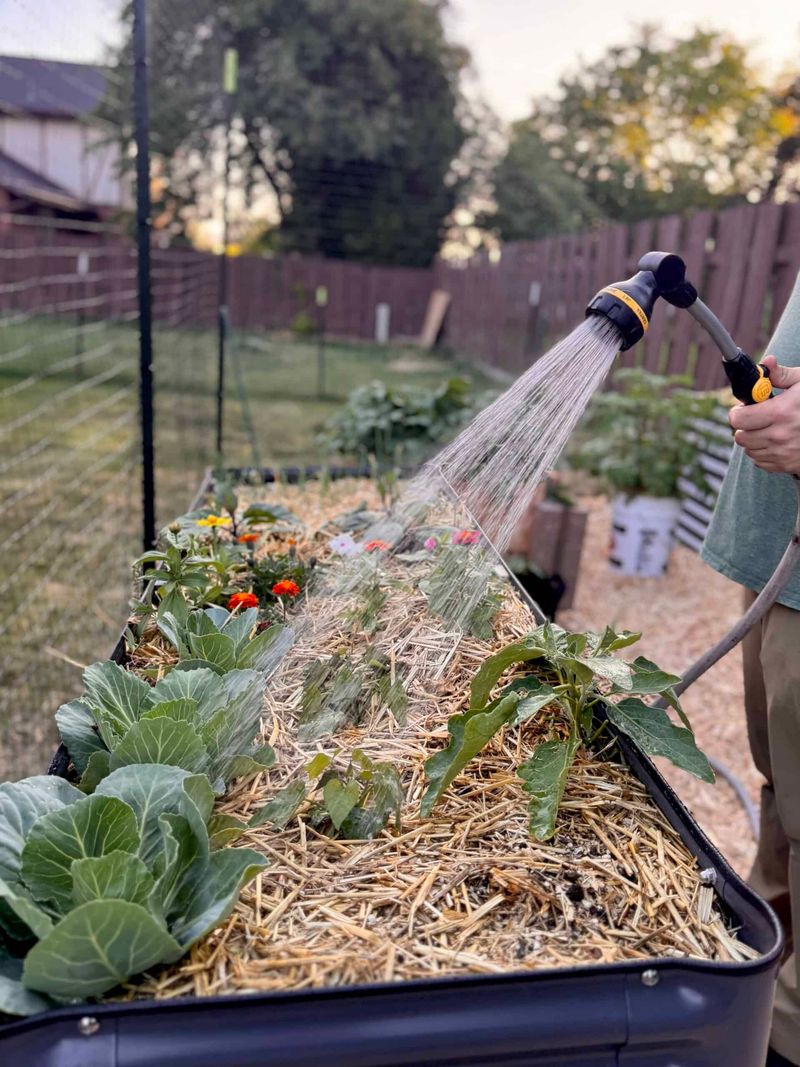
A watering recommendation that works perfectly in a humid Illinois garden can leave plants thirsty in a hot, windy New Mexico yard or drown roots in a rainy Georgia week.
Soil type is one of the biggest variables.
Sandy soil drains quickly and may need water more often, while clay soil holds moisture longer and can stay wet enough to cause problems if you water on a fixed schedule without checking first.
Containers and raised beds dry out faster than in-ground beds because they have less soil volume and more surface area exposed to air and sun.
Oregon State Extension notes that sandy soil or containers may need watering as often as twice daily during summer heat, while heavier soils in cooler conditions need far less.
Colorado State Extension says thorough irrigation every five to seven days can be preferable to light daily sprinkling in some growing situations.
Those two recommendations are not contradictory because they address different soils, climates, and setups.
Utah State’s vegetable water recommendations and Illinois Extension’s cucumber page both reinforce that plant size, vine coverage, and local weather should guide adjustments.
A small seedling needs far less water than a full-sized vine in mid-July heat.
A week with two inches of rain needs no supplemental irrigation at all.
The 2-inch soil check resolves all of those differences without requiring a formula, and it prevents the two most common errors: watering too lightly too often, and letting the soil go bone dry between deep soakings.
Check the Plant Before Adding Fertilizer
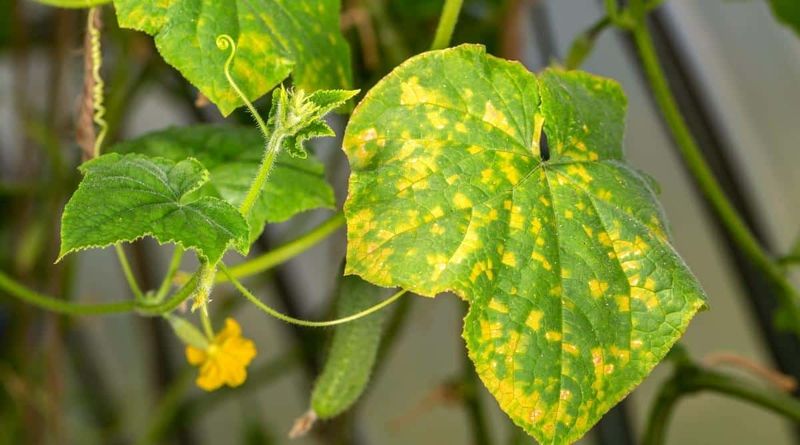
A misshapen cucumber does not automatically mean the soil is thirsty or the plant is hungry.
Before reaching for a fertilizer bag or a micronutrient supplement, take a few minutes to look at the whole plant.
If leaves show mosaic patterns, yellow mottling, puckering, or widespread distortion across multiple vines, a virus may be involved.
Wisconsin Extension’s cucumber mosaic resource describes how viral infection can distort both foliage and fruit, and the pattern tends to appear across multiple plants rather than on one isolated cucumber.
Heat can complicate the picture further.
Penn State Extension reports that temperatures above about 90 degrees Fahrenheit can reduce fruit set, while temperatures below about 65 degrees can contribute to misshapen development.
University of Maryland’s cucumber production guide lists high heat as a cause of poor pollen production, flower injury, fruit drop, and disorders including bottlenecking and pinched blossom ends.
If you had a stretch of 95-degree days during bloom, heat may be the bigger factor than water.
Gardeners growing cucumbers in high tunnels or small greenhouses should know that parthenocarpic varieties, which are bred to set fruit without pollination, can actually produce curved or misshapen fruit if bees do reach them unexpectedly.
Penn State Extension’s high-tunnel cucumber guide covers this edge case, which does not apply to ordinary outdoor seeded varieties.
On the fertilizer question, low fertility can occasionally contribute to poor fruit development, but adding potassium, calcium, or boron without a soil test is risky.
Wisconsin Extension warns that cucumbers are sensitive to excess boron, which can damage leaves and reduce growth.
Illinois Extension’s cucumber guide and Maryland Extension’s common cucumber problems page both point toward diagnosis before amendment.
One more thing worth saying plainly: cucumbers do not become misshapen because they cross-pollinated with squash or melons in the same garden.
Cross-pollination affects seed genetics in the next generation, not the shape of the fruit growing on your vine this season.
Remove Stalled Fruit and Protect New Growth
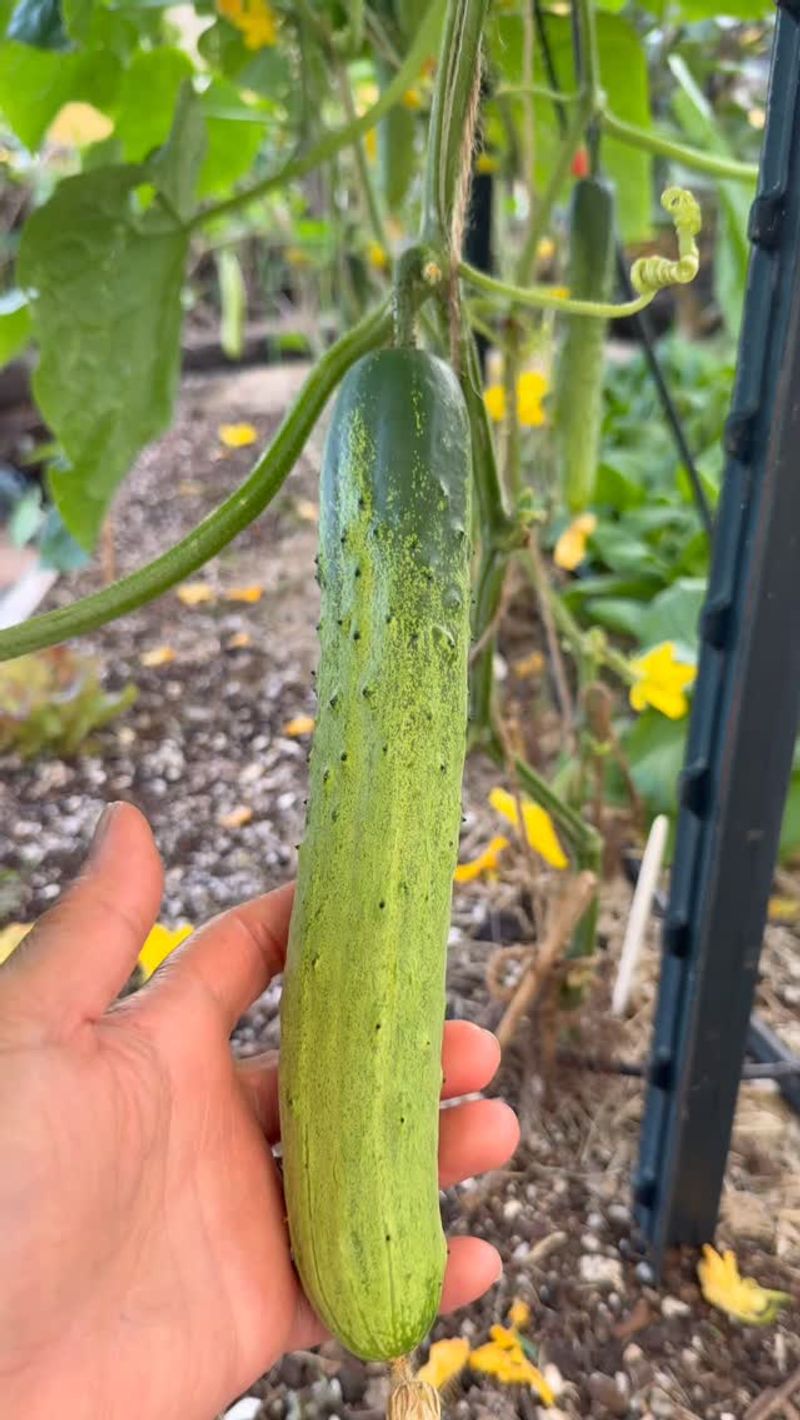
Some fruit is simply not going to recover.
Utah State Extension says badly misshapen small cucumbers will not develop into normal fruit and should be removed.
Leaving them on the vine pulls energy away from the flowers and young fruit that can still develop well.
Cut them off cleanly and move on.
Regular harvesting matters beyond just the misshapen ones.
Oversized cucumbers left on the vine signal the plant to slow down fruit production.
Picking every two to three days during peak season keeps the plant focused on new growth and new flowers.
That steady harvest rhythm, combined with steadier soil moisture, gives the next round of developing fruit the best possible conditions.
Protecting pollinators is part of the same plan.
Avoid spraying insecticides during bloom, especially in the morning when bees are most active.
Maryland Extension’s pollination guide and Utah State’s pollination resource both emphasize that seeded cucumber varieties depend on bee visits for proper fruit development.
If treatment is necessary, follow the product label and apply it in the evening after flowers close.
The real measure of whether any of this worked is the next cucumber that develops after you have made adjustments.
One malformed fruit is a clue, not a verdict.
Watch the shape of the fruit setting over the following week or two, keep the soil moisture steady, and let the plant show you whether the problem has shifted.
A garden that gets consistent attention tends to return the favor.