
The Fragrant Texas Native Shrub That Shrugs Off 104 Degree Afternoons And Perfumes The Patio After Rain
Follow us on Google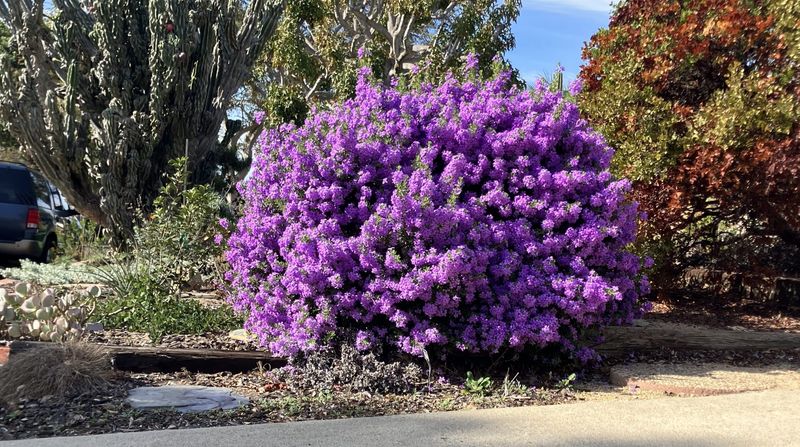
Step outside after a summer rain in Texas and something catches you off guard: a silvery shrub at the corner of the patio just burst into purple blooms, and the air carries a faint, sweet scent you weren’t expecting.
That shrub has been sitting there through weeks of triple-digit heat, barely complaining, sipping far less water than anything else in the yard.
It’s Texas sage, and once you understand what it actually needs, it becomes one of the most satisfying plants you can put in a hot, sunny Texas landscape.
Meet the Shrub Behind the Clue
The shrub behind the headline is Texas sage, known across the state by several names: cenizo, Texas ranger, and barometer bush are the most common.
Its botanical name is Leucophyllum frutescens, as documented in the NC State Extension Gardener Plant Toolbox, and it belongs to the figwort family, Scrophulariaceae, according to NCBI taxonomy.
That last detail matters more than it sounds.
Texas sage is not a true culinary sage.
Culinary sage belongs to the genus Salvia, and Texas sage is not related closely enough to treat as a kitchen herb or edible plant.
Do not consume the leaves, flowers, or any preparation made from them.
The name overlap creates real confusion at nurseries, especially since Salvia greggii, commonly called autumn sage, shares shelf space with cenizo and looks broadly similar at a glance.
What sets Leucophyllum frutescens apart visually is its foliage.
The leaves are small, rounded, and covered in fine hairs that give the whole shrub a soft, silvery appearance year-round.
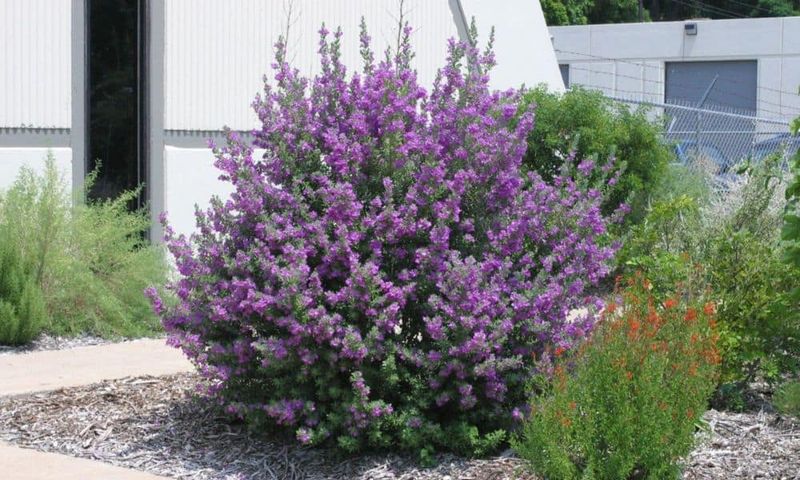
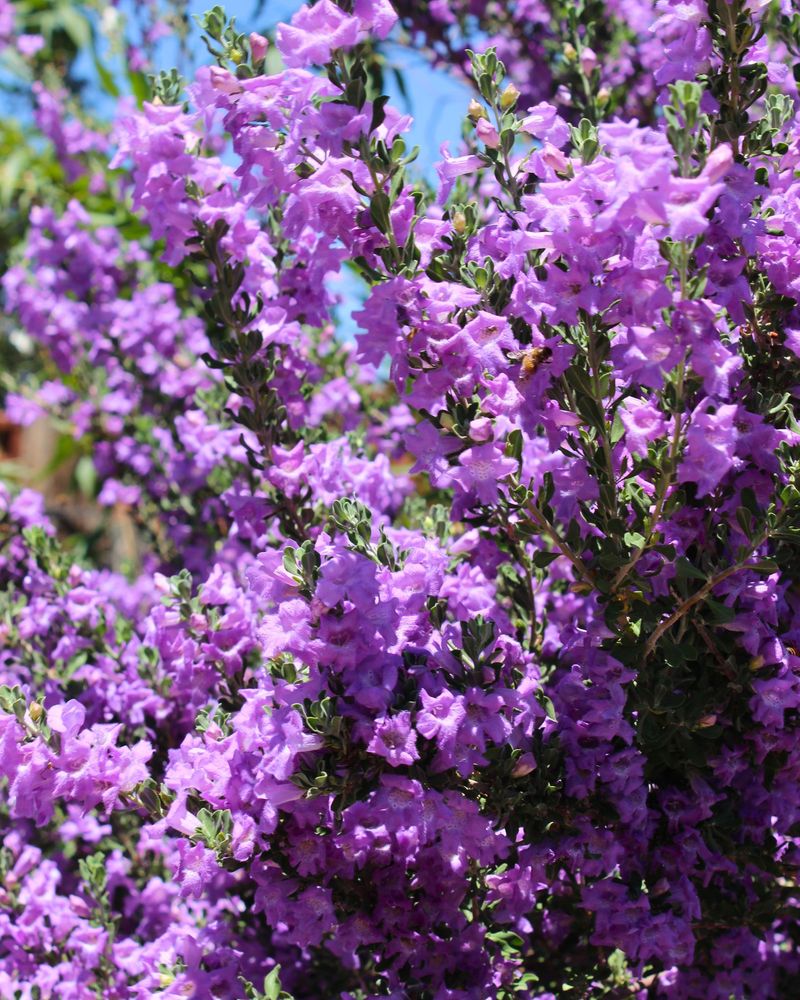
Flowers come in purple, pink, or white depending on the cultivar, and they appear as dense clusters along the stems.
The Texas Parks and Wildlife Department lists cenizo as a recognized Texas native, and its native range stretches from the Chihuahuan Desert through much of South and West Texas into Mexico.
Mature plants commonly reach about 5 to 8 feet in height and width, though some cultivar references report a broader range of 6 to 12 feet.
The shrub is genuinely evergreen in mild winters, which means the silver foliage earns its place in the landscape even during the long stretches between bloom cycles.
The headline’s heat, drought, and post-rain flowering clues all point to this plant, though a few of those dramatic promises deserve a closer look before you head to the nursery.
Why Its Silver Foliage Handles Heat
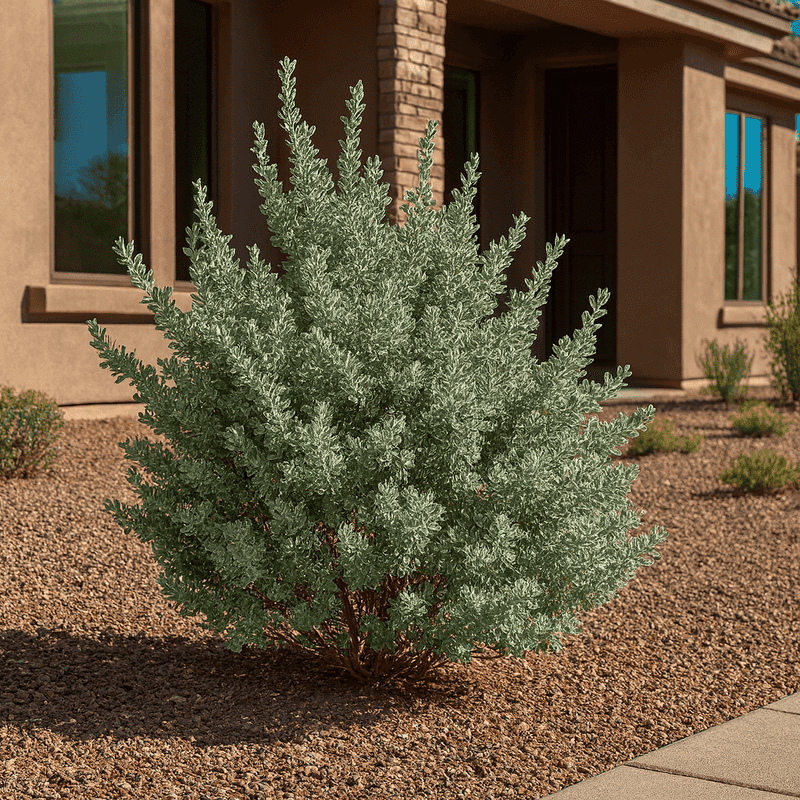
Those fine, silvery hairs on the leaves are not decorative.
They act like a sunscreen, reflecting intense solar radiation and slowing moisture loss during the long, punishing afternoons that define summer across much of Texas.
Full sun, meaning roughly 6 or more hours of direct light daily, is not just tolerated by this shrub: it is genuinely preferred.
Shade or dappled light tends to produce weak, open growth and fewer flowers.
The headline’s reference to 104-degree afternoons is a vivid way to describe the kind of heat Texas dishes out from June through September, but it is editorial shorthand rather than a tested survival threshold.
The NC State Extension profile confirms strong heat and drought tolerance for established plants in suitable sites, but that description applies to plants with established root systems, good drainage, and appropriate sun exposure.
A shrub you planted three weeks ago during a West Texas heat wave is a different situation entirely.
Newly planted shrubs, plants growing in containers, and plants with restricted or damaged roots can still wilt, drop leaves, or suffer damage during extreme heat, even in a species known for toughness.
The roots simply have not had enough time to reach the deeper, cooler soil moisture that sustains a mature plant through a dry stretch.
Container plants face a harder version of this problem because their soil heats and dries far faster than in-ground soil, especially when a pot sits on a south-facing concrete patio in August.
Once established over a full growing season or two, Texas sage in a well-drained, sunny spot can handle long dry periods without supplemental watering.
That resilience is real and worth celebrating.
But established drought tolerance is the reward for doing the first season right, not a shortcut around it.
Rain Brings Flowers, Not a Forecast
Here is the part that genuinely surprises people the first time they see it.
After a summer rainstorm rolls through, the cenizo that spent weeks looking quietly silver and unremarkable suddenly erupts in purple.
It can happen within a day or two of a significant rain event, and the effect is striking enough that generations of Texans have used the plant as an informal signal that wet weather is on the way or just arrived.
The nickname barometer bush comes from this behavior, but the University of Florida IFAS Extension notes that the flowering response is associated with changes in humidity, rainfall, or soil moisture, not with a precise atmospheric pressure reading.
Some plants bloom before rain arrives.
Some bloom after.
Some respond to a humidity shift without any measurable rainfall at all.
Calling it a rain predictor is a charming piece of Texas folklore, but the plant is responding to environmental change rather than sending a reliable forecast.
The fragrance question is where the story gets more nuanced.
Several authoritative plant databases describe the flowers as fragrant, and published research has identified volatile aromatic compounds in the leaves and flowers of Leucophyllum frutescens.
So there is a real chemical basis for the scent.
But one extension plant profile lists the stems as non-aromatic, and fragrance intensity varies by cultivar, individual plant, temperature, wind, and the sensitivity of the person standing nearby.
After a summer rain, when the shrub is in full bloom and the air is briefly cooler and damp, you may catch a soft, sweet scent drifting across the patio.
That moment is possible and worth hoping for.
Treat it as a pleasant bonus rather than a patio-wide guarantee, and you will not be disappointed when it arrives.
Choose the Site Before You Amend the Soil
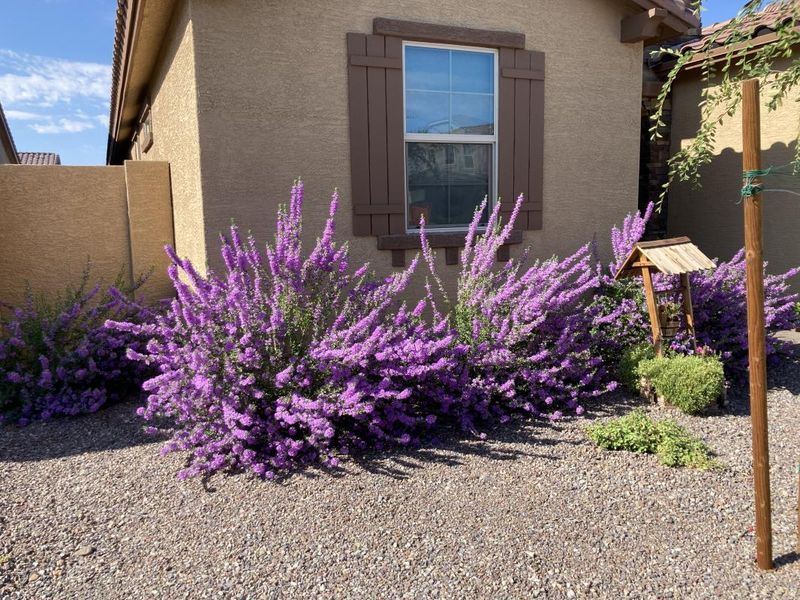
Placement is the single decision that determines whether this shrub thrives or slowly declines.
Get the site right and Texas sage will largely take care of itself.
Get it wrong and no amount of fertilizer or extra watering will fix the underlying problem.
Full sun and sharp drainage are the two non-negotiable requirements.
The NC State Extension profile confirms that Texas sage can tolerate clay, loam, sand, shallow rocky soil, and alkaline conditions, but that poorly drained soil and excessive irrigation can contribute to root problems, including cotton root rot, a soil-borne disease that can kill established shrubs.
The plant’s native range is dry, rocky, and alkaline country.
It evolved to shed water quickly, not to sit in it.
For North and Central Texas homeowners dealing with blackland clay, the practical move is to plant slightly high.
Set the root ball so the top sits an inch or two above the surrounding grade, or build a low mound and plant into that.
Water that pools after a downpour will drain away from the roots rather than sitting against the crown.
This is a site-based inference from the plant’s drainage preference, not a result from a clay-specific trial, but it is the approach recommended for drainage-sensitive shrubs in heavy soils.
In the Hill Country and West Texas, shallow alkaline soil and caliche layers make deep planting difficult.
Rather than digging a narrow amended hole that can trap water, prepare a broad, shallow planting area to give roots room to spread laterally.
Avoid creating a heavily amended compost pocket in a clay or caliche site: it can act like a bathtub, holding moisture against the roots longer than the plant wants.
Along the Gulf Coast and in humid East Texas, the combination of warmth, moisture, and poor airflow creates the hardest conditions for cenizo.
Texas A&M AgriLife Extension Earth-Kind guidance stresses that native status alone does not guarantee low maintenance: site selection remains decisive.
In humid areas, avoid low or wet spots, give the shrub room for air to move around it, and choose a cultivar with documented performance in higher humidity if one is available at your local nursery.
Water by Establishment and Soil Moisture
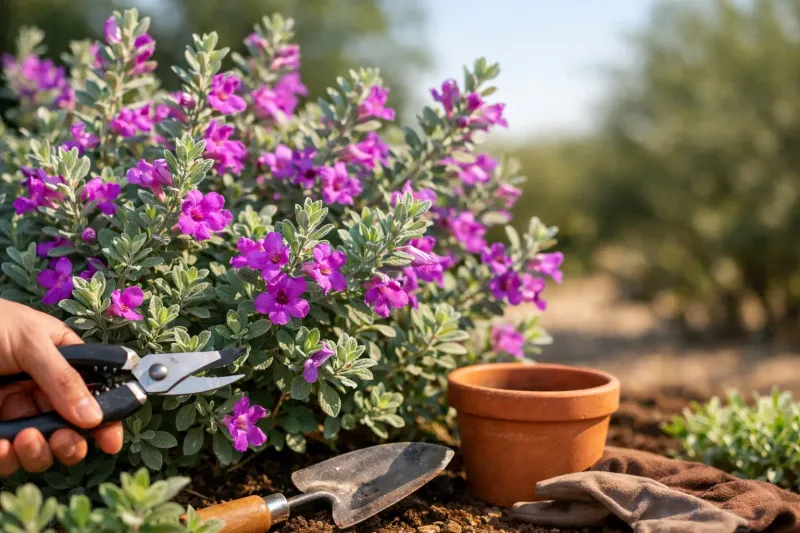
Drought tolerance is a finish line, not a starting point.
The cenizo you just brought home from the nursery needs consistent water while its roots push out into the surrounding soil, even if the tag says drought tolerant and the plant looks perfectly happy in its pot.
A general extension framework for newly planted shrubs, drawn from University of Minnesota Extension guidance on watering newly planted trees and shrubs, suggests watering daily for the first 1 to 2 weeks, then every 2 to 3 days from weeks 3 through 12, then weekly until the plant is established.
Treat that schedule as a starting framework, not a Texas sage prescription.
Texas summers are hotter and drier than Minnesota, and your soil, drainage, and microclimate will shift those intervals.
A heavy clay site that stays moist for days after rain needs far less frequent watering than a sandy raised bed in full South Texas sun.
Check the soil before you water, not the calendar.
When rainfall of more than 1 inch falls within a day or two, you can skip the next scheduled watering interval and let the ground tell you when it is dry again.
Push a finger or a thin trowel into the soil near the root zone: if the top 6 inches still feel damp, wait.
Container plants are the exception, since pots in triple-digit weather can dry out in less than 24 hours.
For established plants, extension guidance on watering established shrubs recommends checking whether the upper 6 to 9 inches of soil are dry before watering deeply at the root zone.
A slow, deep soak once the soil has dried is far better than brief daily sprinkling.
Short, frequent watering encourages shallow roots and wastes water to evaporation, which matters when a Texas drought stretches across July and August and water restrictions kick in.
A 2- to 3-inch layer of organic mulch spread over the root zone slows evaporation and moderates soil temperature.
Keep the mulch several inches away from the stems and do not pile it against the base of the shrub.
Deep mulch against the crown can trap moisture, restrict oxygen, and promote the same root problems you are trying to avoid.
Prune Lightly and Skip Unnecessary Fertilizer
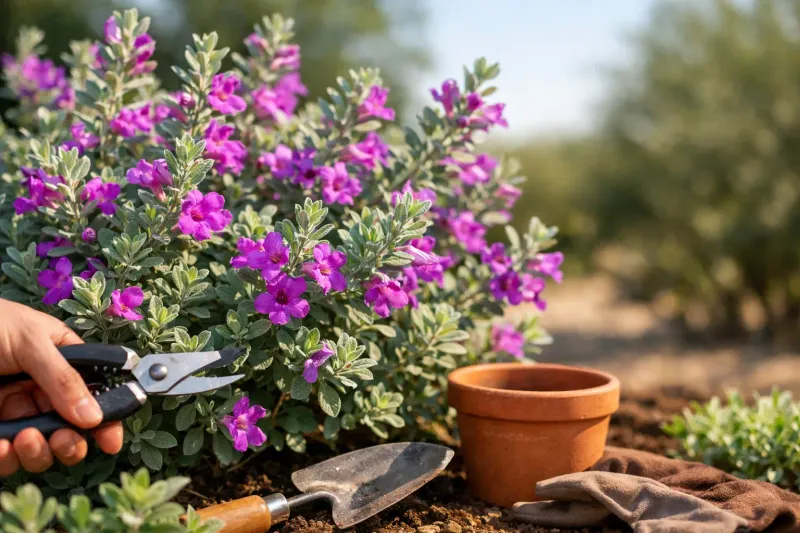
Left alone, Texas sage grows into a naturally rounded, airy mound that suits a patio corner or a foundation planting without much fuss.
The temptation for many homeowners is to shear it into a tight ball or a clipped hedge because the small leaves look tidy when cut.
Resist that instinct.
Flowers form on new wood, meaning the fresh growth that emerges after each flush.
Shearing removes that new growth and with it the next round of blooms.
The NC State Extension profile advises against heavy pruning, and a City of Austin plant guide specifically recommends pruning for a natural look and states not to shear or hedge the plant.
Light shaping after a flowering flush, removing a wayward branch or reducing the overall size by no more than a third, keeps the shrub looking intentional without sacrificing future flowers.
Avoid severe pruning during the hottest weeks of summer or immediately before a hard freeze is forecast.
The concern is not a specifically documented causal effect on Texas sage, but general horticultural caution: severe cuts during extreme conditions can stress the plant and expose tender new growth to whatever comes next.
Light, selective cuts at more moderate times of year are the safer approach.
Fertilizer is a different matter.
The NC State Extension profile specifically advises against fertilizing Texas sage.
In a suitable site with decent native soil, the shrub does not need the push.
Adding fertilizer can encourage weak, lush growth that is more susceptible to stress rather than the compact, resilient form you want.
If you suspect a nutrient deficiency, a soil test from your county extension office is the right first step, not a bag of general-purpose granules from the hardware store.
Poor drainage, excess water, transplant stress, an unusually hard freeze, and occasional disease can still cause decline in a cenizo that looked fine last season.
The shrub is generally low-maintenance in a good site, but it is not indestructible.
Match Its Size and Hardiness to the Space
Before you fall in love with the idea of cenizo on every corner of the patio, pull out a tape measure and check the nursery tag.
Mature size varies more than most people expect with this shrub.
The NC State Extension profile lists a common mature range of approximately 5 to 8 feet in height and width, while some cultivar references and broader plant databases report plants reaching 6 to 12 feet under favorable conditions.
That difference matters a great deal when you are planting 3 feet from a doorway or underneath a window.
For a patio placement, think through what is nearby: seating, doors, air-conditioning equipment, roof drainage downspouts, and any overhead structure.
A shrub that reaches 8 feet wide in 5 years will crowd a narrow walkway, press against a dryer vent, or block access to an outdoor electrical panel.
Give the plant room to reach its mature width without needing constant corrective pruning to keep it out of the way.
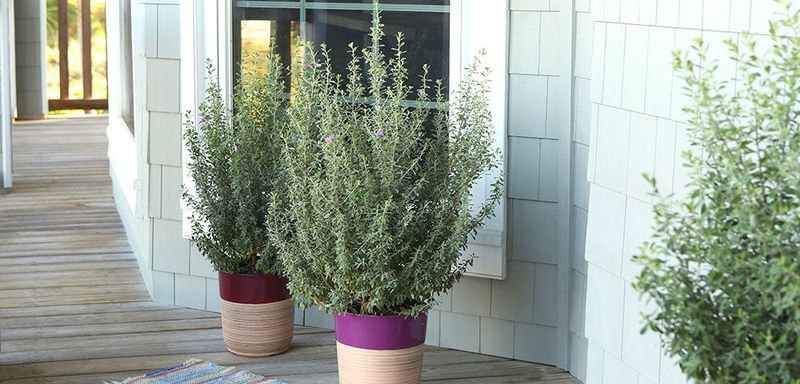
Container growing is possible, and cenizo can make a striking patio specimen in a large pot.
But containers introduce two complications.
First, the pot must have drainage holes: standing water in a container is as damaging to this shrub as a wet foundation bed.
Second, containers heat and dry far faster than in-ground soil, especially sitting on a south-facing concrete surface during a July afternoon.
A container plant may need more frequent watering during extreme weather than an in-ground plant, which runs counter to the low-water reputation.
Cold hardiness is the other variable worth checking before you buy.
The USDA Plant Hardiness Zone Map divides the country into 5-degree half-zones, and the NC State profile lists Texas sage for zones 8a through 10b.
That range covers most of Central, South, and West Texas comfortably, but the Panhandle sits in colder zone territory where an unusual hard freeze can damage or kill exposed growth, particularly on young plants or container specimens.
Texas A&M AgriLife Extension Earth-Kind guidance encourages matching the plant to the specific site rather than assuming a Texas native will perform identically across the state’s wide range of climates.
If you garden in the northern Panhandle, ask your local nursery which cultivars have held up through recent winters before committing to a foundation planting.
The right cenizo in the right spot is one of the most rewarding, lowest-drama shrubs in the Texas landscape, and that outcome is worth the extra few minutes of planning before you dig the hole.