
Your Cucumber Leaves Yellow Overnight And It Is Not The Disease You Are Bracing For
Follow us on Google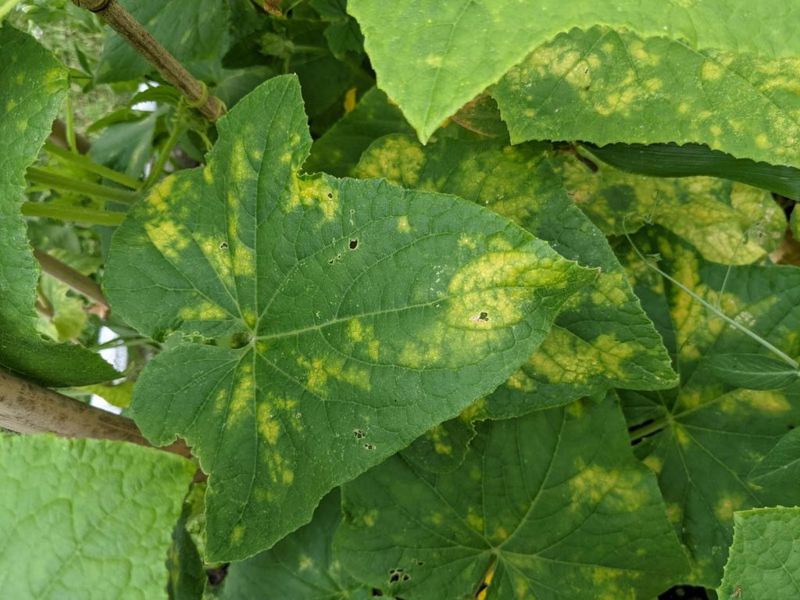
You walked out to the garden this morning and something looked wrong.
The lower leaves on your cucumber plant had gone pale and yellow overnight, and your first thought was probably blight or some spreading fungal disaster.
Before you reach for a spray bottle or pull the plant, slow down, because the cause is more likely a nutrient shortage than a death sentence.
Knowing the difference between a hungry plant and a sick one can save your harvest and keep you from making the problem worse.
Nitrogen Fits One Specific Yellowing Pattern
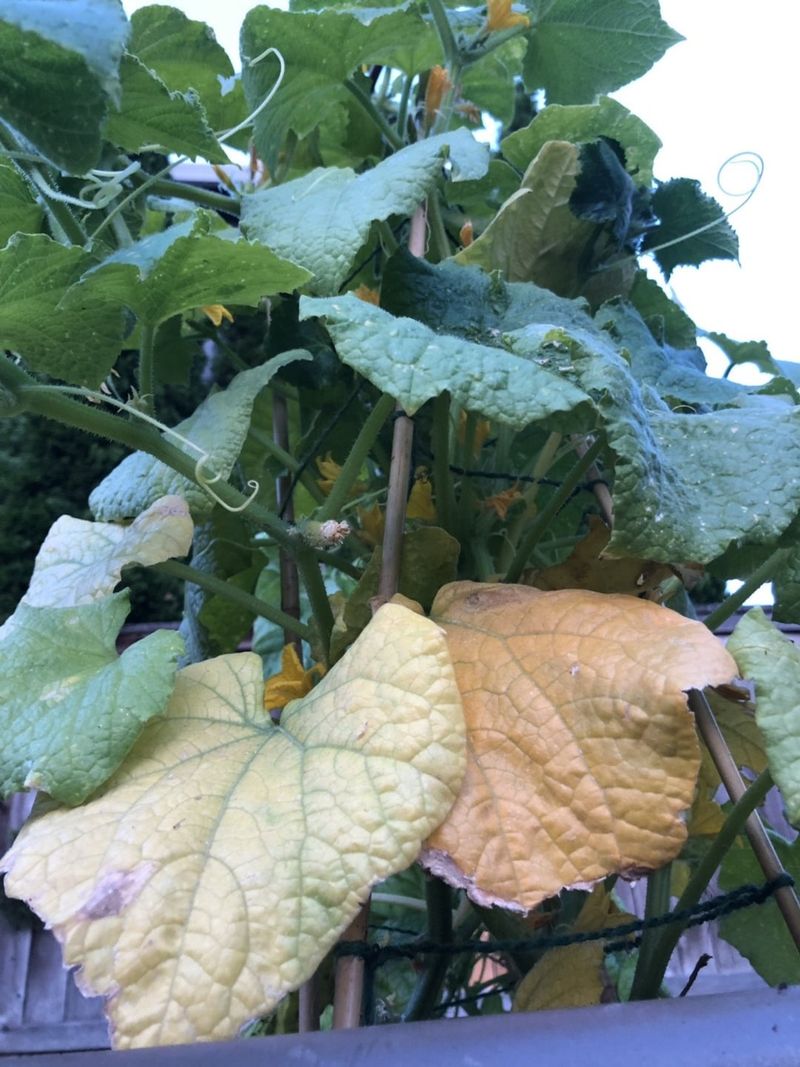
Pale yellow leaves on a cucumber plant do not all mean the same thing, and the pattern matters more than the color.
When nitrogen is the issue, Texas A&M AgriLife Extension notes that the yellowing typically starts on older, mature leaves lower on the plant, while newer growth at the top stays noticeably greener.
The plant may also grow slowly, have thin stems, or produce fewer fruits than you expected.
Nitrogen is what plant scientists call a mobile nutrient.
When a cucumber (Cucumis sativus) runs low, it pulls nitrogen out of its older leaves and sends it toward younger, actively growing tissue.
That internal triage is why the bottom of the plant goes yellow first, the plant is not dying, it is rationing what it has left.
The “overnight” part of what you noticed is almost certainly a visual discovery, not proof that the deficiency appeared in a single night.
UC IPM explains that nitrogen deficiency usually develops gradually, though a gardener can miss the early signs until a stress event, a heavy rain that leaches nutrients, or a stretch of rapid growth finally makes the change obvious.
Compare the oldest leaves to the newest ones before drawing any conclusions.
Fairly uniform pale yellowing on older leaves, with greener new growth at the tips, is the pattern that points toward nitrogen.
If the new leaves look just as bad, or if the yellowing forms spots or patches rather than a general fade, nitrogen deficiency is less likely to be the whole story.
Use Leaf Patterns To Prioritize Possibilities
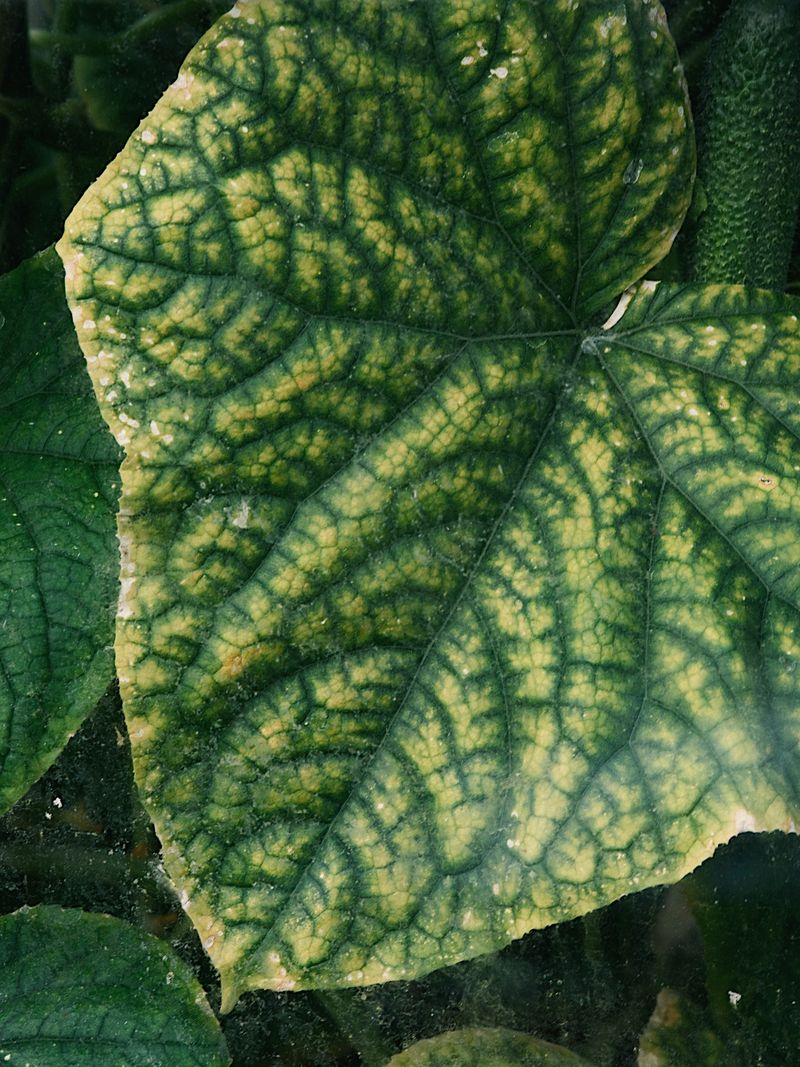
Not every yellow cucumber leaf is telling the same story, and the details in the pattern can help you narrow down what to check next.
University of Minnesota Extension points out that yellow tissue between green veins on younger leaves tends to suggest iron or another immobile-nutrient problem, because those nutrients cannot travel from old tissue to new the way nitrogen can.
Yellow margins that shade into brown or scorched-looking edges lean toward potassium deficiency or another stress, not a straightforward nitrogen shortage.
Spots that form a defined shape, a ring, an angular patch, or a water-soaked blotch, point toward something other than a nutrient problem entirely.
Look at where the damage is, what the veins are doing, and whether the edges or the centers of leaves are most affected.
University of Arizona Cooperative Extension cautions that nutrient deficiency symptoms can overlap visually, and that pH problems, root injury, or multiple deficiencies happening at once can produce a confusing mix of signals.
Use these patterns as a way to decide what to investigate further, not as a final diagnosis.
If the leaf picture is messy, with multiple kinds of damage on both old and new growth, a soil test will give you more reliable information than a visual guess.
The goal right now is to rule out the most serious possibilities before adding anything to the soil.
Sudden Visibility Does Not Rule Out Disease
Here is the part the original headline gets wrong.
Disease can look sudden even when it has been building for days, and some of the most common cucumber diseases produce yellowing that is easy to mistake for a nutrient problem at first glance.
Downy mildew is the one most worth knowing.
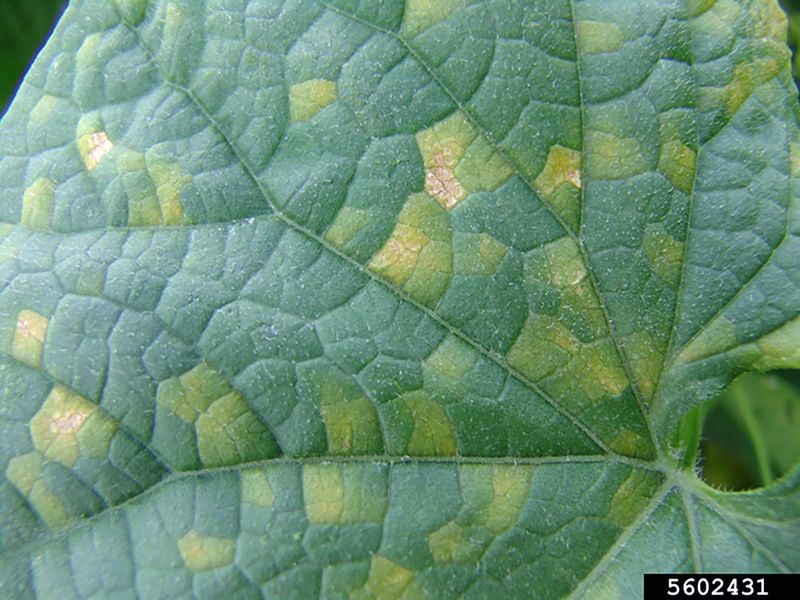
University of Maryland Extension describes the early signs as tan to dull-yellow angular lesions that are often bounded by leaf veins, with fuzzy gray or purplish growth on the underside of the leaf during warm, wet conditions.
The disease can spread fast and kill leaves quickly, which is exactly why it can seem to appear overnight.
Cornell University’s cucurbit disease resources report that downy mildew symptoms can become visible 4 to 12 days after infection, and that wind-dispersed spores can travel long distances, meaning you do not have to have done anything wrong for the disease to arrive.
Flip the leaf over before you do anything else.
Fuzzy growth underneath, angular lesions, water-soaked patches, or any kind of mottling or distortion are signals to stop and investigate disease rather than reach for fertilizer.
University of Minnesota’s plant diagnosis tool also lists powdery mildew as a cause of leaf discoloration, which shows up as white powdery or felt-like patches on leaf surfaces rather than yellowing.
Cucumber mosaic virus causes mottled yellow-and-green foliage with distorted or curled leaves and stunted growth.
Bacterial wilt often makes leaves look dull green and wilted during the day, sometimes with partial recovery at night before the plant declines further.
The decision point is this: fairly uniform whole-leaf paling on older leaves favors nitrogen.
Angular lesions, fuzzy undersides, mottling, distortion, or daytime wilting require a different path entirely.
Check Water, Soil, And Roots First
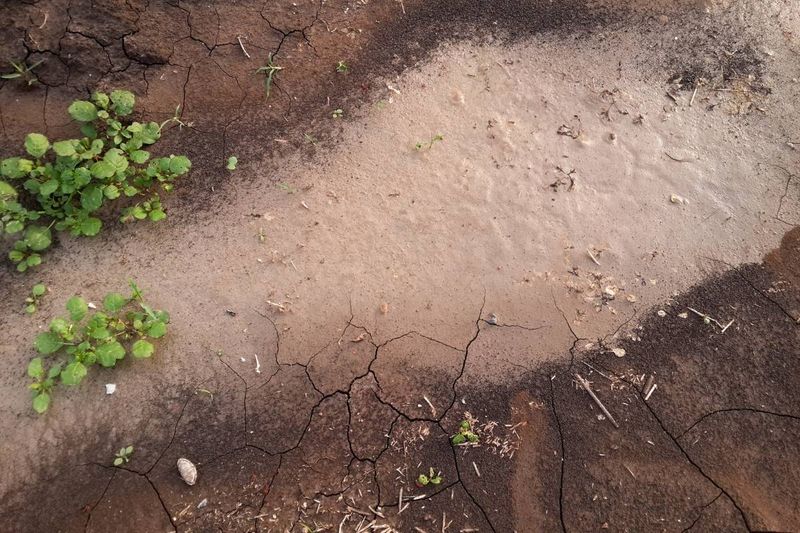
Fertilizer cannot fix a drainage problem, and adding nitrogen to a plant with damaged or waterlogged roots can make things worse rather than better.
Cucumber plants have shallow roots, and those roots are surprisingly sensitive to the conditions just a few inches below the surface.
UC IPM notes that cold or saturated soil, compaction, poor drainage, and root damage can all restrict nutrient uptake even when nitrogen is present in the soil.
The plant looks deficient because its roots cannot do their job, not because the nutrient is missing.
Push a finger 2 inches into the soil near the base of the plant.
Bone dry soil after a hot week points toward drought stress.
Soggy soil that smells faintly sour or holds standing water points toward waterlogging.
Illinois Extension points out that both extremes can produce yellowing that looks like a nutrient problem on the surface.
UC IPM’s cucumber growing guidance specifically warns that water stress during fruit set can cause small or deformed fruit, a sign that the plant’s resources are already stretched.
Consistent moisture matters most at that stage, but the soil should drain freely between waterings.
Minnesota Extension also flags cold injury as a cause of cucumber leaf discoloration, noting that air temperatures below 50 degrees Fahrenheit combined with damp soil below roughly 62 degrees can stress the plant enough to cause yellowing.
That threshold is most relevant for gardeners in the Upper Midwest or at higher elevations, not a universal diagnosis for every US region.
Correct drainage and moisture problems before adding any fertilizer.
If the roots cannot absorb what is already in the soil, more fertilizer will not help and could burn the roots or contribute to runoff.
Apply Measured Nitrogen To The Root Zone

Once you have checked the leaves for disease signs and confirmed the soil moisture and drainage are reasonable, and the pattern still points toward nitrogen, the next step is a measured fertilizer application to the root zone.
The word “measured” is doing a lot of work in that sentence.
Penn State Extension recommends selecting fertilizers based on soil-test results where possible, because overapplication can damage plants and contribute to water pollution.
If you do not have a soil test, choose a granular or water-soluble fertilizer whose N-P-K label lists a meaningful nitrogen number in the first position, and follow the product label exactly for rate and timing.
Utah State University Extension explains that foliar feeding is generally not recommended for macronutrients like nitrogen because root uptake is the normal pathway, and spraying fertilizer directly on leaves can cause injury if the concentration or weather conditions are wrong.
Apply the product to the soil around the root zone, water it in well, and keep it off the stems and foliage.
Iowa State University Extension offers a regional reference point: for home gardens without a soil test, roughly 1 to 2 pounds of an all-purpose 10-10-10 fertilizer per 100 square feet before planting, and side-dressing cucurbits about 4 to 6 weeks after planting with approximately 2 tablespoons of complete fertilizer around each plant.
Those are Iowa-based guidelines, not a universal rescue prescription, and your product label takes priority.
University of Minnesota Extension warns that excess nitrogen can push the plant toward excessive leafy growth, delay fruit production, and burn roots or foliage.
Skip the improvised treatments: concentrated urea, blood meal without a supporting diagnosis, uncomposted manure, and unmeasured home remedies all carry real risk of making the situation worse.
Measure Recovery In New Growth
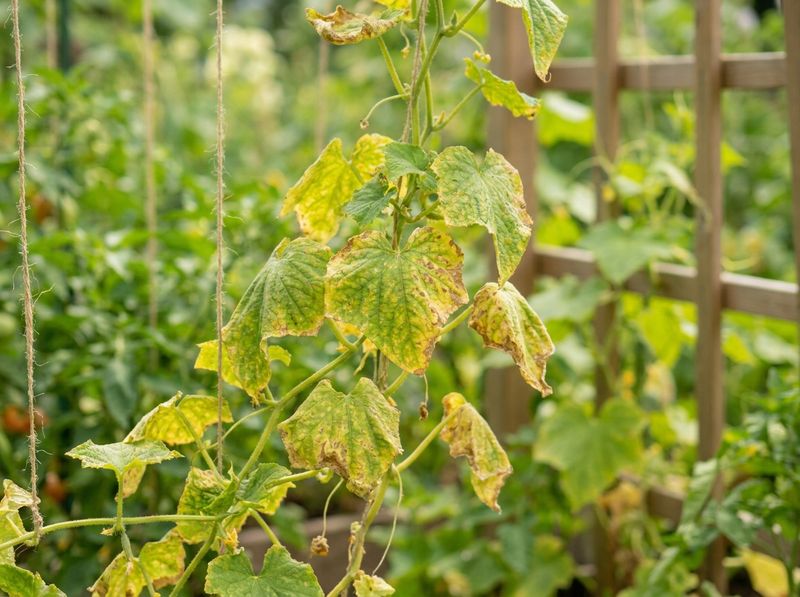
After a nitrogen application, the temptation is to check the yellow leaves every morning hoping to watch them turn green again.
That is not quite how recovery works, and expecting it can send you back to the fertilizer bag too soon.
Texas A&M’s cucurbit problem solver supports the practical interpretation that a nitrogen-deficient plant redirects available resources toward newer growth first.
So the place to look for progress is the top of the plant, not the bottom.
Healthier emerging leaves, continued growth, and no further spread of yellowing are the signs that things are moving in the right direction.
Already-damaged older leaves may not return to their original green.
The tissue that lost chlorophyll is not likely to fully recover, and that is normal.
Utah State Extension’s nutrient guidance reinforces that root uptake takes time, so a fast visual transformation in existing leaves is not a reliable goal.
Keep soil moisture consistent during this period.
Drought stress right after a fertilizer application can limit how well the plant absorbs the nutrients you just added.
Avoid a second heavy application within a short window, because the first one needs time to work and the plant needs stable conditions to respond.
Remove leaves only after you have made a diagnosis.
Dead leaves, leaves with active disease signs, or leaves that are clearly getting worse rather than holding steady are reasonable to take off.
Pulling healthy-enough yellow leaves early removes photosynthetic area the plant may still be using, so diagnose first and remove selectively.
Prevent The Next Round Of Yellowing
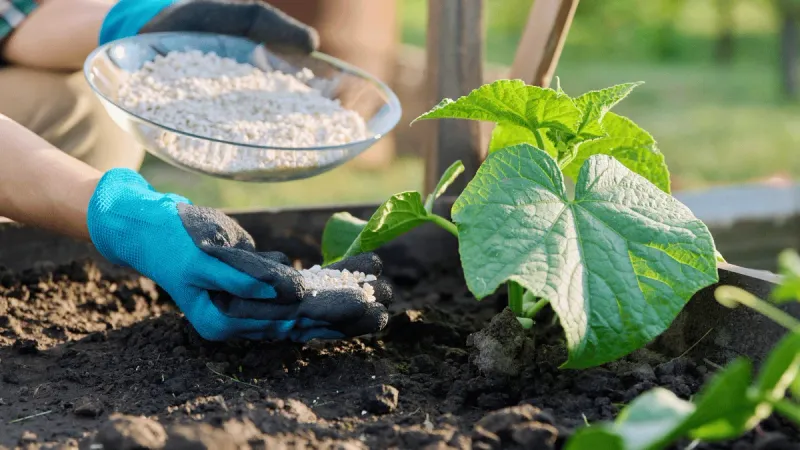
The best follow-up to a nitrogen scare is building the conditions that make the next one less likely.
Cucumbers are warm-season, fast-growing vines that put real demands on soil, and those demands do not let up once the plant starts producing fruit.
Illinois Extension recommends side-dressing cucumber plants with nitrogen fertilizer when they begin to vine, which is a practical prompt to feed before the plant shows stress rather than after.
Fertile, well-drained soil and consistent watering during fruit formation are the two conditions that matter most for keeping the plant from cycling through stress and deficiency.
Iowa State University Extension advises planting cucumbers after frost danger has passed and soil temperatures reach roughly 60 to 70 degrees Fahrenheit.
Starting in cold soil sets the plant back early and makes nutrient uptake problems more likely right from the beginning.
Compaction is a quiet problem in many backyard beds.
If foot traffic or heavy rain has sealed the surface, water and nutrients struggle to reach shallow cucumber roots.
Loosening the top few inches of soil between plants and adding compost before the next season can make a real difference in how the plant performs under stress.
University of Minnesota’s soil test guidance for fruit and vegetable crops is a useful starting point if you want to move from guessing to knowing what your soil actually needs before next season.
A soil test costs less than a bag of fertilizer and tells you far more.
Treat nitrogen as the leading suspect only when the leaf pattern supports it: fairly uniform pale yellowing starting on older lower leaves, with greener new growth above.
When you see spots, fuzzy growth, mottling, distortion, or wilt, the plant is asking a different question entirely, and it deserves the right answer.