
Guinea Fowl May Eat Some Ticks In Your Yard, But The “Hundreds A Day” Claim Is Unverified
Follow us on Google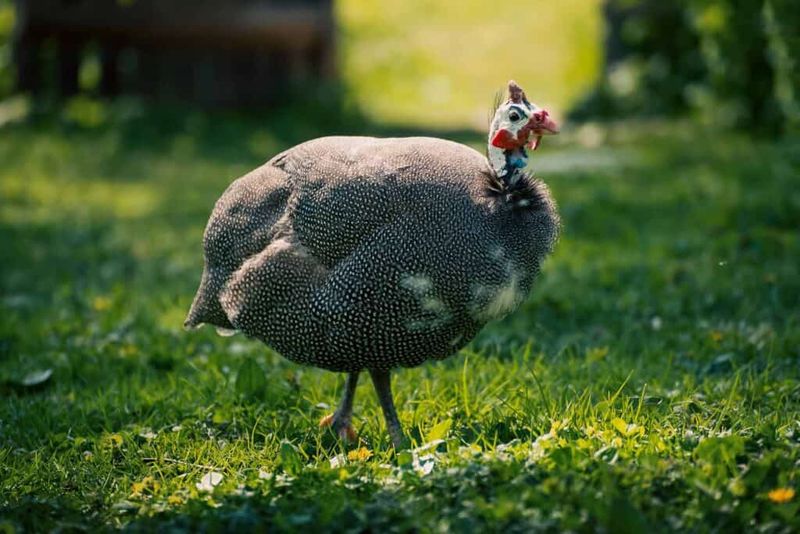
Scroll far enough through Pennsylvania homeowner groups and you will find the claim: a single backyard bird eats hundreds of ticks every day, right where your kids are playing.
The bird is the helmeted guinea fowl, and it genuinely does forage for insects across a yard.
But the “hundreds a day” number is not supported by solid research, and the idea that the bird patrols your patio like a security guard does not match how these animals actually behave.
Before you order a flock, here is what the evidence actually says.
The Bird Is A Helmeted Guinea Fowl
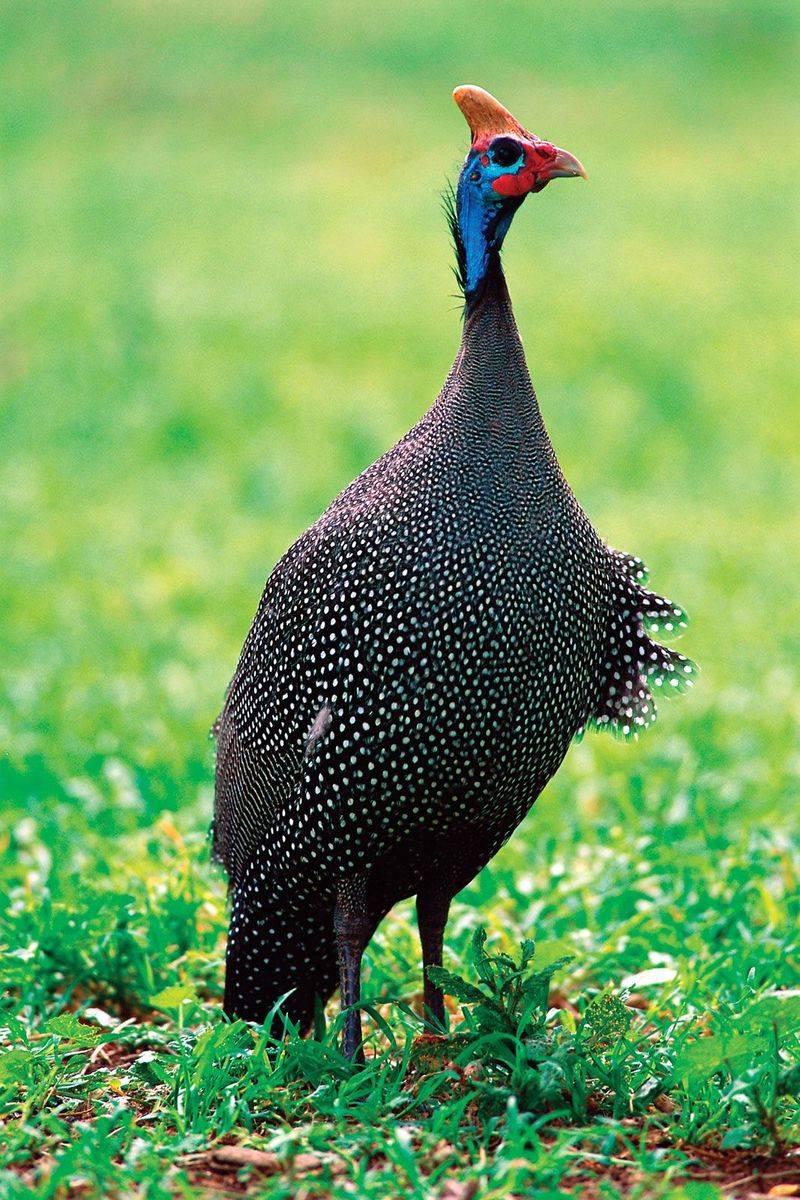
Meet Numida meleagris, the helmeted guinea fowl.
Native to sub-Saharan Africa, it ended up in American backyards through centuries of domestication, and Pennsylvania homeowners keep it today alongside chickens and ducks. “Pennsylvania bird” in this context means a bird kept in Pennsylvania, not a species that evolved here or has any special relationship with the state’s landscape.
What makes the bird interesting to yard owners is its foraging style.
Poultry Extension guidance on guinea fowl husbandry describes them as active, wide-ranging foragers that pick up insects, arachnids, slugs, worms, caterpillars, weed seeds, and vegetation as they move through a yard.
Ticks are on that menu, along with a long list of other things they happen to encounter.
That broad, opportunistic diet is the source of the tick-control reputation.
A guinea fowl moving through tall grass or a woodland edge will consume some ticks as part of its day.
But “may eat some ticks while moving through your yard” is a different claim from “eats hundreds of ticks a day right where your family plays.”
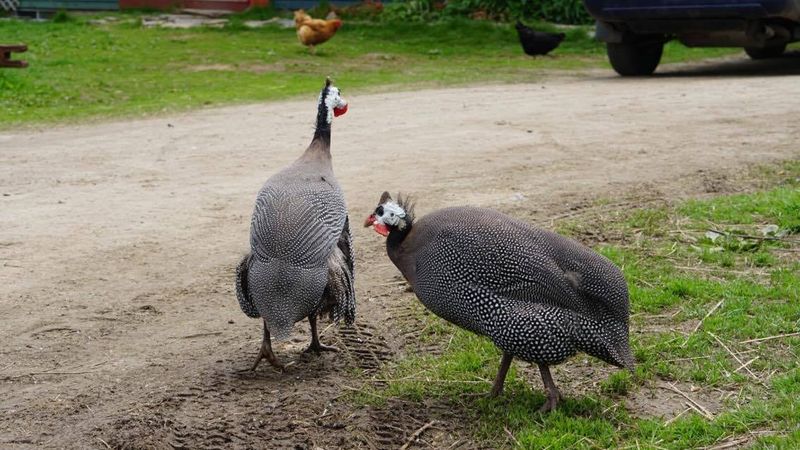
The free-ranging behavior that makes guinea fowl effective foragers also makes them difficult to direct.
They do not stay on the patio.
They do not focus on the swing set.
Penn State Extension’s review of tick-control birds treats their tick consumption as part of a broad diet, not as targeted pest management.
That distinction matters before you spend money on a flock expecting a yard service.
The “Hundreds Of Ticks” Claim Does Not Hold Up
Here is where the headline falls apart.
The “hundreds of ticks a day” figure gets repeated across social media and backyard-poultry blogs, but no peer-reviewed research backs it up as a reliable daily count under ordinary yard conditions.
Eating some ticks while foraging is not the same as consuming hundreds of them on a schedule.
Penn State Extension’s assessment puts it plainly: chickens and guinea fowl do feed on ticks, but they generally do not eat enough to reduce tick populations.
That is the honest summary of the older evidence.
The birds are not eating their way to a tick-free yard.
The more recent research is even more sobering.
A 2024 peer-reviewed study published in the Journal of Medical Entomology looked specifically at guinea fowl and lone star ticks.
The researchers found no evidence that the birds controlled lone star tick populations or reduced tick-borne pathogen risk in the study area.
That is not a small caveat buried in the methods section.
That is the headline finding.
The defensible version of the claim is narrower and more honest: guinea fowl are active foragers that may consume some adult ticks as part of a mixed diet.
No supplied evidence supports a dependable daily number, reliable population control, or measurable protection for a family using a backyard patio.
If a number like “hundreds” appears without a citation, treat it as folklore rather than fact.
A Guinea Fowl Can Host A Tick
The story gets more complicated when you look at what the 2024 research actually found inside the study plots.
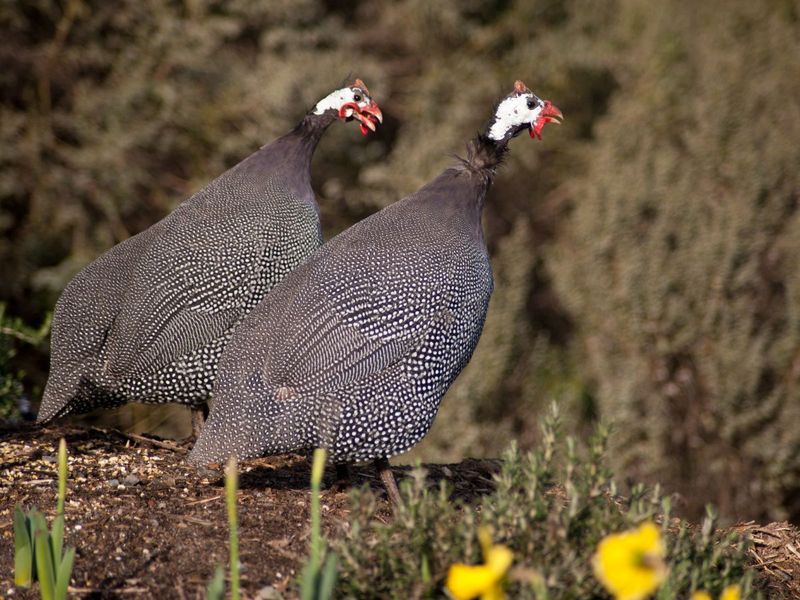
The full-text peer-reviewed study documented lone star nymphs that had fed on the guinea fowl themselves.
The birds were not just predators moving through tick habitat.
They were also hosts, carrying engorged nymphs the way a deer or a dog might.
That puts guinea fowl inside tick ecology rather than above it.
This does not prove that keeping guinea fowl increases tick populations on your property.
The study did not make that claim.
But it does complicate the simple predator story that gets shared on social media.
Earlier research produced a more optimistic picture.
A 1992 study by Duffy, Downer, and Brinkley examined helmeted guinea fowl and adult deer ticks in New York and found the birds did consume adult ticks in the study area.
Later reviewers questioned the limited scope and methodology of that work, particularly the difficulty of translating adult-tick consumption into lower human disease risk.
That gap matters.
Research from the Cary Institute on tick-borne zoonoses reinforces the distinction: a bird eating a tick is not the same as a bird reducing the number of infected ticks in a yard, reducing the number of bites a person receives, or reducing the household risk of disease transmission.
Tick abundance can fall while disease risk stays the same, because a single infected bite may be enough.
Keep those steps separate when you are evaluating any tick-control claim.
Noise And Roaming Can Outweigh The Pest Benefit
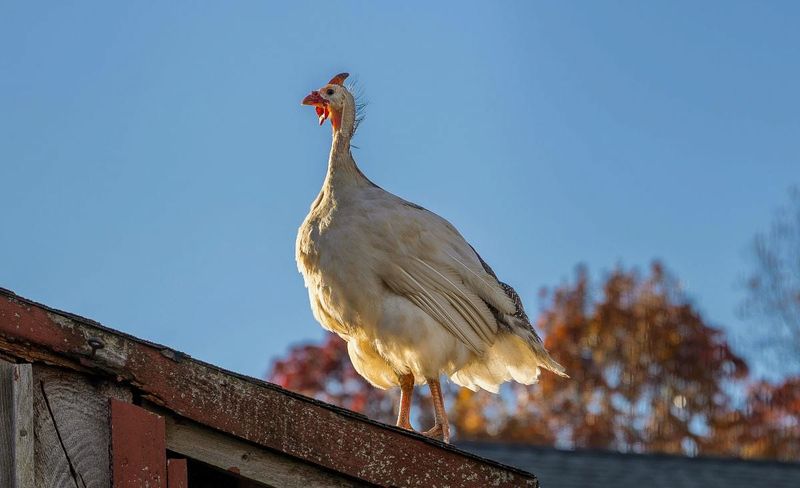
Guinea fowl have a reputation for being loud, and that reputation is earned.
When something disturbs the flock, whether it is a hawk overhead, a passing car, or a neighbor’s dog on the other side of the fence, the alarm calls carry.
Extension guidance on raising guinea fowl describes them as more prone to alarm calling than chickens and notes that they retain considerably more wild behavior.
On a half-acre lot with neighbors close by, that is not a minor inconvenience.
It is a daily reality.
The roaming is just as important to understand.
Guinea fowl do not read property lines.
They will cross into the neighbor’s garden, work their way to the edge of the road, and explore wooded edges well beyond your lawn.
Their droppings follow them wherever they go, which can create sanitation concerns in shared spaces and genuine friction with neighbors who did not sign up for the arrangement.
This roaming behavior is also why “right where your family plays” does not describe how guinea fowl actually work.
They forage broadly, following their instincts across a landscape.
They may spend time near the patio on a given afternoon, but they cannot be positioned there or relied upon to concentrate their foraging around family recreation areas.
Before acquiring guinea fowl, check your local zoning ordinance, any nuisance-animal rules in your township or borough, your homeowner-association covenants if applicable, and any county or municipal poultry requirements.
Extension guidance specifically flags zoning as a first step because these birds may range beyond a small property regardless of your best containment efforts.
The real investment here is housing, feed, water, bedding, predator protection, and the time and goodwill it takes to manage a flock that does not stay put.
Keeping Guinea Fowl Requires A Real Poultry Plan
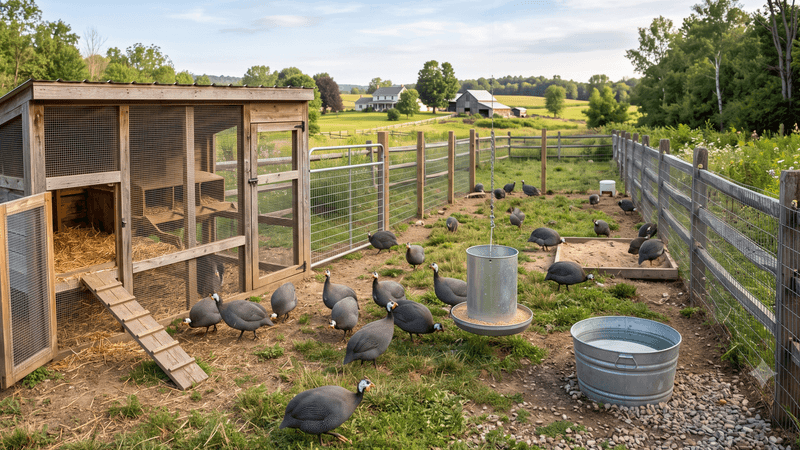
If you have weighed the noise and the roaming and you still want guinea fowl, go in with a real plan rather than a hope that they will figure things out on their own.
Shelter comes first.
The birds need a structure that keeps out wind, rain, cold, sun, and predators.
Pennsylvania winters, especially in the northern tier and across the Allegheny Plateau, are hard on poultry that lack adequate housing.
University of Kentucky and Poultry Extension husbandry guidance recommends approximately 2 to 3 square feet of indoor space per confined adult bird.
That means a flock of 6 birds needs at least 12 to 18 square feet of dry, bedded floor space with perches, clean water, grit, and appropriate poultry feed available.
Crowding leads to stress, pecking, and illness, none of which help your yard or your birds.
Starting from keets, which are guinea fowl chicks, requires more specialized attention.
Brooder temperature should start near 95 degrees Fahrenheit for the first 2 weeks, then drop by 5 degrees each week as the birds feather out.
Dampness is genuinely dangerous during those first 2 weeks.
A wet keet in a cool brooder is a keet that probably will not survive, so dry bedding and good ventilation matter from day one.
Adult birds brought to a new property need time to learn where home is before they are turned loose.
The standard guidance calls for confining new arrivals for roughly 1 to 2 weeks.
After that initial period, release one bird first and wait several days before releasing another, then let the rest follow gradually.
This approach may improve homing and reduce the chance that the flock disappears into a neighbor’s woodlot on day one.
It is practical advice, not a guarantee, and Pennsylvania properties vary enough that results will differ from one yard to the next.
Pennsylvania’s Tick Landscape Is Not One-Size-Fits-All

Pennsylvania has a genuinely complicated tick problem.
Penn State Extension’s tick guidance confirms that black-legged ticks, the species most associated with Lyme disease transmission, occur in all 67 Pennsylvania counties.
That is a statewide concern, not a regional one.
But black-legged ticks are not the only species in the yard.
American dog ticks are common in tall grass and brushy areas and use a different set of hosts than black-legged ticks do.
Lone star ticks, which were the focus of the 2024 guinea fowl study, are expanding their range in Pennsylvania and favor woodland edges and areas with deer activity.
Each species has its own habitat preferences, host associations, and seasonal patterns, so a single control approach rarely addresses all of them equally.
Penn State Extension’s broader tick resource identifies white-footed mice as critical hosts for immature black-legged ticks.
Larval and nymphal ticks feed on these mice, picking up the Lyme disease bacterium in the process.
Deer transport adult black-legged ticks across the landscape and help sustain tick populations, though deer themselves do not carry the Lyme bacterium.
Managing deer access and reducing rodent harborage around a yard addresses the actual reservoir in a way that a flock of guinea fowl cannot.
Regional conditions across Pennsylvania add another layer of variation.
Tick pressure, vegetation density, winter severity, and host availability differ between the Poconos, the Laurel Highlands, the Susquehanna Valley, and southeastern Pennsylvania near the Delaware Valley.
A flock that works reasonably well on a rural property with open pasture in central Pennsylvania may be a poor fit for a quarter-acre suburban lot in Chester County.
No statewide promise about flock size, timing, or results holds across all of those landscapes.
Use Layered Tick Prevention Around The Patio

Whether or not you keep guinea fowl, the measures that actually move the needle on tick exposure around a patio are practical, well-documented, and available to every Pennsylvania homeowner right now.
Start with the landscape itself.
CDC tick prevention guidance recommends removing leaf litter, clearing tall grass and brush around the yard’s edges, mowing regularly, and keeping patios and play equipment away from wooded or brushy borders.
A 3-foot-wide wood-chip or gravel barrier between your lawn and any woodland edge creates a drier, hotter zone that ticks are reluctant to cross.
Personal protection adds a second layer.
EPA-registered repellents applied to exposed skin, clothing treated with 0.5% permethrin, and a full-body tick check after any time spent outdoors address the exposure that landscape work alone cannot eliminate.
CDC Lyme prevention guidance recommends prompt tick removal as a critical step because the longer an infected tick feeds, the higher the transmission risk.
A tick found and removed within a few hours is far less dangerous than one found the next morning.
Dogs bring ticks into the yard and into the house more reliably than almost any other route.
Veterinary tick prevention for dogs is not optional if you want to genuinely reduce the ticks that make it inside.
Your vet can recommend a product appropriate for your dog’s size and health.
The CDC Tick Management Handbook covers all of these approaches in detail and explains the evidence behind each one.
Guinea fowl may be entertaining birds to watch move through a yard, scratching and calling and covering ground.
But a gravel barrier, a permethrin-treated pair of pants, and a nightly tick check will do more for your family’s safety than any flock.
The birds are a supplement at best, not a system.