
These Native Texas Groundcovers Smother Weeds Better Than The Mulch You Rebuy Every Year
Follow us on Google
You step outside before breakfast and the patio already feels warm, a soft warning that another Texas summer is loading up.
Down in the flower beds you spot them, the same stubborn weeds pushing through mulch you spread just a few months ago.
It happens every single year, and every single year you buy more bags and spend another weekend hauling and spreading.
But there is a way off that treadmill, and it grows roots.
These native groundcovers work like a living blanket, choking out weeds while they thrive in our heat, saving your water bill and your Saturdays.
1. The Secret To A Living Mulch That Works Year After Year
Many Texas homeowners fight the same yearly battle.
You spread a fresh, dark layer of mulch, feel proud for a month, then watch weeds sneak right back through by midsummer.
Here is the plain truth.
Wood chips and shredded bark break down and disappear, so you buy and haul more every spring.
A living mulch does the opposite.
These groundcovers spread across the soil and form a dense mat of leaves that blocks sunlight from reaching weed seeds.
No light means no sprouting.
And unlike bark that thins out, the plants grow thicker and better each season, becoming a permanent part of your landscape.
They hold moisture in the soil and grip the dirt on slopes far better than a two inch layer of chips.
What actually helps is that these are Texas natives.
They already know how to handle triple-digit heat, long dry stretches, and those sudden downpours that flood a bed in twenty minutes.
From the caliche of West Texas to the humid shade of East Texas, there is a native that fits.
You end up with a green carpet that smothers weeds, feeds pollinators, and asks for almost nothing once its roots settle in.
That is a genuinely better trade than another trip to the garden center.
2. Frogfruit Is The Undisputed Champion Of Spreading
Those bare, sunny patches in the yard are basically an open invitation.
Weeds see empty dirt and move right in, and no amount of pulling seems to keep them out.
The quiet hero here is Texas frogfruit, Phyla nodiflora.
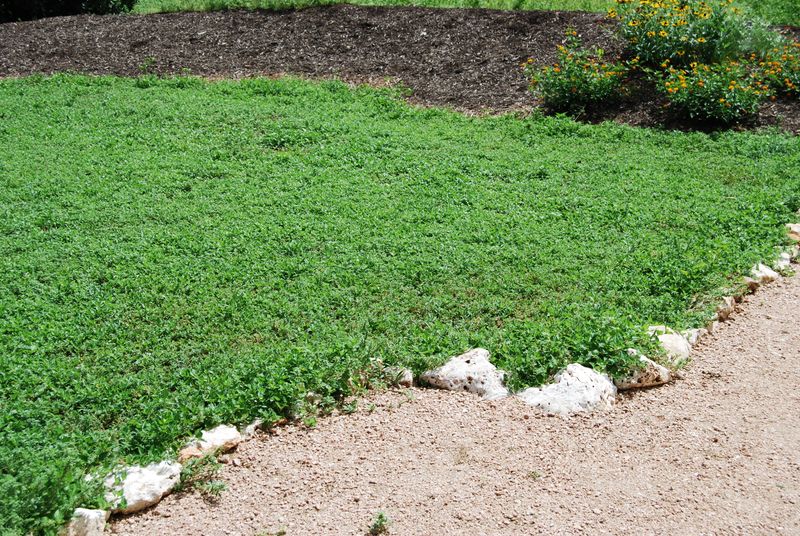
This unassuming native forms an incredibly dense mat, staying just one to three inches tall, though its little white and purple flowers can rise to about six inches.
It spreads by rooting wherever its stems touch the ground, filling large areas fast.
That aggressive habit is exactly why it beats weeds.
Some folks mistake frogfruit for a weed itself, but it simply outruns the competition and crowds them out.
To put it to work, plant starts about 12 inches apart in spring or early fall.
A single plant can spread three to four feet wide, so patience pays off.
It handles full sun to part shade and takes light foot traffic, which makes it a great lawn alternative or filler between stepping stones.
Once established, it shrugs off long, dry Central Texas summers and stays green.
The tiny blooms also feed butterflies and bees, so your weed cover doubles as a pollinator stop.
You get less weeding and more wings dancing over the yard, which feels like a genuine win.
3. Horseherb Offers A Green Carpet Even In The Deepest Shade
Shade is where most lawns go to die.
Under a mature live oak the grass thins, browns, and finally gives up, leaving dusty bare soil and a parade of opportunistic weeds.
But horseherb, Calyptocarpus vialis, actually laughs at that problem.
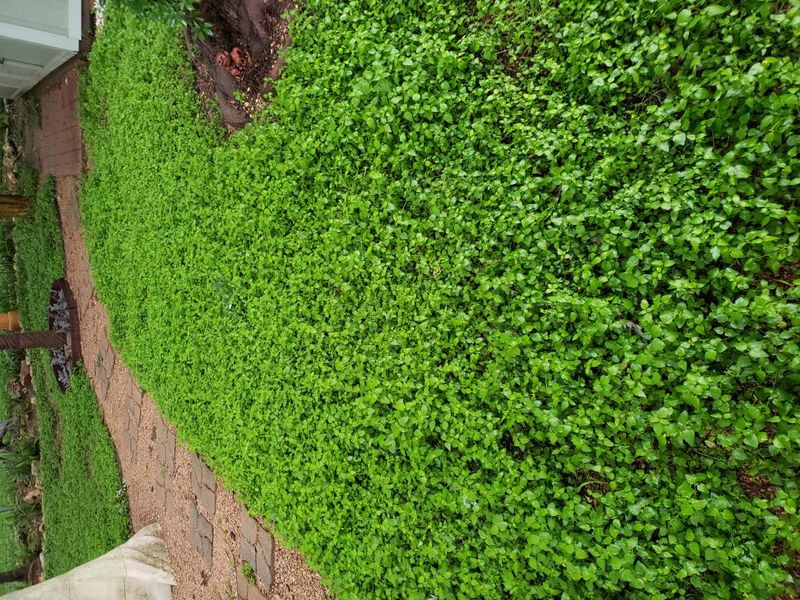
It builds a soft, mat-like carpet exactly where turfgrass fails, filling the deepest shadows with low green growth.
Its trailing stems root as they spread, so it colonizes an area and leaves weeds no room to settle.
Adaptability is its trick.
Horseherb takes deep shade, tolerates some sun, and handles moderate foot traffic, which makes it useful all over the yard.
It grows in the blackland clay of North Texas and the acidic sands of East Texas without complaint.
During mild winters it stays semi-evergreen, holding color when the rest of the bed looks tired.
In a hard freeze or a long drought it may go dormant, then bounce right back when conditions ease.
Space plants about eight to ten inches apart and water them in for the first season, then mostly leave them alone.
No more staring at that barren spot under the tree, just a green, cool patch that finally looks alive.
4. Turk’s Cap Brings Color And Cover To Tricky Spots
Sometimes covering the ground is not enough.
You want a spot to smother weeds and hand you color, and it feels like you have to pick one or the other.
Not in a Texas garden.
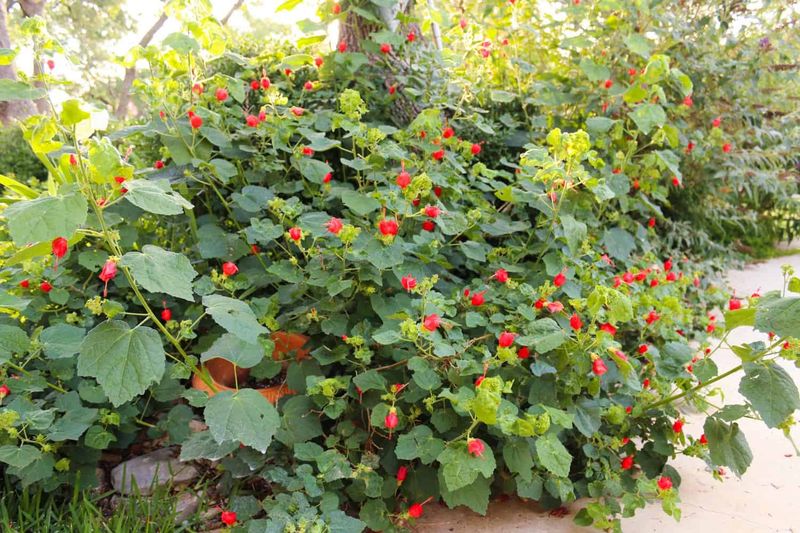
Turk’s cap, Malvaviscus arboreus var. drummondii, does both jobs at once.
It often grows as a medium shrub, but in shaded and partly shaded beds it spreads low and wide, working as a dense groundcover that blocks weeds while it blooms.
Those red flowers are the fun part.
They twist shut and never fully open, and they pour out from spring through fall.
Hummingbirds cannot resist the tubular blooms, so the plant turns a dull corner into a busy little flight path.
Toughness comes standard.
Turk’s cap handles heat and drought once settled, grows in the heavy clay of North Texas, and takes anything from full sun to heavy shade.
It drops its leaves after a cold snap below the mid-20s, but the roots survive and it returns in spring thicker than before.
Plant it two to three feet apart to let it knit into a spreading colony.
You get fewer weeds and a dazzling show in the exact spots that usually stump you, which is genuinely satisfying to walk past.
5. Texas Sedge Provides A Soft Texture Without The Mower
You have probably poured hours into coaxing turfgrass to grow in a dry, shady spot, only to watch it thin out and quit.
The patchy result becomes a weed nursery, and the whole cycle repeats.
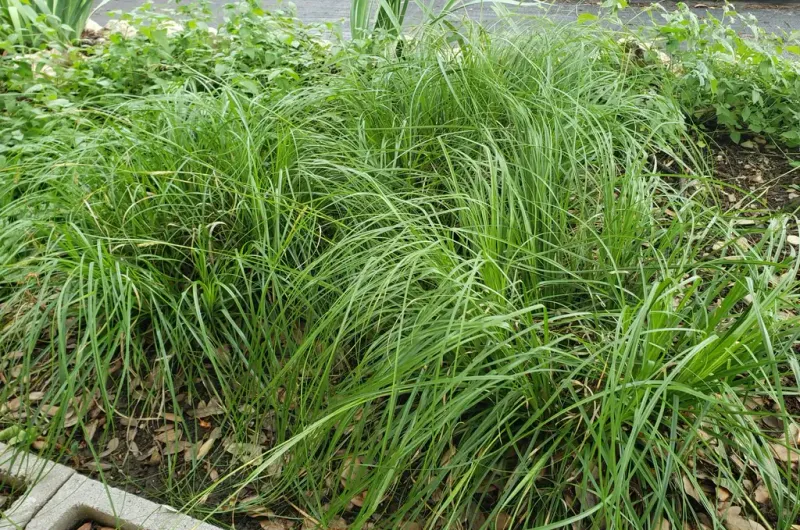
Texas sedge, Carex texensis, offers a way out.
It looks like grass but belongs to its own family, and it forms a fine, flowing mat up to about one foot tall.
It spreads by rhizomes, the underground stems that let it colonize an area, and that density is what starves out weeds by grabbing the light and water first.
Dry shade is its sweet spot, and it is genuinely heat tolerant.
It settles into sandy woodlands and heavier loams across much of Texas without fuss.
Here is the part that wins over busy folks.
You can trim it once or twice a year on a high setting if you want it tidy, but it needs no regular mowing at all.
That hands you back weekend hours you never expected.
Deer usually walk right past it, too.
Picture a soft carpet that sways in the breeze and asks for almost nothing.
That is a landscape working for you instead of the other way around.
6. Silver Ponyfoot Shimmers In The Toughest West Texas Sun
Out in West Texas and the Hill Country, the sun and the shallow, alkaline soil can make gardening feel like a losing bet.
When afternoons push past 100 degrees Fahrenheit and rain stays away for weeks, most plants just scorch and quit.
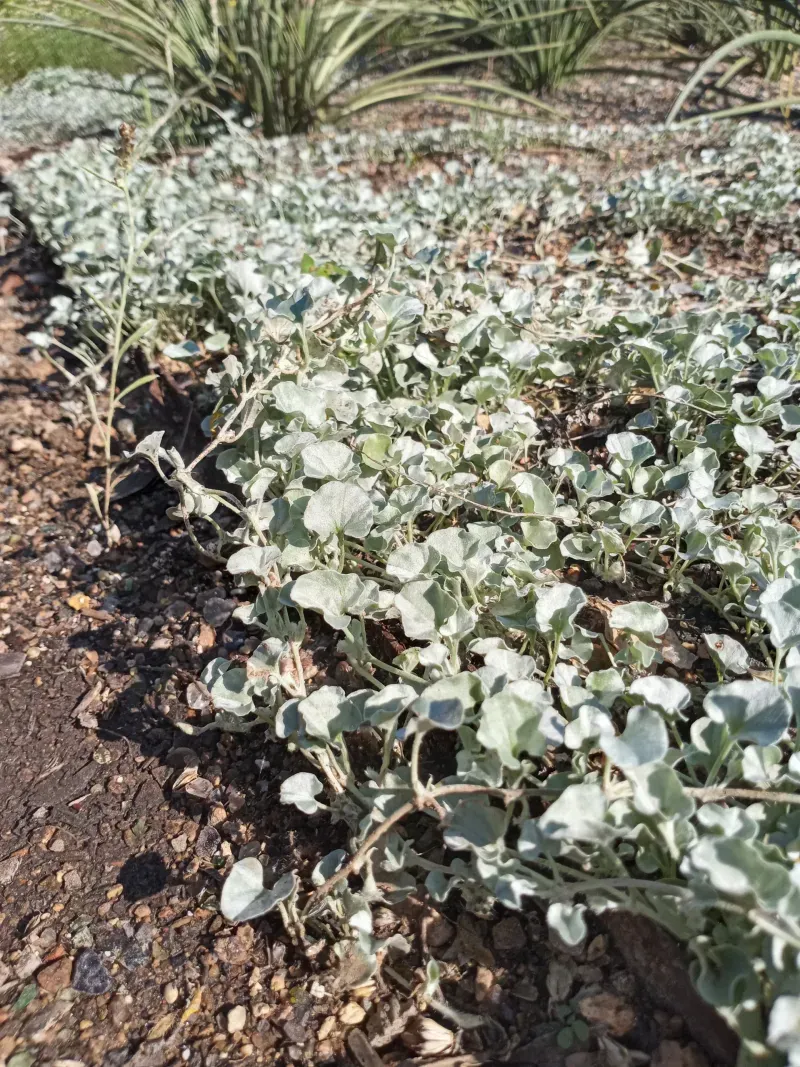
Silver ponyfoot, Dichondra argentea, was built for exactly that punishment.
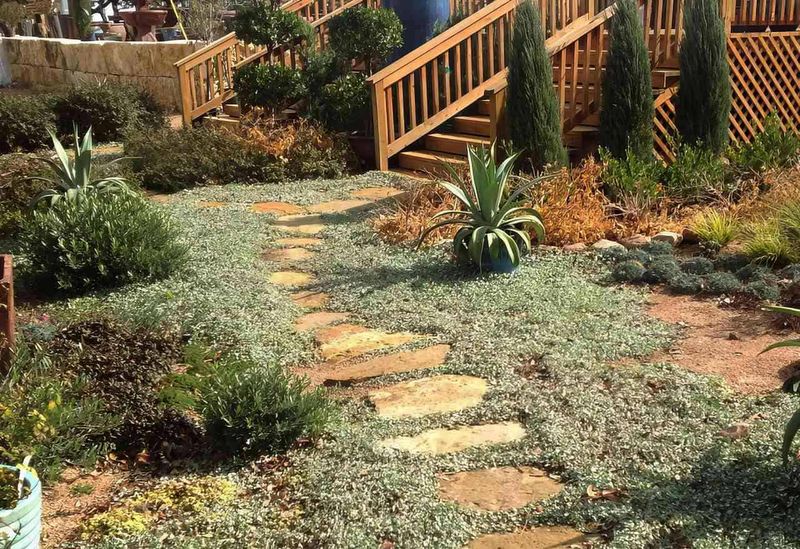
This low, spreading perennial wears soft, silvery leaves that genuinely shimmer in hard sunlight, giving a hot bed a cool, calm look.
It forms a tight mat that fills open ground and shuts the door on weeds before they start.
Being native to West Texas, it takes extreme heat and long dry stretches in stride.
Once its roots are down, it needs very little from you, thriving in full sun to part shade and settling happily into thin limestone soil and caliche.
It also grips slopes well, so it doubles as erosion control where water runs off fast after a downpour.
Tuck it along a path, between stepping stones, or across a wide bank that bakes all day.
Space plants about twelve inches apart and water them in through the first summer.
After that, you have a silver ribbon that holds soil, blocks weeds, and looks striking in the harshest corner of your yard.
7. Prepping Your Plot For Permanent Weed Protection
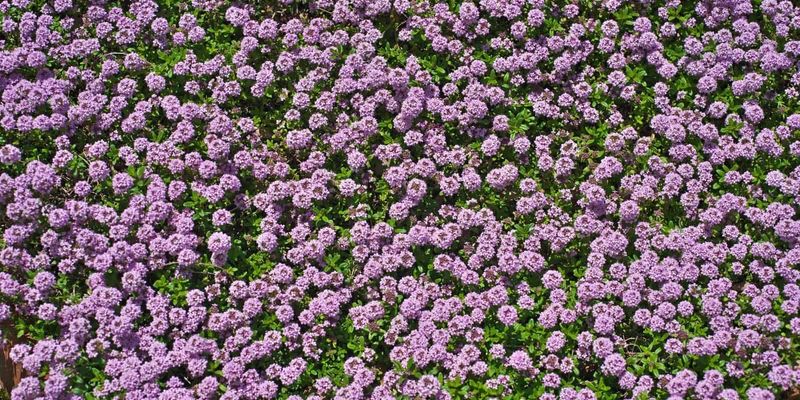
A weed-free, low-work bed is real, but it starts with a little planning and honest effort.
Plenty of folks rush the planting, expect instant magic, then feel defeated when weeds creep back within months.
Here is where it gets tricky, and it matters most.
Good soil prep is the true foundation for a living mulch that lasts.
First, clear out existing weeds and debris so nothing gets a head start.
Then loosen the soil to a depth of about 12 inches so new roots can dig in fast and deep.
Next, work in organic matter.
Mix quality compost or aged manure at roughly 25 percent by volume into the top layer.
That improves drainage and feeds your natives while they establish.
Spacing decides how quickly the bed fills.
For many of these groundcovers, planting around 2.25 plants per square foot, which is about eight inches apart, closes the gaps faster and shuts out weeds sooner.
Frogfruit and silver ponyfoot spread wider, so you can stretch to twelve inches with those.
After planting, water deeply once or twice a week through the first season, adjusting for rain.
Texas A&M AgriLife Extension recommends steady early watering to build strong roots.
Do this and you are installing a living defense, not a chore.
Your yard becomes a small, tough ecosystem that runs mostly on its own, and you get to feel a little proud every time you walk past it.