
If You Spot This Fuzzy Little Bug In Pennsylvania, Do Not Touch It With Bare Hands
Follow us on Google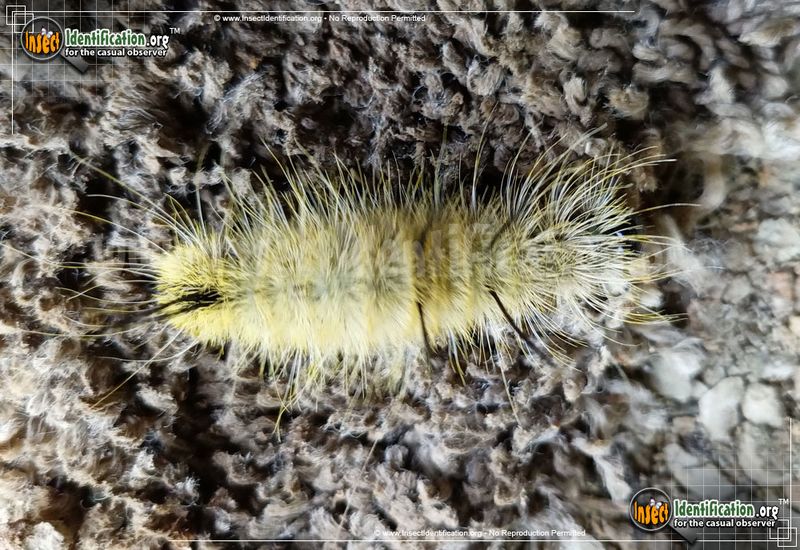
You reach down to move a leaf off the porch steps and something soft and pale catches your eye.
It looks almost cuddly sitting there, the kind of thing a kid would want to pick up.
But some of Pennsylvania’s fuzziest caterpillars carry defensive spines or detachable hairs that can sting, rash, and irritate skin on contact.
The rule is simple: do not touch an unidentified fuzzy caterpillar with bare hands.
The Headline May Point to a Puss Caterpillar
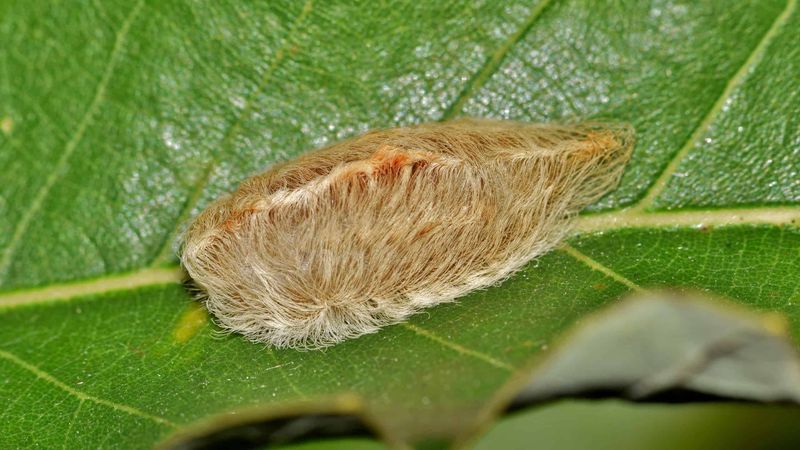
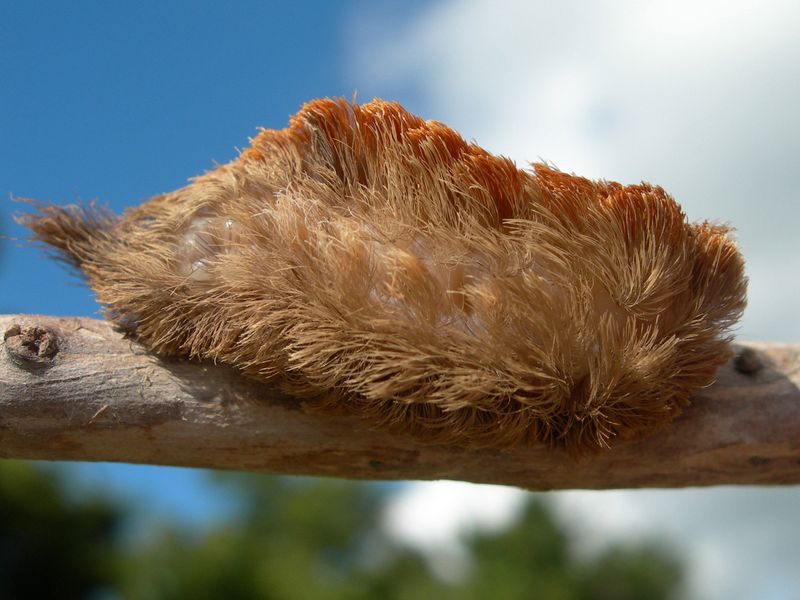
One fuzzy caterpillar that may explain headlines like this one is the puss caterpillar, also called the asp or southern flannel moth larva, Megalopyge opercularis.
It is compact, pale, and looks almost exactly like a small tuft of pet fur resting on a leaf.
That appearance is the trap.
Beneath the longer, soft setae lies a layer of hollow venomous spines connected to venom glands, and pressing against them is how exposure happens.
Size gives you one clue if you ever spot this caterpillar without touching it.
Mature larvae reach about 3.5 centimeters, roughly 1.4 inches, in body length, and about 4 centimeters, or 1.6 inches, when you include the tail.
The University of Florida IFAS species profile for Megalopyge opercularis documents the recorded range as beginning in New Jersey and extending south to Florida and west to Arkansas and Texas.
That range places the species in geographic proximity to parts of Pennsylvania, particularly areas closer to the New Jersey border in the southeast.
But proximity to the range edge is not the same as a common statewide presence.
The same authoritative profile does not establish that puss caterpillars are abundant across Pennsylvania, and appearance alone cannot confirm that any particular fuzzy caterpillar you find in your yard is this species.
The practical takeaway is this: the headline is a fair warning about a real risk, but it cannot serve as a field identification guide.
Pennsylvania has several fuzzy caterpillars, and the safest move with any unknown species is to leave it alone and keep your hands away until you know what you are looking at.
A Common Pennsylvania Caterpillar Can Irritate Skin
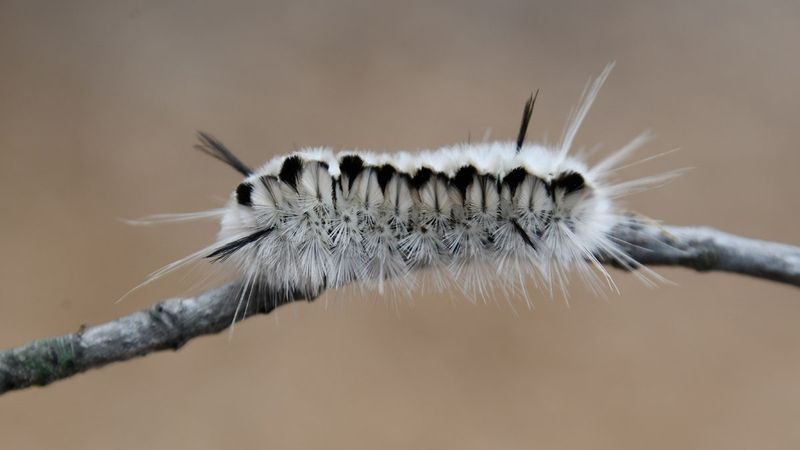
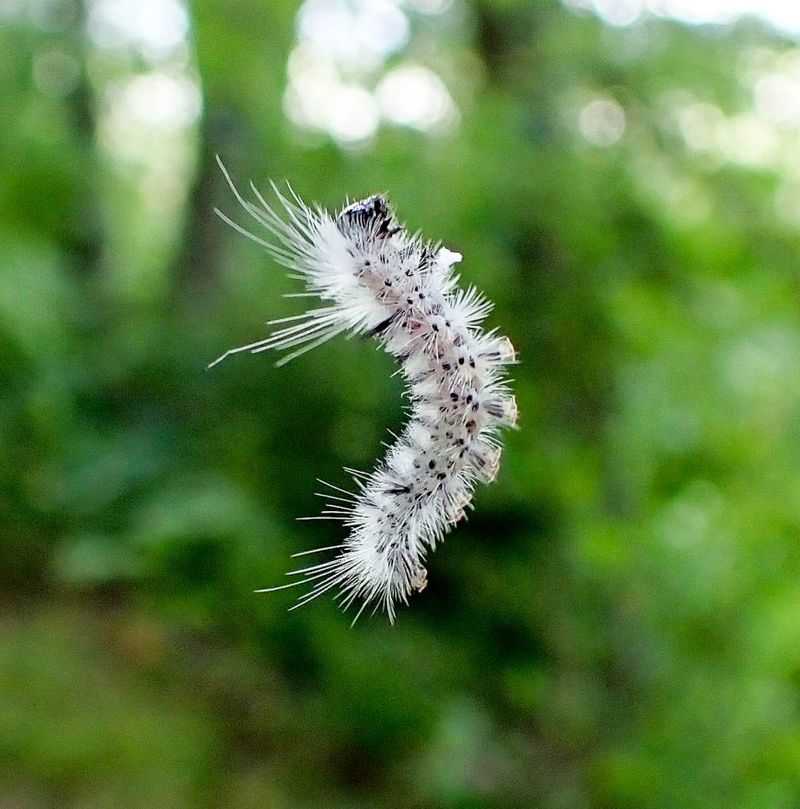
Walk through almost any Pennsylvania yard or park from July through September and you have a reasonable chance of crossing paths with the hickory tussock moth caterpillar, Lophocampa caryae.
Penn State Extension describes it as a common Pennsylvania caterpillar, white and black with a noticeably fuzzy coat, and it can grow to about 1.7 inches by the time it is fully mature.
Unlike the puss caterpillar’s venomous spines, this one’s defense is mechanical.
Its hairs are detachable, meaning they break free on contact and can embed themselves in skin, eyes, or mucous membranes.
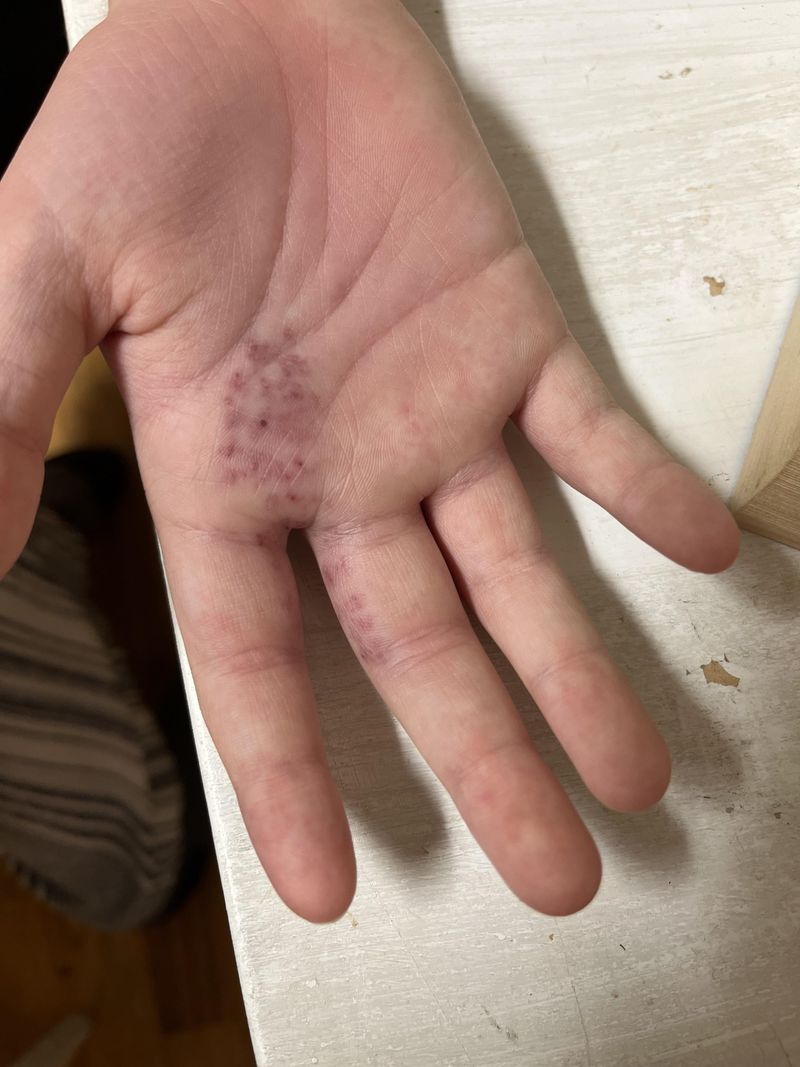
The typical result is a localized rash and itching rather than the immediate, intense burning pain associated with puss caterpillar exposure.
That distinction matters when you are deciding how seriously to treat an exposure.
Penn State Extension’s hickory tussock moth caterpillar page cites a southwestern Pennsylvania exposure study finding that children accounted for 80 percent of reported exposures, with most happening through direct skin contact.
That number should land with any parent or grandparent who has watched a curious child crouch down to inspect something fuzzy on a fence post or a low branch.
Cocoons are part of the picture too.
Hickory tussock moths incorporate their defensive hairs into the cocoon structure, so the risk does not disappear once the caterpillar is gone.
During fall cleanup in the central valleys or along wooded edges in the Poconos, cocoons tucked into bark crevices or leaf litter can still cause the same localized irritation if handled without care.
Keep children and pets away from fuzzy cocoons just as you would from the caterpillar itself.
Fuzzy Fur Can Hide Defensive Spines and Hairs
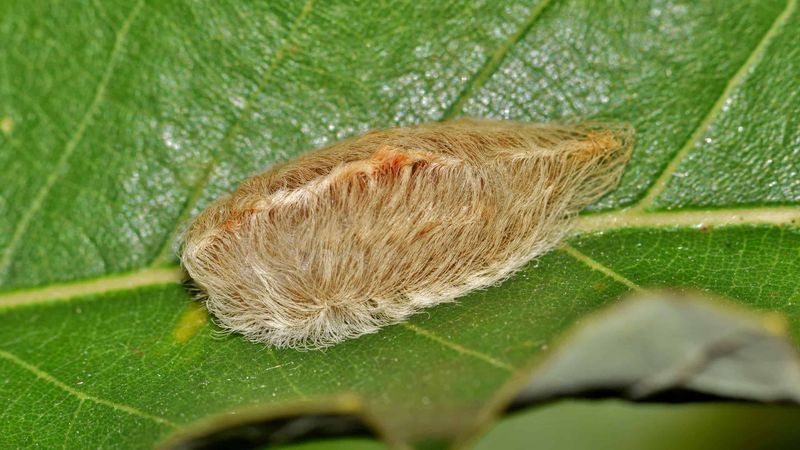
Soft-looking does not mean safe.
A caterpillar’s fuzzy coat evolved as camouflage and protection, not as a signal of harmlessness.
The two Pennsylvania species most worth knowing about use their defenses in genuinely different ways, and understanding that difference helps you respond correctly after an exposure.
The puss caterpillar’s longer setae look like fur, but the shorter hollow spines underneath connect directly to venom glands.
When you press against the caterpillar, brush it while moving through foliage, or accidentally crush it, those spines can drive venom into skin.
Poison Control’s guidance on caterpillar stings describes possible symptoms including immediate burning pain, a grid-like red rash that mirrors the spine pattern, swelling, headache, and nausea.
In some cases, more widespread systemic symptoms can follow, though reactions vary significantly from person to person.
Hickory tussock hairs work differently.
They are not connected to venom glands.
Instead, they detach on contact and mechanically embed in skin or mucous membranes, sometimes carrying irritants with them.
Penn State Extension notes that the typical result is localized rash and itching, and no systemic allergic reactions are documented for this species specifically, although unusual responses are always possible in individuals with sensitivities.
Contact does not require picking the caterpillar up.
Brushing against a branch where one is resting, pressing on it accidentally during garden cleanup, or handling a hickory tussock cocoon can all cause exposure.
The University of Florida IFAS profile also notes that puss caterpillar shed skins, called exuviae, may still carry functional spines.
So even an empty-looking skin on a leaf deserves a wide berth.
Leave Any Unidentified Fuzzy Caterpillar Alone
Here is the prevention rule that works across every fuzzy caterpillar species in Pennsylvania: if you cannot identify it with confidence, leave it alone.
That applies to the caterpillar itself, to any fuzzy cocoon attached to bark or a fence post, and to shed skins resting on leaves or garden furniture.
If moving a caterpillar is genuinely necessary, reach for a stick, a garden scoop, or a container with a lid rather than your fingers.
Slide it gently without crushing it.
A crushed caterpillar can release hairs or drive spines into skin just as effectively as a live one can during direct contact.
Poison Control and Penn State Extension both reinforce the tool-over-fingers approach for handling these situations.
Long sleeves and gardening gloves reduce the chance of accidental contact during fall cleanup or pruning, but they are not a reason to handle an unknown species deliberately.
Thin gloves can still allow hairs to penetrate the material, and the goal is distance, not a false sense of protection.
Keep children and pets away from fuzzy caterpillars on low branches, fence rails, porch steps, and garden beds.
Kids in the Laurel Highlands and the northern tier are just as likely to encounter a hickory tussock caterpillar during a late-summer walk as kids anywhere else in the state.
The CDC guidance on protecting yourself from stinging insects supports keeping a safe distance as the first and most reliable line of defense.
The balanced rule is this: not every fuzzy caterpillar is dangerous, but appearance alone cannot tell you which ones are safe, so caution costs nothing.
Use Sticky Tape Before Washing the Area
Contact happened, and now you want to know what actually helps.
Start with sticky tape, not your fingernails and not a rough cloth.
Place a strip of tape over the affected skin, press it down gently, and peel it away.
Repeat with a fresh piece of tape until you have lifted as many hairs or spines as possible.
Poison Control recommends this tape method as the first step after caterpillar hair or spine contact.
After taping, wash the area with mild soap and cool water.
A cold pack wrapped in a thin cloth can reduce discomfort.
If itching or mild swelling lingers, hydrocortisone cream or an oral antihistamine may help when used according to label directions and your own medical situation.
These are options that may ease symptoms, not guaranteed cures, and individual reactions vary.
Penn State Extension adds that fine tweezers may be useful for removing a visible embedded hair, but excessive picking or repeated rubbing can work hairs deeper into the skin and make irritation worse.
Treat the area gently.
A few things to avoid entirely: rubbing the area with a towel, scraping aggressively, applying household bleach or solvents, or squeezing the skin to force hairs out.
None of those approaches are supported by medical guidance, and several can genuinely worsen the irritation or introduce new problems.
The goal is to remove what you can carefully, soothe what remains, and watch how symptoms develop over the next hour or two.
Know When to Call for Medical Help
Most caterpillar exposures in Pennsylvania result in localized rash and itching that ease within a day or two with basic care.
But some reactions go further, and knowing when to get help quickly is the part of this conversation that matters most.
Seek urgent medical care right away if you or someone with you experiences trouble breathing, difficulty swallowing, severe swelling, faintness, widespread symptoms across a large area of skin, extreme pain, or any exposure involving the eyes or mouth.
Swallowed hairs also require immediate attention.
Clinical guidance on caterpillar envenomation confirms that systemic reactions, while not the most common outcome, do occur and require prompt professional evaluation.
If the affected area is badly blistered or symptoms are not improving after several hours of basic care, contact a healthcare provider.
Do not wait for a serious reaction to escalate.
For exposures that are concerning but not immediately life-threatening, Poison Control at 1-800-222-1222 is staffed around the clock by specialists who can assess what happened, ask the right questions, and tell you whether home care is appropriate or whether a visit to urgent care makes more sense.
That number is worth saving in your phone before you need it.
Stay calm, especially when the affected person is a child.
Children exposed to hickory tussock hairs through skin contact most commonly experience localized irritation, not a medical emergency.
Reassure them, follow the first-aid steps, and call Poison Control if anything about the reaction seems unusual or is spreading quickly.
Most Hickory Tussock Sightings Do Not Need Spraying
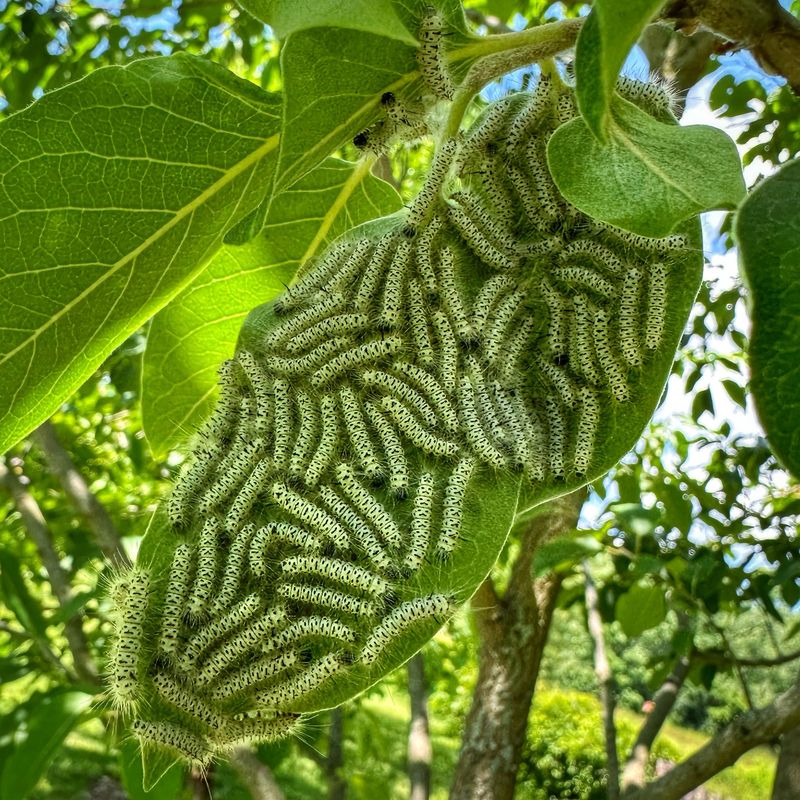
Finding a cluster of hickory tussock caterpillars on a backyard hickory or walnut in August feels alarming, but the tree is almost certainly going to be fine.
These are native caterpillars, and they feed late in the season when deciduous trees across Pennsylvania are already beginning to slow down and prepare for leaf drop.
Penn State Extension says that late-season feeding by hickory tussock caterpillars generally does not cause lasting tree damage, and control is often unnecessary.
If a small tree is being heavily defoliated or the caterpillars are in a spot where children or pets regularly pass, you have a few practical options.
Pruning out infested leaves or branches and disposing of them carefully, using gloves and a bag, removes the immediate concern without any chemicals.
Moving caterpillars with a tool to a less-trafficked corner of the property is another option.
Submerging them in soapy water is a method Penn State lists for situations where removal is warranted.
For younger caterpillars on smaller trees, generally those under about 15 feet tall, products containing Bacillus thuringiensis kurstaki, commonly called Bt, can be effective and are more selective in what they affect.
Spinosad is another option sometimes listed, but Penn State Extension cautions that spinosad can harm many pollinators and should not be applied to blooming plants or when bees and other beneficial insects are actively visiting.
The word “organic” on a product label does not mean harmless to every living thing in your yard.
Treat it as one layer of a broader decision, not a free pass.
Most of the time, the best yard-management choice with hickory tussock caterpillars is the same as the best safety choice: pause, keep your hands away, and let the season do most of the work for you.