
What It Really Means When Dragonflies Suddenly Take Over Your Florida Yard
Follow us on Google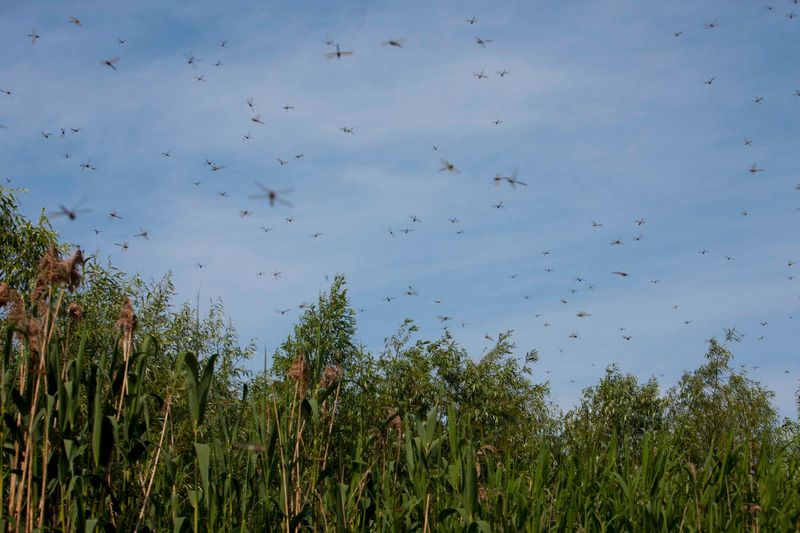
You step onto the patio after breakfast and the air is already thick with wings.
Dozens of dragonflies are cutting loops over the grass, the pool deck, even the driveway, and you have never seen anything like it before.
Something changed, but figuring out exactly what takes a little detective work.
This article walks through what a sudden dragonfly surge actually signals, what it cannot tell you on its own, and what to do next.
The Swarm Does Not Prove You Changed Your Yard
Dozens of dragonflies banking and circling over a Florida yard is one of those sights that stops you mid-step.
The first instinct many homeowners have is that they must have done something right, planted the correct natives, cut back on spraying, or let the pond edge grow in a little.
That feeling is understandable, but the swarm alone cannot confirm it.
What you are watching is a response to a food-and-habitat landscape that is almost certainly bigger than your property line.
It may include a retention pond two blocks away, a drainage canal running behind the neighborhood, a seasonal wetland at the edge of a nearby park, or simply the open sky over a stretch of mowed lawns where small flying insects are easy to spot and catch.
UF/IFAS research on Florida dragonflies and damselflies notes that Florida hosts more than 150 species, and some of them forage in open fields well away from any water.
That kind of diversity makes a single tidy explanation almost impossible to defend.
Florida also receives seasonal southward migration on top of its resident populations.
The swarm overhead could be a wave of migrants passing through rather than a group that hatched anywhere near your fence line.
None of that means your yard is irrelevant.
Habitat choices you make genuinely matter, and the sections below will get specific about which ones have real backing.
The goal here is to read the signal accurately, separating what the evidence actually supports from what feels satisfying but goes a step too far.
Water May Be Nearby, Not In Your Yard
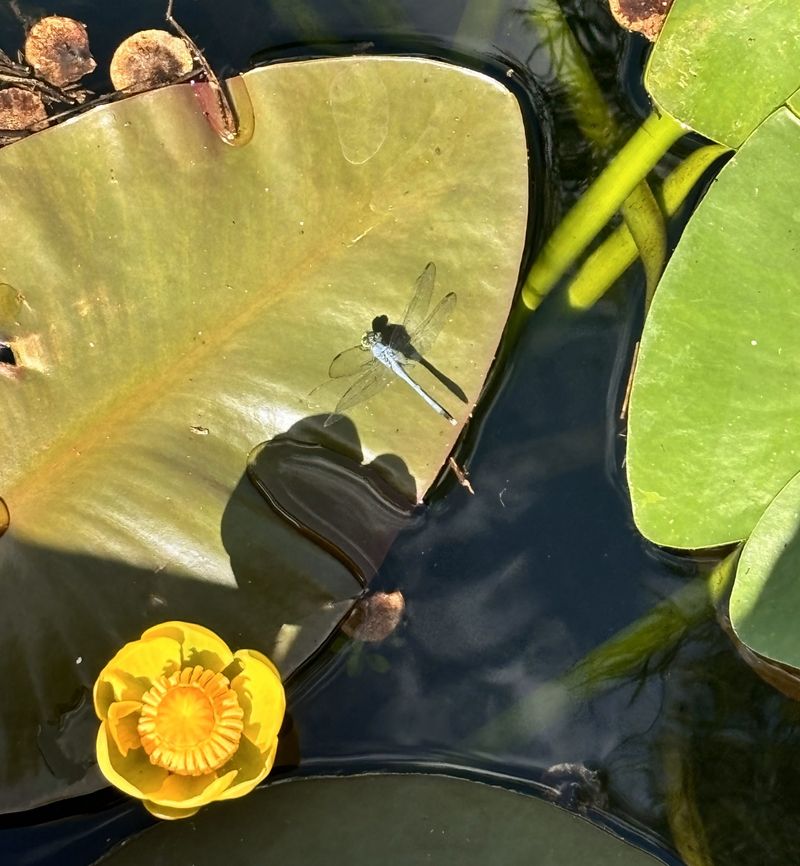
Dragonflies lead a double life, and understanding that split explains a lot about why they show up where they do.
The aquatic stage comes first.
A female lays eggs in or near water, and the nymphs that hatch live underwater, sometimes for as long as two years, before they climb out and take their first flight as adults.
According to UF/IFAS Gardening Solutions, those aquatic nymphs feed on mosquito larvae and a wide range of other small aquatic organisms during that underwater phase.
The adults that eventually emerge are free to fly wherever prey takes them, which can be far from the pond, canal, or wetland where they actually hatched.
That gap between birthplace and hunting ground is the key fact.
Adults over your driveway or pool deck do not mean your yard contains dragonfly nymphs.
The breeding site could be a stormwater pond at the end of the street, a low marshy area behind a shopping center, or a canal running through a neighborhood nearby.
Florida’s landscape is laced with water features of every size, and dragonflies move freely among them.
Connectivity matters too.
Research has found that adult dragonfly abundance in urban areas is associated with how well ponds and wet areas are linked across the landscape, not just whether a single pond exists.
A yard with no standing water can still sit inside a network that supports a large local population.
Adult presence alone cannot identify the breeding location or confirm that a recent yard project caused the arrival.
That is not a reason to feel skeptical of the sighting, it is a reason to look at the broader picture before drawing conclusions.
Weather And Prey Can Bring A Temporary Wave
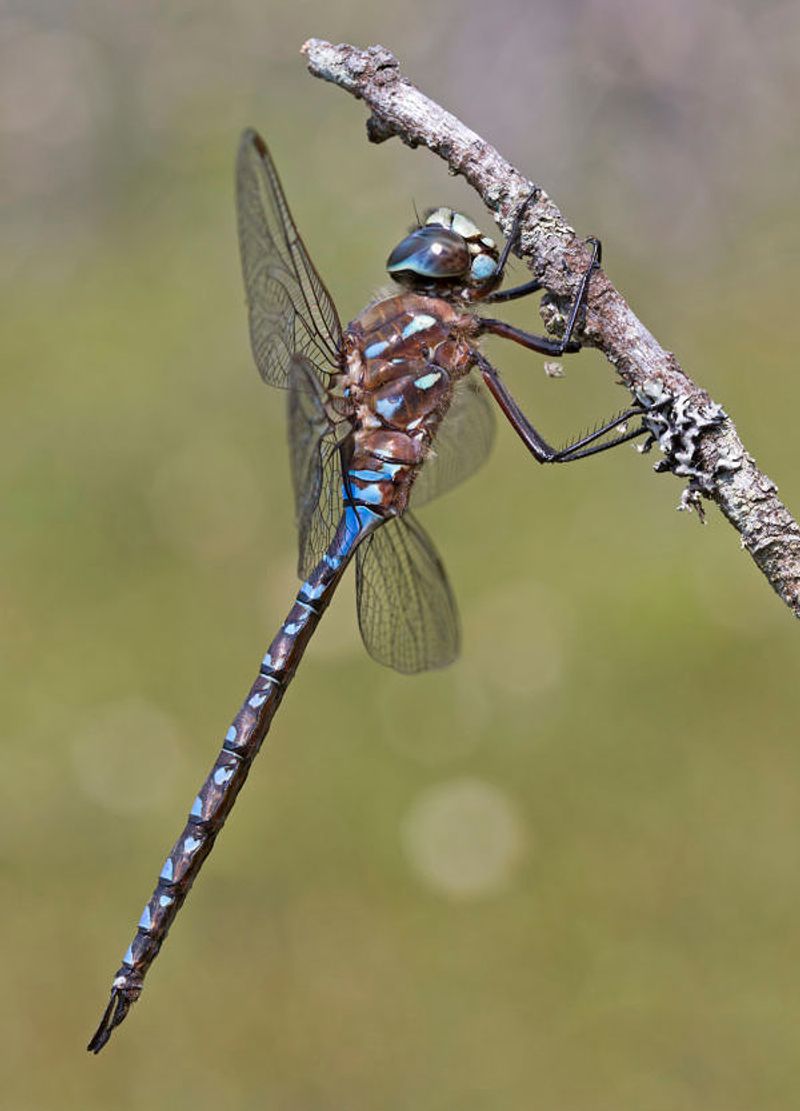
A sudden swarm often has less to do with anything permanent and more to do with what happened in the last 24 hours.
Adult dragonflies are hunters, and they go where the food is.
When small flying insects concentrate in one spot, whether because of a weather shift, a brief hatch of midges or gnats, or a change in wind that pushes prey toward a particular open area, dragonflies follow.
A U.S.
Fish and Wildlife Service habitat conservation plan describes feeding swarms as groups foraging over concentrated prey, with flight height and location shifting as prey availability changes.
Those observations were made for a specific species and region, so they should not be read as a universal Florida rule.
The principle, though, applies broadly: dragonflies track their food supply, and that supply moves.
Light rain is a classic trigger.
A passing afternoon shower, the kind that rolls through Central Florida almost daily in summer, can knock small insects lower to the ground and make them easier targets.
Nearby mowing can do the same thing, flushing insects out of tall grass and into the open air where dragonflies can pick them off.
Florida also receives a seasonal southward migration of dragonflies, described by UF/IFAS as an influx of migrants moving south to breed.
Timing varies with species, resident versus migratory populations, local habitat, and weather, so there is no single statewide schedule to rely on.
If you saw the swarm right after rain, a mowing event, or a shift in wind, that context is a useful clue worth holding onto.
A Swarm Is Not A Breeding Population
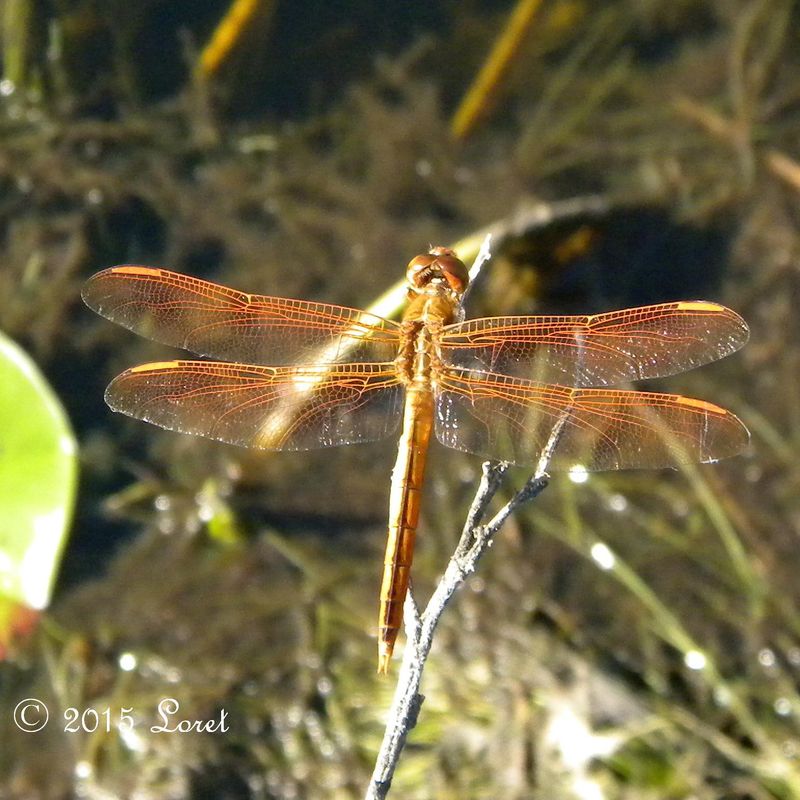
Seeing 50 dragonflies over your pool deck feels permanent, but most feeding swarms are not.
Adults gather temporarily where prey is thick, then scatter when conditions change.
By the next morning, or the next rain, they may be gone entirely, which tells you something important about what you were watching.
A temporary feeding swarm over a lawn, driveway, or pool deck cannot confirm that dragonflies are reproducing anywhere on the property.
UF/IFAS notes that some species forage in open areas far from water, so adult presence is not even a reliable indicator of nearby breeding habitat, let alone proof that your landscaping caused it.
Here is where it gets practical.
Rather than treating the swarm as a verdict, use it as a starting point for a short inspection.
Think back over the past week or two and ask a few specific questions.
Did a low spot in the yard collect water after a storm and sit for more than 4 days?
Are gutters clogged and holding water?
Do any planter saucers, rain barrel overflow areas, or potted plant trays have standing water?
Did a neighbor’s pond recently refill, or did nearby mowing flush a surge of insects into the open?
Also consider pesticide changes.
A reduction in broad-spectrum spraying in recent weeks, whether by you or a neighbor, can allow small flying insect populations to rebound quickly, and dragonflies notice that fast.
None of these observations proves a cause, they help you form a better hypothesis.
The swarm is a question mark, and a careful look at the surrounding conditions is how you start answering it.
Your Yard Can Still Support Better Habitat
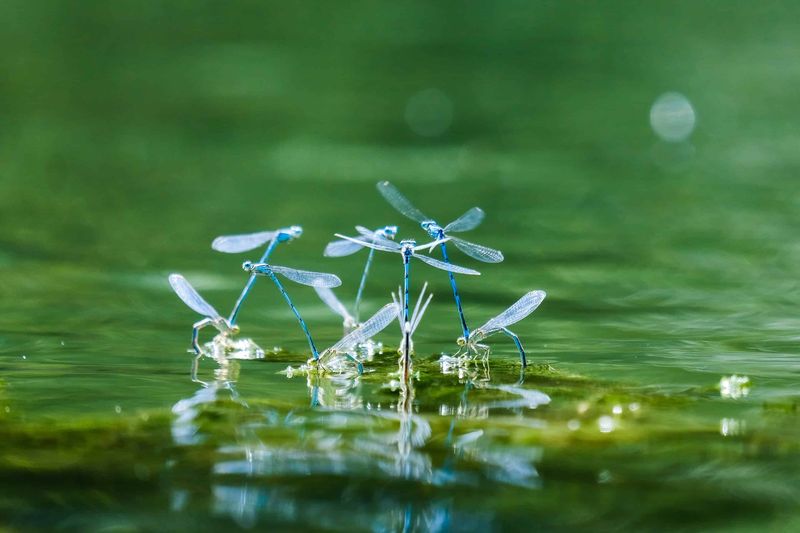
Even with all the caution above, homeowner choices genuinely matter.
The question is which ones have real backing and which ones are wishful thinking dressed up as ecology.
If you already have an ornamental or managed pond, maintaining a narrow band of native shoreline vegetation is one of the most defensible steps you can take.
Florida Fish and Wildlife Conservation Commission guidance on managed pond design recommends this approach for providing fish and wildlife habitat and reducing erosion.
That advice applies to ponds that already exist, not to digging a new one without first checking drainage plans, safety requirements, local permits, and any HOA restrictions that apply to your property.
Reducing unnecessary broad-spectrum pesticide use is another choice with real ecological grounding.
EPA guidance on reducing pesticide impacts on wildlife recommends treating only the specific area that needs it, keeping all pesticides out of water, and applying them only when necessary.
Cutting back on blanket spraying can benefit dragonflies along with many other beneficial insects, but it is not a replacement for managing genuine mosquito or pest problems.
Research has found associations between dragonfly abundance and both water-quality conditions and pond connectivity in specific study settings.
One study found that adult dragonfly abundance was positively related to connectivity among stormwater ponds, while another found that higher chloride and metal concentrations were associated with lower dragonfly abundance in urban pond communities.
These are associations in particular settings, not universal rules you can apply to any Florida yard.
Providing perch structures like upright plant stems, adding native plantings with varied height, and maintaining some open water edges can all make your yard more usable for dragonflies passing through.
Penn State Extension’s guidance on attracting dragonflies to backyard ponds reinforces that suitable vegetation structure and water access matter more than simply adding water volume.
Dragonflies Help, But They Do Not Control Mosquitoes
Dragonflies do genuinely eat mosquitoes.
Both the aquatic nymphs, which consume mosquito larvae underwater, and the flying adults, which catch mosquitoes and other small insects mid-air, make them real predators in the food web.
That is worth appreciating.
But their prey choices are broad, their flight patterns shift with weather and opportunity, and no population of dragonflies can intercept every mosquito that breeds near a property.
UF/IFAS integrated pest management guidance is direct on this point: homeowners should not rely solely on natural predators for protection from mosquito-borne disease, because predators cannot consume every mosquito.
Counting on dragonflies alone leaves real gaps.
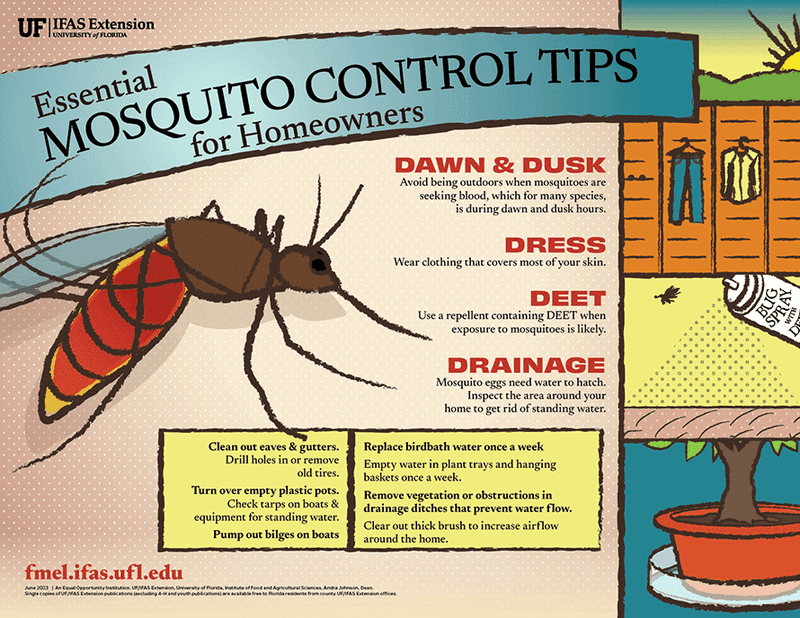
The most reliable first step is removing the water where mosquitoes breed.
CDC guidance on mosquito control at home recommends emptying, scrubbing, turning over, covering, or discarding any water-holding container at least once a week.
In Florida’s summer heat, that timeline tightens.
UF/IFAS advises flushing birdbaths and bromeliads every 3 to 4 days during the warm months, because warm water speeds up mosquito development considerably.
If you have an existing ornamental pond, aeration can reduce standing-water conditions that favor mosquito larvae, and stocking with an appropriate mosquito-eating fish may be an option depending on your site and local rules.
Do not add buckets, saucers, or shallow containers to attract dragonflies.
Those features are far more likely to become mosquito nurseries than reliable dragonfly breeding habitat.
Beyond source reduction, CDC integrated mosquito management guidance describes screens, fans, and correctly used larvicides as potentially appropriate additional layers, selected based on your household’s exposure level, local mosquito pressure, and site conditions.
Not every household needs every layer, but no household should skip source reduction entirely and rely on dragonflies to fill the gap.
Read The Sighting As One Ecological Clue
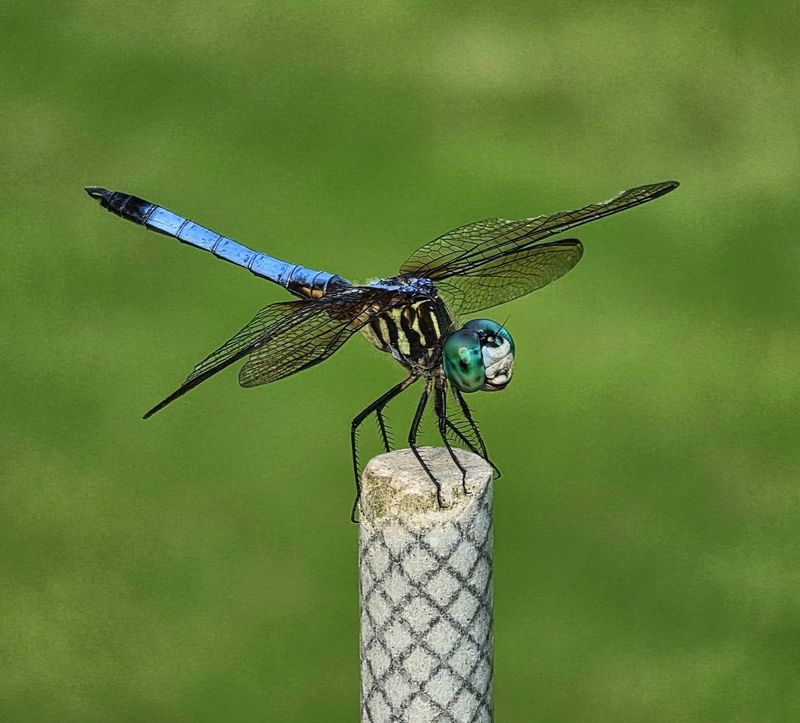
So what does the swarm actually mean.
The most accurate answer is that dragonflies are showing you a snapshot of active relationships among insects, water, weather, and connected habitat, some of which may include your yard and some of which almost certainly extends well beyond it.
A casual adult swarm over a lawn or driveway cannot assess water quality on its own.
That kind of ecological information comes from studying dragonfly species composition and aquatic nymph communities in formal assessments, not from counting adults in the air on a Tuesday morning.
Research on water-quality effects on dragonfly communities supports the idea that species patterns can carry ecological information, while also showing that results vary by setting and cannot be applied universally across Florida.
Treat the sighting as a prompt to observe, not a verdict to celebrate or worry over.
Note how long the swarm lasts, whether it returns the next day or disappears by afternoon, and what the weather did in the 24 hours before it arrived.
Check nearby water features for standing water, look at recent yard and pesticide changes, and keep up with source reduction regardless of how many dragonflies are circling.
UF/IFAS and UF/IFAS Gardening Solutions both support the view that Florida’s dragonfly diversity and habitat connectivity make simple single-cause explanations unreliable.
The swarm is not a report card.
It is a signal that your yard sits inside a living system, and paying attention to that system is the most useful thing you can do with what you saw.
A yard full of dragonflies is genuinely worth noticing, just not worth misreading.