
The Florida Native Vine That Turns A Bare Fence Into A Passionflower Wall Alive With Fritillaries
Follow us on Google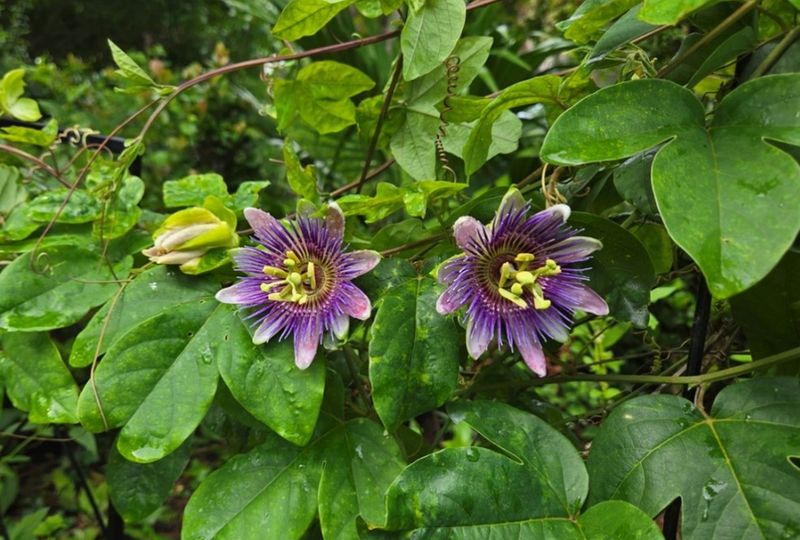
Walk past a bare chain-link fence on a July morning in Florida and you get nothing back, just heat and metal.
Plant purple passionflower along that same fence and, by midsummer, you could be looking at a tangle of hand-sized blooms and orange-and-black caterpillars working the leaves like they own the place.
That vine is Passiflora incarnata, also called maypop, and it is one of the few Florida-native climbers that genuinely earns its spot by feeding butterflies, covering ugly structure, and asking for very little once it settles in.
Getting it right takes some honest expectations and a few practical moves, and that is exactly what this guide covers.
The Best Match Is Purple Passionflower
Purple passionflower, Passiflora incarnata, also called maypop, is the vine that most honestly delivers on the headline’s promise for Florida homeowners.
UF/IFAS Gardening Solutions identifies it as a fast-growing Florida-native perennial that can be trained on a fence, trellis, or arbor, and that serves as a documented larval host for Gulf fritillary, variegated fritillary, and zebra longwing butterflies.
Those are real, verified benefits, not marketing copy.
The flowers themselves are worth the fence space even before a single butterfly shows up.
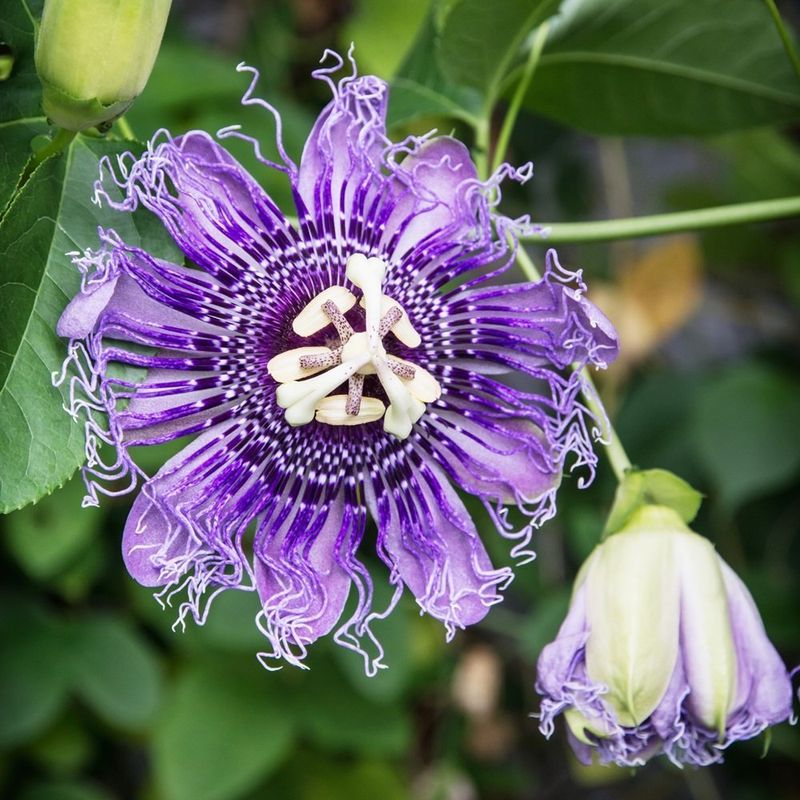
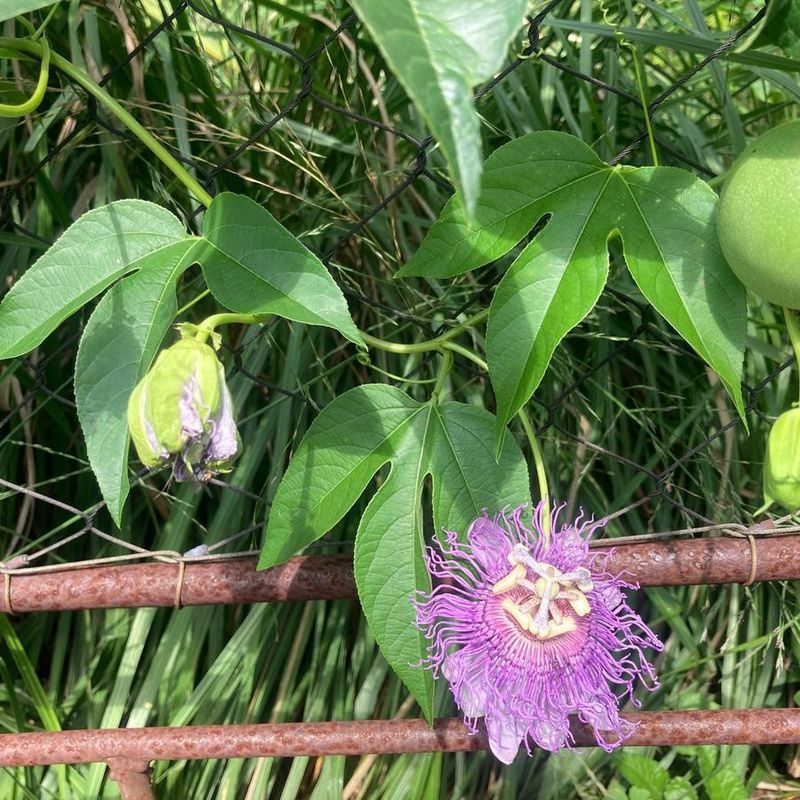
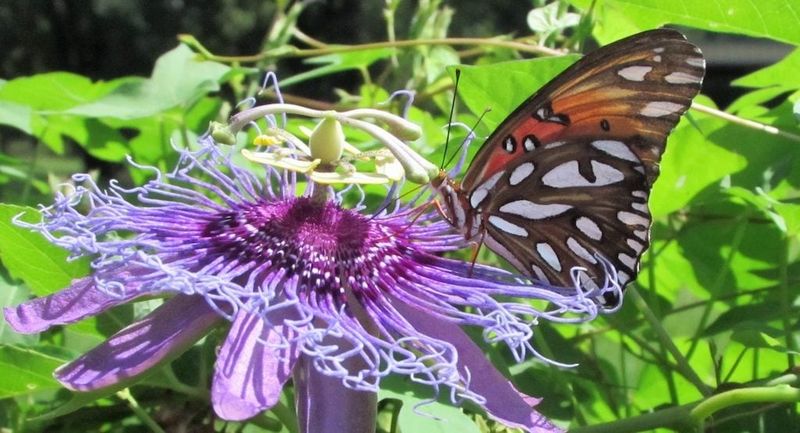
Each bloom stretches 3 to 5 inches across, with pale purple petals ringed by a fringe of wavy purple and white filaments that look almost tropical.
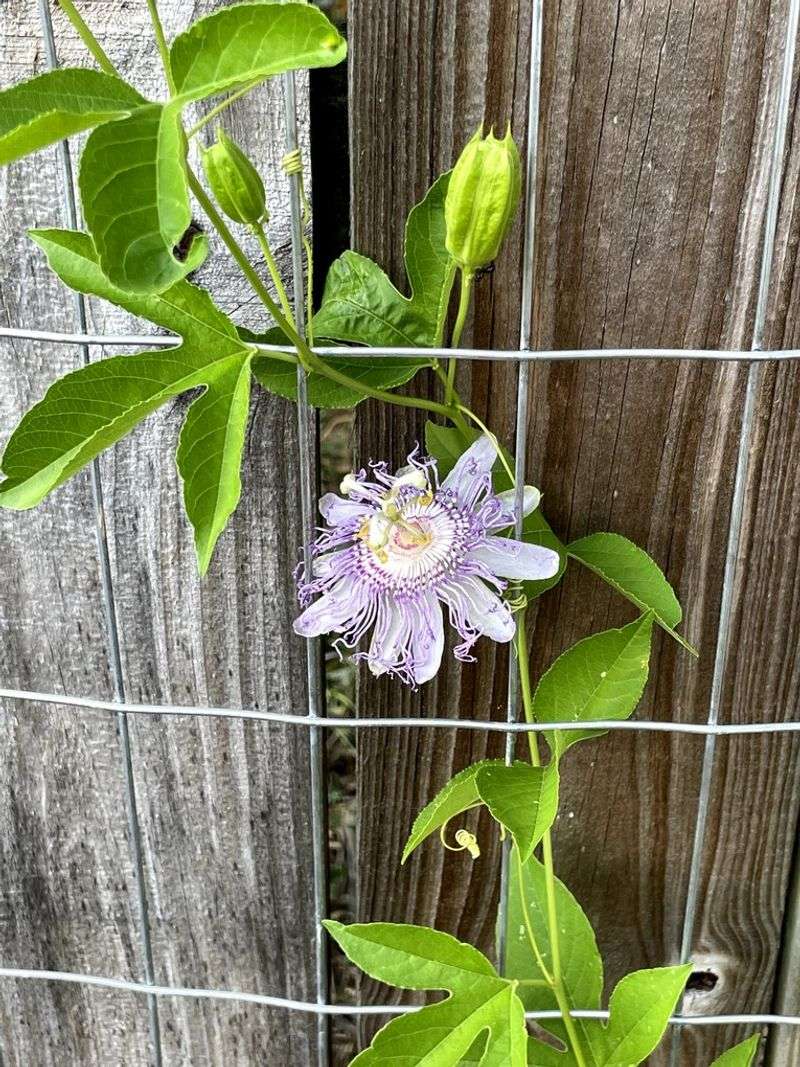
The vine climbs by tendrils, attaches itself to wire, wood, or lattice, and pushes out dense seasonal foliage that softens a bare fence line.
Coverage is seasonal and site-dependent, though, so think of it as a strong possibility rather than a guaranteed wall-to-wall screen.
Before you buy anything at the nursery, check the botanical name on the tag. “Passionflower” can mean several different plants.
UF/IFAS research on passion fruit makes clear that Passiflora edulis, the tropical passion fruit grown commercially, is a separate nonnative species and not a casual substitute for the Florida-native maypop.
The Florida Native Plant Society’s profile of P. incarnata also warns that this vine can spread aggressively through underground rhizomes, so it rewards attentive management, not neglect.
Plan for maintenance from day one and you will get along with it fine.
The Vine Feeds Caterpillars, Not Every Butterfly Need
Here is where a lot of well-meaning garden articles quietly mislead people.
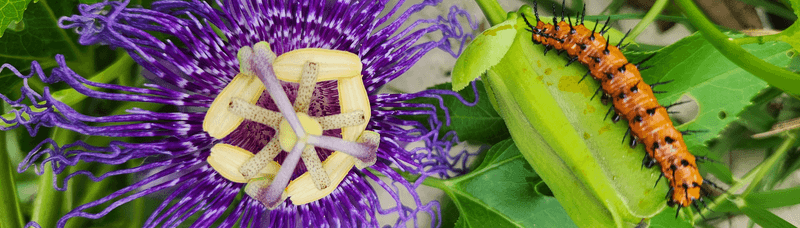
Purple passionflower is a larval host plant, which means it supplies leaves for caterpillars to eat, not nectar for adult butterflies to sip.
Those are two completely different jobs in the butterfly life cycle, and one vine cannot do both at once.
UF/IFAS Community ButterflyScaping guidance draws a clear line between host plants and nectar plants, explaining that a successful butterfly garden needs both.
Passionflower handles the host-plant role well.
Gulf fritillary is probably the butterfly you will see most often associated with it in Florida yards, a striking orange species with silver-spotted underwings that lays eggs directly on the vine.
Variegated fritillary and zebra longwing also use Passiflora species as larval hosts, and which of those three actually visits your fence depends on your location, the season, and what butterfly populations are active nearby.
When the leaves start looking ragged and chewed, that is the system working.
Caterpillars need to eat, and a healthy established vine can handle serious defoliation without permanent damage before the larvae pupate and move on.
Adult butterflies may or may not appear in large numbers at your fence.
Butterflies and Moths of North America documents Gulf fritillary activity across Florida, but presence at any specific yard depends on shelter, nearby nectar sources, weather, and local population levels.
The vine creates the conditions that make butterflies possible, and that is genuinely worth planting for.
Build The Support Before Planting
Many people put the vine in the ground first and worry about the support later.
That is a mistake that costs time and sometimes costs the fence itself.
Dense passionflower foliage acts like a sail in a windstorm, and Florida’s hurricane season runs from June 1 through November 30, so the support needs to be solid before the first tendril grabs hold.
UF/IFAS Extension guidance on Passiflora incarnata specifically recommends a simple but strong fence or trellis, firmly anchored in the ground.
Walk your fence line and check each post.
Wobbly posts, rotted wood at the base, or loose wire panels need to be fixed now, before the vine adds weight and wind resistance.
If you are building a new trellis rather than using an existing fence, set posts at least 18 inches deep in Florida’s sandy soil and brace corner posts against lateral pull.
Spacing matters for both coverage and airflow.
A practical recommendation based on the documented 36- to 60-inch mature plant spread is one plant every 3 to 5 feet along the fence line.
How quickly those plants fill the gap depends on sun exposure, soil quality, available water, and how aggressively you prune.
More sun and well-drained soil generally mean faster growth.
Do not expect a solid green wall in the first season, plan for it in the second or third year and you will not be disappointed.
Getting the structure right from the start means you are not trying to retrofit a stronger fence while a loaded vine is already pulling on it during a July storm.
Choose The Right Florida Site
Florida is not one climate, and purple passionflower does not perform identically from Pensacola to the Keys.
Getting the site right is the single biggest factor in how well the vine covers your fence and how long it stays healthy.
Full sun is the safer recommendation when your goal is abundant flowering.
UF/IFAS Gardening Solutions notes that the vine tolerates some shade, but a fence that gets six or more hours of direct sun daily will produce more flowers and more vigorous growth than a shaded one.
Soil drainage matters just as much.
The plant tolerates sand, loam, clay, acidic soil, and slightly alkaline soil, and it can handle occasional wet feet, but a low spot that stays waterlogged after a downpour is asking for root problems.
Place it where water moves through, not where it sits.
The vine is listed as hardy from USDA Zone 7B through Zone 11, which covers essentially all of Florida.
In the Panhandle and North Florida, temperatures can drop below 28 degrees Fahrenheit in a hard freeze, and the vine may die back to the ground.
It typically returns from the roots in spring, but do not count on evergreen coverage in those regions through a cold winter.
Central Florida gardeners may see stems knocked back by a sharp cold snap, while South Florida yards generally keep more growth year-round.
The UF/IFAS plant fact sheet for P. incarnata also notes moderate salt tolerance, but that does not mean the plant handles direct coastal spray.
On exposed Gulf Coast or Atlantic Coast sites, tuck it behind a windbreak or set it at least 50 feet inland from the waterline.
South Florida is a qualified option: the Florida Native Plant Society confirms P. incarnata can grow there, though its natural range extends only slightly into that region, and shallow limestone-based soils in the Keys may limit performance.
Water During Establishment And Mulch Correctly
A newly planted maypop is not the drought-tough vine it will become in two or three years.
Roots need time to spread into Florida’s sandy soil, and the plant is genuinely vulnerable during that first growing season, especially through a dry spring or a stretch of hot weeks without rain.
UF/IFAS guidance on establishing landscape plants gives a useful benchmark: during the first year after planting, apply 1 to 2 gallons of water when more than approximately two weeks pass without at least one-quarter inch of rain.
That is a general starting point, not a fixed daily schedule.
Sandy soil drains faster than clay and may need more frequent attention, while a spot that catches runoff from a roof or patio may need less.
Check the soil a few inches down before you water, if it still feels moist, wait.
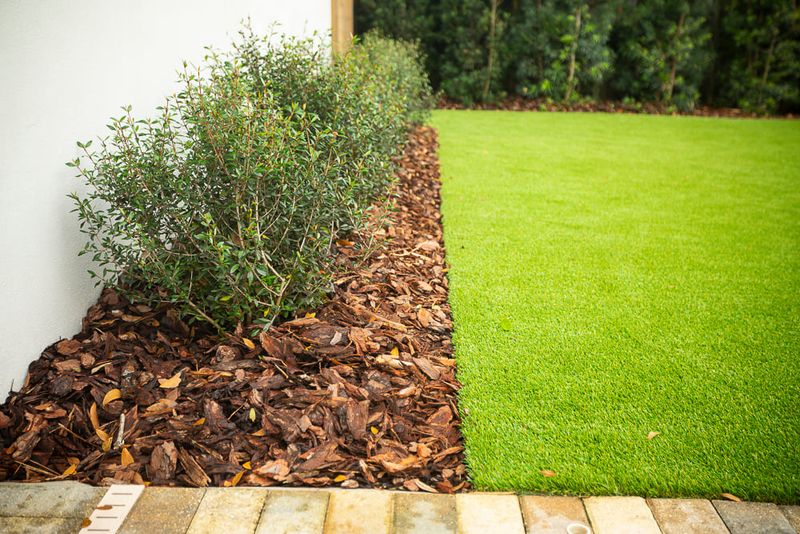
Mulch does two jobs at once: it slows moisture loss between rain events and it keeps weeds from competing with a vine that is still getting established.
Spread a 2- to 3-inch layer of wood chip or pine bark mulch in a ring around the base of the plant.
Keep the mulch from touching the stem itself, because contact there can hold moisture against the bark and invite rot or fungal problems.
UF/IFAS mulching research confirms that layers deeper than 3 inches can reduce soil oxygen and create conditions that stress roots rather than help them.
Once the vine is established and actively climbing, its water needs drop considerably, but do not skip that first-year attention or you risk losing a plant that was perfectly healthy at purchase.
Let Healthy Caterpillars Eat The Leaves
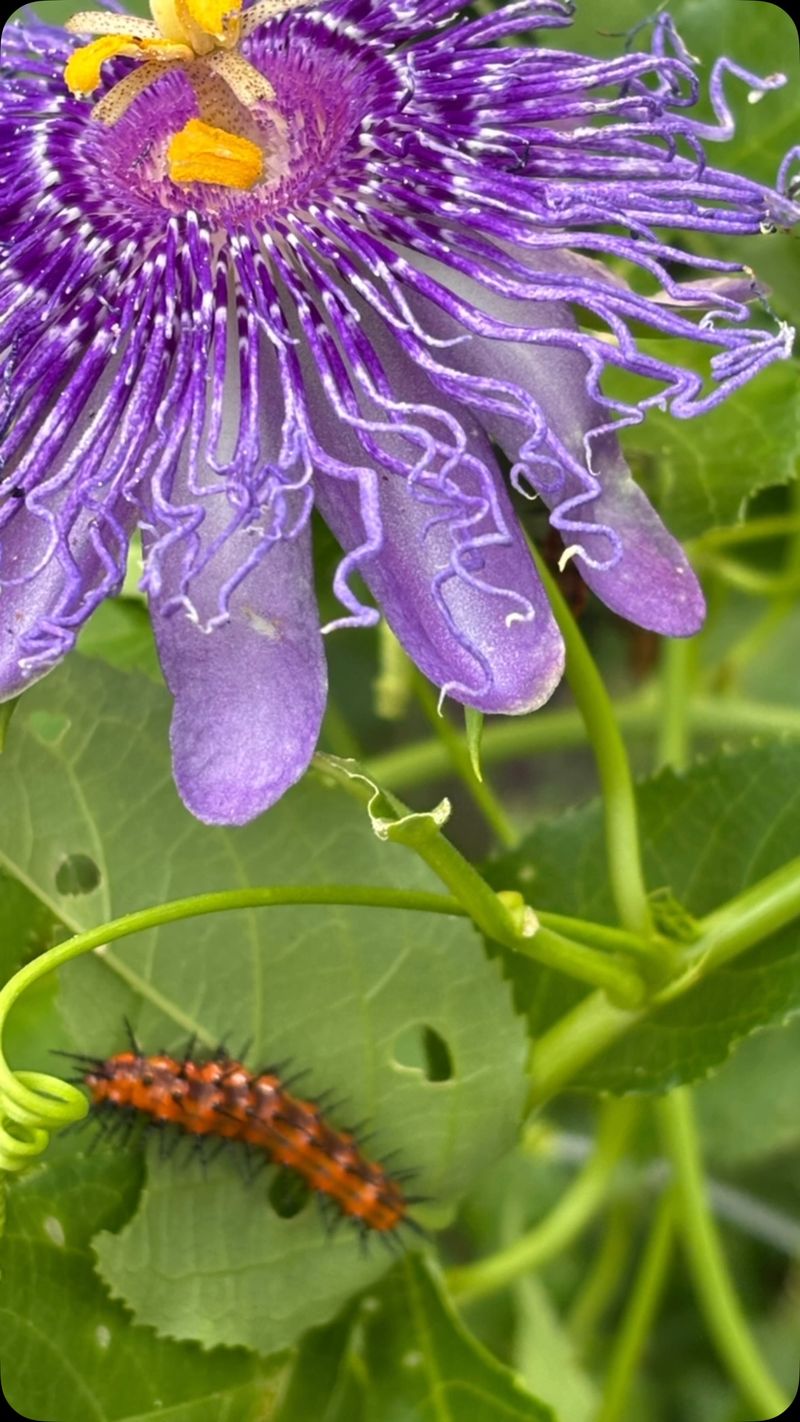
The day you walk out and find your passionflower leaves stripped to stems, the instinct is to reach for a spray bottle.
Resist that instinct.
Those caterpillars are the entire point of the planting.
UF/IFAS edible and ornamental landscape research confirms that butterfly larvae feed on host-plant leaves and typically cause no permanent damage before they pupate and move on.
A healthy, established passionflower vine can be completely stripped and recover within a few weeks, especially in warm months when growth is fast.
The leaves look alarming.
The plant is usually fine.
Give it a week before you conclude there is a real problem.
Spraying is where many butterfly gardens quietly fail.
Broad-spectrum insecticides kill caterpillars without distinguishing the ones you planted for.
Bacillus thuringiensis var. kurstaki, often sold as Bt-k, is specifically lethal to caterpillars, including Gulf fritillary and zebra longwing larvae.
Insecticidal soap and neem-based products can also harm soft-bodied larvae on contact.
UF/IFAS guidance on natural pest products is clear: identify the actual pest before treating anything, and follow the label exactly.
If your vine is declining even without heavy caterpillar pressure, that is worth investigating.
Root-knot nematodes are a documented problem for P. incarnata in Florida’s sandy soils, and sudden wilting or yellowing that does not match feeding patterns may point to a soil issue rather than an insect one.
In those cases, look at drainage, soil condition, and root health before spraying anything at all.
Control The Spread Without Removing The Habitat
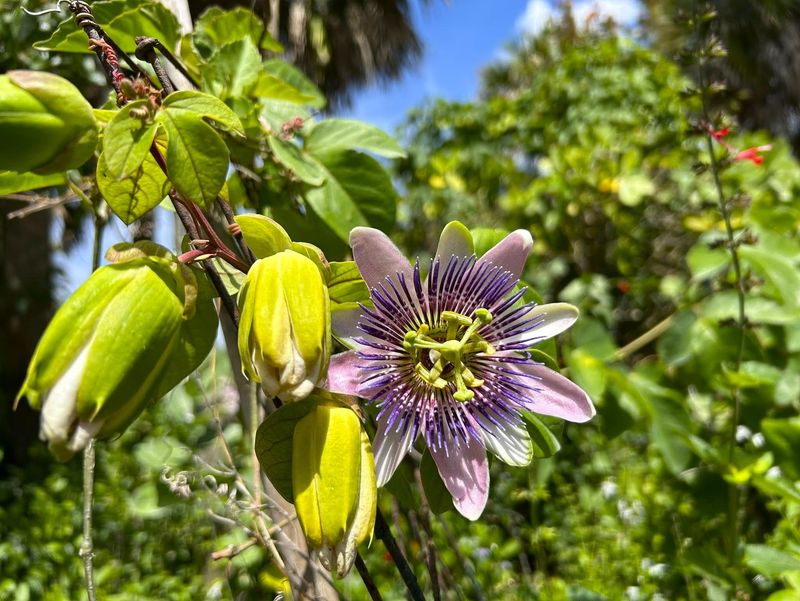
Purple passionflower is a native plant, and native plants still follow their own rules.
This one spreads, sometimes enthusiastically, through shallow underground stoloniferous rhizomes that can push up new shoots a foot or two away from the original planting, especially in loose sandy soil or a freshly mulched bed.
The Florida Native Plant Society’s profile of P. incarnata describes stems that can run 3 to 10 feet long with a scrambling, sprawling habit that goes wherever a surface lets it.
On a fence, that energy is useful.
In the lawn, the vegetable garden, or a neighbor’s yard, it becomes a project.
Walk the fence line every few weeks during the growing season and cut any shoots that are coming up outside the intended area.
A sharp pair of hand pruners and ten minutes of attention every couple of weeks is enough to keep the plant where you want it.
Pruning along the fence itself is a different calculation.
UF/IFAS Extension recommends regular pruning to keep passion vines from growing out of control, but timing matters in a butterfly garden.
If you can see caterpillars actively feeding on a section of vine, leave that section alone until the larvae have moved on to pupate.
Prune the portions that have no caterpillar activity and let the rest finish its job.
You end up with a tidier fence and a complete butterfly life cycle, and that combination is genuinely the goal.
Add Nectar Plants For A Fuller Butterfly Garden
The passionflower fence handles caterpillars.
Adult butterflies need something else entirely: flowers loaded with nectar, positioned close enough to the vine that a newly emerged adult does not have to travel far to feed.
UF/IFAS Community ButterflyScaping resources are consistent on this point: a butterfly-supporting garden needs both larval host plants and nectar sources, and relying on one without the other leaves a gap in the habitat.
Good Florida-native nectar options to plant near the fence include firebush (Hamelia patens), blanket flower (Gaillardia pulchella), and American beautyberry (Callicarpa americana).
These plants bloom across a long season, tolerate Florida’s heat and occasional drought, and attract the same adult butterflies that use the passionflower vine as a nursery.
Regional timing shapes what you can realistically expect to see.
Butterflies and Moths of North America documents Gulf fritillary activity in South Florida essentially year-round and from roughly January through November farther north, but those ranges describe where the species has been recorded, not what will show up in a specific yard on a specific afternoon.
Which butterflies appear depends on local populations, nearby habitat, seasonal weather, and what else is blooming in the neighborhood.
The full maintenance picture for this fence planting is straightforward: anchor the support firmly before planting, water through the first year using rainfall as your guide, tolerate leaf loss when caterpillars are feeding, keep unwanted shoots cut back every few weeks, and plant nectar flowers within a few feet of the vine.
Do those five things and the fence corner you started with becomes the liveliest spot in the yard, not by accident, but because you set it up that way.