
This Low Spreading Rose Changes The Usual Rose Deal By Skipping The Fussy Part
Follow us on Google
Roses have a reputation for being demanding, and honestly, a lot of that reputation is earned. But a group of low, spreading cultivars bred for landscape use can genuinely shift that equation, cutting down on staking, heavy pruning, and constant deadheading without asking you to give up blooms.
The catch is that they reduce the fussy part, they do not skip it entirely. Pick the right plant for the right spot and you get a flowering, low-profile planting that earns its keep all season long.
Groundcover Roses Reduce the Usual Rose Work
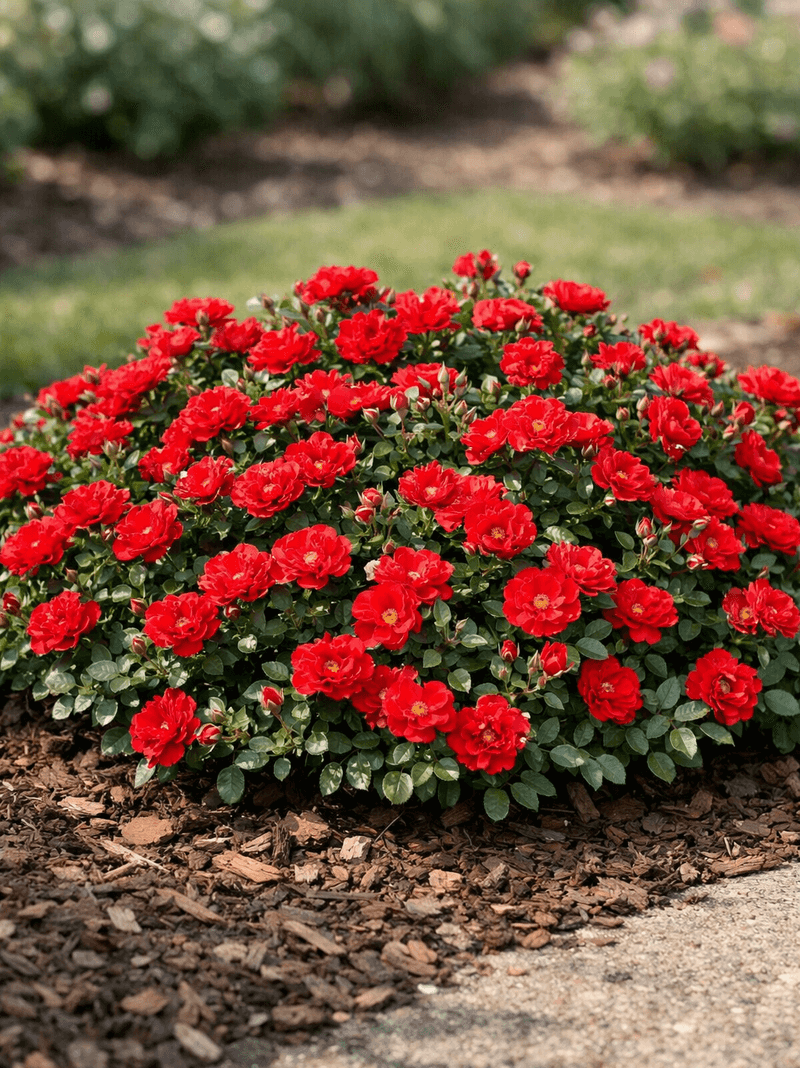
Walk past a bed of hybrid teas in midsummer and you will often see stakes, careful pruning cuts, and a spray schedule taped somewhere nearby. Groundcover roses work differently.
UC IPM identifies groundcover roses as a distinct landscape growth form, separate from climbing or upright shrub types, with low, arching, or trailing canes that generally do not need structural support to hold their shape.
“Groundcover rose” describes a growth habit, not one single plant. Red Meidiland (Rosa ‘Meineble’) grows roughly 1.5 to 2 feet tall and spreads 4 to 5 feet wide.
Missouri Botanical Garden lists Flower Carpet Red (Rosa ‘Noare’) at about 2 feet tall and 3 feet wide. Drift roses are compact groundcover types suited to roughly USDA Zones 4 through 10, depending on the specific cultivar and your local conditions.
Those are meaningfully different plants in mature size, flower form, thorniness, and rebloom, so treating them as interchangeable will lead you astray.
Landscape roses were bred for stronger disease resistance and fuller coverage than traditional cut-flower types, and that breeding does translate to a lighter routine for many gardeners. UF/IFAS notes that Drift roses generally require less spraying than hybrid teas, though disease can still appear.
The corrected promise worth keeping in mind: selected cultivars can offer recurring flowers with noticeably less routine fuss, but none of them makes rose care disappear. Watering, establishment work, cleanup, and occasional monitoring remain part of the deal.
The Spreading Habit Simplifies Support and Pruning

An upright hybrid tea holds its canes like a candlestick, and in windy spots or heavy bloom years, those canes can lean or snap without support. A groundcover rose behaves more like a wave rolling outward, its canes arching and trailing under their own weight rather than reaching straight up.
That low, spreading posture is the practical reason most groundcover roses do not need staking.
The Royal Horticultural Society notes that most groundcover roses need only light pruning, with timing typically after flowering or in late winter. What light pruning means in practice: remove dead, diseased, damaged, or badly misplaced canes when you see them, and cut back any canes that are outgrowing their space.
You are not reshaping the whole plant annually the way you would a formal hybrid tea. Meilland states that Meidiland roses do not require routine cutback, though occasional pruning can control size or refresh older plants.
Deadheading is often optional with landscape roses. UC IPM notes that many landscape roses drop spent petals on their own, though removing faded flowers may speed rebloom in some cultivars.
That distinction matters more than it sounds. Saying “no deadheading” is more defensible for some of these plants than saying “no maintenance.” On disease resistance, UF/IFAS describes Drift roses as generally having good disease resistance, but black spot and other problems remain possible, especially in humid climates.
Improved resistance means potentially less spraying, not a guaranteed spray-free season.
A Low Planting Area Still Needs Good Drainage

Many gardeners picture a “low spot” in the yard and immediately think it would be perfect for a low-growing plant. Sometimes that logic holds.
Often it does not, and roses are one of the clearest examples of why.
A groundcover rose can work beautifully in a low-profile section of a bed, a gently sloping bank, a border, or a wall planting where the ground simply sits a bit lower than the surrounding lawn. What it cannot do is survive in a spot that collects standing water or stays soggy after rain.
Illinois Extension warns that poorly drained soil can kill roses, and that warning applies to landscape types just as much as to formal cultivars. Roots sitting in saturated soil lose oxygen, weaken, and become vulnerable to rot and disease.
Before you plant, do a simple drainage check. Dig a hole about 18 inches deep, fill it with water, and watch.
If the water drains away in roughly 5 to 6 hours, drainage is considered satisfactory by Illinois Extension guidance. That test is a useful starting point, not a guarantee for every soil type or rainfall pattern, but it gives you real information before you invest in plants.
If the hole stays wet much longer, you have a few options. You can regrade the area to redirect runoff, build a raised bed to lift the roots above the problem zone, or install a drainage solution before planting.
UC IPM confirms that roses perform best in well-drained soil, so if none of those fixes are practical, a different plant species is the honest answer. A rose is a tool for a low-profile visual gap, not a fix for a drainage problem.
Sun, Water, and Mulch Keep the Easy Care Intact
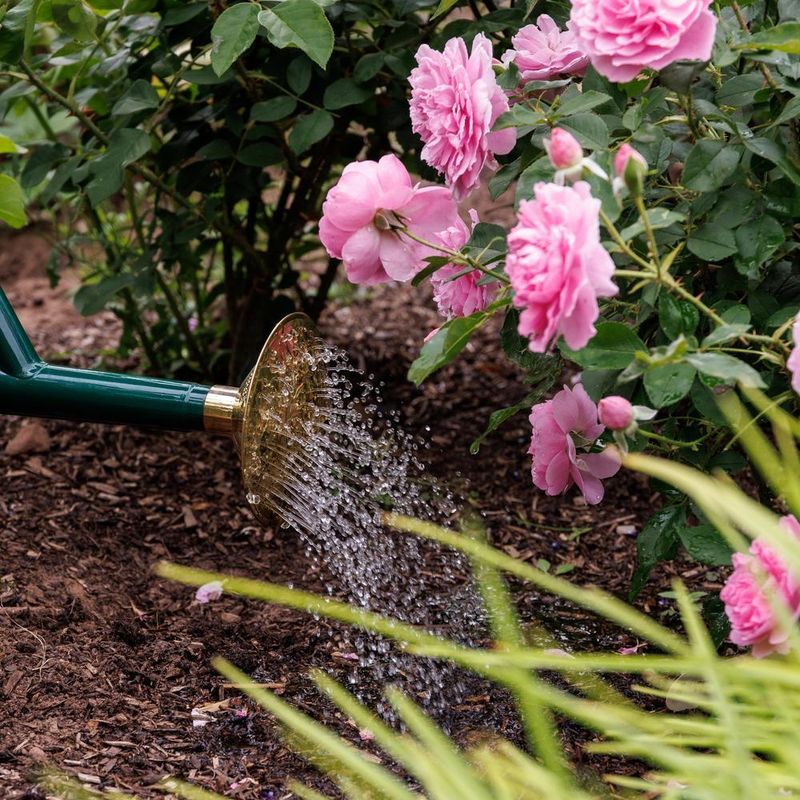
Put a groundcover rose in deep shade and it will reward you with fewer flowers, weaker growth, and more disease. The plants are bred to work hard, but they need the right conditions to actually do it.
About 6 or more hours of direct sun per day is the standard starting point, and morning sun is especially useful because it dries dew off the foliage faster, which cuts down on the humid leaf surface where fungal diseases like black spot get their start.
Good air movement matters for the same reason. Avoid planting groundcover roses in tight corners where air sits still, even if the sun exposure looks adequate.
Illinois Extension recommends well-drained soil, adequate sun, and good air circulation as the foundation for any rose planting, and those three factors together do more for long-term health than any spray program.
Water deeply during the establishment period, which typically runs through the first full growing season. A common starting guideline is about 1 inch of water per week, adjusted upward in heat or sandy soil and downward when rainfall is generous.
Illinois Extension recommends delivering water at soil level using drip irrigation or a soaker hose rather than overhead sprinklers, which wet the foliage and raise disease risk. That one habit, keeping water off the leaves, pays back more than most gardeners expect.
Apply 2 to 3 inches of organic mulch around each plant, keeping it a few inches away from the stems to avoid rot. UC IPM notes a broader 2- to 4-inch range for organic mulch in rose plantings.
Mulch holds soil moisture, moderates temperature, and slows annual weed germination, but it does not make the planting maintenance-free. You will still pull weeds, especially during the first season before the roses fill in.
Choose the Plant by Its Mature Spread
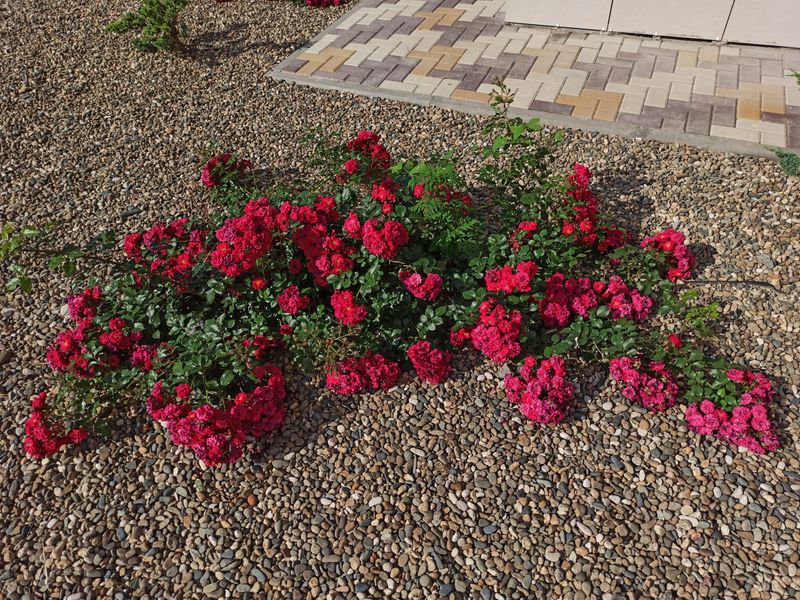
The spreading habit that makes groundcover roses useful in a low border is the same habit that can cause problems if you underestimate how wide the plant gets. Mature spread is the number to plan around, not mature height.
Missouri Botanical Garden lists Red Meidiland at roughly 4 to 5 feet wide at maturity. Flower Carpet Red comes in at about 3 feet wide.
Those are meaningfully different footprints, and spacing plants too close together creates crowding that reduces air movement and invites disease. Missouri Botanical Garden recommends 2 to 3 Flower Carpet shrubs per square yard when massing them as groundcover, but that guidance applies specifically to that cultivar planted for dense coverage.
Do not carry it over as a universal rule for every groundcover rose.
On a bank or slope, the trailing habit works in your favor, covering exposed soil and reducing erosion risk as plants fill in. Along a border, the spread can soften a hard edge nicely.
The RHS notes that groundcover roses can also cascade attractively over walls, which makes them useful in spots where a taller shrub would feel too heavy.
Thorns are a placement issue that low growth does not solve. UC IPM notes that landscape roses may have smaller or fewer thorns than traditional varieties, not that they are thornless.
A rose planted beside a narrow path, a children’s play area, a dog run, or a seating edge will eventually grow into that space, and brushing against thorny canes is unpleasant at best and a real scratch hazard at worst. Give the plant room to reach its published mature width before it becomes someone else’s problem.
Disease Resistance Depends on Cultivar and Climate

Buying a disease-resistant rose does not mean buying a disease-proof rose. The distinction matters most in humid regions of the Midwest and Southeast, where summer rainfall, warm nights, and dense foliage create conditions that favor black spot, powdery mildew, and rust even on cultivars marketed as low-maintenance.
A plant that performs beautifully in dry interior California may need more active management in a wet Ohio summer.
Penn State Extension recommends removing infected canes, cleaning up fallen leaves, keeping foliage dry, and using fungicides when needed to manage rose diseases outdoors. Those are practical steps regardless of how resistant your cultivar is listed.
Sanitation, meaning removing fallen leaves and diseased material rather than leaving them at the base of the plant, cuts the source of fungal spores that would otherwise overwinter and reinfect new growth in spring.
UF/IFAS notes that Drift roses generally have good disease resistance and require less spraying than hybrid teas, but preventive fungicide programs may still be warranted in humid climates with regular rainfall. Whether you spray depends on your cultivar, your local disease pressure, the weather that season, and your tolerance for cosmetic leaf damage.
There is no single answer that applies everywhere.
Rose rosette disease deserves a specific mention. Symptoms include distorted bright-red new growth, excessive thorniness on new canes, and a witches’-broom cluster of distorted shoots.
Penn State recommends destroying infected plants and removing any multiflora rose (Rosa multiflora) within about 100 feet, because multiflora rose serves as a reservoir for the disease. Penn State Extension identifies multiflora rose as an invasive or noxious weed in parts of the United States, including Pennsylvania, and it spreads aggressively by seed.
The named cultivars in this article, Drift, Flower Carpet, Red Meidiland, are ornamental breeding lines sold through reputable nurseries. Confirming the cultivar name before you buy is the simplest way to avoid confusion.
Use a Small Maintenance Routine to Protect the Payoff

Start with the cultivar name, not the category. Walk into a nursery asking for “a groundcover rose” and you might leave with a plant that tops out at 18 inches or one that eventually spreads 5 feet.
Check the published mature width, the USDA hardiness zone range, the disease resistance notes for your region, and whether the rebloom frequency matches what you are hoping to see. A reputable nursery can help you match the plant to your specific site conditions rather than guessing from a label.
UC IPM frames landscape rose care as an integrated approach rather than a promise that one resistant cultivar eliminates all pest and disease concerns. That framing is the right one to carry into your own yard.
Plan for mulch and hand-weeding during the establishment period, because the weed suppression that groundcover roses eventually provide takes a full season or two to develop. Illinois Extension recommends even soil moisture and soil-level watering throughout the growing season, adjusted for rainfall and your soil type.
Neither of those things is complicated, but skipping them during a hot July stretch will set the plant back.
Light pruning when needed, regular checks for disease or pest signs, occasional cleanup of fallen leaves, and a consistent watering routine are the layers that keep the lower-fuss benefit intact. The RHS confirms that groundcover roses generally need only light pruning compared with formal types, so the time investment stays modest.
Illinois Extension is clear that site preparation matters as much as plant selection, so match the rose to the sun, drainage, and contact conditions before you dig the hole. Get those fundamentals right and a groundcover rose becomes one of the more satisfying plants you can put in a low border, not because it asks nothing of you, but because what it asks is actually manageable.