
The Most Underrated Pennsylvania Native That Fuels Monarchs On Their Fall Migration
Follow us on Google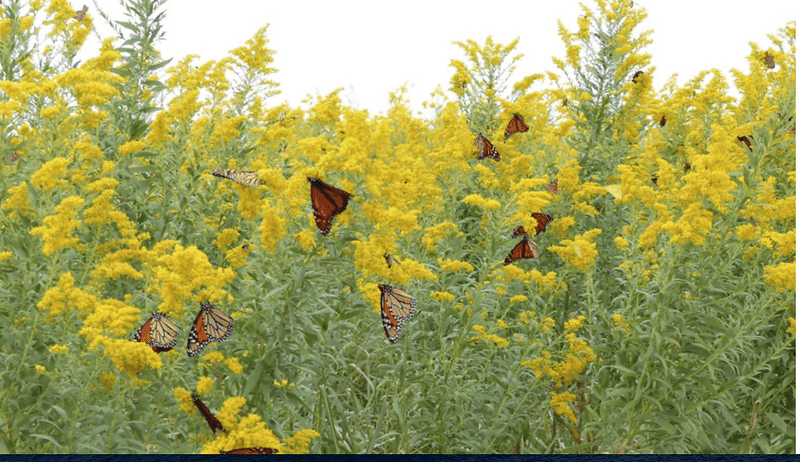
Walk outside on a late-August morning in Pennsylvania and you might catch a monarch butterfly pausing in your yard, wings slowly opening and closing in the warm sun.
That butterfly could be carrying enough stored energy to reach central Mexico, but right now it needs a meal.
Native goldenrod is one of the most overlooked plants you can grow to help, blooming just when fall migrants need late-season nectar most.
It is not the only plant monarchs need, but it is a genuinely useful one that most Pennsylvania yards could easily support.
An Overlooked Pennsylvania Native Helps Monarchs in Fall
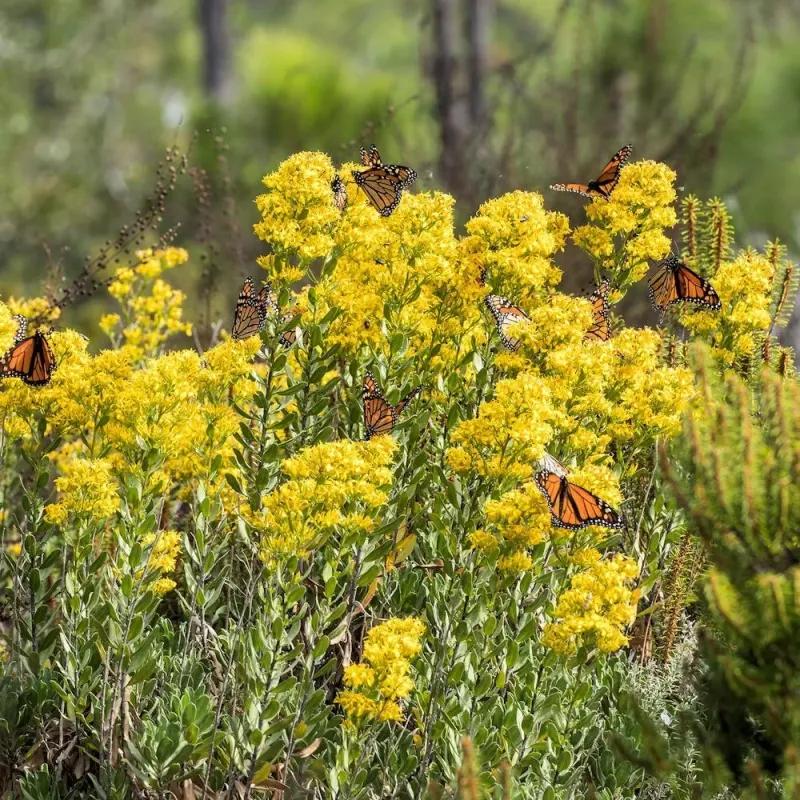
Goldenrod has a reputation problem it does not deserve.
Many Pennsylvania gardeners yank it out of beds or skip it at the nursery, assuming it is a weedy nuisance.
But several native Solidago species, including showy goldenrod (Solidago speciosa), wrinkleleaf goldenrod (Solidago rugosa), and Canada goldenrod (Solidago canadensis), bloom from late summer well into fall, long after most spring and summer flowers have finished.
Penn State Extension identifies goldenrods as important late-season nectar sources for migrating monarchs and many other pollinators.
The headline on this article calls goldenrod “the most underrated” plant for monarchs, and that framing deserves a quick correction right here.
Goldenrod is one overlooked and useful fall nectar source among several.
Monarchs also visit native asters, Joe Pye weed, ironweed, mountain mint, and other flowers.
No single plant carries the whole migration, and goldenrod does not either.
What it does do is fill a real gap in the late-season garden when nectar options are genuinely thin.
Now for the allergy myth.
Goldenrod blooms at the same time as ragweed, so it gets blamed for the sneezing and itchy eyes that hit many Pennsylvanians every August and September.
Penn State Extension explains that ragweed commonly causes those fall hay-fever symptoms because ragweed produces light, windborne pollen that travels far.
Goldenrod pollen is heavier and moves mainly on the bodies of bees, butterflies, and other insects rather than through the air.
That said, individual people can still react to goldenrod or other plants, so if you have known sensitivities, check with a health provider before planting it close to a patio or window.
How Fall Nectar Supports Monarch Migration
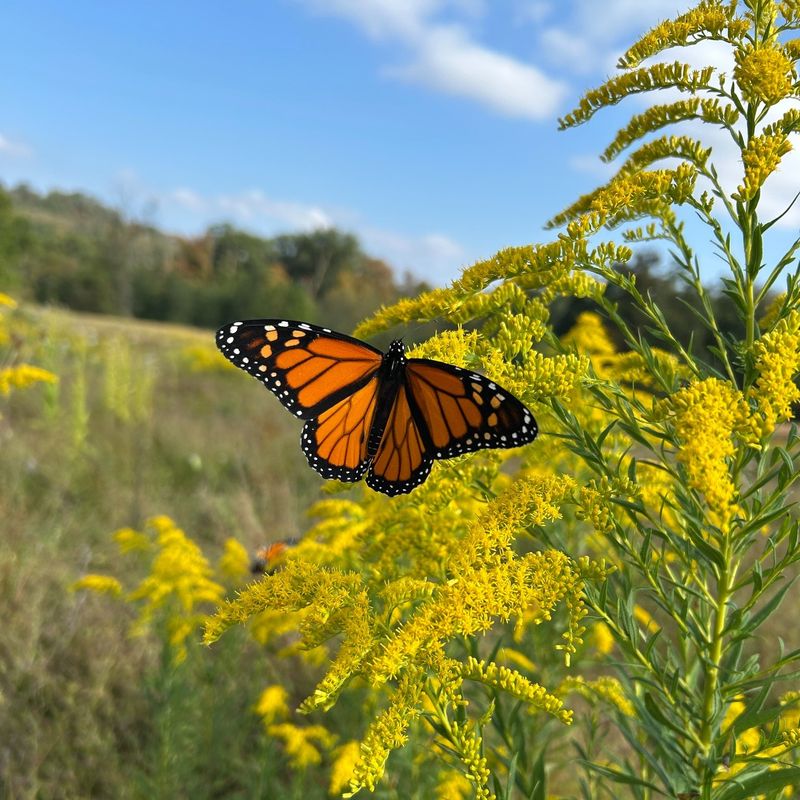
Monarchs do not simply tank up on nectar and fly nonstop to Mexico.
The process is more interesting than that.
Adult monarchs drink nectar, use its carbohydrates for immediate energy, and convert a portion of that energy into stored lipids, the fat reserves that actually power the long journey south and sustain them through the winter.
Research by Brower, Fink, and Walford on fueling the fall migration established that monarchs are nectar generalists, meaning they feed from many flower species rather than depending on any single one, and that the importance of nectar varies by location and migration stage.
Here is where it gets tricky.
Monarchs traveling through Pennsylvania are still early in a journey of more than 3,000 miles.
More recent isotopic tracing research suggests that monarchs may actually accumulate a substantial portion of their lipid reserves later in the journey, closer to Texas, northern Mexico, and the overwintering sites.
So a patch of goldenrod in your Susquehanna Valley yard genuinely contributes to a migrating monarch’s energy budget, but you cannot credit it with supplying all the fuel a butterfly later uses in the Sierra Madre.
One distinction matters a lot here.
Goldenrod feeds adult monarchs.
It does not feed monarch caterpillars.
Larvae eat milkweed species exclusively, and no amount of goldenrod can replace that.
Fish and Wildlife Service monarch profile makes clear that milkweed is the required host plant for caterpillars.
If you want to support the full monarch life cycle, goldenrod and milkweed belong in the same yard, doing different jobs.
Why Goldenrod’s Bloom Fits Pennsylvania’s Fall Window
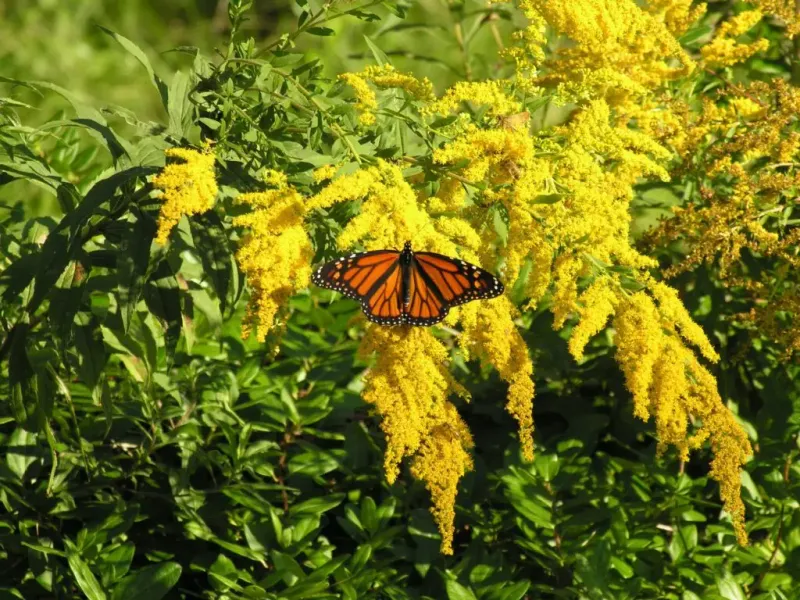
Timing is everything for a fall migration garden.
Penn State Extension notes that monarchs generally occur in Pennsylvania from late May through early November, with southbound migrants moving through the state mainly during late summer and fall.
A southern Pennsylvania migration study tracked fall migrants across periods spanning roughly August 20 through October 20, which maps almost perfectly onto goldenrod’s bloom window.
Goldenrod starts flowering in late summer and, depending on species and location, can keep blooming toward the first hard frost.
Many spring and summer perennials have already gone to seed by the time monarchs are pushing south through the Poconos or the central valleys.
That gap in the nectar calendar is exactly where goldenrod earns its place.
Penn State Extension recommends goldenrod specifically for that late-season window when other nectar sources run thin.
The journey south covers more than 3,000 miles, and the U.S.
Fish and Wildlife Service reports that monarchs can travel about 50 miles on a good day.
But flight is not constant.
A monarch’s body temperature falling below approximately 86 degrees Fahrenheit can interrupt flight, and cool, cloudy, rainy, or windy days can ground a butterfly regardless of the outdoor air reading.
On those paused days, a yard with blooming goldenrod and native asters becomes a genuine rest stop.
The practical takeaway is straightforward: pair goldenrod with a succession of other blooms so there is always something open when a monarch lands in your yard.
Choose a Goldenrod That Matches Your Yard
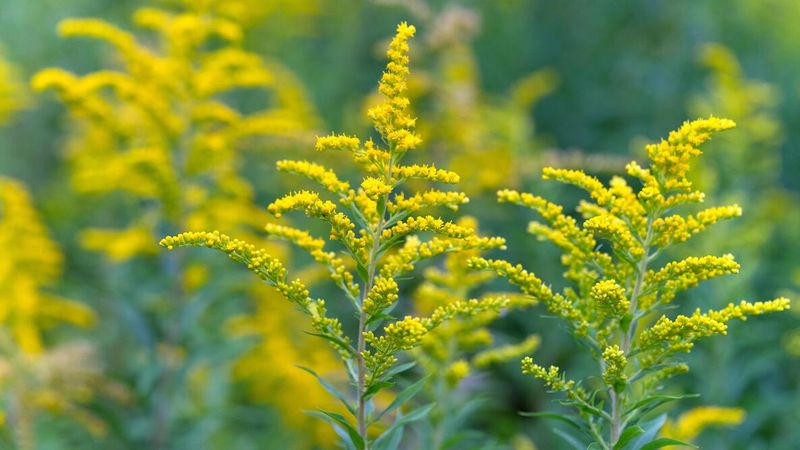
Not every goldenrod behaves the same way, and that actually works in your favor.
Missouri Botanical Garden describes showy goldenrod (Solidago speciosa) as a 2-to-3-foot perennial with a similar spread, a July-to-September bloom period, full-sun preference, and tolerance of dry, average, and clay soils.
It carries a USDA Zones 3 through 8 rating, which covers most of Pennsylvania’s varied climate range, though the state spans multiple hardiness zones and site conditions, so always check the specific plant’s requirements for your location.
Penn State Extension describes Solidago speciosa with a broader 1-to-5-foot height range and an August-to-September bloom window, a reminder that real garden conditions, soil fertility, moisture, and sun exposure, shape how any plant actually performs.
Those two descriptions are not contradictory; they reflect how much local conditions matter in Pennsylvania gardens from the Allegheny Plateau to the Delaware Valley.
Beyond showy goldenrod, you have useful options matched to specific sites.
Zigzag goldenrod suits dry conditions and partial shade, which makes it a candidate for spots under open tree canopies in the northern tier or Laurel Highlands.
Gray goldenrod stays shorter and thrives in dry, sunny locations, a good fit for rocky or lean soils common across parts of western Pennsylvania.
Wrinkleleaf goldenrod cultivars can handle more moisture, making them worth considering for heavier clay soils in southeastern Pennsylvania.
Penn State Extension and the Loyalhanna watershed plant guide both point to matching species to site rather than picking one goldenrod for every yard in the state.
Before you buy, check the mature size, light needs, and moisture requirements of the specific species or cultivar you are considering.
Plant Goldenrod for Light, Soil, and Space
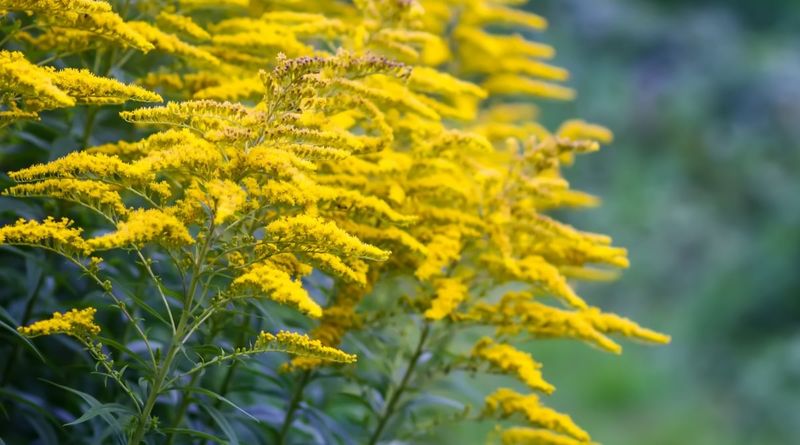
Full sun gives most goldenrods their best performance.
Aim for about 6 to 8 hours of direct light daily when you can.
Some species, like zigzag goldenrod, accept partial shade, but showy goldenrod and gray goldenrod genuinely want an open, sunny spot.
Place tall forms toward the back of a border or at least a few feet from a walkway so they do not flop into foot traffic later in the season.
Penn State Extension recommends testing your soil before amending it and supports planting native perennials in spring, early summer, or fall.
Whichever window you choose, water new plants thoroughly at planting and keep monitoring them during dry stretches.
Pennsylvania summers can surprise you with weeks of drought tucked between heavy thunderstorms, and a newly planted goldenrod in a shallow, rocky Poconos bed or a hot urban spot in the Delaware Valley will feel that stress quickly.
Established plants are more resilient, but they are not invincible.
Spacing follows the plant, not a universal rule.
Showy goldenrod typically spreads about 2 to 3 feet wide, so allow that much room at planting.
Compact cultivars may need considerably less space.
If you are working with a smaller bed, choose a cultivar bred for a tighter footprint rather than trying to constrain a naturally spreading species.
Penn State Extension also notes that cutting late-blooming perennials back by about one-third in mid-to-late June can produce shorter, bushier plants that are less likely to topple, though you may see flowers open a week or two later than usual.
That is a trade many gardeners find worthwhile.
Maintain the Patch Without Harming Pollinators
Goldenrod can spread, and that surprises some gardeners who planted it expecting well-mannered behavior.
Depending on species and cultivar, it spreads by rhizomes underground or by self-seeding, sometimes both.
That is not automatically a bad thing in a larger yard, but in a tight bed along a path in the central valleys or a narrow side yard in the Delaware Valley, it can become a project.
Missouri Botanical Garden recommends dividing showy goldenrod about every 2 to 3 years to keep it from overrunning its neighbors.
Choosing a compact cultivar from the start solves the problem more cleanly than trying to manage a spreading clump every season.
Penn State Extension advises leaving some stems, seed heads, and leaf litter in place through winter rather than cutting everything to the ground in fall cleanup.
Seed heads feed birds through the cold months, hollow stems shelter overwintering native bees, and leaf litter can protect butterfly larvae.
A tidy fall cutback feels satisfying, but it quietly removes habitat that pollinators depend on until spring.
Cut back what you need to for appearances, and leave the rest.
The pesticide question comes up every year, especially with spotted lanternflies moving across Pennsylvania.
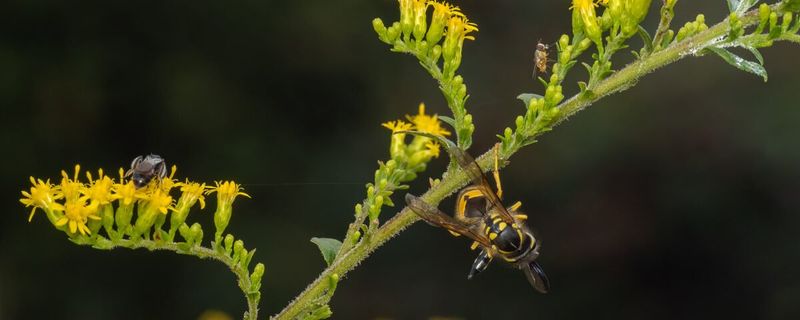
Blooming goldenrod can host bees, wasps, flies, beetles, and butterflies all at once, sometimes dozens of insects on a single plant.
EPA guidance on pollinator protection and Penn State’s spotted lanternfly pesticide safety guidance both advise against applying pesticides to blooming plants while pollinators are foraging.
If you need to treat for a pest, follow the product label carefully and time any application to avoid active foraging periods.
Spraying a plant covered with monarchs and bees is not a reasonable trade-off.
Build a Diverse Monarch Garden Around Goldenrod
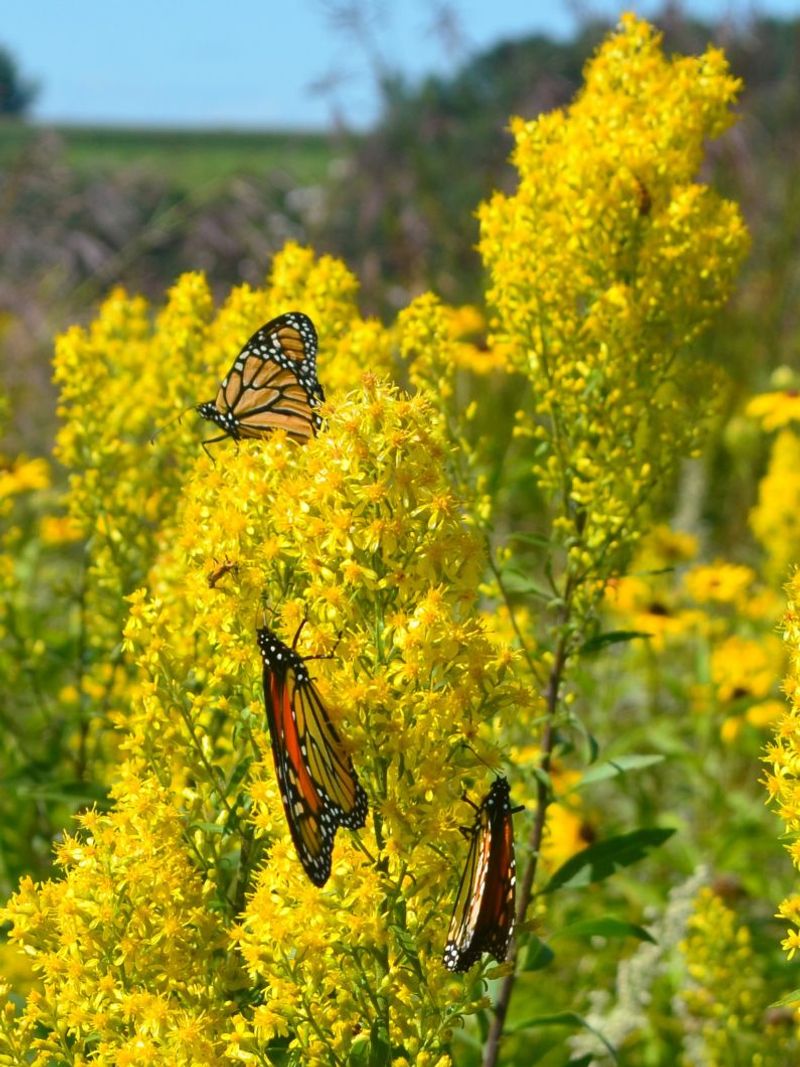
Goldenrod works best as part of a team.
Penn State Extension recommends varied flower shapes, colors, and bloom times to support a wider range of pollinators through the season.
Pair goldenrod with New England aster (Symphyotrichum novae-angliae), which blooms at nearly the same time and is a favorite of late-season monarchs and native bees alike.
Add Joe Pye weed, bee balm, mountain mint, and ironweed for a staggered bloom sequence that stretches from midsummer into October.
Milkweed belongs in this garden too, doing a completely different job.
The Xerces Society’s monarch nectar plant guides are clear that milkweed is the required host plant for monarch caterpillars, while goldenrod and other flowers supply nectar to adults.
A yard with only goldenrod supports migrating adults passing through.
A yard with goldenrod and native milkweed can support the whole life cycle when conditions allow.
The Xerces Society’s Northeast monarch nectar plant guide lists several goldenrod species among recommended regional plants alongside asters and other natives.
Research does link better autumn nectar conditions with monarch population health.
That does not mean one home planting guarantees more monarchs in your yard or reverses population trends on its own.
USGS research on monarch decline points to multiple interacting factors, including breeding habitat, milkweed loss, weather, and overwintering conditions.
What you can do is choose a goldenrod that fits your site, add a few other late-season natives, skip the pesticide spray while pollinators are foraging, and leave some stems standing when November arrives.
That combination of small, honest choices adds up to a yard that genuinely helps.