
A North Carolina Yard For Painted Buntings Starts With Layering These Native Plants The Right Way
Follow us on Google
Spot a male Painted Bunting once and you will never forget it.
The electric blue head, red breast, and green back look less like a wild bird and more like something that escaped a tropical aviary.
For North Carolina homeowners near the coast, building a yard that feels familiar to this bird is genuinely within reach, but it takes more than planting one pretty flower.
The real key is layering the right native plants to create the kind of brushy, semi-open edge habitat Painted Buntings actually use.
Start With Range And Season, Not A Guarantee
Before you buy a single plant, pull up a range map.
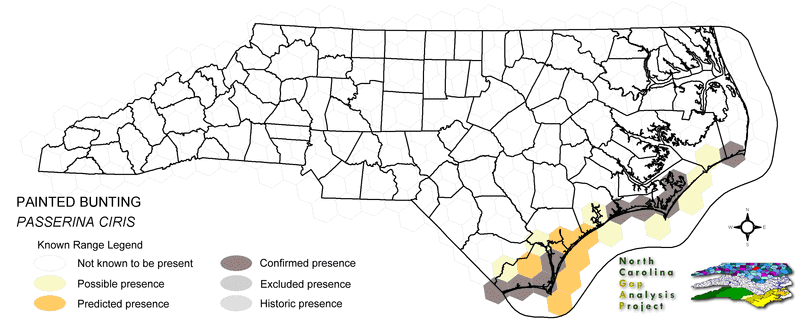
USGS breeding-range data for the eastern Painted Bunting population shows the birds concentrated along the southeastern Atlantic coast, from North Carolina southward, with some inland occurrence along large river systems.
If your yard sits near Brunswick County, the Outer Banks, or the lower Cape Fear region, you have a real geographic argument for this project.
Raleigh, Charlotte, and Asheville are a different story.
That does not mean inland readers should skip this entirely.
A Painted Bunting occasionally turns up in Piedmont backyards or Sandhills edges, and Carolina Bird Club records document scattered sightings well away from the coast.
But those are genuinely rare moments, not a realistic planning target.
If you live in the mountains or deep Piedmont, think of this planting as good native habitat work that might, on a lucky spring or fall day, catch a migrating bird moving through.
Seasonality matters just as much as geography.
Cornell Lab of Ornithology’s life history account describes the eastern population as a warm-season breeder, present in North Carolina roughly from late April or May through late summer, then largely gone by fall.
Do not plan around a year-round bird.
The window for a coastal breeding-season encounter is real but finite, and the planting should be understood as habitat improvement work, not a proven arrival formula.
Frame the whole project honestly from the start: you are making your yard more structurally similar to the places Painted Buntings actually use.
Whether one shows up depends on local population density, neighboring land cover, and plain luck.
That is a worthwhile goal even if the bird never appears.
Recreate A Semi-Open Edge
Most yards look nothing like what a Painted Bunting needs.
A carpet of fescue lawn with a tidy shrub border is the opposite of the habitat these birds recognize.
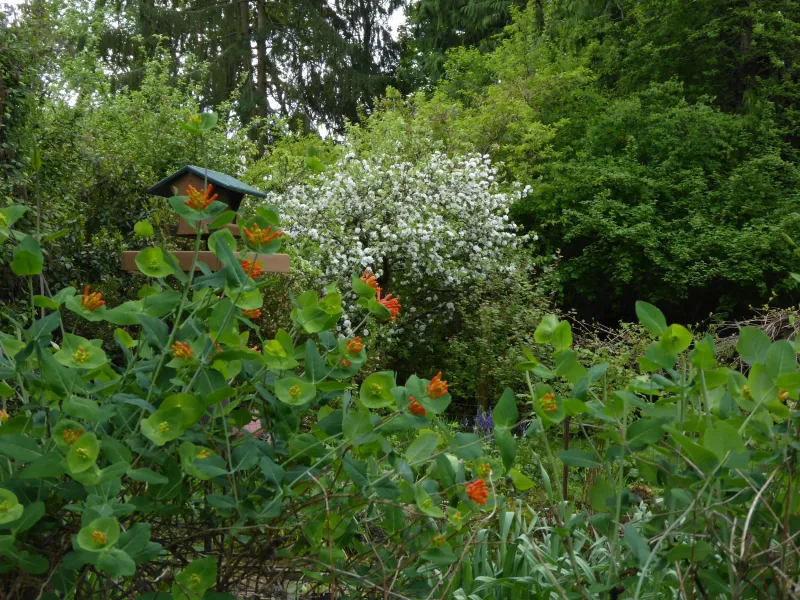
Cornell Lab describes Painted Buntings as birds of brushy woodland edges, hedgerows, overgrown fields, coastal scrub, maritime thickets, and early-successional areas where low dense vegetation meets open ground.
That phrase, semi-open edge, is the design target.
Picture the ragged border where a field stops and a shrub thicket begins.
Low grasses and forbs grow knee-high in the sun, seed heads nodding.
Just behind them, dense shrubs or vines close off the view.
Between patches, there are small openings of bare soil or short growth where a ground-feeding bird can see what is around it.
Audubon’s field guide account echoes this pattern, and South Carolina coastal wildlife management guidance describes the same semi-open, shrubby structure as core Painted Bunting habitat.
A manicured flowerbed does not replicate this, no matter which plants are inside it.
An isolated ornamental grass in a mulched ring does not either.
And a solid wall of native shrubs, while useful for other species, misses the contrast between cover and openness that makes the edge functional.
The goal is structure first, plant list second.
NC State Extension’s native wildlife landscaping guidance recommends combining different plant forms and heights because birds use ground, shrub, midstory, and canopy layers differently.
That principle aligns well with what Painted Bunting habitat actually looks like.
Your yard design is a practical translation of that documented habitat pattern, not a tested residential formula proven to bring the bird in.
Build The Low Layer For Seeds And Insects
Ground level is where Painted Buntings spend most of their feeding time.
Cornell Lab’s life history account describes them as mostly ground foragers, eating seeds from grasses, sedges, and forbs.
During breeding season, adults and nestlings shift toward insects, including grasshoppers, beetles, caterpillars, spiders, and other invertebrates.
A low planting layer that produces both seeds and insect habitat is more useful than a showy flower bed chosen for color.
Native grasses are a practical starting point for this layer.
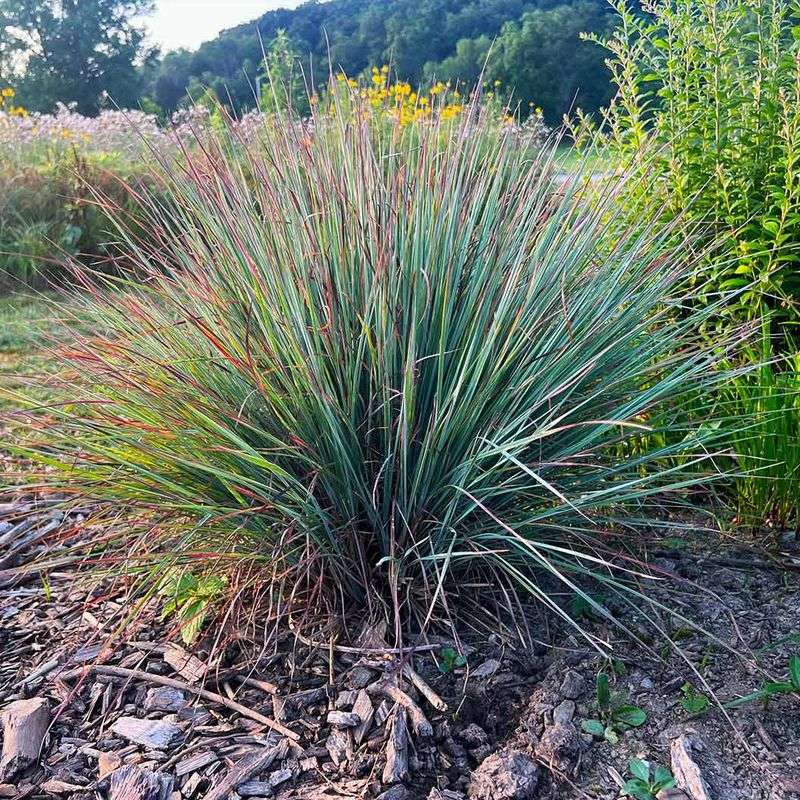
Little bluestem (Schizachyrium scoparium) is one example that NC State’s plant database lists as adaptable across much of North Carolina, with wildlife value for both food and cover.
Switchgrass (Panicum virgatum), Indiangrass (Sorghastrum nutans), and native panic grasses are mentioned in NC State’s songbird habitat guidance as useful seed sources for a range of ground-feeding birds.
Native sedges can fill shadier or moister spots where grasses struggle.
None of these plants are proven Painted Bunting attractants in a residential setting.
Treat them as examples of the kind of low, seed-producing, insect-supporting vegetation that fits the documented habitat pattern.
Whether any one of them works in your yard depends on your sunlight, drainage, soil type, and region.
A coastal sandy site may support species that would fail in Piedmont red clay, and vice versa.
NC State Extension’s wildlife landscaping resource recommends matching plants to regional moisture and light conditions rather than applying one statewide list.
Start with grasses and forbs suited to your actual site, keep the layer low enough to stay visually open, and let seed heads stand through fall so the food resource persists into the season when birds need it most.
Add Cover Without Making A Solid Wall
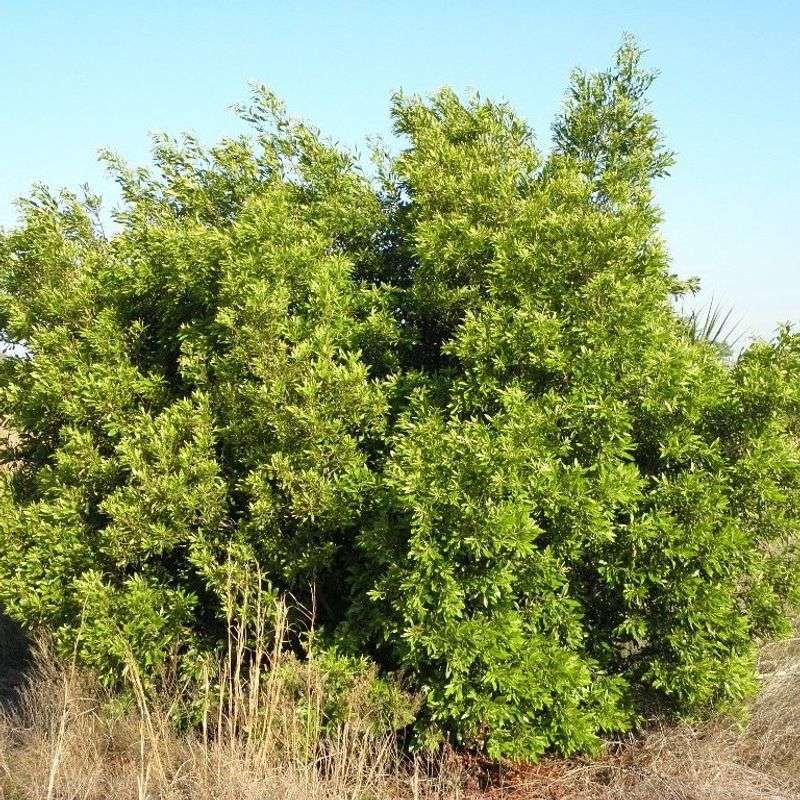
A few feet behind your low grass and forb layer, the shrub layer does two jobs at once.
It gives birds a place to retreat instantly when something alarming moves nearby, and it can provide nesting structure during the breeding season.
Cornell Lab notes that Painted Buntings commonly place nests roughly 3 to 6 feet above ground in dense foliage, though nests can occur higher when low vegetation is not available.
That is a habitat observation, not a backyard nesting guarantee, and it should not be read as a promise that shrubs in your yard will host a nest.
South Carolina coastal wildlife guidance points to dense, shrubby thickets as core cover in Painted Bunting habitat.
Wax myrtle is a commonly cited example for coastal North Carolina because it tolerates sandy soil, salt exposure, and stays dense year-round.
Native hollies, viburnums, and locally appropriate vines are mentioned in Brunswick County Extension’s coastal native plant guidance as wildlife-friendly shrub choices for the region.
Their actual usefulness depends on site conditions, mature size, and whether they create the kind of dense foliage structure that provides real cover.
The placement matters as much as the species.
Position shrubs beside rather than across the low layer, so the open feeding area remains accessible.
NC State Extension’s native landscaping guidance recommends placing shorter plants in front of taller vegetation and allowing some areas to stay less manicured.
A solid green wall with no opening is less useful than a shrub mass that sits next to accessible low growth.
Dense cover is one part of the design, not the whole answer.
Use Open Space As A Practical Habitat Translation
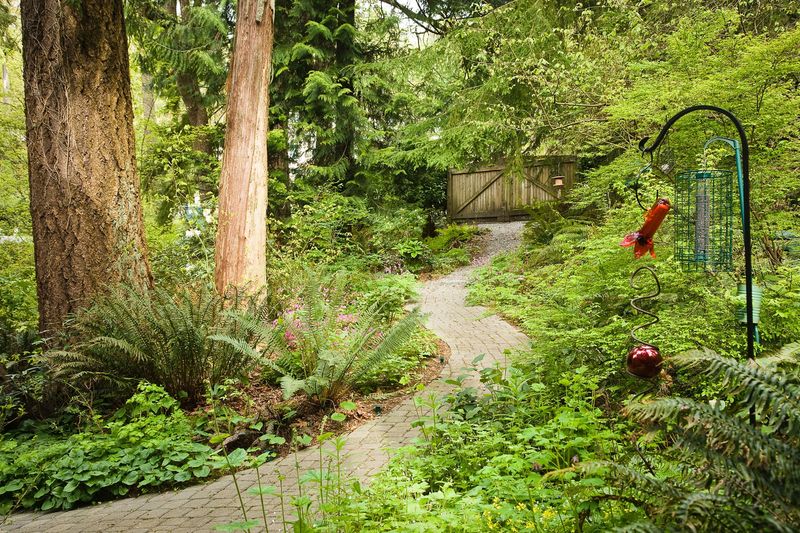
Semi-open habitat means exactly that: not fully covered, not fully bare.
Alongside your planted layers, keep a patch of short vegetation, mulch, or open soil where the ground is visible and accessible.
Cornell Lab’s account describes Painted Buntings as ground foragers in semi-open settings, and that foraging behavior is the practical reason to build contrast between your covered layers and an adjacent open patch.
This is a reasonable design interpretation of the documented habitat pattern, not a tested residential requirement.
South Carolina coastal wildlife guidance describes the semi-open, edge-like structure as the setting where these birds feed and move.
A bird foraging on the ground benefits from being able to see its surroundings, and that visibility is easier in a partly open space than in a dense thicket.
If a low fence post, dead snag, or open branch sits nearby, it can serve as a perch from which a bird scouts before dropping to the ground.
Keep those perches available where you have them naturally.
The open patch does not need to be large or elaborate.
A 6 to 10 foot strip of mulch or closely mowed native grass beside your planted edge is enough to create the structural contrast.
NC State’s backyard bird habitat guidance supports retaining defined lightly managed sections while keeping paths, play areas, and family-use spaces maintained.
Semi-open means managed contrast, not a yard left entirely to grow wild.
Your patio, kids’ play area, and garden paths stay exactly as usable as they are now.
NC State Extension frames wildlife landscaping as a set of intentional choices about which parts of the yard do which jobs.
The habitat patch earns its place by being structurally varied, not by covering the whole property.
Match The Layers To Your North Carolina Site
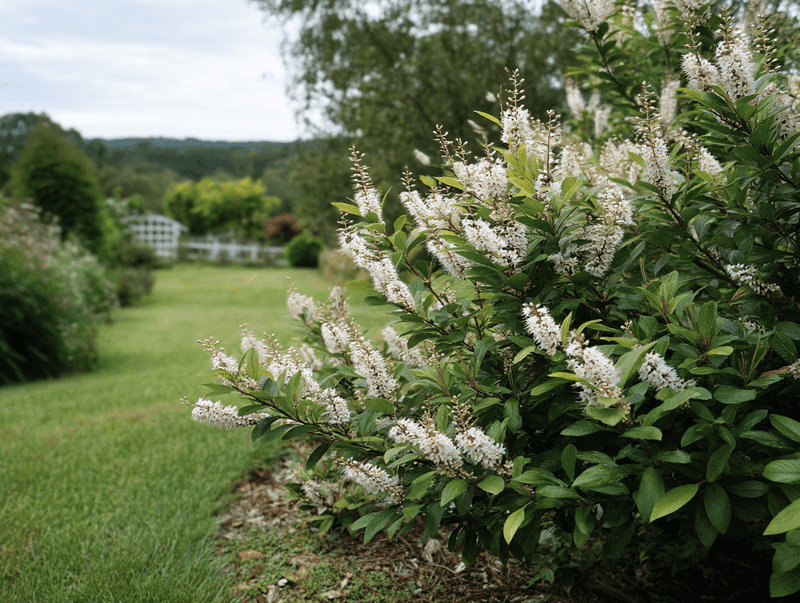
The same layered structure works across North Carolina, but the plant list changes depending on where you live.
Coastal and barrier-island readers are working with sandy, often salt-exposed soil that drains fast and can be hostile to plants that prefer consistent moisture.
Brunswick County Extension’s coastal native plant guide is a practical starting point for choosing low grasses, shrubs, and forbs that are actually suited to those conditions, and it lists species by site type rather than offering one universal recipe.
Piedmont readers deal with red clay that compacts easily, holds moisture inconsistently, and can frustrate plants that need sharp drainage.
Sandhills yards may be droughty and acidic.
Mountain sites add cold hardiness as a real constraint, and Painted Buntings are much less likely there in any season.
NC State Extension’s wildlife landscaping guidance recommends matching plants to local light, soil moisture, and drainage rather than treating native status alone as a reason to plant something.
A plant that carries a North Carolina native label is not automatically the right choice for your specific site.
NC State’s herbaceous plants for wildlife resource organizes options by moisture and light, which is a more useful filter than a broad statewide list.
Little bluestem is one grass that NC State’s plant database describes as adaptable across a wide range of North Carolina conditions, but even it needs the right light and drainage to thrive.
Check mature size before you plant anything near a fence or structure.
New native plantings are not maintenance-free.
Plan on establishment watering through the first summer, regular weeding while roots settle in, and protection from deer browse or foot traffic.
Native plants earn their low-maintenance reputation after establishment, not before it.
That first growing season is genuinely the hardest part of the whole project.
Manage A Habitat Patch Through The Seasons
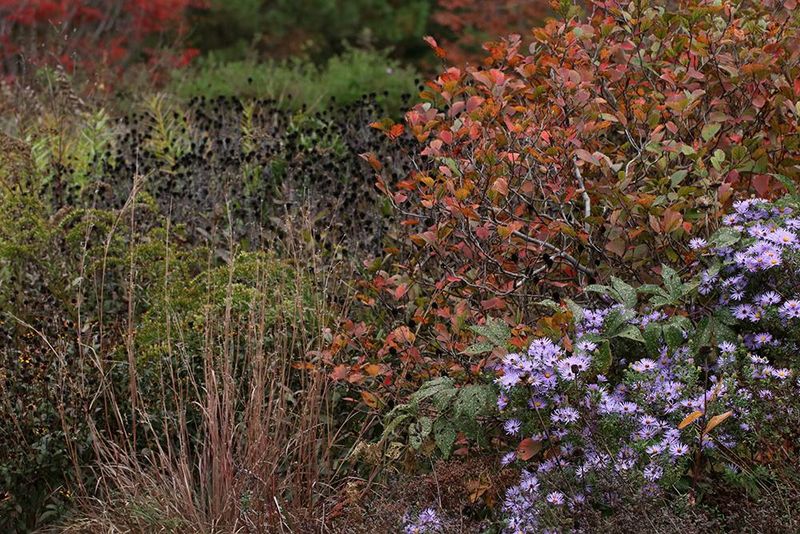
Planting is only the beginning.
What you do with the yard through fall and winter determines whether the habitat you built actually delivers food and cover when birds need it.
NC State’s backyard bird habitat guidance specifically recommends leaving portions of yards unmowed or unmanicured so fruit- and seed-producing plants remain available through the colder months.
Cutting everything back in September removes exactly the seed heads that ground-foraging birds rely on from October onward.
A practical approach is to define one section of the yard as your habitat patch and manage it on a different schedule than the rest of the lawn.
Let native grass seed heads stand through fall and into winter.
Delay pulling forb stems until late winter or early spring, because insects overwinter inside hollow stems and leaf litter.
NC State Extension’s wildlife landscaping resource supports this kind of intentional, phased cleanup rather than a single annual clearing.
The rest of the yard does not have to change.
Paths stay mowed, the patio stays clear, and the kids’ play area stays exactly as usable as it was before.
The habitat patch earns its space by doing a specific job, not by taking over the whole property.
NC State’s herbaceous plants resource frames this kind of targeted management as the difference between a yard that supports wildlife and one that merely contains native plants.
Native plants do not eliminate ticks, mosquitoes, or other yard pests, and this project should not be sold to yourself on those grounds.
Managing for habitat structure and food resources is the honest goal.
A well-managed patch that feeds insects and produces seeds through winter is doing exactly what it was designed to do, whether or not a Painted Bunting ever lands in it.
Treat A Feeder As Supplemental Help
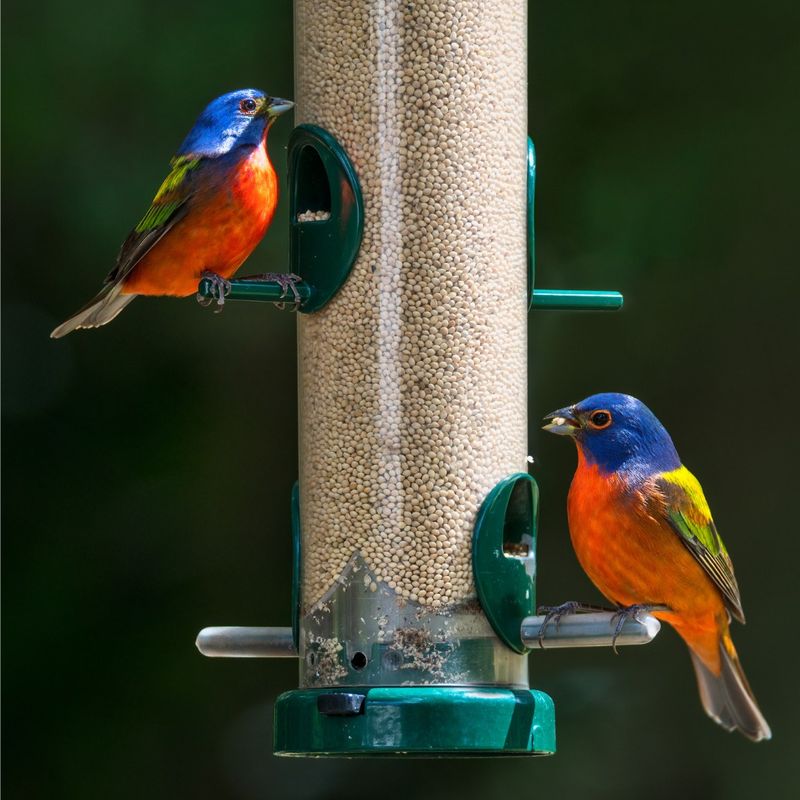
A feeder is not a shortcut to Painted Buntings.
It can add one food source to a yard that already offers cover, insects, and structural variety, but it cannot replace any of those things on its own.
Cornell Lab’s Painted Bunting overview and South Carolina coastal wildlife guidance both describe feeder use as supplemental.
White millet is the seed most consistently associated with Painted Buntings in the reviewed sources, so if you do put out a feeder, start there rather than a mixed blend.
Placement matters more than most people expect.
Set the feeder close enough to shrubs or dense native plants that a bird can retreat quickly, but not so buried inside the vegetation that a cat or other predator can approach unseen.
About 10 feet from a shrub edge is a reasonable starting point.
Keep the feeder visible from your house so you can watch it without disturbing the area around it.
Cleanliness is not optional.
NC State Extension’s wildlife chapter recommends cleaning and disinfecting feeders at least every two weeks, more often when sick birds appear.
Fish and Wildlife Service bird-feeding guidance echoes that schedule and adds that spilled seed beneath the feeder should be removed regularly, and any wet, musty, or decomposing seed should be discarded immediately.
Moldy seed can sicken birds faster than an empty feeder would.
Measure success honestly.
A layered native yard with a clean supplemental feeder gives you a healthier habitat and a better chance of a seasonal visit from a bird that genuinely needs places like yours.
That is a real outcome, even if the bird never actually lands.
The yard itself becomes worth more to the whole neighborhood of creatures that actually do show up every single day.