
The Ancient Walnut Hiding in Your Backyard That Still Feeds Squirrels Today
Follow us on Google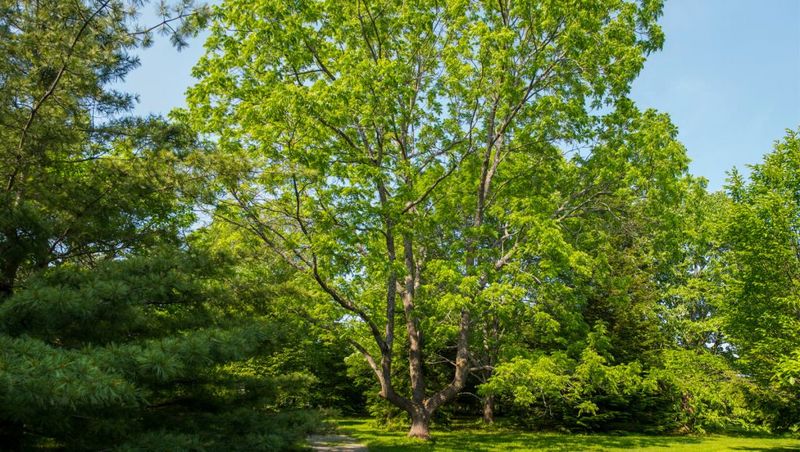
Walk into almost any older neighborhood in Ohio, Missouri, or Virginia and you will likely spot a massive tree dropping hard, green-husked balls that stain everything they touch.
That tree is eastern black walnut, and it has a story older than most people expect.
Its walnut relatives have fossil roots stretching back tens of millions of years, and today the nuts it drops every fall still drive your backyard squirrels into a caching frenzy.
Before you plant one or curse the one you already have, here is what you actually need to know.
Meet the Eastern Black Walnut
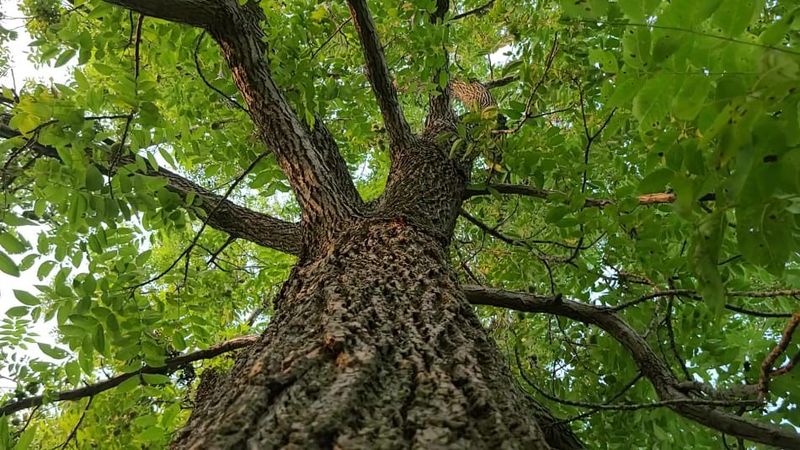
Eastern black walnut, Juglans nigra, grows wild across a wide sweep of eastern and central North America, from parts of New England and southern Ontario west into the Great Plains and south toward Texas, Georgia, and the edges of northern Florida.
USDA Forest Service range data shows it naturally occupying a broad band of river bottoms, mixed forests, and fertile uplands, making it one of the most widely distributed native nut trees on the continent.
Its edible kernels are rich in oil and protein, valued by people and wildlife alike for centuries.
The tree is not the walnut you find in a grocery bag.
That familiar, smooth-shelled nut comes from English or Persian walnut, Juglans regia, a Eurasian species.
Eastern black walnut has a much harder, deeply ridged shell, a darker and more intensely flavored kernel, and a thick green husk that releases a pungent, almost iodine-like smell when bruised.
The two species look and behave differently enough that gardening advice written for one does not automatically apply to the other.
Two other species sometimes cause confusion in the West.
California black walnut, Juglans hindsiiJuglans californica, and southern California walnut, , are separate native species with their own ecology and range.
USDA silvics research describes Juglans nigra as one of North America’s most economically important hardwoods, prized for its wood, its nuts, and its role as wildlife habitat.
Keeping these species distinct matters because historical, ecological, and safety claims that apply to one walnut do not necessarily transfer to another.
The Ice Age Claim Needs a Smaller, Truer Story
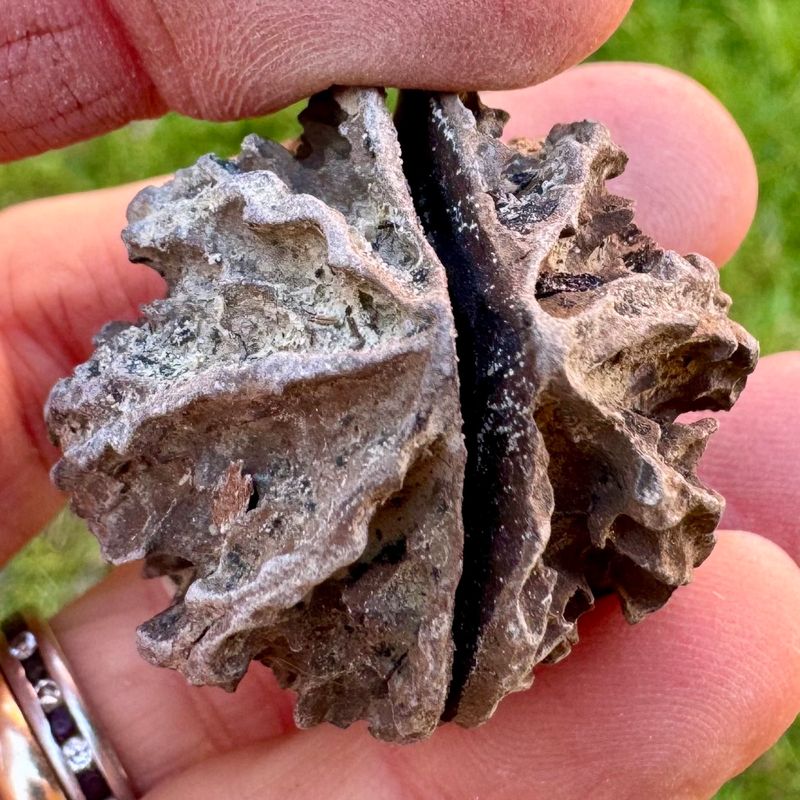
The headline that brought you here suggests black walnut fed Ice Age humans, and that is a genuinely exciting idea.
The honest version is a little more complicated, and actually more interesting once you understand what the evidence does and does not show.
The walnut genus, Juglans, has fossil records extending back into the Eocene, roughly 34 to 56 million years ago.
Fossil pollen and leaf research confirms that walnut relatives were widespread across the Northern Hemisphere long before humans arrived.
Cooling climates and the repeated glacial cycles of the Pleistocene reshaped where those trees could survive, pushing populations south and then allowing them to recolonize as ice retreated.
That is a real and documented story about an ancient lineage shaped by millions of years of change.
What the research does not establish is that the modern species Juglans nigra fed humans during the Ice Age or survived the last glacial maximum in its present form.
Phylogeographic studies of the walnut family show that today’s species are the products of long evolutionary change, not frozen snapshots of a Pleistocene ancestor.
Calling black walnut a “living fossil” makes for a good story around the fire, but it is a casual metaphor, not a scientific classification.
What the evidence does support is long, documented human use.
Indigenous peoples across eastern North America used black walnut nuts as food and the hulls for dye and medicine.
Research on Juglans evolutionary history places the genus in a lineage that survived and diversified through dramatic climate shifts, which is a genuinely ancient story worth telling without overpromising what the fossils prove.
Squirrels Still Depend on Its Seasonal Bounty
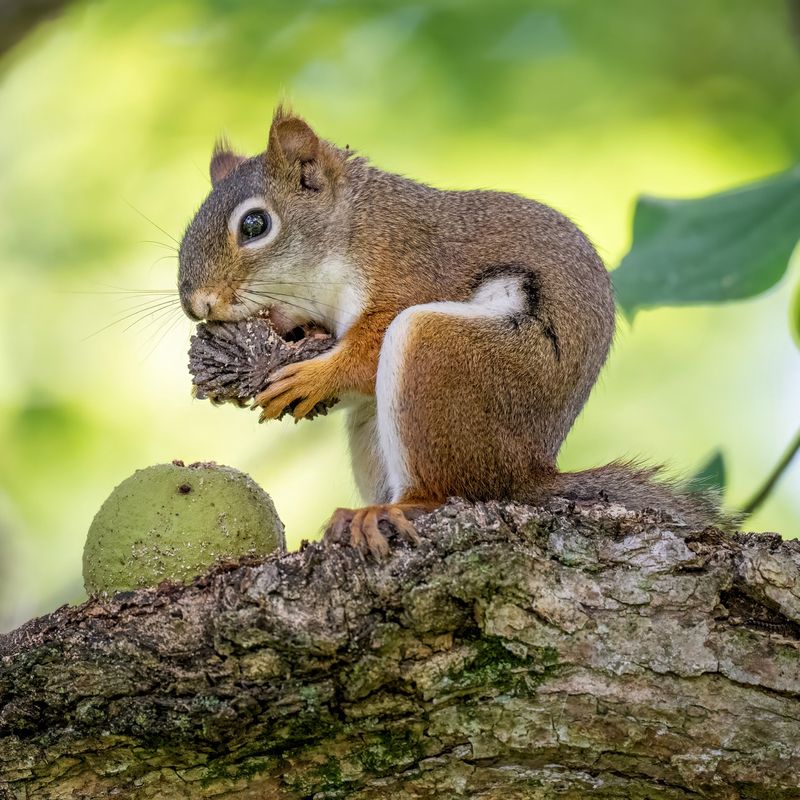
Come September, something shifts in a backyard with a black walnut.
Squirrels that spent the summer chasing sunflower seeds suddenly work with focused urgency, carrying the green-husked balls one by one to caching spots across the lawn.
Eastern gray squirrels, fox squirrels, and red squirrels all rely on black walnut as a high-fat winter food source, and USDA fire ecology reviews document the nut’s importance to multiple squirrel species across the tree’s range.
Rodents and several bird species also take advantage of the crop.
Squirrels do more than eat the nuts.
They bury them as scattered caches, then forget or abandon a portion of those sites.
Those overlooked nuts sprout the following spring, which means squirrels have been planting black walnut trees across eastern North America for a very long time.
USDA Southern Research Station data on mast production describes this scatter-hoarding as a key dispersal mechanism for the species.
The wildlife value is real, but so is the cleanup.
A mature black walnut drops a heavy crop of nuts in a short window, and the green husks stain driveways, patios, and shoes a dark brown that does not wash out easily.
The shells are unusually hard, and the hulls have a sharp, persistent odor.
Volunteer seedlings sprout wherever squirrels forget a cache, and you will pull them from flower beds and lawn edges all spring.
The tree provides genuine mast and habitat, but it asks for your attention in return.
Check the Space and Soil Before You Plant
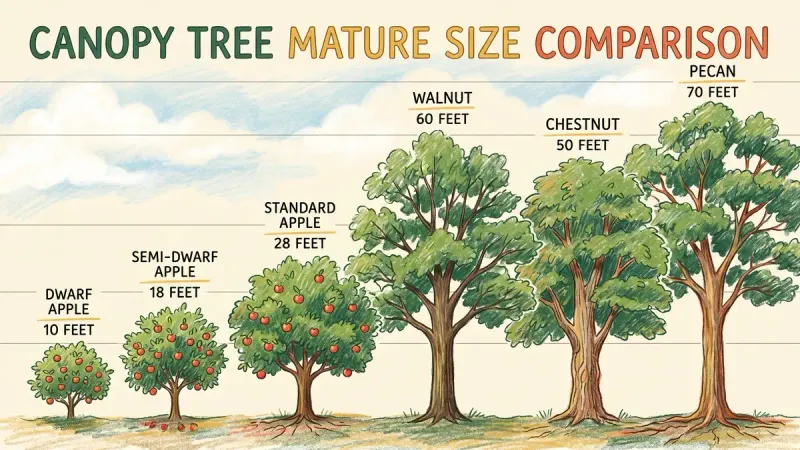
A black walnut is not a tree you tuck into a corner and forget.
At maturity it can spread 40 to 50 feet in canopy width, and Utah State University home orchard guidance recommends spacing trees roughly 30 to 50 feet apart when planting more than one.
That footprint alone puts it out of reach for many small city lots, but plenty of suburban and rural properties have the room if you choose the right spot.
Keep the planting site well away from your house foundation, driveway, roof overhang, septic system, and overhead utility lines.
Falling nuts and large surface roots can damage structures, and the staining husks will mark any hard surface they hit.
A small vegetable garden nearby is also a concern, which the juglone section covers in more detail.
Soil matters as much as space.
Black walnut grows best in deep, fertile, well-drained soil with steady moisture, and USDA silvics research identifies deep alluvial soils, loams, sandy loams, and silt loams as favorable.
Shallow soil, dry ridges, and compacted urban ground all limit the tree’s growth and long-term health.
A quick site check: pour water on the spot after a heavy rain and see whether it drains within 24 hours.
If water still stands after a full day, the drainage is too poor for black walnut.
Penn State Extension site-selection guidance also warns against low frost pockets where late spring cold can damage new growth.
In northern states, a south- or east-facing slope with good air drainage gives the tree a better start than a flat, low-lying yard.
Plant for the Mature Tree
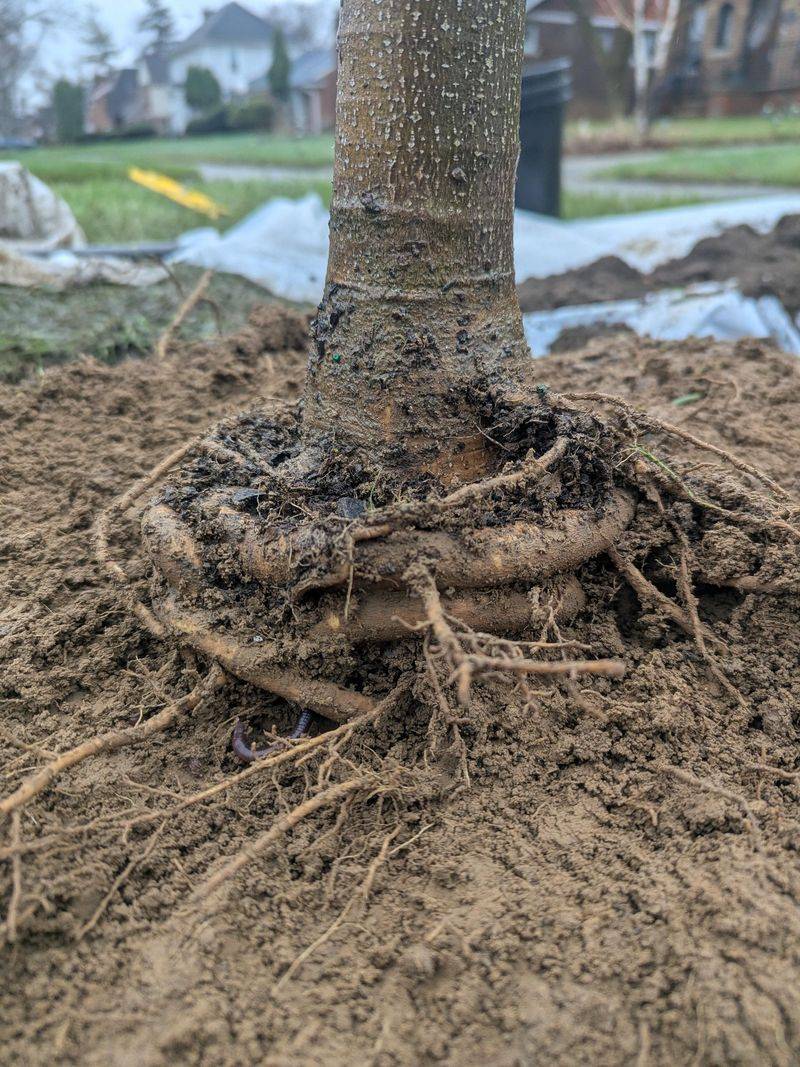
Once you have confirmed the site works, the planting itself is straightforward if you follow a few rules that the tree will hold you to for decades.
A nursery-grown tree is the most reliable starting point.
UC IPM planting guidance recommends digging a hole 18 to 24 inches wide, wider than the root system but no deeper than the tree grew in its container.
Set the tree so the root flare, the slight widening where the trunk meets the roots, sits at or just above the finished soil surface.
Burying the flare invites rot and long-term decline.
Do not add fertilizer or manure directly into the planting hole.
That advice sounds counterintuitive, but concentrated nutrients near new roots can burn them and encourage the tree to stay shallow rather than reach outward.
Backfill with the native soil you removed, water thoroughly, and mulch the surface out to the drip line, keeping mulch a few inches away from the trunk.
If you want to start from seed, the process takes more patience.
Black walnut nuts need a cold, moist period to break dormancy, a process called stratification.
University of Minnesota Extension woodland guidance recommends stratifying nuts through winter and planting in spring, while older forestry practice places nuts about 2 to 4 inches deep in fall and lets natural cold do the work.
Either way, squirrels will find direct-seeded nuts quickly, so protect them with a wire cage or hardware cloth until germination.
Plan the harvest window into your calendar.
Nuts ripen in September and October across most of the tree’s range, though timing shifts with latitude and seasonal weather.
University of Illinois Extension notes that the green husk begins to soften and yellow slightly when the nut is ready, a useful visual cue before the squirrels clean out the crop.
Juglone Affects Some Gardens, Not Every Plant
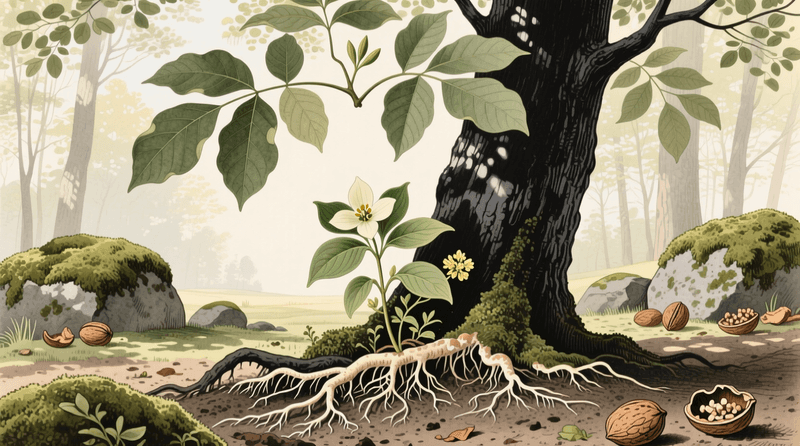
Black walnut produces a chemical called juglone, concentrated in its roots, leaves, stems, buds, and nut hulls.
Some nearby plants absorb it and struggle.
Tomatoes, peppers, and certain other vegetables are well-known for sensitivity, and gardeners near an established walnut sometimes watch healthy transplants wilt within days of going in the ground.
The tree is not trying to poison your garden, it is just doing chemistry, but the effect on sensitive plants is real.
Juglone does not behave like a highly mobile soil toxin that spreads far from the tree.
Penn State Extension explains that juglone is poorly soluble in water and does not move far through soil on its own.
The greater risk comes from direct root contact with sensitive plants, from fallen leaves and hulls piling up in a bed, and from wet or poorly aerated soil that slows microbial breakdown of the compound.
Before you blame juglone for a struggling plant, check the other usual suspects.
Drought stress, dense shade, compacted soil, root competition, poor drainage, and disease all produce wilting and dieback that can look identical to juglone injury.
Penn State’s practical walnut guide specifically notes that drought wilt and juglone-induced wilt are frequently confused, and misdiagnosing the cause leads to the wrong fix.
A raised bed can reduce contact between walnut roots and sensitive crops, but it is not a guaranteed solution.
Roots can grow under or around the sides of any bed, and walnut leaves and hulls still fall from above.
Extension Ask an Expert guidance on walnut and raised beds recommends using a root barrier, fresh soil, good drainage, and consistent removal of fallen walnut debris if you want the bed to perform near an existing tree.
For highly sensitive crops like tomatoes, the most reliable answer is to locate the garden outside the walnut’s root zone entirely.
Many plants grow fine near black walnut.
University of Minnesota Extension and Penn State both publish lists of juglone-tolerant species, and black walnut naturally grows in mixed communities with other trees, shrubs, and understory plants.
Tolerance still depends on water availability, heat, cultivar, and soil conditions, so a plant listed as tolerant may still struggle in a dry, shaded, compacted spot.
Manage Nuts, Pets, Horses, and Treated Trees Carefully
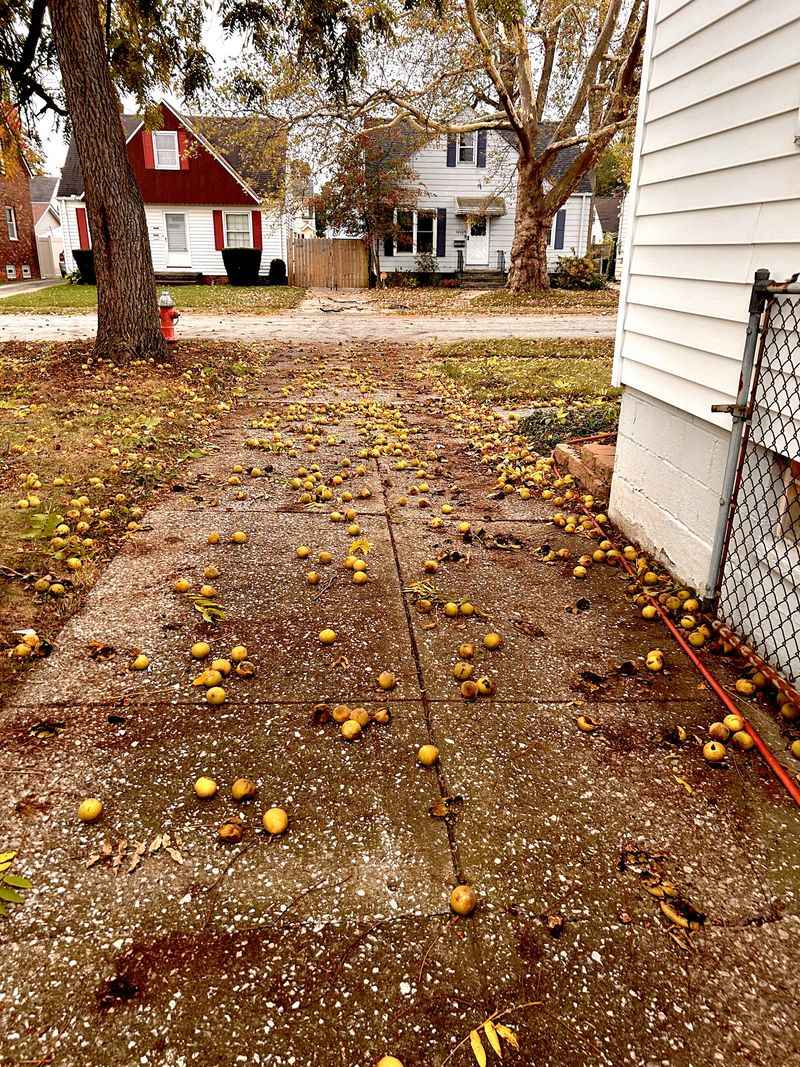
The nuts start falling in September, and the green husks they wear when they hit the ground are the first practical problem.
Husks stain skin, clothing, and concrete a dark brown that resists scrubbing.
Wearing gloves for any cleanup is not optional if you want to keep your hands presentable.
The shells underneath are genuinely hard, dense enough that cracking them requires a dedicated nutcracker or a concrete block, not a standard kitchen tool.
Horse owners need to pay close attention.
Fresh black walnut shavings, leaves, and hulls are toxic to horses and can cause laminitis, colic, warm and painful hooves, and stiffness even from short bedding exposure.
University of Minnesota Extension guidance on black walnut bedding is direct: do not use black walnut material in horse stalls or paddocks under any circumstances.
If a horse has been exposed, contact a veterinarian immediately.
Dogs face a different but serious risk.
The ASPCA lists black walnut as toxic to dogs and horses, and moldy or decomposing nuts and hulls can cause tremors and seizures in dogs.
A dog that grazes fallen nuts on a fall afternoon is not in a safe situation.
Keep fallen nuts raked up from areas where dogs spend time, and call your veterinarian or an animal poison-control service if you suspect ingestion.
One more caution applies to anyone planning to eat nuts from a tree that has been treated with insecticide, particularly where spotted lanternfly control programs have been active.
Penn State Extension advises checking pesticide labels and treatment history before consuming nuts from a treated tree.
Some insecticide labels carry restrictions on eating treated crops, and the treatment history may not be obvious if you did not apply it yourself.
Decide Whether This Wildlife Tree Fits Your Yard
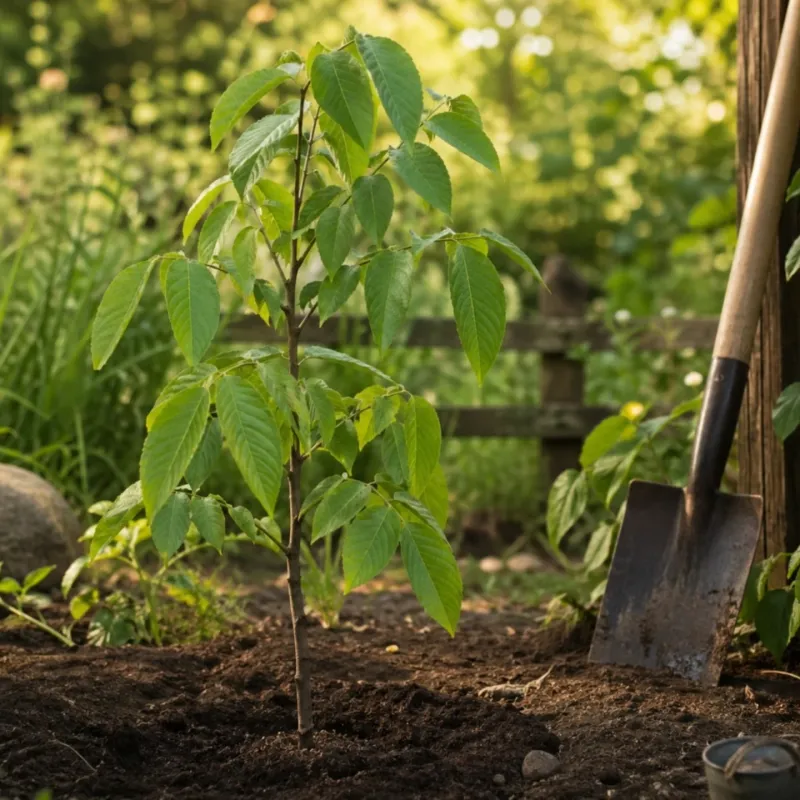
Eastern black walnut earns its place in a yard that has room for it and an owner who goes in with realistic expectations.
If your property has a large open area away from structures, utilities, and sensitive gardens, and you want to feed wildlife, attract squirrels, and grow a native tree with genuine ecological weight, black walnut is a strong choice.
USDA silvics data describes it as one of the most valuable native hardwoods in eastern North America, useful for mast, timber, and habitat across its range.
The case against planting one is equally clear.
Small lots, yards with structures nearby, homes with horse facilities, properties with dog runs under the canopy, and gardeners who rely on tomatoes, peppers, or other sensitive crops within 50 feet of where the tree would grow are all situations where another species makes more sense.
A walnut planted 20 feet from a foundation will eventually become a problem that a future owner has to solve at considerable expense.
Penn State’s guidance on living with black walnut notes that many plants tolerate juglone well, but performance still depends on water, shade, heat, soil health, and the specific cultivar.
A tolerant species list is a starting point, not a guarantee, and the best garden placement is one that keeps sensitive crops out of the root zone rather than one that relies on barriers alone.
Black walnut is genuinely valuable habitat, and it rewards the homeowner who respects what it needs.
The tree will drop nuts every fall whether you are ready or not, stain whatever they land on, and send squirrels into a seasonal routine that is worth watching.
Treat it as a working partner with real space and cleanup requirements, and it will anchor your yard’s wildlife value for generations.