
Why North Carolina Gardeners Should Never Move A Box Turtle Out Of The Yard
Follow us on Google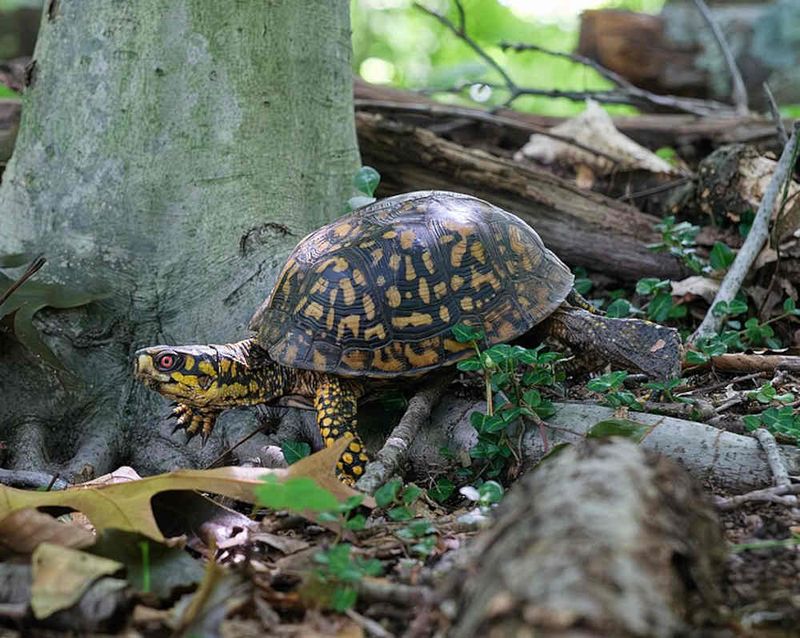
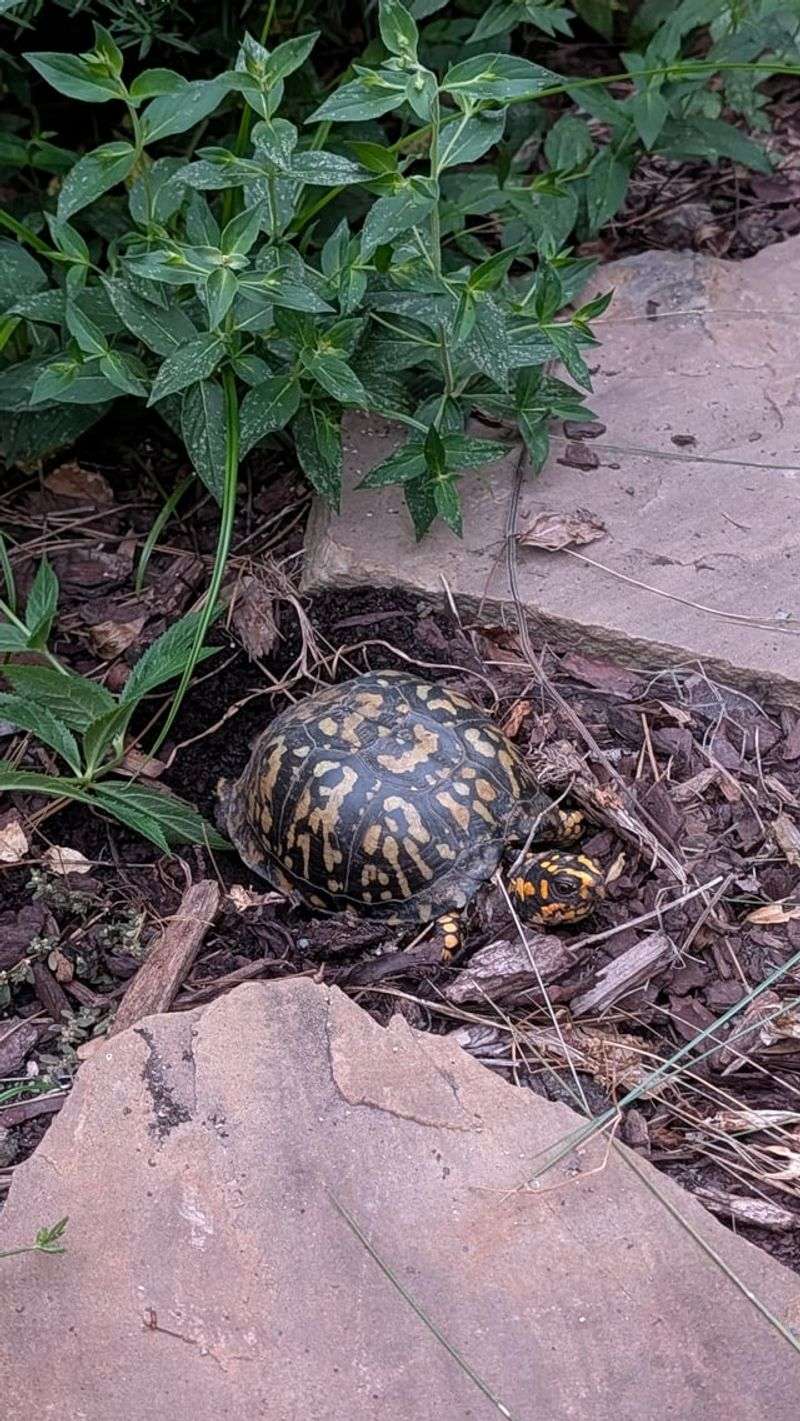
You are pulling weeds along the back fence on a muggy July morning when you spot it: a domed shell the color of old bark, tucked between the tomatoes and the hose reel. Most gardeners feel the same urge right away, to pick it up and carry it somewhere safer or more natural.
Before you do that, stop. Moving a healthy eastern box turtle out of your yard is one of the most well-meaning mistakes a North Carolina homeowner can make, and understanding why takes less than five minutes.
What the Headline Gets Wrong
The headline is almost right, but not completely. A healthy eastern box turtle wandering through your yard does not need to be moved to a creek, a wooded park, a forest edge, or any other spot you think looks more suitable.
That kind of casual relocation is genuinely the wrong call, and this article will explain exactly why.
But “never” cannot cover every situation. A short emergency move away from an immediate danger, or an action directed by an authorized wildlife professional, can be appropriate.
Those narrow exceptions do not change the core rule: do not pick up a healthy box turtle and carry it somewhere new simply because you think it deserves a better home.
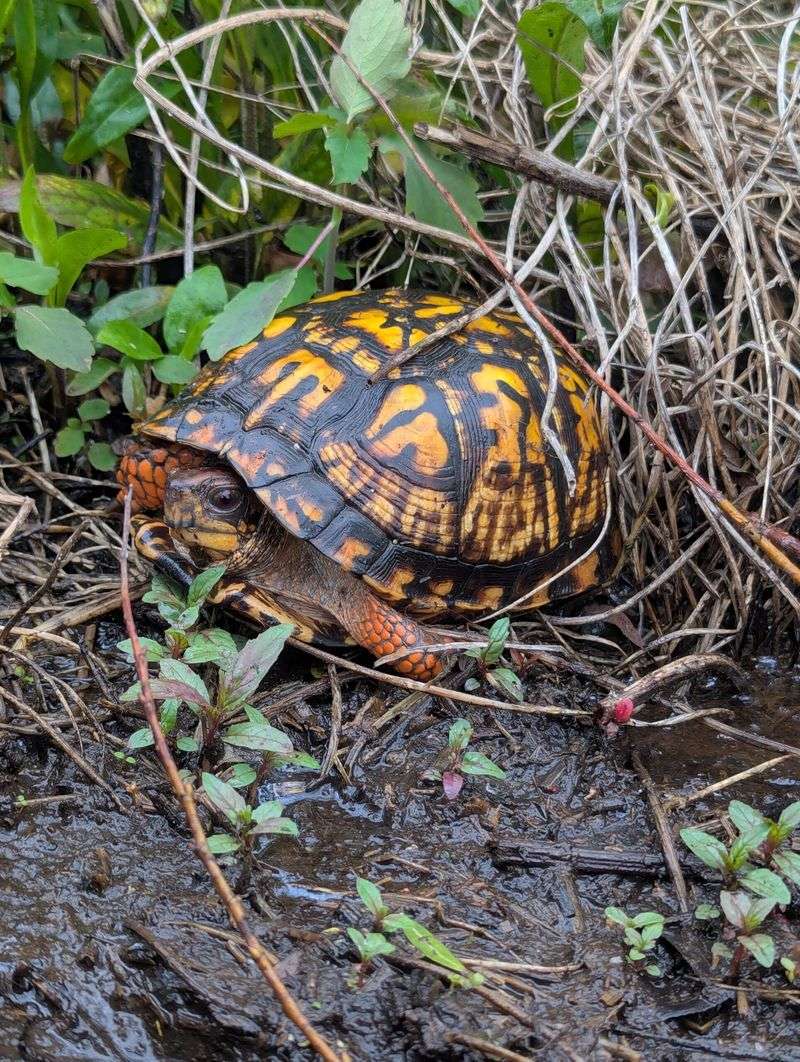
Eastern box turtles, known scientifically as Terrapene carolina carolina, are native, completely terrestrial turtles found throughout North Carolina. They show up beside porches, along driveways, in garden beds, and on lawns all the time, and they are not lost or displaced when you see them there.
North Carolina Wildlife Resources Commission guidance is straightforward on this point: leave it alone and let it continue moving.
Your immediate response when you spot one should be three things. Keep children and pets from crowding or chasing it.
Stay back far enough that the turtle does not feel cornered. Then watch from a distance and let it go wherever it was heading.
That is genuinely the most helpful thing you can do, and it requires no handling at all.
Why Familiar Ground Matters
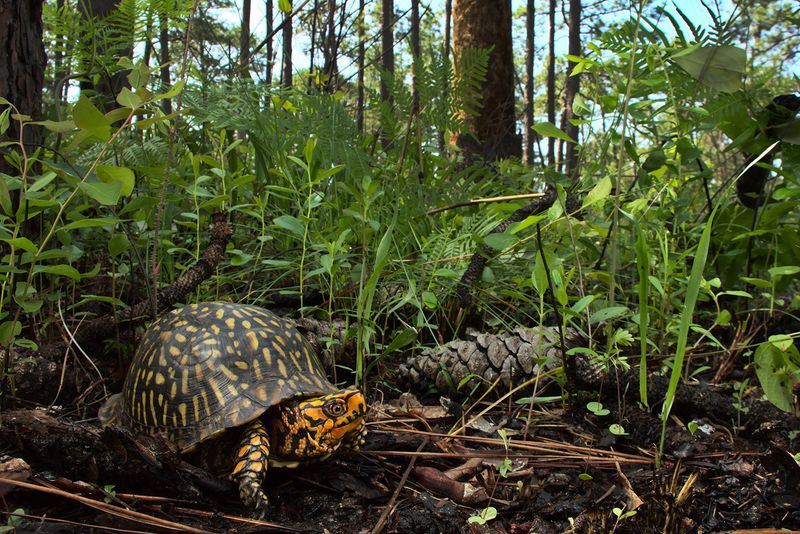
A box turtle does not wander randomly. It moves through a home range it has memorized over years, returning to the same feeding spots, the same hiding places under brush piles and leaf litter, the same nesting patches, and the same overwintering sites where it burrows down for the cold months.
Remove it from that familiar ground and you have not given it a new home. You have dropped it into unknown territory it may spend the rest of its life trying to escape.
Long-term research on home-range behavior, including USGS work on eastern box turtles at Patuxent Research Refuge, shows that individuals use small but consistent areas and return to the same core spots season after season. Newer spatial studies have found variation in home-range size depending on the individual and the landscape, so there is no single acreage that applies to every turtle.
What holds across the research is strong site fidelity: these animals know exactly where they are, and they work hard to get back.
A North Carolina relocation study compared 10 resident eastern box turtles with 10 that had been moved to new sites. The relocated turtles made far larger movements and used much bigger areas than the resident animals, apparently searching for familiar ground.
Five of the 10 relocated turtles died or disappeared during the study period. None of the resident turtles did.
The sample was only 20 animals, so the study does not prove that every moved turtle will die. What it does show, clearly, is that relocation raises the risk of disoriented wandering and reduced survival.
That is reason enough to leave a healthy yard turtle exactly where you found it.
The Right Response to a Healthy Yard Turtle
Spotting a box turtle in your garden is not a rescue situation. Your job is mostly to stay out of its way.
The first thing many gardeners want to do is carry it to the creek at the edge of the neighborhood or set it loose in the nearest patch of woods. Both of those moves feel kind, but both are likely harmful.
A nearby creek is especially wrong for this species. North Carolina Wildlife Resources Commission handling guidance identifies eastern box turtles as the only completely terrestrial turtles native to the state.
They do not need water the way aquatic turtles do, and placing one at a creek bank does not help it at all. A wooded area just down the road may still be well outside the turtle’s familiar range, across roads it will then try to cross, or on property where it has no established knowledge of food or cover.
Keep pets and children back while the turtle is in the yard. A dog sniffing or pawing at a box turtle can injure the shell even without meaning to, and a frightened child chasing it adds stress that can push the animal toward a road or fence where it becomes more vulnerable.
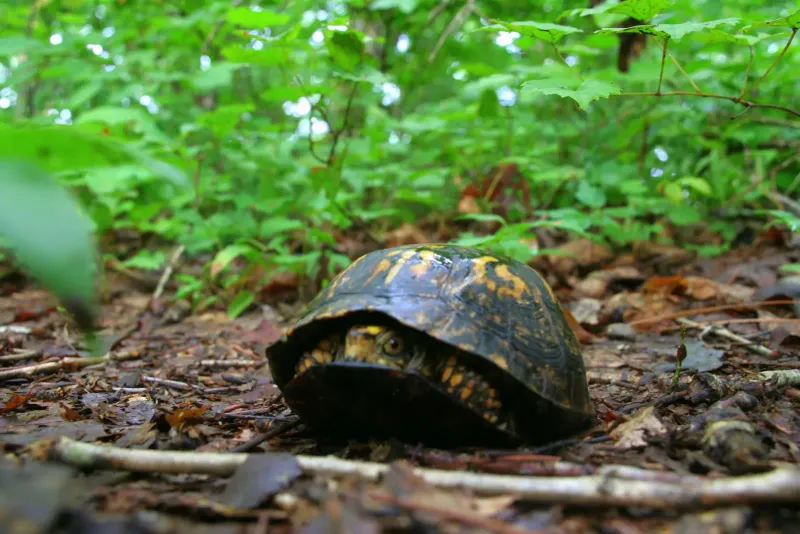
If the turtle pulls into its shell and goes completely still, do not assume it is sick or dying. NC Wildlife notes that threatened wild animals may remain motionless for hours and that giving them space is the correct response.
A healthy box turtle that simply feels watched will often sit tight for a while before moving on. Leave it alone, and it will almost always sort itself out.
When a Short Move Is Necessary
Two situations call for action instead of observation, and they are worth keeping separate in your mind because they require different responses.
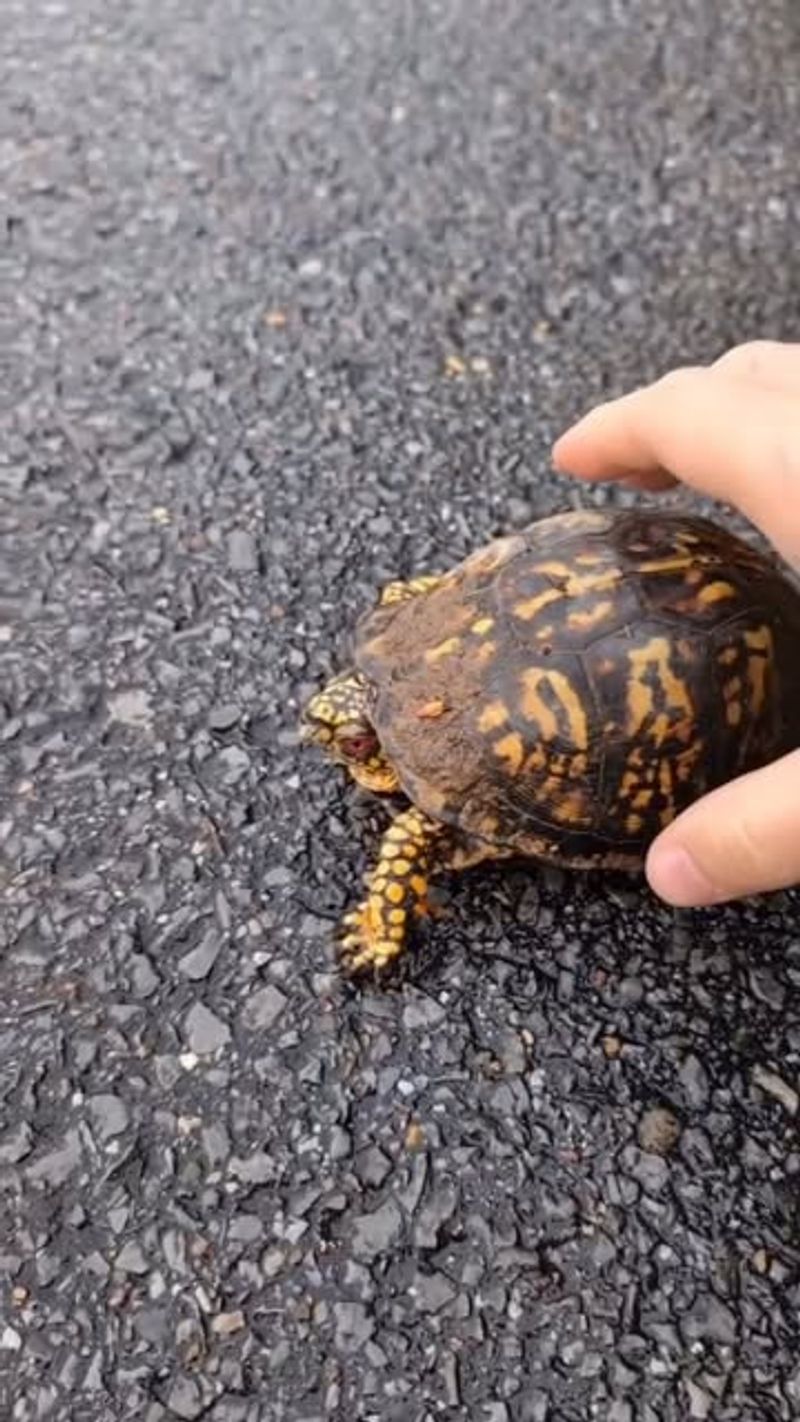
The first is an immediate local hazard in the yard itself: a lawnmower path, a dog that cannot be contained, a construction project, or something similar that puts the turtle in direct danger right now. In that case, the North Carolina Wildlife Resources Commission recommends moving the turtle only the shortest distance necessary, ideally less than 50 feet, and keeping it within the same immediate area.
You are not relocating the animal. You are nudging it a few steps away from the specific thing that will hurt it, then letting it resume its own navigation.
Carrying it to the back of the property, across the street, or into the neighbor’s yard crosses the line from emergency help into the kind of casual relocation this article warns against.
The second situation is a road crossing. If you spot a box turtle clearly in the act of crossing a road, and you can reach it safely without entering traffic or putting yourself at risk, you can help by carrying it to the opposite shoulder, in the direction it was already traveling.
Do not turn it around because the other side of the road looks less appealing to you. The NCWRC specifically notes that a turtle may continue toward its original destination after being moved, which means turning it around could send it straight back into the road.
Carry it forward, set it down on the far shoulder, and walk away.
Human safety comes first in any road situation. No turtle is worth stepping into fast-moving traffic.
If stopping safely is not possible, drive on. An authorized wildlife professional may direct other actions in specialized circumstances, and their guidance takes precedence over any general rule in this article.
When Injury Calls for Professional Help
Pulling into its shell is normal. Staying still for an hour is normal.
Moving slowly across a garden in the afternoon heat is completely normal for a box turtle in a North Carolina summer. None of those behaviors, by themselves, mean the animal is hurt.
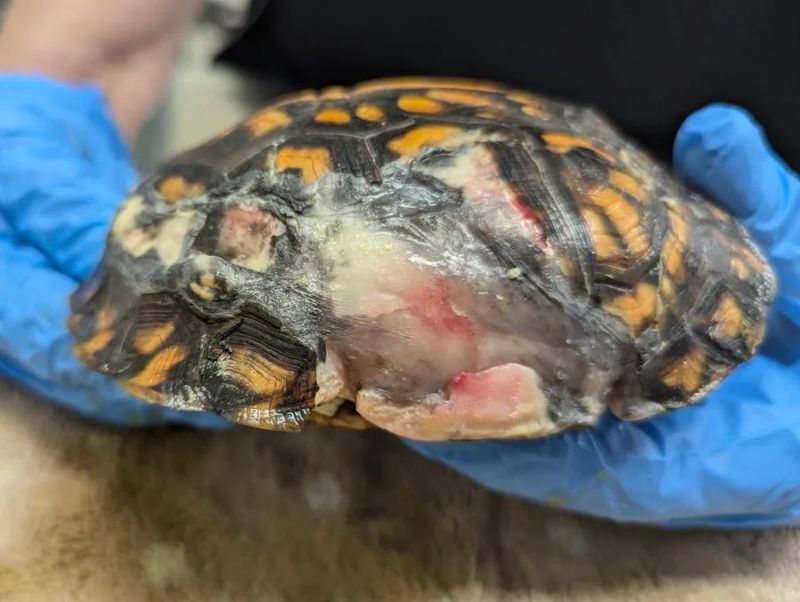
The signs that actually call for outside help are different: a visibly cracked or broken shell, active bleeding, a wound you can see, a turtle that cannot hold its head up, or an animal that appears severely weak and unresponsive even when approached closely. Those are real injury signals, and the right move is to contact a licensed reptile wildlife rehabilitator rather than attempt home treatment or bring the turtle indoors.
NC Wildlife explains that captivity is stressful for wild animals and that reptile care requires specialized knowledge most households do not have. North Carolina generally requires authorization to possess live wildlife, so keeping an injured turtle on your kitchen floor overnight is not a neutral act.
A rehabilitator has the legal standing and the training to actually help.
If you do need to handle the turtle while arranging care, wear gloves and wash your hands thoroughly afterward. NCWRC handling guidance notes that turtles can carry Salmonella, which is reason enough to be careful.
One more thing: box turtle handling advice does not transfer to every turtle you might find. Larger species, especially snapping turtles, can deliver a serious bite and require a completely different approach.
If you are not certain what you are looking at, stay back and call a professional.
Make the Yard Better Without Managing the Turtle

Here is where the story gets genuinely satisfying. You cannot force a box turtle to stay in your yard, but you can make your yard the kind of place one would actually want to use.
That distinction matters, because it shifts your energy from managing an animal to improving a habitat.
NC Wildlife’s suburban backyard habitat guidance recommends layered plantings as a starting point: native shrubs and small trees over lower groundcovers, with some open patches of leaf litter in between. A brush pile tucked in a back corner takes about 20 minutes to build and provides cover for turtles, toads, skinks, and a long list of other animals that keep a yard feeling alive.
Replacing even a small section of lawn with diverse native plantings gives wildlife more food and more places to hide without making the whole yard look untended.
Native plants are the practical choice here. Species like beautyberry, native viburnums, and wild strawberry produce fruit that box turtles actually eat.
Mushrooms, earthworms, and insects that turn up naturally in a yard with good leaf cover round out the diet. None of this guarantees that a particular turtle will settle in or return, and it would be misleading to promise otherwise.
What these changes do is make the yard genuinely useful to wildlife passing through.
If you find a nest while gardening, the temporary protection option is a small square of chicken wire or hardware cloth set lightly over the disturbed soil. NC Wildlife advises removing it once the soil settles, usually within one to two weeks, because a cover left in place can trap hatchlings.
Eggs may take up to 90 days to hatch and sometimes overwinter, so mark the spot gently and leave the ground undisturbed.
A Simple Decision Rule for Gardeners
Most encounters with an eastern box turtle come down to one question: does this animal need me to do something right now? The answer is almost always no.
Run through this sequence and you will handle it correctly every time. If the turtle is healthy and in your yard, leave it where it is.
Keep pets and kids back, give it space, and let it move on its own schedule. If an immediate hazard in the yard makes that impossible, move the turtle only the shortest safe distance, less than 50 feet, within the same area.
If it is crossing a road and you can help safely, carry it forward to the opposite shoulder in the direction it was already going, then step back. If it shows real signs of injury, cracked shell, bleeding, obvious trauma, or severe unresponsiveness, contact a licensed reptile wildlife rehabilitator rather than attempting care at home.
Before any handling, take a moment to confirm what you are looking at. Eastern box turtles are the only fully terrestrial turtle native to North Carolina, but the state has 21 native turtle species total.
NCWRC handling guidance is clear that larger turtles, especially snapping turtles, require a completely different approach. If you are not certain of the species, do not handle it.
The best thing a North Carolina gardener can offer a box turtle is not a new address. Restraint, a yard with some cover and native plants, and the good sense to let a wild animal navigate its own familiar ground, that is the most useful help you have.