
Simple Backyard Habits That Improve Your Chances Of Seeing Painted Buntings In Your Texas Yard
Follow us on Google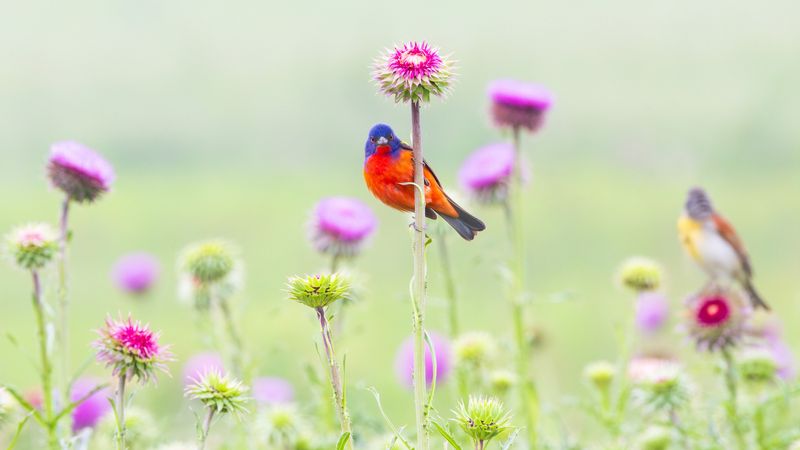
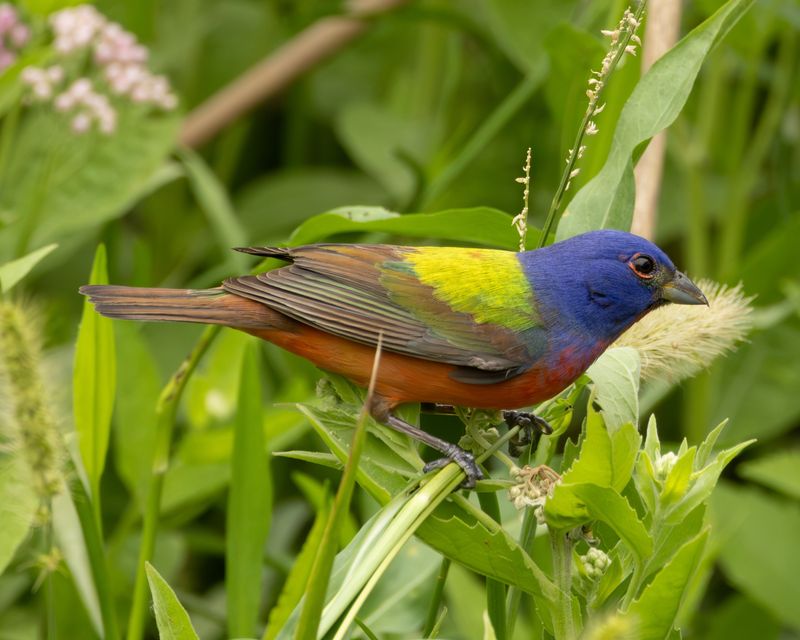
Painted Buntings are arguably the most dazzling birds that visit Texas yards, and spotting one feels like finding a jewel in the grass.
Many Texas homeowners set out a feeder and wait, only to wonder why nothing shows up.
The truth is that these birds care far more about cover and habitat than about seed alone.
Build the right conditions and your odds of seeing them repeatedly go up considerably, though no yard setup can promise a visit every single summer.
Start With Cover, Not A Feeder
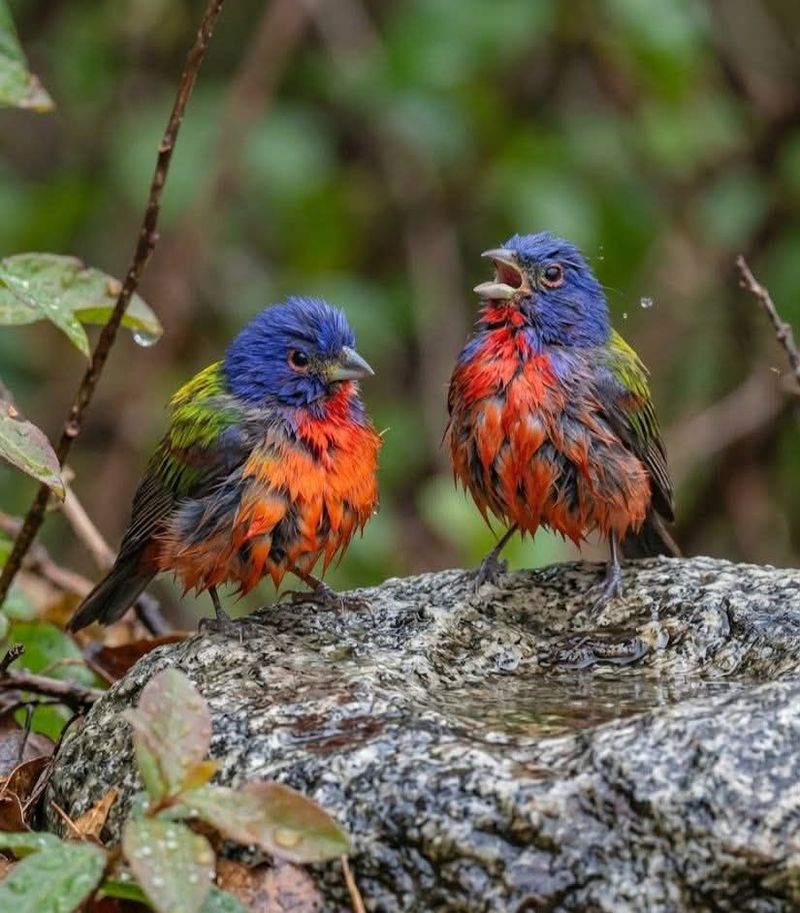
Painted Buntings have a reputation as feeder birds, but that reputation skips over something important.
Texas Parks and Wildlife Department notes that Painted Buntings rarely visit backyard feeders when those feeders sit far from cover.
Before you spend a dollar on seed, walk your yard and ask honestly: does it have anywhere a small, secretive bird would feel safe?
Painted Buntings breed in semi-open landscapes with dense thickets, woodland edges, streamside vegetation, brushy roadsides, and patches of grasses and wildflowers.
Cornell Lab of Ornithology’s Painted Bunting life history describes them as birds of scattered shrubs and tangled low growth, not closely mowed open lawns.
A yard that is all turf grass and a single ornamental tree gives a bunting almost nothing to work with.
The first step, then, is to identify one corner where you can allow or plant a compact brushy pocket beside a slightly more open area where a bird could feed.
That pocket does not need to be large or messy.
It just needs to offer dense low cover within a few seconds of an escape route.
Also consider what surrounds your yard.
A property near a creek bottom, a fallow field edge, or a wooded lot has a real advantage.
TPWD’s Wildscape certification guidance points out that connecting your yard to existing habitat corridors gives wildlife more reason to pass through and stop.
Thoughtful conditions can genuinely improve the odds of repeat sightings, but they cannot compel a wild bird to return.
That distinction matters, and this whole article is built around it.
Choose Plants For Your Ecoregion
One of the most common mistakes Texas homeowners make is following a generic bird-garden plant list pulled from a national source.
Texas spans ten distinct ecoregions identified by TPWD, and a plant that thrives in the moist Pineywoods of East Texas may die in the shallow caliche of the Hill Country within a single summer.
Before you buy anything, check TPWD’s plant guidance organized by ecoregion.
That resource matches recommended species to local soil, rainfall patterns, and climate conditions.
Your actual site matters more than any broad regional label like “Central Texas” or “South Texas,” because soil types, drainage, and average rainfall can vary even within a single county.
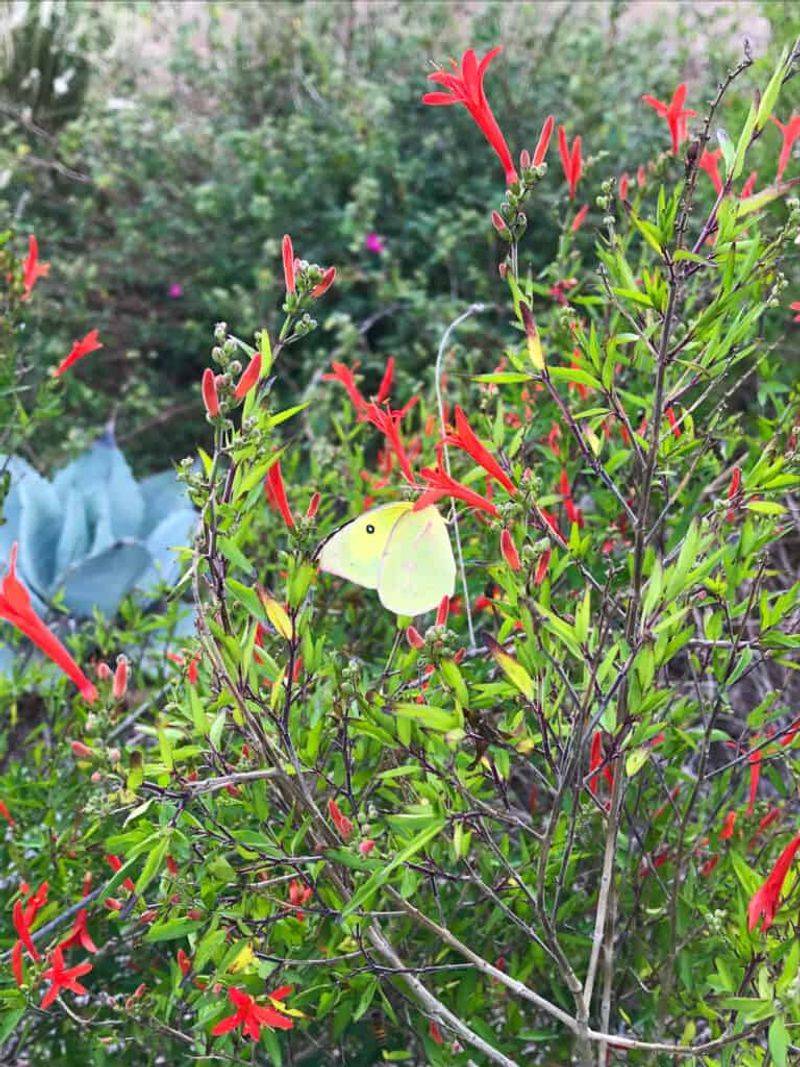
Plants like Turk’s cap (Malvaviscus arboreus var. drummondii), autumn sage (Salvia greggii), flame acanthus (Anisacanthus quadrifidus var. wrightii), Gregg’s mistflower (Conoclinium greggii), lantana (Lantana urticoides), Texas sage (Leucophyllum frutescens), live oak (Quercus virginiana), native milkweeds, and native grasses are sometimes listed as possible habitat components in Texas bird gardens.
TPWD’s Wildscape program presents these as regionally variable options, not as guaranteed Painted Bunting attractants that work everywhere in the state.
What matters most is whether a plant actually survives and grows dense enough to provide cover.
A struggling plant that needs constant irrigation during a Panhandle drought or a Gulf Coast summer offers a bird almost nothing.
Choose what will genuinely thrive in your specific yard, and let the cover do the work.
Build A Layered Habitat Pocket
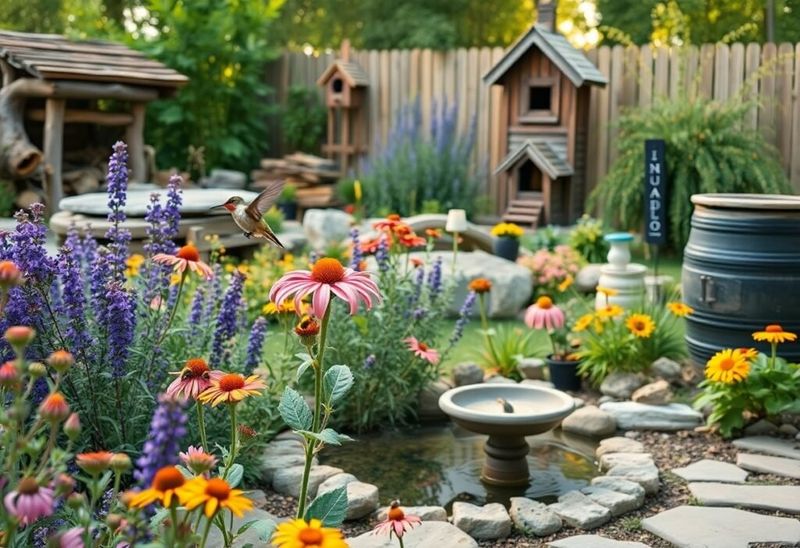
Layering is the concept that separates a useful habitat pocket from a random collection of plants.
TPWD’s Wildscape certification program recommends combining tall trees, smaller trees, shrubs, perennials, grasses, and groundcovers so that wildlife can find food and shelter at different heights.
For Painted Buntings specifically, the most valuable layer is dense, low cover, roughly 3 to 6 feet off the ground, placed near a slightly more open spot where a bird can land and feed.
Retain a brushy corner, a hedgerow, or a thicket rather than clearing every volunteer plant that appears.
Keep paths, patios, and high-traffic areas orderly while letting one or two defined habitat pockets stay dense.
TPWD’s wildscape design guidance also suggests including nearby perches, bare branches or fence posts where birds can pause and scan before dropping into cover.
In wildfire-prone areas of Texas, especially the wildland-urban interface zones of the Hill Country, Trans-Pecos, or Rolling Plains, TPWD recommends keeping highly flammable vegetation at least 30 feet from your home’s structure.
Dense native plantings are genuinely valuable, but they should not pile up against the house or create a continuous fuel path toward a structure.
Also check for invasive plants before you let any thicket establish.
Chinese tallow, giant reed, and privet can take over a brushy corner fast and outcompete the native plants that actually support birds.
TPWD’s Painted Bunting page frames the goal as planned, managed habitat, not simply letting a yard go wild.
That framing keeps your neighbors and your local fire district on your side, too.
Support Seeds And Insect Prey
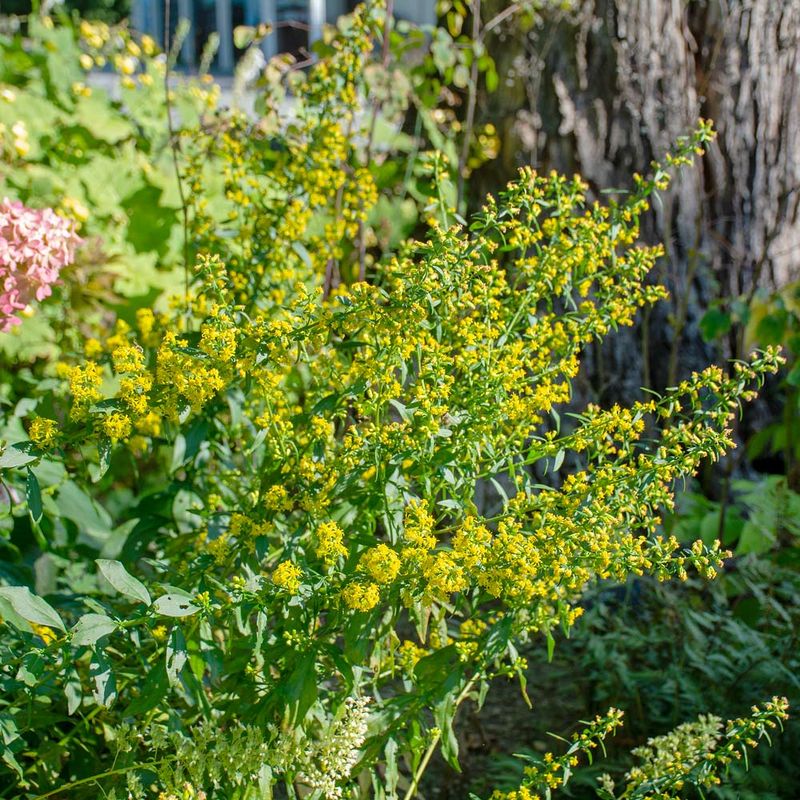
Most people think of Painted Buntings as seed eaters, and for much of the year that is accurate.
But during the breeding season, the picture changes.
Cornell Lab’s Painted Bunting life history documents that breeding adults feed nestlings insects including grasshoppers, beetles, caterpillars, bugs, spiders, snails, wasps, and flies.
A yard focused only on seed misses that part of what the birds need when they are raising young.
Growing locally suited native plants is the most practical way to support insect availability.
TPWD and TPWD’s South Texas wildscape tips both note that native plants may reduce the need for insecticides because they are adapted to local conditions and tend to support the insect communities that birds depend on.
Tolerating some ordinary caterpillar or beetle activity on your plants is part of the deal.
Avoid broad-spectrum insecticides whenever possible in and around the habitat pocket.
If a pest problem genuinely requires treatment, follow the product label closely, avoid spraying flowering plants while pollinators are active, and keep any pesticide away from birdbaths, ponds, or shallow water features.
University of Minnesota Extension’s pesticide-smart guidance makes the point plainly: targeted, label-compliant treatment does far less collateral damage than routine broadcast spraying.
The practical goal is a yard where insects have somewhere to live and reproduce.
Native grasses with seed heads, flowering perennials, and dense low shrubs all contribute to that.
A yard that supports a functioning insect community quietly offers Painted Buntings and dozens of other bird species more than a tidy, chemically managed lawn ever could.
Add Clean, Shallow Water
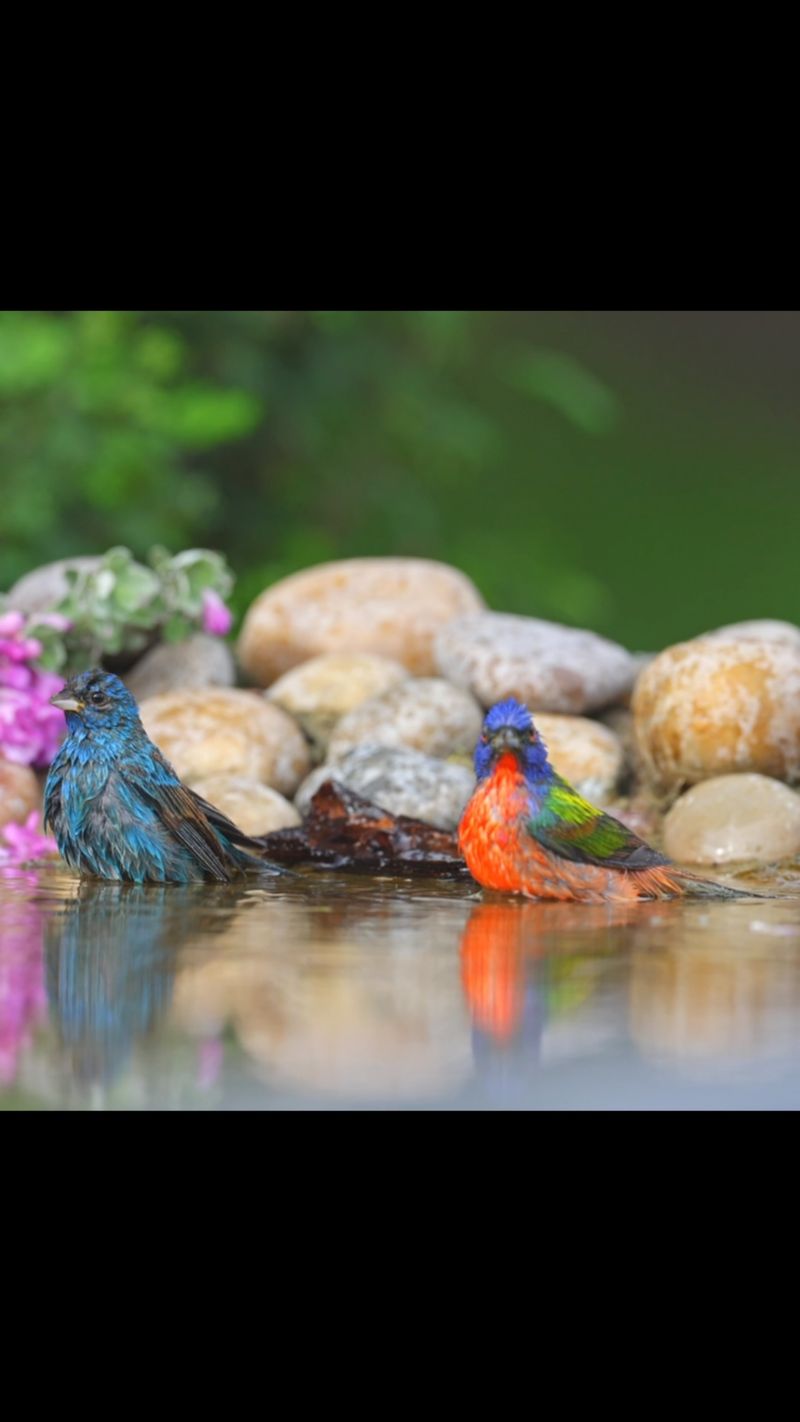
Water is one of the most reliable ways to make any yard more useful to birds in general.
TPWD’s wildscape design tips recommend a simple pan, birdbath, or shallow pool, kept clean and filled consistently.
You do not need an elaborate water feature.
A wide, shallow basin about 1 to 2 inches deep at the center works well for small songbirds.
A dripper or small aerator can increase general bird use because moving water catches light and makes sound that birds notice from a distance.
That said, moving water is not a documented Painted Bunting requirement.
Think of it as a bonus that benefits the whole yard, not a bunting-specific trick.
Maintenance is where most birdbaths fail.
Cornell Lab’s birdbath algae guidance advises changing the water at least every 3 days, and more frequently during hot Texas summers when algae and mosquito larvae develop quickly.
Scrub the basin when you refill it, remove any green film, and dump and refresh after heavy rain or anything that visibly contaminates the water.
In Texas, water restrictions are real, especially during drought years in the Hill Country, West Texas, or South Texas.
A small birdbath uses far less water than a lawn sprinkler, but you should still follow your local municipality’s watering rules.
Place the bath where you can see it easily from inside, so you remember to check it every couple of days.
That simple habit, more than the bath’s design or location, is what keeps the water genuinely useful to birds passing through your yard.
Use Feeders As A Small Experiment
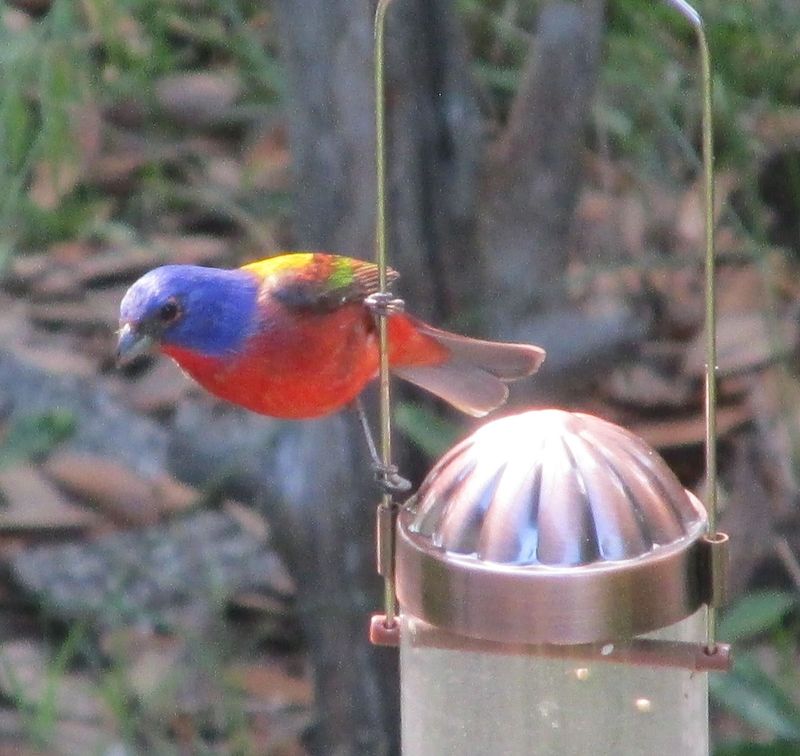
Here is where many Texas homeowners put all their effort first, and the results disappoint them.
TPWD’s Painted Bunting species page is direct about this: Painted Buntings rarely visit feeders when those feeders are placed far from cover.
If the habitat pocket is not in place first, a feeder sitting in the open is mostly decoration.
If you do add a feeder, position it within a few feet of the dense cover you have already established, close enough that a small bird can reach safety in under 3 seconds, but not buried inside vegetation where a cat or hawk could wait unseen.
White millet appears often in informal bunting advice, but the authoritative sources reviewed here do not establish it as a proven Painted Bunting-specific attractant.
Treat it as one option to try, not a guaranteed draw.
TPWD’s wildscape tips also caution that feeders should not become the yard’s sole food source.
Feeder maintenance matters more in Texas heat and humidity than most guides acknowledge.
Cornell Lab’s feeder cleaning guidance recommends scrubbing seed feeders about every 2 weeks, and more often during wet weather or heavy use.
Discard any visibly moldy seed rather than trying to dry it out.
Remove accumulated hulls and droppings from beneath the feeder regularly.
Cornell’s safe summer feeding Q&A specifically warns against overfilling feeders in warm, humid conditions.
Two more safety habits apply to every feeder setup.
Place feeders either within 3 feet of a window or more than 30 feet away, because Cornell’s bird-feeding guidance identifies the middle range as the most dangerous for window collisions.
And keep cats indoors or in a genuinely enclosed outdoor enclosure.
University of Minnesota Extension’s forestry and birds resource lists outdoor cat predation as a major general hazard for backyard birds across North America.
Watch Without Expecting A Guarantee
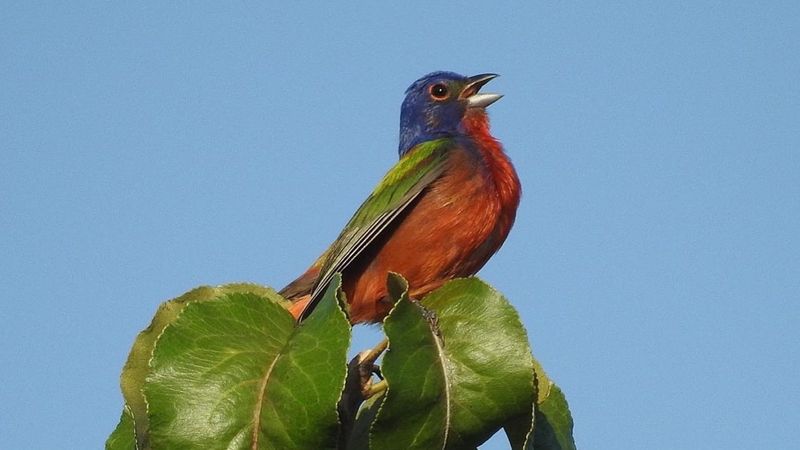
Painted Buntings are common summer residents in much of Texas, but common does not mean uniformly distributed.
TPWD describes them as widespread across much of the state while also noting that they are secretive and tend to stay in dense brush.
A yard in good bunting country but surrounded by unsuitable development may still go seasons without a confirmed sighting.
The colorful adult male is far easier to spot than a female or an immature bird, both of which are greenish and blend into vegetation remarkably well.
Males may sing briefly around sunrise from a raised perch, often the top of a shrub or a fence post, before dropping back into cover.
If you are only looking for a flash of red and blue and green, you may miss the quieter birds that are actually present.
Some Painted Buntings do return to the same locations across multiple seasons.
A long-term USGS study of the eastern coastal Painted Bunting population found that 78 percent of adult-male resightings and 81 percent of adult-female resightings occurred at the same study site where birds were originally banded.
That is encouraging, but the study population lived in a different habitat and region than most Texas backyards.
It supports the possibility of repeat use, not a promise of it.
Cornell Lab’s life history account notes that Painted Buntings migrate south in fall to Mexico, Panama, and parts of the Caribbean, with local timing varying by population, latitude, and weather.
Spend 15 to 20 minutes near sunrise watching the edge of your habitat pocket during the local breeding season.
Look for movement and listen for the song before judging whether the yard is working.
Let The Habitat Do More Than Attract One Bird
Pull the whole approach together and the to-do list is actually short.
Choose plants suited to your specific ecoregion and site conditions.
Maintain one layered, low-cover habitat pocket beside a more open feeding area.
Support both seeds and insects by growing locally appropriate natives and keeping pesticide use restrained.
Provide clean, shallow water and refresh it at least every 3 days.
Use a feeder only as a supplement to habitat, not as a replacement for it, and keep it clean on a 2-week schedule.
One visit does not prove that your yard is a meaningful conservation refuge, and a quiet season does not mean the habitat failed.
TPWD’s Wildscape program frames the goal honestly: a well-designed yard can offer useful food and cover to Painted Buntings and many other wildlife species, while respecting fire safety, local water restrictions, and regional growing conditions.
That is a realistic and genuinely worthwhile outcome.
Cornell Lab reminds us that Painted Buntings are free-moving wild animals that choose their own stopping points each season based on conditions you cannot fully control.
The quiet pride of this kind of yard is not a guaranteed sighting.
It is knowing that if a Painted Bunting does come through your corner of Texas, your yard will actually be worth stopping in.