
More Praying Mantises In Your Pennsylvania Garden Means Fewer Lanternflies Chewing Your Trees
Follow us on Google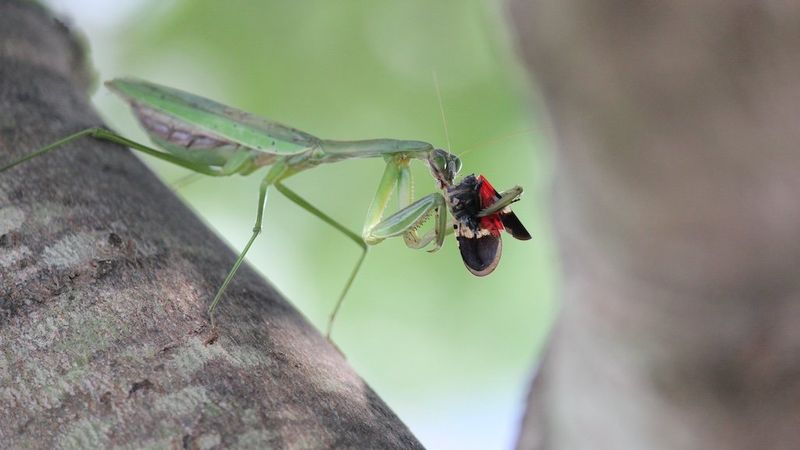
Walk out to your backyard on a warm July evening in Pennsylvania and you might spot a praying mantis perched motionless on a stem, waiting.
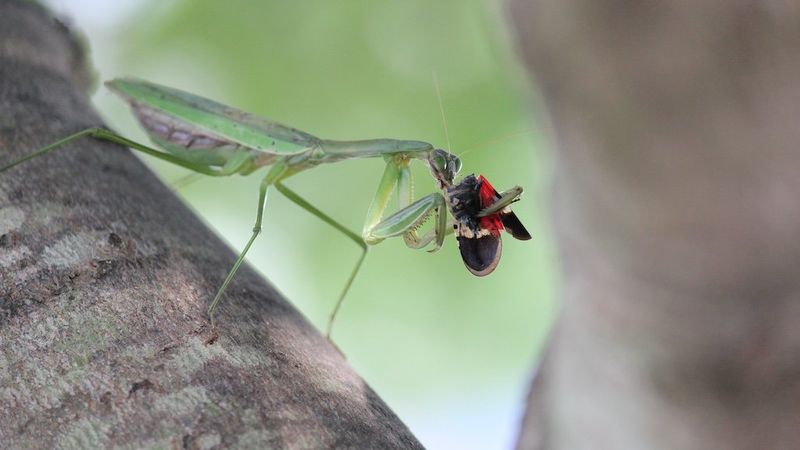
What you may not know is that the same insect has been quietly hunting spotted lanternflies, those colorful sap-suckers that have been feeding on trees and shrubs across the state since arriving from Asia.
Recent lab studies confirm that mantises genuinely do eat spotted lanternfly nymphs and adults, making them a useful, low-effort ally in your yard.
They are not a magic fix, but understanding what they can and cannot do gives you one more smart layer in keeping your trees and garden healthier.
Mantises Really Do Eat Spotted Lanternflies
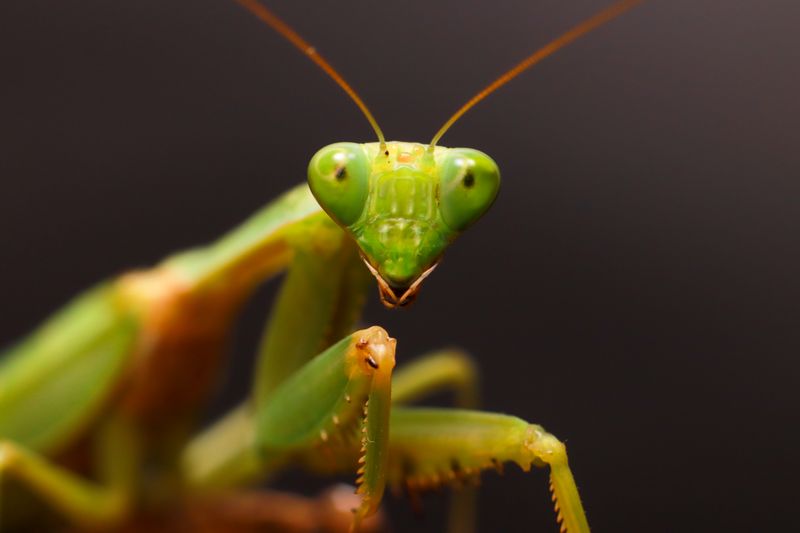
Spotted lanternflies do not chew your trees the way a caterpillar would.
They pierce plant tissue and suck sap, leaving behind sticky honeydew and, over time, a black sooty mold that coats leaves and bark.
That distinction matters when you are deciding which yard allies can actually intercept them.
Here is where the good news comes in.
A 2025 study on generalist arthropod predators in North America found that Carolina mantises and Chinese mantises consumed spotted lanternfly nymphs and adults under controlled conditions, placing mantises among the more effective generalist predators tested.
A separate 2025 USDA Agricultural Research Service study tested five mantis species and found that every one of them readily ate adult spotted lanternflies when given the opportunity.
That is genuine, documented predation, not gardening folklore.
What those studies do not show is that a yard full of mantises will measurably reduce the number of lanternflies feeding on your maple or black walnut.
The experiments placed predators and prey together at close range.
A real Pennsylvania yard is far messier, with lanternflies flying in from neighboring properties, mantises wandering off, and dozens of other insects competing for attention.
So the honest version of the headline promise is this: mantises may eat some spotted lanternflies that wander within reach, and that makes them worth welcoming.
Treating them as a guaranteed pest-control program, though, sets you up for disappointment.
Think of a mantis as one quiet hunter in a larger team, not the whole defense.
The Evidence Stops at Predation
Laboratory results and backyard reality are two very different things, and being clear about that difference actually makes the mantis story more useful, not less.
In the 2025 controlled-environment research, mantises were placed with spotted lanternflies at close range with limited escape routes.
Predation happened reliably under those conditions.
A southeastern Pennsylvania yard operates on completely different rules.
Lanternflies can fly in from a neighbor’s tree-of-heaven overnight, replenishing whatever a mantis removed the day before.
A well-fed mantis may ignore a passing lanternfly entirely and hunt something easier.
Mantises also move, disperse, and sometimes fall prey to birds before they get a chance to hunt at all.
No cited study provides a mantis-per-square-yard recommendation or demonstrates a measurable drop in tree injury as mantis numbers rise.
Compare that to Penn State Extension’s spotted lanternfly guidance for homeowners, which centers on physical removal of egg masses, managing host plants, and using labeled pesticides when infestations threaten valuable plants.
Mantises do not appear there as a stand-alone solution, because the field evidence does not support that role yet.
That is not a reason to dismiss mantises.
It is a reason to place them correctly in your plan.
They may quietly remove some nymphs and adults from your yard on any given summer afternoon, and over a full season that adds up to something real.
Just pair that quiet work with the other layers your yard actually needs, and you will be working with what the evidence genuinely supports.
A Mantis Hunts More Than Lanternflies
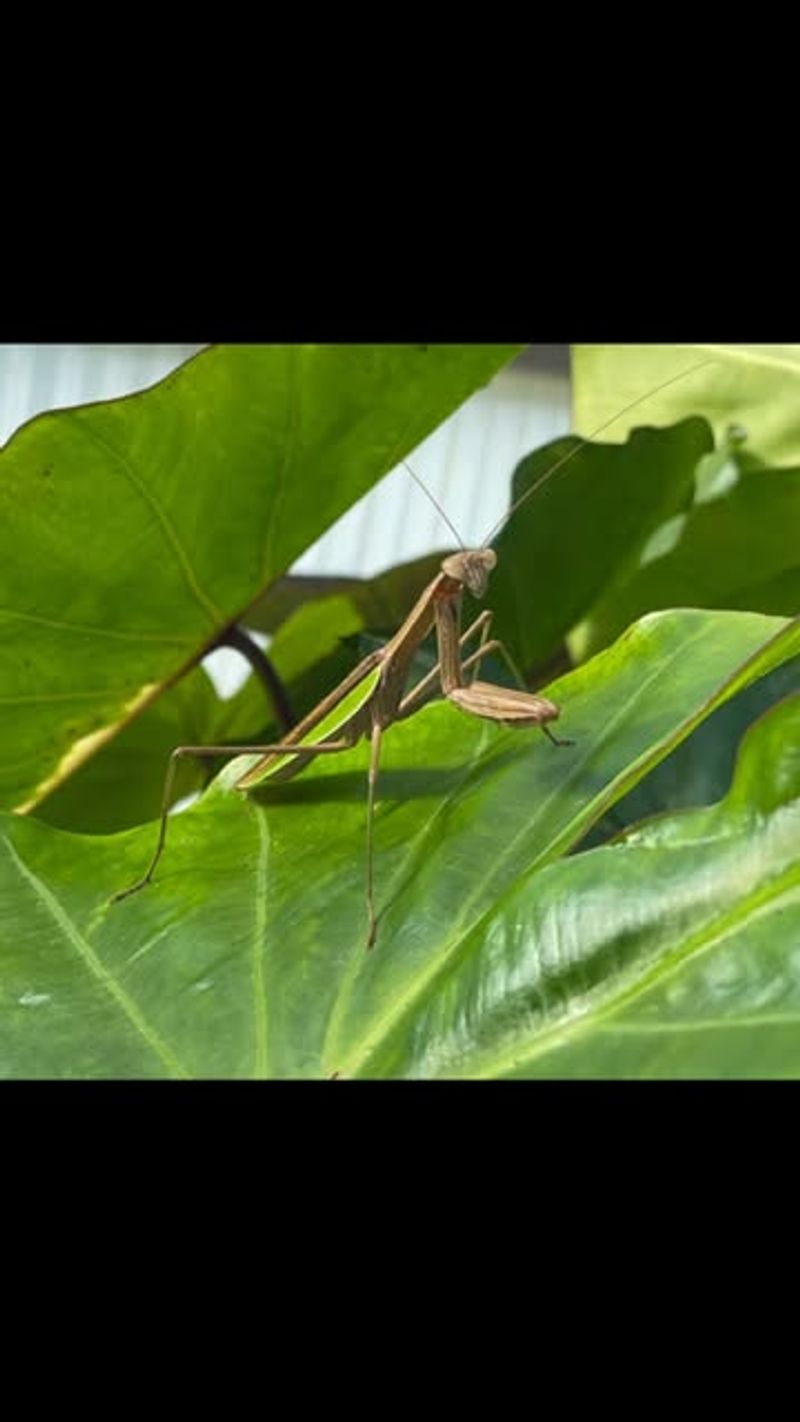
Mantises are ambush hunters with no loyalty to your pest list.
A Chinese mantis (Tenodera sinensis) sitting on a goldenrod stem in your Susquehanna Valley garden is equally happy to take an aphid, a caterpillar, a bumble bee, or a monarch butterfly passing through on its fall migration.
That is the honest tradeoff of welcoming a generalist predator.
Penn State Extension notes that generalist predators signal a healthy, active landscape, but cautions that they feed on both pests and beneficial organisms without discrimination.
A mantis does not know that the bee it just grabbed was pollinating your tomatoes.
This is why one visible adult mantis does not tell you much about your yard’s overall predator situation.
Several egg cases may be tucked into shrub stems nearby while you never see the adults that hatch from them.
And when lanternfly numbers spike in late summer, more predators get exposed simply because prey is everywhere, which can make it look like mantises are controlling the population when the relationship may actually run the other way.
The practical point is not to avoid mantises but to avoid over-relying on any single hunter.
A diverse yard with layered plantings, good leaf litter, and minimal pesticide use can support ground beetles, spiders, wheel bugs, and birds alongside mantises, each hunting in a slightly different niche.
No single one of them functions like a dedicated pest service.
Together, they quietly chip away at the problem every day without any extra effort from you.
Build Habitat Instead of Buying Predators

Purchasing mantis egg cases and releasing them rarely delivers what gardeners hope for.
Released mantises disperse quickly, may not stay on your property, and do not arrive with any particular preference for spotted lanternflies.
The better investment is making your existing yard attractive enough that naturally occurring mantises, along with a whole community of other beneficial insects, choose to stay.
Penn State Extension’s pollinator habitat guidance recommends a mix of trees, shrubs, turf, annuals, and perennial flowers with blooms available from early spring through late fall.
For a Pennsylvania yard, that can mean goldenrod (Solidago canadensis) and native asters carrying the season into October, with bee balm (Monarda didyma), purple coneflower (Echinacea purpurea), and mountain mint (Pycnanthemum muticum) filling the summer gap.
Herbs like dill, coriander, and fennel add structure and draw in smaller predatory wasps and flies that also hunt lanternfly nymphs.
No single plant guarantees enough mantises to control spotted lanternflies, and planting size or bloom schedule alone will not produce a pest-free yard.
What diverse plantings do is raise the overall population of beneficial insects so that predation is happening across more species and more hours of the day.
Penn State’s guidance on attracting beneficial insects is clear that routine broad-spectrum insecticide applications undercut this whole approach.
Even insecticidal soaps, horticultural oils, and botanical products can harm insects contacted during application, including the mantises and native bees you are trying to protect.
Save any treatment for targeted use on a specific plant with a specific problem, and your yard’s natural hunters get to keep doing their quiet work.
Protect Mantis Egg Cases Outdoors
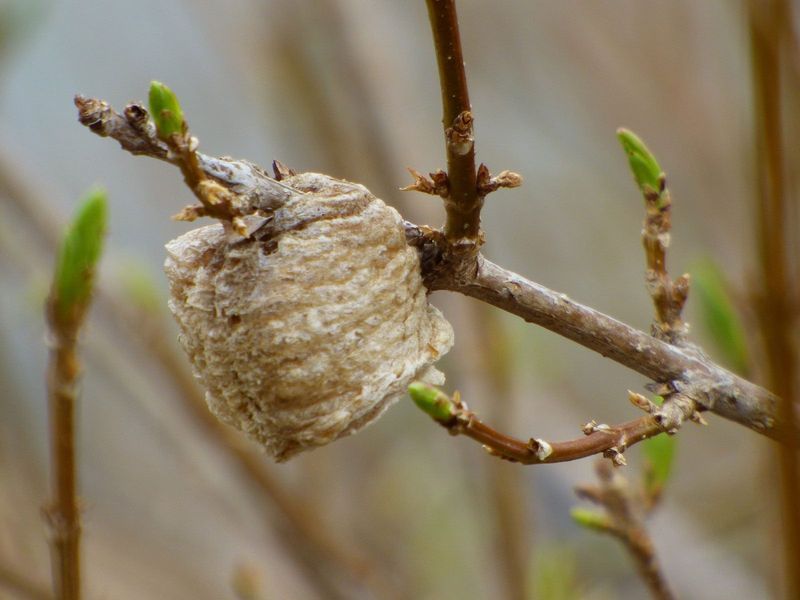
Every papery, foam-like egg case you spot on a shrub stem or wooden fence rail in your Pocono Mountains or Delaware Valley yard is a future generation of predators.
Mantises overwinter entirely as oothecae, the scientific name for those cases, and a single case can hold anywhere from a few dozen to several hundred eggs depending on the species.
The most common mistake well-meaning gardeners make is bringing a case indoors.
Indoor warmth tricks the eggs into hatching weeks ahead of schedule, releasing hundreds of tiny mantis nymphs into a house with nothing to eat.
Penn State Extension advises leaving egg cases outdoors where they belong, and if you must move one, take the whole attached branch or object outside rather than trying to raise the hatchlings yourself.
Pennsylvania hosts four documented mantis species.
The native Carolina mantis (Stagmomantis carolina) is smaller and well-adapted to local conditions.
Three introduced species, the Chinese mantis (Tenodera sinensis), the narrow-winged mantis (Tenodera angustipennis), and the European mantis (Mantis religiosa), are now well-established across much of the state.
All four are active predators.
The introduced species are common enough that most gardeners encounter them regularly, and the practical extension guidance treats all of them as beneficial in the yard context, not as targets for removal.
One thing mantises cannot do is replace your fall egg-mass scouting for spotted lanternflies.
The 2025 predator research documents predation on mobile nymphs and adults, not on lanternfly egg masses.
Those masses need a different approach entirely, which the next section covers.
Follow the Lanternfly Calendar
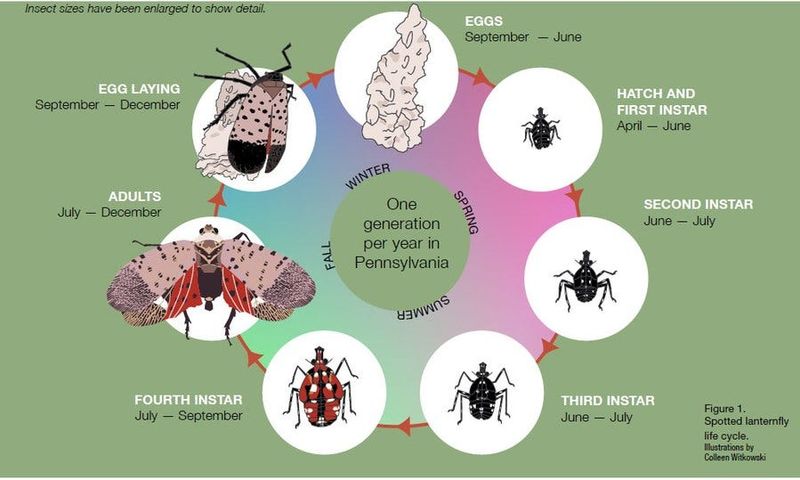
Spotted lanternflies run on a predictable one-generation-per-year schedule in Pennsylvania, and knowing that schedule turns a frustrating pest into a manageable one.
Timing varies with weather, elevation, and location across the state, so treat these windows as guides rather than hard dates.
Egg masses generally appear from late summer and persist through winter into early spring.
Penn State Extension recommends scraping or crushing reachable egg masses from September through May.
Each mass holds roughly 30 to 50 eggs, so destroying even a handful during a fall cleanup walk makes a real dent in next year’s local population.
Scrape them into a container of rubbing alcohol or hand sanitizer, or crush them thoroughly against a hard surface so every egg is destroyed.
Here is where the effort runs into a hard limit.
Do not climb ladders or attempt to reach masses high in a tree canopy.
The risk of a fall is not worth it, and the masses on neighboring properties, on vehicles parked outside, on patio furniture, and on fence posts will replenish your yard regardless.
The Pennsylvania Department of Agriculture tracks the lanternfly’s seasonal progression statewide, and nymphs typically begin emerging in spring, with adults present from roughly July through November.
Mantises can intercept those mobile stages, but they cannot reach the egg masses hidden in bark crevices 30 feet up.
Scraping and predators each cover different parts of the calendar, which is exactly why you want both working together.
Use Targeted Control When Plants Face Heavy Pressure
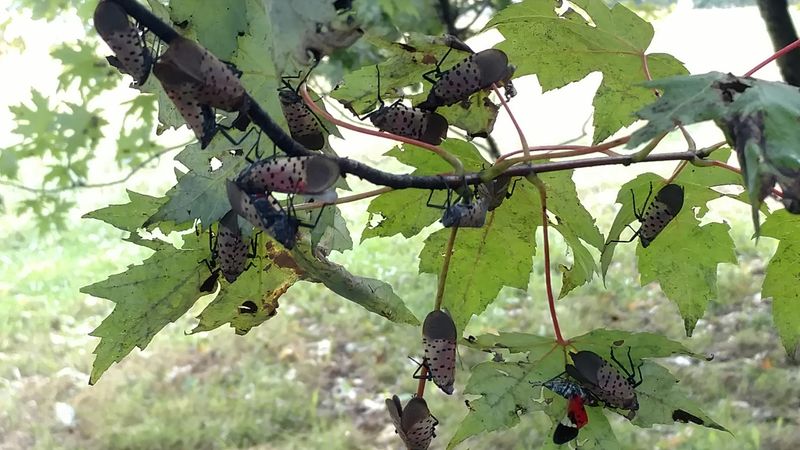
A few spotted lanternflies feeding on a large, healthy red maple in your central Pennsylvania yard are unlikely to cause permanent damage.
Trees can handle modest sap loss, and a wet summer in the Susquehanna Valley gives most established trees enough resources to compensate.
The calculus changes when numbers climb.
Heavy infestations can genuinely stress vulnerable plants, and the honeydew that spotted lanternflies excrete while feeding drips onto leaves and surfaces below, feeding a black sooty mold that blocks sunlight and makes a mess of patios and outdoor furniture.
The Pennsylvania Department of Agriculture identifies grapes, fruit trees, maples, black walnut, birch, and willow as plants facing greater risk under heavy lanternfly pressure.
When a valuable plant faces serious feeding, Penn State Extension’s pesticide safety guidance directs homeowners to identify the host plant and select only a pesticide labeled for that specific site and pest.
Spot treatment or selective application on the affected plant is far better than spraying the whole yard, which would eliminate the mantises, native bees, and other beneficial insects you have been working to protect all season.
Penn State explicitly warns against homemade sprays made with vinegar, salt, dish soap, essential oils, or other household materials.
Those mixtures can injure plants, harm pets, and kill non-target insects without reliably controlling lanternflies.
And skip the ladder work for high infestations.
Reach what you safely can from the ground, then let labeled treatment handle the rest.
Mantises, habitat, egg checks, and targeted pesticide use are four separate layers, and each one covers gaps the others cannot.
Let Mantises Help Without Expecting a Miracle
Your best mantis strategy costs almost nothing and takes about ten minutes a season.
Walk your yard in late summer and early fall, note any egg cases on shrubs, fence posts, or garden stakes, and leave them exactly where they are.
Add a few native perennials if you have bare spots, and hold off on any broad-spectrum sprays unless a specific plant truly needs them.
That is genuinely the whole job.
Pair that quiet work with a fall egg-mass walk from September through May, scraping every reachable lanternfly mass into alcohol or crushing it flat.
Penn State Extension’s egg-mass guidance keeps that task simple and safe, no ladders required.
Check outdoor furniture, vehicles, and fence rails too, because lanternflies lay eggs on almost any flat surface.
When a grapevine or young fruit tree faces a heavy wave of feeding in late summer, reach for a labeled product applied to that plant only, following Penn State’s pesticide safety guidance.
Spot treatment protects your investment without dismantling the beneficial insect community you have spent the season building.
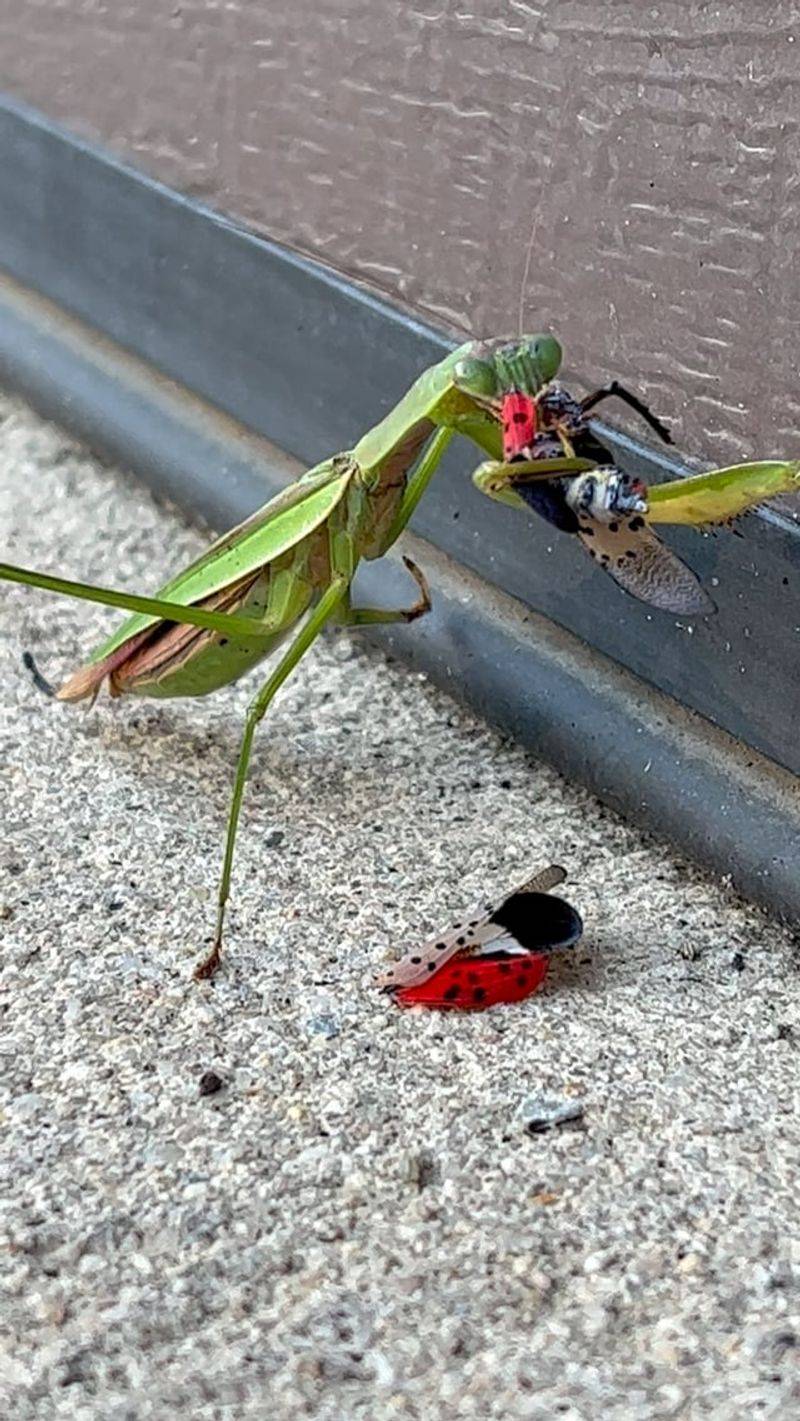
The precise, supported promise is this: mantises may remove some spotted lanternfly nymphs and adults from your yard across the season, and supporting a diverse community of beneficial insects makes that predation more likely to happen.
They cannot promise a pest-free tree or a damage-free summer.
What they can do is work quietly in the background while you handle the parts that need a human hand.
A yard that supports both is a yard that is genuinely harder for spotted lanternflies to own.