
The Florida Native Vines That Cover A Fence And Bring Painted Buntings To It
Follow us on Google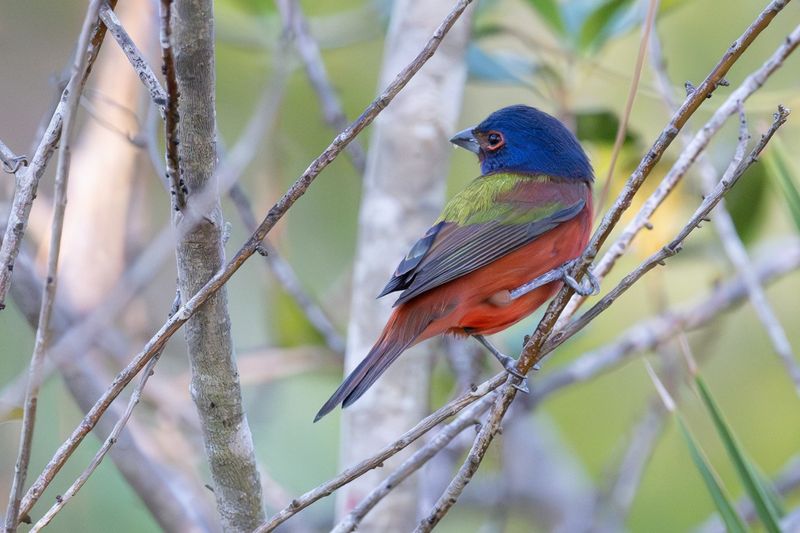
You step onto your patio after breakfast, and the air already feels heavy with the promise of another warm Florida day.
A flash of blue, red, and green zips past your eye, then vanishes into the hedge.
You know that was a painted bunting, one of the shyest jewels in the bird world, and you wish it would stay awhile.
Here is the thing many Florida homeowners miss.
That bare fence line is not a barrier, it is an unused invitation.
The right native vines turn plain chain-link or wood into dense cover, a food source, and a safe corridor these skittish birds genuinely trust.
This is a list of the Florida native vines that cover a fence and coax painted buntings to it, plus the ground-level touches that seal the deal.
You do not need a jungle.
You need the correct plants in the correct spots, matched to your part of the state.
1. Native Vines Turn A Fence Into Habitat
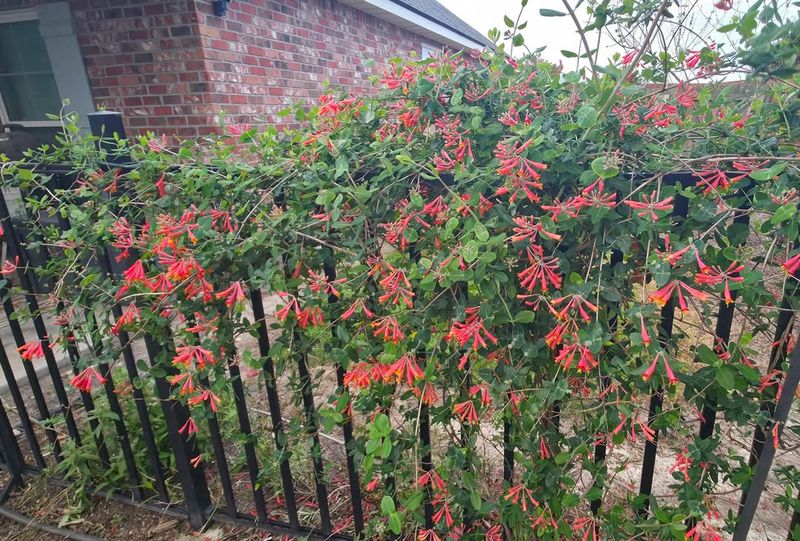
Most people look at a fence and see a boundary.
A painted bunting looks at the same fence and sees nothing worth stopping for, unless it is dressed in green.
Here is the turn.
Florida native vines are not the aggressive, house-swallowing kind that earn the whole group a bad name.
Our own climbing species build dense cover, hide seeds and berries inside their tangle, and give a shy bird an instant escape route when a hawk drifts over.
A bunting will drop into that kind of thicket without a second thought.
So your fence stops being a wall and starts being a vertical garden.
It cools the yard, softens the afternoon glare, and blooms with flowers that do not ask much of you in return.
Along both the Gulf Coast and the Atlantic Coast, that living screen also buffers salt spray better than a bare panel ever could.
The plants that follow each earn their spot for a different reason.
One feeds hummingbirds, one feeds you, one raises butterflies, and one simply covers ground fast when you need privacy yesterday.
Match the vine to your region and your fence, and the birds tend to find the rest on their own.
2. Coral Honeysuckle Feeds Hummingbirds Then Songbirds
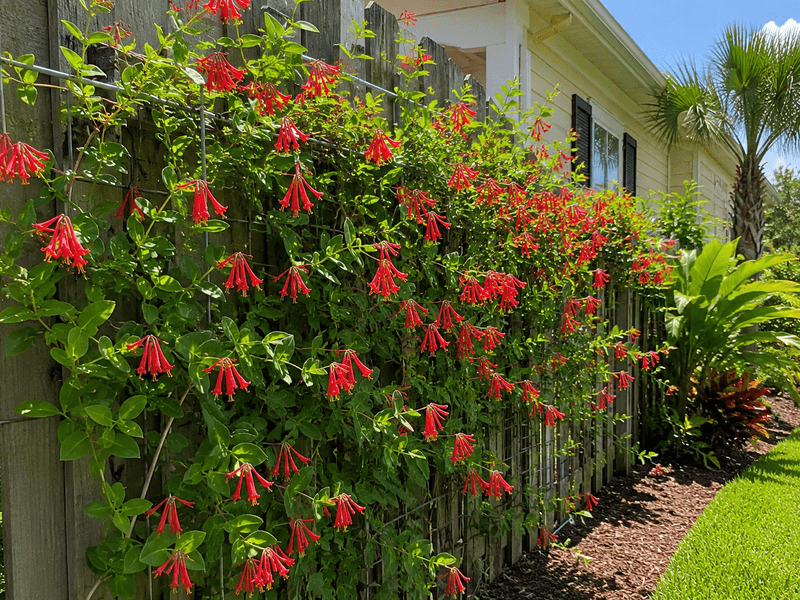
Bright, trumpet-shaped flowers in red and orange, blooming from spring straight through summer.
That is coral honeysuckle (Lonicera sempervirens), and hummingbirds treat it like a filling station.
But the real gift for painted buntings arrives after the show ends.
Once the blooms fade, clusters of small red berries ripen in late summer and fall, and songbirds including cardinals and mockingbirds work them over.
The dense, mostly evergreen foliage across Central and South Florida gives shy birds a spot to duck into the second they feel exposed.
Coral honeysuckle behaves itself, which is rare for a fast climber.
It grows well in USDA zones roughly 8 through 10, so gardeners from the Panhandle down through the peninsula can plant it.
Give it full sun for the heaviest flowering, though it tolerates a little afternoon shade in South Florida heat.
Space plants about 24 inches apart if you plan to prune, and train the young stems onto wires so they climb where you want.
It is not a magic bird magnet on its own, it is one dependable layer.
Plant it once and it rewards you for years, quietly stitching color and cover across a plain panel.
3. Muscadine Grape Feeds You And The Birds
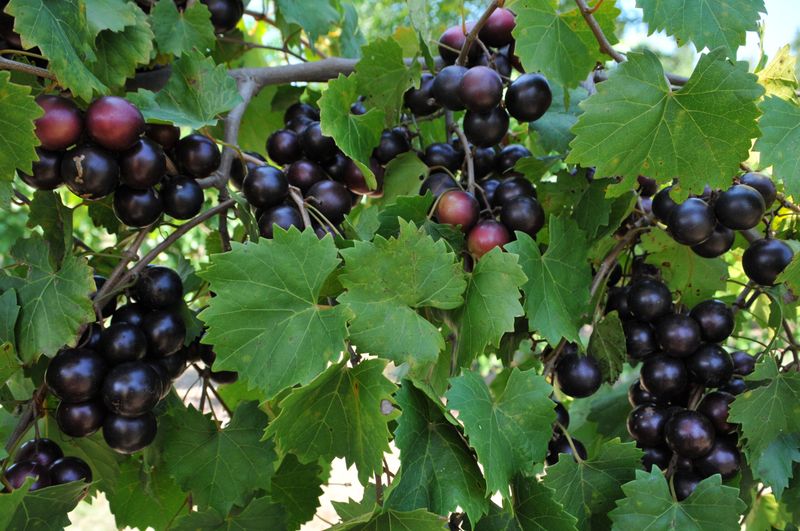
Plump, dark grapes ripening along your fence in late summer, sweet enough to snack on and rich enough to draw a crowd of birds.
Muscadine grape (Vitis rotundifolia) delivers both, and it is native from the Gulf Coast to the Atlantic Coast.
Do not expect a dainty plant.
Muscadine is a muscle vine, climbing to 20 feet and spreading fast, which makes it the natural pick for smothering an ugly chain-link run or an arbor.
It wants full sun and the well-drained, acidic sandy soil that shows up across so much of Florida.
Here is where it gets good for buntings.
Those intertwining stems build genuinely thick thickets, and thick thickets mean nesting spots and cover from predators.
A cautious bird will sit deep inside that tangle and feed on the fruit and the insects it attracts.
Give each vine 10 to 20 feet of room, because crowding it only invites fungal leaf spots in our humid summers.
Prune in late winter for the best fruit set.
Your county UF/IFAS Extension office publishes muscadine pruning guides worth reading before you cut.
You end up with a screen that feeds your family and the wildlife at the same fence.
4. Maypop Passionflower Raises Butterflies And Buntings
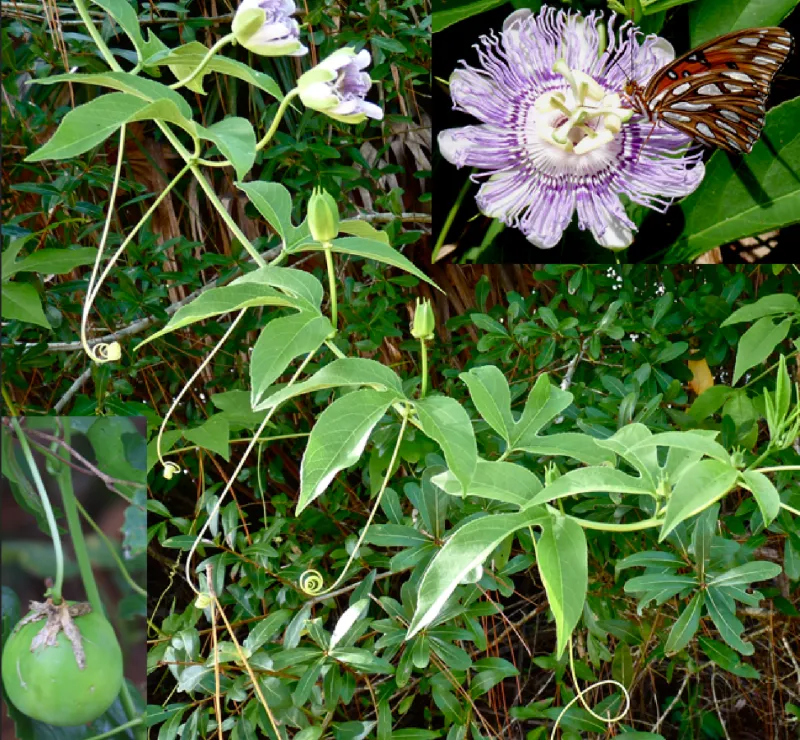
Few flowers stop a scroll like the maypop.
Its lavender and purple blossoms, often 2 and a half to 3 inches across, look almost engineered by someone with too much imagination.
Maypop passionflower (Passiflora incarnata) blooms spring through summer and pulls in hummingbirds along with a steady parade of butterflies.
Gulf fritillaries and zebra longwings lay eggs on it, using the leaves as a nursery, which is exactly why those caterpillars matter to birds.
Painted buntings feed insects to their young in breeding season, so a leaf full of caterpillars is a stocked pantry.
Native across North, Central, and South Florida, maypop grows in full sun to part shade and shrugs off sandy, loamy, or limestone-based soils.
After the flowers come egg-shaped green fruits in late summer and fall.
Its cousin corkystem passionflower (Passiflora suberosa) carries smaller fruits that birds pick clean.
Give it 5 to 10 feet of running room, because this vine sprints.
Expect chewed leaves and let them be, that damage is the whole point.
One plant on your fence stacks nectar, caterpillars, fruit, and cover into a single tidy footprint.
5. Virginia Creeper Covers Fast And Feeds In Fall
Sometimes you just need coverage, and you needed it last week.
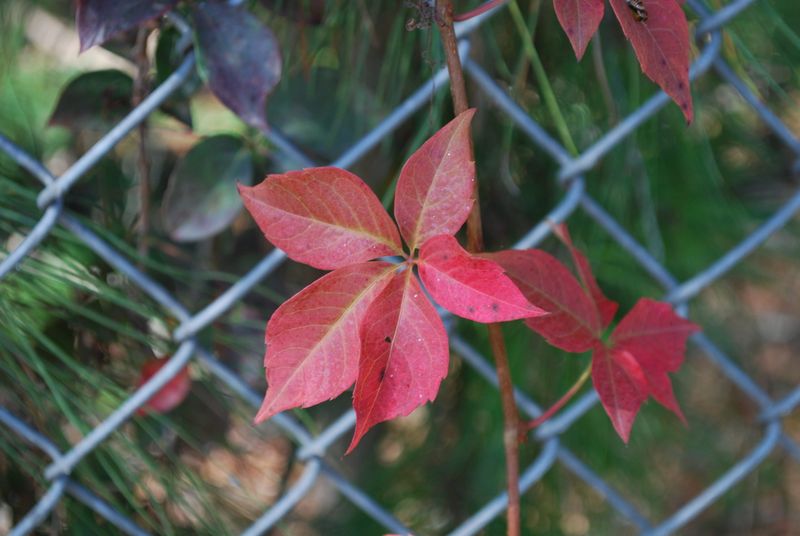
Virginia creeper (Parthenocissus quinquefolia) is the native that gets a bare fence green in a hurry.
This one adapts to almost anything, thriving from USDA zone 3 through 10 and handling full sun to deep shade, plus sandy, loamy, and shallow limestone soils common in South Florida and the Keys.
It drops its leaves in winter, but through the warm months those five-fingered leaves throw dense shade.
In fall the whole vine turns burgundy and crimson, a real show along a fence line.
The payoff for birds comes as small blue-black berries that ripen in late summer and fall, right when migrants need fuel.
Many songbirds strip them.
A quick honest warning, those berries are toxic to people, so keep curious kids clear of the fruit.
Clinging tendrils let Virginia creeper blanket a large panel fast, building the kind of tangle a painted bunting darts into when startled.
Trim it a couple of times a season so it does not climb painted siding or wander where you do not want it.
Fast, tough, and generous, it is the workhorse of the group.
6. Crossvine Screens A Fence Through Cool Snaps
Blunt truth.
If you garden in North Florida or the Panhandle and worry about a hard freeze, most vines look ragged by January.
Crossvine (Bignonia capreolata) does not.
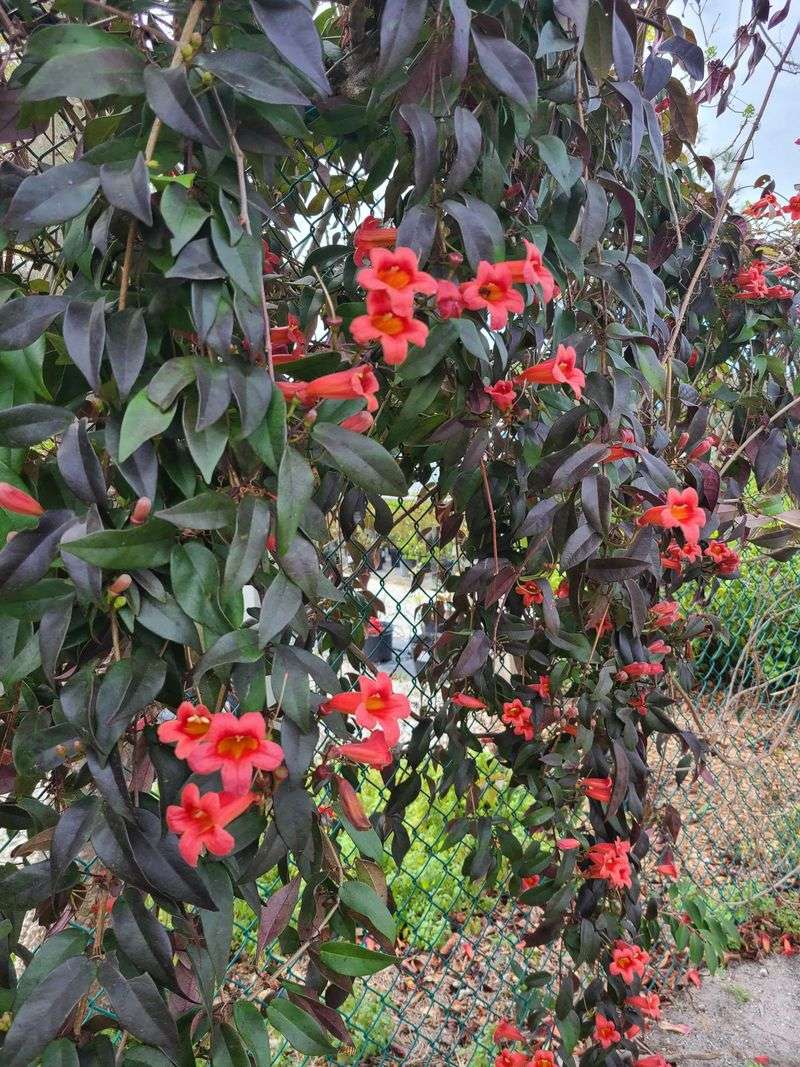
This tough native stays semi-evergreen through brief cold snaps in Central Florida and shrugs off the occasional dip toward the mid 20s in the north.
In early spring it erupts with orange-red trumpet flowers that hummingbirds chase before almost anything else has bloomed.
That early nectar matters when the calendar still says winter.
Crossvine climbs high and clings with little tendril discs, so it sheets a tall fence or a mailbox arbor without much fuss.
It handles full sun, part shade, and the acidic sandy soil that runs across so much of Florida.
Give plants 3 to 6 feet of spacing and a structure to grab, and it does the rest.
For painted buntings, the value is steady cover that does not vanish the moment temperatures drop.
Buntings winter in Central and South Florida from roughly October through April, and a vine that stays leafy gives them a reliable place to hide all season.
It is the dependable evergreen backbone behind the flashier fruit vines.
7. Plant Your Vines Right The First Time
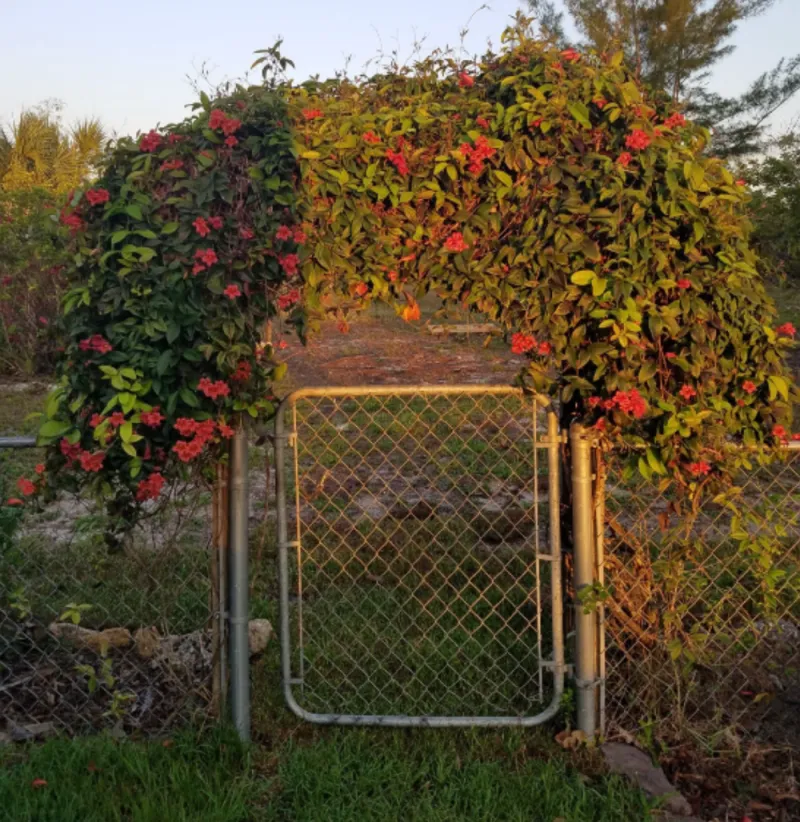
Get the planting wrong and even a tough native sulks for a year.
Get it right and it climbs like it has somewhere to be.
Start with sun.
Most of these vines flower and fruit best in full sun, though several tolerate part shade during the brutal afternoons of Central and South Florida.
Drainage comes next, because our poorly drained low pockets breed root rot fast.
If your spot stays soggy, work in organic matter before you plant.
Across the sandy soils covering much of Florida, these natives settle in easily.
Dig the hole twice as wide as the root ball and no deeper than the pot, then tease apart any circling roots so the plant does not strangle itself later.
Space vigorous growers like muscadine and maypop 5 to 10 feet apart, and set coral honeysuckle about 24 inches apart if you intend to prune it tight.
Water deeply the moment you finish.
A new vine wants roughly 1 inch of water per week for its first few months, from rain or the hose.
And put up a trellis or training wires from day one, because guiding a young stem is easy while wrestling a mature one is not.
Do this once and the vine practically raises itself.
8. Low Care Keeps The Green Wall Productive
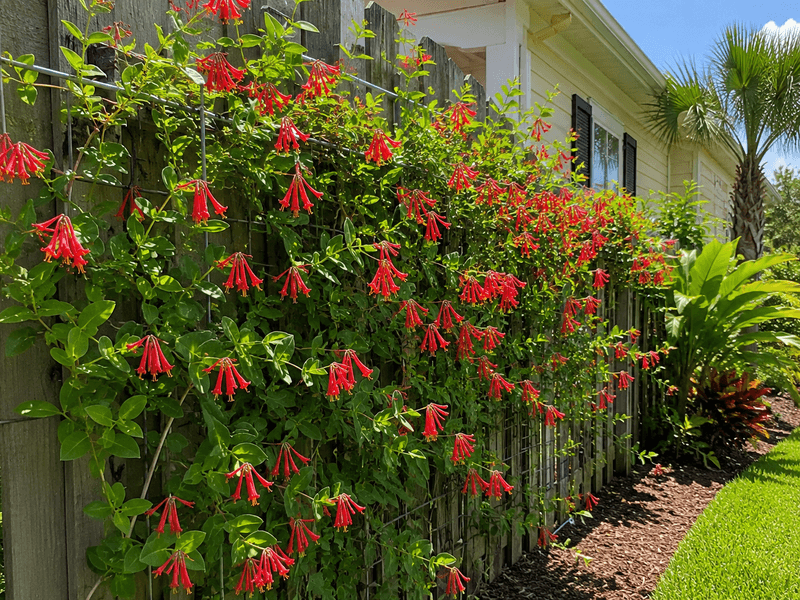
Established Florida natives are genuinely low fuss, which is the whole reason to choose them.
They evolved for our humid summers, sudden downpours, and winter dry spells, so they do not need babying.
A little pruning keeps them generous.
Trim coral honeysuckle lightly after each bloom flush to push more flowers.
Prune muscadine in late winter for good fruit, and cut back maypop whenever it starts bullying its neighbors.
Virginia creeper wants a trim or two a season so it does not creep onto painted wood siding.
Pests rarely take over on these plants.
You will see caterpillars chewing passionflower leaves, and that is a win, not a problem, so leave them.
Watch for fungal leaf spots on muscadine in the wettest stretch of summer, and improve airflow rather than reaching for a spray.
Occasional deep watering carries the vines through a drought, but our seasonal rain usually handles it.
Go easy on fertilizer, maybe two or three times a year with a slow-release organic feed.
Overfeeding grows leaves at the expense of the flowers and berries birds actually want.
A healthy, unhurried vine keeps producing the seeds, insects, and shelter that make a painted bunting feel at home.
That is the payoff for barely lifting a finger.
9. What Else Actually Helps Bring Buntings In
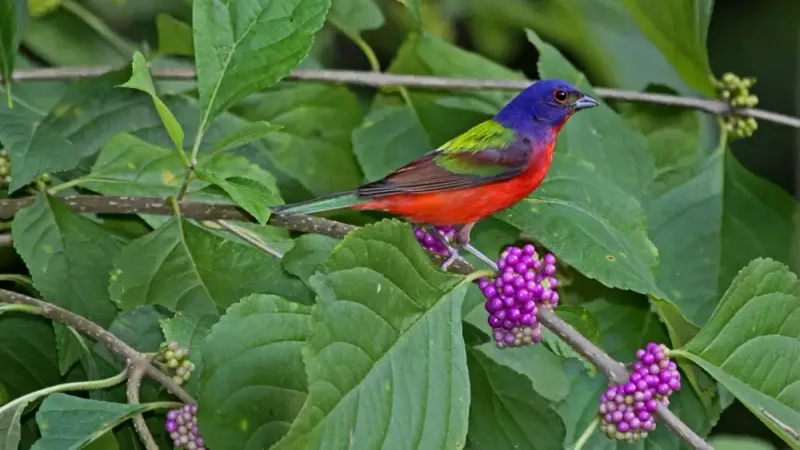
Vines build the safe room.
Painted buntings still need a reason to walk in the front door, and that reason is mostly food on the ground.
These birds are seed eaters at heart, favoring small seeds from native grasses and wildflowers, plus insects during breeding season.
So back your vine-covered fence with a low layer of natives.
Muhly grass (Muhlenbergia capillaris) and blanket flower (Gaillardia pulchella) drop exactly the kind of seed they hunt for.
Buntings prefer to feed on open ground where they can watch for danger, but they will only do it with cover a short hop away.
Tuck dense shrubs like coontie (Zamia integrifolia) or American beautyberry (Callicarpa americana) near the fence to widen that safety net.
Then set a ground-level feeder filled with white proso millet within 10 to 15 feet of the tangle, most useful during their Central and South Florida winter from October through April.
Add a shallow water dish at ground level and you have covered every need.
Stack the vertical cover, the ground seed, the shrubs, the millet, and the water, and your plain fence becomes a full habitat.
Then you wait.
One quiet morning a flash of blue and green settles in, stays longer than usual, and the whole small project suddenly feels worth every minute.