
The Meaning Behind A Cardinal Choosing Your Texas Yard Again And Again
Follow us on Google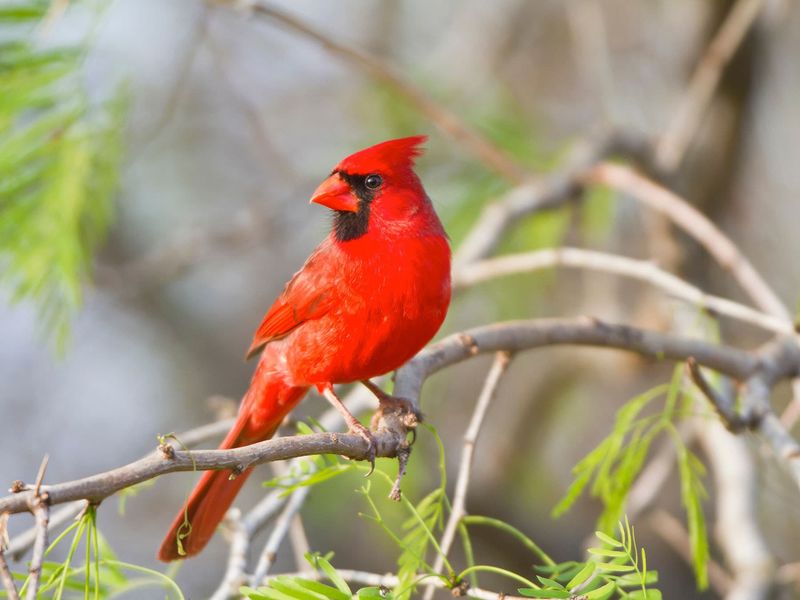
You step outside on a warm Texas morning and there it is again, that flash of red perched on the fence like it owns the place.
A lot of folks wonder if the bird keeps coming back for a reason that goes deeper than seeds and shrubs.
The answer is genuinely interesting, and it has everything to do with what your yard offers, not a message meant just for you.
Understanding why cardinals return can help you make your outdoor space safer and more welcoming for one of Texas’s most recognizable backyard birds.
Why A Cardinal Keeps Returning
Most mornings in Central Texas, a flash of red at the feeder feels personal.
It can stop you mid-coffee and make you wonder if something bigger is going on.
The honest answer is quieter than folklore, but no less fascinating.
A cardinal that keeps showing up in your yard is almost certainly there because your yard offers something useful.
That might be a reliable feeder, a dense shrub for cover, a birdbath during a dry stretch, or a patch of territory the bird has already claimed as its own.
Texas Parks and Wildlife Department describes Northern Cardinals as year-round residents across much of the state, especially the eastern two-thirds, where they regularly use backyards, shrubby edges, and dense vegetation.
Males defend territories and both sexes may sing throughout much of the year, so a familiar yard can function as part of a pair’s regular route.
One feeder alone can explain the pattern, even when the surrounding landscape offers limited nesting habitat.
That repeated visit does not prove your yard is a complete wildlife sanctuary, just that it holds at least one resource the bird depends on.
Texas Wildscapes guidance makes clear that native vegetation, not just supplemental feeders, forms the real foundation of lasting habitat.
You can absolutely experience a returning cardinal as a comfort or a symbol of something meaningful.
That personal interpretation belongs entirely to you.
What the bird is doing, though, is following food, shelter, water, and territory, the same practical logic that guides every wild creature that has ever found your yard worth visiting.
The Repeat Visitor May Not Be One Bird
Here is where it gets tricky.
Many Texas homeowners picture one devoted bird making daily visits, but what you are actually watching may be two birds, or more, cycling through the same spot at different times.
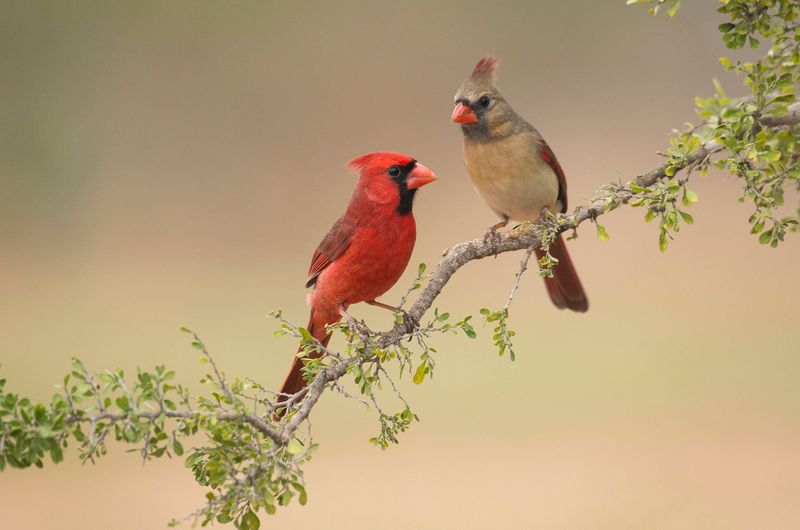
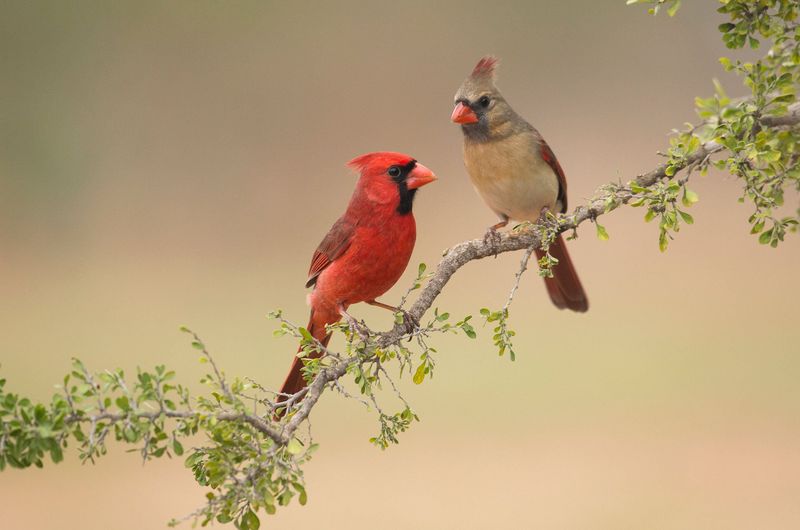
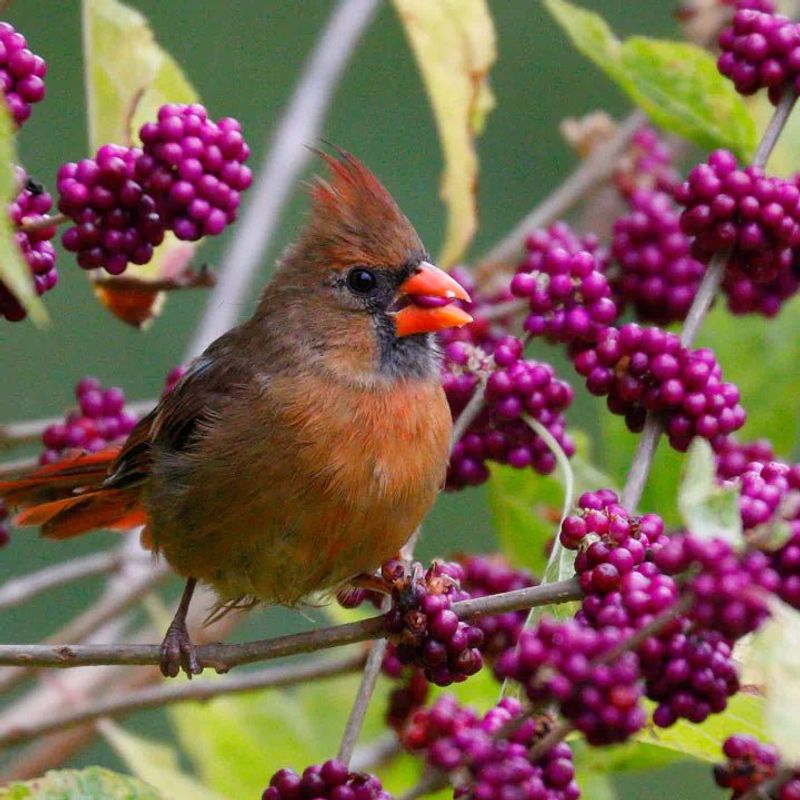
Northern Cardinals often occur in pairs, and Cornell Lab of Ornithology’s identification guide notes that males are brilliant red with a distinctive black facial mask, while females are brownish overall with reddish wings, crest, and tail.
Both sexes sing, which means the bird you keep hearing may not always be the same individual you keep seeing.
During winter, cardinals can form loose groups, so a yard that draws one bird may quietly attract several.
Neighboring territorial adults may also overlap at a shared resource like a feeder or birdbath.
Fledglings from a nearby nest follow their parents to reliable food sources and then return on their own once they are independent.
TPWD’s cardinal profile confirms that cardinals use backyards and shrubby edges as regular foraging habitat, meaning your yard may sit inside the range of more than one pair.
Watching for these differences can actually make the experience richer.
A brownish bird with a reddish crest is a female cardinal, not a less impressive version of the red one.
She is half of a territorial pair that has found your yard genuinely useful, and that is a story worth paying attention to.
Check For A Texas Cardinal Lookalike
Not every red-crested bird in a Texas yard is a Northern Cardinal.
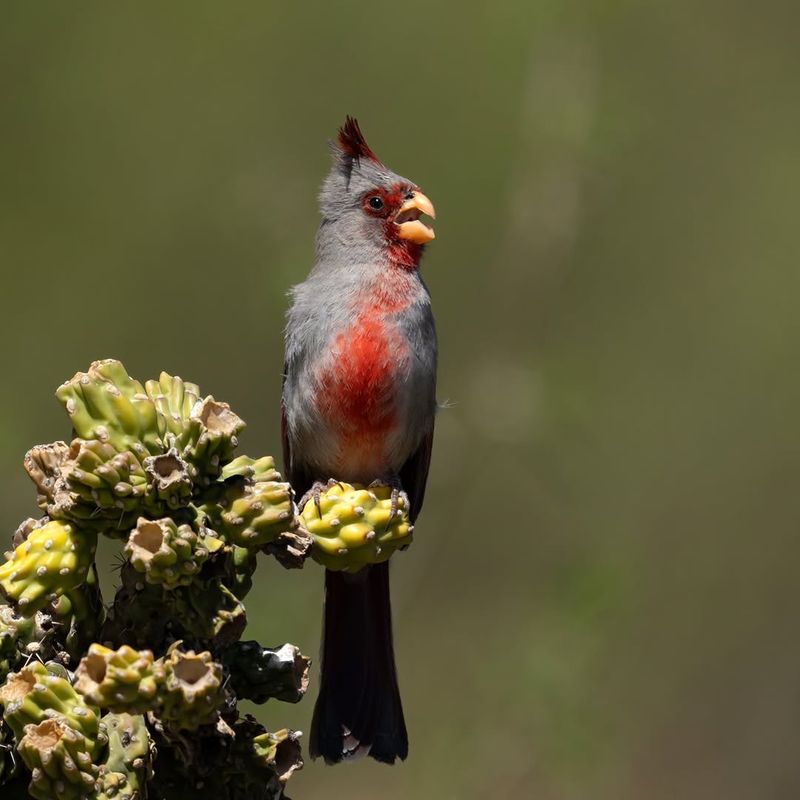
If you live in West Texas, South Texas, or the Brush Country, the bird you keep seeing may actually be a Pyrrhuloxia (Cardinalis sinuatus), a desert cardinal relative that shares the same family but favors a very different landscape.
Texas Parks and Wildlife’s guide to cardinals and Pyrrhuloxias describes the Pyrrhuloxia as gray overall with reddish accents on the wings, tail, crest, and face, and a noticeably curved, parrot-like bill that sets it apart from the straighter bill of a Northern Cardinal.
A female Pyrrhuloxia can look similar to a female Northern Cardinal at a quick glance, especially in low light or at a distance.
Location and surrounding habitat are your best first clues.
Pyrrhuloxias prefer thorny scrub, mesquite thickets, and arid brushland.
If your yard backs up to that kind of cover in the Trans-Pecos, the Edwards Plateau edge, or deep South Texas, the repeat visitor may be this bird rather than a classic red cardinal.
Either way, the explanation for repeated visits stays the same.
Both species return to a yard because its structure and resources fit their needs, not because the bird selected or recognized the homeowner.
Knowing which species you are watching helps you make smarter habitat decisions, and it turns a pleasant sighting into a genuinely satisfying identification.
Resources And Territory Explain The Pattern
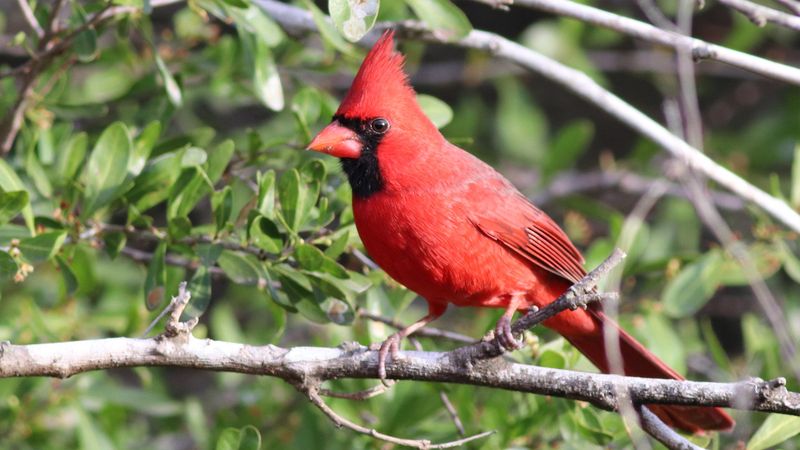
Picture your yard from a cardinal’s point of view.
It is not evaluating aesthetics or looking for a human connection.
It is asking one practical question: does this place have what I need to survive and raise young?
Seeds, berries, and insects answer part of that question.
Dense shrubs and layered understory answer another part, giving the bird cover from hawks, a shaded perch during triple-digit Texas summers, and structural options for building an open-cup nest.
An established territory adds a third layer.
A pair that has successfully nested near your yard once may treat the surrounding area, including your property, as part of their defended range for years.
TPWD notes that cardinals use backyards, shrubby edges, thickets, and understory vegetation as regular habitat components.
A single well-stocked feeder can draw cardinals even when the rest of the yard offers little.
That is useful to know because it means a feeder visit is not proof of comprehensive habitat quality.
It may simply mean the bird has found a concentrated food source, and it will keep returning until that source is gone or a better one appears nearby.
Texas Wildscapes consistently points toward native plants and layered cover as the more durable foundation.
Eastern and Central Texas yards often support the dense shrubby structure cardinals prefer naturally.
In South and West Texas, drought-adapted thorny cover like mesquite and native brush serves a similar function.
Knowing your ecoregion shapes which improvements will actually hold birds long-term, and the next sections walk through exactly that.
Improve Habitat With Native, Layered Cover
A single plant will not guarantee cardinals.
Any honest habitat guide will tell you that, and this one is no different.
What actually works is a combination of food sources, dense structure, insect habitat, and safe cover, all adapted to your corner of Texas.
Cardinals build open-cup nests in dense vegetation, not in the standard wooden birdhouses sold at hardware stores.
So the most useful thing you can add is not a nest box but a layered planting of locally appropriate native shrubs.
In North and Central Texas, plants like coralberry (Symphoricarpos orbiculatus), beautyberry (Callicarpa americana), elbowbush (Forestiera pubescens), and Mexican buckeye (Ungnadia speciosa) provide berries, seeds, insect habitat, and the kind of thick branching structure cardinals use for both nesting cover and escape routes.
Soil and ecoregion matter, so check with your local Texas A&M AgriLife Extension office before planting to confirm what thrives in your specific area.
TPWD’s cardinal habitat guidance emphasizes shrubs, vines, and understory plants as the real drivers of nesting success.
In South or West Texas, drought-tolerant thorny natives like desert willow or native acacia species may serve a similar purpose in drier soils.
Texas Wildscapes recommends building habitat as a system rather than relying on any single element.
Feeder placement is a balancing act.
Birds need cover nearby for quick escape from hawks, but a feeder pressed right up against dense brush can give an outdoor cat a hidden approach.
Many sources suggest keeping feeding stations roughly 10 feet from dense cover as a reasonable middle ground, though the right distance depends on your specific yard layout and what predators are present.
Cornell Lab’s feeder placement guidance frames this as a judgment call rather than a fixed rule, which is the right way to think about it.
Maintain Clean Water And Feeders
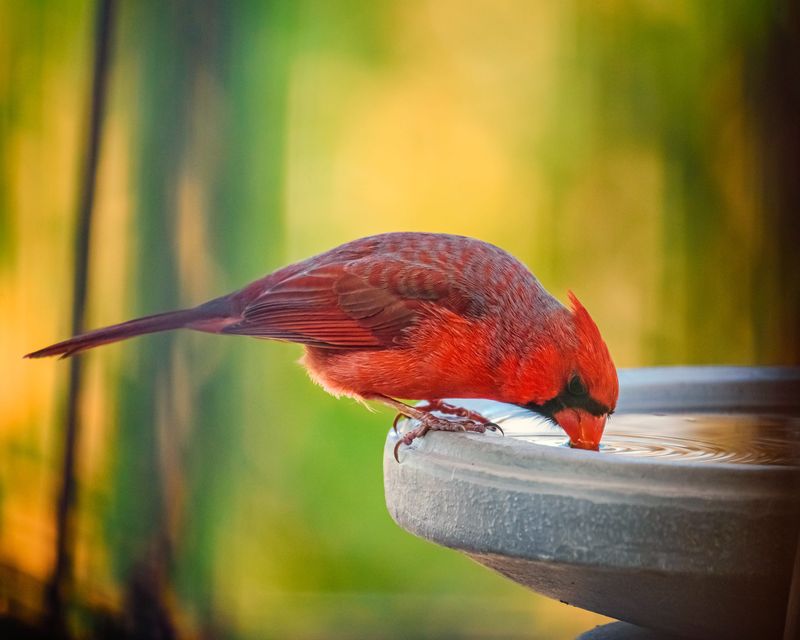
A Texas summer can push temperatures past 100 degrees Fahrenheit for weeks at a stretch, and a clean, shallow birdbath becomes one of the most valuable things in your yard during those dry spells.
Cardinals use water for drinking and bathing, and a reliable source can bring them back just as consistently as a feeder.
Shallow matters.
A basin about 1 to 2 inches deep at the center is safer and easier for birds to use than a deep container.
The U.S.
Fish and Wildlife Service recommends cleaning birdbaths frequently because shared water sources can help spread disease among birds.
Empty, scrub, and refill the basin every 2 to 3 days during hot weather, and more often if you see droppings or algae building up.
Feeders need the same attention.
Project FeederWatch recommends cleaning feeders about every 1 to 2 weeks, or more often during heavy use or wet weather.
Wash with warm water and dish soap, rinse thoroughly, and let the feeder dry completely before refilling.
For a deeper disinfection, you can soak cleaned parts for 10 minutes in a solution of 1 part bleach to 9 parts water, followed by thorough rinsing and complete drying.
Always remove old seed and droppings from the ground beneath the feeder, since wet, moldy seed on the ground is a health hazard for foraging birds.
Black-oil sunflower seed is a practical, widely available choice for cardinal feeders.
It works well, but it supplements habitat rather than replacing it.
Project FeederWatch’s feeding guidance notes that feeders can increase crowding and disease exposure when poorly managed, so cleanliness is not optional.
If you notice a bird that looks lethargic, has crusty eyes, or cannot fly, Project FeederWatch’s sick bird guidance recommends temporarily removing feeders and birdbaths to reduce crowding while you contact a local wildlife rehabilitator.
Do not try to diagnose or treat a wild bird on your own.
Protect Cardinals From Windows And Cats
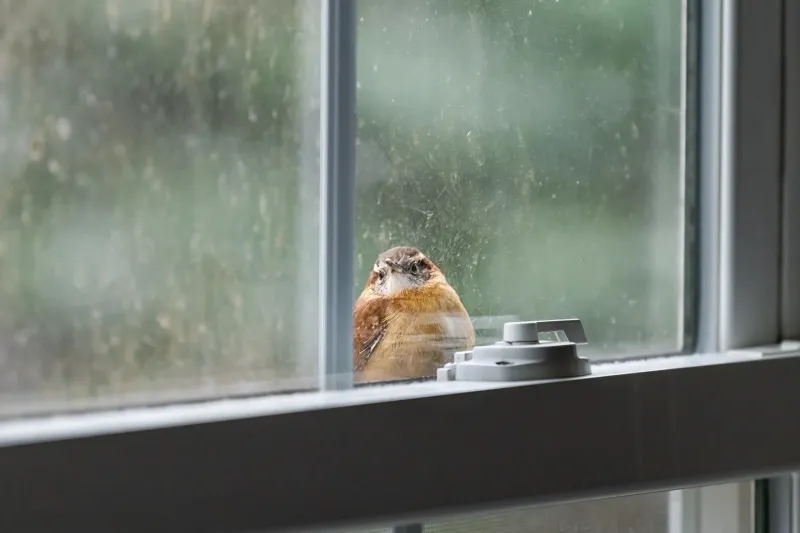
Spring mornings in Texas can bring a surprising sound: a cardinal thumping repeatedly against a window.
It is not confused or injured, at least not yet.
It sees its own reflection and reads it as a rival invading its territory.
This reflection-attack behavior is most common from roughly March through July, when territorial instincts run high.
The fix is not one or two small bird stickers.
A couple of decals spaced widely apart leave large untreated areas of glass, and a bird can fly straight through a gap that wide.
Cornell Lab’s window collision guidance recommends treating the outside surface of the glass with a dense visual pattern, an exterior screen, hanging cord systems, or tape applied close enough together that no gap exceeds 2 inches wide by 4 inches tall.
The goal is to make the glass visible as a solid surface, not to add a few decorative dots.
Cornell’s feeder placement guidance explains that current best practice focuses on making windows bird-safe rather than relying on a specific distance rule.
Older guidance suggesting feeders be placed within 3 feet of a window or beyond 30 feet is still circulated, but window treatment is the more reliable layer of protection.
Cornell’s Northern Cardinal overview confirms that cardinals are among the species most likely to strike windows during territorial season.
Outdoor cats are a separate and serious threat.
The U.S.
Fish and Wildlife Service recommends keeping cats indoors or using a secure outdoor enclosure to protect backyard birds.
A cardinal that has learned to trust your feeder is genuinely vulnerable to an ambush from a cat hidden in nearby cover, which is another reason feeder placement near dense brush deserves careful thought.
Let The Meaning Stay Personal
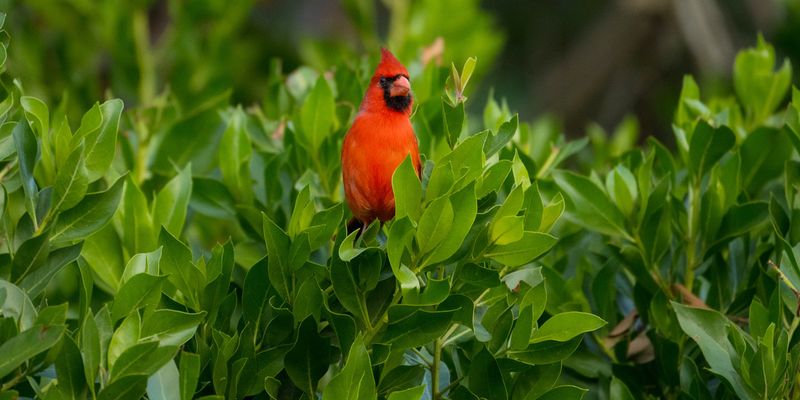
None of the practical explanation above takes anything away from what a cardinal means to you personally.
Many people across Texas and beyond associate a sudden cardinal visit with a deceased loved one, a moment of comfort, or a feeling that something good is near.
That is a long tradition in American folklore, and Audubon documents the cultural symbolism that has grown up around these birds.
Holding that meaning is not something science can take from you.
What ornithology can offer is a richer story running underneath the personal one.
A cardinal returning to your yard has made a series of real decisions based on food, water, cover, and territory.
Watching for those patterns, noticing whether you see one bird or two, whether visits cluster around the feeder or the shrubs, whether the bird sings from a specific perch, turns a meaningful sighting into an ongoing conversation with the natural world.
One more thing worth knowing: if you see a cardinal in late summer or early fall that looks oddly bald on top, do not assume the bird is sick.
TPWD explains that cardinals can lose many crown feathers at once during seasonal molt, creating a temporarily bald appearance.
The crest grows back.
A bird that looks lethargic, has crusty eyes, shows abnormal growths, or cannot fly is a different situation and deserves a call to a licensed wildlife rehabilitator.
TPWD’s cardinal resource is a good starting point for Texas-specific guidance.
Protect native cover, keep water and feeders clean, treat dangerous windows, and keep cats inside.
Do all of that, and the cardinal in your yard will have genuinely good reasons to keep coming back.