
The One Thing North Carolina Hydrangeas Need In August If You Want Blooms Next Spring
Follow us on Google
August in North Carolina is hot, muggy, and full of temptation to tidy up the yard before summer slips away. If you have a bigleaf or oakleaf hydrangea, that tidying urge can actually cost you next year’s blooms.
The one thing these old-wood hydrangeas need right now is for you to put the pruners down and leave healthy stems alone. Get this right in August, and you give those flower buds the best possible chance to survive the winter and open next season.
Protect Next Year’s Blooms Before You Cut
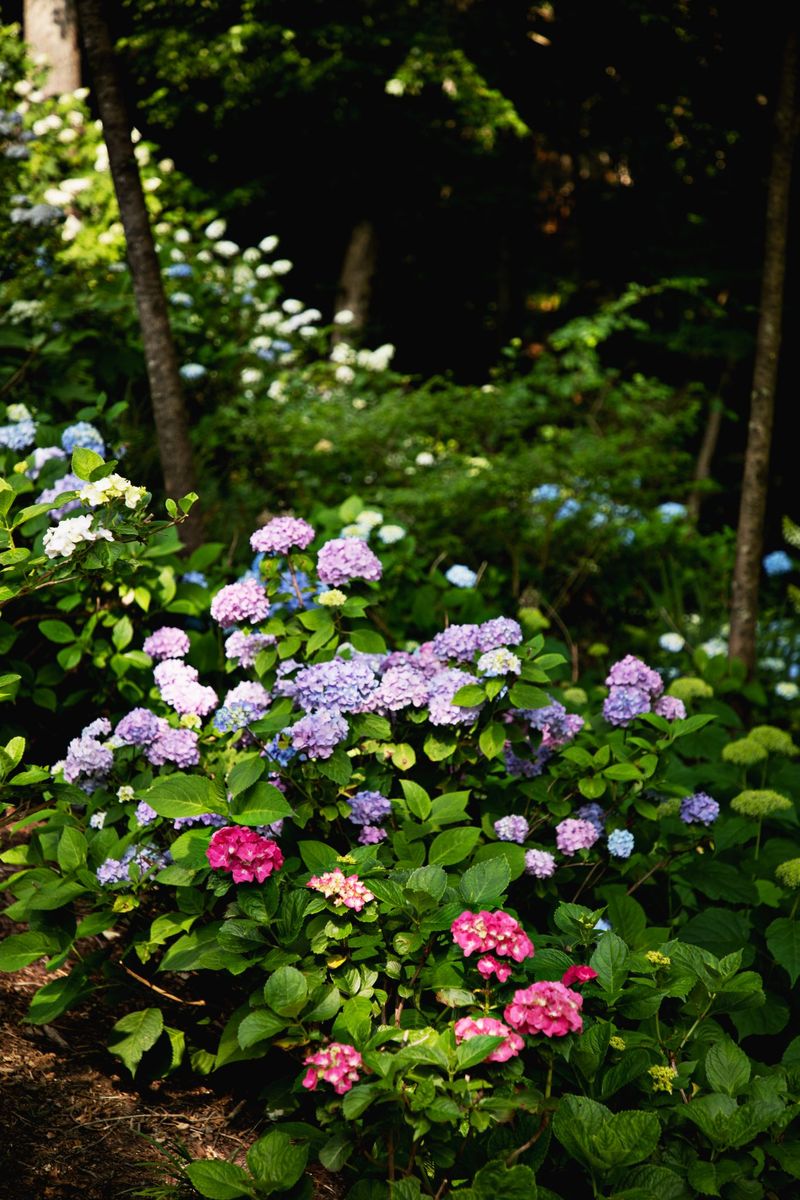
August is exactly the wrong time to give a bigleaf hydrangea, Hydrangea macrophylla, or an oakleaf hydrangea, Hydrangea quercifolia, a routine haircut. These are old-wood hydrangeas, meaning they build next year’s flower buds on stems they grew this past season.
Reach in with your pruners now and you can remove those buds before they ever get a chance to open.
The risk is not that you will kill the plant. A late cut is unlikely to do that.
What it can do is leave you staring at a healthy green shrub next summer with almost nothing blooming on it, wondering what went wrong. NC State Extension’s woody ornamentals guidance warns that pruning after flowering on these types can remove the buds that would have opened the following year.
The practical August rule for old-wood hydrangeas is straightforward: do not shape or hard-prune once early August arrives, especially after the flowers have faded. UGA Cooperative Extension’s bigleaf hydrangea guide uses August 1 as a conservative cutoff for finishing any pruning on bigleaf types.
That date is a rule of thumb, not a hard law. A plant still in full flower on August 3 should not be pruned simply because the calendar flipped.
Plant identity, flowering status, and your specific location in North Carolina all matter more than the date alone. The message is the same either way: if you are not sure what you have, or you know it blooms on old wood, leave the healthy stems in place.
The only cuts worth making right now are ones with a clear reason behind them: a branch that is unmistakably dead, one that snapped in a storm, wood that shows signs of disease, a stem that is a genuine hazard, or growth that is blocking a walkway. Everything else can wait.
Old Wood Carries The Following Season’s Buds
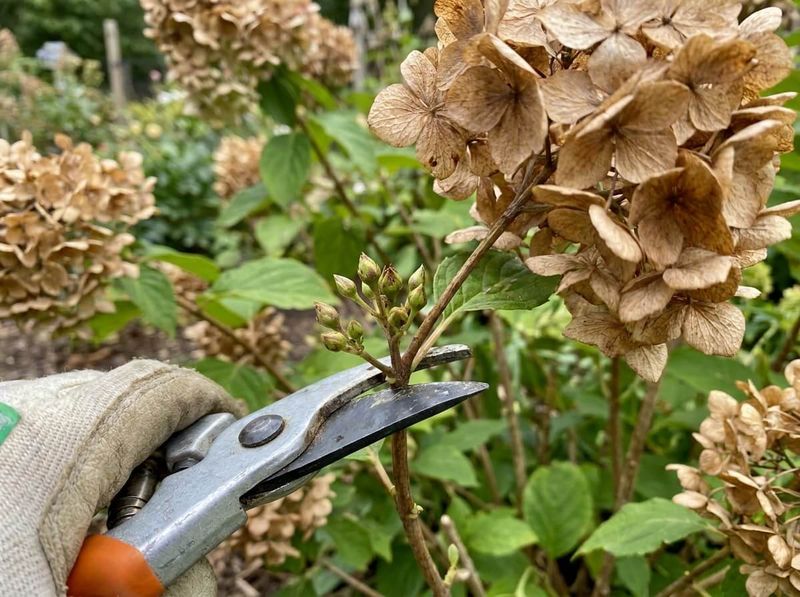
Here is where it gets tricky for a lot of gardeners. “Old wood” does not mean the branch looks thick, brown, or ancient. Old wood simply means stems that grew during the previous growing season, the canes your shrub pushed out last year.
Those stems are the ones carrying the potential flower buds for next year, and by late summer they are already starting to develop them.
Bigleaf and oakleaf hydrangeas set those buds in late summer and fall. NC State Extension notes that pruning these shrubs after flowering, or worse, waiting until fall cleanup or an early-spring tidy-up, can remove the very buds that would have opened next season.
A fall haircut feels productive. To the plant, it is a flower eraser.
A spent flower head is a different matter entirely. When the blooms on a bigleaf hydrangea fade and turn papery, that old flower cluster is not a diseased branch or a dying stem.
It is just a finished bloom sitting on top of a healthy cane that is quietly doing its job underground and in its tissues, preparing for next year. Penn State Extension’s deciduous shrub guidance draws a clear line between removing spent flowers and cutting into the productive stem below.
Preserving those healthy stems matters far more than making the shrub look perfectly tidy right now. A hydrangea with some faded brown flower heads still attached is doing exactly what it should in August.
A hydrangea that has been cut back hard is starting over, and next summer’s blooms may not be there to show for it.
Identify The Hydrangea Before Touching The Pruners
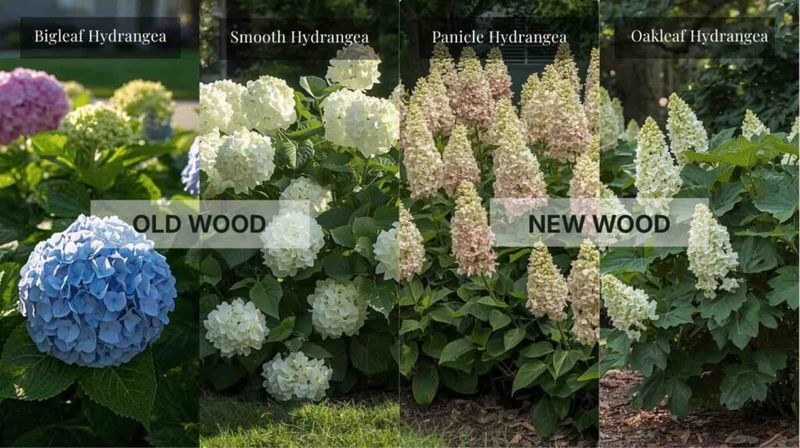
Before you pick up any tool, spend two minutes figuring out what you actually have growing in your yard. The pruning rules are completely different depending on the type, and guessing wrong can cost you a full season of flowers.
Flower shape and leaf form are your two best clues, though a plant tag is even better if you saved it.
Round, pom-pom flower heads, what most people picture when they hear the word hydrangea, usually signal a bigleaf mophead type. Flat-topped flowers with a lacy ring of petals around a center cluster point to a bigleaf lacecap.
Both are old-wood bloomers. NC State’s hydrangeas-in-the-garden overview lays out the four main types found in North Carolina landscapes and their basic care differences.
Leaves shaped like the lobes of an oak leaf, combined with shredding cinnamon-colored bark on older stems, tell you that you have an oakleaf hydrangea. These also bloom on old wood, so the August hands-off rule applies to them just as much as it does to bigleaf types.
UGA Extension’s Forsyth County identification guide recommends using flower shape as a first sorting step before making any pruning decision.
Cone-shaped or elongated flower clusters, often creamy white turning pink or tan in late summer, are the signature of a panicle hydrangea. Large white globe-shaped flowers on a more compact shrub suggest smooth hydrangea, the Annabelle type.
Both of these bloom on new wood and follow a different pruning schedule entirely. Treat flower shape as a helpful clue, not a guaranteed identification, and when in doubt, hold off on any cuts until you can confirm what you have.
Remove Hazards, Not Healthy Stems
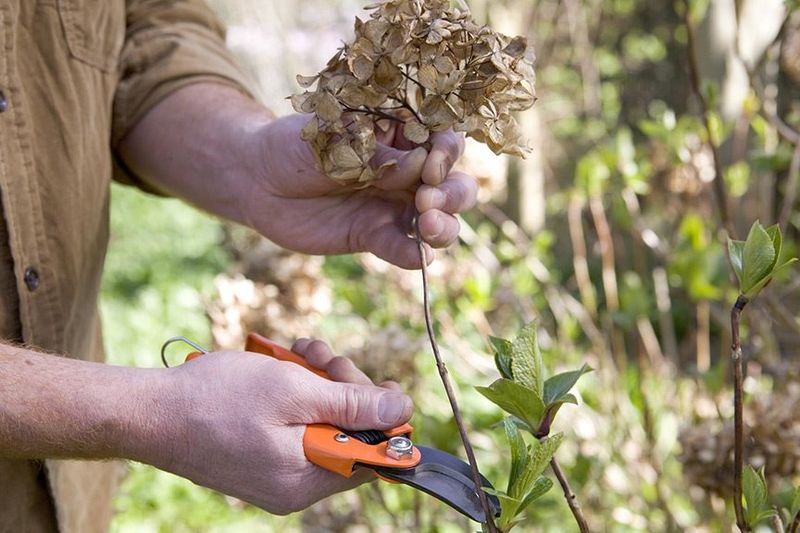
Many Piedmont gardeners reach August and feel an almost physical urge to cut something. The shrub is big, the blooms are fading, and the yard looks a little ragged after a long summer.
That urge is understandable, and you can actually act on part of it without hurting next year’s flowers, as long as you stay disciplined about what comes out.
Dead wood is fair game. If a stem is completely dry, brittle, and produces no green growth when you scratch the bark lightly with a fingernail, it is not coming back.
Broken branches from summer storms, stems showing clear signs of disease, wood that poses a safety hazard, and growth that is actively blocking a gate or pathway can all come out now. NC State Extension recommends sterilizing tools between cuts when removing diseased wood, and a clean, sharp bypass pruner makes a smaller wound than a dull or dirty blade.
When you are cutting diseased material, wipe the blades with a diluted bleach solution or rubbing alcohol between each cut to avoid spreading problems to healthy stems. Then stop.
Do not keep going just to make the plant look more symmetrical. UGA Extension’s fall pruning guidance recommends a conservative approach to late-season deadheading when plant identity or timing is uncertain.
A faded flower head sitting on a healthy green stem is not an August emergency. If you want to remove a few spent blooms for appearance, clip just below the flower cluster and leave the rest of the stem intact.
Major reshaping, size correction, and the kind of hard pruning that makes a big shrub look small again can all wait for the correct window next year. Postponing that work is not neglect, it is actually the right call.
New-Wood Types Follow A Different Schedule
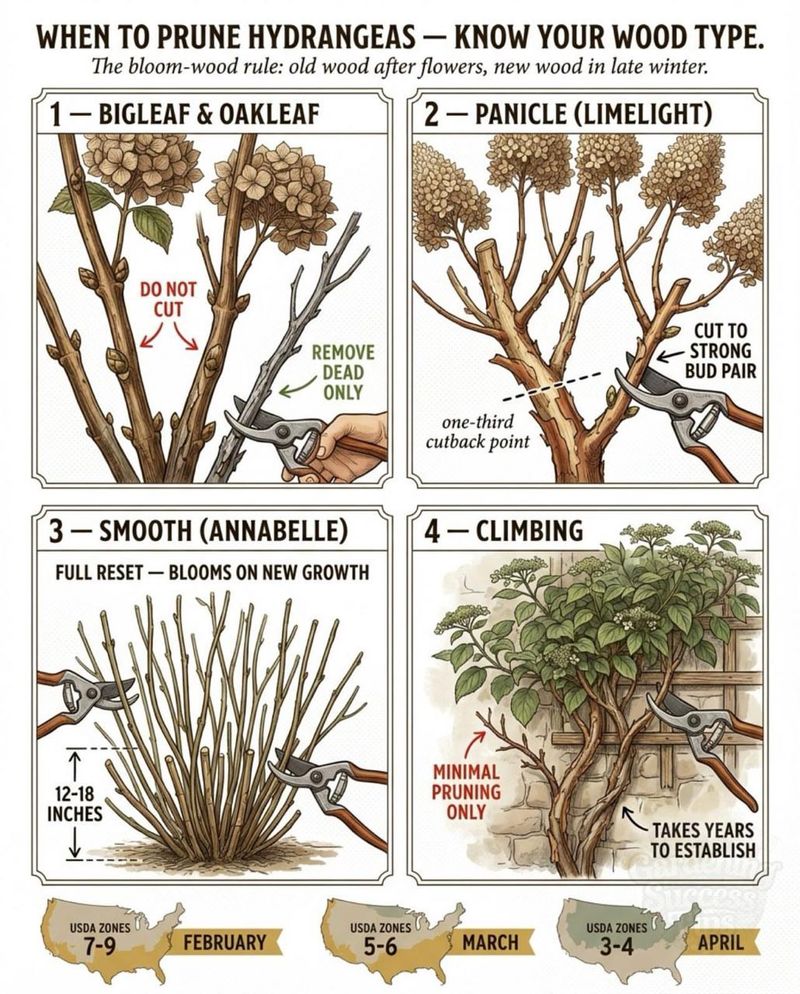
Smooth hydrangeas, Hydrangea arborescens, including the familiar Annabelle types with their big white globes, and panicle hydrangeas, Hydrangea paniculata, operate on a completely different timeline. Both bloom on new wood, meaning the stems they push out during the current growing season are the ones that carry this year’s flowers.
NC State’s hydrangea garden overview confirms that these two types are normally pruned during dormancy, in late winter or early spring, before new growth begins.
Knowing you have a panicle or smooth hydrangea does change the picture, but it does not open the door to routine August shaping. These plants are actively growing and setting seeds right now.
August cuts can stress the plant, remove energy the shrub is redirecting to its roots, and serve no real purpose that could not be handled more cleanly in late February or early March. Reserve any August work on these types to the same standard: clearly dead, broken, diseased, hazardous, or genuinely obstructive growth only.
Reblooming bigleaf cultivars add another layer of nuance. Varieties like Endless Summer, BloomStruck, Twist-n-Shout, and Summer Crush can produce flowers on both old and new wood.
NC State’s bigleaf hydrangea plant profile lists several of these cultivars and notes their ability to rebloom. That flexibility makes them more forgiving than standard bigleaf types, but it does not make pruning timing irrelevant.
Cut the old stems in August and you can still lose the first flush of flowers next season, even if the plant eventually pushes new-wood blooms later in summer.
Treat reblooming cultivars as more resilient, not immune. The safest approach for any hydrangea in August is still to identify it first, then act accordingly.
Cold And Drought Can Also Reduce Flowers
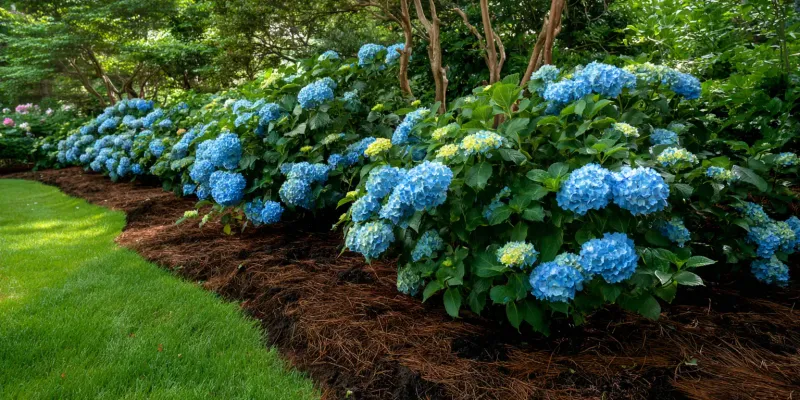
Even if you do everything right with the pruners this August, a disappointing bloom season next year is still possible. Bigleaf hydrangeas are genuinely sensitive to winter cold, and their buds can fail after a sudden hard freeze following bud development in fall.
NC State Extension notes that cold damage is a real and separate cause of reduced flowering in bigleaf types, independent of pruning choices. A gardener in the North Carolina mountains or Piedmont who avoids every late cut can still end up with fewer blooms after a rough January.
What you can control right now is how well the plant enters fall. August in North Carolina is hot and often dry between afternoon storms, and hydrangeas, with their large leaves, show drought stress early.
Water when the plant begins to wilt and rain has not arrived in several days. UGA’s bigleaf hydrangea guide recommends applying 3 to 5 inches of organic mulch to conserve soil moisture and moderate root temperature.
Keep that mulch on the soil surface, not piled against the stems or crown of the plant. A clear gap of a few inches around the base reduces the risk of excess moisture and decay right where the plant is most vulnerable.
University of Minnesota Extension’s mulching guidance supports this approach for woody plants generally.
Piedmont gardeners dealing with red clay need to think about drainage as much as moisture retention, because clay holds water longer and roots can suffer in waterlogged conditions. Sandy Coastal Plain soil dries out faster, so mulch there genuinely helps slow moisture loss, but even that does not justify keeping the root zone constantly wet.
Water and mulch support plant health heading into fall, and a healthier plant handles winter better, but neither one can restore buds that pruning removed or that a freeze killed.
Shape Each Type In Its Proper Window
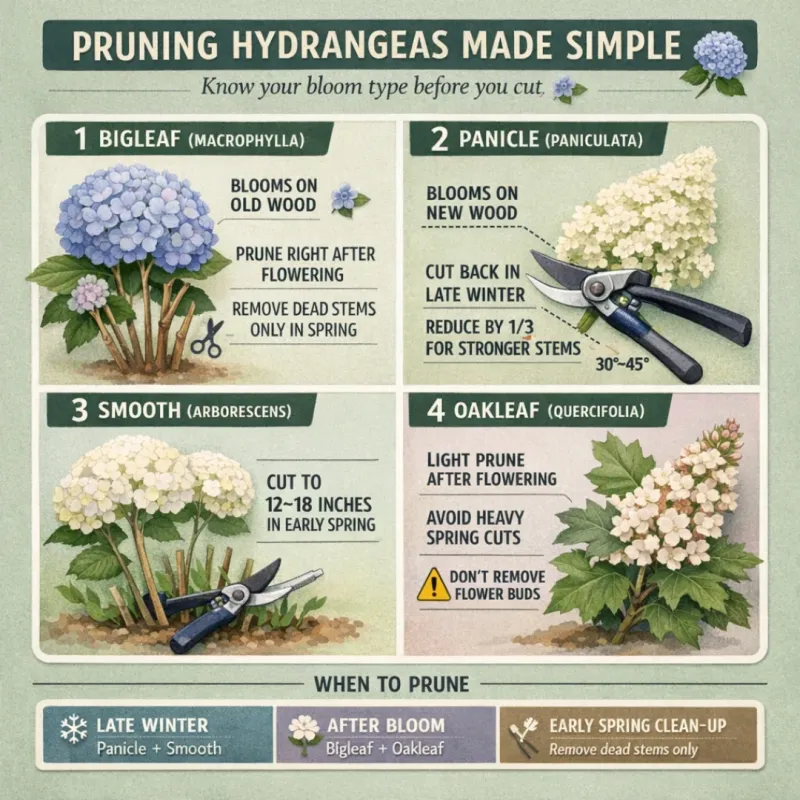
Getting next year’s flowers starts with a simple calendar decision made well before August arrives. Bigleaf and oakleaf hydrangeas should be pruned lightly, and only when actually needed, immediately after flowering wraps up, before late-summer bud formation begins.
For most North Carolina locations, that window runs from late spring through early July, depending on when your specific plant finishes blooming. NC State’s hydrangea overview points to the post-bloom period as the appropriate time for any light shaping on old-wood types.
If you missed that window this year, the correction is simple: wait. Mark your calendar for next summer, watch for the flowers to finish, and make your light shaping cuts within a few weeks of that point.
UGA’s bigleaf hydrangea guidance reinforces the same sequence, finish flowering first, then prune promptly if needed, then leave the plant alone as late summer arrives.
Smooth and panicle hydrangeas get their main pruning in late winter or early spring, just before new growth begins. That timing takes advantage of their new-wood flowering habit and gives them a full season to push fresh stems and set buds.
Penn State Extension’s species-by-species pruning guide confirms late winter to early spring as the standard window for these types.
For any hydrangea, identification comes before any hard cut, plant health and safety guide what comes out now, and cosmetic perfection waits for the right season. The gardeners who get the best bloom seasons are not the ones who prune the most, they are the ones who prune at the right time and leave the rest alone.