
The Backyard Pollinator People Panic About Is Usually One Of The Best Visitors To Keep Around
Follow us on Google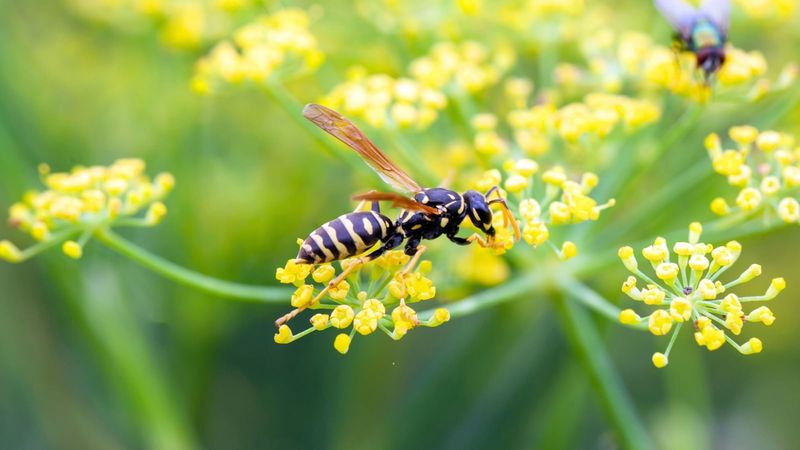
Most people spot a wasp hovering near their tomatoes or landing on a flower and immediately reach for the spray can.
That reflex makes sense, but it may cost you some real garden help.
Wasps are a wildly varied group of insects, and many of them are doing quiet, useful work right alongside the bees you already root for.
Before you write them all off, it is worth knowing which ones deserve a second look.
The Visitor May Be A Wasp—But That Is Not One Diagnosis
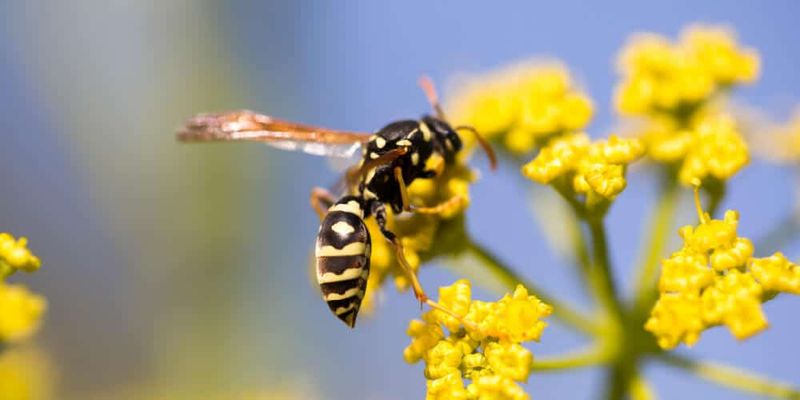
Spotting something striped and winged near your porch does not mean you have a problem.
The word “wasp” covers an enormous range of insects, and most of them behave nothing like the yellowjackets that crash your Labor Day cookout.
That means the vast majority live alone, raise their young alone, and have little reason to bother you.
Wasps fall into three broad types.
Social wasps live in colonies and include yellowjackets, hornets, and paper wasps.
Solitary wasps hunt, dig, or provision individual nests by themselves.
Parasitoid wasps, which are often tiny enough to miss entirely, lay their eggs in or on other insects and let their larvae do the rest.
Each group behaves differently, carries different risks, and offers different potential benefits.
So when you see a wasp, the single most useful question is not “good or bad?” Ask instead: what kind is this, what is it doing right now, and where is it doing it?
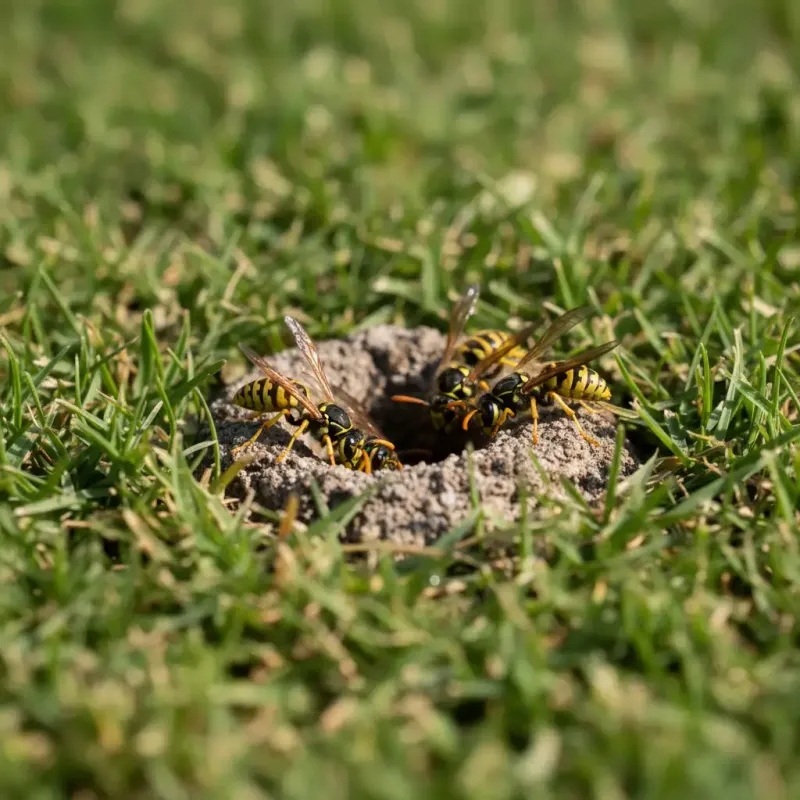
A solitary digger wasp working a patch of bare soil near your garden path is not the same creature as a yellowjacket colony tucked under your deck.
Treating them identically means you may kill the helpers and still have the problem.
The label alone tells you almost nothing useful.
Many Wasps Pollinate And Hunt
Adult wasps need fuel to fly, hunt, and tend their nests.
That fuel is nectar, and chasing it brings many wasps into contact with flowers the same way bees work a garden.
Their bodies may not be as hairy as a bumblebee’s, but pollen still sticks to them and rides along to the next flower.
A 2024 peer-reviewed study put some real numbers behind that idea.
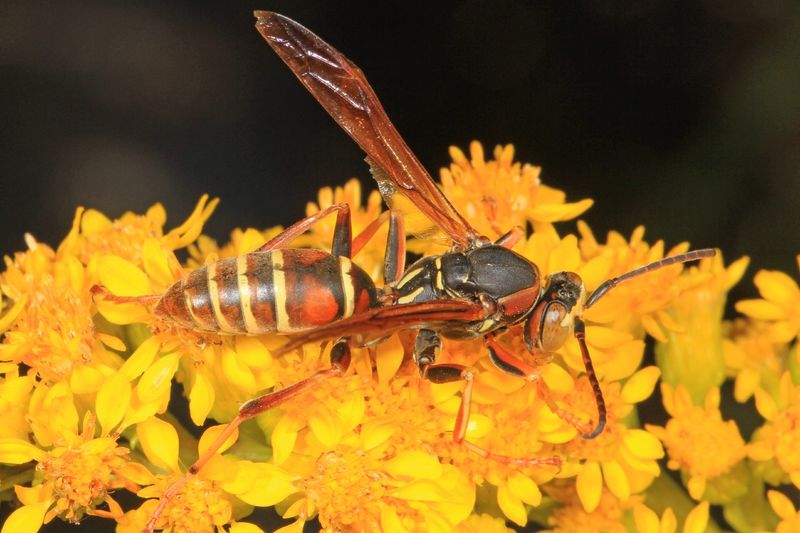
Researchers in central Iowa found that the social paper wasp Polistes fuscatus carried pollen on its body and deposited it on goldenrod flowers at rates comparable to bees in the same study system.
That is one species, one plant, one region.
It does not mean every wasp pollinates every crop as well as every bee.
But it does mean that dismissing wasps as pollination freeloaders is not accurate.
The pest-control side of the equation is where many wasps genuinely earn their place.
Paper wasps scan plants for caterpillars, chew them into a paste, and carry that protein back to feed their larvae.
Colorado State University Extension identifies paper wasps and parasitoid wasps as useful natural enemies of garden pests, including caterpillars, aphids, flies, and beetle larvae.
Parasitoid wasps work differently, laying eggs inside or on host insects so their larvae develop at the pest’s expense.
None of this promises a pest-free garden.
Results depend on which wasp species you have, what prey is available, what season it is, and how your habitat is set up.
Think of these wasps as one layer of help, not a complete solution on their own.
Yellowjackets Are Not Every Wasp
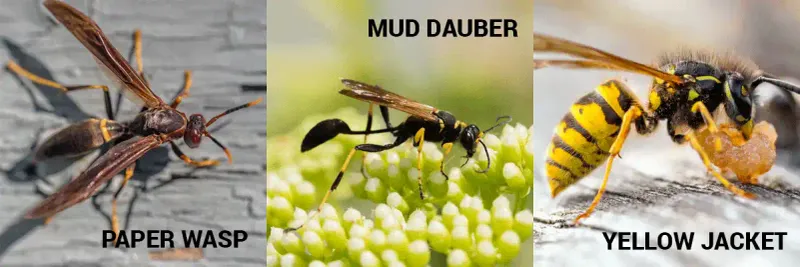
Yellowjackets have done a lot of damage to the reputation of wasps in general, and it is understandable why.
They show up at picnics, hover around open soda cans, and will sting repeatedly when their nest is threatened.
By late summer, a single yellowjacket colony can hold thousands of workers, all primed to defend their home if anything comes too close.
But a yellowjacket is one type of social wasp, not a stand-in for the whole group.
Paper wasps, for example, build open, umbrella-shaped combs and tend to be less defensive than yellowjackets unless you get very close to the nest itself.
Hornets can be more aggressive, particularly the bald-faced hornet, which defends a larger aerial nest.
Solitary wasps are a different story entirely.
A cicada killer wasp the size of your thumb may look alarming, but the females are focused on hunting, not people.
The tiny parasitoid wasps that target aphids or caterpillar eggs are often so small that most homeowners never even notice them.
Trying to identify a wasp from a quick glance at color or body shape alone is risky.
Patterns vary within species, lighting changes how markings look, and some beneficial insects mimic wasp coloring.
When in doubt, watch what the insect is doing before deciding anything.
A Flower Visit Is Different From A Risky Nest
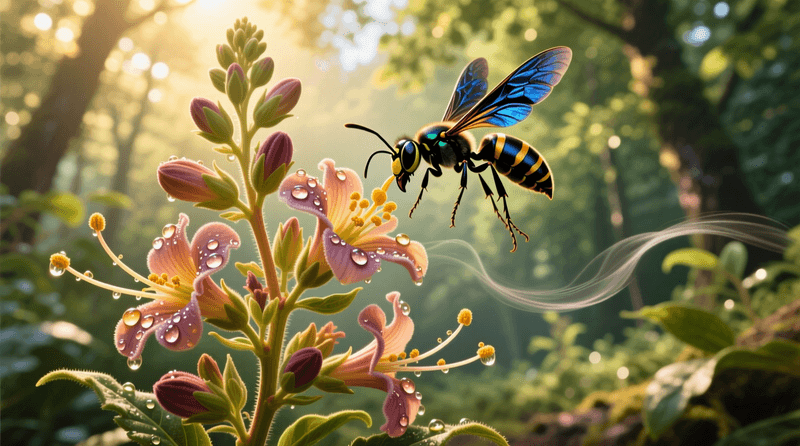
Watching a wasp work its way across a coneflower is not the same situation as finding a colony wedged under your eave.
The wasp on the flower may have a nest somewhere 50 yards away, completely out of your daily path.
Its presence near your garden does not automatically mean you are sharing your yard with a defensive colony.
A single wasp away from its nest is generally far less concerning than one that senses its colony is under threat.
The key is how you respond.
Avoid touching, trapping, swatting at, or blocking the flight path of any wasp you encounter.
Swatting releases alarm signals that can attract more wasps if a nest is nearby, and it turns a neutral situation into a confrontational one.
If you want to figure out whether a nest exists, Penn State Extension advises watching activity and flight paths from approximately 10 to 15 feet away during daylight.
You may be able to notice which direction wasps are consistently flying toward.
That observation can help you determine whether a nest is tucked into an eave, a shrub, or a ground opening nearby.
Keep in mind that a concealed nest entrance may not be visible even from that distance.
Solitary wasps often nest in the ground or in wood cavities and rarely give any outward sign of where home is.
If you are seeing one or two wasps visiting flowers without any concentrated flight pattern, a solitary species is a reasonable possibility, and leaving them alone is usually the right call.
Build Habitat Without Chasing A Miracle Fix
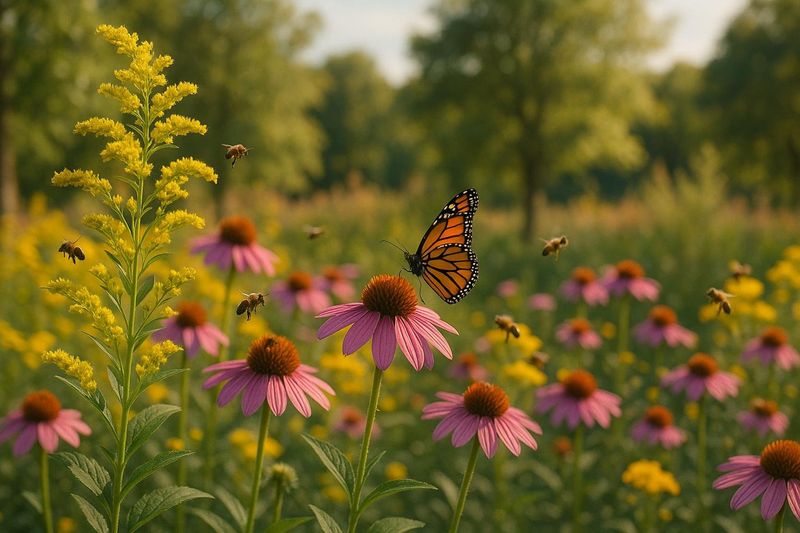
Supporting useful wasps and other beneficial insects is less about planting one magic flower and more about giving them a yard with something to offer across the whole season.
A garden that blooms for two weeks in June and then goes quiet will not hold many beneficial insects for long.
The goal is overlap, with something open from early spring through fall.
Penn State Extension recommends diverse plantings with overlapping bloom periods, nesting space, a water source, shelter, and reduced pesticide exposure as the foundation of good pollinator habitat.
Simple, open flower shapes tend to be more accessible to wasps and other beneficial insects than densely doubled ornamental varieties where the nectar is hard to reach.
Some plants that many beneficial insects visit include goldenrod (Solidago spp.), yarrow (Achillea millefolium), purple coneflower (Echinacea purpurea), dill (Anethum graveolens), coriander (Coriandrum sativum), mountain mint (Pycnanthemum spp.), boneset (Eupatorium perfoliatum), and asters (Symphyotrichum spp.).
These are examples, not a universal list.
What qualifies as native or well-adapted depends entirely on your region, and Penn State Extension recommends checking with your local Cooperative Extension office for regionally appropriate choices before planting.
Beyond flowers, think about what else the yard offers.
A shallow dish with clean water and a few stones for landing spots helps.
Patches of bare, undisturbed soil give ground-nesting solitary wasps a place to work.
Leaving some hollow stems or dead wood in a back corner costs nothing and provides shelter for others.
USDA hardiness zones tell you about winter cold tolerance, not which plants belong in your specific landscape, so treat zone maps as one data point among several.
Pesticides Can Remove The Helpers Too
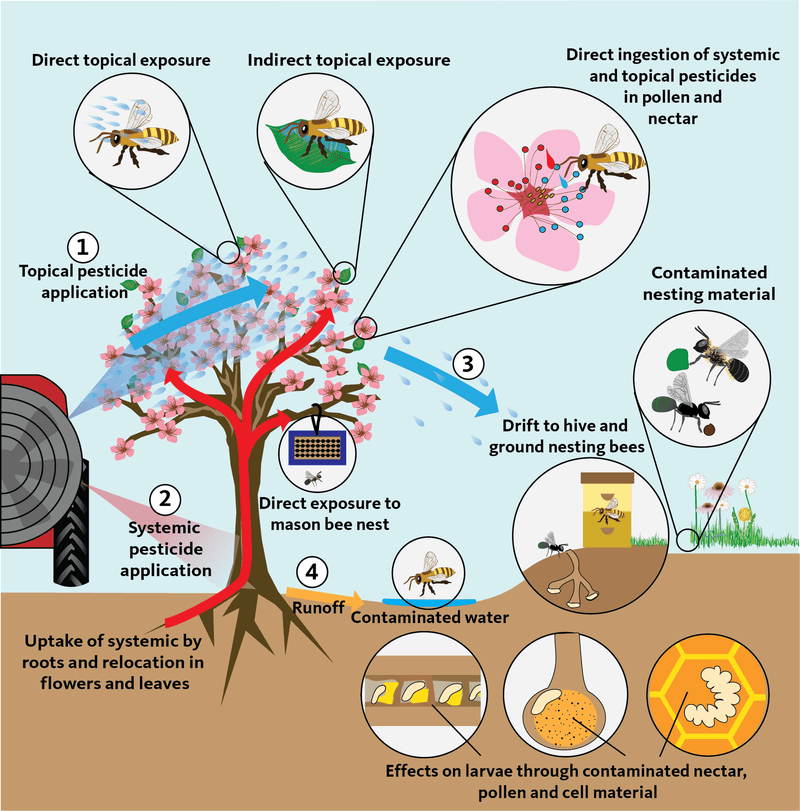
A broad-spectrum insecticide does not read labels on the insects it touches.
When you spray for one pest, the product can reach predatory wasps, parasitoids, and pollinators that were doing work you wanted done.
Routine use of these products can gradually clear out the beneficial population in a yard, leaving pest insects with fewer natural checks.
A more careful sequence works better.
Start by monitoring what is actually causing the damage, because not every chewed leaf means an infestation.
Consider nonchemical options first, including hand-picking, exclusion netting, sanitation, or resistant plant varieties.
If a pesticide becomes necessary, choose the most targeted product for the specific pest, and read the label fully before opening the container.
EPA pollinator-protection guidance calls for avoiding applications when pollinators are actively foraging, accounting for bloom timing so that drifting product does not reach open flowers, and following any buffer or timing restrictions on the label.
Evening applications after foraging activity slows down are often less risky than midday spraying, but conditions vary and the label governs.
Natural or botanical pesticides require the same caution. “Natural” does not mean safe for beneficial insects.
Spinosad, pyrethrin, and other plant-derived products can harm pollinators through direct contact, residues left on foliage, or drift onto blooming plants nearby.
Any product that affects insect biology should be treated with the same care as a synthetic one.
Read the label, follow the timing guidance, and account for what is flowering within the application area.
A Nest Near People Changes The Decision
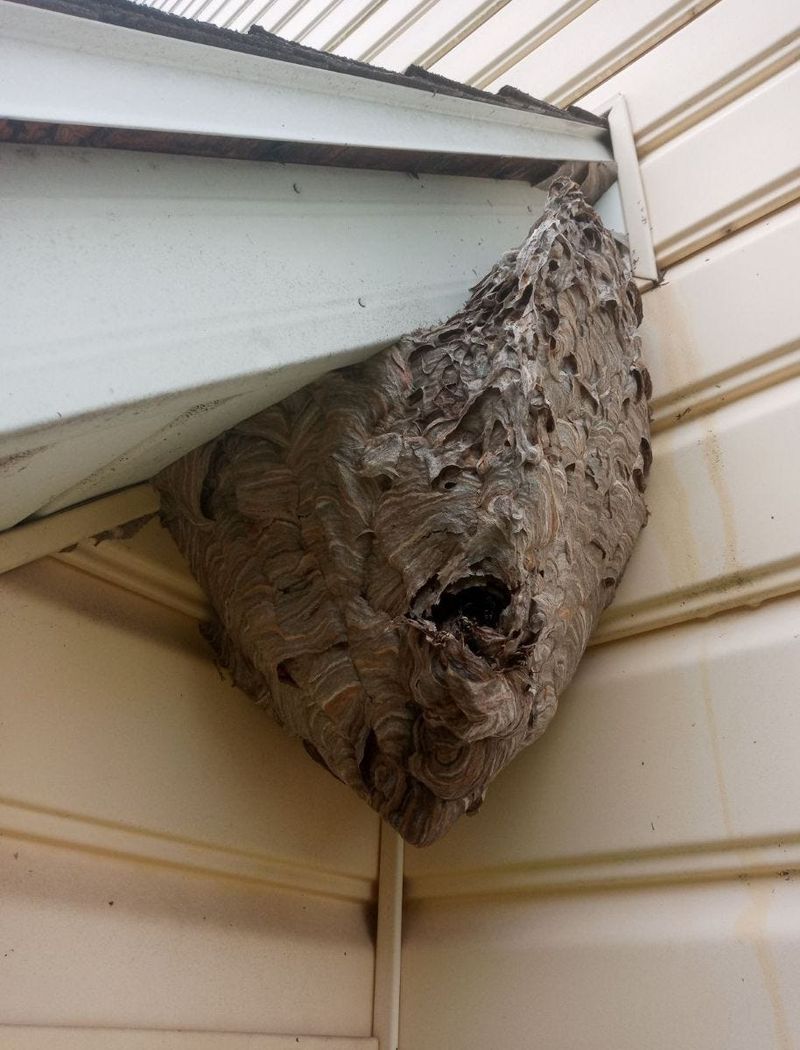
A wasp colony tucked under a far corner of the barn roof, away from daily foot traffic, is a very different situation from one built into the gap above your back door frame.
Location is the factor that turns a potentially useful colony into a household hazard, and that distinction matters more than any general rule about whether wasps are good or bad.
Nests near doorways, patios, outdoor dining areas, children’s play spaces, sandboxes, dog runs, or main walking paths create a meaningful risk of accidental disturbance.
Penn State Extension recommends assessing nest location, colony size, species if identifiable, and the likelihood that people or pets will disturb the nest before deciding on a course of action.
A small, accessible paper wasp nest on a seldom-used shed may be manageable differently than a large yellowjacket colony inside a wall void.
Do not attempt to knock down, relocate, or casually spray a nest without understanding what you are dealing with.
Disturbing a colony can trigger a defensive response quickly.
Wasps may be less active at night, which can reduce the immediate risk during treatment, but nighttime does not make nest removal safe.
Large colonies, nests in concealed spaces, nests in elevated locations, or any nest that is difficult to reach safely should be handled by a licensed pest-management professional.
If a sting does occur, CDC guidance recommends washing the site with soap and water and applying ice to reduce swelling.
Anyone with a known severe sting allergy should follow their clinician’s emergency plan and use prescribed epinephrine as directed.
Trouble breathing, swelling of the throat or tongue, faintness, or widespread hives or symptoms require emergency medical care right away, not a wait-and-see approach.
Keep The Useful Insects You Can Safely Avoid
A practical framework cuts through most of the confusion.
When a wasp is visiting flowers or hunting through your garden beds and its nest is somewhere you can avoid, leave it alone.
That forager may be carrying pollen, hunting caterpillars, or parasitizing pest eggs, and removing it gains you very little.
When a colony is located somewhere that people or pets will regularly pass within a few feet, the location changes the calculation.
Manage that nest based on its species, size, and position, not on a blanket rule about whether wasps are helpful.
Penn State Extension and Colorado State University Extension both frame the decision around specific conditions rather than a universal keep-or-remove verdict.
Wasps work best as one part of a broader integrated approach that also includes monitoring for actual pest pressure, hand-picking when practical, using physical barriers and exclusion, choosing resistant plant varieties, maintaining garden sanitation, and applying targeted controls only when a real threshold is crossed.
EPA pollinator-protection resources reinforce that protecting beneficial insects and managing pests are not competing goals when you work carefully through each decision.
Wasps will not eliminate your pest problems, perfect your pollination, or reduce your tick exposure.
What many of them will do, when you let them work undisturbed, is add one more layer of quiet function to a yard that already has a lot going on.
That is worth something, even if it is not the whole answer.