
Florida Plants That Support Owl-Friendly Habitat, And What That Means For The Rats In Your Shed
Follow us on Google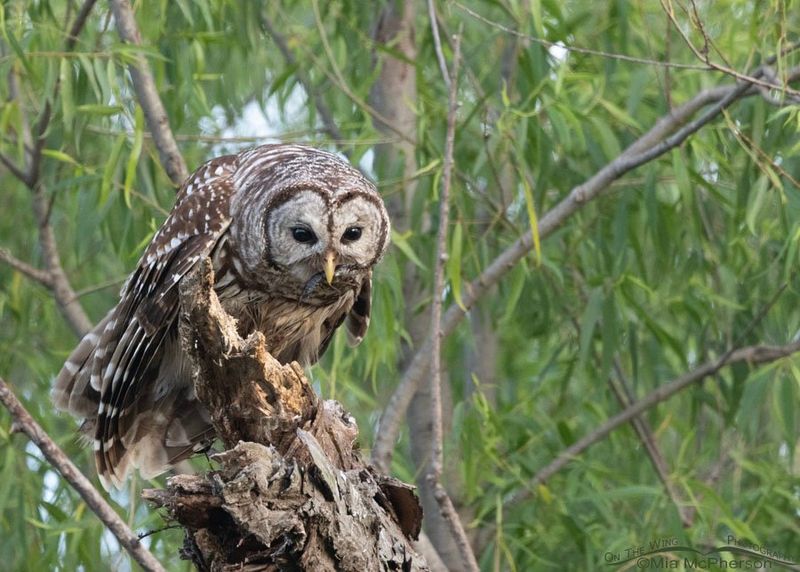
You flip on the shed light one evening and something skitters behind the bags of potting mix.
That sound is familiar to a lot of Florida homeowners, and so is the next thought: is there any way to get a predator out there to handle this?
Native plants and owls keep coming up in that conversation, and the connection is real enough to be worth understanding, even if it does not work quite the way the headlines suggest.
What the Title Gets Wrong About Owls and Plants
Nobody has documented a Florida shrub that reliably calls an owl into a yard.
That is worth saying up front, because the idea that you can plant beautyberry or saw palmetto and watch a predator arrive to clear out your shed is genuinely appealing, and genuinely unsupported.
Florida Native Plant Society guidance on attracting wildlife frames native plants as habitat support, not as bait for specific predators.
What plants can do is contribute to a broader wildlife system.
Good habitat in Florida means food, water, shelter, and space for raising young.
When those elements come together, a yard becomes more useful to more species, including the small mammals and insects that owls actually hunt.
The Florida Fish and Wildlife Conservation Commission habitat framework describes that chain of connections clearly: you support the food web, and the food web may eventually support a predator.
Florida has several owl species, and they do not share the same needs.
Barred owls use mature woodland edges.
Great horned owls prefer places where trees meet open ground.
Burrowing owls need short, open grassland and are a poor match for a heavily planted backyard.
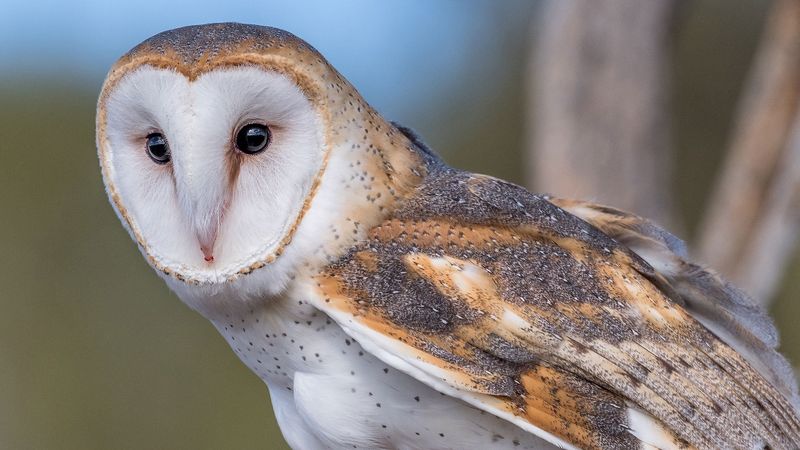
Barn owls are the species most relevant to open suburban and rural properties near fields or marshes, because UF/IFAS documentation on barn owls confirms they eat roof rats, cotton rats, and rice rats in southern Florida.
Barn owls are listed by the Florida Fish and Wildlife Conservation Commission as the least common breeding owl in the state.
That does not mean they are rare everywhere, but it does mean a homeowner should not plan a pest strategy around a species they may never see.
Think of habitat planting as one quiet investment in a larger system, not a guaranteed predator delivery service.
An Owl Overhead May Be Hunting a Much Larger Landscape
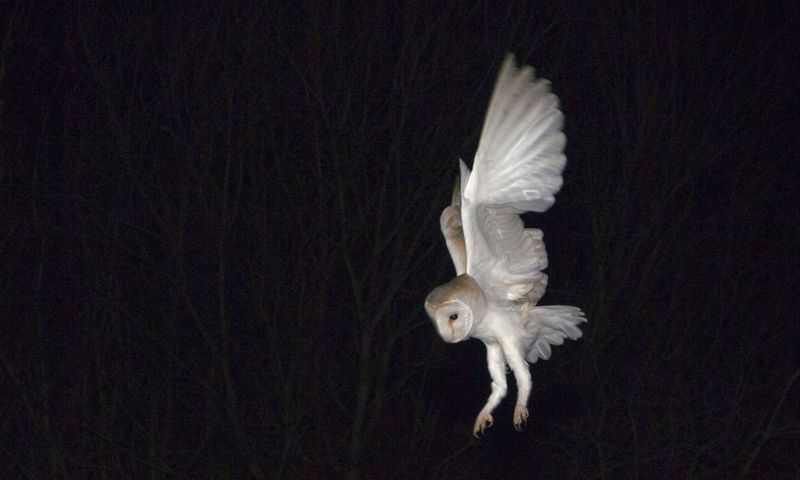
Spotting an owl gliding over your fence at dusk feels like a sign.
Here is where it gets tricky: that bird may be working a territory that stretches far beyond your property line.
UF/IFAS barn owl research documents hunting ranges of roughly 0.6 to 12.3 square miles, depending on prey density and habitat quality.
Your shed is one small stop on a much longer nightly route.
Barn owls hunt by sound in near-total darkness, quartering slowly over open ground and dropping on small mammals moving through grass or leaf litter.
A rat hidden behind a wall, under a floor, or inside a pile of clutter is simply not accessible to a bird hunting from the air.
The owl does not know your shed exists in any meaningful way.
A 2025 vineyard study published in peer-reviewed literature found some evidence that barn owls affected rodent behavior and abundance under specific agricultural conditions, which is genuinely encouraging.
The same researchers described the broader body of agricultural studies as mixed, and the authors did not extend their findings to residential settings.
That distinction matters a great deal for a homeowner with a shed.
The practical takeaway is this: an owl overhead may add some predation pressure to the rodents moving around your yard at night.
Rats are prey animals and they do respond to perceived risk.
But comparing fresh droppings, gnaw marks, tracks, and sightings over several weeks is the only honest way to know whether activity is actually decreasing.
One flyover proves nothing on its own.
Build Habitat Instead of Trying to Bait an Owl
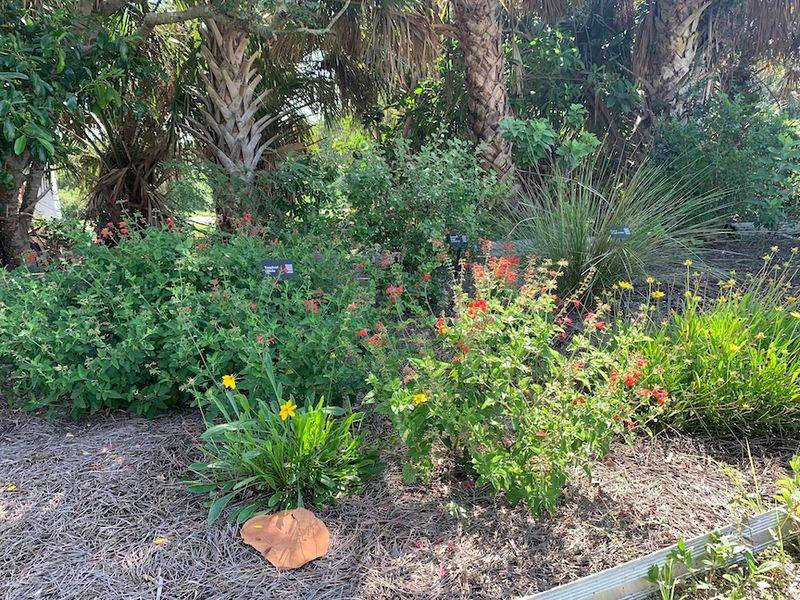
Planting for owls actually means planting for everything an owl eats.
Fruit-bearing natives feed birds and small mammals.
Flowering plants support insects, which support lizards and frogs, which support larger predators.
FWC’s habitat guidance describes this as building the full chain: food, water, shelter, and space for raising young.
An owl does not respond to a shrub.
It responds to a landscape that reliably holds prey.
The design boundary that matters most is the shed perimeter itself.
Dense plantings right against shed walls create exactly the kind of sheltered, dark, hidden space that rats prefer.
Florida Native Plant Society resources on attracting wildlife emphasize habitat structure and transitions, meaning the edges between shrubs, open lawn, and taller plants are where wildlife movement actually happens.
Keep those transitions away from your shed walls, doors, and stored materials.
A better arrangement places native plants along a fence line or garden bed at least several feet from the shed, with an open strip of mown grass or gravel between the plantings and the structure.
That open strip is actually useful hunting ground for an owl moving low over the yard.
FNPS landscape guidance supports layered planting that creates habitat value without turning the whole property into a thicket.
More vegetation everywhere is not automatically better.
A yard that offers open sight lines, some taller perches, a reliable water source, and native ground-level plantings away from the shed gives a passing owl more reason to linger than a solid wall of shrubs does.
Keep the shed visible, clean, and easy to walk around.
That benefits you as much as it benefits any predator overhead.
Choose Florida Plants That Fit the Site
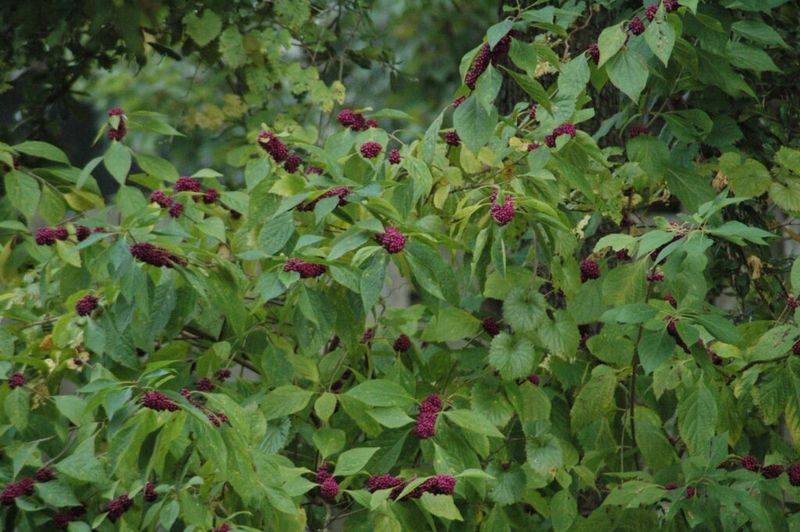
American beautyberry, Callicarpa americana, is one of the more useful fruiting shrubs for a Florida wildlife garden.
It commonly grows 4 to 6 feet tall and 3 to 5 feet wide, produces persistent purple fruit clusters that birds and small animals use through fall and into winter, and tolerates a wide range of soil conditions across much of the state.
UF/IFAS native plant guidance lists it as a reliable wildlife-support choice.
It does not attract owls.
It feeds the food web that an owl may eventually hunt.
Saw palmetto, Serenoa repens, is drought- and salt-tolerant, which makes it genuinely useful along the Gulf Coast and Atlantic Coast where salt spray and sandy soil limit other options.
It typically stays under 8 feet, though its form varies by site.
Coontie, Zamia pumila, grows roughly 2 to 3 feet tall and 2 to 4 feet wide, handles both salt and drought, and provides dense low structure without becoming a hiding place for rodents if kept away from shed walls.
For wetter or more sheltered sites, Simpson’s stopper, Eugenia foetida, and wild coffee, Psychotria nervosa, can add dense foliage and fruit for birds in spots that stay moist.
Those are possible choices, not universal recommendations.
Every Florida property has a different combination of sunlight, drainage, soil type, salt exposure, and local climate, and a plant that thrives in a Central Florida sandy lot may struggle in a South Florida limestone yard or a North Florida site that catches occasional hard freezes.
The honest approach is to evaluate your specific site conditions and then check with FNPS landscape guidance or your county UF/IFAS Extension office before buying.
FWC’s habitat resources can also help you match plants to what wildlife actually uses in your region.
All of these plants add structure and wildlife value to a yard.
None of them guarantee an owl visit.
A Nest Box Offers a Possible Nesting Site
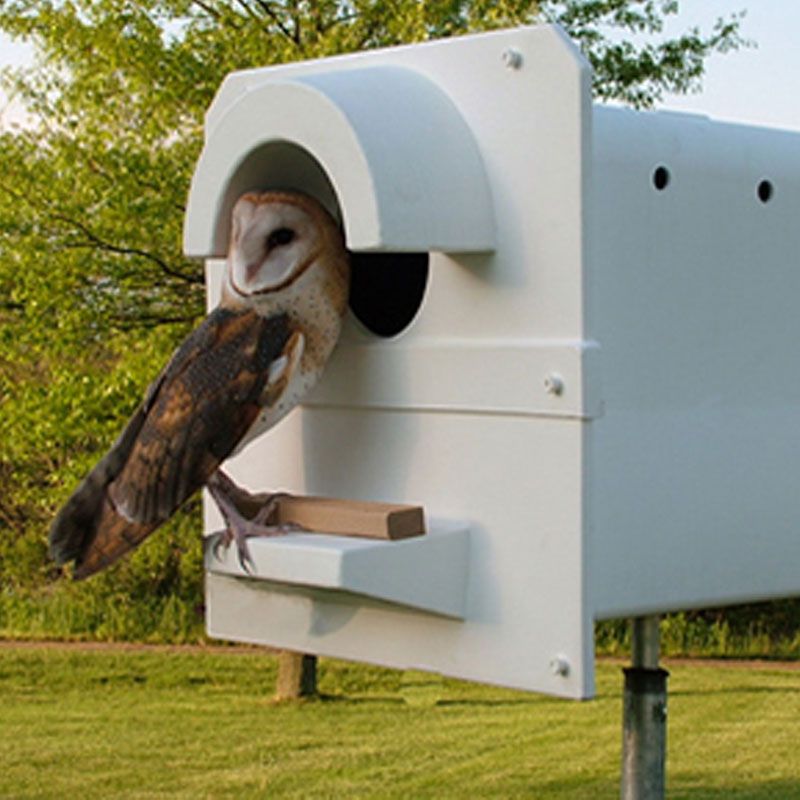
A properly designed nest box has a more direct connection to providing a nesting opportunity than any plant does, and that is actually saying something useful.
Plants build the food web.
A box addresses the specific shortage that often limits barn owls in suburban Florida: a safe, quiet cavity at the right height with clear flight access.
Cornell Lab NestWatch guidance for barn owls recommends placing boxes roughly 8 to 25 feet above ground, with an entrance opening near 4.5 inches in diameter and a box depth of approximately 16 inches.
Where multiple boxes are used on larger properties, spacing them at least 100 feet apart reduces competition and territorial conflict.
UF/IFAS barn owl nest box construction guidance adds that facing the entrance toward the north can reduce direct sunlight exposure where that orientation is practical on your property.
The box should be mounted where an owl can glide in and out freely, ideally at an open field edge, a farm structure, or a quiet corner of a larger lot.
Keep the box away from bedroom windows, active patios, shed doors, and any path with regular foot traffic.
Barn owl nestlings are genuinely loud, and active nests should not be opened, moved, or repeatedly checked.
UF/IFAS barn owl management guidance reinforces that point.
Florida’s severe storms and hurricane-season winds require that the mounting be solid and storm-resistant, not just a quick bracket installation.
A box may sit unused for a season or more.
NestWatch nest box placement guidance is clear that prey availability, open hunting habitat, safe access, and timing all affect whether a box gets used.
An empty box does not mean the design failed.
It may mean the local food web is not yet dense enough, or that a barn owl simply has not found it yet.
Give it time, keep the area around it open, and do not count on occupancy before the season starts.
Seal and Clean the Shed Before Relying on Wildlife
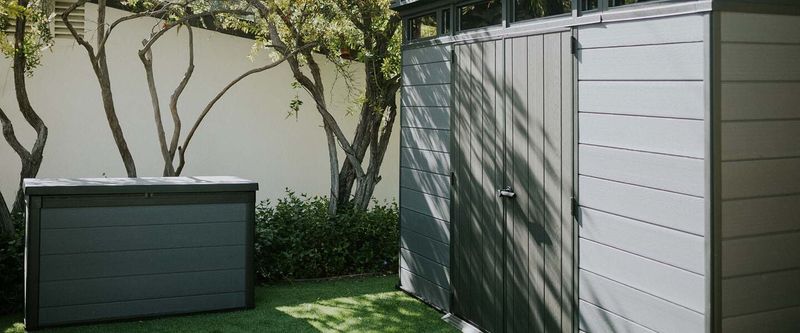
A rat does not need much of an opening.
CDC rodent exclusion guidance states that mice can squeeze through a hole about 1/4 inch wide, which is roughly 6 millimeters, the diameter of a pencil.
Roof rats, the most common shed invader across Florida, are not much larger.
Any gap around a door threshold, roof edge, pipe penetration, or wall joint is a potential entry point.
Seal those openings with durable materials: metal flashing, hardware cloth, cement, or purpose-built rodent-exclusion products.
Caulk and spray foam are useful for finishing small cracks, but they will not hold against a rat that is already motivated to chew through a larger gap.
CDC prevention recommendations consistently emphasize physical exclusion with hard materials as the foundation of rodent control, not chemical deterrents or wildlife pressure alone.
Inside the shed, storage matters as much as the walls do.
Seed, pet food, fertilizer products, and animal feed stored in open bags are essentially a free buffet.
Move everything into thick plastic, metal, or glass containers with tight-fitting lids.
Clean up spills the same day they happen.
Keep garbage in covered bins, and check the area around the shed regularly for signs of new activity.
CDC guidance suggests keeping compost piles roughly 100 feet from structures and woodpiles roughly 100 feet away while raising them at least 1 foot off the ground.
Those are general benchmarks, and many Florida lots cannot accommodate that distance.
On a smaller property, the practical version is to keep those materials as far from the shed as the lot allows, and to check them regularly for nesting signs.
Clutter inside the shed is just as inviting as clutter outside it, so clear out anything that blocks your ability to inspect corners, baseboards, and the area around stored materials.
Protect Owls While You Monitor the Results
Monitoring is the honest version of pest control.
Compare fresh droppings, gnaw marks, tracks, and sightings over several weeks, not several days.
A single owl flyover is not evidence that rodent activity has decreased.
The 2025 barn owl vineyard study that found some behavioral effects on rodents under agricultural conditions also described results across similar studies as mixed.
Residential shed infestations are a different and less studied setting.
Watch the actual signs, not the sky.
Rodenticide use creates a serious problem for any owl hunting your yard.
Poisoned rats and mice can remain active long enough to be caught by a barn owl or other raptor, and the predator then ingests the poison along with the prey.
EPA documentation on bromadiolone secondary toxicity identifies barn owls specifically as a species at risk from this exposure pathway.
Not every rodenticide carries identical risk, but EPA assessment materials on anticoagulant rodenticides make the general hazard clear enough that casual bait use around active hunting habitat is a genuinely bad idea.
If chemical control becomes necessary, follow the product label exactly and consult a licensed pest professional.
Florida owls, their eggs, their young, and any active nest are protected under the federal Migratory Bird Treaty Act.
FWC guidance on great horned owls advises observing from a distance, keeping pets leashed or indoors near active nests, and never handling eggs, chicks, or nest materials.
A fledgling on the ground may look abandoned but is often in the middle of learning to fly.
Contact a licensed wildlife rehabilitator if a bird appears genuinely injured.
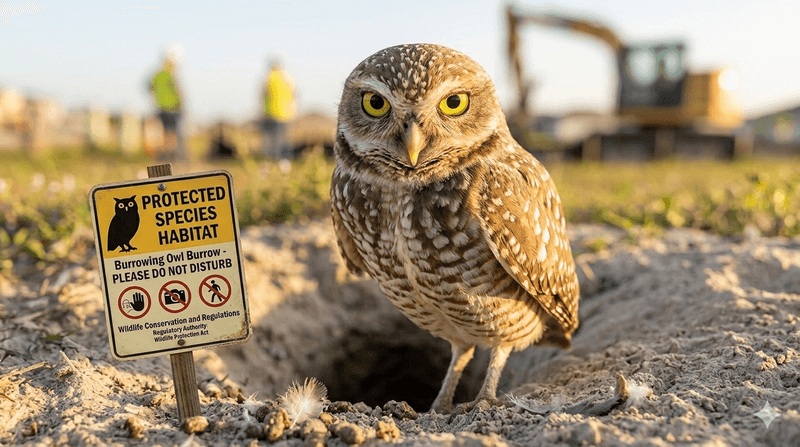
If you have burrowing owls on your property, treat them as a separate situation entirely.
FWC burrowing owl guidance notes they are state-threatened in Florida and require open, short-grass habitat.
Do not landscape over an active burrow, and do not install a tree nest box expecting a burrowing owl to use it.
Native plants may support owl-friendly habitat over time, but a sealed, clean shed is the one part of this plan that works every single night.