
When Your Garden Speaks To Your Heart, This Is Usually What You’re Feeling
Follow us on Google
Some yards just feel different. You step outside after a long day, and something in that familiar patch of soil and leaves quietly settles you back into yourself.
Researchers have a few grounded explanations for why certain gardens feel this personal, and none of them require magic. Understanding what is actually happening can help you protect that feeling on purpose.
Your Yard Can Become Part of Who You Are

Researchers use the term “place attachment” to describe a lasting emotional bond with a specific environment, and a home garden can quietly build one of the strongest versions of that bond. Research on home attachment describes a home as a place of emotional centering, identity reinforcement, safety, and refuge.
That is not poetry. It is a documented pattern in how people relate to the places they return to every day.
Place attachment actually has two layers worth knowing. Place identity is when a setting feels connected to who you are, the porch where you drink your morning coffee, the bed you dug out the summer after a hard year.
Place dependence is when the space supports activities and needs better than anywhere else, a spot that fits your routines in ways a park or a neighbor’s yard simply does not.
Repeated routines matter more than most people expect. The more seasons you spend watering, weeding, and watching a space, the more the space reflects your choices back at you.
Many gardeners notice a reluctance to leave even for short trips, and that pull is not weakness. It may be the yard holding evidence of time, effort, and care that nowhere else does.
Attachment is not universal, and it is worth saying plainly. Access, housing stability, finances, culture, past experiences, and personal preference all shape whether a yard feels like refuge or labor.
Some people find their deepest sense of place in a community plot, a balcony container, or a rented backyard. The bond follows the care, not the square footage.
A Garden May Give Attention a Gentler Target
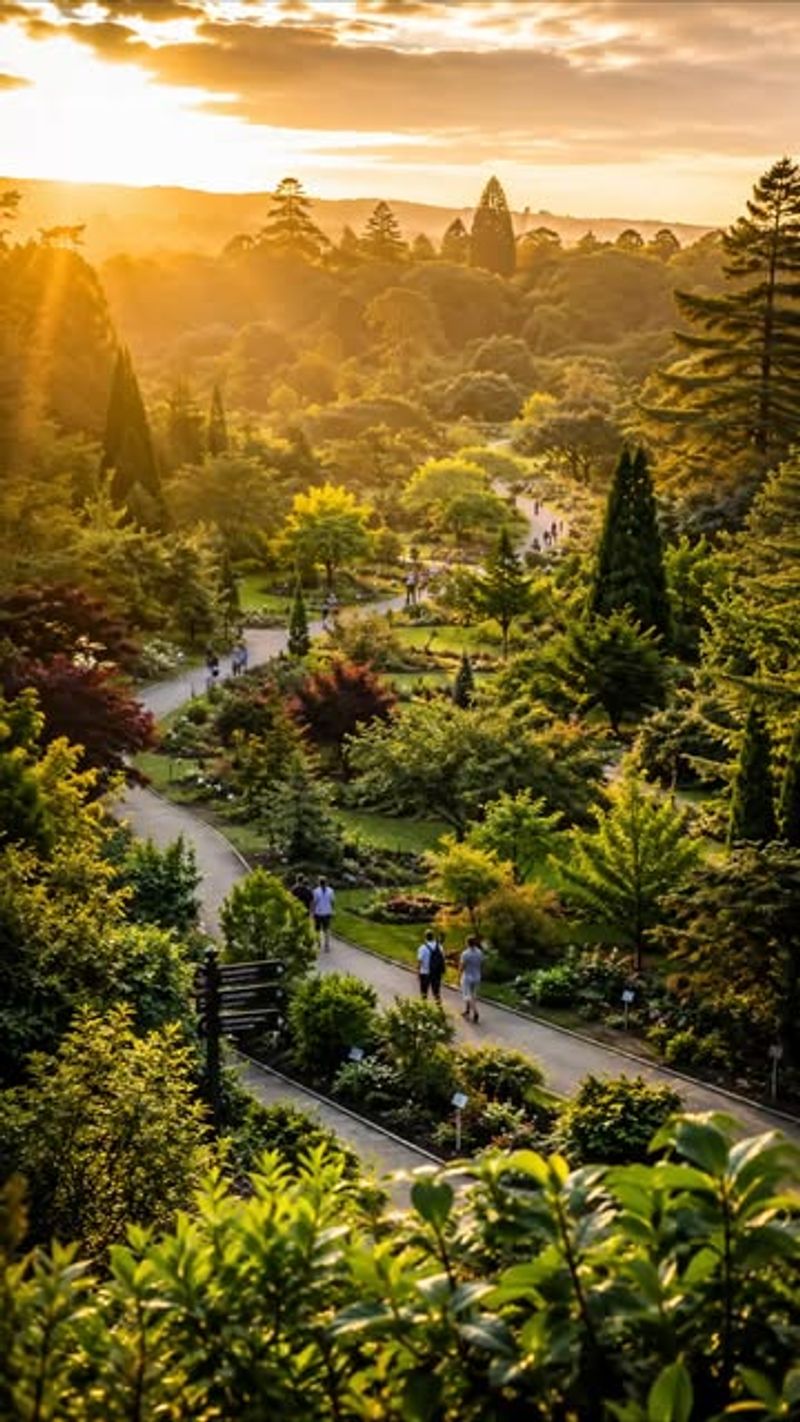
Mental fatigue feels like a specific kind of tired. Not sleepy, just used up, the way you feel after hours of screens, decisions, traffic, and problem-solving.
A garden may help with that particular kind of drain, though the explanation comes with honest limits.
Attention restoration theory proposes that natural settings can offer what researchers call “soft fascination,” sensory interest that holds your attention without demanding the same effort as work or worry. Leaves moving in a breeze, a bee working a flower, the smell of damp soil after watering: these things draw the eye and ear without requiring a response.
Research on restorative environments identifies four qualities that may contribute to this effect: being away from demanding tasks, a sense of extent or scope, fascination, and compatibility with what the person actually wants to do there.
The research supports the idea, but with real variation. Reviews of nature and cognitive function find some improvements in working memory and attention after nature exposure, but the effects differ across studies and are not guaranteed for every person or setting.
A separate analysis found that many attention measures showed no clear benefit, and the best conditions and exposure lengths remain uncertain.
A garden beside a loud road, full of overdue chores, glare, or biting insects, may not feel restorative at all. The practical principle is simpler than the theory: a small backyard works best when it matches what you want to do there, whether that is sitting quietly, watching birds, harvesting a handful of herbs, or doing light work in the cool of the morning.
Fit the space to the use, not the other way around.
Care Makes the Space Feel Authored
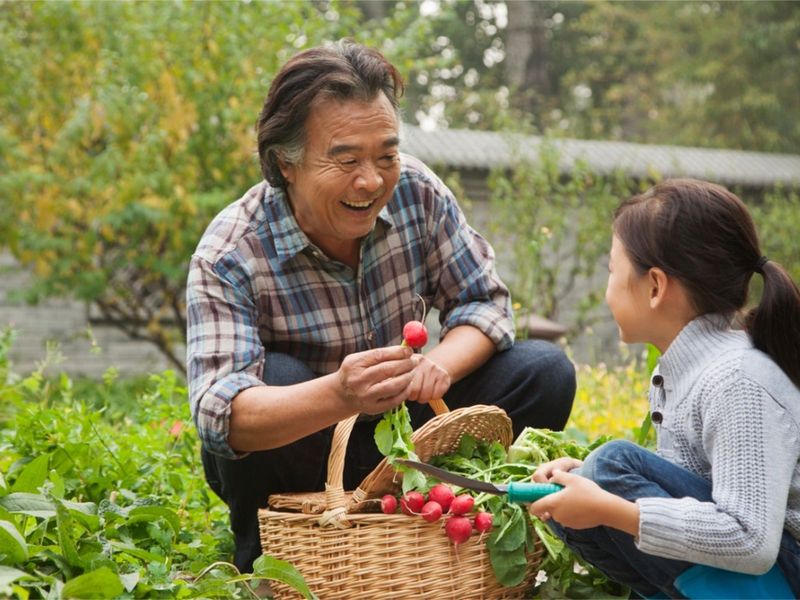
Viewing a beautiful park and tending your own garden are genuinely different experiences. A park asks nothing of you.
Your garden remembers what you did last spring.
Planting, watering, pruning, harvesting, watching for pests, and adjusting when something fails all create a sense of agency, the feeling that you have helped shape a living space and that your choices there actually matter. That sense of authorship can deepen attachment in ways that passive enjoyment does not.
Research linking garden participation with neighborhood attachment supports this connection, though much of the evidence is observational and does not prove direct causation.
Memory weaves into care in ways that are easy to underestimate. A tomato seedling from a neighbor’s saved seed, a rose division from a parent’s front yard, a bed rebuilt during a difficult recovery season: these are possible examples of how a plant can carry personal history.
Place attachment research connects identity and memory to the emotional weight a familiar space can hold over time. Not everyone experiences this, and the examples above are possibilities rather than a universal script.
What tends to hold across many gardeners is the cumulative effect of repeated small decisions. The corner you finally got right after three seasons.
The herb you moved twice before it thrived. Each adjustment leaves a trace that makes the space feel less like property and more like a collaboration between you and something that grows back.
Living Things Can Make the Yard Feel Responsive
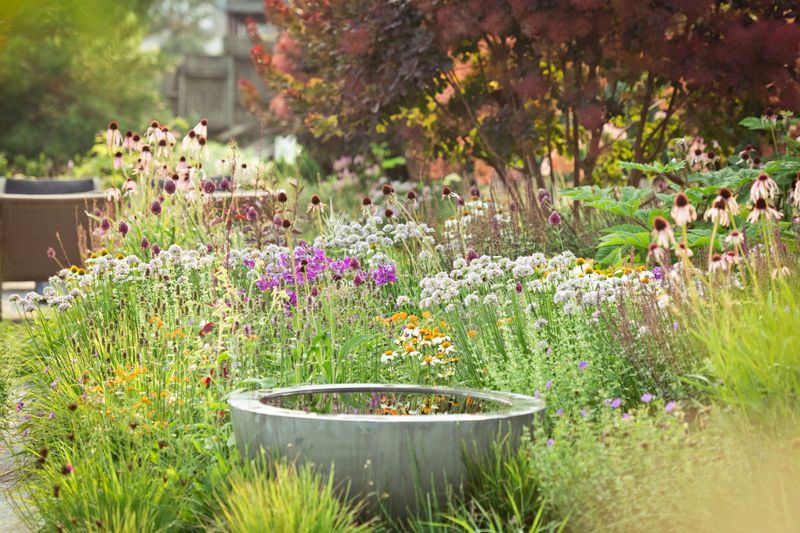
A yard full of only lawn grass is quiet in a particular way. Add a patch of flowering plants, and within a season you may notice bees arriving in the morning, a goldfinch working the seed heads, and butterflies passing through on warm afternoons.
That shift from static to active changes how the space feels to spend time in.
USDA Forest Service research on residential yards confirms that home landscapes can provide meaningful habitat for birds, pollinators, and other wildlife, especially when they include diverse vegetation suited to local conditions. The yard becomes something closer to a participant than a backdrop.
Practical habitat guidance from NRCS habitat resources and NRCS pollinator guidance points in a consistent direction: plant several species rather than one isolated specimen, group flowers in clumps, overlap bloom periods from spring through fall where your local climate allows, and provide food, shelter, water, and nesting opportunities. A shallow dish of water and a small brush pile can matter as much as the plants themselves.
Native plants often support more local wildlife than non-native ornamentals, but native status is strictly regional. A plant native to the tallgrass prairie of Illinois is not native to coastal Georgia or the high desert of New Mexico.
University of Minnesota Extension’s native plant guidance is one example of locally grounded advice, and every region has its own equivalent through state extension services and natural-resource agencies. Native plants are not automatically low-maintenance everywhere, so matching the plant to the soil, sunlight, drainage, and rainfall of your specific site matters more than the native label alone.
One honest note: adding habitat plants will not eliminate ticks, mosquitoes, or household pests. A wildlife-friendly yard still requires personal protection, tick checks after time outdoors, and sensible management of brush or leaf litter near frequently used areas.
One Small Refuge Can Hold the Feeling
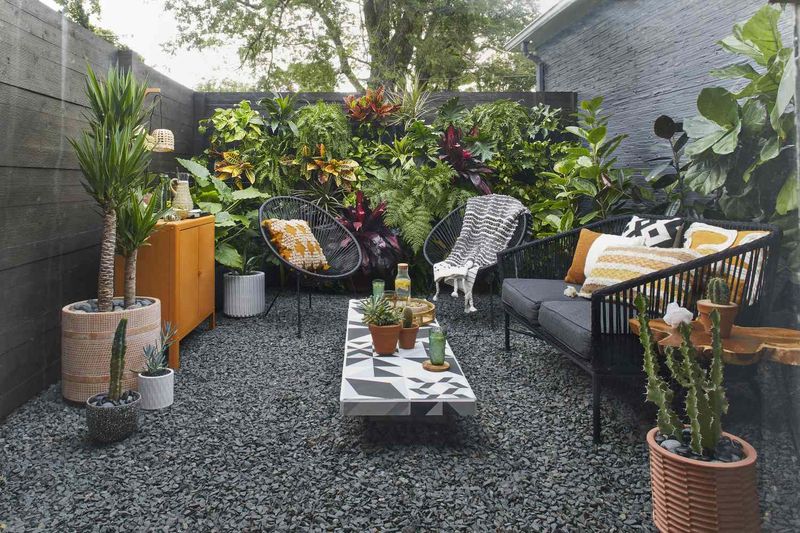
Most of the research on restorative spaces does not require a large property. What seems to matter is that the spot feels intentional, comfortable, and genuinely suited to how you want to use it.
A useful starting point is choosing one sitting or light-working area rather than redesigning the whole yard. Give it a comfortable seat, a clear view of at least a few plants, some shade or shelter from direct sun or wind, and one or two sensory details: a fragrant herb within reach, a pot of ornamental grass that moves in a breeze, a small water feature, or a spot where birds tend to land.
University of Minnesota Extension’s healing garden guidance describes design around scent, touch, movement, sound, and calm visual repetition. Those principles travel well across regions even if the specific plant suggestions are Minnesota-oriented.
Plant choices must fit your local conditions. Climate, soil type, sunlight, drainage, and water availability all shape what will actually thrive.
USDA hardiness zones describe winter cold tolerance and nothing else. They do not account for summer heat, humidity, rainfall, elevation, or growing-season length, so a zone number alone is a thin guide for plant selection.
Oregon State Extension’s accessible gardening resources and Penn State Extension’s well-being and gardening overview both note that meaningful contact with living things does not require a large plot. Balconies, containers, raised beds, and community garden plots can all offer sensory engagement, care, and observation.
No research establishes a minimum garden size for restoration, so the goal is a space that fits your life, not one that meets a standard set somewhere else.
Movement and Connection Add to the Meaning
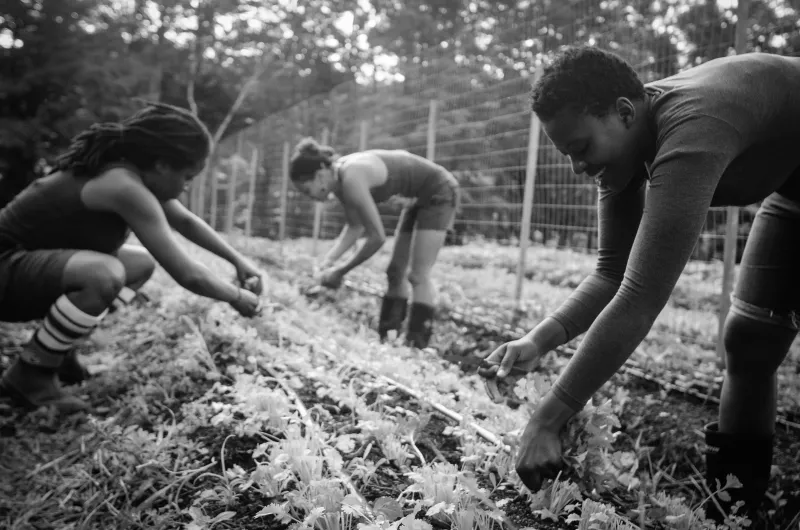
Gardening is physical in ways that accumulate without feeling like a workout. Digging a new bed, carrying bags of compost, walking back and forth to the hose, kneeling and standing to weed: these movements add up across a morning without the structure of a gym session.
CDC guidance on physical activity recommends at least 150 minutes of moderate activity per week for broad cardiovascular benefits in adults. Gardening can contribute to that total, but not every task counts as moderate activity for every person.
Strolling between containers and watering with a light hose is not the same as double-digging a raised bed. Count what you do honestly and supplement with other movement if needed.
Safe habits matter more than pushing through. Split heavy jobs into sessions of 20 to 30 minutes.
Alternate digging with lighter tasks like weeding or harvesting. Use a garden cart for soil and mulch rather than carrying heavy bags by hand.
Stop if you feel pain, dizziness, unusual weakness, confusion, or any sign of overheating.
For hot-weather work, NIOSH guidance for outdoor workers recommends drinking about 1 cup of water every 15 to 20 minutes, taking rest breaks in shade, and scheduling strenuous tasks during the cooler parts of the day, typically before 10 a.m. or after 4 p.m. in summer.
Gardens also connect people in quieter ways. Sharing a harvest of tomatoes with a neighbor, passing along seed packets, working a community plot alongside others: these small exchanges can build a sense of belonging that extends beyond the fence line.
A CDC review of community gardening reports social and emotional benefits including strengthened family relationships, community building, and life satisfaction. Those findings are strongest for community-garden settings and do not automatically apply to every private yard, but the underlying dynamic, shared effort around living things, tends to travel.
Meaningful Does Not Mean Risk-Free or Universal
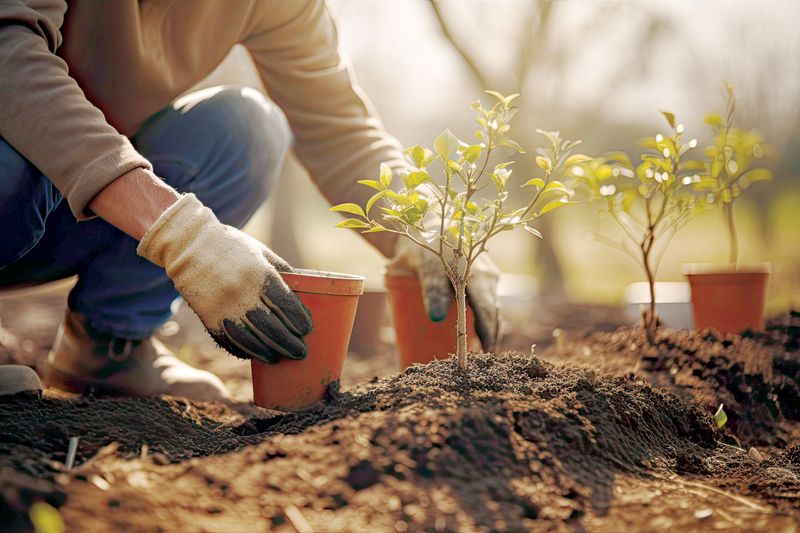
The research on gardening and well-being is genuinely encouraging, but it comes with honest caveats that are worth reading before drawing broad conclusions. A 2024 umbrella review of 40 studies found a positive overall effect on well-being from gardening, but it also emphasized substantial heterogeneity across studies and cautioned against direct clinical implications.
A separate meta-analysis found that pooled effects were inconsistent across mental-health outcomes and that heterogeneity remained high even after lower-quality studies were removed. Positive overall direction, real variation in results.
Ordinary backyard gardening and structured therapeutic horticulture are not the same thing. Therapeutic horticulture typically involves defined goals, specific participant groups, planned activities, and often trained professionals.
It may support existing mental-health care, but it should not be described as a replacement for it. Tending your tomatoes is worthwhile on its own terms, without needing to carry clinical weight it was not designed to carry.
A few safety areas deserve direct attention. Soil near older homes, painted structures, or roads can contain lead.
ATSDR soil safety guidance advises washing hands after working in the soil, removing shoes before entering the home, and washing produce grown in potentially affected areas. If your home was built before 1978, testing your soil before planting edibles is a reasonable step.
Pesticides require label reading, not guesswork. EPA pesticide safety guidance advises keeping children, toys, and pets away during application and respecting the label’s reentry interval before returning to treated areas.
The EPA citizen’s guide to pest control adds never to transfer products into food or drink containers.
Wildlife-friendly spaces are not tick-free spaces. CDC vector-borne disease prevention guidance notes that tick exposure can occur year-round, with higher activity typically from April through September across much of the US.
Wear long pants, do tick checks after time in brushy or wooded areas, and manage leaf litter near spots where you sit or play. And on hot days, take the heat seriously.
NIOSH heat illness information is clear that heat stroke can cause permanent disability or death, and strenuous outdoor work raises the risk. Care, memory, attention, and belonging may genuinely meet in a garden, but no garden works exactly the same way for every person who enters it.