
This Garden Favorite Gets Misnamed Constantly, And The Real One Earns Its Spot
Follow us on Google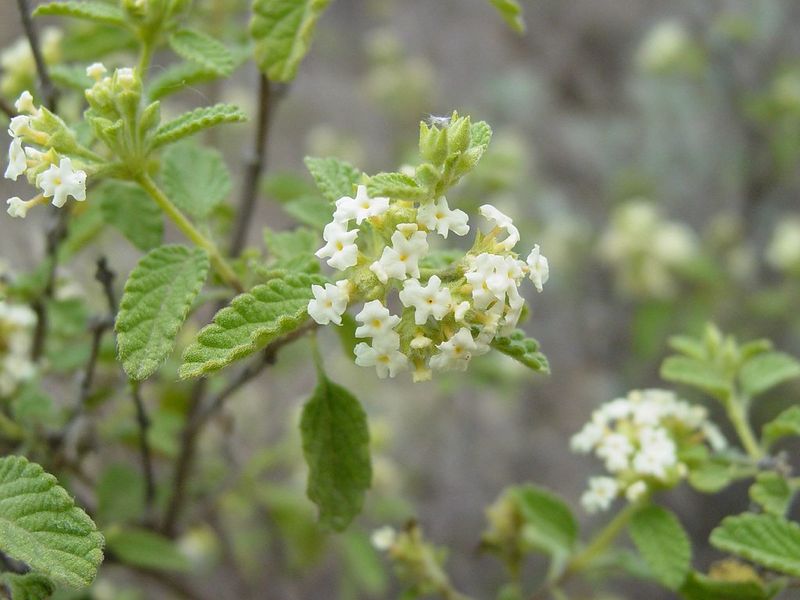
Pick up a pot labeled Mexican oregano at a local nursery, and you might assume you know exactly what you’re getting. That assumption is where the trouble starts.
The common name covers more than one plant, and the differences between them matter when you’re deciding what to grow, where to put it, and whether to cook with it. Getting the right plant is simpler than it sounds once you know what name to look for on the label.
The Best Botanical Answer Is Mexican Oregano
When gardening references and herb catalogs say Mexican oregano, the plant they most often mean is Lippia graveolensLippia origanoides, a woody, heat-loving shrub with small aromatic leaves. Some current taxonomic authorities, including Kew’s Plants of the World Online, treat that name as a synonym of , so you may see either name on a reputable plant label or in a university reference.
Both names point to the same plant in practical terms, and knowing that prevents unnecessary confusion at the nursery.
The naming situation is not a case of constant mislabeling so much as a natural result of how common names travel. Regional usage, nursery traditions, and overlapping culinary roles all contribute to the same label appearing on more than one species.
That is a common-name problem, not evidence that most plants on the shelf are wrong.
This distinction matters for your garden because Lippia graveolensOriganum vulgare and Mediterranean oregano, , are genuinely different plants with different growth habits, different family memberships, and different flavors. Buying one when you want the other leads to mismatched expectations, especially if you are planning around a shrub-sized plant or a specific culinary use.
The practical goal here is straightforward: help you identify the right plant before you put it in the ground, so you can decide whether it fits your space and your cooking.
Common Names Create the Confusion
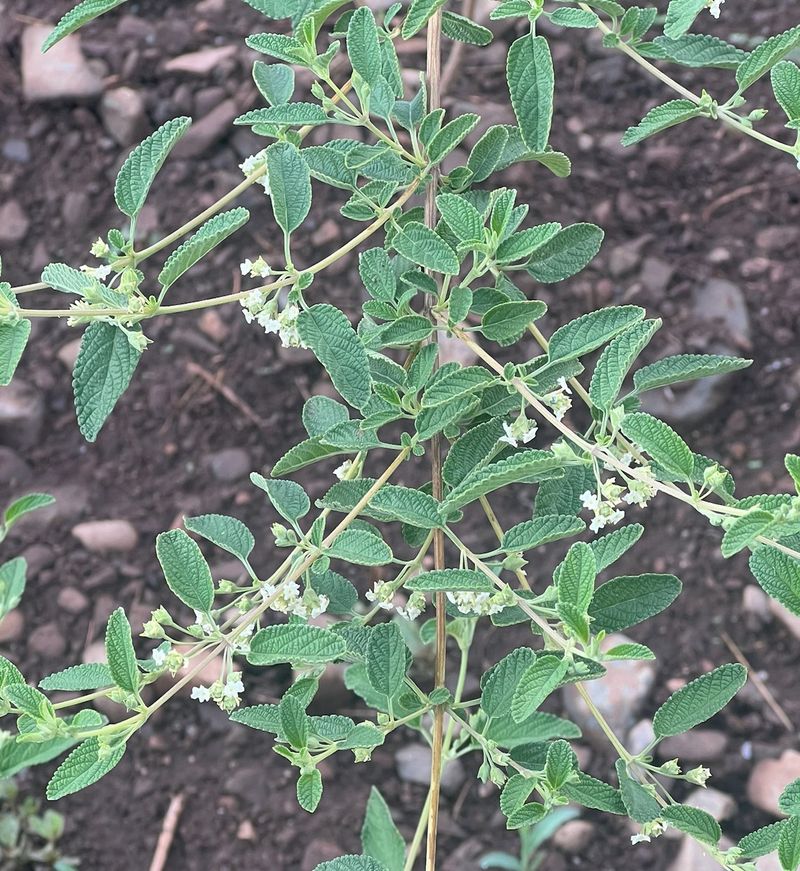
A label that says Mexican oregano does not guarantee you are holding Lippia graveolens. The common name has been applied to several plants across Mexico, the American Southwest, and Central America, and nursery tags follow regional habits rather than a single botanical standard.
Research on the naming of Mexican oregano documents that the term covers multiple species in legitimate regional use, which means a plant sold under that name in one state may be a different species than one sold under the same name two states over.
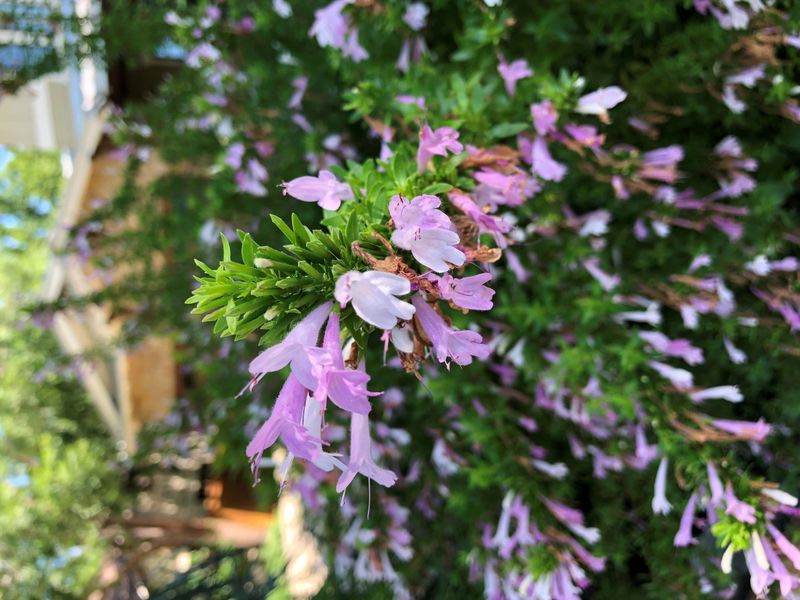
A concrete example: the University of Arizona’s plant sale list has included Poliomintha maderensisLippia, a lavender-flowered shrub, under the Mexican oregano label. That plant is not , but it is not a fraud either.
It reflects honest regional usage. The problem is that two shoppers buying Mexican oregano at different nurseries may go home with plants that look and taste quite different from each other.
None of this means other labeled plants are impostors. But it does mean the common name alone is not enough information before you cook with something or commit it to a permanent spot in your garden.
Poison Control’s guidance on plant identification makes a useful general point: do not eat a plant you cannot identify by its botanical name. The safe buying rule is simple.
Check the label for Lippia graveolensLippia origanoides or , ask the nursery staff if the tag is unclear, and buy from a reputable source that can tell you what it is actually selling.
Use Its Family And Form To Tell It Apart
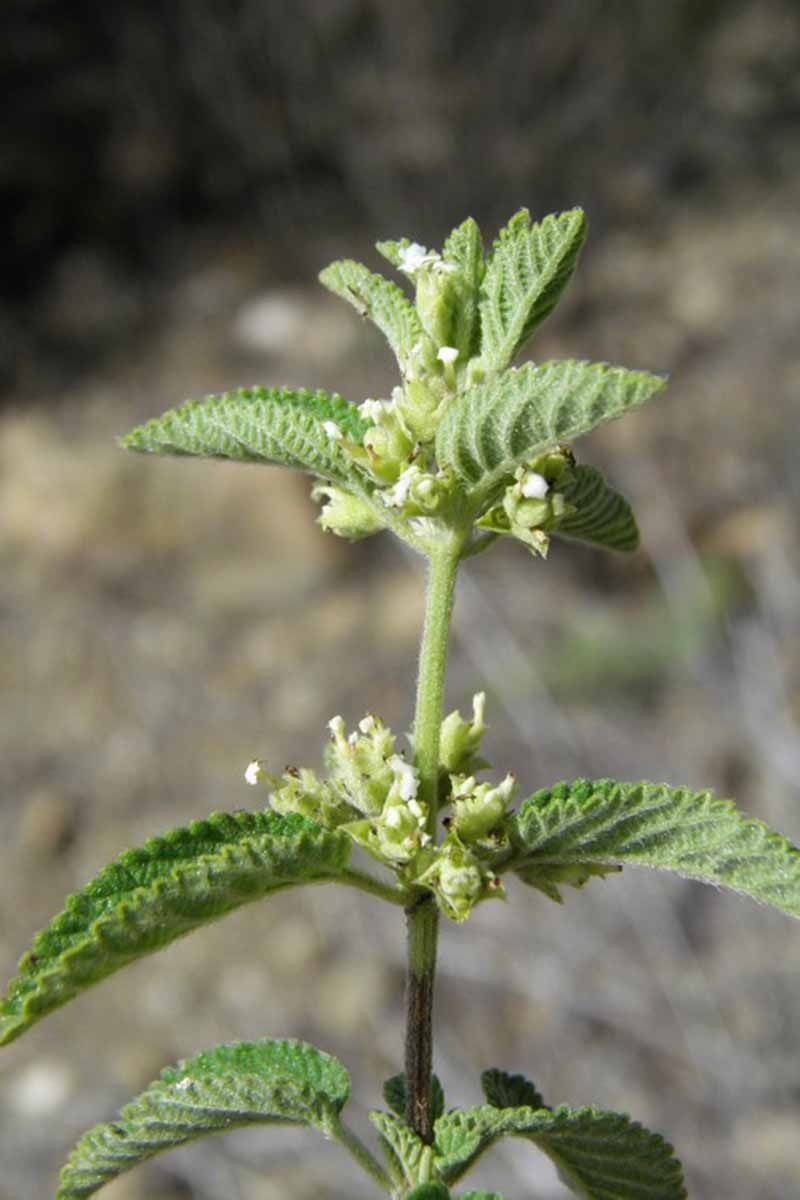
Family membership is the clearest way to separate these two plants. Mexican oregano, Lippia graveolens, belongs to Verbenaceae, the verbena family.
Mediterranean oregano, Origanum vulgare, belongs to Lamiaceae, the mint family. Those are genuinely different plant families, and the difference shows up in how the plants grow, not just in how scientists classify them.
Texas A&M AgriLife herb guidance describes Mexican oregano as a bushy shrub that is distinct from Origanum vulgare, the low-spreading herb common in Italian and Greek kitchens. Mediterranean oregano tends to stay compact, often reaching around 24 inches tall, and spreads along the ground in a familiar soft mound.
Lippia graveolens grows upright and woody, more like a small flowering shrub than a ground-hugging herb. The stems harden over time, and the plant takes up considerably more vertical space.
Some references describe Mexican oregano as not a true oregano, which is botanically understandable but can mislead readers into thinking the plant is somehow inferior or fake. A more accurate way to put it: Mexican oregano is not a species of Origanum, the genus that includes Mediterranean oregano.
That distinction places the plants in different families and explains their contrasting forms, but it does not diminish LippiaLippia graveolens‘s long history as a recognized culinary herb. A published review of Mexican oregano as a source of bioactive compounds confirms that carries a well-documented culinary and ethnobotanical record.
The family difference is a useful ID tool, not a quality judgment.
A Culinary Herb With Shrub Potential
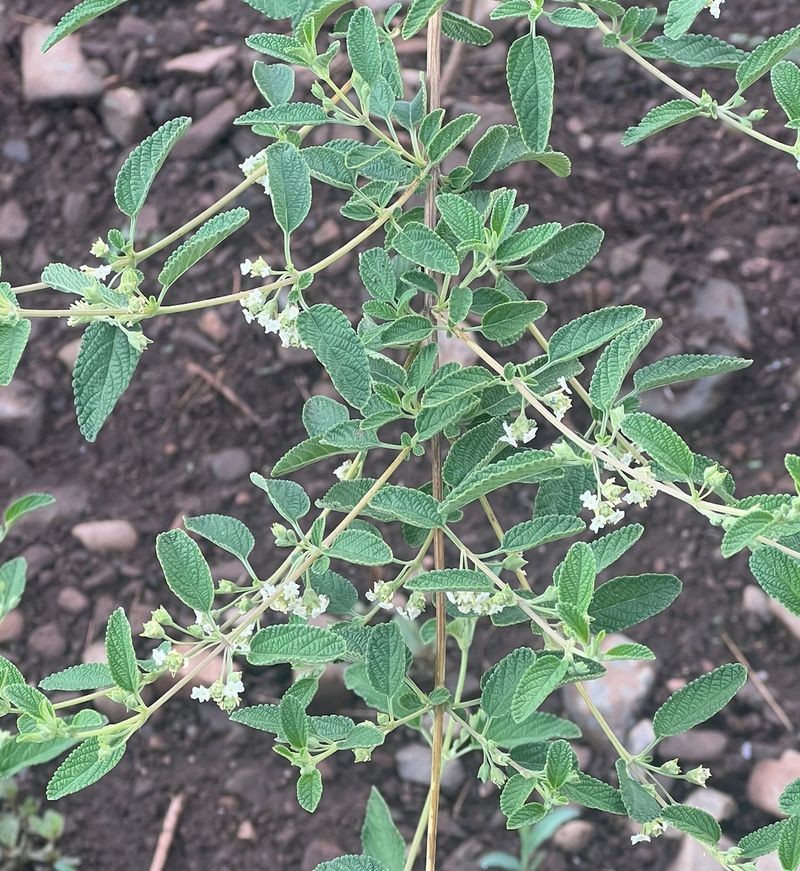
Knowing you have the right plant changes how you plan your garden space. Lippia graveolens is not a tidy little pot herb you tuck between tomatoes.
The University of Arizona Campus Arboretum describes it as a fast-growing evergreen shrub that can reach about 2 meters, roughly 6 feet, in both height and width under suitable warm-climate conditions. In a warmer Texas setting, some local herb guides put the expected size closer to 2 or 3 feet, so the final footprint depends on your climate and how much you harvest.
The leaves are small and green, and the plant produces small white to yellow flowers in late spring through early summer. Those flowers are part of the plant’s appeal beyond the kitchen.
After pollination, the blooms give way to small fleshy fruits. The flowering period adds seasonal interest to a rock garden, a sunny herb bed, or a drought-aware landscape planting, as long as the site conditions actually fit the plant’s needs.
The culinary value is real and distinct. Mexican oregano carries a stronger, slightly citrusy flavor compared to Mediterranean oregano, and Texas A&M AgriLife notes its use in regional cooking that includes beans, salsas, and chili.
The shrub form means you get both a working herb and an ornamental plant in one space. For gardeners in warm climates who want a plant that pulls double duty, that combination is genuinely worth considering, provided the site gives it the sun and drainage it needs.
Match Sun And Drainage To The Climate
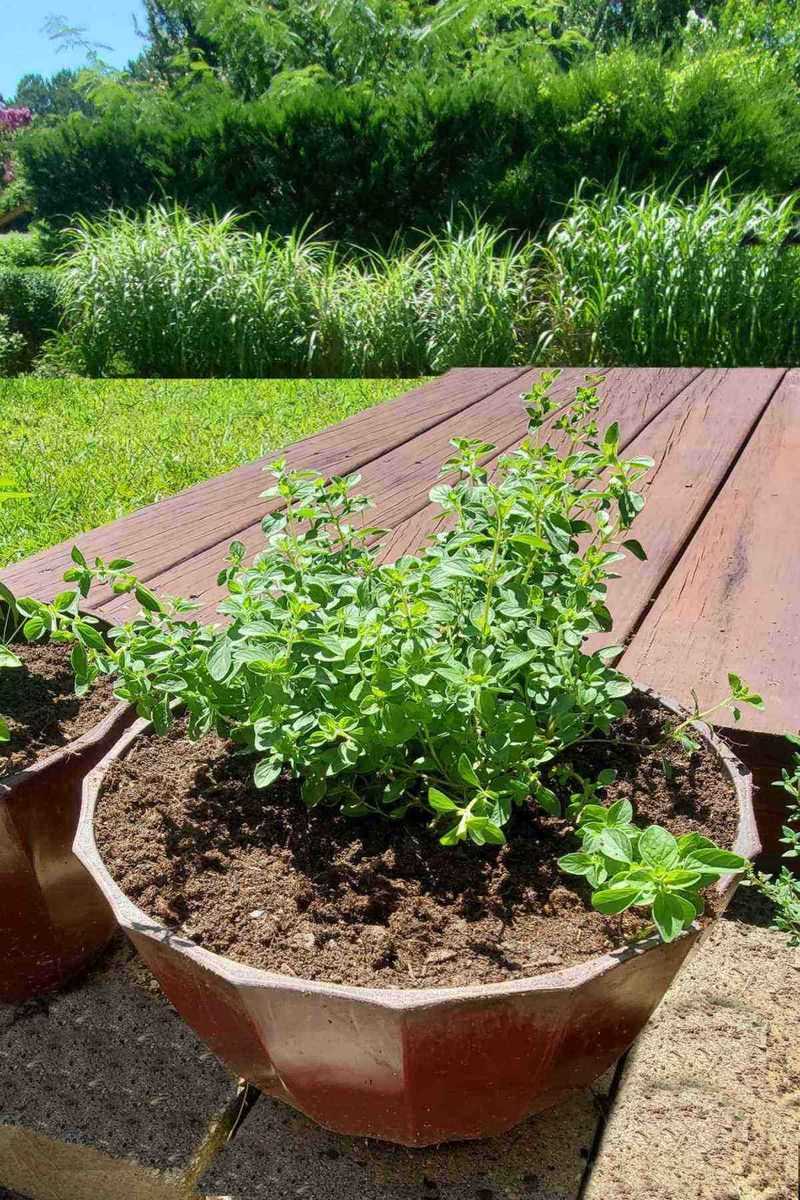
Full sun and well-drained soil are the two conditions this plant will not negotiate on. The University of Arizona’s arboretum profile lists full sun and low water use after establishment as key cultivation notes, placing its reliable landscape performance in USDA Zones 8 through 11.
Those zone numbers describe winter cold tolerance only, not the full picture of humidity, summer rainfall, soil drainage, or growing-season length. A Zone 8 garden in coastal South Carolina and a Zone 8 garden in central Texas are very different environments, and Mexican oregano will respond to those differences.
In the warm Southwest, an established plant handles dry spells well and fits naturally into low-water landscape designs. New plants still need regular watering for the first growing season to develop a strong root system before you ease back on moisture.
Rushing past the establishment phase is one of the most common reasons a drought-tolerant plant fails in its first year.
Gardeners in Zones 7 and colder should plan for winter damage or outright loss if the plant goes in the ground unprotected. A container on a sheltered patio solves that problem and lets you move the plant indoors when temperatures drop below about 25 degrees Fahrenheit.
Where soil stays wet through winter, drainage becomes more important than the zone number. Texas A&M AgriLife herb guidance recommends raised beds where garden soil tends to hold water, and that advice applies here too.
Give the plant a spot where water moves through quickly, and it will reward you with steady growth through the warm months.
Harvest Tender Leaves As Needed
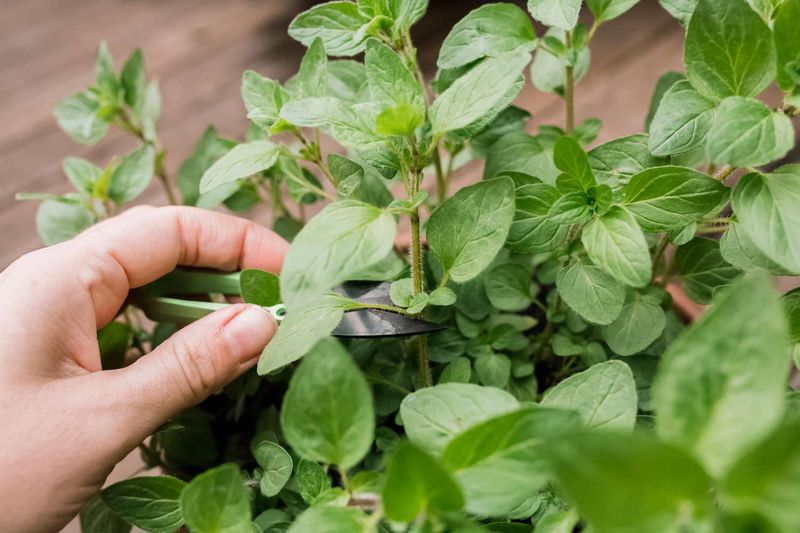
Harvesting from a Lippia shrub works best when you treat it as a living pantry rather than a one-time cutting. UC IPM’s general oregano growing guidance recommends picking tender leaves as needed and harvesting frequently to encourage new growth.
That advice applies broadly to oregano-type herbs, and it fits Lippia well in practice. Regular light harvests keep the plant producing fresh growth and prevent the woody stems from taking over.
If your goal is maximum leaf production rather than flowers, prune the plant before it blooms. Flowering does not make the leaves unusable, but the plant shifts energy toward reproduction once buds form.
A trim before that happens redirects the plant’s effort back into foliage. In warm climates with a long growing season, you may get more than one opportunity to do this between spring and fall.
In the kitchen, Mexican oregano suits dishes that can handle a bolder, slightly citrusy herb note. Beans, red salsas, chili, and braised meats are traditional pairings in Mexican and Tex-Mex cooking.
That flavor profile differs from Mediterranean oregano’s warmer, more resinous character, and neither is better in an absolute sense. They suit different dishes, and preference depends on what you are cooking.
Texas A&M AgriLife notes Mexican oregano’s place in regional cooking without ranking it above its Mediterranean counterpart.
One firm boundary: the culinary leaves and concentrated essential oils are not interchangeable. Poison Control warns that essential oils can cause serious poisoning when misused, and product concentrations vary widely.
Keep the harvest in the kitchen and off the medicine shelf.
Let The Right Plant Earn Its Place
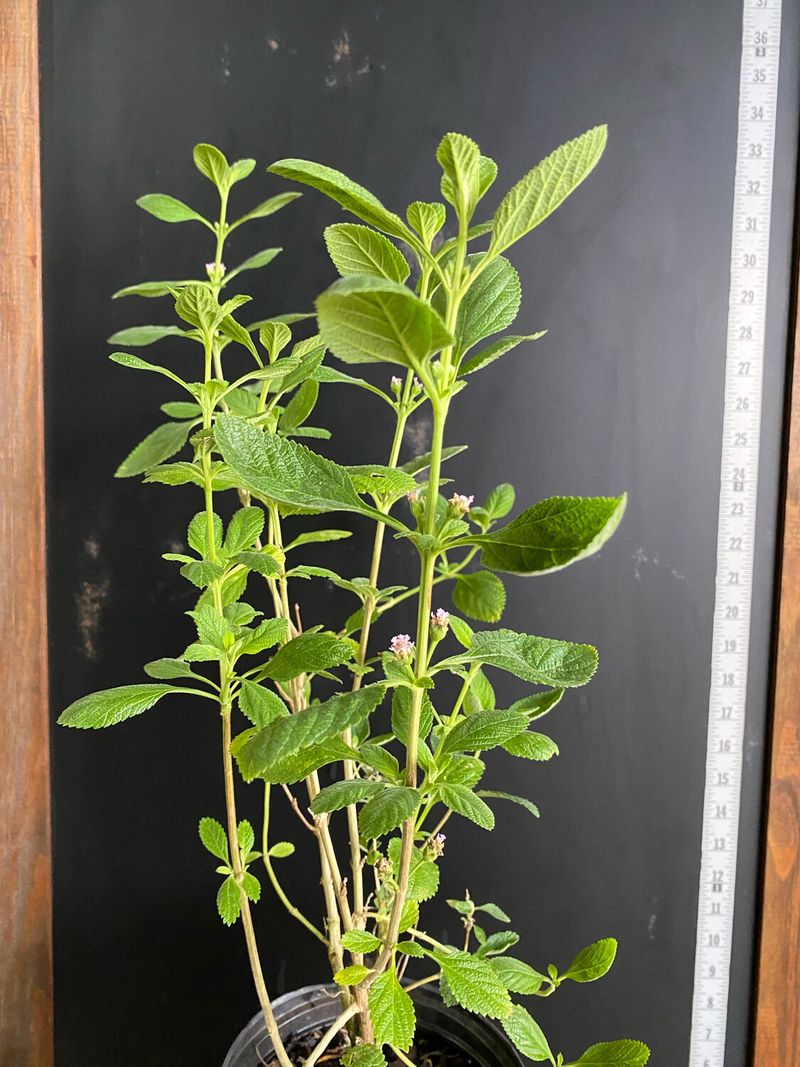
A plant earns its spot by doing more than one thing well. Lippia graveolensLippia origanoides, or as some current sources list it, offers a usable culinary herb and a flowering shrub in a single plant, and in warm, dry climates it does both with very little supplemental water once it is established.
The University of Arizona’s arboretum profile documents its low-water performance in the warm Southwest, and that combination of ornamental value and kitchen usefulness makes it a practical candidate for sunny herb beds, rock gardens, and drought-aware landscape borders where conditions align.
Colder-region gardeners are not locked out. A container on a south-facing patio, moved indoors before the first hard frost, can carry the plant through winters that would otherwise kill it.
That approach adds some effort, but it keeps the option open for gardeners in Zone 7 or colder who want to try the herb without committing to a ground planting. Sheltered microclimates near a south-facing wall can also help, though they cannot guarantee success when temperatures drop hard.
Before you buy, check the label for Lippia graveolensLippia origanoides or and confirm the nursery can tell you what it is selling. University of Arizona Extension plant sale materials show that even reputable sources may list different plants under the same common name.
Treat the name Mexican oregano as a starting point for the conversation, not the end of it. Match the site’s sun and drainage to what the plant actually needs, and the right Lippia will do the rest on its own terms.