
This Backyard Hunter Looks Scary, But It Cuts Mosquitoes Around Your Porch
Follow us on Google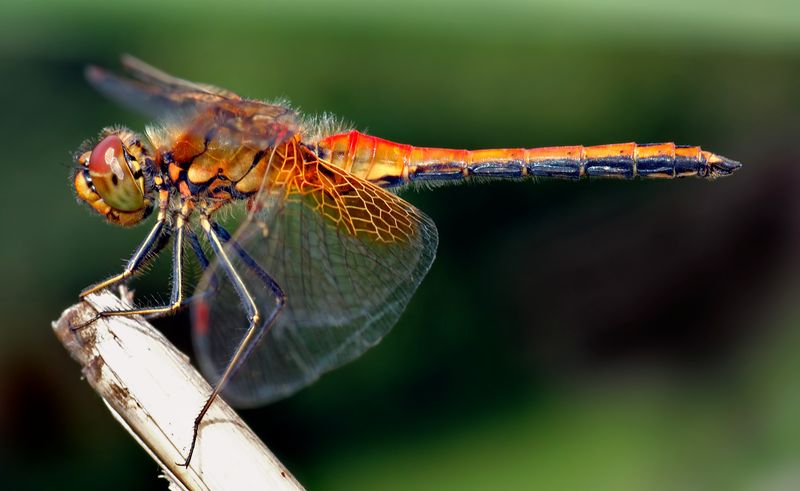
That big, hovering insect near your porch light is not something to swat away.
It is a dragonfly, and it has been hunting mosquitoes and other flying pests long before you set up your lawn chairs.
Understanding what dragonflies can and cannot do for your backyard changes how you fight mosquitoes all summer long.
Dragonflies Are Hunters, Not Mosquito Machines
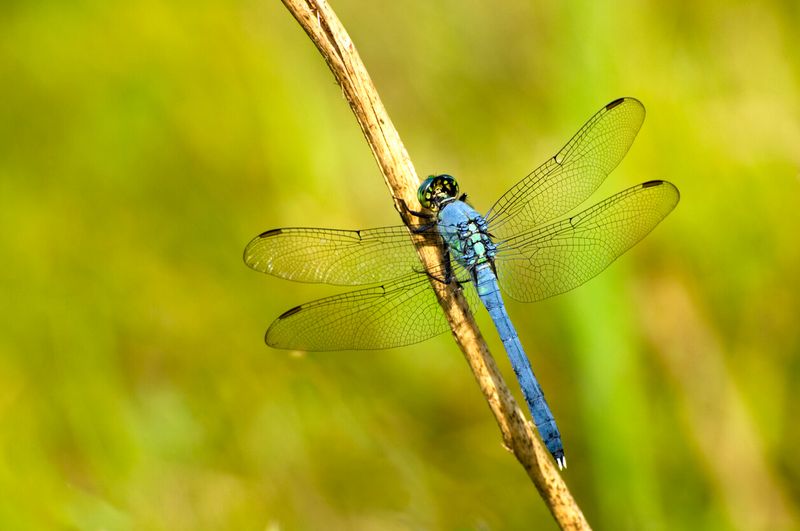
Spot one of those large, hovering insects near your porch on a warm evening and your first instinct might be to step back.
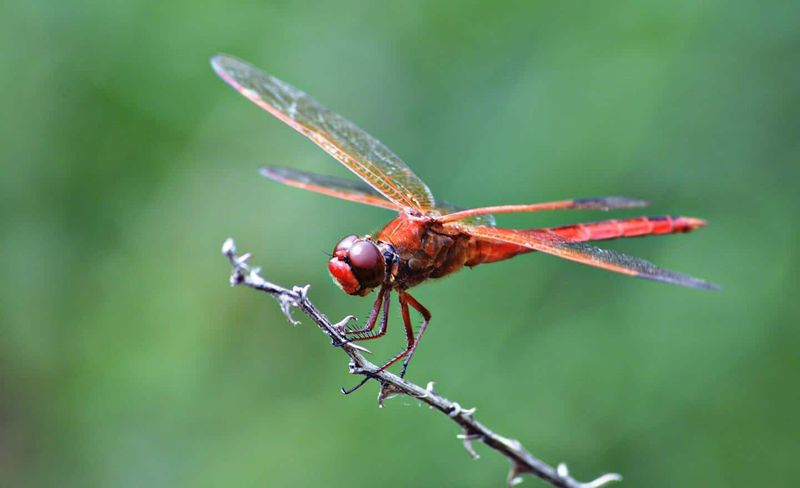
Dragonflies look formidable, with their helicopter wings, segmented bodies, and eyes that seem to take in everything at once.
That intimidating build is real, and it serves a genuine predatory purpose.
Adult dragonflies are aerial hunters.
They catch flying insects mid-air with a success rate that puts most predators to shame, snatching prey with their legs and consuming it on the wing.
Mosquitoes are absolutely part of their diet, along with flies, midges, gnats, and just about anything else small enough to grab.
Penn State Extension notes that dragonflies are active, agile hunters that patrol territories and return to favorite perches between flights.
Here is where the promise gets honest.
Dragonflies are generalist predators, not mosquito specialists.
A visitor cruising your yard may eat a handful of mosquitoes, some gnats, and a few midges in the same outing.
University of Illinois Extension explains that mosquito predators, including dragonflies, typically make up only a small portion of their overall diets and are unlikely on their own to significantly reduce mosquito populations around a home.
So the scary backyard hunter is a real ally, just not a standalone solution.
Think of a visiting dragonfly the way you would think of a helpful neighbor who occasionally pulls a weed from your sidewalk crack.
Appreciated, genuinely useful, but not a replacement for actually tending the garden.
Adults And Nymphs Hunt In Different Places
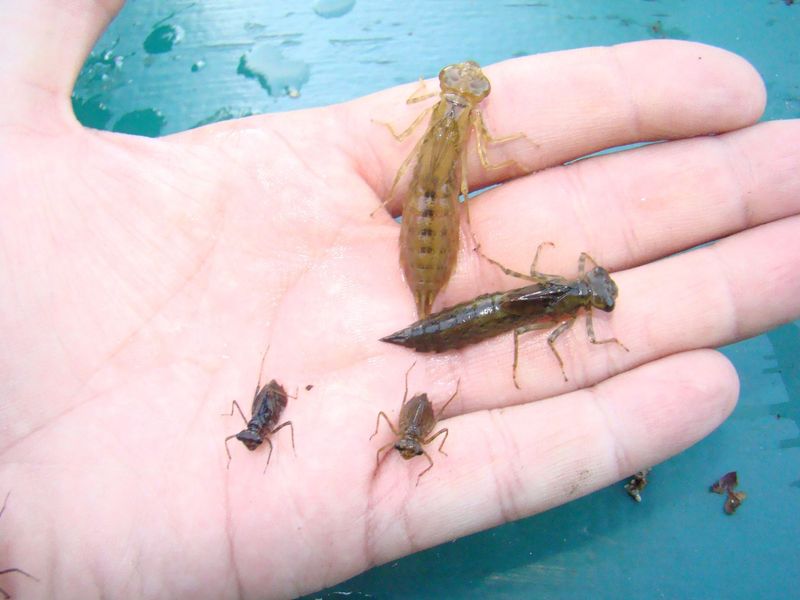
A dragonfly is two hunters in one body, and they operate in completely different worlds.
The life most people see, the adult darting through the air above the yard, is only part of the story.
Before that adult ever took flight, it spent months or even years underwater as a nymph, also called a naiad, hunting prey in the mud and among aquatic plants.
Adult dragonflies leave the water entirely once they emerge.
They patrol the air, catch flying insects, and may travel considerable distances from the pond where they developed.
The aquatic nymph stage is where mosquito larvae become potential prey in the water itself.
Nymphs are ambush predators that eat mosquito larvae along with other small aquatic organisms when both happen to share the same suitable habitat.
Penn State Extension describes the nymph stage as the longest phase of the dragonfly life cycle, with most of the insect’s life spent underwater.
A 2023 meta-analysis covering 31 studies and 47 dragonfly and damselfly species found strong evidence that nymphs can serve as effective biological-control agents against mosquito larvae under experimental conditions.
That is meaningful science.
But experimental mesocosms and controlled ponds differ from the scattered, varied water sources around a typical suburban yard.
The key qualification is habitat overlap.
Nymphs can only eat mosquito larvae where both predator and prey share the same water.
Field research in mesocosm settings confirms predation occurs when conditions align, but a dragonfly-friendly pond does not automatically intercept mosquitoes breeding in a neighbor’s clogged gutter or a forgotten bucket two doors down.
Both life stages contribute real predation, just in different places and under different conditions.
A Diverse Pond Can Support Dragonflies
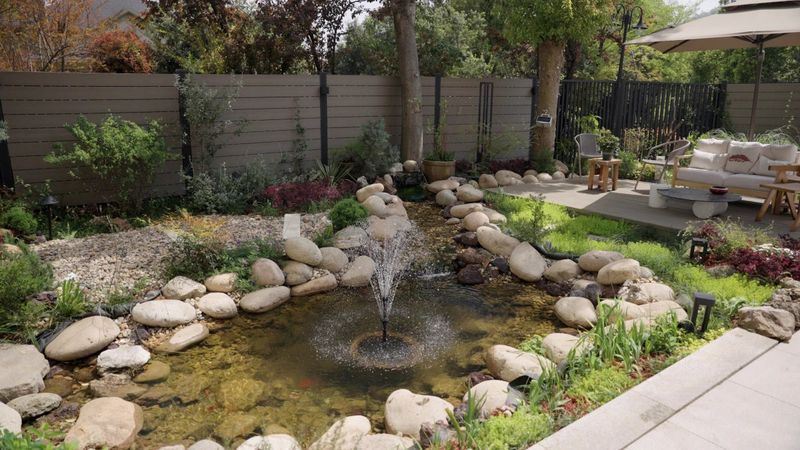
Water is non-negotiable for dragonfly reproduction.
Adults may visit any yard, but a lasting local population needs a place to lay eggs, a place for nymphs to hunt and grow, and safe spots for newly emerged adults to dry their wings.
A backyard pond, designed with those needs in mind, can provide all three.
Penn State Extension recommends including a diversity of submerged, emergent, and floating native plants, sunny open water for hunting, flat stones for basking, and upright stems or sticks for perching and emergence.
Plants serve multiple roles at once: they shelter nymphs from fish predation, provide egg-laying sites, and support the small prey that nymphs eat.
Pond depth matters too.
University of Maryland Extension describes a pond with shallow margins and a center at least 2 feet deep as suitable dragonfly habitat.
Shallow edges let emergent plants root and give nymphs places to climb toward the surface when they are ready to emerge as adults.
The deeper center supports water quality through warmer months.
These are helpful targets, not universal requirements, since dragonfly species vary in their preferences and tolerances.
Pond size matters in a practical way.
Larger ponds with more plant diversity tend to attract and support more dragonfly species.
A small container pond, say a half-barrel or a preformed liner no bigger than a bathtub, may attract adult visitors and even occasional egg-laying, but it may not provide the full habitat depth and plant variety needed to sustain a breeding population through summer.
Plant selection should always be regional.
Native shoreline plants that thrive in a Georgia yard will not be the right choice for a Minnesota pond.
Your state university Extension service is the most reliable guide for which aquatic and emergent plants suit your soil, water conditions, climate, and local regulations.
Skip the generic lists and ask the people who know your zip code.
Prevent Small Water Sources From Becoming Nurseries
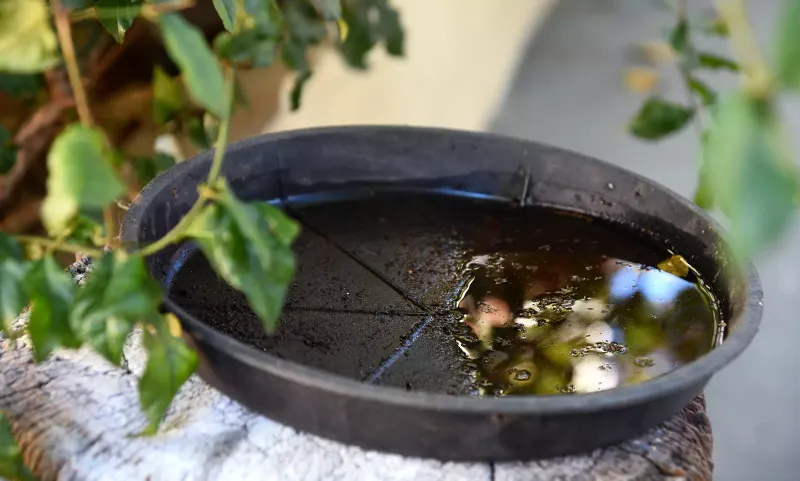
Before any pond plan, the single most effective thing most homeowners can do is walk the yard once a week and empty anything holding water.
Mosquitoes do not need a pond.
Illinois Extension reports that some mosquito species can develop in roughly 1 tablespoon of standing water, and common culprits include clogged gutters, flowerpot saucers, toys, buckets, old tires, folded tarps, birdbaths, tree holes, and uncovered rain barrels.
The weekly routine is simple: tip it, drain it, scrub it, or store it upside down.
Birdbaths should be emptied and refilled every 5 to 7 days, since mosquito eggs hatch and larvae develop within that window.
Gutters deserve a check after every heavy rain.
A tarp pooling half an inch of water after a storm can produce hundreds of mosquitoes before the water evaporates.
A neglected pond or water garden creates the same problem.
Illinois Extension notes that water garden containers become mosquito nurseries when they are not actively managed.
Moving water helps.
Virginia Tech Extension recommends an aerating fountain or pump to keep pond water circulating, since mosquitoes strongly prefer still, stagnant surfaces for egg-laying.
When water genuinely cannot be drained or moved, a properly labeled larvicide is the next step.
CDC identifies mosquito dunks, bits, tablets, pellets, and briquettes containing Bacillus thuringiensis israelensis, known as Bti, as homeowner-appropriate larvicide options.
Bti targets mosquito larvae and is not harmful to most other wildlife when used according to the label.
Always follow label directions for rate and frequency, and never apply any larvicide to drinking water sources.
Fish And Sprays Can Undermine The Habitat
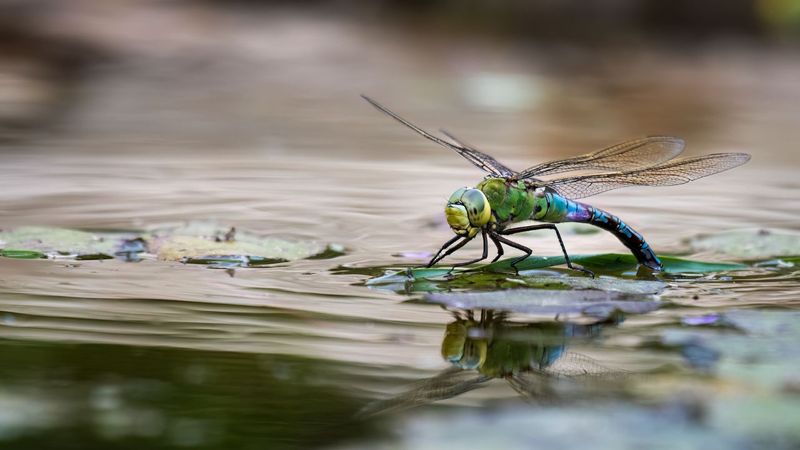
Two tempting shortcuts can quietly work against dragonfly habitat, and understanding the trade-off helps you make a smarter choice for your specific yard.
The first is fish.
Goldfish, koi, and even mosquitofish (Gambusia affinis) eat mosquito larvae, which sounds ideal.
But larger fish also eat dragonfly nymphs, and a pond stocked with hungry fish can eliminate the very predators you are trying to support.
UF/IFAS Extension explains that fishless wildlife ponds can be more favorable for dragonfly reproduction when the goal is supporting their aquatic life stage.
If your priority is dragonfly habitat, a pond without fish, or with only very small fish, gives nymphs a better chance of surviving to adulthood.
If your priority is fish-based mosquito control, that is a different pond design with a different set of outcomes.
The second shortcut is broad-spectrum spraying.
Adulticide sprays applied around a yard can kill mosquitoes, but they also reach beneficial insects, including dragonflies resting on vegetation and nymphs exposed through pesticide runoff into nearby water.
UC Agriculture and Natural Resources identifies pesticide contamination as a genuine threat to dragonfly populations, since aquatic nymphs are directly exposed to chemicals that wash into water.
UGA Cooperative Extension notes that outdoor residual sprays provide limited and temporary control and do not address mosquito breeding sources.
Broad spraying is not automatically harmless, and it can undercut the habitat investment you just made.
If targeted treatment is needed, choose products labeled for the specific use, follow the label exactly, and keep applications away from water features and flowering plants.
Protect Yourself On The Porch Now
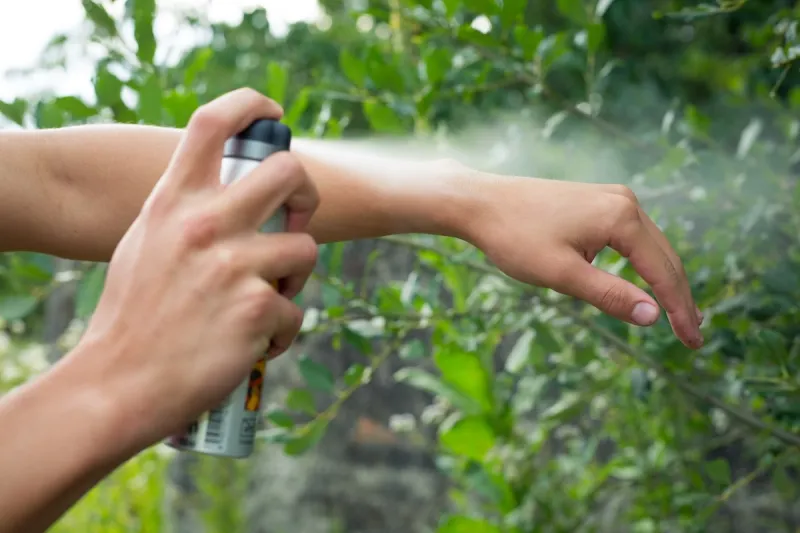
Habitat changes take time.
A new pond, even a well-designed one, will not bring immediate relief on a July evening when mosquitoes are already biting.
The measures that protect you right now, tonight, do not depend on any insect visiting your yard.
CDC recommends using EPA-registered repellents containing DEET, picaridin, IR3535, or oil of lemon eucalyptus as your most dependable personal protection.
Apply repellent to exposed skin and reapply according to label directions.
Long sleeves and pants add a physical barrier, especially at dawn and dusk when many mosquito species are most active.
Permethrin-treated clothing or gear, treated ahead of time and allowed to dry, provides an additional layer that lasts through multiple washes.
Screens are the unsung heroes of porch protection.
A torn or poorly fitted screen on a door or window is an open invitation.
Check every screen around your porch and repair gaps larger than about 1.5 millimeters, which is roughly the width of a matchstick head.
Mosquitoes are persistent and will find the gap you missed.
These steps matter beyond comfort.
Mosquitoes in the United States can transmit West Nile virus, eastern equine encephalitis, and other illnesses, and EPA’s integrated mosquito management guidance treats direct bite protection as a core component of any control plan, not an afterthought.
Dragonflies are a welcome part of the picture, but they cannot reliably stand between a mosquito and your arm on a warm evening.
Repellent and screens can.
Match The Fix To The Mosquito
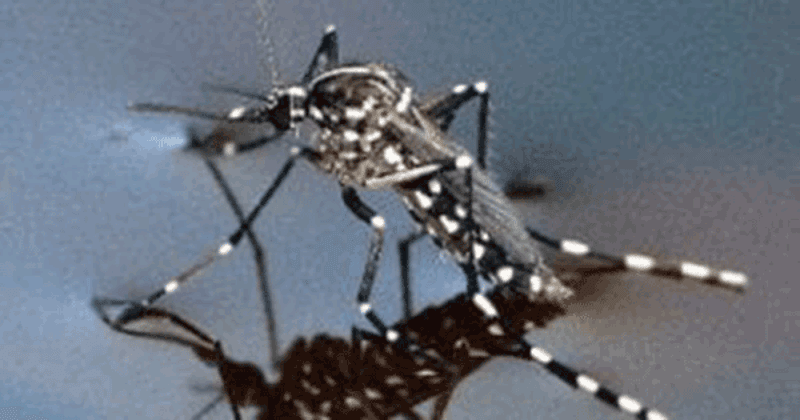
Not all mosquitoes behave the same way, and a strategy that works for one species may do little against another.
A dragonfly-friendly pond addresses mosquitoes that breed in open water, but some of the most aggressive biters around a porch are container breeders that never go near a pond at all.
Aedes mosquitoes, including the Asian tiger mosquito (Aedes albopictus) common across much of the eastern and southern United States, breed in small, scattered containers and can use water volumes as tiny as a bottle cap.
CDC notes that these species often bite during daylight hours, not just at dusk.
That means your dragonfly pond may support nymphs that eat an entirely different mosquito species while the one biting you at noon came from a forgotten saucer under a potted plant three feet from your chair.
Adult dragonflies add another layer of geographic complexity.
They may fly a quarter mile or more from the pond where they developed, and mosquitoes biting your porch may have traveled from a neighbor’s yard, a stormwater basin, a roadside ditch, or a wetland beyond your property line.
EPA’s integrated control framework reflects this reality by recommending layered approaches rather than single solutions.
Regional differences also shape which mosquito species dominate and which dragonfly species are likely to visit.
A homeowner in coastal Georgia faces different conditions than one in the high desert of New Mexico or the lake country of Minnesota.
Penn State Extension recommends consulting your state university Extension service for guidance on local dragonfly species, regionally appropriate native plants, water regulations, and mosquito pressure specific to your area.
That local knowledge is worth more than any nationwide list.
Build A Layered Mosquito Plan
Dragonflies earn a place in any thoughtful backyard mosquito plan, just not the top spot.
The foundation of that plan is weekly water removal: empty, flip, or treat every container that holds water, from gutters to saucers to tarps.
That single habit eliminates more potential mosquitoes than any single predator can eat.
Layer in direct bite protection next.
CDC’s prevention guidance puts EPA-registered repellents, protective clothing, and repaired screens at the center of personal protection because those measures work regardless of what insects are visiting your yard.
Where water cannot be removed, use a properly labeled Bti product following CDC larvicide guidance for rate and frequency.
A well-maintained pond with native plants, shallow margins, deeper water, and moving water added by a small fountain pump can support dragonflies and other beneficial wildlife.
That is worth doing if the property suits it and you are willing to manage it through the season.
But a pond is optional.
Your porch does not need one to be safer.
EPA’s integrated mosquito management approach works whether or not dragonflies show up.
Preserve the dragonflies that do visit.
Skip broad spraying near water, keep pesticide use targeted and label-compliant, and let the hunters do what they do.
They will not solve the problem alone, but they are genuinely on your side, and a yard that welcomes them is already a yard that treats mosquito control as a system rather than a single fix.
That shift in thinking is what actually makes a summer evening on the porch feel possible again.