
This North Carolina Bird Does More Mosquito Work Than Most Porch Gadgets Ever Will
Follow us on Google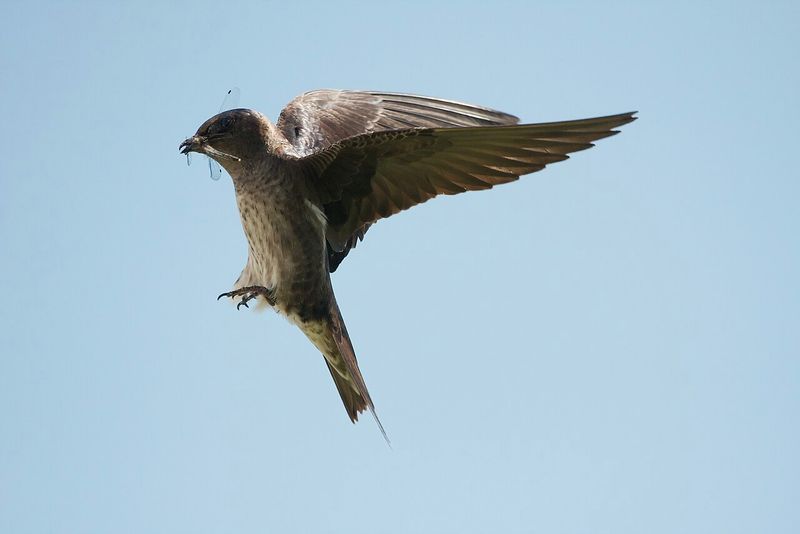
You drag a porch chair into the shade on a muggy July evening, and within five minutes the mosquitoes find you.
Half of North Carolina homeowners have tried a bug zapper or a plug-in repeller gadget and still ended up slapping their arms all night.
There is a bird that actually eats mosquitoes, along with dozens of other flying insects, and it has been working the skies over your neighborhood since spring.
Understanding what it can and cannot do, and how to support it safely, is a better use of your summer than replacing batteries in another device that does not work.
Meet North Carolina’s Chimney Swift
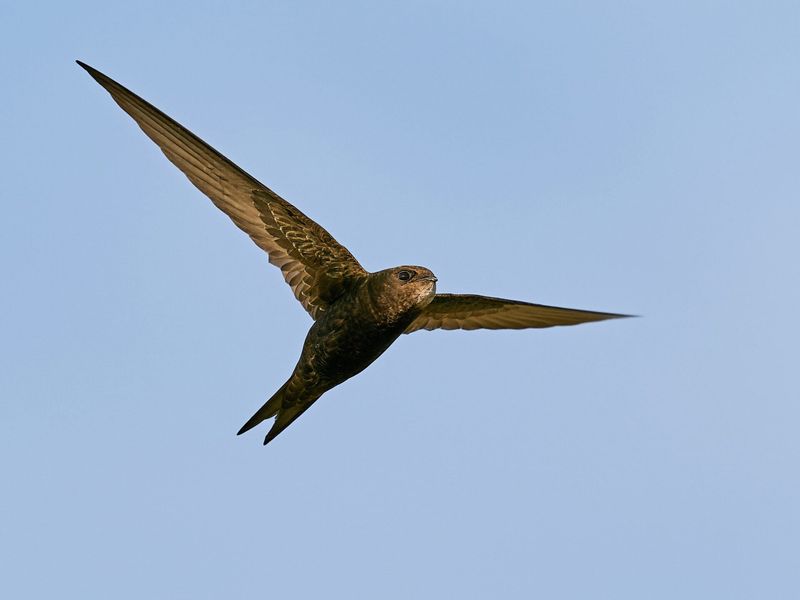
Somewhere over a Piedmont rooftop or a coastal marsh, a small dark bird is pulling tight circles through the air, mouth wide open, eating everything it catches.
That bird is the Chimney Swift, Chaetura pelagica, and it is a strong evidence-based candidate for the most useful aerial insectivore you will see over a North Carolina yard all summer.
According to the U.S.
Fish and Wildlife Service, Chimney Swifts generally arrive in North Carolina from March or April, spend the warm months breeding and roosting, and head back toward South America in August or September.
Audubon North Carolina has documented large evening roosts forming in towns and cities right across the state, sometimes dozens or hundreds of birds spiraling down into a single chimney at dusk.
Identifying one takes about ten seconds once you know what to look for.
The body is shaped like a cigar with wings, short and stubby from nose to tail.
The wingbeats are rapid and stiff, almost flickering, and the tail is squared off rather than forked.
Most people mistake swifts for swallows at first, but swallows perch on wires and branches.
Chimney Swifts cannot do that.
They cling to vertical surfaces, and Cornell’s All About Birds describes stiff bristles around the mouth that help them snag insects mid-flight.
They spend almost every daylight hour airborne, covering neighborhoods, fields, forests, ponds, and marshes in wide loops.
That constant movement is exactly what makes them interesting to North Carolina homeowners.
This is a bird doing real ecological work right above the backyard, not a decorative species that sits on a feeder and looks pretty.
Mosquitoes Are One Part of a Broad Diet
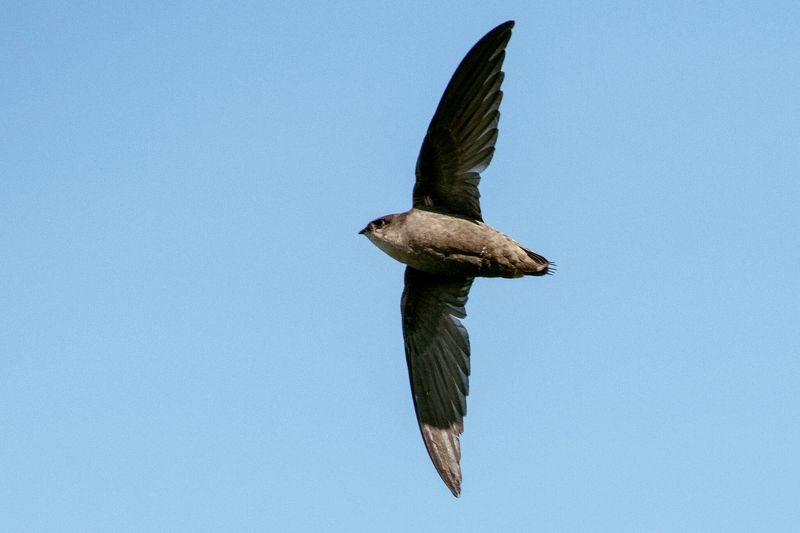
Chimney Swifts eat on the wing, which means whatever is flying at the right altitude at the right moment is fair game.
Their documented prey includes flies, beetles, moths, true bugs, ants, wasps, crane flies, and mosquitoes.
That is a wide menu, not a specialized one.
Mosquitoes genuinely appear in the diet.
A recent DNA-based study, published in the journal Ornithology, confirmed mosquitoes among the prey items identified from swift samples.
What that study does not show is how large a share mosquitoes make up, or whether swifts eat enough of them to actually reduce the population buzzing around your back porch.
Those are two very different questions, and only the first one has a confirmed answer.
Here is where it gets tricky.
Eating mosquitoes and controlling mosquitoes are not the same thing.
NC State Extension specifically notes that birds and bats may consume mosquitoes but do not have a significant impact on mosquito populations around homes.
Swifts forage over broad areas, sometimes traveling several miles from a roost, so there is no concentration of their hunting over one particular patio.
The Purple Martin comparison is worth clearing up here, because the internet loves that bird for mosquito control.
Audubon states plainly that the popular claim of 2,000 mosquitoes per day has no factual basis.
A peer-reviewed review in The Auk found mosquitoes to be a negligible part of the Purple Martin’s diet.
Neither species supports a verified daily mosquito count.
The Chimney Swift is the more honest story, and even that story requires careful telling.
Why the Porch-Gadget Comparison Needs Limits
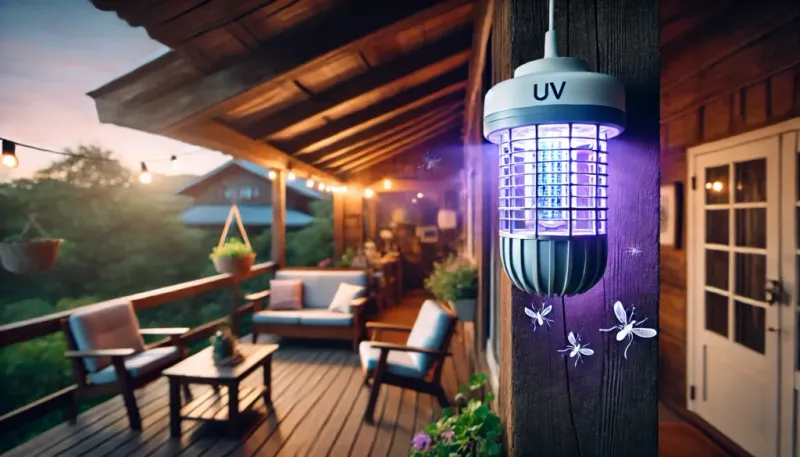
Bug zappers are everywhere on summer porches across the Carolinas, and they do kill insects.
The question is which insects.
NC State Extension reports that fewer than one-quarter of 1 percent of insects killed by outdoor electrocutor traps were biting insects, and the majority of what these devices kill are beneficial insects drawn to the ultraviolet light.
Moths, beetles, and other non-pest species take the hit while mosquitoes largely ignore the trap.
Electronic high-frequency repellers, the plug-in kind that promise to drive mosquitoes away with sound, have a different problem.
NC State Extension notes that these devices have not been shown to work for mosquito control.
The technology sounds plausible, but the evidence for effectiveness is not there.
Chimney Swifts consume a genuinely broad range of airborne insects all day long.
That is a real biological activity, confirmed by prey studies including the DNA-based research in Ornithology.
The contrast with bug zappers is honest: a device that kills mostly non-target insects versus a bird that eats a wide variety of flying insects as its entire livelihood.
What this comparison cannot claim is a measured head-to-head test showing that swifts reduce household mosquito numbers more effectively than these devices or any other product.
No such test exists.
The defensible version of the comparison is narrower: outdoor bug zappers and high-frequency repellers perform poorly for mosquito control, and a Chimney Swift is genuinely eating insects, mosquitoes included, as part of a broad diet.
That contrast is real and worth knowing.
It just does not mean that watching swifts over your yard will solve a mosquito problem on its own.
A Chimney Can Help Only If It Is Safe
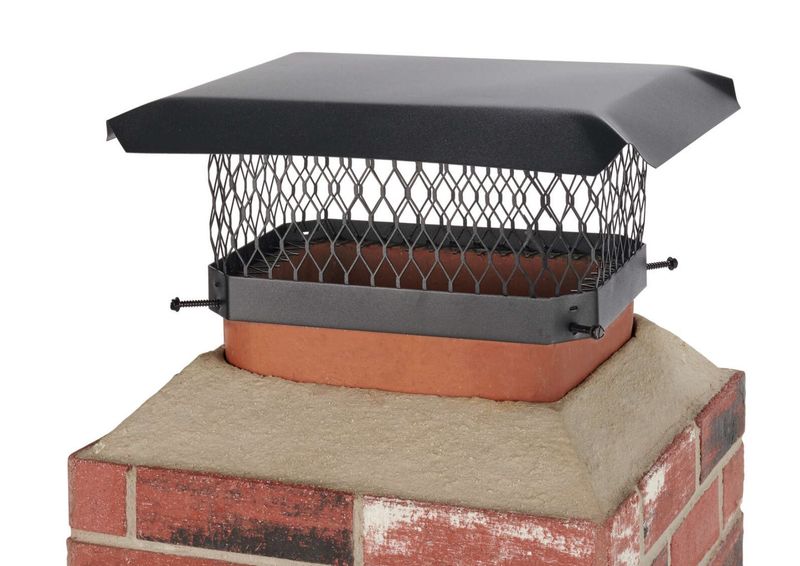
Old brick chimneys are the reason Chimney Swifts thrived in North Carolina towns for so long.
Before modern construction replaced hollow trees with subdivisions, swifts nested and roosted in large standing snags.
Masonry chimneys gave them a functional substitute, and many swifts in the Piedmont and mountain towns still depend on them today.
If your home has a masonry or clay-lined flue, keeping it accessible during the swift season can provide real nesting or roosting habitat.
But the wildlife benefit cannot come before home safety.
A qualified chimney professional needs to confirm that the fireplace, flue, draft, fire safety, and carbon-monoxide situation are all sound before you leave a chimney open for birds.
That inspection is not optional, it is the first step.
Smooth metal liners are a separate issue entirely.
The U.S.
Fish and Wildlife Service explains that Chimney Swifts cannot cling to smooth metal surfaces and recommends capping metal-lined chimneys specifically to prevent wildlife from becoming trapped inside.
If your chimney already has a metal liner, capping it protects the birds rather than helping them.
Chimney Swifts are also federally protected.
The Migratory Bird Treaty Act covers the birds, their eggs, and active nests from prohibited take, and chimney work during active use can create legal exposure.
Audubon North Carolina has urged property owners to coordinate any capping, lining, repair, or demolition with qualified wildlife and chimney professionals.
Scheduling that work outside the active season, generally before March or after September, is the practical way to avoid conflict with nesting or roosting birds.
When in doubt, call the professionals before touching anything.
Swift Towers Build Habitat, Not Mosquito Patrols
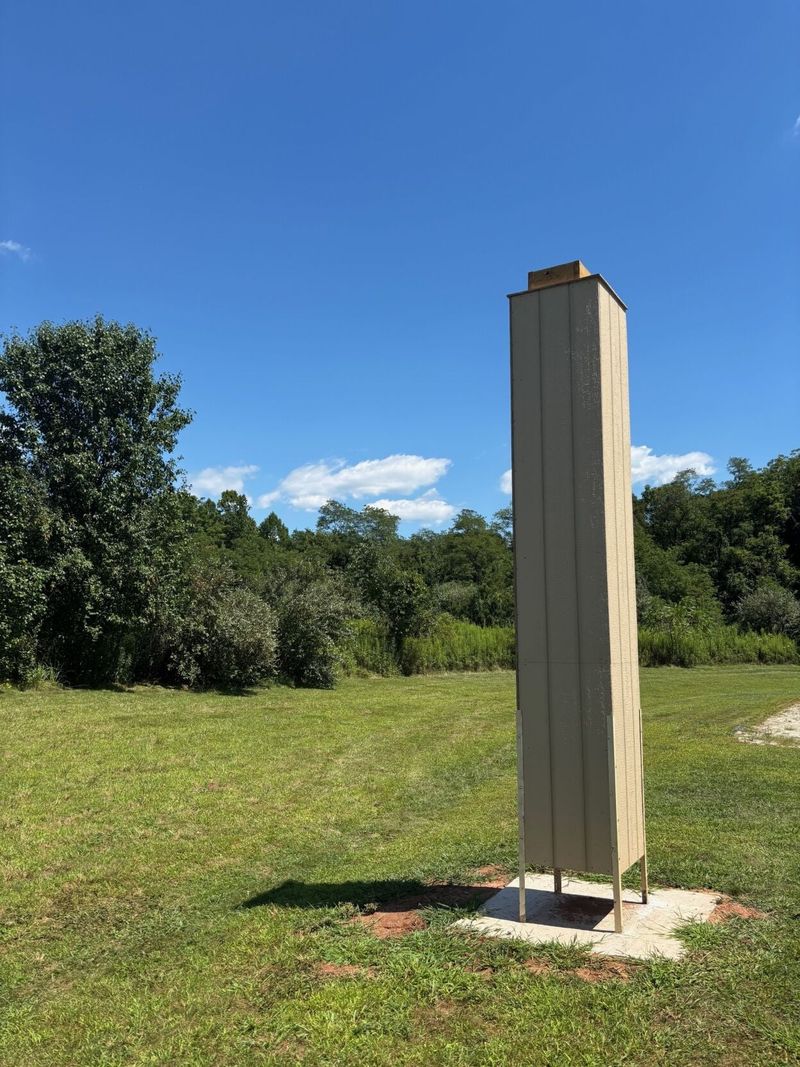
Not every North Carolina home has a usable masonry chimney, and that is where a swift tower enters the picture.
Towns like Black Mountain have already installed community towers and watched swifts adopt them within a season or two.
A tower built for your own yard can do the same thing, though the timeline for occupancy varies and success is never guaranteed.
Placement matters more than almost anything else.
Audubon North Carolina’s tower guidance calls for clear airspace above the structure, away from tall buildings, powerlines, and nearby trees, with at least 25 feet of clearance from surrounding trees as a general rule.
Swifts need room to approach from above in a spiraling descent, and a tower tucked under a canopy will not get much use.
Construction principles are well established, even if specific dimensions vary across published plans.
Specialist guidance from the Driftwood Wildlife Association calls for rough interior walls the birds can cling to, a vertical shaft design, protection from overheating in the summer sun, and enough interior depth to support both nesting and roosting.
Published tower designs range from 8 feet to 12 feet and beyond, so do not treat any single measurement as a universal requirement.
The conservation reason to build one is real.
Audubon North Carolina documents a sharp population decline over recent decades, and Cornell’s State of the Birds identifies the Chimney Swift as an Orange Alert Tipping Point species.
A tower supports that declining population.
What it does not do is station a mosquito guard over your patio.
Swifts forage across broad areas, and a tower in your yard simply adds one more anchor point to a landscape they are already moving through.
Start With Standing Water
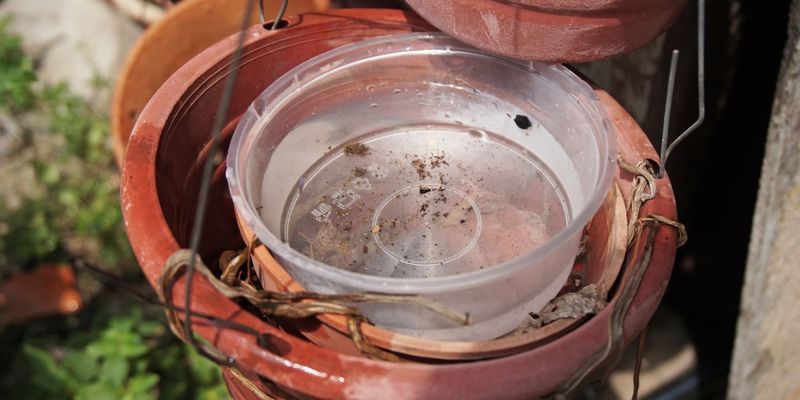
Every mosquito that bites you on the back porch started as a larva in standing water, and most of that water is within 300 feet of where you are sitting.
That is the fact that makes water management the most powerful tool available to a North Carolina homeowner, more reliable than any bird and more immediate than any gadget.
The CDC recommends a weekly routine: empty and scrub, turn over, cover, or throw away anything that holds water.
The list is longer than most people expect.
Flowerpot saucers, kids’ toys, buckets, old tires, birdbaths, trash container lids, and rain barrels all qualify.
A birdbath that sits unchanged for a week is a mosquito nursery, not a wildlife feature.
Some water cannot be emptied or covered, like an ornamental pond or a low spot in the yard that collects rain.
For those situations, an EPA-registered Bti product is worth knowing about.
Bti, short for Bacillus thuringiensis israelensis, is a naturally occurring bacterium that kills mosquito larvae in water.
NC State Extension notes that Bti dunks can control larvae for roughly 30 days in small breeding sites of 100 square feet or less.
One thing Bti does not do is affect adult mosquitoes already flying around the porch.
It works in water, on larvae, before the mosquito ever takes wing.
The CDC describes Bti as generally safe for people, pets, birds, fish, and bees when used as directed, but the product label still controls where and how you apply it.
Check the label before treating any pond, rain barrel, birdbath, or water source, because not every Bti product carries the same approvals.
EPA guidance on Bti confirms the label-first rule applies across all formulations.
Protect the People on the Porch

Water control handles the source, but it does not protect you from the mosquitoes already flying.
For that, personal protection measures are the most direct line between your family and a bite.
The CDC recommends repairing window and door screens and using EPA-registered repellents according to their labels.
A well-fitted screen is one of the most underrated tools in a North Carolina summer.
Repellents with active ingredients registered by the EPA, such as DEET, picaridin, IR3535, or oil of lemon eucalyptus, give you genuine protection when applied correctly.
CDC guidance on mosquito and arthropod protection points to registered repellents as the standard for personal coverage.
Read the label, reapply on schedule, and keep it off children’s hands and faces.
Residential misting systems deserve a careful look before you invest.
The CDC notes that automated misting systems lack adequate effectiveness data and can expose people, pets, children, outdoor furniture, and toys to insecticides on a routine basis.
The EPA echoes those concerns about unintended exposure from timed systems.
Routine whole-yard fogging is not the default answer for a family porch.
So where does the Chimney Swift fit in all of this?
Supporting swifts, whether through an open masonry chimney inspected by a professional or a properly placed tower in a yard with clear airspace, is genuinely worthwhile.
Native plantings that support a broader insect food web add another layer of habitat value, even if they do not guarantee more swifts or fewer mosquitoes overhead.
The bird is a real part of a living North Carolina yard, not a substitute for water management and personal protection.
A yard that is safer for your family and genuinely welcoming to swifts is not a trade-off, it is just a good plan.