
9 Perennials That Fill Empty Texas Beds In A Single Growing Season
Follow us on Google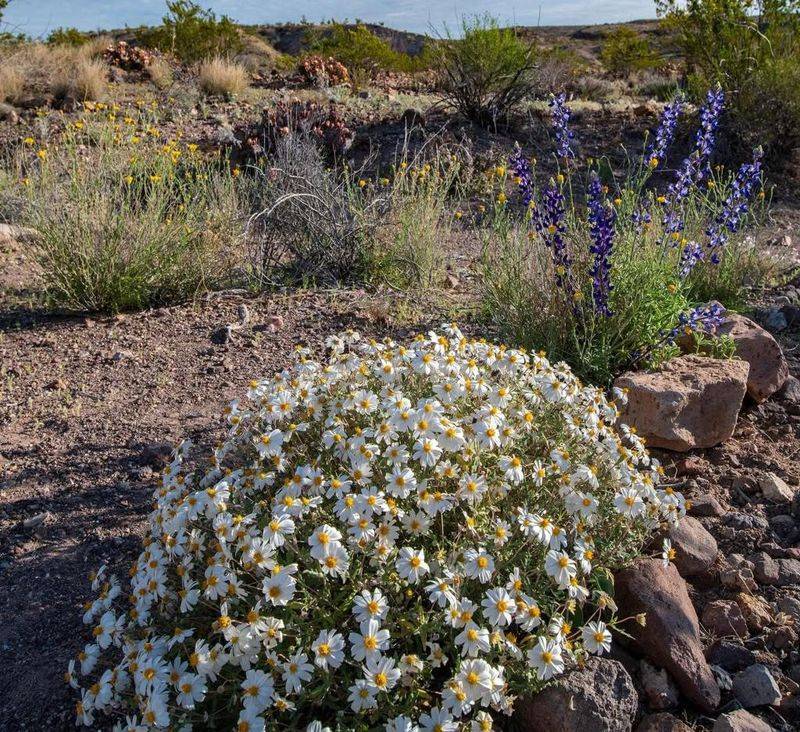
You step outside before breakfast and the patio already feels warm, and there it is again, that bare patch of dirt by the fence. These nine Texas-tough perennials can turn it into a full, blooming bed by fall, often from small nursery pots planted this spring.
Each one earns its spot for a different reason, from shade to caliche to monarch season. Pick the right ones for your corner of Texas and that empty bed stops being an eyesore fast.
1. Texas Lantana
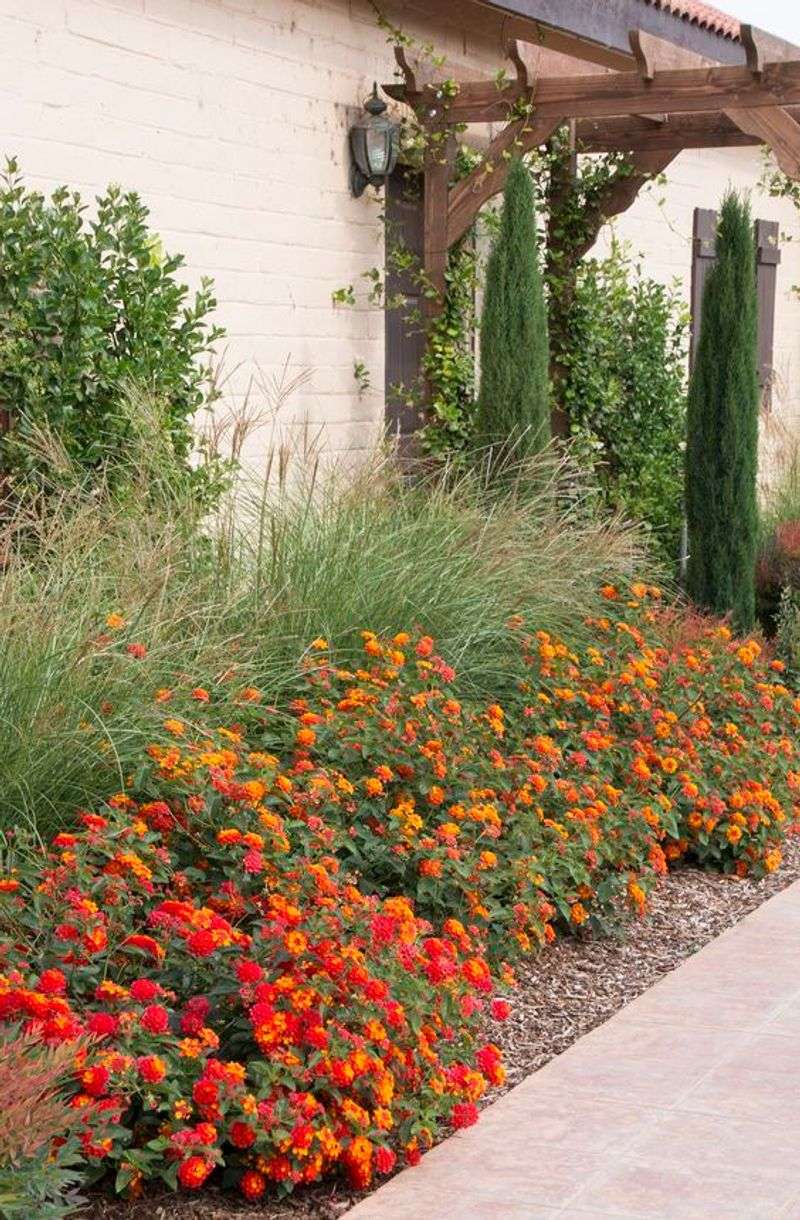
Bare dirt in July bakes hard enough to crack. Texas lantana (Lantana urticoides) is the plant that shrugs at that and keeps spreading, often reaching 3 to 6 feet wide by its first fall.
The reason is simple. Its roots chase water deep, and its flowers keep coming from late spring into November, so the bed looks full the whole stretch.
Plant it in full sun after your last frost, about 4 feet apart. Water every 3 to 4 days for the first 4 to 6 weeks, then back off.
It handles North Texas blackland clay or Gulf Coast sand, as long as water never sits around its feet.
Choose the native species if you have pets, since some non-native lantanas can be toxic. By August, butterflies treat your once-empty bed like a corner diner.
2. Turk’s Cap
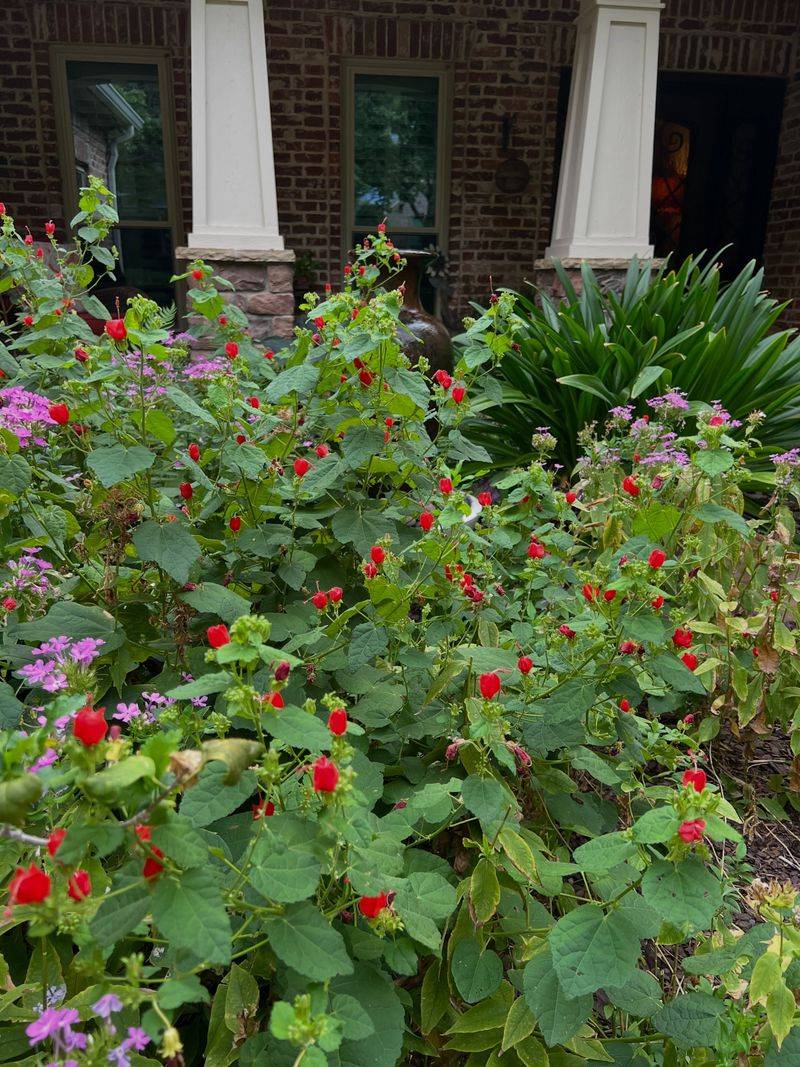
Most bloomers sulk in the shade of a live oak. Turk’s cap (Malvaviscus arboreus var. drummondii) actually leans into it, filling 3 to 5 feet of shady ground in one season.
Its little red flowers look like twisted turbans that never fully open. Hummingbirds do not mind one bit, and they visit from spring through frost.
Set plants 3 to 4 feet apart in part shade, which keeps the leaves lush in East Texas sand or Central Texas clay alike. After a hard freeze, cut stems to about 6 inches in late winter.
It returns from the roots with real gusto.
Here is the catch. It spreads by seed and suckers, so give it room or trim it back each spring.
That shady dead zone finally has a resident.
3. Autumn Sage
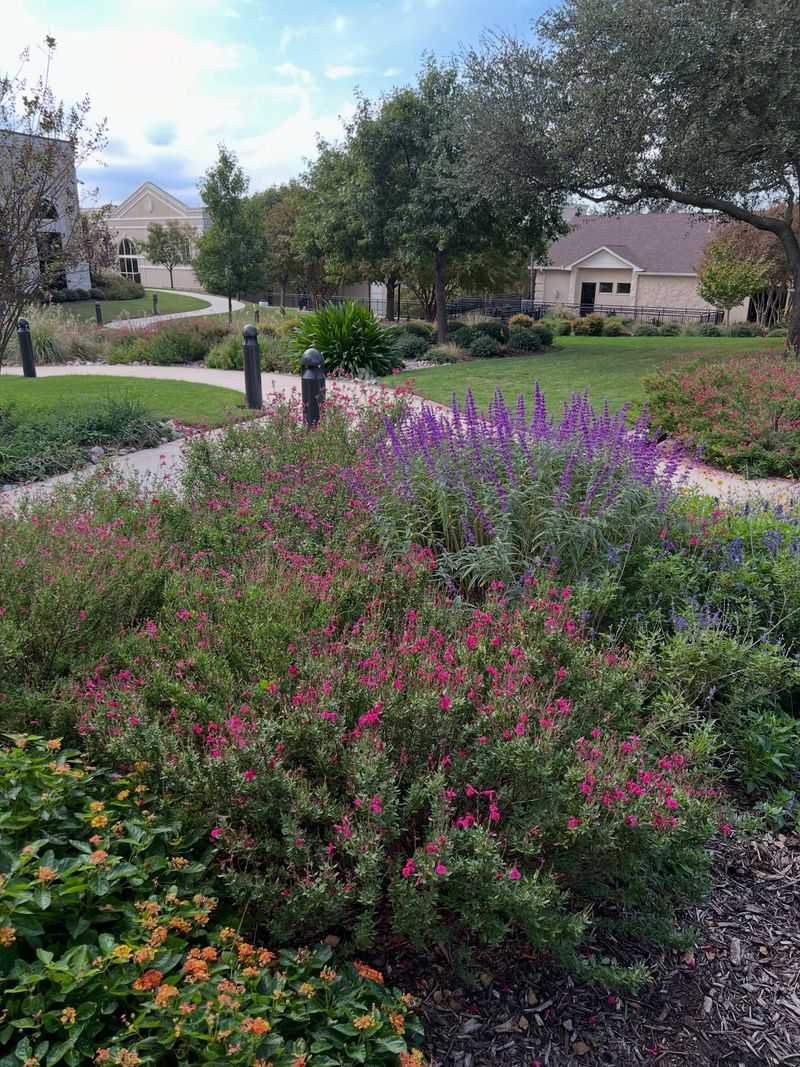
Hummingbirds fight over autumn sage. Many Hill Country gardeners watch tiny aerial battles over a single plant by the second month.
Salvia greggii forms a neat 2 to 3 foot mound fast, blooming in waves from March through November. It is a native of West Texas and the Hill Country, so heat and thin soil feel like home.
Drainage is the whole secret. In heavy clay, plant it on a slight mound raised 4 to 6 inches.
Prune by half in mid-February and by a third in mid-August, and the fall show doubles.
Deer and rabbits mostly leave it alone. You get color, wings, and almost no fuss.
4. Flame Acanthus
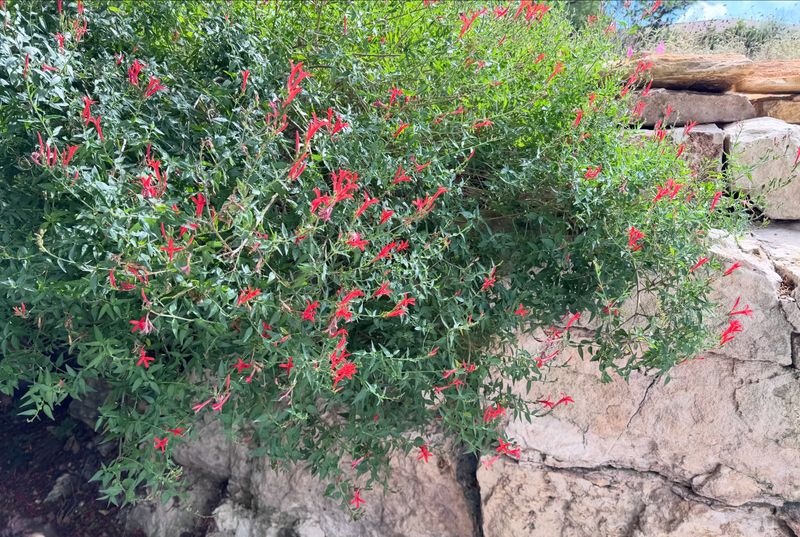
August is when most Texas beds give up. Flame acanthus (Anisacanthus quadrifidus var. wrightii) waits for exactly that moment to put on its biggest show.
Its orange-red tubes glow from late spring into fall, peaking in August and September. The shrub reaches 3 to 5 feet tall and about 4 feet wide quickly.
Give it at least 6 hours of sun. Caliche, limestone, and rocky ground suit it fine across South Texas and the Trans-Pecos.
Once rooted, it needs little extra water.
Cut it back by a third to a half in February or March for denser growth. Fall migrating hummingbirds will find it, and you get to watch.
5. Gregg’s Mistflower
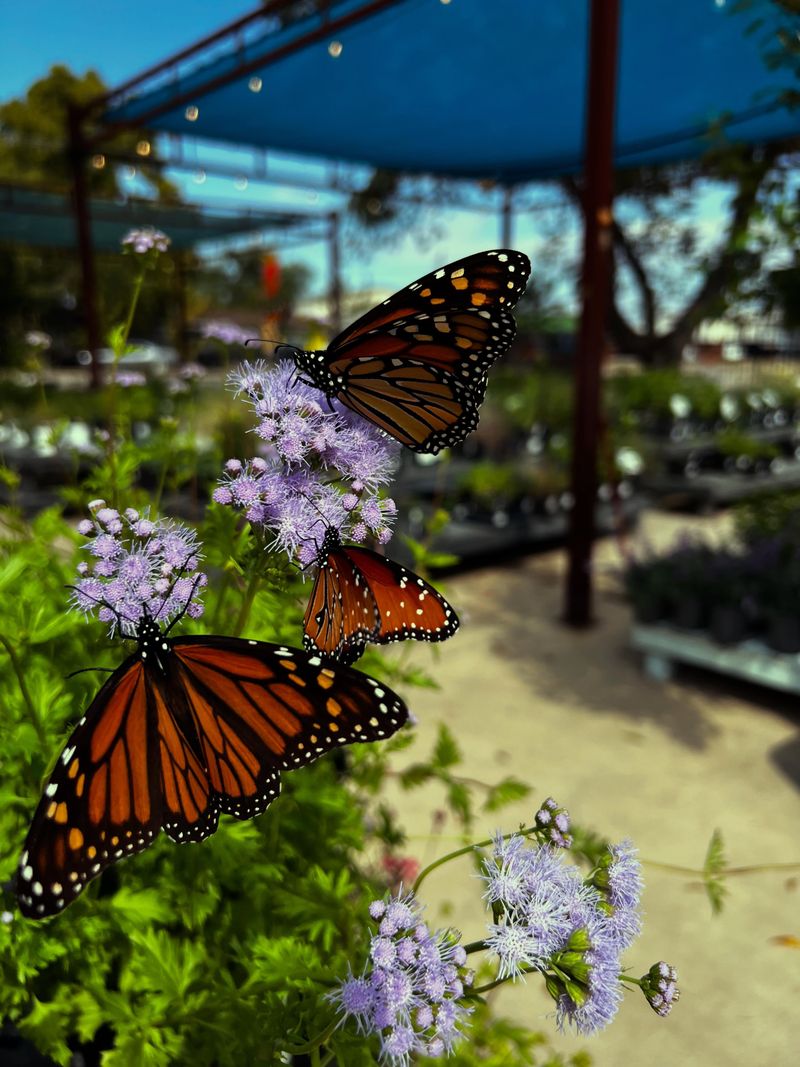
Monarchs passing through Texas in October are hungry and in a hurry. Gregg’s mistflower (Conoclinium greggii) is the rest stop they cannot pass up.
Fuzzy lavender puffs cover a 1 to 2 foot clump that spreads 2 to 3 feet wide. Underground runners do the spreading, which is why it fills gaps so quickly.
Plant in full sun or light shade, 2 feet apart, in well-drained soil. Cut it to the ground after a freeze.
Those same runners can crowd small neighbors, so edge it in tight beds.
One afternoon in fall, the whole patch flutters orange. That moment is the payoff.
6. Mexican Bush Sage
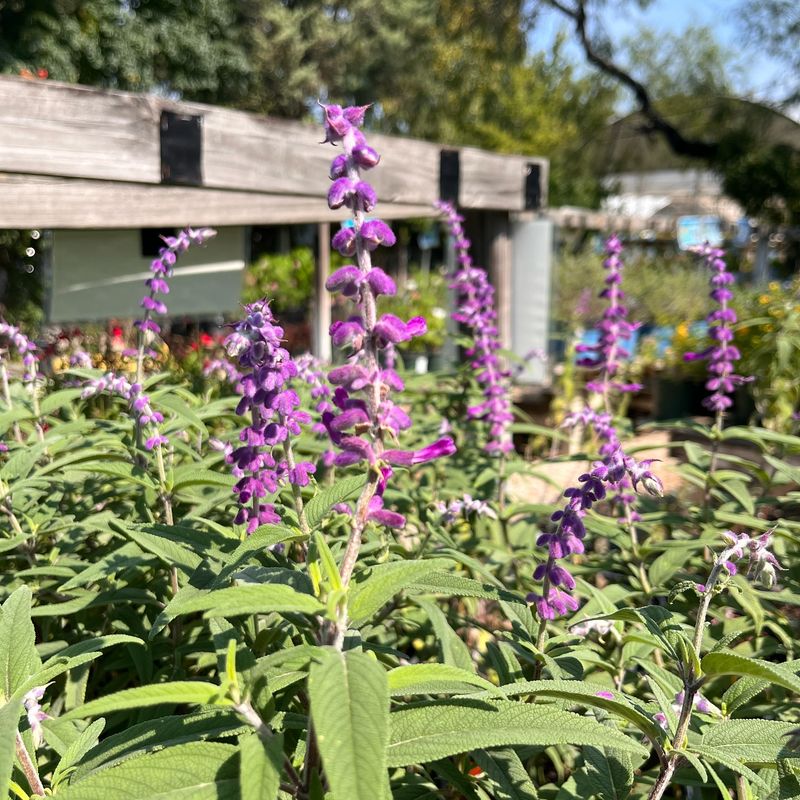
Some plants sprint early and fade. Mexican bush sage (Salvia leucantha) does the opposite, growing to 4 to 5 feet wide and saving its velvet purple spikes for fall.
That size from one spring planting makes it a real space filler. It is reliably perennial across the southern two-thirds of Texas.
Plant in spring after the last frost in full sun to part shade. In North Texas, add 3 inches of mulch over the roots before winter, since a hard freeze can knock it out.
When summer flowers fade, it is just getting started.
7. Zexmenia
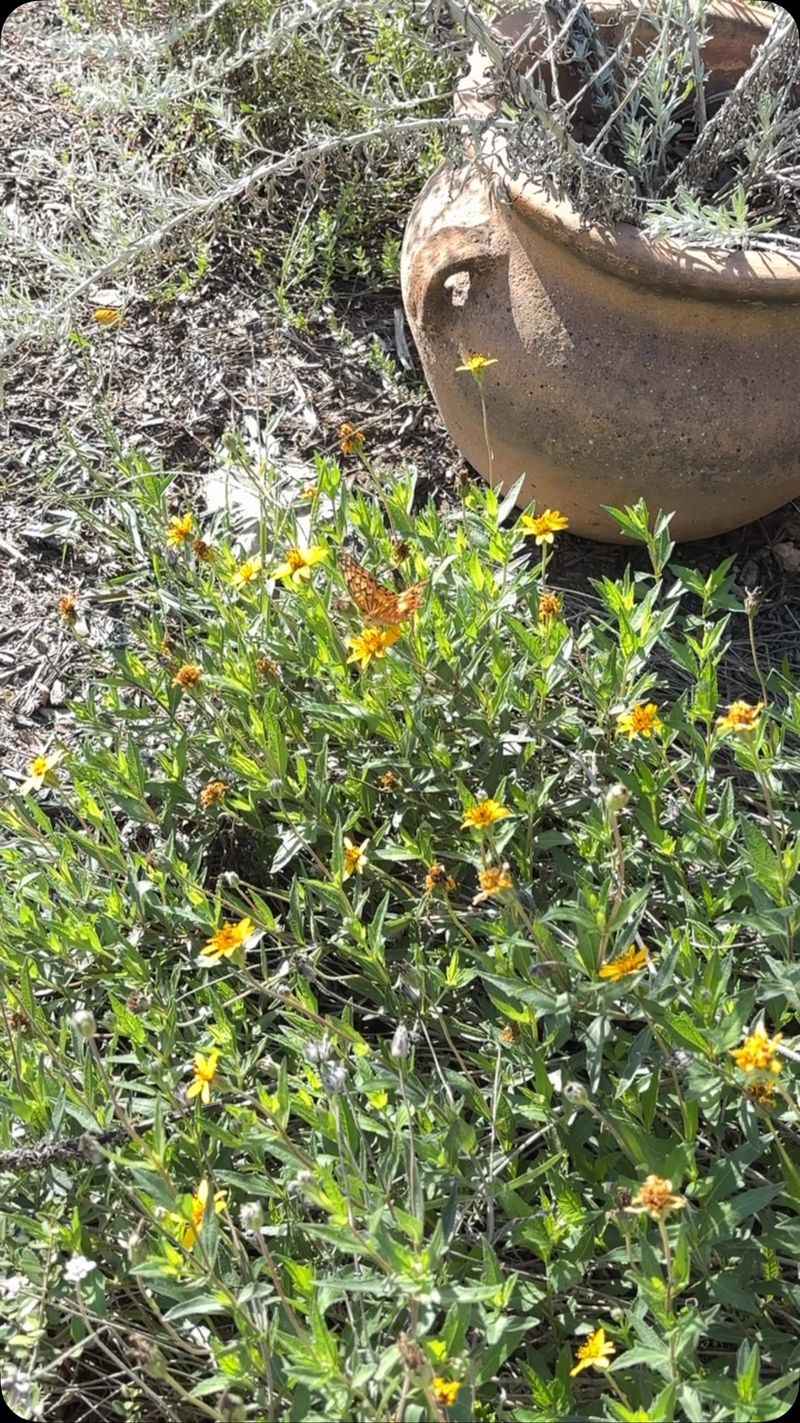
Zexmenia is the friend who shows up early and stays until frost. Wedelia acapulcensis var. hispida covers itself in gold-orange daisies from late spring into November.
It grows 2 to 3 feet tall and wide, and it self-seeds, so small volunteers fill leftover gaps for you.
Plant in full sun, 6 hours or more, in drained soil. Hill Country caliche is fine.
It actually looks fuller with a deep soak every 2 weeks during brutal heat. Freezes kill it to the ground, but it returns by mid to late spring.
A bed of steady gold is hard not to be proud of.
8. Blackfoot Daisy
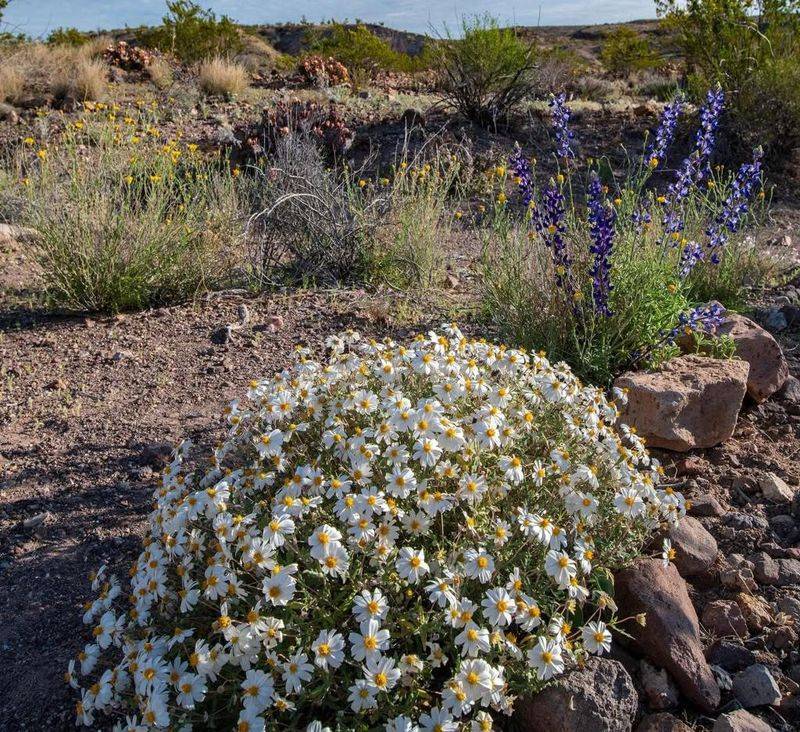
Front edges look empty longest. Blackfoot daisy (Melampodium leucanthum) solves that, spreading 12 to 24 inches while staying just 8 to 12 inches tall.
Its honey-scented white blooms run spring through fall. It is genuinely built for West Texas and Hill Country rock.
Space plants 12 to 18 inches apart in gravelly, fast-draining soil. Skip it in heavy clay or humid East Texas, where it tends to rot.
Water sparingly once established.
Small plant, tidy finish.
9. Pink Skullcap
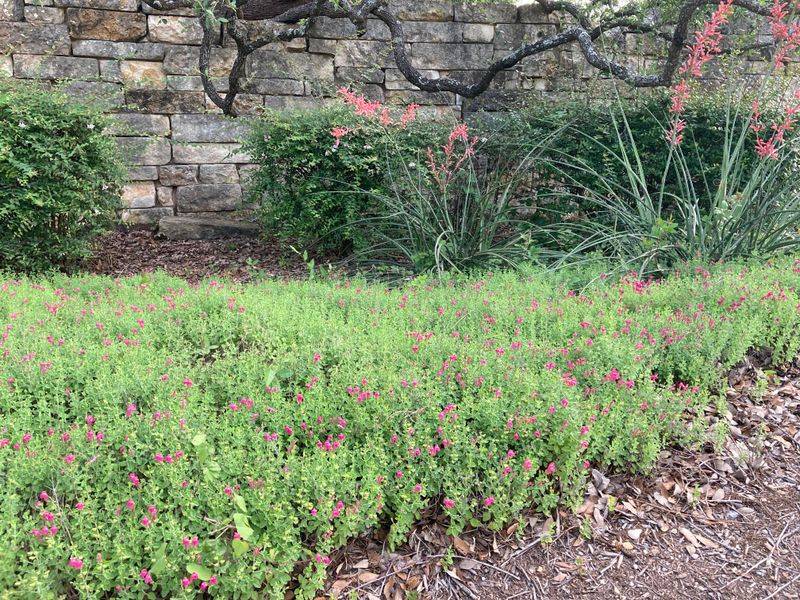
Raised bed edges often stay bare. Pink skullcap (Scutellaria suffrutescens) spills over them in a 1 to 2 foot mound that widens to 2 to 4 feet.
Little snapdragon-like pink flowers keep coming from spring through fall across North and Central Texas. Texas A&M AgriLife Extension lists it among their Earth-Kind tough plants.
Plant in sun, 2 feet apart, in well-drained soil, and never let it sit wet. Trim lightly after flushes to keep it compact.
By fall, your empty bed is full, and you planted every bit of it.
