
Pennsylvania Native Evergreens For Winter Wind: Eastern Redcedar, American Holly, And The Trade-Offs
Follow us on Google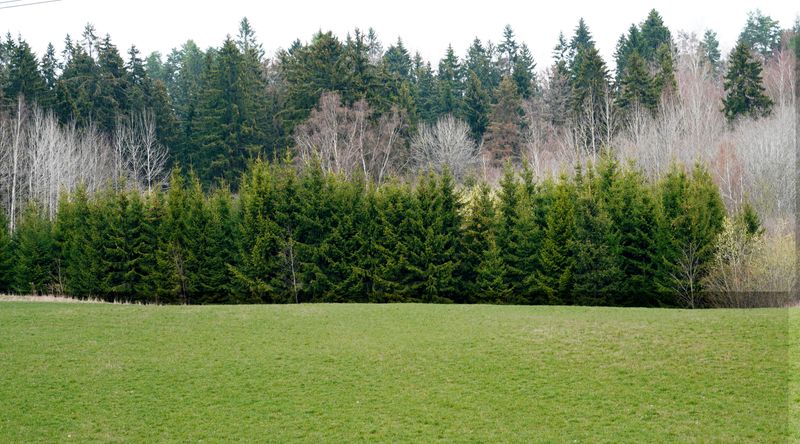
You step onto the porch on a January morning in Pennsylvania, and the west wind cuts straight through your coat. You glance at the bare hedge by the driveway and wonder if some tough native shrub could block that blast without leaving a mess.
Here’s the honest answer: no single native shrub does both jobs. But a couple of native evergreens come close, and knowing their limits can save you years of regret.
Eastern Redcedar Fits Windbreaks, Not Every Yard
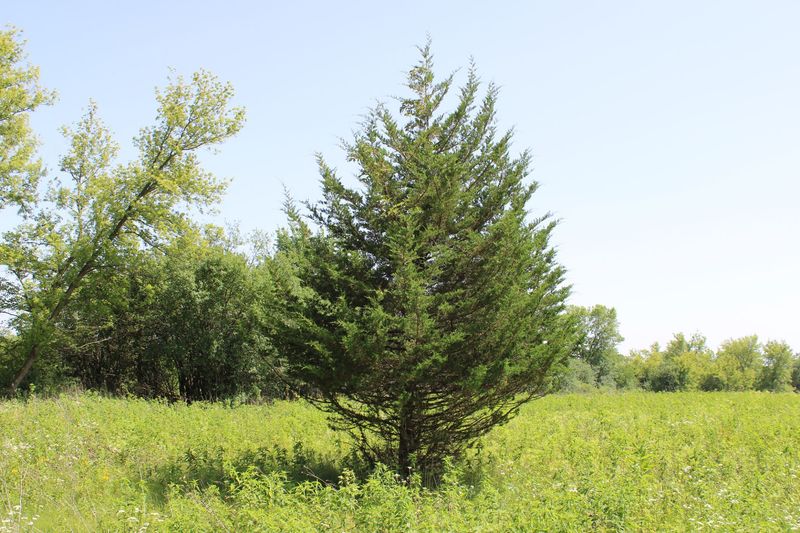
Here is the blunt truth about the strongest native windbreak candidate. Eastern redcedar (Juniperus virginiana) is not a compact shrub, and calling it one sets people up for a surprise.
Penn State Extension lists it among native plants used for windbreaks and privacy screens, but it also identifies it as a tree that can reach 30 to 60 feet. That is taller than most houses.
So why does it keep showing up in windbreak talk? It stays evergreen all year, so it keeps screening when every maple and hedge nearby is bare.
A dense wall of redcedar acts like a patient bouncer at the edge of a property, slowing the wind before it reaches the door.
That same strength is the catch. Many suburban lots in places like the Delaware Valley or around Pittsburgh simply do not have room for a tree that wide and tall.
A row planted too close to a house, a driveway, or a neighbor’s fence can become a problem in a decade.
If you have an acre, a farm edge, or a long back property line, redcedar deserves a serious look. If you have a narrow lot, think of it as a windbreak tree, not a shrub-sized screen, and keep reading for smaller options and their limits.
Evergreen Foliage Still Falls
Some people picture an evergreen as a plant that never sheds a thing. That is a myth, and it is worth clearing up before you plant anything.
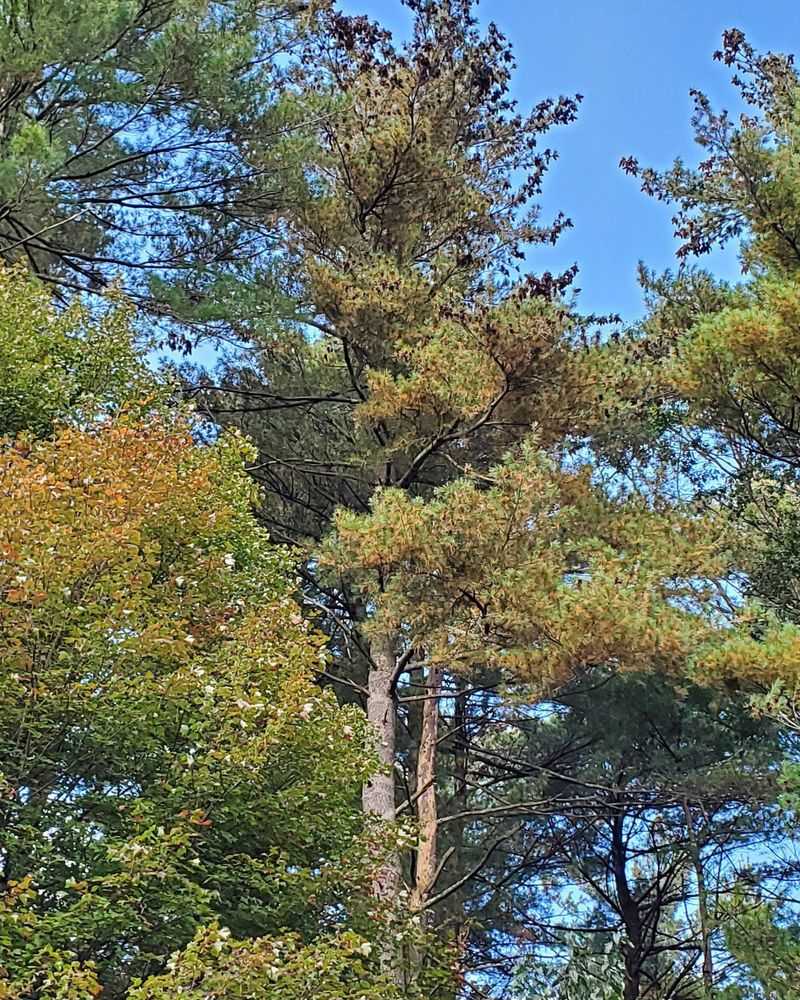
Cornell Cooperative Extension explains that normal needle and leaf drop happens every year on every evergreen. The older inner foliage turns yellow or brown and falls, usually while the outer growth stays green.
Here is the limited, honest benefit. That shedding may be less conspicuous than the pile of leaves a deciduous hedge drops in one fall weekend.
You may notice it less, but you should not expect a yard with no debris.
Holly adds another wrinkle. Female American holly plants may drop fruit, and birds will eat some berries, but nothing guarantees they will take every one.
Berries can end up on a walkway or patio, especially near the spots where you sit.
The practical move is to plant evergreens away from patios and steps you rake often, and expect a light seasonal tidy rather than zero chores. You can trade a big fall cleanup for a small, steady one.
That is a fair deal, as long as you know it going in.
American Holly Is A Regional Hedge Option
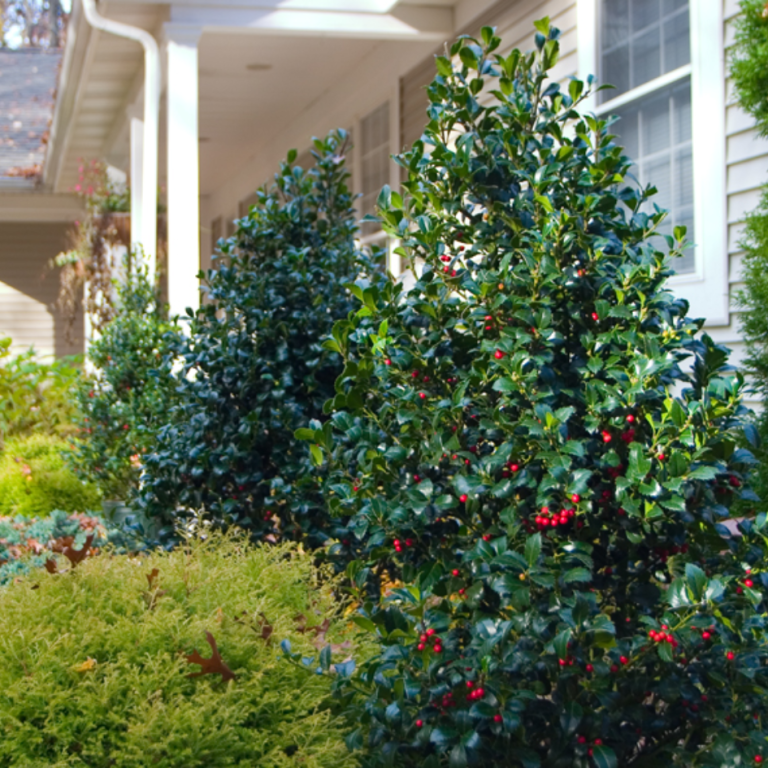
If a giant redcedar is too much, American holly (Ilex opaca) looks like a closer match for an evergreen hedge. It has glossy leaves and a solid, full look through winter.
The USDA Pennsylvania Conservation Planting Guide rates its winter foliage density as high and says it can be used in windbreaks. But it grows slowly, reaching about 20 feet at 20 years.
Then comes the regional catch. The guide notes that holly occurs naturally mostly on the Coastal Plain, and lists it for zones 6a through 8a.
So it is a fair bet in parts of southeastern Pennsylvania, but not a statewide recommendation for colder northern or higher-elevation yards.
Berries need both male and female plants. The guide also suggests pairing holly with faster-growing species in windbreaks, since patience is required.
Inkberry (Ilex glabra) is a smaller cousin that people often mention. Penn State Extension describes it as a shrub that prefers acidic, consistently moist soil, and the USDA guide rates its winter density as low.
It makes a decent low hedge, but not a strong stand-alone winter windbreak.
Neither plant is a one-and-done answer. Think of holly as a slow, steady teammate.
Wind Protection Depends On The Planting Plan
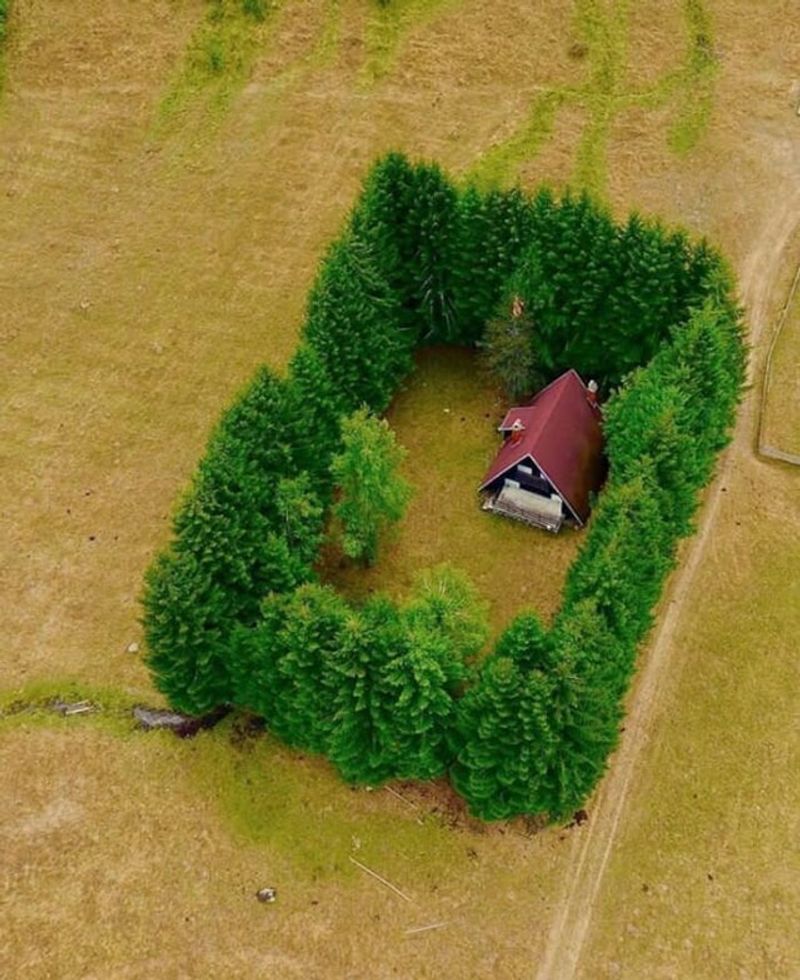
Here is something that surprises many homeowners. Wind protection does not come from a single plant.
It comes from the whole planting, and its height, foliage density, spacing, and row arrangement all matter.
The USDA guide says most barriers meant for year-round protection need at least one evergreen row. A shrub can be part of that barrier, but it does not give the same effect alone.
Direction counts too. Penn State Extension reports that Pennsylvania’s winter winds come mainly from the west and northwest.
So a planting works best upwind of what you want to protect, running across that wind direction.
Penn State gives 50 to 200 feet as a typical distance from a home, and suggests keeping 50 feet from a house or driveway to avoid snow drifts piling up. Those are planning guides, not rules for every lot.
A small yard, a hillside on the Allegheny Plateau, or a neighbor’s garage will change what is practical.
So walk your property on a windy day and notice where the gusts actually hit. Mark the upwind side, measure what room you really have, and plan from there.
A smart layout beats a bigger plant every time.
Match The Plant To The Site
Picture a gardener who falls for one plant and ignores the ground it must grow in. The plant usually loses that argument.
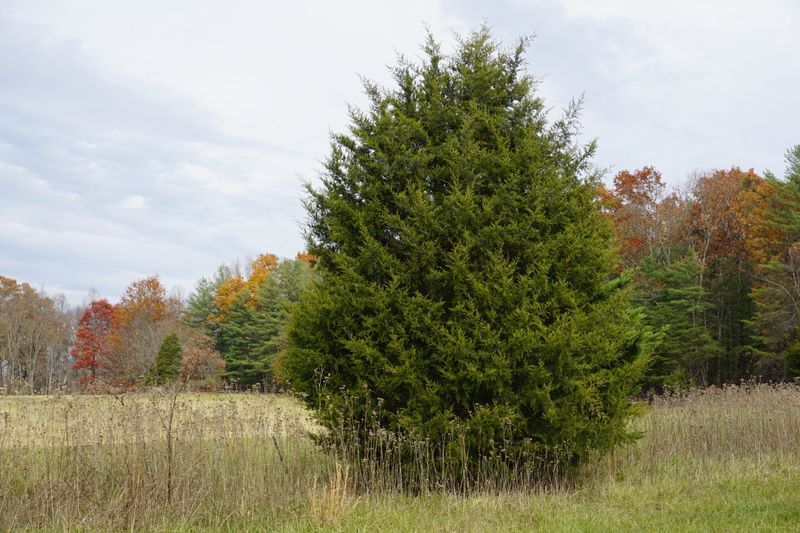
Eastern redcedar wants full sun and well-drained soil, according to Penn State Extension. It tolerates dry spells, compaction, and salt, but a soggy low spot or a tight small lot is a poor match.
There is another warning. Redcedar can host cedar-apple rust, a fungal disease that affects apples, crabapples, and hawthorns.
If you grow any of those nearby, read Penn State’s rust guidance before planting.
American holly is limited in a different way. It is slow, and the USDA guide places its natural range mostly on the Coastal Plain, so colder spots call for caution.
Inkberry needs acidic, consistently moist soil. It would struggle on dry, rocky glacial ground in the northern tier or on alkaline limestone valley soil.
Test your soil, note the sun, and check for apple trees first. Then choose.
No candidate fits every Pennsylvania yard, and that is okay.
Establish Evergreens And Reduce Winter Stress
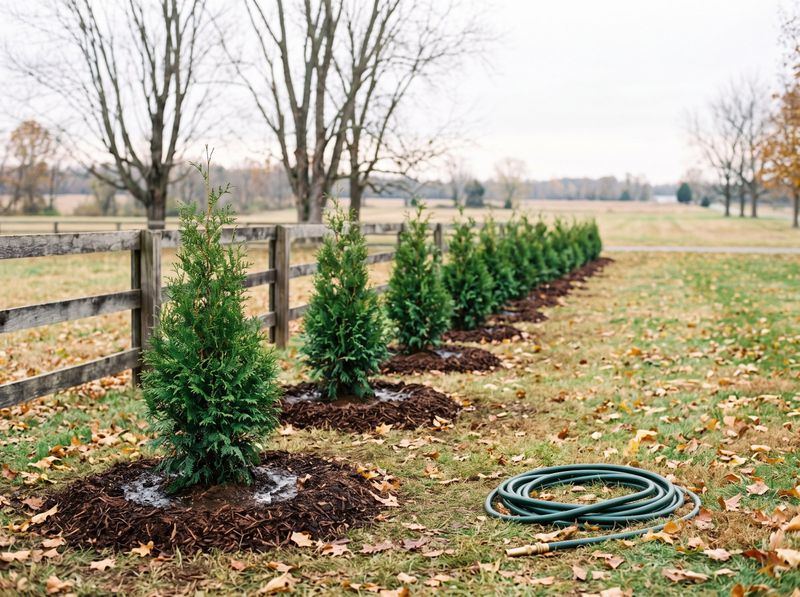
Planting day is only the start. New evergreens need steady water while their roots find their footing.
Penn State’s watering schedule for new trees and shrubs is daily for the first 1 to 2 weeks, every 2 to 3 days from weeks 3 to 12, then weekly through the first frost. Skip watering after a substantial rain, and avoid overwatering clay or compacted soil.
Winter has its own trick. Wind and sun pull moisture from the needles and leaves while frozen ground keeps roots from replacing it.
Penn State notes that during extended dry periods, watering young plants before the ground freezes may reduce stress.
Mulch helps too. Spread 3 to 4 inches deep, and keep it away from the stems so moisture and pests do not settle against the bark.
None of this guarantees a plant will skip winter injury. It simply tilts the odds your way.
An evergreen still needs room, care, and a little patience, and it will drop some foliage along the way. Plant it right, and it will quietly hold the line when winter shows up.
